Connect with us

Cuba

Cuba At The End Of Trump

Published

on

cuba-at-the-end-of-trump

With the Republican Party’s defeat in the U.S. midterm elections, the final and perilous stage of Donald Trump’s presidency begins. Perilous because the president now finds himself in the minority in Congress, because the Democratic gains amount to a rebuke of his policies, and because the battle over the 2028 presidential succession could become considerably more difficult if the Republican leadership decides to distance itself from him in search of a candidate better positioned to take on the opposition.

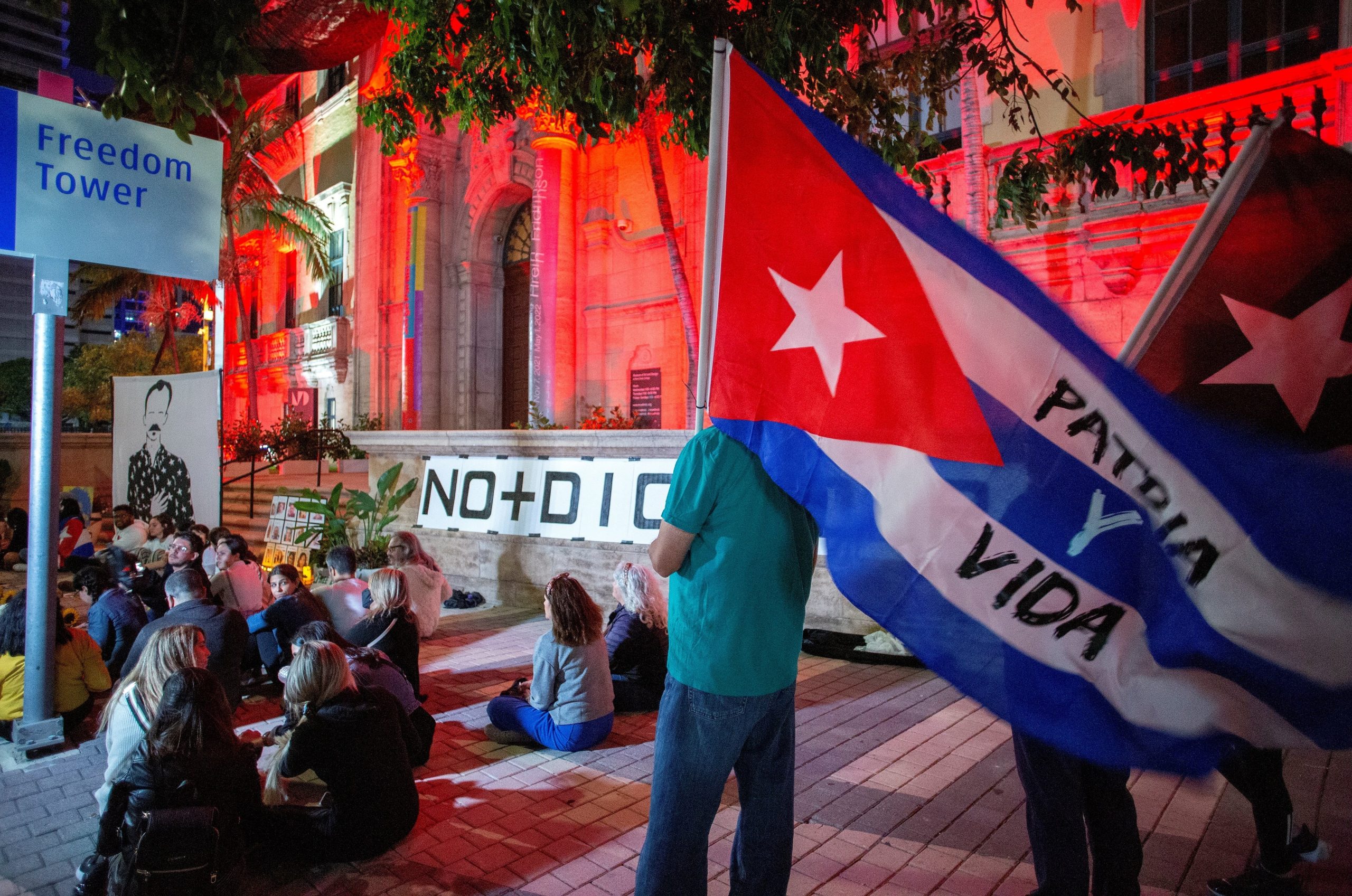
As opposition to the war in Iran gains ground in Congress and Washington’s rapprochement with the government of Delcy Rodríguez in Venezuela recedes as a political issue, one card remains in the administration’s hand: Cuba. The reelection of the three Cuban American members of Congress from Florida showed that the promise of the “liberation of Cuba” still carries electoral weight, even if signs of voter fatigue are becoming apparent. The latest threats of invasion are Washington’s response to discontent in Miami.

The question is whether that promise will take on a different form from the one that has prevailed over the past year. Since the military operation in Caracas, the arrest of Nicolás Maduro, and the executive order that tightened the oil embargo on Cuba, the Trump administration has pursued a strategy that combines threats of a full-scale invasion or a targeted military operation with an escalating sanctions regime, ostensibly aimed at weakening the economic and political power of Cuba’s ruling elite.

The latest crackdown on independent journalists and activists on the island has made clear that that power remains intact. The Cuban government has failed in its efforts to persuade allies such as Russia or Mexico to break the energy blockade, but it has proved effective at maintaining internal control and preventing a social uprising, despite living conditions that are arguably worse for much of the population than during the Special Period of the 1990s or the pandemic years at the start of this decade.

The punitive logic behind Washington’s sanctions on Cuba has always pursued one of two possible outcomes: either the regime’s internal collapse or negotiations with the United States. An invasion, which has remarkably regained the broad support it enjoyed among the historic Cuban exile community of the 1960s, would effectively eliminate both possibilities at once. The lesson of this year, when the United States has been in its strongest geopolitical position to confront Cuba militarily since the Cold War, is that if there is neither external military action nor an internal rebellion, the only feasible outcome is negotiation.

What kind of negotiation? In the various feelers exchanged this year, the Cuban government has made its position clear: it wants limited economic opening, even at the risk of making the system more oligarchic, unequal, unproductive and dependent, but without undertaking the political reforms that many sectors on the island and in the Cuban diaspora consider both necessary and achievable at relatively low cost. The Trump administration, and especially the State Department led by Marco Rubio, has shown no willingness to accept that deal.

In practice, Cuba has become more structurally dependent on the United States than at any other point in its history. But that does not appear to be enough for Washington, or, above all, for Miami. Beyond the electoral dynamics of the Cuban-American community, still tied to the promise of the “liberation of Cuba,” Donald Trump and Marco Rubio may be trying to devise an arrangement that their Cuban-American supporters would perceive as something close to “regime change.”

If that is the case and negotiations resume in the coming months, the process will have to contend with at least three constituencies: the sector of the Cuban-American community most committed to a confrontational approach; hard-line factions within Cuba itself; and Havana’s more ideological international support network, which, in the name of “solidarity,” not only strongly opposes any negotiation with the United States but also rejects the island’s recent market-oriented reforms.

That anti-opening reaction is not new among any of those three groups, but today it is weaker than ever. With the decline of Trumpism, the confrontational wing of the Cuban exile community is losing influence. Within Cuba itself, the most hard-line defenders of continuity, at least in the economic sphere, no longer wield the same clout. And Cuba’s potential international allies — China, Russia, Brazil and Mexico — are not challenging Washington over the island. Concrete international support is limited to long-standing solidarity networks that champion democracy, markets and good relations with the United States in their own countries, but not in Cuba.

Although weaker, these reactions may achieve what they have always achieved: derailing negotiations and preserving the status quo. In essence, the latter would mean more of what Cuba experienced in 2026, to the detriment of the island’s low-income majority: sanctions and more sanctions from Washington, alongside an unrelenting increase in poverty, inequality, shortages and repression in Cuba.

Sign up for our weekly newsletter to get more English-language news coverage from EL PAÍS USA Edition

%

Cuban Family’s 7-Border Journey To Salobreña

Published

on

cuban-family’s-7-border-journey-to-salobrena

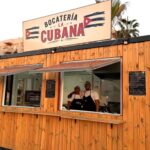
Antony and Odaimy’s place on Salobreña sea front. Credit: ETFB

A Cuban family’s journey to Spain has ended with a new life and a sandwich business in Salobreña, on Granada’s Costa Tropical.

Antony, his partner Odaimy and her son Víctor left Cuba in 2021, hoping to settle in Russia. Instead, they crossed seven borders during a three-month journey to Spain in southern Spain. Cuban independent outlet elTOQUE interviewed the family about their journey.

From Cuba to Russia – then onwards

They sold their home in Havana to fund their departure. Russia was their first destination, but language and cultural barriers made settling there difficult, so they decided to not stop moving until they found the fit for them.

They travelled onwards to Serbia, then tried to cross into Croatia. Their first attempt ended when armed soldiers intercepted them and sent them back. On their second try, they walked almost 20 kilometres through uninhabited fields carrying their luggage.

The route continued through Croatia, Slovenia, Italy and France. The family were detained in Croatia and Slovenia, and feared deportation back to Cuba. In Italy, a relative helped with money for food and bus tickets. Odaimy said the thought of her son kept her going. “I would look at my son and tell myself that, above all, I owed him that: freedom.”

A new beginning on the Costa Tropical

After entering Spain, the family passed through Barcelona, Valencia and Murcia before deciding on settling in Salobreña, as the coast reminded them so much of home.

They found work in the food industry and built relationships in town. At the start of 2026, Antony and Odaimy opened a business selling Cuban sandwiches. “We’ve met some wonderful people, and we owe them a great deal,” Antony said. “Among other things, we owe it to them that we now have our own business.”

Odaimy says she is happy with the life they have built. Her son, now 26, has started his own life in Spain, and she has become a grandmother. Antony still worries about his parents and relatives in Cuba. “I have to go back even if I don’t want to,” he said.

Read the original elTOQUE report for the family’s full account. Their sandwich bar can be found on the corner of Paseo Marítimo and Calle Oleaje, Salobreña.

Continue Reading

Cuba

What Would Happen If Puerto Rico Looked More Towards The Antilles?

Published

on

what-would-happen-if-puerto-rico-looked-more-towards-the-antilles?

Félix Aponte Ortiz is the kind of person who has meticulously calculated how much rainwater he’s able to collect from his own roof in Puerto Rico. The answer, he told me recently, was around 600,000 gallons in a normal year — way more than enough for his household to be self-sufficient.

Félix is an expert on the archipelago’s water system and a retired professor of urban planning, and I had reached out to him for an interview for a podcast I host called La Brega. With Puerto Rico in the grips of a historic drought this year, the issue of rainwater collection has been front of mind for him. It’s rare in Puerto Rico, but it shouldn’t be.

It turns out that Puerto Rico is an anomaly in the Caribbean: other islands in the Antilles have a long-established practice of harvesting rainwater. But, Félix told me, Puerto Rico has been looking in the wrong places for models to follow. And not just about water.

“Until 1898, we looked toward Europe,” he tells us in the episode, referring to the year that the U.S. invaded Puerto Rico. “And since 1899, we now look towards Washington, towards New York.” In other words, the gravitational pull of one colonial power, Spain, was simply replaced with another.

“But our geographic reality is the Caribbean, the great Caribbean,” he continued. “And our thinking needs to spring from that geographic reality. Our gaze should be towards our siblings in the Antilles.

It seems like a simple observation on its surface, but the consequences of shifting the gravitational pull are profound. What would happen if Puerto Rico considered itself more a part of the Antilles instead of an appendage of the United States? Rainwater collection is an obvious lesson to be learned, but these days there are more and more examples of Puerto Ricans shifting their gaze to the rest of the Caribbean in big and small ways. It feels like an overdue course correction.

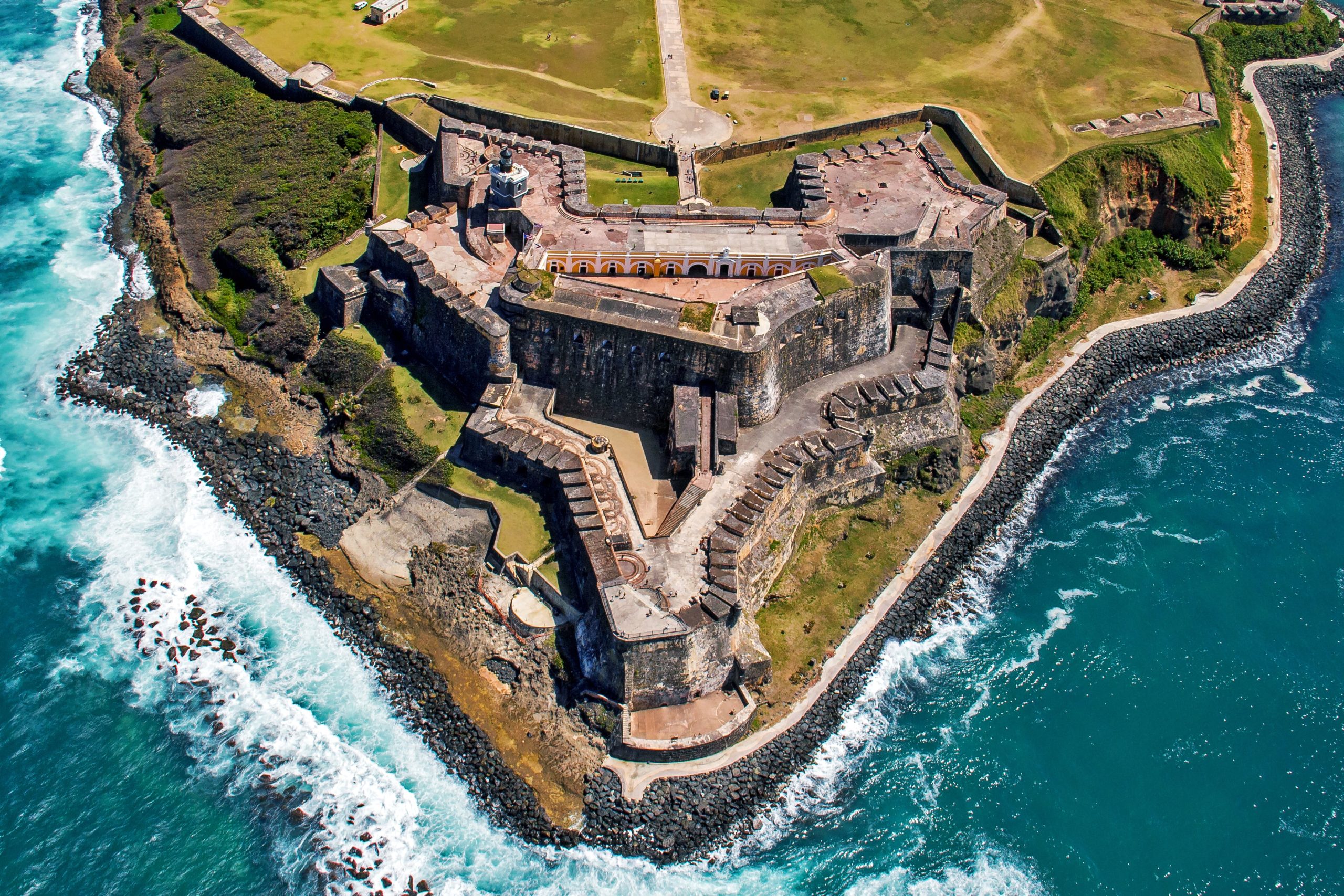
To understand it, you’ve got to know this abridged history: in the 20th century, the U.S. built up Puerto Rico as the “pearl of the Caribbean” and a showcase of democracy and capitalism, a counterweight to Communist Cuba. That investment brought with it miracles of infrastructure: electricity and running water all over the archipelago, astonishing progress lowering infant mortality rates, and increasing life expectancy and literacy rates. So, naturally, there’s been a sense that Puerto Rico is a world apart from its Caribbean neighbors, built more in the image of the US. Plus, there are the Puerto Rican diasporas in New York and Chicago and Philadelphia and other cities to the north.

But even with that gaze northward, and even with more expansive water infrastructure, Puerto Rico couldn’t escape a timeline that it shares with the other islands. Dr. Farah Nibbs, who studies water use at the University of Maryland, Baltimore County, has this extraordinary observation about Caribbean history: that all these countries have a shared colonial past, even if the colonial powers are different, and that has shaped them all in the same way.

“In Puerto Rico, in the U.S. Virgin Islands, in any Caribbean island,” she told me, “when the water system was being developed, it was developed so that the plantation economy could be taken care of.” Fast forward a bit, and replace plantations with industrial centers, and then with military bases, and then with tourism hotspots, and you see a pattern that Puerto Rico fits into perfectly.

It’s a pattern that continues to be relevant today, as Puerto Rico faces the same challenges from extractive tourism as the rest of the Caribbean does. Take, for example, the fight against the controversial luxury enclave called Esencia, which developers want to build in an ecologically sensitive part of Puerto Rico called Cabo Rojo. Even New York City Mayor Zohran Mamdani, in a recent visit to San Juan, spoke out against the project. Activists against Esencia have seen that their fight is shared elsewhere, too.

Just last month, the long-distance swimmer Eva Buzo swam for 12 hours as part of a campaign to raise awareness about Esencia and other luxury developments. Where did she go next? Jamaica, where activists are waging a similar battle against extractive tourism, and where over 90% of beaches have been privatized. The gravitational pull of the states would tell us that tourism is an undeniable benefit to the Caribbean; looking around at our neighbors would tell us to be wary.

These links are everywhere if you start looking for them; it’s why we’re expanding the focus of La Brega to look at Puerto Rico and the Caribbean, and all that our diasporas share as well. It’s in the cultural zeitgeist as well: Bad Bunny resisted the gravitational pull of the states and kicked off his world tour in neighboring Santo Domingo, skipping the US entirely. Chuwi, the band that opened for him, has a new album inspired by Cuba.

What else awaits us if we shift our gaze to, as Félix put it, “our siblings in the Antilles”? I can’t wait to see.

Continue Reading

America

Atacado En Panamá Un Periodista Que Investiga Casos De Corrupción

Published

on

By

atacado-en-panama-un-periodista-que-investiga-casos-de-corrupcion

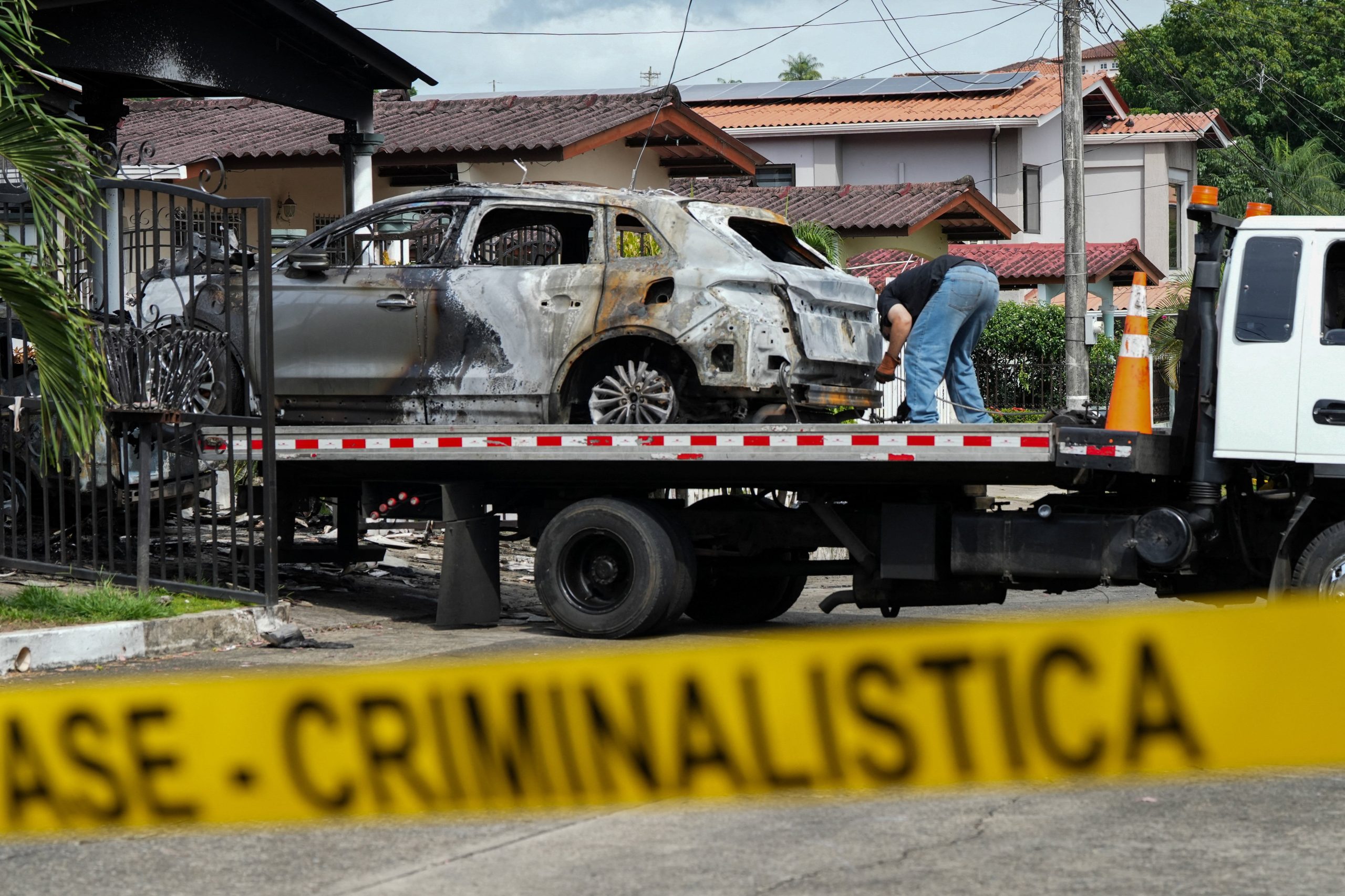
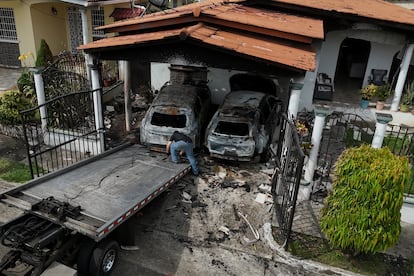
Un desconocido prendió fuego en la madrugada del sábado a dos coches y parte de la vivienda en la capital de Panamá del periodista de investigación Rolando Rodríguez, sin que se hayan registrado víctimas. Rodríguez es uno de los directivos del diario local La Prensa e integra el equipo transnacional coordinado por el Centro Latinoamericano de Investigación Periodística (CLIP). El presidente de Corporación La Prensa —la casa editora del periódico—, Jorge Molina, calificó de “acto terrorista” el ataque contra el reportero de ese medio. “Estamos preocupados porque el ejercicio del periodismo no puede estar sujeto a actos de terrorismo”, dijo Molina en una conferencia de prensa.

El último trabajo del reportero en CLIP, publicado entre junio y julio y titulado Negocios de Familia, hurgó sobre presuntos vínculos entre los empresarios panameños Roberto y Ramón Carretero Napolitano, el expresidente venezolano Nicolás Maduro y el Gobierno de Cuba. El equipo de investigación está integrado también por Transparencia Venezuela, Diario de Cuba y el medio venezolano Armando.info.

“Hasta ahora las cosas se habían dirimido en juzgados, la persona que hizo este cobarde atentado, ha querido ser juez y verdugo, ha atentado contra la democracia panameña, contra la libertad de expresión”, dijo por su parte Rodríguez, arropado por los directivos de la casa editora del periódico. “Tengo que pensar también en el país, si bien esto ha sido un atentado contra mi familia y mi vida, tengo que decir que esto cambia las reglas del juego de Panamá, porque todos ahora estamos expuestos”, advirtió.

Medios locales dan cuenta de que es el primer atentado de este tipo registrado en Panamá. Una cámara de seguridad mostró cómo un hombre se acerca a la casa de Rodríguez con una mochila. Segundos después, el fuego se propaga desde el estacionamiento hasta el resto de la vivienda. La esposa del periodista se encontraba en la vivienda y logró salir a tiempo.

“Rechazo enérgicamente la acción violenta sufrida por Rolando Rodríguez, periodista de La Prensa, como la rechazo ante todo ciudadano que pase por estas circunstancias”, escribió en X el presidente de Panamá, José Raúl Mulino. La Policía Nacional y la Fiscalía están investigando lo ocurrido, agregó Mulino, que afirmó que “Panamá no acepta este tipo de actos bajo ninguna circunstancia”.

Rechazo enérgicamente la acción violenta sufrida por Rolando Rodríguez periodista de La Prensa, como la rechazo ante todo ciudadano que pasen por estas circunstancias.

La Policía Nacional está investigando el hecho, junto al Ministerio Público de manera objetiva y eficiente…

— José Raúl Mulino (@JoseRaulMulino) November 14, 2026

Rodríguez es un experimentado periodista de investigación panameño que ha publicado en el pasado trabajos que desnudaron negocios sucios de presidentes, ministros y altos funcionarios. En este momento preparaba una nueva entrega de Negocios de Familia.

El diario La Prensa había recibido esta semana una carta de la abogada de los empresarios Carretero advirtiendo que los textos de Rodríguez afectaban la honra de sus clientes. Roberto Carretero tiene una sentencia de 2021 por malversación de fondos. En 2025, la familia había demandado a Armando.info y a periodistas de La Prensa por calumnias e injurias y exigieron una compensación de un millón de dólares. En octubre pasado, la fiscalía archivó la querella por falta de pruebas. Vicente Carretero, uno de los hermanos, avanzó más tarde directamente sobre Rodríguez y el diario La Prensa.
El diario La Prensa de Panamá, fundado en agosto de 1980, es conocido por sus investigaciones periodísticas, premiadas con galardones internacionales. Es uno de los principales periódicos del país y ha sufrido denuncias de altos políticos que han afectado sus cuentas, así como agresiones, cierres y el exilio de algunos de sus periodistas durante la dictadura militar que gobernó el país hasta diciembre de 1989.

La Sociedad Interamericana de Prensa (SIP) ha condenado “enérgicamente el brutal atentado” contra la vivienda del periodista: “Un ataque de extrema gravedad que reclama una investigación inmediata, el esclarecimiento de los hechos y garantías de protección para el periodista y su familia”.

Continue Reading

Trending

Copyright © 2017 Spanish Property & News