Connect with us

France

Must-Visit: The Picturesque Towns On France’s Southern Coast That Are Just A 2-Hour Drive From Spain


Published

on

must-visit:-the-picturesque-towns-on-france’s-southern-coast-that-are-just-a-2-hour-drive-from-spain

%

Spanish Food Company Uncovers Explosive Surprise Hidden In French Potato Shipment

Published

on

spanish-food-company-uncovers-explosive-surprise-hidden-in-french-potato-shipment

The projectile measured 75mm and was identified as ammunition from the Second World War. Photo credit: Guardia Civil/Ministerio de Interior

A company in León got considerably more than it bargained for when a shipment of potatoes from France arrived with an unexploded Second World War artillery shell hidden among the produce.

The 75mm projectile was discovered by workers on a conveyor belt at the company’s premises in Santovenia de la Valdoncina. It still contained explosive material, prompting staff to stop the machinery and call the Guardia Civil. Fortunately no one was injured, but the discovery required the intervention of the Guardia Civil’s explosives disposal specialists.

Bomb found among imported potatoes

The incident happened at a company in Santovenia de la Valdoncina, in the province of León, while workers were handling a shipment of potatoes imported from France. The shell was spotted on the processing line by, where potatoes are moved along a conveyor belt for handling. Once its appearance raised suspicions, staff stopped the machinery and alerted the authorities rather than risk moving it.

The projectile measured 75mm and was identified as ammunition from the Second World War. Despite the decades that had passed, it had not been rendered harmless and still contained explosive material. The discovery meant the shipment had brought a piece of wartime weaponry into a food-processing workplace, where employees could have been seriously injured had it been mishandled or gone unnoticed.

Guardia Civil explosives experts called in

The Guardia Civil sent its explosives disposal specialists, known as EDEX, to deal with the device. Their work involved assessing the condition of the shell and making it safe to remove. The operation was carried out without injuries, and there were no reports of damage at the company. The shell was subsequently taken to a quarry in La Pola de Gordón, where specialists destroyed it in a controlled explosion.

The operation removed the explosive device, but the discovery raised an obvious question: how had a wartime projectile ended up among potatoes being transported commercially from France? The obvious explanation would be that it had been uncovered in a field where the potatoes were being grown, but how it managed to not detonate through the entire collection, transport and delivery process is a miracle in itself.

Old explosives can remain dangerous

Unexploded ammunition from past conflicts can remain hazardous long after the fighting has ended. Rust, damage and deterioration do not necessarily remove the explosive risk, and moving or handling an old projectile can trigger a detonation. The Guardia Civil regularly deals with discoveries of old military explosives across Spain, including devices found during building work, agricultural activity and land clearance.

Anyone who comes across a suspected grenade, shell or other piece of ammunition is advised not to touch it, move it or attempt to inspect it. The safest response is to keep away and contact the emergency services so trained specialists can assess it. The French connection sets this find apart from many old shells recovered in León, where unexploded ammunition is more commonly associated with battles fought during the Spanish Civil War.

Old military ammunition can turn up in unexpected places, particularly during agricultural and construction work, the Guardia Civil advises anyone finding suspected ammunition to leave it untouched, move away, keep others clear and call 062 right away.

Continue Reading

France

France’s €400m ‘riot tax’: Millions face higher insurance bills to pay for damage done

Published

on

By

France is introducing a new insurance levy to cover damage from recent violent civil unrest. What will it cost French taxpayers, and what does it already cost Europeans across the continent?

Approved under the 2026 Finance Law, the French government measure plans to raise roughly €400 million for demonstration damage annually by spreading financial risks across the insurance sector.

Although widely referred to as a “riot tax”, insurance firms will pay the contribution directly. Draft plans indicate a proposed rate of 0.8 per cent on qualifying premiums, though legislation permits up to 1.5 per cent. The levy applies to policies covering private and commercial property, motor vehicles, and specific business interruption losses.

Funds will support a mutual pool managed by the Caisse Centrale de Réassurance, backed by a €3.25 billion annual state guarantee. The European Commission granted state-aid clearance on Friday, July 24, 2026. French officials are currently finalising regulations ahead of the expected launch on Friday, January 1, 2027.

Rising costs of civil unrest

Escalating payouts from previous disturbances drove the government to create this shared safety net. Senate data reveals that insured losses reached €204 million during the 2005 riots and €230 million during the 2018 and 2019 Yellow Vest protests. Riots in 2023 following the police shooting of teenager Nahel Merzouk cost insurers €793 million.

The 2024 riots in New Caledonia generated approximately €945 million in claims, according to France Assureurs. More recently, demonstrations over living costs and public services turned violent across several French cities on Saturday, October 17, 2026. These totals exclude uninsured losses, policing bills, and public infrastructure repairs, such as smashed-up schools and bus shelters (property of everyone).

Potential impact on households

While households will not receive a direct government bill through the post, insurers will certainly pass the expense onto policyholders through higher premiums. If firms pass on the proposed 0.8 per cent rate in full, an annual €300 policy would rise by €2.40, while a €600 policy would increase by €4.80.

Final price changes depend on how insurers absorb the cost. Under the new law, an insurable riot requires violent collective action against public authority causing substantial economic damage, excluding peaceful protests.

How Spain and other countries compare

Spain already has a state-backed system for dealing with certain extraordinary risks. The Consorcio de Compensación de Seguros (CCS) provides compensation for qualifying events, such as riots, including damage caused violently by terrorism, rebellion, sedition, mutiny and other disturbances.

The system is funded through compulsory surcharges on eligible insurance policies, collected by insurers and passed to the Consorcio. It is therefore not a specific riot tax, but Spanish policyholders already contribute to a shared insurance fund which can cover certain forms of civil unrest.

The recent 38-day housing protest camp in Madrid’s Puerta del Sol is a separate example of the public resources demonstrations can require. Police dismantled the camp on November 3, with cleaning crews brought in afterwards. Euro Weekly News reported on the Madrid camp clearance after 38 days of housing protests. It was a housing protest, not automatically a legally defined riot, and no official overall bill for the operation has been published. That is currently between Madrid council, and their insurer.

In the UK, the Riot Compensation Act 2016 provides a route for people whose property is damaged, destroyed or stolen during a qualifying riot to claim compensation from the relevant local policing authority, particularly where the property was uninsured or inadequately insured.

France is taking a different route by creating a specific and dedicated insurance pool backed by the state. The question now is how much protection the new arrangement will provide, and how much of its cost will eventually find its way onto ordinary insurance bills. And also, how much the public will continue tolerating this kind of behaviour when it ends up coming out of their own pockets.


Continue Reading

%

France’s €400m Riot Tax Creates Higher Insurance Bills

Published

on

france’s-e400m-riot-tax-creates-higher-insurance-bills

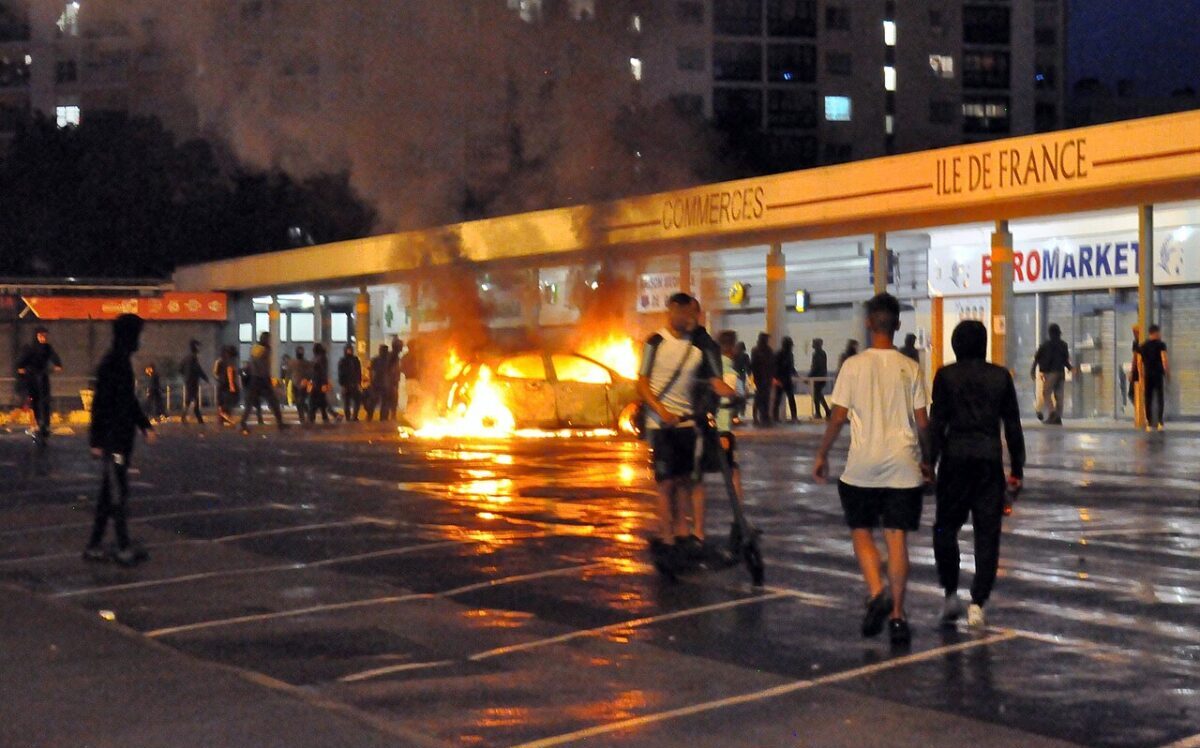
Riots in Paris. Credit: Toufik-de-Planoise CC wiki

France is introducing a new insurance levy to cover damage from recent violent civil unrest. What will it cost French taxpayers, and what does it already cost Europeans across the continent?

Approved under the 2026 Finance Law, the French government measure plans to raise roughly €400 million for demonstration damage annually by spreading financial risks across the insurance sector.

Although widely referred to as a “riot tax”, insurance firms will pay the contribution directly. Draft plans indicate a proposed rate of 0.8 per cent on qualifying premiums, though legislation permits up to 1.5 per cent. The levy applies to policies covering private and commercial property, motor vehicles, and specific business interruption losses.

Funds will support a mutual pool managed by the Caisse Centrale de Réassurance, backed by a €3.25 billion annual state guarantee. The European Commission granted state-aid clearance on Friday, July 24, 2026. French officials are currently finalising regulations ahead of the expected launch on Friday, January 1, 2027.

Rising costs of civil unrest

Escalating payouts from previous disturbances drove the government to create this shared safety net. Senate data reveals that insured losses reached €204 million during the 2005 riots and €230 million during the 2018 and 2019 Yellow Vest protests. Riots in 2023 following the police shooting of teenager Nahel Merzouk cost insurers €793 million.

The 2024 riots in New Caledonia generated approximately €945 million in claims, according to France Assureurs. More recently, demonstrations over living costs and public services turned violent across several French cities on Saturday, October 17, 2026. These totals exclude uninsured losses, policing bills, and public infrastructure repairs, such as smashed-up schools and bus shelters (property of everyone).

Potential impact on households

While households will not receive a direct government bill through the post, insurers will certainly pass the expense onto policyholders through higher premiums. If firms pass on the proposed 0.8 per cent rate in full, an annual €300 policy would rise by €2.40, while a €600 policy would increase by €4.80.

Final price changes depend on how insurers absorb the cost. Under the new law, an insurable riot requires violent collective action against public authority causing substantial economic damage, excluding peaceful protests.

How Spain and other countries compare

Spain already has a state-backed system for dealing with certain extraordinary risks. The Consorcio de Compensación de Seguros (CCS) provides compensation for qualifying events, such as riots, including damage caused violently by terrorism, rebellion, sedition, mutiny and other disturbances.

The system is funded through compulsory surcharges on eligible insurance policies, collected by insurers and passed to the Consorcio. It is therefore not a specific riot tax, but Spanish policyholders already contribute to a shared insurance fund which can cover certain forms of civil unrest.

The recent 38-day housing protest camp in Madrid’s Puerta del Sol is a separate example of the public resources demonstrations can require. Police dismantled the camp on November 3, with cleaning crews brought in afterwards. Euro Weekly News reported on the Madrid camp clearance after 38 days of housing protests. It was a housing protest, not automatically a legally defined riot, and no official overall bill for the operation has been published. That is currently between Madrid council, and their insurer.

In the UK, the Riot Compensation Act 2016 provides a route for people whose property is damaged, destroyed or stolen during a qualifying riot to claim compensation from the relevant local policing authority, particularly where the property was uninsured or inadequately insured.

France is taking a different route by creating a specific and dedicated insurance pool backed by the state. The question now is how much protection the new arrangement will provide, and how much of its cost will eventually find its way onto ordinary insurance bills. And also, how much the public will continue tolerating this kind of behaviour when it ends up coming out of their own pockets.

Continue Reading

Trending

Copyright © 2017 Spanish Property & News