
ElPais
Leo XIV’s Plan To Combat Child Sexual Abuse Remains A Mystery: ‘They’re Trying To Hold Him Back, And He Doesn’t Know Who He Can Trust’


EL PAÍS launched an investigation into child sexual abuse in the Spanish Catholic Church in 2018 and maintains an up-to-date database of all known cases. If you know of a case that has not yet been made public, you can contact us at abusos@elpais.es. For cases in Latin America, please write to abusosamerica@elpais.es.
───────────
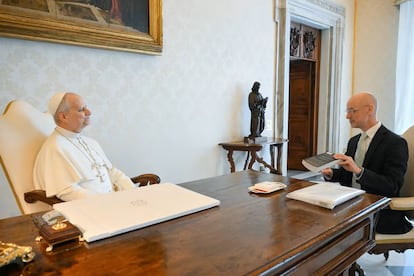
British journalist Gareth Gore, author of Opus, an investigative book about Opus Dei, went to meet Pope Leo XIV last March and handed him a dossier of documents detailing allegations of abuses of power, spiritual abuse and sexual abuse within the Catholic organization. But, as Gore has now recounted, the Pope’s reaction left him stunned.
“As I handed over the documents, the pope said something that left me stunned. ‘Thank you for bringing these,’ he said, before adding: ‘I’m going to lock them away in my room because, if I hand them to anyone around here, they will just disappear,’” Gore wrote in an article.
Then, he says, referring to Opus Dei, the pope pointed around the room and told him: “You know, these people are very powerful around here.”
Gore has now disclosed these details because eight months have passed since the meeting and, he says, nothing has changed. He believes the pope is being kept in the dark.
“I offered to help put him in touch with 100 or 200 former members and former leaders of Opus Dei who can help the church itself understand the problem. They haven’t responded. It’s as if they don’t want to know anything about it,” he explains over the phone. “It was very difficult for me to write the article because I wanted to strike the right tone. I didn’t want to directly criticize the pope, because I believe he genuinely wants to address these issues. But I think the problem lies in the church’s structure and in those who have spent years trying to avoid confronting these scandals. I believe there are many people trying to hold the pope back, and he doesn’t know who he can trust.”
It is a reflection that applies to the entire scandal involving abuse and child sexual abuse in the Catholic Church, church sources confirm.
Gore says that when he met with Pope Leo XIV, it was the pontiff himself who wanted the meeting to be made public. It was the first strong, clear indication that he wanted to get to the bottom of serious allegations of abuse. This was all the more significant given that Opus Dei itself had accused the book of being full of falsehoods.
“I still believe his compassion was genuine,” says Gore. “However, I also came away with the unsettling impression of a man surrounded by powerful interests. Perhaps that explains the gap between his public promises and the church’s response to the allegations against Opus Dei. But it cannot justify it.”
The future of Opus Dei is one of the thorny issues Francis left for Leo XIV to address. The Argentine pope curbed the organization’s power and ordered it to rewrite its statutes. His death left the process unfinished, and Opus Dei finally submitted its proposal in 2025. But the new pontiff has yet to make a decision — one of the most eagerly awaited within the church.
There is a related dispute in Spain, where another unresolved issue pits the bishop of Barbastro-Monzón, Ángel Pérez Pueyo, against Opus Dei over control of the Torreciudad shrine, a spiritual stronghold of the organization.
“I told the pope that it is impossible to decide what should be done with Opus Dei because the church itself does not understand what it is,” Gore says. “It has never tried to speak to former members or victims. They don’t know what the problem is, and that makes it impossible to decide what should be done.” Asked to comment on Gore’s article, Opus Dei declined to do so.
EL PAÍS also personally handed the pope a USB drive last June, aboard his flight to Spain, containing extensive documentation on the scale of the child sexual abuse scandal in the Spanish Catholic Church. It included the six reports published by this newspaper since 2021, containing more than 800 testimonies; another report on cases in Latin America; and a list of seven cardinals, 61 bishops and 26 heads of religious orders in Spain accused of covering up abuse cases.
But there has been no response to that material either. In fact, there has been no response at all in five years, despite the documents having been submitted to the Dicastery for the Doctrine of the Faith over that period. The department is dominated by a bureaucratic outlook that views allegations with suspicion and has no direct contact with victims. Most of the Spanish Catholic Church has also consistently failed to respond to this newspaper’s requests for information. Since Robert Prevost became Pope Leo XIV in May 2025, nothing has changed.
A year and a half into his pontificate, the pope’s plan for addressing abuse in the church remains a mystery. Those who know him say he always takes his time when confronting a problem, studying it thoroughly before acting — but once he does, he acts decisively. On this issue, however, he has yet to make a move. There have been no changes to the law, the church’s structure or its methods. Nor has he delivered any notable speeches about the scandal.
The one clear sign of progress is the major Vatican investigation into abuse within the Sodalicio de Vida Cristiana, the ultraconservative Peruvian organization dissolved by Francis in 2025, shortly before his death. The current pope played a decisive role in that effort when he was bishop in Peru. Leo XIV has entrusted the investigation to a special commissioner, Spanish priest Jordi Bertomeu. It could set a precedent for addressing all forms of abuse, including financial misconduct, in other similar organizations.
But beyond that, victims are still waiting for something to change. Investigations continue to stall, and most end in disappointment. In Spain, where bishops make compensation payments only sporadically, there are extraordinary cases like that of Carlos, the fictitious name of a former seminarian from Toledo who has been waiting 17 years for a response after reporting abuse by a priest in 2009.
Both the Spanish Catholic Church and the Vatican offer no transparency whatsoever: no information is provided, and many cases are simply shelved or dismissed. And that is only the cases that make it to Rome. The rules continue to be flouted, and cases are not reported to the Dicastery for the Doctrine of the Faith.
The prevailing mood in the Vatican, as in the Spanish Catholic Church, is that the crisis is behind them and it is time to move on. One remark Leo XIV made in his first interview, shortly after becoming pope, looms large: “We can’t make the whole Church focus exclusively on this issue, because that would not be an authentic response to what the world is looking for in terms of the need for the mission of the Church.” His main concern, moreover, is to ease tensions within the church, and he knows this is a deeply divisive issue.
The pope has already made clear during his trips that this is not a priority for him, and his latest visit to Uruguay, Argentina and Peru has confirmed that impression. Spain was the first country he visited where the scandal was on the agenda, but he referred to it only in passing, and a meeting with victims was arranged under a veil of secrecy. With the exception of France, where the event was announced in advance and well-known victims attended before holding a news conference, the same pattern has been followed in Argentina and Peru.
Gareth Gore, in fact, has broken his silence after discovering that in Argentina, as in Spain, victims of Opus Dei were not invited to the meeting with the pope. “These meetings are tightly controlled by each local church. They select people who won’t cause controversy or engage in debate,” the journalist says.
In his view, the pope “cannot limit himself to being someone who listens with empathy.” “He has the authority to demand answers, compel cooperation and ensure that allegations are investigated independently. He must exercise that authority now,” Gore says.
A complaint involving the Augustinians, the pope’s own religious order
Meanwhile, the system remains a maze for those who dare to come forward. A case uncovered by EL PAÍS involving the pope’s own religious order, the Augustinians, is a telling example. Alicia, a pseudonym used to protect her identity, illustrates the secrecy and silence that surround religious orders. She reported being sexually abused by Father Álvaro Martín Fuente, a priest at the Augustinian-run Buen Consejo school in Madrid, where her siblings were students. The order learned of the allegations 16 years ago, covered them up and did nothing. Despite EL PAÍS publishing the case shortly before the pope’s arrival in Spain, the friar who covered it up, Agustín Alcalde, took part in Leo XIV’s meeting with Spanish Augustinians during his visit.
Alicia gave testimony to the order on May 12. More than six months later, she still has no information about her case or whether it has been forwarded to the Dicastery for the Doctrine of the Faith. She also points to “gaps and shortcomings” in the process. On July 13, the vicar general handling the case, Tomás Marcos Martínez, emailed her to say they were “nearing the end of the internal investigation” and that, “as is often the case, the accounts given by those who testified differ.” He therefore asked her to provide medical records showing her prescribed medication.
Alicia was astonished. She replied that those documents, including a psychological report, had already been submitted in March. She also told him she wanted the investigation to end because the process had been “an ordeal” for her. The vicar general replied that he was sorry and advised her to “move on.” “The best thing is to forget, try to rebuild your life and be happy,” she says he told her.
Last week, Alicia wrote to the vicar general again, asking for an update on her complaint and when it had been sent to the Dicastery for the Doctrine of the Faith. She also requested a case reference number or acknowledgment of receipt. The priest replied: “I can’t answer, not because I don’t want to, but because I don’t know. After the internal investigation, I gave my assessment (vote) to the provincial prior in July. He must then give his assessment to the prior general, who in turn must convey his opinion to the Vatican Dicastery.”
He added: “As you can see, it’s a somewhat complicated and slow process. Each person knows their own part; I don’t know what happens next.”
Alicia then asked for the prior general’s contact details, but the vicar replied that he could not “give her information about the other people involved in the process.” He urged her to trust them.
“How can I do that when they won’t even give me information they are required to provide under Article 164 of the Dicastery’s vademecum?” Alicia asks. This is happening within the pope’s own religious order.
Sign up for our weekly newsletter to get more English-language news coverage from EL PAÍS USA Edition







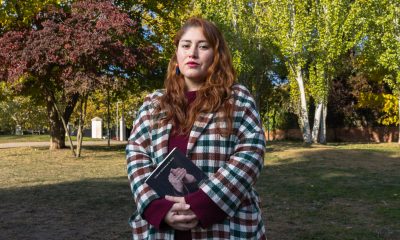






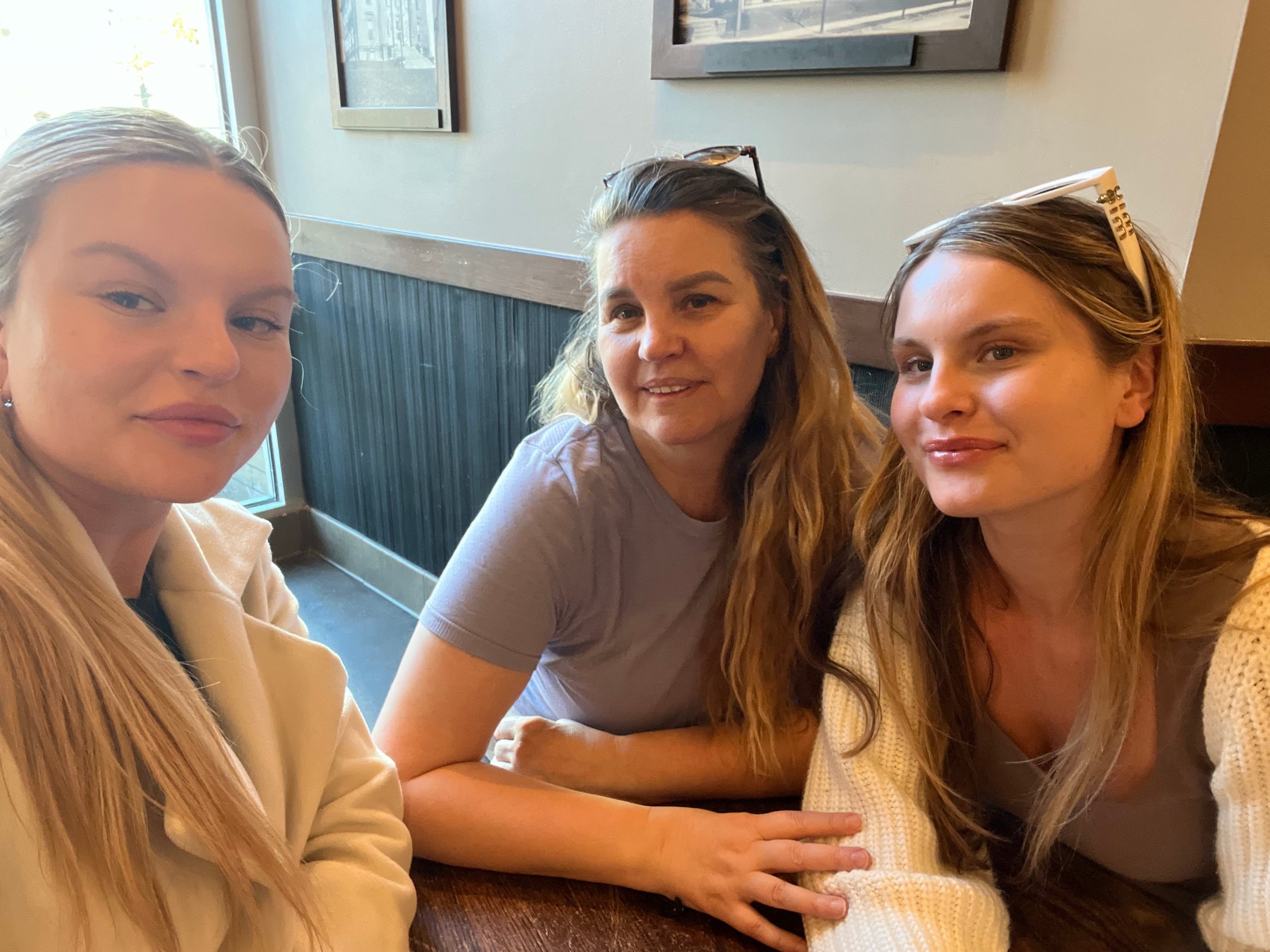
Beata Siemionkowicz, a 57-year-old Polish citizen, was released on bail on November 10 from the Campbell County Detention Center in Kentucky, one of the facilities used by U.S. Immigration and Customs Enforcement (ICE) to hold detainees. She had spent 15 months in custody over two minor offenses committed more than a decade ago. Siemionkowicz does not fit the profile of the migrants ICE claims to target: she is neither undocumented nor a dangerous criminal. Yet she faces deportation.
She arrived in the United States from Poland in the mid-1990s and obtained her green card more than 20 years ago. In August 2025, while working in the garden of her daughter’s home in Illinois, several masked men appeared and took her into custody. They were ICE agents.
The immigration agency targeted her over two petty theft convictions dating back to 2005 and 2011, according to her attorney, Hirsh Joshi, of the American Civil Liberties Union (ACLU) in Illinois. “We are not talking about someone who is among the worst of the worst. We are talking about an individual who has maintained an impeccable record since 2011 and has made significant contributions to our society,” Joshi says by phone.
Siemionkowicz’s case is not unique. Since Donald Trump began his second term in January 2025, the number of lawful permanent residents detained by ICE has grown. Many have lived in the United States for decades, worked, raised U.S.-born children and felt secure in the legal status granted by their green cards, which they have routinely renewed every 10 years with little reason for concern.
The green card is the strongest protection available to noncitizen immigrants against deportation. Now, however, ICE has begun dusting off minor offenses from years or even decades ago, often without any new criminal charges, to arrest lawful permanent residents and place them in deportation proceedings.
“The government has been aware of these issues for many years, and in the past it decided not to take action against them. Now it has changed its mind, even though nothing has changed except for the administration,” says John Gihon, an immigration attorney from Florida. At his law firm, the number of detained clients holding green cards has increased by 50% this year. The infractions involved can be minor, such as possessing cannabis 20 years ago or mistakenly voting without being eligible to do so.
Before Trump’s return to office, immigration detention was generally reserved for people considered a danger to the community or a flight risk. “When it comes to someone who has been a lawful permanent resident for a long time, who has never been convicted of any crime, and who is scheduled to appear in court, there seems to be no reason to keep them in custody, since they pose no danger and there is no risk of them fleeing. Nevertheless, the government’s standard practice now is to detain them,” says Gihon.

Siemionkowicz had no intention of fleeing. Her family, including her two daughters, are U.S. citizens. Nevertheless, she spent 15 months confined in a detention center where, according to accounts from former detainees, conditions are inhumane. She herself criticized the facility’s unsanitary conditions and said it was plagued by rodent infestations.
In both of the cases that led to her arrest, Siemionkowicz pleaded guilty. The first incident occurred in 2005, shortly after she had given birth to her younger daughter. She was in a supermarket when her husband, following a public altercation, left the store with the child. Siemionkowicz hurried after him carrying a bag of groceries she had not paid for. The second incident took place in 2011. According to her attorney, she was being financially controlled by her husband, who denied her access to money despite the fact that she worked. She went to a local store and took clothing for her young daughters. Both cases were resolved with the payment of a fine.
In the years that followed, she put the incidents behind her, complied with her immigration obligations, raised her two daughters, now 22 and 26, and worked caring for people in hospice. She hopes to return to that work once she has recovered from the trauma of spending more than a year in detention.
“The federal government punished her for those two cases much more severely than she would have been punished had the state of Illinois decided to imprison her at the time,” says Joshi. “When we add to this the context of domestic violence we’re discussing, it’s really hard to understand why the government would act this way.”
In response to questions from EL PAÍS about the detentions, the Department of Homeland Security offered only a brief statement: “The primary mission of USCIS [U.S. Citizenship and Immigration Services] is to safeguard the United States. Verifying the identity and background of all foreign nationals applying for immigration benefits requires a rigorous process, which prioritizes the safety of American communities through a thorough evaluation and scrutiny of all foreign nationals.”
Dying in detention
Sanjuanita Guerra never expected that, at age 74, she would end up in an ICE detention center over an incident that had occurred more than three decades earlier. But that is exactly what happened when she returned to Texas from a trip to Mexico last March.
“My mom didn’t understand because she has memory problems. She couldn’t remember what happened more than 30 years ago,” explains her daughter, Carla Fuentes.
On her trip, Guerra had forgotten her green card, so while she was at the border with immigration agents, her daughter came to pick her up. It made little difference. They were given five minutes to say goodbye before agents took her to the El Valle ICE Processing Center in Texas.
The reason, they were told, was a weapons charge filed against her in 1994. Fuentes, who was 11 at the time, was struggling with depression and suicidal thoughts and had obtained a handgun. Guerra found the weapon and placed it in her purse to keep it away from her daughter. Some time later, she went to pick up her sister at the airport, carrying the same purse and forgetting that the gun was inside. Police discovered it. The case was resolved through a plea agreement, and she believed it had long since been put behind her. In the years that followed, she entered and left the United States several times without incident. Until this year.
“This isn’t the first time permanent residents have been detained; it also happened during Trump’s first administration, although there is now more scrutiny at the border. But what’s striking is that they show no consideration for people of such advanced age and with medical conditions,” says her attorney, Wendoli Rodríguez. The previous December, Guerra had undergone back surgery and was given metal implants that caused her severe pain.
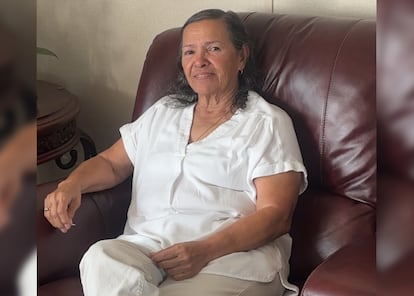
During the month she spent in detention, her health deteriorated rapidly. “We were terrified because we couldn’t believe this was happening to my mother,” Fuentes says. “We were worried about her health because they kept her without her medication for two weeks, and without it she could die.”
Other detainees requested an extra mattress to help ease the back pain that kept Guerra awake at night, but an officer ordered it removed. On one occasion, when the facility ran out of drinking water and she needed to take her medication, staff told her to use water from the toilet. She was also unable to eat because the food was spoiled, sometimes even containing worms, and survived largely on fruit given to her by fellow detainees.
Rodríguez says she received calls from other women in detention warning that if Guerra was not released soon, she would not survive. The attorney applied for humanitarian release, but the request was denied. She even sought help from Congresswoman Mónica de la Cruz, who lost her seat in the most recent midterm elections, but says she was turned away from the lawmaker’s office. Guerra was ultimately released on bond.
Although the experience left Guerra deeply traumatized, she was more fortunate than Emiliano Andrade-Covarrubias, a 56-year-old Mexican lawful permanent resident who died last month at the Rio Grande Processing Center in Laredo, Texas. Andrade-Covarrubias had lived in Dallas for decades, raising three U.S.-born children and regularly traveling to Mexico. He was detained in June at the Juárez-Lincoln International Bridge, a port of entry in Laredo, while returning from the neighboring country.
ICE justified the arrest by claiming that Andrade-Covarrubias had failed to disclose a 2004 theft charge when he applied for his green card. His daughter, Estefani Andrade, told The Texas Tribune that her father had in fact reported the incident and that federal authorities approved his permanent residency application with full knowledge of the case. Andrade-Covarrubias became the seventh person to die in ICE custody in Texas this year, and the second at the Laredo facility. He suffered from a heart condition, diabetes and high blood pressure. According to his daughter, he was denied medication, and medical staff ignored his complaints of chest pain and difficulty breathing.
Until Trump returned to the White House, a green card offered substantial protection against deportation and was widely regarded as a stepping stone to U.S. citizenship. Under the current administration, which remains committed to carrying out what Trump has described as the largest deportation campaign in U.S. history, that assumption is no longer so certain. While the president continues to repeat the familiar refrain that his administration is removing criminals, people who have spent decades working in the United States, obeying immigration rules and avoiding any further run-ins with the law are now finding themselves detained in ICE facilities.
“Showing that you were doing everything right used to be a step toward earning citizenship,” Joshi says. “What is surprising, and deeply sad, is that this tradition has been abandoned. And it’s a real shame, because these people contribute to our society. They are by no means ‘the worst of the worst.’ However, protections that once appeared to exist no longer seem to be there.”
Sign up for our weekly newsletter to get more English-language news coverage from EL PAÍS USA Edition
Asia
Jian Tang, Robot Maker: ‘The First Things They Will Do Will Be To Pick Up Objects And Run Washing Machines’


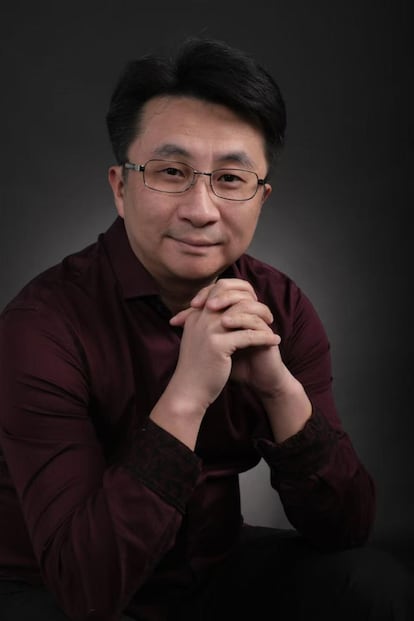
Humanoid robots are already running half marathons: “It was a test to check the robot’s stability, reliability and endurance, as well as the embodied intelligence algorithms it runs,” says Jian Tang, chief technology officer (CTO) of the Chinese company X-Humanoid, one of the businesses behind that event in 2025. Robots also perform spectacular dances that go viral: “They are a real business. You can earn some money from commercial shows, but that should not be the main focus of the whole industry,” Jian Tang adds.
The first deployments are likely to be in ‘dangerous, dirty or dull’ environments, such as a hazardous materials lab, a logistics warehouse or at an earthquake. But the big step for these robots will be to win over homes and household chores. There’s still some way to go, Jian Tang says by videoconference from his office in Beijing. This Monday he is participating in the China-Spain Green Energy Forum in Madrid.
Question. What is the biggest misconception about humanoid robots?
Answer. People see a demonstration of a robot cooking a very complicated dish and start to believe: ‘This is very close, we’re almost there. Maybe next year I can buy one for my home.’ But that’s not the case. Doing a demo is easy because you collect data from the specific environment where the robot is going to do the demonstration. You collect a huge amount of data. But if you put it in thousands of homes, it would most likely not be able to repeat that performance. That’s the hardest part. When it encounters an object it has never seen before or a new environment, it can get stuck or fail.
Q. But is it already capable of, for example, finding a clove of garlic in the refrigerator and chopping it into pieces?
A. A small object shouldn’t be a problem. They can do precision tasks. If you collect thousands of trajectories, we should be able to do it. But if you take it to a new home, then no.
Q. In how many years?
A. In nine years it may be able to do perhaps not everything, but 90% of tasks.
Q. And that 10%?
A. In other words, it will do almost everything, but its success rate will not always be 100%.
Q. Could you ask it to empty an entire closet to find a lost sock?
A. Of course, exactly.
Q. That’s crazy.
A. A robot can devote more time than anyone and find that sock. It can use a search algorithm to scan the whole room.
Q. Will there be anything before those nine years?
A. Within four years products should start to appear that will already be true domestic service robots. Their functions may be limited: they will likely be able to pick up a glass of water and bring it, or perform some simple task. Later they will gain more and more functions. In the end, within nine years, it will be a true home service robot.
Q. What will the first tasks be?
A. We’re fairly sure the first thing will be picking up and placing objects.
Q. Also a glass or bottle, which can break?
A. I don’t think that will be a problem. Then, with the help of a washing machine, it should be able to put clothes in, start it, take the clothes out and fold them.
Q. Will that be in five years?
A. Yes. And also housecleaning tasks.
Q. And will they cost the same as a car?
A. About the same as a car. When the scale becomes larger, the price will fall. The idea is around $20,000 [€18,200].
Q. What is slowing progress down?
A. The AI model. We are waiting for a leap—when the whole industry reaches its ‘ChatGPT moment’, then we’ll be ready to mass-produce domestic service robots.
Q. Is it a software issue?
A. It’s purely a software issue. Right now everyone is working on what is called embodied general intelligence. We are trying to create a general model that can do almost everything. The main bottleneck is that the generalization capability of the AI model is not good enough.
Q. That’s why remote control of robots is a common resource today.
A. If they have remote control, they can do almost anything. The problem is generalization capacity, because the data you train your AI model on is limited. When the robot enters a new home, it often sees objects it has never seen before—a mug, a pen it doesn’t recognize—and it may not be able to manipulate them. But in the future, if the AI model of the physical world has a generalization ability equivalent to ChatGPT or Claude in the digital world, then it will be able to manipulate anything, even if it has not seen it before.
Q. Haven’t you considered making robots that are not humanoid?
A. The logic is that it should do what a human does. That’s the basic logic behind making a bipedal humanoid robot. But in some scenarios a wheeled robot is enough. For example, in a factory a wheeled robot is better: it’s faster and more precise.
Q. Why is China so far ahead in these robots?
A. China is ahead in hardware and in everything related to locomotion. As for the embodied general intelligence model, I think China and the United States are at the same level. No one has yet achieved that major breakthrough. China leads in hardware because the whole country has a practically complete and very wide supply chain.
Q. What will the relationship between a robot and its owners be like?
A. It will become a member of your family. That’s why we want it to look human, because you’ll feel more comfortable. You’ll have in front of you something that is at least partly human, instead of an appliance or a machine.
Q. Does that make things easier?
A. I used to work in appliances. We developed an AI model for the air conditioner so you could talk to it and ask it to lower or raise the temperature. But normally people only want to give the air conditioner a couple of commands. They don’t want to be talking to the air conditioner for ten minutes. It’s because of its appearance, which makes you think it’s just an appliance. But if a robot works for you for a long time, you may start to treat it as another family member.
Q. And will they last like a car?
A. Yes, their useful life will get longer, like a car. At least five years should not be a problem.
Q. Won’t it be like having someone living in your home watching you in your private life?
A. I understand the concern. One of the efforts we’re making is to have the robot do most of its computing on board rather than in the cloud. Especially vision-related tasks we want to process in the robot’s body. This is called edge computing. Or on a device in your home, a small server you can install, so not all data goes to the cloud. We try to transmit fewer data to the cloud rather than virtually everything.
Q. How fragile are they?
A. They are much more resilient than last year. When they fall, they get up most of the time: we tested them, we threw them to the ground 100 times and they kept getting up. Of course it depends on how they fall, just like a person.
Q. Are the robots we’ll have at home like the ones we see now?
A. No. They will evolve a lot. Companies are working on electronic skins.
Q. Robots with skin would be terrible.
A. No, it’s not like human skin. It’s a kind of soft material placed over the robot’s body. With a very light, very gentle touch the robot stops for safety. Also, it makes the robot look more human.
Q. But will it have a head, five fingers?
A. Yes. For the home, it should look exactly like a human, or increasingly like a human, so our customers feel comfortable.
Sign up for our weekly newsletter to get more English-language news coverage from EL PAÍS USA Edition

Anthropic Se Desploma Más Del 11% Y Pierde El Precio De La Salida A Bolsa Cuatro Días Después De Debutar

Estados Unidos Ultima Nuevos Aranceles A China, La UE Y Otra Docena De Países

Leo XIV’s Plan To Combat Child Sexual Abuse Remains A Mystery: ‘They’re Trying To Hold Him Back, And He Doesn’t Know Who He Can Trust’


-

 New Developments3 weeks ago
Luxury Villas For Sale, Estepona – ProjectL1
-

 New Developments3 weeks ago
The San Roque Club – Townhouses For Sale
-

 New Developments4 weeks ago
How To Get A Tourist Rental Licence In Andalusia (Spain) – Step-By-Step Guide 2025
-
Age Concern Marbella - San Pedro4 weeks ago
Halloween lunch sells out as 51 join Marbella get-together
-

 %4 weeks ago
Spain Orders Replacement Of Eight Million Gas Meters: New Rules, Costs And Deadlines
-
costa blanca live music3 weeks ago
Beatles tribute: The Liverpool Band returns to Orihuela Costa
-
countryside3 weeks ago
Rural revival: Five Almeria villages make moving inland easier and more enticing
-

 New Developments3 weeks ago
Stylish 3-Bedroom Apartment With Panoramic Sea Views – Benalmádena