
Benjamin Netanyahu
Palestinian Student Jailed Without Charge After Arrest At Jerusalem Dormitory

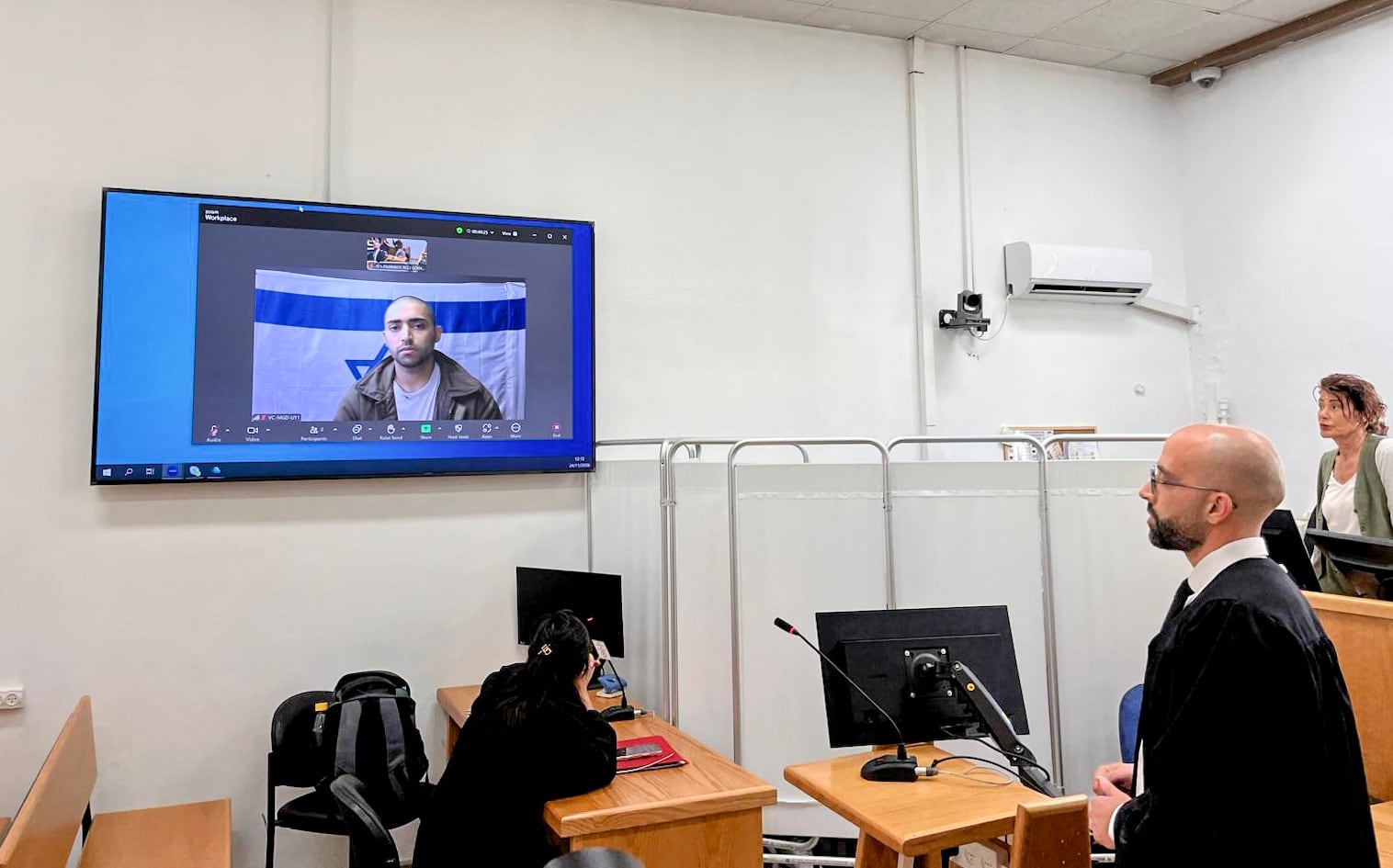
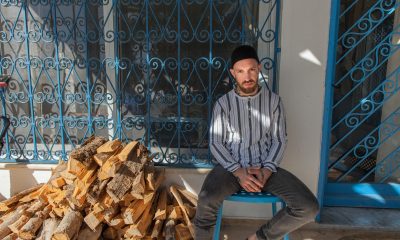
Mahdi Tunsi, a 26-year-old Palestinian and a well-known left-wing activist who advocates for peaceful relations between Jews and Arabs, was at the student residence of the Hebrew University of Jerusalem, where he is studying Sociology and Criminology, when Israeli security forces entered and took him away under arrest.
That was 17 days ago, and the student remains in administrative detention, a controversial legal mechanism that allows Israeli authorities to extend a person’s detention for months, and even years, without trial or formal charges. That is why Tuesday’s hearing at the Jerusalem District Court was held behind closed doors. And that is why neither he nor his lawyer, Nasser Odeh, knows what he is accused of.
“He looked worse at this hearing,” his lawyer said afterward, with little else he could reveal because of the secrecy surrounding the case. “I can’t share information even with the family,” he lamented.
So far, the authorities have disclosed only that he is suspected of “conspiracy to commit a terrorist act.” The intelligence services have submitted, in writing and in a closed proceeding, the reasons they want his detention extended by six months. The judge is expected to rule on the request in the coming days. On Tuesday, she rejected a request to allow the university and diplomats to present their views.
The press was allowed into the courtroom for only a minute on Tuesday, before the hearing began, enabling reporters to see him on a video screen with a serious and exhausted expression. His hair and beard were completely shaved off, whereas he had previously worn them long, and he was not wearing his glasses, despite the judge having ordered the prison service to return them to him.
Speaking from Israel’s Megiddo Prison, with an Israeli flag visible in the background, he appeared from a wing where scabies has broken out among inmates. The prison, under the authority of ultranationalist National Security Minister Itamar Ben-Gvir, has become more a place of mistreatment than incarceration, according to critics.
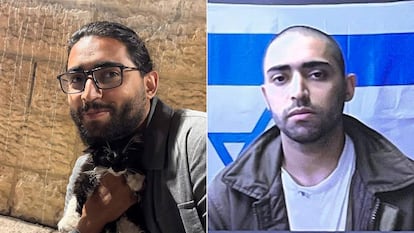
On Tuesday, Tunsi’s lawyer said that a doctor had seen him in prison but had not provided any medication. The Palestinian detainee described a violent arrest, even though police told the university that the operation had been carried out without incident.
Maysam, his 21-year-old sister, was also barred from attending the hearing. Waiting outside the courtroom, visibly nervous and with tears in her eyes, she told reporters: “They took him from the heart of the university […] There are no charges against him. He’s simply someone who loves studying. He should be finishing his degree, not sitting in prison.”
The arrest took place on November 8. His family and friends only learned what had happened the following afternoon, when they contacted the police to report him missing. Neither the security forces nor the university informed them. Police had obtained a detention order based on terrorism-related suspicions that was due to expire within a week, after which he would have been released.
But the Shin Bet, Israel’s domestic intelligence agency operating in Israel and the occupied Palestinian territories, stepped in and requested his administrative detention. His lawyer explained that questioning focused less on any alleged offence than on his political activism on campus and his involvement with various left-wing groups, chiefly the Standing Together movement.
The court extended his detention without charge until last Sunday, but the intelligence services failed to send a representative to the hearing, so the proceedings were postponed until Tuesday. The profile of those attending reflected the growing attention the case has attracted, including European diplomats and Ofer Cassif, the only Jewish lawmaker among the 11 parliamentarians elected on the Arab Joint List in the October elections.
Tunsi is far from the only administrative detainee. According to figures from the Israel Prison Service published by the human rights organisation Hamoked, there are another 3,100 such detainees in the West Bank. A further 1,320 people are being held under the category of “unlawful combatants,” a designation created specifically for Gazans. The use of administrative detention against Jewish Israelis was already rare, but Defence Minister Israel Katz has now banned it altogether, at a time when violence by Jewish settlers is at unprecedented levels.
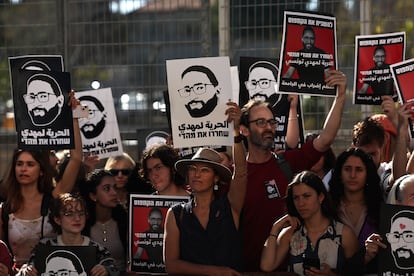
In little more than two weeks, however, the case has become a symbol. Around 150 people, both Jewish and Arab, gathered outside the courthouse on Tuesday carrying banners and chanting slogans such as “Stop political persecution,” “Freedom for Mahdi,” and “Argentina 1976 is happening here.” The day before, about 200 students had protested against his arrest on the Jerusalem campus where it took place, facing a small counter-demonstration by right-wing activists. Similar protests were held at Tel Aviv University and the University of Haifa.
Unlike Palestinians in the West Bank, who are the usual targets of administrative detention, Tunsi is also a Jerusalem resident, giving him a different legal status: that of a permanent resident with freedom of movement throughout Israeli-controlled territory.
As the case has drawn increasing attention, so too has the controversy over the role of the Hebrew University. Some critics accuse the institution of failing to prevent the arrest. Others fault it for changing its account of events, initially saying it had no knowledge of the operation and later stating that it had been informed “minutes beforehand,” as well as for waiting 10 days before issuing a carefully worded statement of clarification.
“It’s a disgrace,” lawmaker Ofer Cassif said at the court. “It cannot be that students at an academic institution are afraid of what might happen to them if they speak out against the government. This is a situation we have seen before during dictatorships in Latin America and in Spain.”
Last week, the Israeli Sociological Society said it was “horrified” by the detention and urged the heads of the country’s universities to “act to ensure that campuses and student residences remain safe and protected spaces.” Professors at the Faculty of Law issued a separate letter expressing their “concern” that the detention appeared to be linked to the student’s “public activity,” which “includes the expression of views critical of government policies.”
He went on to argue that the campus where the arrest took place, on Mount Scopus, is “probably the most complex on the planet” because of its mix of Israeli and Palestinian students and the sensitivities involved. “This requires a great deal of common sense. Our campus is in a very fragile and delicate situation, on the verge of an explosion.”
Noa Dagoni, executive director of Ir Amim, an NGO focused on the impact of the conflict on Jerusalem, attended Tuesday’s hearing in solidarity with Tunsi, who had served as a guide on tours the organization ran in his neighborhood of Silwan. She is not surprised that a Palestinian involved in Jewish-Arab activism was detained.
“That kind of activism is what frightens the government most,” she told EL PAÍS. “It is the political potential for change that can emerge from that interaction.”
Dagoni sees the arrest as part of two overlapping waves of repression. The first began in October 2023, when the Hamas attack triggered what she describes as a collective criminalization of Palestinians, including those with Israeli citizenship. The second has unfolded in recent weeks, fuelled by incitement from Benjamin Netanyahu’s government following the strong electoral showing of its allies in last month’s elections.
On November 3, police arrested Abed Abu Shehadeh, a Palestinian journalist and activist with Israeli citizenship, at his home in Jaffa, near Tel Aviv. Five days later, he was released without charge and without ever appearing before a court.
Sign up for our weekly newsletter to get more English-language news coverage from EL PAÍS USA Edition



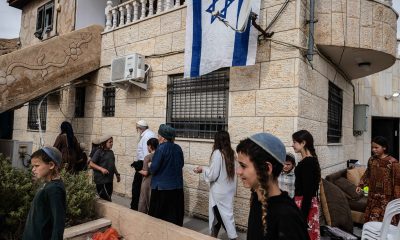








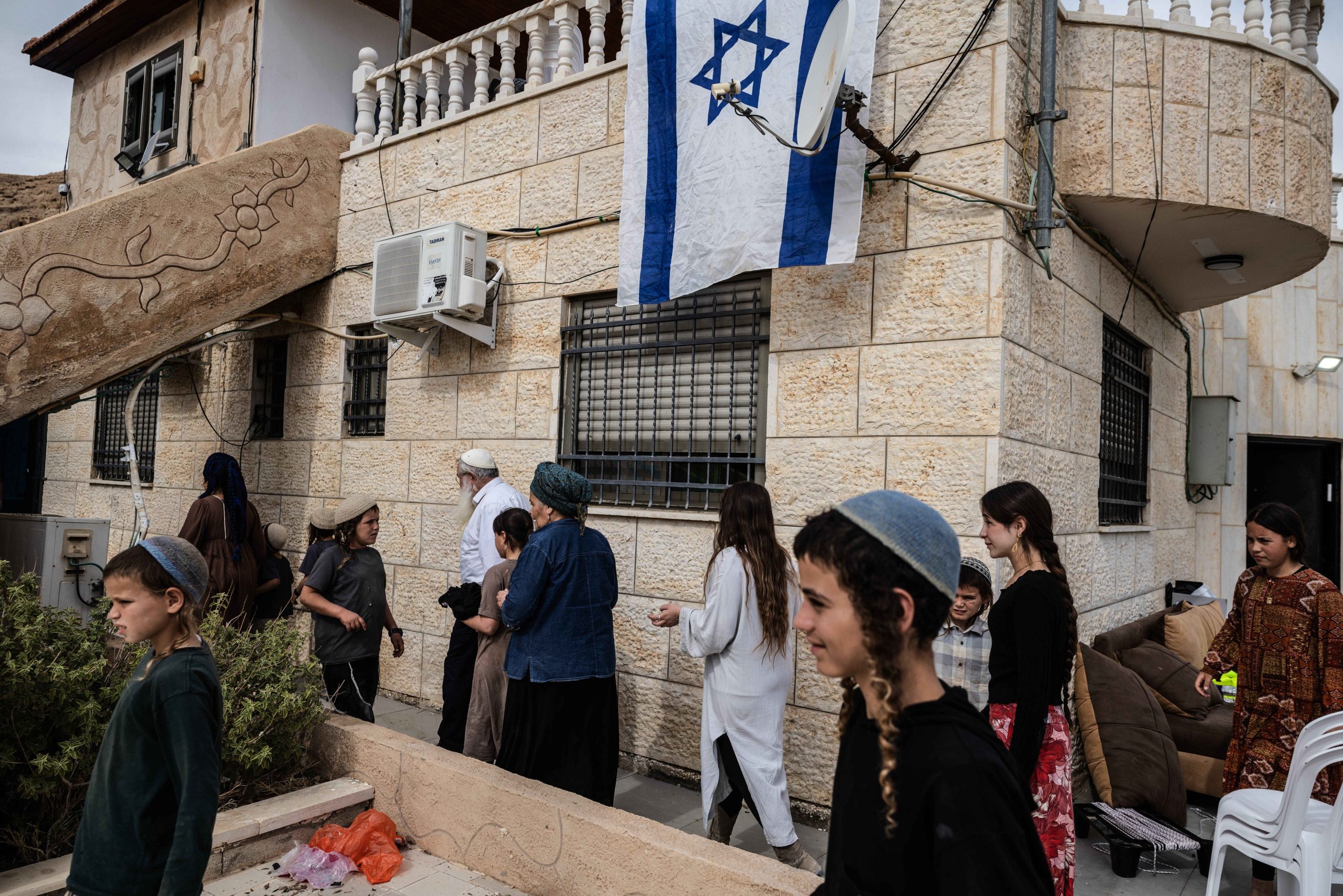
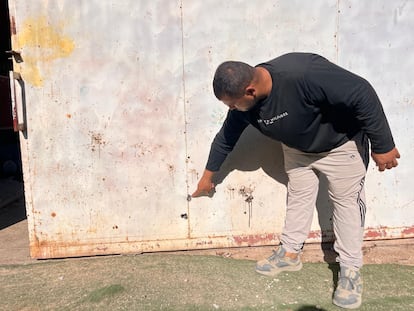
Ahmed Fheidat shows the bullet holes in the metal gate that gives access to his sister-in-law Fada’s house in Ein al Duyuk al Tahta. It is a neighborhood on the outskirts of the Palestinian city of Jericho that, for the past two weeks, has had new and unwanted neighbors: radical Israeli settlers who have just occupied eight houses about a five-minute walk away. The holes, he says, are from shots the settlers fired at him on Monday night when he was dragging Fada — 10 years older and bleeding from another gunshot wound — into the house. He recalls it with one leg bandaged, the result of the bullet that did hit him.
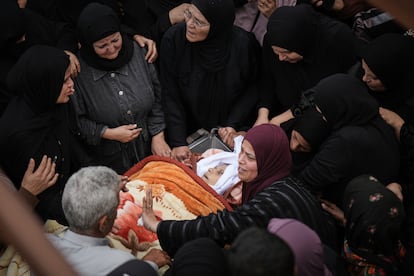
His sister-in-law was not so lucky. A bullet to the head made her the first person killed in the latest drive by Israel’s settlement movement to push ever deeper into the West Bank and ever closer to its major cities, with Jericho the newest frontier. Settlers call it “erasing the lines” or “expanding the line of friction” with Palestinians. Here, on Wednesday, it leaves the two sides separated by only a few hundred meters: settlers encouraged by institutional support, and Palestinian women grieving for Fada in a dimly lit home.
The new settlement, backed by Nachala, an organization that promotes Jewish settlement in Gaza, the West Bank, Lebanon and Syria, lies on the edge of Area C, the two-thirds of the West Bank under full Israeli control. This Wednesday, its newest residents demonstrated who really holds power by threatening a group of journalists and activists into leaving the vicinity of the occupied homes, wielding no legal authority other than that conferred by their weapons and the complicity of the Israeli soldiers watching the scene.
“I’m an Israeli citizen. Why can’t I be here while you can?” one activist challenged a settler in Hebrew.
“That’s for the soldiers to decide,” the settler replied, fully aware of which of the two would be driven away.
Fada Fheidat died a few hundred meters from those houses. A stone’s throw away, but already in Area A of the West Bank, where the Palestinian National Authority formally holds administrative and security control, and where Israel prohibits its citizens from entering.
Israeli authorities described the events as an attempted Palestinian “terror attack” by vehicle ramming. The army justified Fada’s death by saying a group of Palestinians was throwing stones at the Israelis and one of the settlers fired in self-defense. Four other Palestinians were wounded by gunfire, and no Israelis were arrested.
Arafat, the victim’s son, was instead pulled from the ambulance by the army and arrested, Ahmed says. He is accused of the purported “terrorist” ramming. Locals insist he drove at high speed after learning his mother was being attacked and that the settlers were outside the car he struck. Three of them suffered minor injuries. The Israeli army has not released footage of the incident.
Witnesses describe it as yet another provocation by the settlers, this time with a fatal outcome. Ahmed says several settlers insulted him on the main road, just a few dozen meters from the house, at a side street. “I said to him, ‘Shame on you. I’m 60 years old, you’re the age of my grandson, and you’re insulting me?’” He says they then tried to run over an 18-year-old relative, Abdala.
The confrontation eventually spilled over to a nearby car wash, where more and more armed settlers began to gather. That was when the two brothers-in-law went to see what was happening. “They began shooting heavily […] I shouted at them in Hebrew: ‘Stop, we don’t want trouble,’” he recalls. When he heard people shouting, “They’ve killed Grandma!”, he turned toward Fada and put his hand on the back of her head — he recalls — “it was covered in blood.”
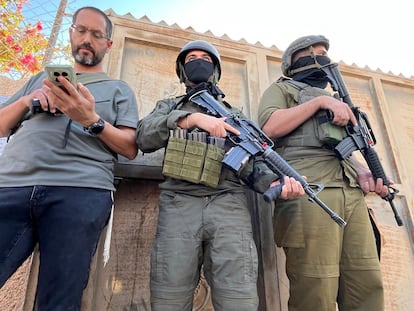
No Palestinians opened fire. The settlers, by contrast, were carrying M16 rifles, pepper spray and bats, according to eyewitnesses.
They have both long and short firearms because they are mobilized as local reserve units and live in an area where Israel allows civilians to obtain firearms permits. Some of their vehicles are also provided by the Ministry of Settlements and National Missions, headed by another far-right politician, Orit Strook, and by the World Zionist Organization.
The Netanyahu government has also allocated 20 million shekels (about $6.1 million) to develop the Hasmonean palaces — dating from the first and second centuries BCE and adjacent to the new settlement — and in March issued a military order (theoretically reserved for urgent needs) to seize a strip of land that would allow access to the archaeological site without passing through Jericho, which is in Area A and home to about 20,000 Palestinians.
One of Netanyahu’s ultranationalist ministers and the real strongman in the West Bank, Bezalel Smotrich, visited the settlers on Tuesday. He praised the “excellent work” of the soldiers protecting them, pledged to “continue strengthening settlement presence” and described the new colony as a kind of historical redress for the “damned Oslo Accords” (which granted Palestinians limited self-rule), noting that the first two places where the Palestinian flag flew were Jericho and Gaza. Najalá’s veteran president, Daniela Weiss, insisted on the importance of colonizing both territories: first Jericho, then Gaza.
It is not just government support. The settlers entered the houses on November 4. They claim to have bought them, a claim under investigation by the Palestinian National Authority, which forbids such purchases. According to Haaretz, the head of the army’s Central Command, Avi Bluth (who was born and received his military training in a Jewish settlement), met with the group the day before. He instructed them not to inform local military commanders until after they had established themselves on the site.
Bluth is the same officer responsible for operations in the West Bank who, in May, acknowledged during a private forum that the army was killing Palestinians “at a rate not seen since 1967,” when Israel occupied the territory during the Six-Day War. He also said that troops had opened fire on 42 Palestinians for throwing stones, but never on Jews who did the same because doing so would carry “serious social consequences.”

For that reason, Yael Sela, an activist with the Palestinian Solidarity Cooperative, which organized the visit to the site together with the Israeli human rights group B’Tselem, describes the Jericho case as a “microcosm of the ethnic cleansing taking place in the West Bank,” because it contains all its elements. There is the “exploitation” of archaeology tied to Jewish history, given the proximity of the Hasmonean palaces; the seizure of territory; and “the cooperation between settlers and the army and the rest of the state’s arms.” “And now, the murder,” she says.
Local residents stress the same point. The first killing occurred on Monday, but they say they have been subjected to constant harassment for months by a settlement farm, a newer form of settlement expansion that allows settlers to take control of larger tracts of land without requiring a large population. It was established in 2024 by prominent settler leader Hanan Herbst.
Originally known as Havat Armonot, it was renamed Daya in April, when the Netanyahu government granted it legal status under Israeli law, along with around a hundred other outposts. Under international law, however, all Israeli settlements are considered illegal.
Demolitions
The problems began in February, when dozens of settlers attacked residents and, according to their accounts at the time, stole agricultural vehicles and cash. More significantly, they did something that, in theory, falls under the authority of the military: they demolished 13 homes with an excavator brought from Havat Armonot.
Several houses in the area are under demolition orders. However, enforcement is the responsibility of a military body, the Civil Administration, and some of the orders had been frozen by the Supreme Court. Israel considers the structures illegal because they lack permits that Palestinians are rarely granted, even as it promotes and legalizes the construction and expansion of Jewish settlements in the same territory.
That day, another far-right minister, Amihai Eliyahu, who heads the Heritage Ministry, posted a video on Facebook showing himself raising the Israeli flag over the ruins of the Hasmonean Palaces. “We will destroy everything that has been built on the heritage of the Jewish people […] Everyone knows this is our land,” he says in the video.
Mohamed Salah says the name Hanan Herbst 18 times in eight minutes. He stresses that he does not know him personally and has nothing against him, sounding torn between conciliation and anger after being forced four months ago to move to Bethlehem, abandoning his home in Ein al Duyuk al-Tahta, fed up with settler harassment. “We reached a point where our children were in danger. They had stolen our house and broken the cameras [the surveillance systems],” he says. “Our lives have no value. Not even our presence here has value. Today, the Israeli army has no authority over Hanan. He is the law here.”
Sign up for our weekly newsletter to get more English-language news coverage from EL PAÍS USA Edition

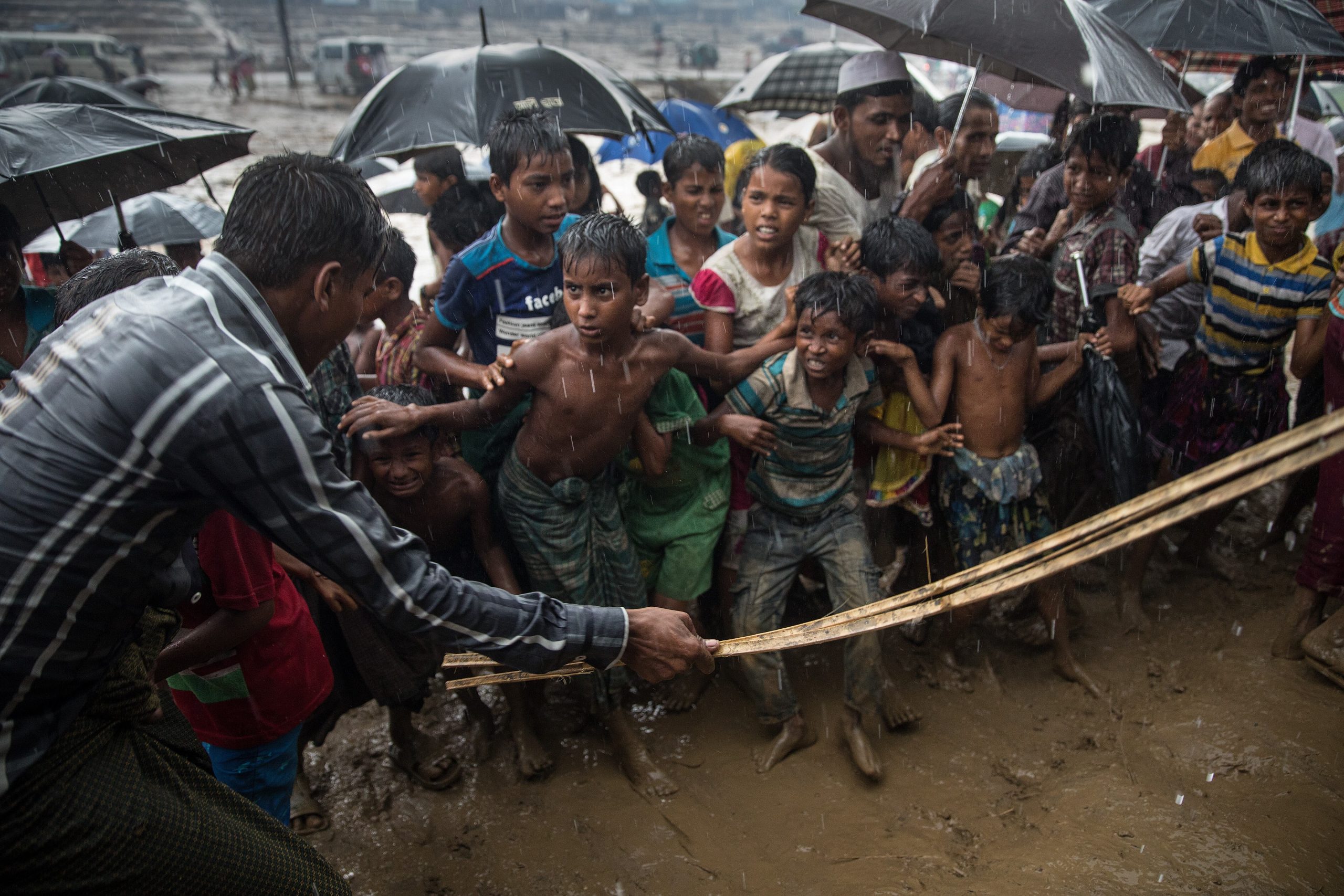
Genocide is considered the crime of crimes. However, its path through international justice has been tortuous. Under the 1948 Convention on the Prevention and Punishment of the Crime of Genocide, ratified by 153 states — including Israel — the crime is defined as the “intent to destroy, in whole or in part, a national, ethnical, racial or religious group.”
The Convention’s definition, which emerged from lengthy negotiations among countries after World War II, is stricter and harder to apply than the one coined by the word’s inventor, Polish jurist Raphael Lemkin, who sought a new concept to define Nazi crimes. The jurisprudence developed by international justice since then has made a conviction even more difficult.
So far no state has ever been convicted of genocide, although dozens of individuals have been found guilty by international tribunals — such as those for Rwanda and the former Yugoslavia — and by national courts in universal jurisdiction cases, for example in Belgium. It took 50 years after the Convention’s adoption for a person to be legally deemed a génocidaire: Rwandan Jean-Paul Akayesu, mayor of Taba, tried by the International Criminal Tribunal for Rwanda and convicted in 1998. Of all the massacres during the wars in the former Yugoslavia, only Srebrenica — where 8,000 Bosnian Muslim men and boys were killed by Serbian ultranationalists in the summer of 1995 — was judged to be genocide.
That is why the ruling the International Court of Justice (ICJ) in The Hague plans to announce on November 19 regarding Gambia’s complaint against Myanmar for the ethnic cleansing of the Rohingya — a Muslim minority — is so important. If this UN court, which hears disputes between states, finds that the acts amount to genocide, it would create jurisprudence that could affect the next case the ICJ must rule on, as yet not scheduled: South Africa’s complaint accusing Israel of genocide in Gaza.
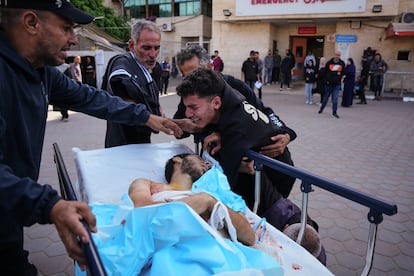
A jurist and international law expert familiar with the process described himself as “moderately optimistic” and, above all, acknowledged the influence this case could have on what happens with Israel. The ICJ ordered Israel in 2024 to halt its offensive in Gaza because of the territory’s “catastrophic humanitarian situation” and to allow investigation of the genocide allegation. The government of Benjamin Netanyahu has done neither.
Lemkin (1900–1959), of Jewish origin, coined a new word to try to define the Nazi horrors of World War II, blending the Greek genos — tribe or people — with the Latin –cidium — killing. Around the same time, as Philippe Sands recounts in East West Street, Hersch Lauterpacht, another jurist who studied in the same city as Lemkin, Lviv (now in Ukraine), coined the concept of crimes against humanity, which punishes the murder of individuals, as opposed to genocide, which punishes the destruction of a collectivity.
Lemkin spent his life pushing for the concept to be incorporated into international justice, without fully succeeding: at the Nuremberg trials, genocide appeared in the indictments but not in the verdicts, so technically the top Nazi leaders were never convicted of genocide, even though their crimes — and the mass killings of Armenians by the Ottoman Empire — forced the search for a new concept to define the abysses of horror into which humanity had fallen.
When Lemkin first used the term in his book Axis Rule in Occupied Europe, written in 1943 and published in 1944, Auschwitz was still an occupied Polish town, not yet a synonym for the industrial extermination of human beings. In his book the jurist writes about Jews but also about other peoples deported and persecuted by the Nazis, such as Slovenes. His concern was not only physical murder but “the destruction of the economic foundations of a national group,” as he explains in the chapter devoted to the term in his essay.
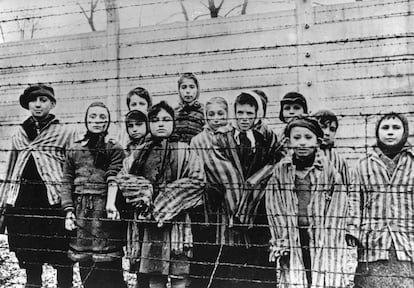
After World War II, Lemkin campaigned for the international community to adopt the concept, hoping humanity would learn the lesson of the Holocaust and Nazism. Thus the Convention on the Prevention and Punishment of the Crime of Genocide was born, and it was far more restrictive than his ideas. Because the USSR took part in the negotiations, it pushed especially for the inclusion of the notion of an ethnic group so that it could not be accused over Stalin’s crimes. Franco’s dictatorship, for example, signed the convention in 1968, at a time when the fascist regime was seeking to win a place in the international community.
The convention text defines genocide as: “any of the following acts committed with intent to destroy, in whole or in part, a national, ethnical, racial or religious group, as such: (a) Killing members of the group; (b) Causing serious bodily or mental harm to members of the group; (c) Deliberately inflicting on the group conditions of life calculated to bring about its physical destruction in whole or in part; (d) Imposing measures intended to prevent births within the group; (e) Forcibly transferring children of the group to another group.” Proving intent has never been easy, and international jurisprudence has made it even harder.
Philippe Sands explained those difficulties in an article in the magazine Le Grand Continent. Under the title On the Concept of Genocide, the jurist and writer noted that in the precedent involving Serbia — accused by Croatia and Bosnia of genocide — the ICJ leaned toward finding genocide only when mass killings were not accompanied by other military operations. If mass killings occur during an offensive, they would be treated as war crimes and crimes against humanity, not genocide. Another question is whether degrees of horror should be ranked: Sands insists there is no scale of barbarism and that genocide is not worse than crimes against humanity.
Serbia, therefore, was not convicted of genocide, but of failing to prevent it in Srebrenica. “If there are two possible motives for committing an offense, it is not easy to qualify it as a crime of genocide,” Sands explained. Even intent alone is not always sufficient to secure a conviction.
So far, various tribunals have found genocide in crimes committed in Rwanda and in Cambodia under the Khmer Rouge regime — during which nearly a third of the country’s population was exterminated — as well as in Srebrenica, in Bosnia and Herzegovina. For many jurists it is highly significant that the International Criminal Court — also based in The Hague but different from the ICJ, because it tries individuals, not states — ordered the arrest of Netanyahu for war crimes and crimes against humanity, but not for genocide, at least to date.
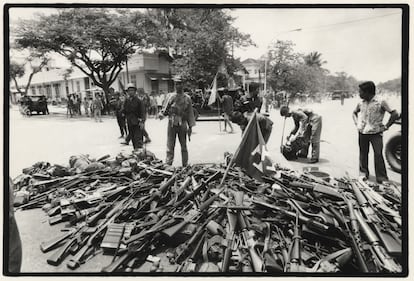
Historians and jurists — and even states such as Germany in the case of the Herero and Namaqua peoples in early 20th-century Namibia — expand the list of 20th-century genocides considerably, starting, of course, with the Jewish Holocaust and the extermination of the Armenians (which Turkey does not recognize). But the authority of a ruling by an international court is undeniable.
Sign up for our weekly newsletter to get more English-language news coverage from EL PAÍS USA Edition


Andy Taylor: Duran Duran Guitarist Dies Aged 65
‘Guiri tax’ in Spain: expats claim they are charged more for being foreigners

Canaries Migrant Crisis At Emergency Level


-

 New Developments4 weeks ago
Luxury Villas For Sale, Estepona – ProjectL1
-

 New Developments3 weeks ago
The San Roque Club – Townhouses For Sale
-
countryside4 weeks ago
Rural revival: Five Almeria villages make moving inland easier and more enticing
-
costa blanca live music3 weeks ago
Beatles tribute: The Liverpool Band returns to Orihuela Costa
-

 New Developments3 weeks ago
Stylish 3-Bedroom Apartment With Panoramic Sea Views – Benalmádena
-

 America3 weeks ago
Así Ha Sido La Primera Jornada Del World In Progress 2026: Del Anuncio De Sánchez De Ayudas Para Las Víctimas De Urda A La Reivindicación De Rebeca Grynspan Del Papel De La ONU
-
All Saints4 weeks ago
Driving to Andalucía this weekend? DGT warns of extra traffic after train crash
-
Eating out in Gibraltar4 weeks ago
Young woman left horrified after Gibraltar restaurant receipt carries shocking racist slur