
Benjamin Netanyahu
Israeli Settlement Drive Reaches Jericho’s Doorstep

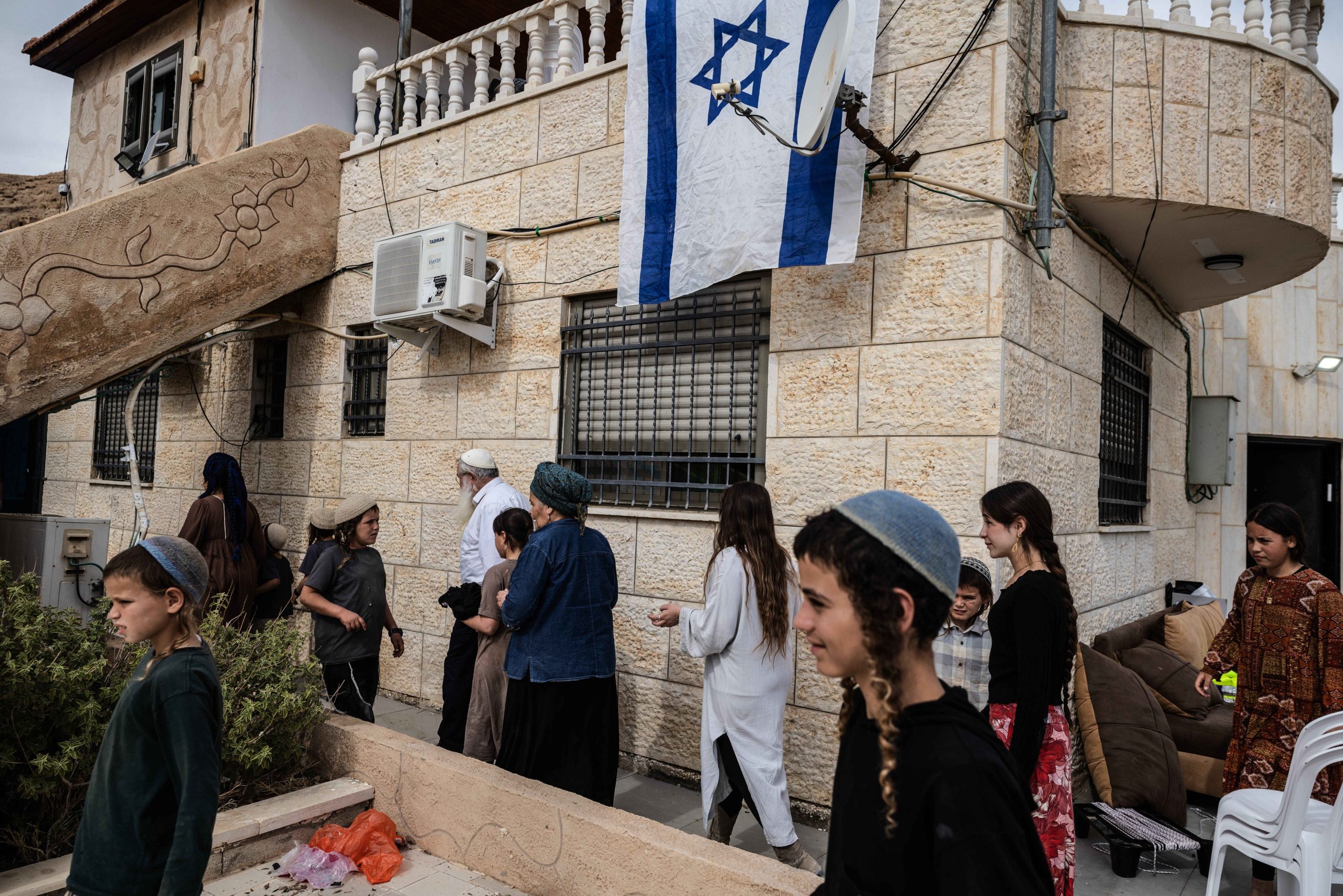
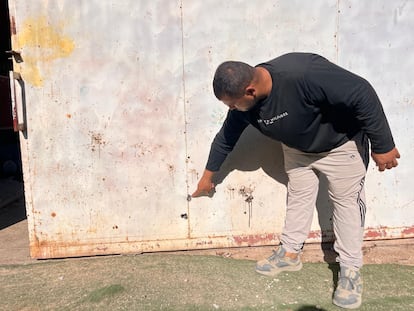
Ahmed Fheidat shows the bullet holes in the metal gate that gives access to his sister-in-law Fada’s house in Ein al Duyuk al Tahta. It is a neighborhood on the outskirts of the Palestinian city of Jericho that, for the past two weeks, has had new and unwanted neighbors: radical Israeli settlers who have just occupied eight houses about a five-minute walk away. The holes, he says, are from shots the settlers fired at him on Monday night when he was dragging Fada — 10 years older and bleeding from another gunshot wound — into the house. He recalls it with one leg bandaged, the result of the bullet that did hit him.
His sister-in-law was not so lucky. A bullet to the head made her the first person killed in the latest drive by Israel’s settlement movement to push ever deeper into the West Bank and ever closer to its major cities, with Jericho the newest frontier. Settlers call it “erasing the lines” or “expanding the line of friction” with Palestinians. Here, on Wednesday, it leaves the two sides separated by only a few hundred meters: settlers encouraged by institutional support, and Palestinian women grieving for Fada in a dimly lit home.
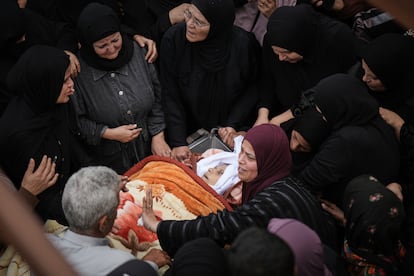
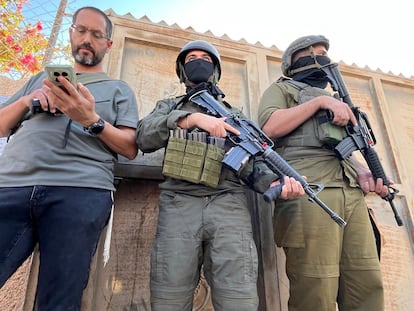
The new settlement, backed by Nachala, an organization that promotes Jewish settlement in Gaza, the West Bank, Lebanon and Syria, lies on the edge of Area C, the two-thirds of the West Bank under full Israeli control. This Wednesday, its newest residents demonstrated who really holds power by threatening a group of journalists and activists into leaving the vicinity of the occupied homes, wielding no legal authority other than that conferred by their weapons and the complicity of the Israeli soldiers watching the scene.
“I’m an Israeli citizen. Why can’t I be here while you can?” one activist challenged a settler in Hebrew.
“That’s for the soldiers to decide,” the settler replied, fully aware of which of the two would be driven away.
Fada Fheidat died a few hundred meters from those houses. A stone’s throw away, but already in Area A of the West Bank, where the Palestinian National Authority formally holds administrative and security control, and where Israel prohibits its citizens from entering.
Israeli authorities described the events as an attempted Palestinian “terror attack” by vehicle ramming. The army justified Fada’s death by saying a group of Palestinians was throwing stones at the Israelis and one of the settlers fired in self-defense. Four other Palestinians were wounded by gunfire, and no Israelis were arrested.
Arafat, the victim’s son, was instead pulled from the ambulance by the army and arrested, Ahmed says. He is accused of the purported “terrorist” ramming. Locals insist he drove at high speed after learning his mother was being attacked and that the settlers were outside the car he struck. Three of them suffered minor injuries. The Israeli army has not released footage of the incident.
Witnesses describe it as yet another provocation by the settlers, this time with a fatal outcome. Ahmed says several settlers insulted him on the main road, just a few dozen meters from the house, at a side street. “I said to him, ‘Shame on you. I’m 60 years old, you’re the age of my grandson, and you’re insulting me?’” He says they then tried to run over an 18-year-old relative, Abdala.
The confrontation eventually spilled over to a nearby car wash, where more and more armed settlers began to gather. That was when the two brothers-in-law went to see what was happening. “They began shooting heavily […] I shouted at them in Hebrew: ‘Stop, we don’t want trouble,’” he recalls. When he heard people shouting, “They’ve killed Grandma!”, he turned toward Fada and put his hand on the back of her head — he recalls — “it was covered in blood.”
No Palestinians opened fire. The settlers, by contrast, were carrying M16 rifles, pepper spray and bats, according to eyewitnesses.
They have both long and short firearms because they are mobilized as local reserve units and live in an area where Israel allows civilians to obtain firearms permits. Some of their vehicles are also provided by the Ministry of Settlements and National Missions, headed by another far-right politician, Orit Strook, and by the World Zionist Organization.
The Netanyahu government has also allocated 20 million shekels (about $6.1 million) to develop the Hasmonean palaces — dating from the first and second centuries BCE and adjacent to the new settlement — and in March issued a military order (theoretically reserved for urgent needs) to seize a strip of land that would allow access to the archaeological site without passing through Jericho, which is in Area A and home to about 20,000 Palestinians.
One of Netanyahu’s ultranationalist ministers and the real strongman in the West Bank, Bezalel Smotrich, visited the settlers on Tuesday. He praised the “excellent work” of the soldiers protecting them, pledged to “continue strengthening settlement presence” and described the new colony as a kind of historical redress for the “damned Oslo Accords” (which granted Palestinians limited self-rule), noting that the first two places where the Palestinian flag flew were Jericho and Gaza. Najalá’s veteran president, Daniela Weiss, insisted on the importance of colonizing both territories: first Jericho, then Gaza.
It is not just government support. The settlers entered the houses on November 4. They claim to have bought them, a claim under investigation by the Palestinian National Authority, which forbids such purchases. According to Haaretz, the head of the army’s Central Command, Avi Bluth (who was born and received his military training in a Jewish settlement), met with the group the day before. He instructed them not to inform local military commanders until after they had established themselves on the site.
Bluth is the same officer responsible for operations in the West Bank who, in May, acknowledged during a private forum that the army was killing Palestinians “at a rate not seen since 1967,” when Israel occupied the territory during the Six-Day War. He also said that troops had opened fire on 42 Palestinians for throwing stones, but never on Jews who did the same because doing so would carry “serious social consequences.”

For that reason, Yael Sela, an activist with the Palestinian Solidarity Cooperative, which organized the visit to the site together with the Israeli human rights group B’Tselem, describes the Jericho case as a “microcosm of the ethnic cleansing taking place in the West Bank,” because it contains all its elements. There is the “exploitation” of archaeology tied to Jewish history, given the proximity of the Hasmonean palaces; the seizure of territory; and “the cooperation between settlers and the army and the rest of the state’s arms.” “And now, the murder,” she says.
Local residents stress the same point. The first killing occurred on Monday, but they say they have been subjected to constant harassment for months by a settlement farm, a newer form of settlement expansion that allows settlers to take control of larger tracts of land without requiring a large population. It was established in 2024 by prominent settler leader Hanan Herbst.
Originally known as Havat Armonot, it was renamed Daya in April, when the Netanyahu government granted it legal status under Israeli law, along with around a hundred other outposts. Under international law, however, all Israeli settlements are considered illegal.
Demolitions
The problems began in February, when dozens of settlers attacked residents and, according to their accounts at the time, stole agricultural vehicles and cash. More significantly, they did something that, in theory, falls under the authority of the military: they demolished 13 homes with an excavator brought from Havat Armonot.
Several houses in the area are under demolition orders. However, enforcement is the responsibility of a military body, the Civil Administration, and some of the orders had been frozen by the Supreme Court. Israel considers the structures illegal because they lack permits that Palestinians are rarely granted, even as it promotes and legalizes the construction and expansion of Jewish settlements in the same territory.
That day, another far-right minister, Amihai Eliyahu, who heads the Heritage Ministry, posted a video on Facebook showing himself raising the Israeli flag over the ruins of the Hasmonean Palaces. “We will destroy everything that has been built on the heritage of the Jewish people […] Everyone knows this is our land,” he says in the video.
Mohamed Salah says the name Hanan Herbst 18 times in eight minutes. He stresses that he does not know him personally and has nothing against him, sounding torn between conciliation and anger after being forced four months ago to move to Bethlehem, abandoning his home in Ein al Duyuk al-Tahta, fed up with settler harassment. “We reached a point where our children were in danger. They had stolen our house and broken the cameras [the surveillance systems],” he says. “Our lives have no value. Not even our presence here has value. Today, the Israeli army has no authority over Hanan. He is the law here.”
Sign up for our weekly newsletter to get more English-language news coverage from EL PAÍS USA Edition













Genocide is considered the crime of crimes. However, its path through international justice has been tortuous. Under the 1948 Convention on the Prevention and Punishment of the Crime of Genocide, ratified by 153 states — including Israel — the crime is defined as the “intent to destroy, in whole or in part, a national, ethnical, racial or religious group.”
The Convention’s definition, which emerged from lengthy negotiations among countries after World War II, is stricter and harder to apply than the one coined by the word’s inventor, Polish jurist Raphael Lemkin, who sought a new concept to define Nazi crimes. The jurisprudence developed by international justice since then has made a conviction even more difficult.
So far no state has ever been convicted of genocide, although dozens of individuals have been found guilty by international tribunals — such as those for Rwanda and the former Yugoslavia — and by national courts in universal jurisdiction cases, for example in Belgium. It took 50 years after the Convention’s adoption for a person to be legally deemed a génocidaire: Rwandan Jean-Paul Akayesu, mayor of Taba, tried by the International Criminal Tribunal for Rwanda and convicted in 1998. Of all the massacres during the wars in the former Yugoslavia, only Srebrenica — where 8,000 Bosnian Muslim men and boys were killed by Serbian ultranationalists in the summer of 1995 — was judged to be genocide.
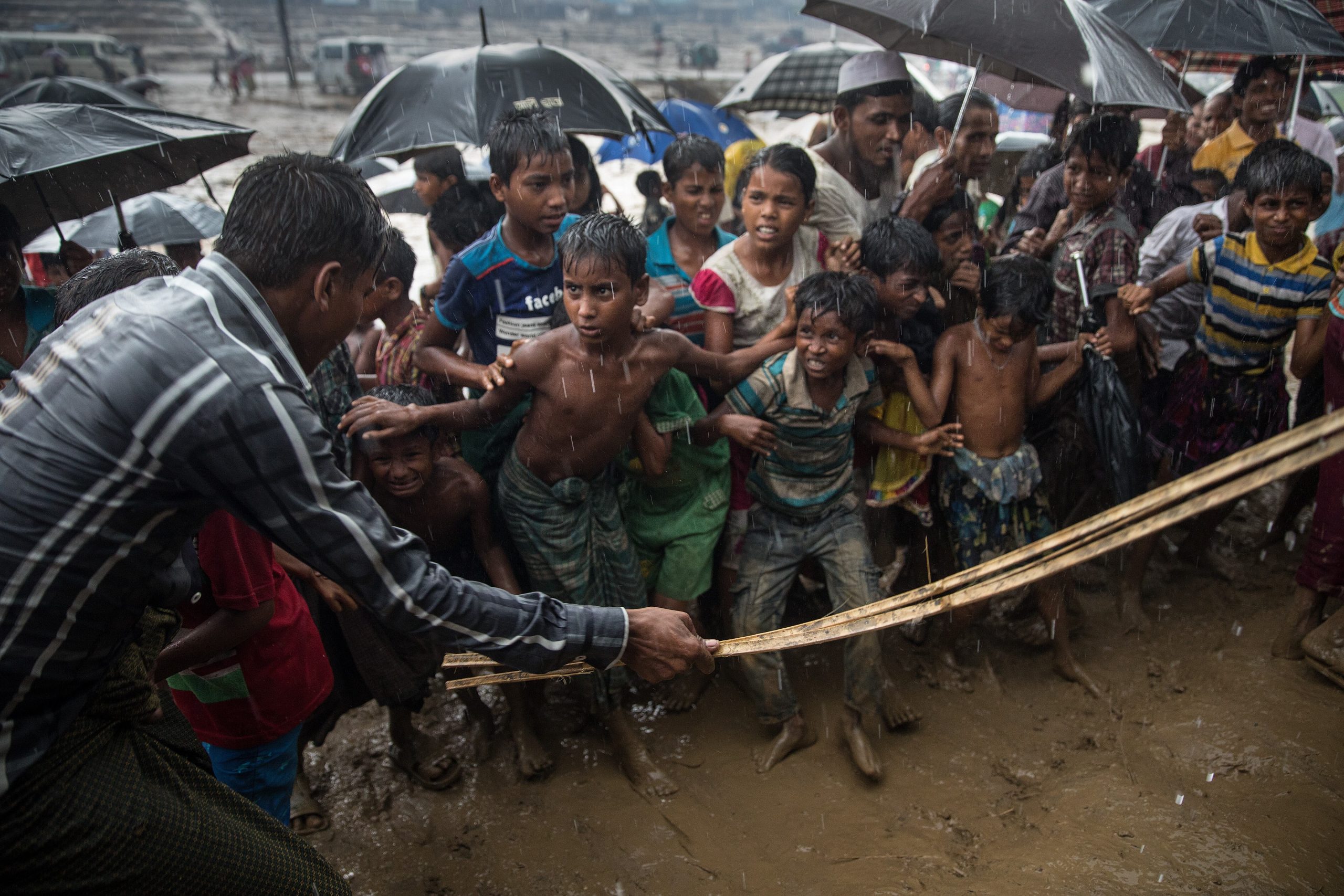
That is why the ruling the International Court of Justice (ICJ) in The Hague plans to announce on November 19 regarding Gambia’s complaint against Myanmar for the ethnic cleansing of the Rohingya — a Muslim minority — is so important. If this UN court, which hears disputes between states, finds that the acts amount to genocide, it would create jurisprudence that could affect the next case the ICJ must rule on, as yet not scheduled: South Africa’s complaint accusing Israel of genocide in Gaza.
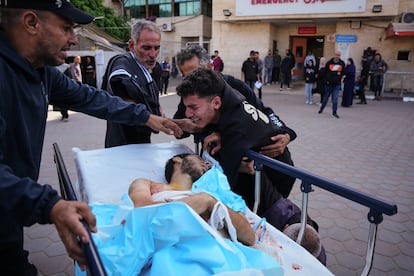
A jurist and international law expert familiar with the process described himself as “moderately optimistic” and, above all, acknowledged the influence this case could have on what happens with Israel. The ICJ ordered Israel in 2024 to halt its offensive in Gaza because of the territory’s “catastrophic humanitarian situation” and to allow investigation of the genocide allegation. The government of Benjamin Netanyahu has done neither.
Lemkin (1900–1959), of Jewish origin, coined a new word to try to define the Nazi horrors of World War II, blending the Greek genos — tribe or people — with the Latin –cidium — killing. Around the same time, as Philippe Sands recounts in East West Street, Hersch Lauterpacht, another jurist who studied in the same city as Lemkin, Lviv (now in Ukraine), coined the concept of crimes against humanity, which punishes the murder of individuals, as opposed to genocide, which punishes the destruction of a collectivity.
Lemkin spent his life pushing for the concept to be incorporated into international justice, without fully succeeding: at the Nuremberg trials, genocide appeared in the indictments but not in the verdicts, so technically the top Nazi leaders were never convicted of genocide, even though their crimes — and the mass killings of Armenians by the Ottoman Empire — forced the search for a new concept to define the abysses of horror into which humanity had fallen.
When Lemkin first used the term in his book Axis Rule in Occupied Europe, written in 1943 and published in 1944, Auschwitz was still an occupied Polish town, not yet a synonym for the industrial extermination of human beings. In his book the jurist writes about Jews but also about other peoples deported and persecuted by the Nazis, such as Slovenes. His concern was not only physical murder but “the destruction of the economic foundations of a national group,” as he explains in the chapter devoted to the term in his essay.
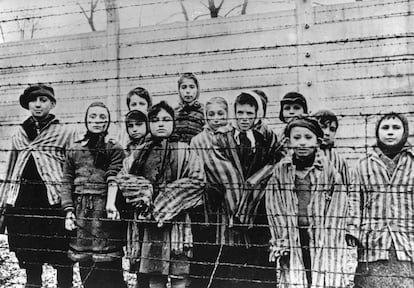
After World War II, Lemkin campaigned for the international community to adopt the concept, hoping humanity would learn the lesson of the Holocaust and Nazism. Thus the Convention on the Prevention and Punishment of the Crime of Genocide was born, and it was far more restrictive than his ideas. Because the USSR took part in the negotiations, it pushed especially for the inclusion of the notion of an ethnic group so that it could not be accused over Stalin’s crimes. Franco’s dictatorship, for example, signed the convention in 1968, at a time when the fascist regime was seeking to win a place in the international community.
The convention text defines genocide as: “any of the following acts committed with intent to destroy, in whole or in part, a national, ethnical, racial or religious group, as such: (a) Killing members of the group; (b) Causing serious bodily or mental harm to members of the group; (c) Deliberately inflicting on the group conditions of life calculated to bring about its physical destruction in whole or in part; (d) Imposing measures intended to prevent births within the group; (e) Forcibly transferring children of the group to another group.” Proving intent has never been easy, and international jurisprudence has made it even harder.
Philippe Sands explained those difficulties in an article in the magazine Le Grand Continent. Under the title On the Concept of Genocide, the jurist and writer noted that in the precedent involving Serbia — accused by Croatia and Bosnia of genocide — the ICJ leaned toward finding genocide only when mass killings were not accompanied by other military operations. If mass killings occur during an offensive, they would be treated as war crimes and crimes against humanity, not genocide. Another question is whether degrees of horror should be ranked: Sands insists there is no scale of barbarism and that genocide is not worse than crimes against humanity.
Serbia, therefore, was not convicted of genocide, but of failing to prevent it in Srebrenica. “If there are two possible motives for committing an offense, it is not easy to qualify it as a crime of genocide,” Sands explained. Even intent alone is not always sufficient to secure a conviction.
So far, various tribunals have found genocide in crimes committed in Rwanda and in Cambodia under the Khmer Rouge regime — during which nearly a third of the country’s population was exterminated — as well as in Srebrenica, in Bosnia and Herzegovina. For many jurists it is highly significant that the International Criminal Court — also based in The Hague but different from the ICJ, because it tries individuals, not states — ordered the arrest of Netanyahu for war crimes and crimes against humanity, but not for genocide, at least to date.
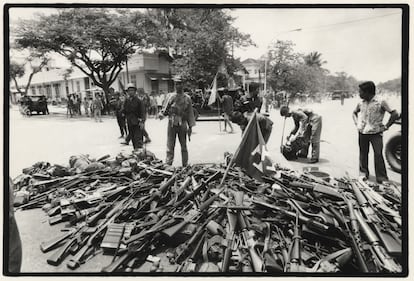
Historians and jurists — and even states such as Germany in the case of the Herero and Namaqua peoples in early 20th-century Namibia — expand the list of 20th-century genocides considerably, starting, of course, with the Jewish Holocaust and the extermination of the Armenians (which Turkey does not recognize). But the authority of a ruling by an international court is undeniable.
Sign up for our weekly newsletter to get more English-language news coverage from EL PAÍS USA Edition



El partido de Benjamín Netanyahu, el Likud, ha ganado las elecciones legislativas celebradas el martes en Israel. El primer ministro no lograría, sin embargo, ni siquiera con los apoyos de sus aliados ultranacionalistas y religiosos, la mayoría de escaños del Parlamento (61) necesaria para seguir gobernando. Una vez escrutado más del 70% de los votos, el partido del jefe de Gobierno israelí obtiene en torno a 27 diputados sobre un total de 120. El partido Yashar (centroderecha), de su adversario, Gadi Eisenkot, sumaría 22, menos de lo que vaticinaban las encuestas previas a estos comicios, que lo situaban como primera fuerza.
Netanyahu gana las legislativas, pero también pierde. Su formación es la más votada, pero no llega a los 32 escaños logrados hace cuatro años. Además, sus socios ultranacionalistas y religiosos tampoco han ampliado su base electoral. Esto hace imposible que el bloque llegue a 61 diputados, es decir, la mayoría suficiente para formar un Gobierno. El actual Ejecutivo de coalición sumaría unos 54 escaños, frente a los 63 que tiene hoy en el Parlamento.
El bloque anti-Netanyahu, formado por Eisenkot y sus aliados (una mezcla heterogénea de partidos judíos, principalmente de centroderecha y derecha) se sitúa en 49, según estos resultados parciales. Las dos listas electorales árabes sumarían 16 escaños y serían indispensables para la formación de un futuro Gobierno y evitar así nuevas elecciones.
Estos comicios, los primeros desde el ataque de Hamás en Israel en 2023 y una sucesión de guerras en Oriente Próximo, registraron un 77% de participación, una cifra muy alta e inédita desde hace más de 25 años.
“Debemos formar un Gobierno nacional de derechas y fuerte”, ha celebrado Netanyahu durante la madrugada ante las decenas de seguidores que le aguardaban en Jerusalén. “Ha quedado claro algo incontestable: el Likud es la primera fuerza de Israel”, ha asegurado el primer ministro, que ha vuelto a demostrar que nunca hay que subestimarlo ya que es capaz de dar la vuelta a meses de encuestas desfavorables.
Pero parece claro que, tras 19 años en el poder en tres etapas distintas desde los años noventa del siglo pasado, Netanyahu comienza a pagar en las urnas la factura de una legislatura marcada por el radicalismo de sus socios en el Gobierno, el cruento ataque de Hamás y el incremento de los problemas domésticos, comenzando por el aumento del coste de la vida y la negativa a obligar a los ultraortodoxos a realizar el servicio militar obligatorio, en un momento en que faltan soldados y sobran terrenos de conflicto para Israel, como Gaza y Líbano.
También ha pesado en la decisión de los votantes israelíes la negativa del primer ministro a crear una comisión independiente de investigación sobre los graves fallos de seguridad que se cometieron el 7 de octubre de 2023. Además, los electores tampoco olvidan su claro interés en evadir la justicia, que quiere sentarlo en el banquillo por corrupción, es otro de los temas que más indigna a sus críticos.
No obstante, el mensaje que han enviado las urnas es que rechazan más a los socios de Netanyahu que al primer ministro. Por ejemplo, dentro de su coalición, el partido ultraortodoxo sefardí Shas pasa de 11 escaños a siete. A esto se suma el aparente castigo a sus dos socios de extrema derecha religiosa. Poder Judío, liderado por el ministro de Seguridad Nacional, Itamar Ben Gvir, tiene pobres perspectivas, con siete diputados, pese a que en campaña, el líder ultra se jactaba de poder llegar a 15 escaños. Y Sionismo Religioso, del titular de Finanzas, Bezalel Smotrich, se conformaría con otros siete parlamentarios.

Un nuevo Gobierno sionista y estable
Eisenkot, que fue jefe del Estado Mayor con Netanyahu en el poder, entre 2015 y 2019, aseguró el martes de madrugada que dedicará “todas sus fuerzas” a construir un “Gobierno sionista, estable y bueno para todos los ciudadanos de Israel”. Además, ante las informaciones sobre un posible ataque a Irán durante las negociaciones para formar Gobierno, provocado por la coalición de Netanyahu, Eisenkot ha lanzado un mensaje al primer ministro: “No te atrevas a usar la seguridad de Israel para tu propio beneficio político”.

Dentro del bloque contra Netanyahu, Los Demócratas, una lista de izquierda que conjuga el laborismo histórico con el pacifista Meretz, logra siete escaños, según estos resultados parciales. “Se nos ha brindado una oportunidad histórica para formar un auténtico Gobierno de cambio en Israel, y no tenemos intención alguna de dejarla pasar”, ha celebrado Yair Golán, su líder. “El mandato que hemos recibido hoy de la ciudadanía es una orden operativa para reconstruir el país ante la que no cabe vacilación, luchas de egos, ni espacio para maniobras políticas”, ha agregado.
Además, en la coalición contra Netanyahu también está Israel Beitenu, la formación de derecha laica del exministro Avigdor Lieberman, que podría subir de seis a ocho, y la coalición de centroderecha Beyahad, que conseguiría 11 escaños, según los resultados parciales, y se convertiría en la tercera fuerza política en la Kneset. La encabezan Naftali Bennett y Yair Lapid que se alternaron en la jefatura de Gobierno en 2021-2022, la única legislatura sin Netanyahu desde 2009.
Los partidos árabes, imprescindibles
Si la tendencia de estos resultados parciales se confirma, Israel tiene por delante semanas de negociaciones políticas en las que los partidos árabes tendrán un papel fundamental. Una vez se contabilicen todos los votos, el presidente, Isaac Herzog, encargará a un diputado (normalmente el líder del partido más votado) que intente formar Gobierno. El aspirante tendrá 28 días para negociar y 14 de prórroga. Si logra la mayoría necesaria y presenta una propuesta que el Parlamento aprueba por mayoría simple, se constituye el Gobierno. Si fracasa, el presidente puede elegir a otro candidato y en última instancia, a un tercero. Si todos estos intentos quedan en nada, habrá nuevas elecciones.
Las dos listas árabes son las grandes triunfadoras de los comicios. La Lista Conjunta, una coalición de tres partidos, habría obtenido 12 diputados, y la islamista moderada Ra’am, cuatro. Todo ello gracias a una movilización sin precedentes de sus votantes, que se sienten discriminados y tratados como ciudadanos de segunda categoría en Israel, sobre todo desde los ataques de Hamás de 2023.
Estas formaciones representan sobre todo a los palestinos con nacionalidad israelí, es decir, a un quinto de la población, pero también reciben votos de votantes judíos, que los consideran la verdadera oposición en este momento en Israel.
Está descartado que el bloque de Netanyahu pacte con los partidos árabes. El miércoles de madrugada, el primer ministro ha considerado una “vergüenza” que los partidos judíos de oposición sean capaces de “poner en peligro a Israel y establecer un gobierno que dependa de partidos árabes antisionistas” que llaman “criminales de guerra” a los soldados israelíes.
Si quiere el puesto de primer ministro, Eisenkot tendrá que aceptar un pacto con una de las listas árabes o tal vez con los dos, pese a que durante la campaña ha asegurado que no estaba dispuesto a negociar con ellos, salvo si aceptan a Israel como Estado judío y democrático y califican a Hamás de grupo terrorista. En una sociedad traumatizada por los ataques de Hamás del 7 de octubre del 2023, lo contrario le habría restado apoyos. Solo Los Demócratas se dijeron dispuestos a aceptar en un futuro Gobierno a Ra’am, formación liderada por Mansur Abbas.

Este líder ya tendió la mano el martes a la oposición a Netanyahu para construir una mayoría. “Espero que salgan las cuentas y podamos garantizar que haya 61 escaños en la Kneset”, ha dicho Abbas. Ra’am se convirtió en 2021 en el primer partido árabe en formar parte de un Gobierno israelí, en este caso presidido por Naftalí Bennett y Yair Lapid. El Ejecutivo solo se mantuvo algunos meses debido a las profundas diferencias ideológicas internas. La Lista Conjunta, liderada por Yousef Jabareen, siempre se ha mostrado más recelosa a apoyar un gobierno sionista, debido a sus políticas contra los palestinos.
Durante la jornada electoral, el primer ministro publicó varios mensajes en sus redes sociales sugiriendo que los partidos árabes estaban “robando las elecciones”, sin explicar en qué se basaba. El martes por la noche, uno de los ministros más ultra del Gobierno, Bezalel Smotrich, dijo que no iba a dejar que las formaciones árabes celebren su avance histórico en las urnas. “Creen que podrán dar marcha atrás a la revolución de los asentamientos en Judea y Samaria (nombre bíblico de Cisjordania), y yo les digo que no lo conseguirán”, ha zanjado.

Spain’s ‘it’ll Go Away’ Attitude Sends Five Million People To A&E

Debate Electoral 29-N, En Directo | Sánchez Pide Perdón Por La Corrupción, Pero Avisa A Feijóo: “Cero Lecciones Del Partido Más Corrupto Del Sistema Político Español”

Spanish Food Company Uncovers Explosive Surprise Hidden In French Potato Shipment


-

 New Developments3 weeks ago
Luxury Villas For Sale, Estepona – ProjectL1
-

 New Developments2 weeks ago
The San Roque Club – Townhouses For Sale
-

 New Developments3 weeks ago
How To Get A Tourist Rental Licence In Andalusia (Spain) – Step-By-Step Guide 2025
-
Age Concern Marbella - San Pedro3 weeks ago
Halloween lunch sells out as 51 join Marbella get-together
-

 %3 weeks ago
Spain Orders Replacement Of Eight Million Gas Meters: New Rules, Costs And Deadlines
-

 New Developments4 weeks ago
Inside The Most LUXURIOUS Apartment Building In Spain!
-
Barcelona riots4 weeks ago
Looting and street violence hit Barcelona as El Corte Inglés customers are trapped
-
countryside3 weeks ago
Rural revival: Five Almeria villages make moving inland easier and more enticing