
Abelardo de la Espriella
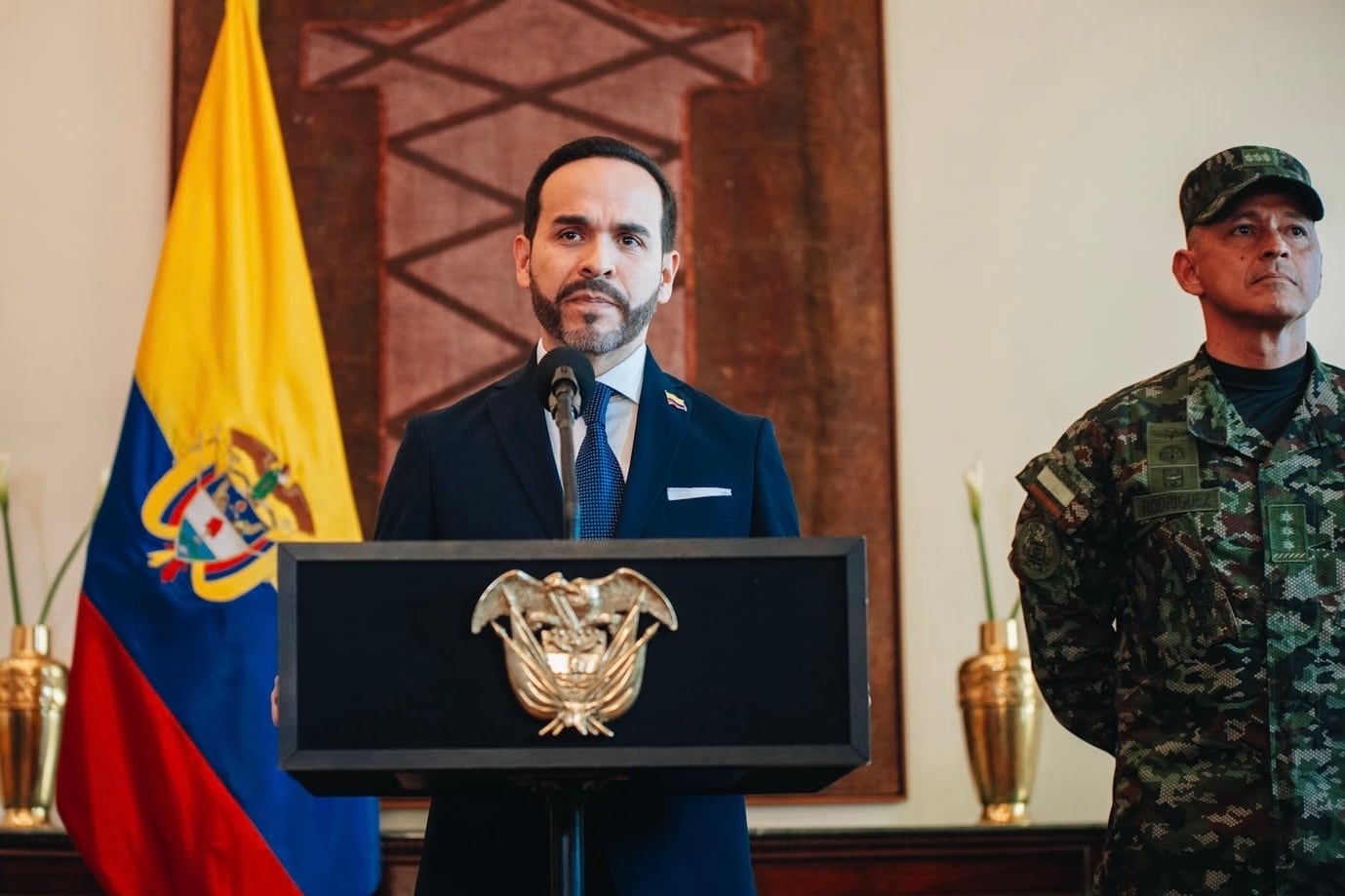
Abelardo De La Espriella Ordena La Deportación Inmediata De Los Inmigrantes Irregulares: “Se Van, Es Una Decisión Política”






Abelardo de la Espriella
Between The Jungle And The Oil: The Amazon Municipality To Which Colombia Owes An Energy Transition

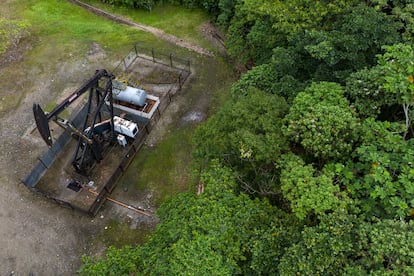
In Orito, Putumayo, a Colombian municipality in the Amazon foothills, the classic tourist sign reading “I love” followed by the place name is set against a backdrop of a pumpjack and an abandoned well: Orito 119. The horsehead of the rig — the part that looks like a hammer — is painted to resemble a toucan’s beak: an image that encapsulates the town’s dynamics. Located in the Amazon rainforest, crude oil extraction has been part of its backbone since its founding.
The Orito 1 well, which gave the town its name, was the first to be drilled in the Putumayo department, in 1963, and just 15 years later, in 1978 — following pressure from settlers who migrated there seeking work and to use the royalties generated by extractive activity — the state formally recognized the town. Its longtime popular nickname was “Orito, the oil capital of Putumayo”: that is, the capital of a department that, even in 2026, is Colombia’s sixth-largest crude producer, according to the National Hydrocarbons Agency (ANH).
Unlike other parts of the Colombian Amazon, Orito’s settlement was not driven by riverside colonization but by oil companies of the time. “The industry’s machines were the ones opening roads and, behind them, people arrived,” says Yolima Devia Acosta, a geographer who researches the relationship between extractivism and settlement. That origin is still visible today: on the pencil cases and backpacks children bring to school bearing the Ecopetrol logo, and in the pipelines that carry hydrocarbons and frame much of the municipality. To the northwest and north of Orito, crossing the Guamuez River, the landscape is bisected by a line: the Trans-Andean Pipeline (OTA), which used to carry crude to the maritime terminal at the port of Tumaco on Colombia’s Pacific coast.
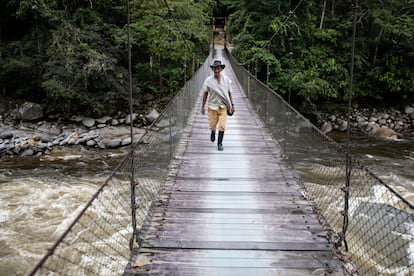
There have been several moments when oil seemed on the brink of disappearing. “For 20 years or more people have been saying ‘five years until the oil runs out,’” says Edinson Humberto Ramírez Delgado, mayor of Orito. “But what nobody expected was a crisis in its price,” he adds, referring to what happened between 2015 and 2016. “That was a blow, a buffer for what came next: a policy from Gustavo Petro [now the former president of Colombia] under which we knew the oil sector would decline somewhat and that we had to look to other sectors.”
According to a report by the Interdisciplinary Center for Development Studies (Cider) at the Universidad de los Andes, published in 2025, the period from 2014 to 2016 saw the highest level of extraction in the municipality, which has trended downward since. In 2024, production fell to its historical low, possibly as a consequence of the Petro government’s decision to halt exploration and reduce hydrocarbon extraction, Cider says. For Ramírez, however, the biggest break remains 2016.
“The Petro government’s policy in the end did not hit as hard,” he says. “It was the 2015–2016 crisis that forced us to start looking for other alternatives.” They have explored cacao, specialty coffee, and Amazonian fruits. With the peace agreement signed with the former FARC guerrilla in 2016, ecotourism also began to be discussed. “These were territories that were, in a sense, hidden because of the conflict,” Ramírez adds. Data from the Observatory of Memory and Conflict indicate that between 2001 and 2020 Orito reported 995 incidents that left 705 people violently affected. Although the FARC is no longer present, the Comandos de la Frontera, one of its dissident groups, remains active.
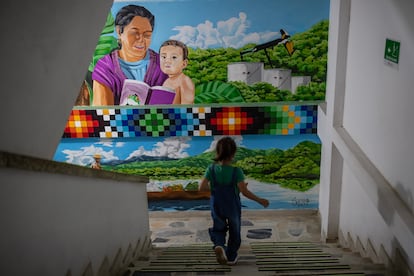
Multicolored economy
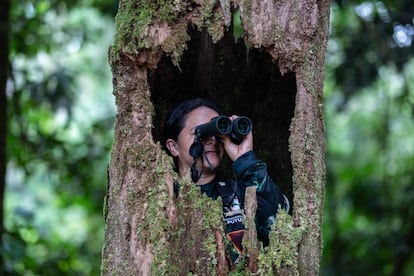
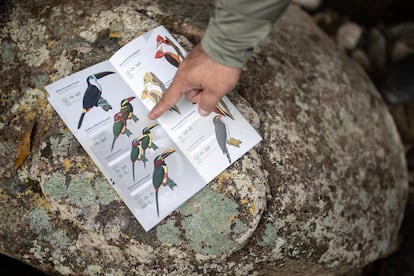
She can identify every bird species from meters away and does not trust apps that use a bird’s song to identify it. “Those platforms sometimes fail. I don’t believe until I see it,” Yasmin Pantoja says as she raises her camera to focus on a boat-billed blackbird (Psarocolius decumanus). The path she walks is part of a birdwatching route she offers to tourists who stay at Sagy Ecolodge, a business her family opened in 2020. “Before, we all worked for the oil sector,” she says. She was an accountant for a hydrocarbon transport company and her husband was a construction foreman. “He spent his time waiting for job openings at Ecopetrol.”
After the 2016 oil price crisis, when there were layoffs or workers had to accept heavier workloads for lower pay, they began looking for a property with water. “We wanted to build a rural hotel like a Decameron,” she recalls with a laugh, referring to the international resort chain. “But when we found this place, with the river and the stream, we understood that we couldn’t tear that down: nature speaks for itself. And, besides, the money wasn’t enough.”
Sagy Ecolodge is part of what a group of locals is trying to build as “the Orito tourism corridor”: a series of enterprises along the Caldero, Orito, and Gaumez rivers. They already have 35 experiences mapped together with the mayor’s office. Some, like the project led by Pantoja, aim to let Amazonian biodiversity attract visitors. For more than two years she has taken part in Global Big Day, one of the world’s largest citizen-science events promoted by the Cornell Lab of Ornithology, during which participants try to record the highest number of bird species in 24 hours. On a smaller scale, Pantoja reproduces that exercise with her guests. She has also experimented with global events for herpetofauna (reptiles and amphibians) and butterflies.
“But nobody here makes a living from tourism,” says Carlos Hernán Castro, a sociologist specializing in Amazon studies and one of the people promoting the corridor. Pantoja, for example, still has not achieved that. “I’m not going to lie: the oil sector is still what people live from in Orito; I still provide services to them. Although I’m working to step away from that.”
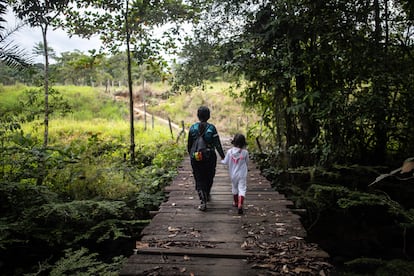
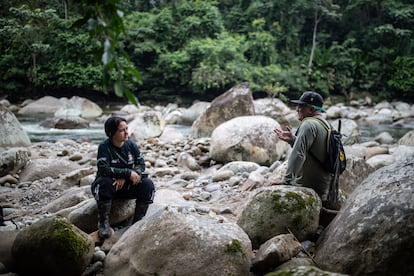
The challenges are multiple and even reveal an energy paradox. Some tourist sites are not connected to the power grid — in one of Colombia’s oil-producing municipalities — lack internet access and have poor roads. “Unless there is an oil well nearby,” Castro adds. Identity also comes into play: the idea that in Orito you can only make a living from hydrocarbons. “If I had the money and they told me to build a Decameron [hotel], I would now say no,” Pantoja says, despite everything.
With just over 60% of its municipal area covered by forest, Orito has strong potential for conservation strategies, agropecultural systems, and nature-based tourism, Cider’s report estimates.
Boost for crude
If Orito’s oil production rises or falls, people’s pockets don’t always feel it. When coca stops being sold, however, the street-level economy changes. Castro and Wilderman Pai, governor of the Alnamawamí reservation of the Awá Indigenous people, say this in conversation.
Alongside the latest report from the United Nations Office on Drugs and Crime, which found that coca production decreased between 2023 and 2024 in the Orito Vides enclave on the Ecuador border, Cider estimates that between 2014 and 2024 oil royalties in Orito fell by 71%, from 48,948 million pesos to 13,992 million pesos (around $15 million to $4.3 million).
Almost parallel to the inauguration of the new government of Abelardo de la Espriella, Mayor Ramírez also announced a renewed push for oil. “We have expectations because Parex will resume an Ecopetrol campaign to exploit oil and Gran Tierra has another project, already with prior consultation and all, and they are ready to start.” His goal for Orito is for it to “again produce at least 20,000 barrels a day.” He believes both projects could even exceed that target. Based on ANH-supervised production data from Orito’s various fields, the figure was 5,900 for June 2026. Although this outlet contacted both Ecopetrol and the Unión Sindical Obrera, the oil industry union in Colombia, to get their perspectives, it did not receive a response.
Oil-producing and Amazonian
Putumayo, the department where Orito is located, is both Amazonian and oil-producing. That is why the mayor’s office is asking why they were not consulted about a resolution published by the Petro government just one day before leaving office that officially declared the Colombian Amazon biome a reserve of natural resources. The decree covers 483,283 square kilometers where no new concessions to explore or exploit hydrocarbons may be authorized.
However, the document hangs in the balance. The new president, De la Espriella, could reverse it — especially because part of his campaign was based on promoting the oil and mining industries in contrast to Petro’s narrative. Orito is one of the places where those messages are landing.
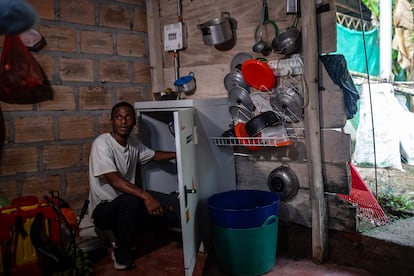
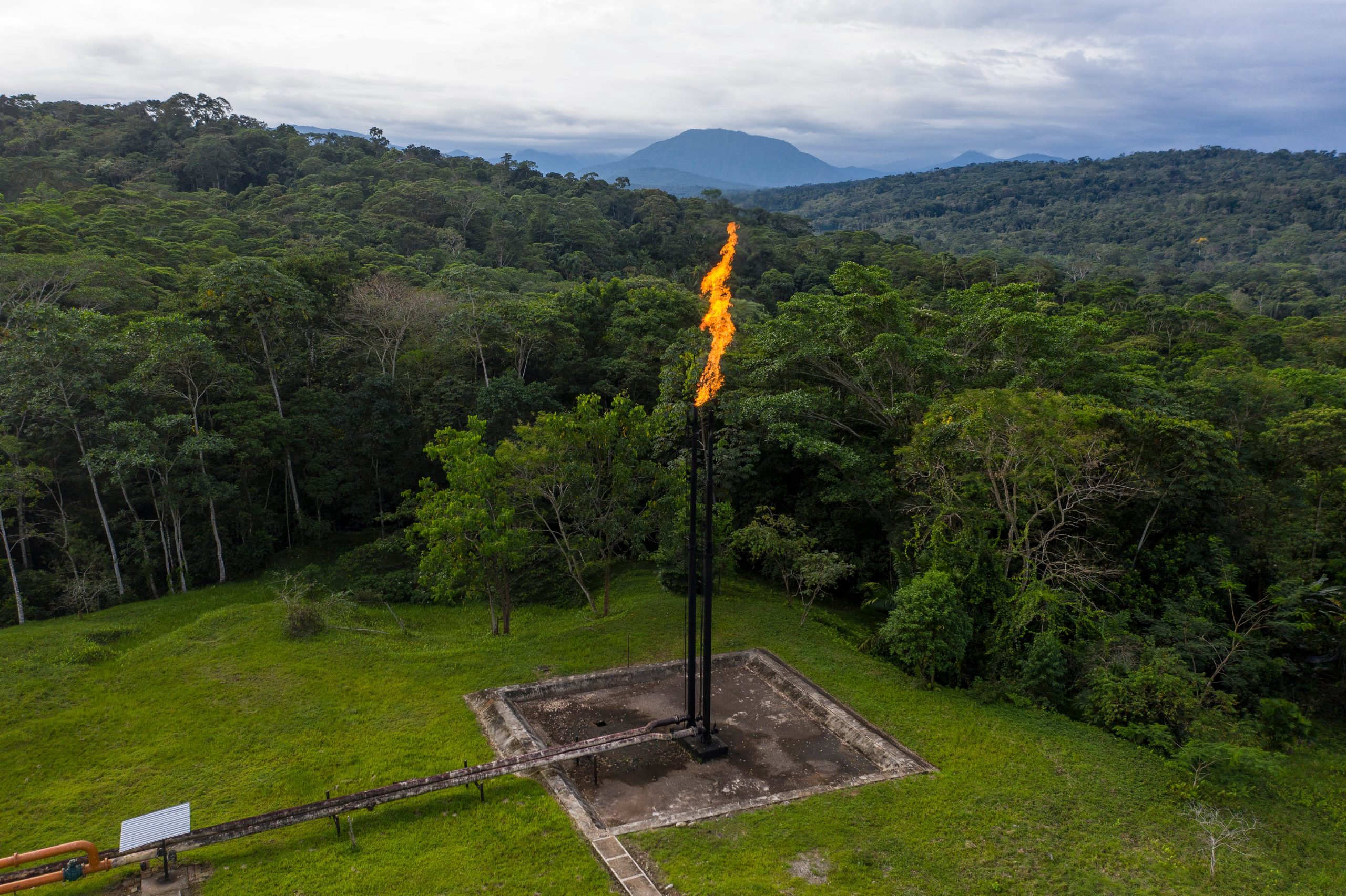
In Orito, everyone lives next to some piece of oil infrastructure. In front of the school in the Porvenir neighborhood — called barrio 1 when it was just a field — there is an active well. One of Castro’s earliest childhood memories, when he first arrived in Orito with his father, is the constant flame that rises from oil batteries to burn off excess gas in a controlled way. One of those batteries sits across the street from the Alnamawamí reservation. Also on that side, some houses are powered by individual solar panels: units that were given to them, precisely, by the oil companies.
Sign up for our weekly newsletter to get more English-language news coverage from EL PAÍS USA Edition
Abelardo de la Espriella
De La Espriella Frente Al Terremoto: Acción, Personalismo Y Revuelo En Su Política Exterior

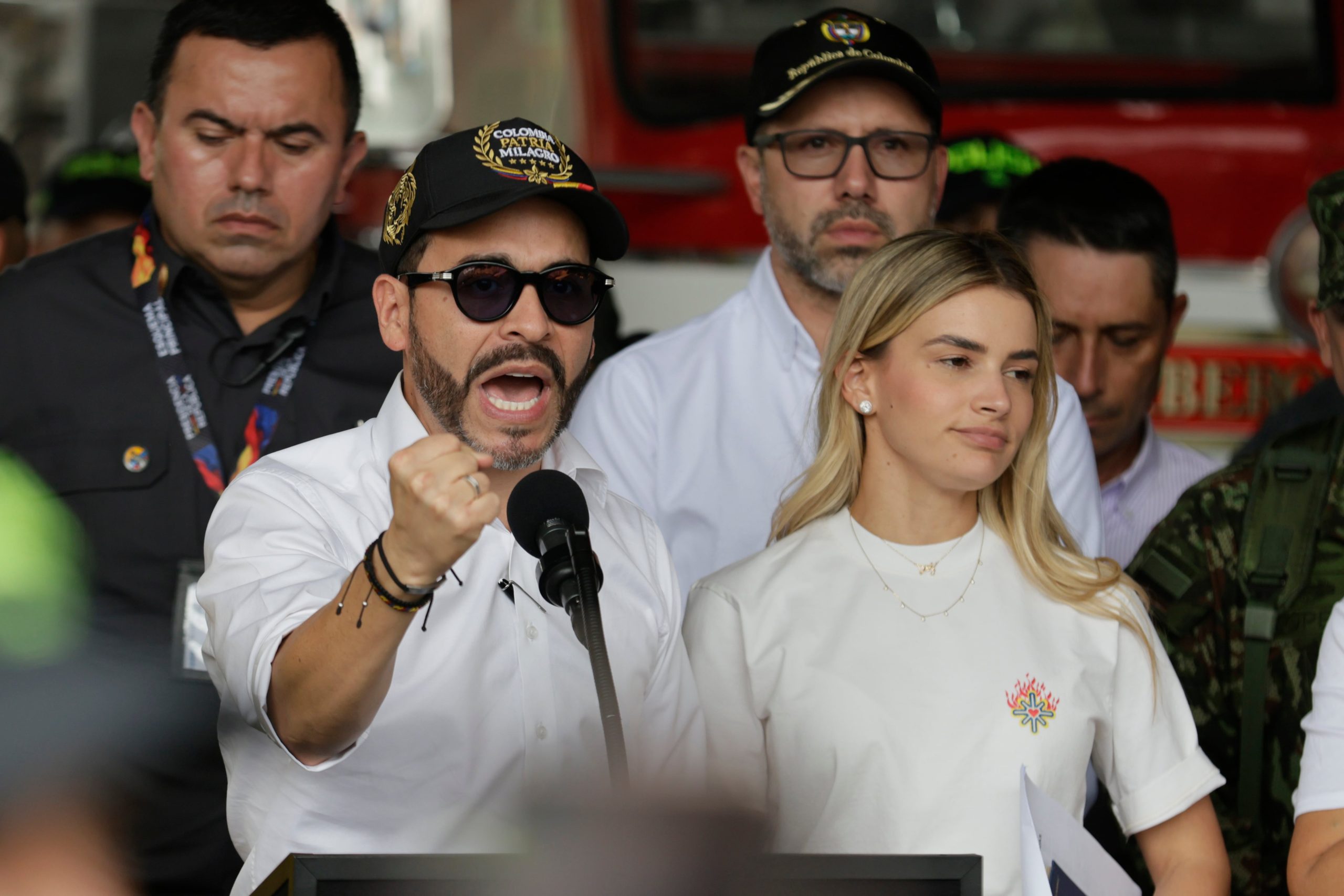
El nuevo presidente de Colombia, Abelardo de la Espriella, llevaba semanas preparándose para arrancar su Gobierno con la misión de combatir la crisis de seguridad, o la crisis de salud, o la crisis fiscal. Pero la tierra tembló y, con menos de tres días en el cargo, tuvo que afrontar la gestión de un letal terremoto que ya suma casi 300 fallecidos y miles de personas sin casa. Al abogado penalista, que nunca tuvo un cargo público, le llegó muy rápido su prueba de fuego. Si le va bien, puede ser su gran oportunidad para liderar un Plan Marshall, como el de la reconstrucción de Europa occidental tras la Segunda Guerra Mundial. Si le va mal, el desastre natural del primer día lo perseguirá hasta el último.

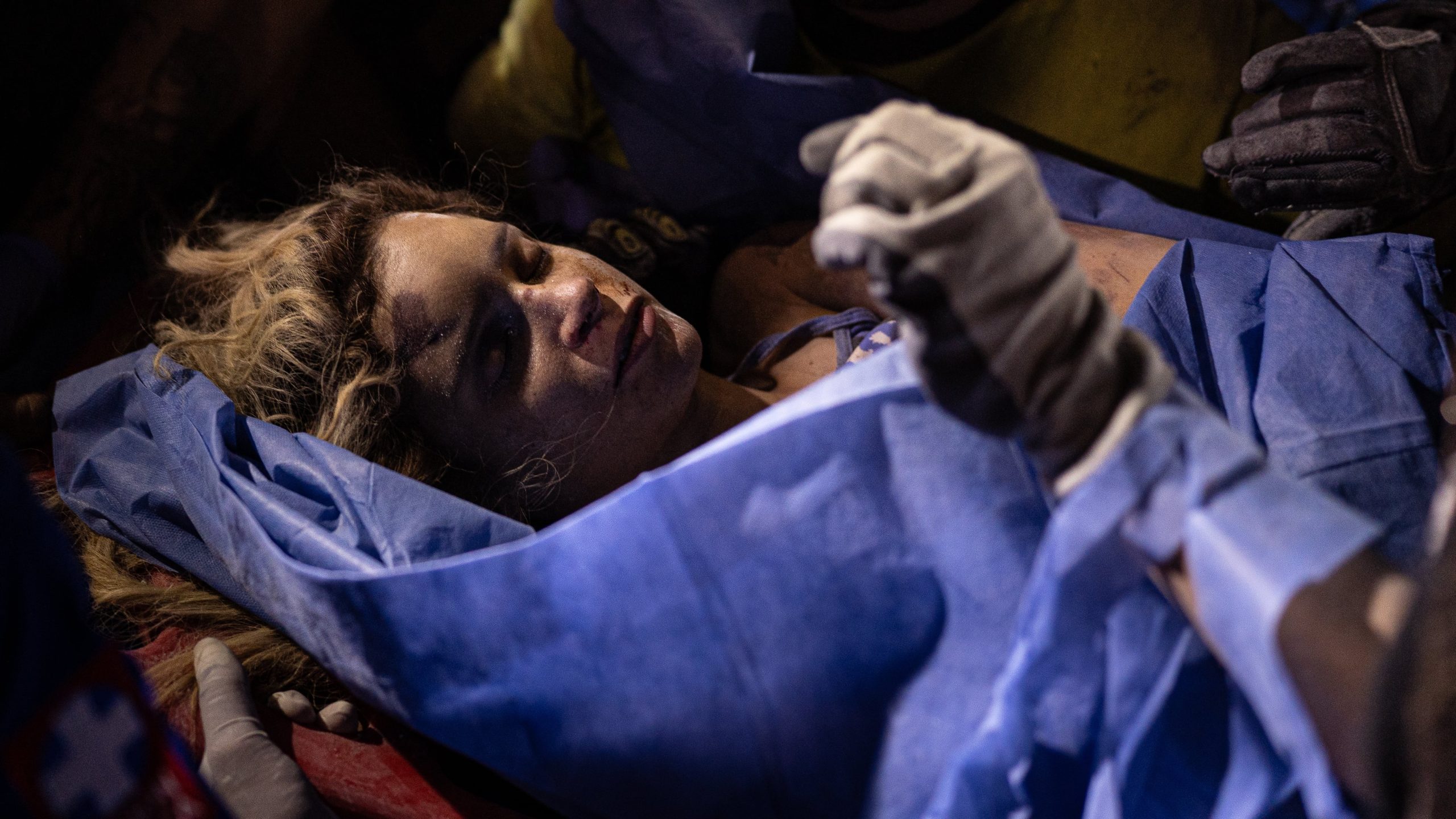
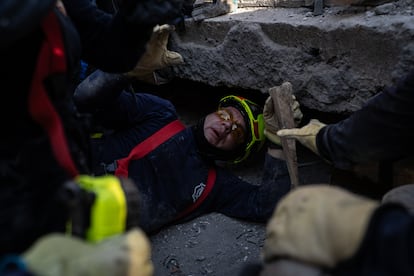
Daniela had already been buried for several hours when someone, standing on a pile of rubble, called out her name. She also shouted back her son’s name. Then her father’s name. That was how rescuers learned that the woman they would pull out alive was the same one whose face and blond hair had been circulating for nearly two days on a poster: ‘Daniela Andrea Largo Sánchez, 32. Missing in Pereira following the earthquake.’
On the Monday of the earthquake, at 7.34 am, Daniela was preparing to keep a promise. She had planned to return to her mother’s house to celebrate her son’s birthday; he would be blowing out 12 candles that day. Her hurry to reach her destination, three hours by road, may be what caused her to be already on the stairs on her way out, and not on the bed in the boarding house where she sometimes spent nights with her partner. Or at least that is what her mother thinks.
The young woman’s thin body was buried beneath the building. Her rescue drew dozens of volunteers, firefighters, police, search-and-rescue specialists and local residents. Teams spent hours clearing debris while a crowd gathered, hoping for good news amid a catastrophe that has already claimed 273 lives. Among that crowd, holding each other, were Julio César, Daniela’s father, and Sandra, his partner of six years. Every time a rescuer emerged empty-handed, they squeezed one another tighter. He barely moved; he did not take his eyes off the opening from which his daughter should emerge.
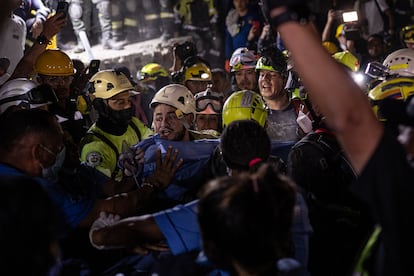
Daniela was pulled out with her cell phone in her hand at 8.27 pm on Tuesday amid applause and prayers. ‘Daniela, Daniela, Daniela!’ the crowd shouted. But when they loaded her into the ambulance she suffered cardiorespiratory arrest and had to be resuscitated for nearly 20 minutes. ‘She was very dehydrated,’ her mother, Martha Emilce Sánchez, says. ‘They revived her right there,’ she says at the door of the hospital where her daughter remains in the intensive care unit. It is not exactly the seventh time Daniela has come back from a place people usually do not return from, but it is close.
Martha tells the story outside Clínica San Jorge, shortly before being allowed to see her for the first time since learning she was alive. Her daughter had been active ever since she was a child, but five years ago life took a complicated turn. She fell and was taken to the hospital. An X-ray showed a large bone tumor in her leg — bone cancer. She was hospitalized for three months. The medical board recommended amputation, but one of the doctors refused: he said he would risk fitting a prosthesis on the leg and knee. Daniela kept the leg. And she continued her life. Until two years ago, when the tumor reappeared.
Daniela underwent eight rounds of chemotherapy that, according to her mother, did little. ‘It hadn’t reduced it at all,’ she says. On the contrary, metastases were found in the lungs and doctors again talked about amputation. That was when Daniela made a decision her family still describes in whispers: no more treatments. ‘She wanted that when God called her, she would be whole,’ Martha says. Daniela stopped going to checkups. She stopped chemotherapy. And, though no one can explain it, the tumor in her leg stopped growing. And the one in her lungs, which had also spread, became progressively smaller. ‘The cancer didn’t go away,’ Martha clarifies, ‘but it went into remission.’
Daniela resumed what had been her normal life, although it was not the life her mother and father would have wished for her. It was a life marked by pain in which she would disappear for several days at a time until they heard from her again.
After the earthquake, Martha began calling her daughter, but there was no signal. She took a deep breath, prayed and tried to tell herself everything was fine, but when the network returned and all the neighbors — except her — began to contact their relatives, she became truly worried. ‘She wouldn’t miss the boy’s birthday,’ she thought. ‘Something’s wrong.’ That was when the father and his wife set off for Pereira to plaster the city center with posters.
They were on the verge of losing hope because no one had seen her, until the phone rang and the voice of a friend was heard on the other end. Rescuers were looking for her in the rubble of a building; they knew it was her because she had called out her son’s name and her father’s.
Daniela was saved, among other things, because someone insisted on getting her out. Among the first rescuers at the site where the building fell was Yeivinson Fontalvo, a Colombian man working with Chaplains International, a U.S.-based organization of Christian chaplains that trains and deploys international teams to respond to disasters and emergencies. He was the one who, acting as a search specialist early Tuesday morning, entered the rubble in search of survivors and who, he says, heard a weak voice answering when he called. ‘There is no single manual, but there is no improvisation. There are years of past earthquakes,’ Yeivinson said minutes before the rescue, which professionals later took over. When the man saw Daniela coming out on a stretcher, he broke down in tears. Then he began to pray aloud, almost in a trance.
Doctors say Daniela is out of immediate danger, but she has not yet awakened. She is beginning to realize she survived this earthquake. Her mother has already told her that the crushing injuries forced doctors to amputate her right arm. After resisting so long to losing a leg, after deciding she would rather die, Daniela is being forced to face her worst nightmare. Her mother prays and trusts that God ‘shakes someone’ with a purpose and that her daughter’s purpose will be to build a life different from her previous ones. ‘If God gives her another chance,’ she says, ‘she must change.’
Around Daniela, while doctors keep her sedated and intubated in the ICU, a fractured family has gathered. Her mother, Martha; Daniela’s father, from whom she separated six years ago after 35 years of marriage; and stepmother Sandra, who threw herself into the search for Daniela as if she were her own daughter. The two women had never spoken until they met at the hospital door and some wounds healed. ‘May God repay you,’ Martha thanked her. And at the center of them all, a 12-year-old altar server who proudly shows the watch, the bracelet and the 60,000 pesos he received on his birthday that, although he does not yet know it, will mark his household’s and Colombia’s history.
Sign up for our weekly newsletter to get more English-language news coverage from EL PAÍS USA Edition

Díaz-Canel Afirma Que El Diálogo Con Estados Unidos Está “estancado”

Silvia Pérez Cruz Lleva Su Canto A Una Habana En Penumbras

El Deportivo Agua La Fiesta Del Málaga En Su Debut Liguero En Casa

Attaoui Saca Un Bronce En 800m De La Casi Nada
Flames force Spanish troops to evacuate 1,000-year-old kings’ bones from burning monastery
Qatar Royal Family’s £300m ‘Palace in the Sky’ lands in Mallorca ahead of historic eclipse


-
 800 metros lisos2 weeks ago
Attaoui Saca Un Bronce En 800m De La Casi Nada
-
aragon wildfire2 weeks ago
Flames force Spanish troops to evacuate 1,000-year-old kings’ bones from burning monastery
-
Mallorca2 weeks ago
Qatar Royal Family’s £300m ‘Palace in the Sky’ lands in Mallorca ahead of historic eclipse
-
Benalmadena pueblo2 weeks ago
Five days that turn Benalmadena pueblo into a giant street party and everyone’s invited
-
Latest2 weeks ago
EU Curbs On ‘forever Chemicals’ In Food Packaging Kick In
-

 ElPais2 weeks ago
The Total Eclipse In Spain, In Pictures
-
climate change2 weeks ago
Jellyfish strike France’s biggest nuclear plant again and shut down three reactors
-
Costa del Sol2 weeks ago
Motril Port closing in on record cruise year with 47,000 summer passengers