
Africa
Africa’s Lucrative, Nutritious Grasshopper Business Runs Into Western Prejudice Against Eating Insects





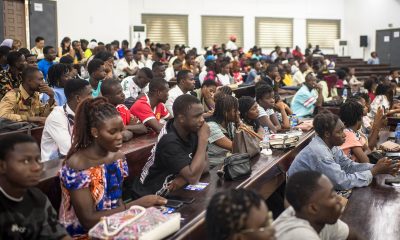






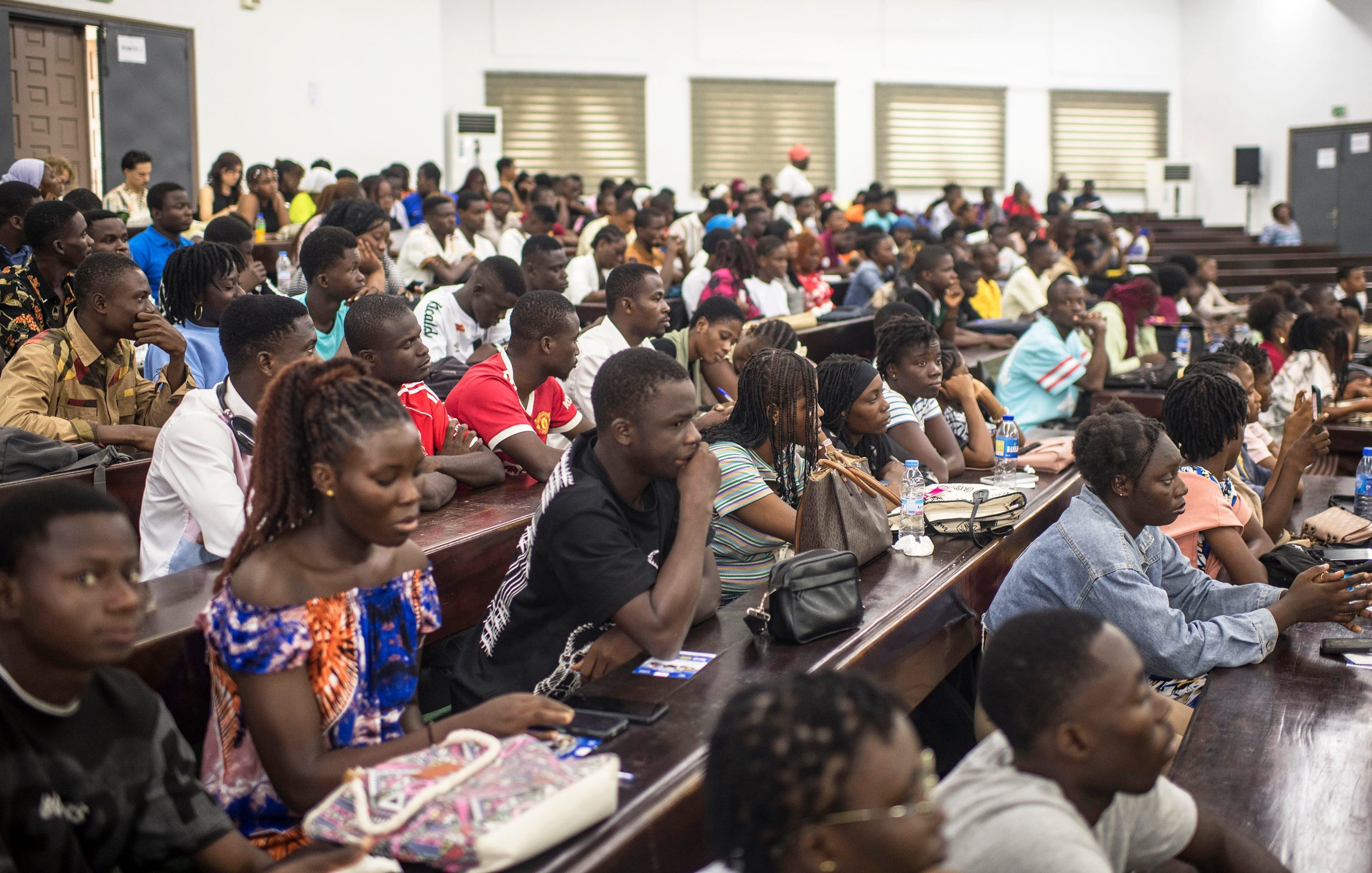
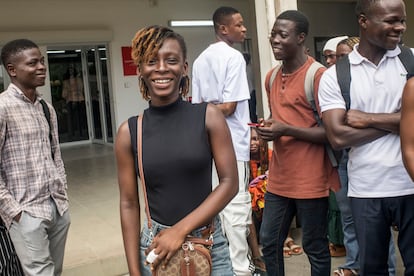
She heard her first words watching the Mexican soap opera Marimar and, from then on, knew she wanted to learn that strange language. Gloria Ane has just started a master’s degree in Hispanic philology at the Félix Houphoüet-Boigny University in Abidjan, Ivory Coast, but she is only one of the 3.5 million Spanish learners in sub-Saharan Africa — a figure that has more than doubled since 2014. Demographics, the rise of Latin music and cinema, soccer as a global phenomenon, and migration — together with the decline in French’s prestige — are allowing the Spanish language to gain ground in Africa. On June 10 the new Aula Cervantes headquarters in Abidjan was inaugurated, and another is already planned for Cameroon, which with 1.2 million learners is the fifth-ranking country in the world by number of students.
“Spanish has established itself as one of the world’s major languages and, beyond communication, it has an expanding presence in areas such as culture, science, business, and international relations,” said Luis García Montero, director of the Instituto Cervantes, at the opening of the new Abidjan headquarters, which includes a small library, two multipurpose rooms and a computer lab. “Its relevance in sub-Saharan Africa is growing. That has to do with population growth, but also with an attitude. We are not in Africa as a language of domination, but of dialogue. Increasingly more students are choosing Spanish as a second language in countries such as Benin, Ivory Coast, and Cameroon,” he added.
We are not in Africa as a language of domination, but of dialogue
Luis García Montero, director of the Instituto Cervantes
The data have just been published in the book Spanish in sub-Saharan Africa, edited by the Instituto Cervantes and Casa África and coordinated by Javier Serrano. The research updates figures gathered in an earlier 2014 study. “The growth is simply spectacular,” says Álvaro García, Instituto Cervantes’ academic director. “In 10 countries in the region there is a medium or high level of institutionalization of Spanish; it is a subject in secondary schools, which account for 95% of the students.” These include the countries already mentioned by García Montero: Cameroon, with 1.2 million students, Ivory Coast (one million) and Benin (725,000), as well as Senegal, Cape Verde, Gabon, Equatorial Guinea, Madagascar, the Central African Republic, and Togo.
These 3.5 million students represent 13.53% of all Spanish learners in the world. Countries with the largest numbers of learners are the United States, with 8.5 million, Brazil (4 million), France (3.6 million), the United Kingdom (2 million) and, in fifth place, Cameroon. Africa is the fourth region in the world in terms of contribution to learners of Spanish as a foreign language, and five African countries rank among the 15 with the most students worldwide. “But in Africa the potential is enormous, especially in lusophone and anglophone countries,” García adds.
To continue growing, the Instituto Cervantes has just created the Global Observatory of Spanish in African Contexts, where experts will scrutinize the main lines of this expansion. The Cervantes itself has gone from having a single classroom in Dakar, which opened in 2010, to an institute in the Senegalese capital that was inaugurated by Queen Letizia in 2021, and now a new classroom in Abidjan, which had been operating for five years without a physical headquarters. The next destination will be Yaoundé, the Cameroonian capital, where work is already underway to open a new space in the coming years.
“A lot of people speak Spanish in the world, which is why I like it — I think it could give me opportunities,” said Moussa Bamba, who is studying the first year of Hispanic philology in Ivory Coast. “For now my dream is to be a secondary-school teacher, but we’ll see.” Maurice Konan is already in his third year and has read El metro and El sueño y otros relatos by Equatoguinean author Donato Ndongo-Bidyogo. “Don Quixote hasn’t yet fallen into my hands, but I’d very much like to read it,” he said with a smile.
The president of the Official Chamber of Commerce of Spain in Senegal, Ramón Nicolau, recalled the quantitative supremacy of other languages, such as Chinese, because of the demographic weight of their countries of origin — about one billion Chinese speakers compared with 635 million Spanish speakers. Nevertheless, he noted that Spanish as an economic and business ecosystem has a singular importance second only to English. Nicolau highlighted the importance of Spanish as “a vehicle of trust and an accelerator of business networks, but it is also a market, a community, and a strategic bridge to the global economy.”
For her part, Korotoumou Niang, law professor at Kurukan Fuga University and at the Institut des Sciences Politiques et des Relations Internationales of Mali, recalled how her decision to study Spanish changed her life. “I received a scholarship and could have chosen other countries, but I went to Cuba. This language has given me opportunities that a Malian woman like me would never have had. I also work as a translator for the Spanish Embassy and on cooperation projects. In my country everyone expects a young woman to marry, have children, and abandon her professional life. I became a role model for my female students,” she said.
This language has given me opportunities that a Malian woman like me would never have had
Korotoumou Niang, law professor at Kurukan Fuga University
During the congress, Eladia Martín, head of the Diploma in Spanish as a Foreign Language (DELE) at the Instituto Cervantes in Dakar, stressed the importance of holding official certification to qualify for jobs. The Cervantes’ academic director said that currently these courses and exams exist in 13 sub-Saharan African countries, where there are 20 examination centers through which 500 diploma candidates sat exams in 2025. For Jean Christophe Dièmè, a teacher at the Jean Mermoz institute in Dakar, it is urgent to undertake a reform and modernization of content.
Sign up for our weekly newsletter to get more English-language news coverage from EL PAÍS USA Edition

Red Bull set for radical new design in desperate bid to keep Max Verstappen

Irán Se Despide De Los Ángeles Con Un Mensaje De Reivindicación Tras Las Restricciones De Estados Unidos
Inglaterra Se Atasca Con Ghana Y Se Jugará La Primera Plaza Del Grupo En La última Jornada
A major EU border system goes live today – What changes for travellers?
El Pentágono, Evacuado Por Una Falsa Alarma Ante La Sospecha De Un “incidente Con Materiales Peligrosos”

Barcelona Tests Olive Pit Asphalt That Could Transform How Cities Build Roads


-
EU rules2 weeks ago
A major EU border system goes live today – What changes for travellers?
-
America2 weeks ago
El Pentágono, Evacuado Por Una Falsa Alarma Ante La Sospecha De Un “incidente Con Materiales Peligrosos”
-
 %2 weeks ago
Barcelona Tests Olive Pit Asphalt That Could Transform How Cities Build Roads
-
european airport delays2 weeks ago
1,225 delays at major European airports raise summer warning for Spain travellers
-
Indian Embassy2 weeks ago
Indian Embassy International Yoga Day 2026, where you can celebrate across Spain
-
Antártida1 week ago
El ‘Hondius’ Zarpa De Nuevo: El Crucero Que Sufrió El Hantavirus Viaja Al Ártico Cargado Con Empleados
-
Costa del Sol1 week ago
Torremolinos installs smart traffic lights on its beaches to warn about UV radiation levels
-

 Canada2 weeks ago
La Ceremonia De Inauguración De La Copa Del Mundo 2026, En Imágenes