
Claudia Sheinbaum
Amid World Cup Buzz, Guadalajara Confronts Legacy Of Cartel Violence

This article was co-published with Puente News Collaborative, a bilingual nonprofit newsroom that covers stories from Mexico and the U.S.-Mexico border, and the Los Angeles Times.
The highway from the Guadalajara city airport to downtown is newly paved and the city’s famous roundabout has gotten a $4 million facelift. The city is abuzz with renovation projects as Guadalajara prepares to host four World Cup soccer matches in June.
But there’s one thing the three million fans expected to flock to the city won’t see — the sites where hundreds of bodies have been found in clandestine graves dug by Mexico’s notorious Jalisco New Generation Cartel. Scores were discovered on the main route leading to Akron Stadium, where the games will be played.
One set of remains was that of a 17-year-old high school student who had gone out to sell his motorcycle to help his unemployed uncle. He disappeared. When his uncle began searching, he disappeared as well. At another site, the bones of a 34-year-old cellphone repairman were found. He was a father of two who’d simply ventured out to shop for used tennis shoes.
According to statistics compiled by the state of Jalisco, between 2018 and March of this year, 1,907 bodies were found in Guadalajara and surrounding cities.
The arrival of the World Cup is an opportunity for Mexico’s second-largest city, also known as the “soul of Mexico,” to shine on the international stage, and the Jalisco state government launched an upbeat campaign highlighting the municipality where games will be played: “Zapopan, the heart of soccer,” the slogan goes.
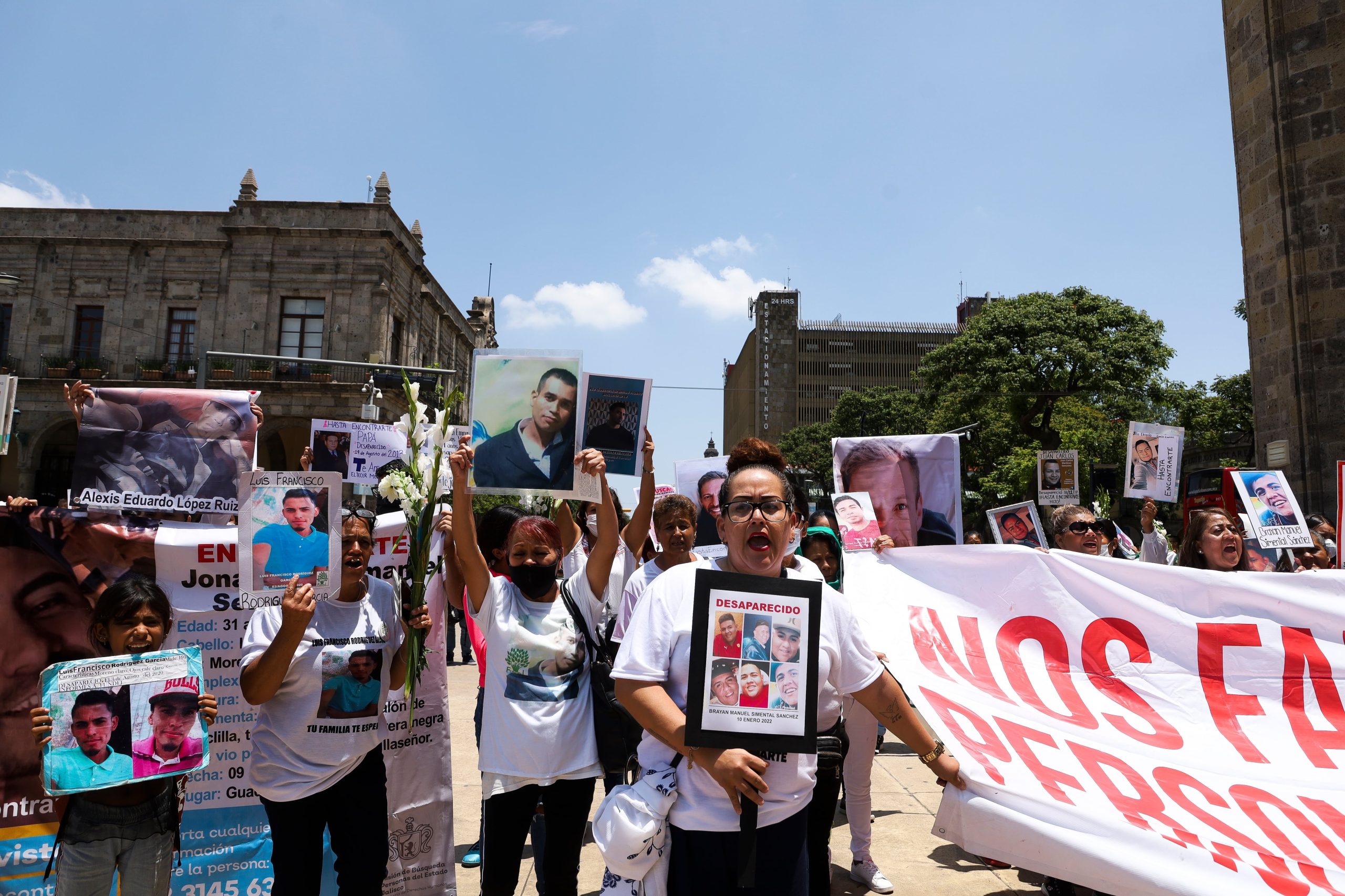
Families searching for their loved ones sarcastically responded with, “Zapopan, the heart of clandestine graves.”
Since January of 2025 alone, search groups and authorities have discovered 58 graves with 226 sets of remains inside city limits. Five of the graves were located within three miles of Akron Stadium.
Three graves with 15 bodies were found within a mile of the city’s iconic La Minerva roundabout, a huge traffic circle featuring fountains, greenery and a towering statue of the Roman goddess Minerva. Others were found not far from Chapultepec Street, a popular tourist destination.

Though tourists and tourist sites are rarely touched by cartel violence in Mexico, critics say the graves are an embarrassment for state and city administrators.
Amid all the clean-up, little official attention has gone to the growing number of clandestine graves that groups of persistent, family-funded search teams have found in recent months.
Large machinery and backhoes are working nonstop across the city ahead of the World Cup, said Jaime Aguilar, a spokesperson for the group Warrior Searchers of Jalisco, which finds an average of two graves a month. “But when we ask for a backhoe to help in our searches, there is never one available,” he said.
Over the years, secret graves have been discovered in rural or industrial areas, alongside roads, inside buildings and even in the heart of Guadalajara. The Jalisco state government tracks grave discoveries, but an analysis by the Los Angeles Times and Puente News Collaborative shows many have been concentrated in the Guadalajara area.
Earlier this year, authorities found a blood-soaked safe house a mile from Akron Stadium where cartel enemies were tortured. One person was found buried there. Within a 10-mile radius, nearly 100 sets of remains were found in 500 trash bags buried in shallow graves.
The graves, and the potential discovery of more, worried Mexican President Claudia Sheinbaum. She feared that FIFA, the international soccer association in charge of the games, might move the Mexico games to the United States or Canada, the other countries co-hosting the tournament, because of the violence, said one Mexican official familiar with planning for the World Cup.
That fear burst into the open in February, when Mexican special forces killed Nemesio “El Mencho” Oseguera Cervantes, leader of the hyper-violent Jalisco New Generation Cartel. Law enforcement officials said Guadalajara is a stronghold for the criminal group.
Cartel members responded to El Mencho’s death by setting fire to cars and buses and blocking major exits from Guadalajara. The city was briefly paralyzed. Gunmen burned 80 convenience stores and a host of pharmacies flexing their power in the city.
In the days following the violence, FIFA officials met with the Mexican government to review security for the Guadalajara matches. Sheinbaum laid out a plan to send 100,000 security personnel including Army soldiers and police officers to stadiums in Guadalajara and the country’s two other host cities, Mexico City and Monterrey. FIFA determined it would not change the World Cup venues.
U.S. law enforcement has been advising Mexico on counter-terrorism methods, including training in repelling drone bombs, a weapon increasingly used by cartels to terrorize communities, attack adversaries, and target military convoys. Also, U.S. special forces have been training Mexican military teams to repel attacks at stadiums.
The Mexican government had already witnessed the Jalisco cartel’s proclivity for brazen killing. In December, some four miles from Akron Stadium, gunmen fired more than 3,000 bullets in broad daylight into the car of a director of a produce distribution center. The gun battle between his security guards and the cartel took place just a few blocks from a police station. It took officers nearly a half hour to arrive at the scene.
In recent years, Jalisco state has become a cartel killing ground, security experts say. Some graves discovered in the Guadalajara area contained a single body, some more than 40. A few had 95 or more.
In 2023, the remains of nine teenagers, chopped up and stuffed in trash bags, were found in a canyon in Zapopan. They had worked for a Jalisco cartel call center where telemarketers scammed Americans of millions of dollars in a timeshare scheme. The teenagers are believed to have upset their employer.
Traffickers recruit young people, including minors, to serve as foot soldiers in their bloody quest to control drug-trafficking routes across Mexico. Some of those teenagers were lured to the state by ads promising good-paying jobs, only to discover they were being funneled to a Jalisco cartel training camp an hour outside Guadalajara. There, as a test, Mexican security officials said, recruits were forced to kill fellow recruits.

The cartel has recruited more than 45,000 minors across Mexico in recent years, said one Jalisco state representative.
While some of Guadalajara’s upscale neighborhoods have escaped the violence, families across the metropolitan area have seen hundreds of children disappear, some to reappear, dead, on cartel battlefields across Jalisco and in the states of Sinaloa and Michoacán, searchers said.
The Jalisco state government lists more than 16,000 reports of missing people — the most of any Mexican state. Nationwide more than 130,000 people are reported missing.
Despite the preparations and the buzz among the nation’s vast population of soccer fans, World Cup fever has not caught on among families of the disappeared and search teams that, each week, fan out across Guadalajara, looking for new graves.
Natalia Leticia García’s son disappeared in 2017. She began her own search and launched a group to help find other victims. Eight years later, García’s group has located 26 graves. Some finds have been bags full of severed heads, others holding just arms, she said. It is a cartel tactic, she said, to make it harder to piece together remains.
“It is cruel,” García said. Her son, César Ulises Quintero García, remains missing.
Fisher is a frequent collaborator for Puente News Collaborative.
Sign up for our weekly newsletter to get more English-language news coverage from EL PAÍS USA Edition









Andrés Manuel López Obrador
Sinaloa Governor, Subject Of US Investigation, Stands Alone Under Allegations Of Cartel Ties



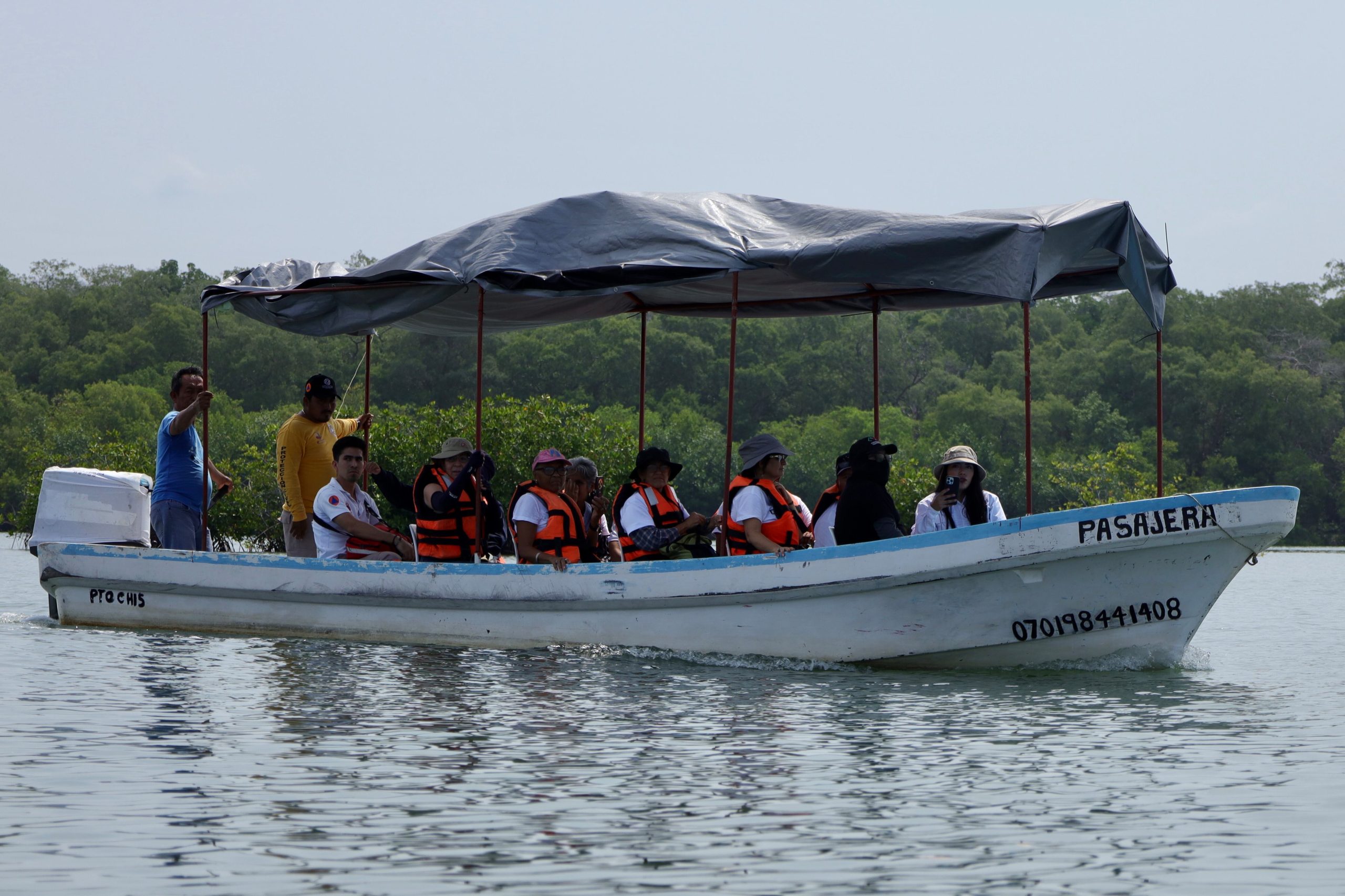
The heat presses down near the ocean’s edge. Hours pass, and the patrols look for shade, officials fan themselves, reporters lean back — but they keep going. They walk, they ask, they insist, they jot things down: a name, a date, another place they’ve never heard of. They work even with the life jackets from the boat ride still on; they don’t take them off, in case there isn’t enough time. They’ve spent 16 months searching, and this is the first time they’ve been able to do it while standing on the same ground their missing loved ones — their children, a grandson, a brother — once stood on; seeing the mangroves, the palm‑thatch roofs, the lagoon brushing up against the Pacific, all of it they are certain — certain — their loved ones also saw.
On December 21, 2024, the trail of 40 migrants vanished in San José El Hueyate, in the Mexican state of Chiapas. They boarded a boat bound for Juchitán de Zaragoza, Oaxaca, also in Mexico. They were never heard from again. The families didn’t know — couldn’t have known — that another group of at least 20 people had disappeared in the same place and along the same route just two months earlier, on October 21, 2024. And another group, 23 migrants, also vanished from a nearby port on their way to the same destination on September 5, 2024. They, the searchers, are seven; they, the missing, are 83. There may be more — they don’t know, they cannot know.
On December 21, 2024, 40 migrants vanished in San José El Hueyate, Chiapas, Mexico. They boarded a boat bound for Juchitán de Zaragoza, Oaxaca, also in Mexico. They were never heard from again. Their families didn’t know — they couldn’t know — but another group, of at least 20 people, had disappeared in the same place and on the same route just two months earlier, on October 21, 2024. And yet another group, with 23 migrants, also disappeared from a nearby port on September 5, 2024, heading for the same destination. Seven relatives are here to search for them; 83 are missing. There could be more; they don’t know, they can’t know.
Alicia Santos, Isis Pérez, Elizabeth Guevara, Margarita Bravo and Lázara Fernández have come from Cuba. Óscar Hernández, from Honduras, and José Quindil, from Ecuador. After 16 months, the government has granted them a visa to enter the country so they can “search.”
Search: put up posters with faces, ask questions, ask again, learn names they had never heard before. The permit — and this matters — is not to investigate. That, they are told, is something the Chiapas state Attorney’s Office must do. It is the office that holds the case file and that, in more than a year, has not traced the phones of the missing, nor those of their smugglers, nor those of the last people who saw them. The office hasn’t summoned anyone, and it has no line of investigation, much less any suspects.


“We wish the Attorney General’s Office had done more before we arrived,” says Margarita Bravo.
“We gave them enough information to search, and they didn’t,” adds Isis Pérez.
“The fact that we have to be here to look for our children means the authorities haven’t done their job,” remarks Alicia Santos.
These seven — taxi drivers, accountants, biologists, retirees, homemakers, government workers — boarded a plane for the first time, left their home countries for the first time, and landed in a country about which the only thing they knew was that it had swallowed their families.
The lack of answers from the Mexican Attorney General’s Office (FGR) — which took nearly a year just to give them a case number — has shaken the families, though it comes as no surprise in a country with more than 130,000 missing people, where families are left to search for their loved ones without any state support.
This week, the Inter-American Commission on Human Rights (IACHR) underscored something the U.N. has been warning about repeatedly: in Mexico, disappearance is “widespread,” “indiscriminate,” a humanitarian crisis that can affect anyone and that state agents allow or participate in. The government of Claudia Sheinbaum insists that addressing this crisis is now a “national priority,” but the last time — this past Monday — officials dared to say it out loud, a mother who has spent 21 years looking for her daughter shouted: “What hope can any victim in this country have?” Silence.
The detectives
Alicia Santos is tall, a leader, an owl‑eyed observer: she is searching for her son, Jorge Lozada, 24.
Isis Pérez hugs hard, investigates hard, remembers hard: she is searching for her daughter, Elianis Morejón, 18.
Elizabeth Guevara prefers to speak little in public and to pray on her knees; she is firm when she says she never feels fear: she is searching for her daughter, Lorena Rosabal, 28.
Margarita Bravo smiles even when she cries, the mother‑figure among the mothers: she is searching for her daughter, Meiling Álvarez, 40, and for her grandson, Samei Reyes, 14. That teenager with the shy smile is also being searched for by his other grandmother, Lázara Fernández. These are the Cuban searchers.
There is also Óscar Hernández, with his dark little notebook, his gentle smile, his wariness: he is searching for his younger brother, Ricardo Hernández, a 33‑year‑old Honduran.
And completing the group is José Quindil, who has been wiping away tears ever since he arrived from Cotopaxi, Ecuador, to find his son, Jefferson Quindil, 21.
Graciela Ramos, mother of Dairanis Tan, a 33‑year‑old Cuban, could not join the brigade, nor could the families of Hondurans Karla Hernández, 29, and Olvin Marin Maldonado, 61, who also disappeared on the same journey. So the seven detectives ask about them, too.

The families began filing missing persons reports — each on their own — in January 2025. They didn’t know one another, nor did they know the names of the people who had traveled with their children, because Mexican authorities dismissed each of their individual reports with ease. The Cuban mothers found one another through social‑media posts, and one phone call led to another.
They eventually reached the Foundation for Justice, the organization that accompanied them more than a year ago to file a complaint before the FGR. The federal agency declared itself not competent and sent the case file back to the Chiapas Attorney General’s Office, even though there were — and still are — signs of organized‑crime involvement.
The case was published in EL PAÍS in June 2025, and from that story, like a domino effect, the September and October disappearances were linked to it. Only a few months ago, Chiapas prosecutor Jorge Llaven acknowledged after a press conference that all the cases were “related” and that San José El Hueyate was home to “a network for smuggling undocumented migrants”: “As there must undoubtedly also be complicity from authorities.”
Two of the three disappearances already have U.N. Urgent Actions, which require the Mexican state to begin an immediate search. It was in that context that the 2026 Tejiendo Redes (Weaving Networks) Brigade was organized with the Regional Network of Migrant Families to bring the detectives to Mexico.
A crossroads
The town’s name is unusual. Even some locals get confused. San José El Hueyate belongs to the municipality of Mazatán; some call it the Barra de San José, and the owner of a restaurant insists people also call it La Encrucijada — The Crossroads. “Do you know what that means?” he asks. Then he explains that here, dozens of tiny islands, dirt paths, and waterways intersect and split apart, that a lot goes through here, that many people have passed through here. But he doesn’t recognize any of the photos of the missing. Another shop owner says bluntly that those who don’t turn up either drowned or were taken. She has a missing brother, just like another neighbor, just like a migration officer. People in town have never dared to hang the faces of the missing on these wooden walls. They are poor, afraid, and they have their reasons. On that, the detectives agree.
San José El Hueyate has been a drug‑trafficking corridor for decades; in the 1980s, small planes loaded with cocaine landed here, and for years, migrants have been hidden in safe houses because of the area’s isolation. No one is used to an operation like the one accompanying the seven detectives, and children stare wide‑eyed at the convoy made up of the National Guard, the Army, Municipal Police, State Police, the Migrant Prosecutor’s Office, the National Search Commission, the State Search Commission, the Executive Commission for Victim Assistance, Civil Protection, the Mazatán government, activists and a handful of journalists. It is an unusual deployment — at times promising, at others ineffective.


The sand is damp, and under the palm‑thatched shelter sit several dozen motorbikes and a handful of neighbors who had been calm until the entire brigade arrived. The families ask carefully, insist patiently. “If at any point you remember something, you can call this number — it’s all anonymous.” “Look, let me show you another photo.” “No, they didn’t disappear at night; it was 9 a.m., broad daylight — someone must have seen them.” “I can’t rest until I know where my son is.” “Have boat guides gone missing here?”
They receive timid answers, a few attentive eyes, and replies that reveal more than they say: “Why do you want to know that?”
“There’s a truth hidden in San José El Hueyate — everything we need to find our relatives is there,” says Óscar Hernández. “That’s what the prosecutor’s office needs to do.”
In 10 days, they have traveled through Mexico City, Tuxtla Gutiérrez, Tonalá, Paredón, Tapachula, Mazatán and San José El Hueyate; they have visited migrant detention centers, shelters, hospitals, prisons, churches, markets, government buildings; they have met with the National Migration Institute and the prosecutor’s office; they have held press conferences; they have given their samples to the Argentine Forensic Anthropology Team; they have left the border covered with the faces of Jorge, Elianis, Lorena, Meiling, Samei, Ricardo, Jefferson, Dairanis, Karla and Olvin; they have shown those faces to more than 1,000 inmates who filed past one by one under the sun to look at their photos; they have heard possible leads and many refusals; at times they wish they could go home and be far from here, and at times they don’t want to leave until they can do so with their families.
“As a son, it’s incredibly frustrating. What am I going to tell my parents when I get back?” Óscar Hernández asks sadly.
At the same time, they acknowledge the progress, the leads, a glimmer of hope once again.
“I think if we stayed here for a month, we could find them,” Alicia Santos muses aloud.
“What we want now is for our case file to be sent to the Attorney General’s Office so they can search the entire country,” says Isis Pérez.
They all hoped to return to their countries with something — with someone — but they know that this has been, after all, just the first attempt.
Sign up for our weekly newsletter to get more English-language news coverage from EL PAÍS USA Edition
Claudia Sheinbaum
Perfect Day, The Royal Caribbean Water Park That Threatens To Devour Mexico’s Mahahual Ecosystem

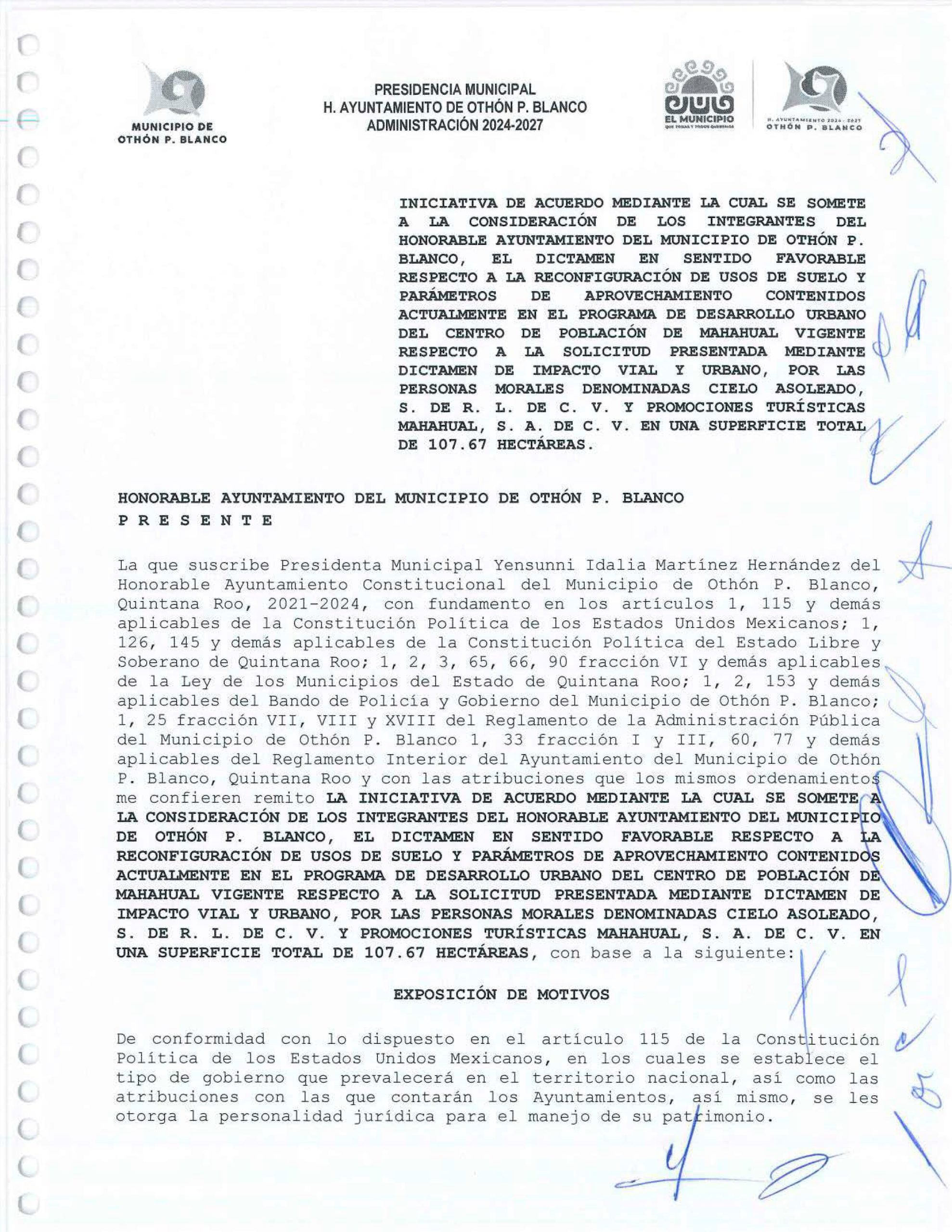
More than 30 water slides, projected to be the tallest in Latin America, six swimming pools, three beaches, 12 restaurants, and 24 bars. That and more will be at Perfect Day, the water park that the international cruise line Royal Caribbean plans to build in the fishing village of Mahahual, Quintana Roo, on Mexico’s Caribbean coast, covering just over 107 hectares. Since 2025, the land and permits have been in place to pave the way for the complex, in which the company will invest $1 billion. This follows the company’s move to take administrative control of the Costa Maya port with another investment of more than $221 million. Some members of the Mahahual community have already raised concerns about the irreversible impact of the project. Others, however, fear that the company will withdraw its investment from the area, and jeopardize their livelihoods.
The Costa Maya port was acquired by Royal Caribbean in July 2025. It was bought by Promociones Turísticas Mahahual, a subsidiary of the cruise line, after a multi-million dollar investment was finalized. Since then, several modifications have been made to the port’s operations. At the same time, the businesspeople involved announced the creation of Perfect Day, a project aimed at replicating the success of the company’s CocoCay theme park — a resort complex on a private island also purchased by Royal Caribbean — in the Bahamas. According to the firm, Perfect Day will open in 2027 and will receive approximately 20,000 visitors daily in Mahahual, which currently has a population of just over 2,600.
“[It will be] the biggest, boldest and most daring destination ever imagined […] a mind-blowing, record-breaking experience like no other,” Royal Caribbean describes on its website, which lists all the attractions the park will feature once it opens to the public.
More than 932 miles away, six members of the international environmental organization Greenpeace unfurled a giant banner on Tuesday with a message for Mexico’s Ministry of Environment and Natural Resources (Semarnat): “Perfect Day, water slides or environmental protection, that is the question.” The banner was part of a campaign to protect the Mexican jungle called México al grito de ¡Selva! — a twist on the patriotic cry ¡México al grito de guerra! (Mexico, answering the call to war).
Through this initiative, Greenpeace has denounced a long list of irregularities and legal violations committed by the company — violations they say have been allowed by authorities in Quintana Roo and overlooked by the Federal Government. According to the organization, the project will devastate the mangrove ecosystem, harm the 300 species that live there, and unleash a waste crisis involving hundreds of thousands of tons of debris from the moment construction begins.

A few hours after the media reported on the protest, Semarnat published a statement saying that “the Perfect Day project in Mahahual is still undergoing environmental assessment and, to date, does not have any environmental authorization for its development, construction or operation.”
When asked about the response, Carlos Samayoa, Greenpeace campaign coordinator, replied: “We already know that. The message is that we will be watching them and that we will be calling on people to pay attention to the outcome of the decision. They cannot continue authorizing more projects like this; we have also said that we are not against job creation, we are not against development, as long as it doesn’t tip the scales in favor of economic benefits concentrated in the hands of a few and with severe repercussions for ecosystems,” he says.
Greenpeace submitted a document of more than 100 pages to Semarnat back in February, analyzing the company’s Environmental Impact Statement and detailing the inconsistencies and gaps it contains. They argue these omissions put a fragile ecosystem at risk — one whose destruction would not only devastate the area but also leave it more vulnerable to extreme weather events such as hurricanes.
The promise of this multimillion‑dollar investment, however, had been endorsed and announced from the first days of Claudia Sheinbaum’s administration, with the involvement of then–economy secretary Marcelo Ebrard. They presented the upcoming investment operations — with companies such as Amazon, Mexico Pacific, Woodside Energy, and Royal Caribbean — as proof of international confidence in the new government. “At least four major investments of around $20 billion were announced for our country by 2025. The Royal Caribbean investment is important because southern Quintana Roo needs development; it’s a tourism investment that will be linked to the Maya Train and all the tourism development underway in the southeast,” Sheinbaum said on October 16, 2024.
On Wednesday, when questioned again after the complaints and criticism surrounding the project, Sheinbaum responded: “In this case, the most important thing is to conserve the reef; there cannot be a project that damages the reef in that area. So, if it’s going to be done, it has to be in another location that allows the project to be developed, or under certain conditions set by Semarnat. Some criticisms are simply for the sake of criticizing everything, but others do have to do with environmental protection, and that’s what they’re reviewing.” EL PAÍS requested a statement from the company regarding the complaints and questions about the project, but had not received a response by the time of publication.
Fast-tracked process
According to lawyer Irma Morales, from the organization Defending the Right to a Healthy Environment (DMAS), the legal battle against the Perfect Day project began when members of the Save Mahahual collective contacted them. After analyzing how the permits were granted, they discovered several inconsistencies in the process.

“They [Royal Caribbean] modified an Urban Development Program [PDU] in less than three weeks without following the procedure established by the state’s human settlements law,” the lawyer explains. “This needs to be spelled out because it’s a bit technical, but when you modify land‑use designations — even at the request of a private party — if that use wasn’t contemplated in the original plan, you must go through a full legal procedure as if you were drafting a new PDU, and that wasn’t done, much less was there any citizen participation. It all happened almost overnight, so to speak. That is, Royal Caribbean requests the land-use change, then the Urban Development Department grants it without further analysis. Then the city council fast-tracks its approval, and then the mayor does too, and it’s published in the state’s official gazette.”
The document Morales is referring to was published on December 5, 2025, and authorizes the land-use change “and development parameters regarding the request submitted through a road and urban impact assessment, by the companies Cielo Asoleado S. de R.L. de C.V. and Promociones Turísticas Mahahual S.A. de C.V. — both owned by Royal Caribbean — on a total area of 107.67 hectares,” according to the resolution, which reproduces the information signed by the municipal council headed by the mayor of Othón P. Blanco, Yensunni Idalia Martínez Hernández.
It was the organization DMAS that mobilized against the illegal land‑use changes granted to the company — in other words, against the municipality — by filing four amparo lawsuits [a constitutional injunction that allows a person or organization to challenge a government act that violates their rights]: one on its own behalf and three on behalf of eight other residents of Mahahual. Of those four filings, three were dismissed by the First District Judge in Chetumal, Quintana Roo, leaving only the organization’s case alive. That remaining petition obtained a definitive injunction last February, which barred the company from requesting municipal, state, or federal environmental permits needed to begin construction.


“That was very good news because, in the end, the company argued that since the land‑use change had already been authorized, they could go ahead and request their permit from Semarnat. But then both the injunction and even DMAS’s lawsuit were challenged by every authority involved — and by Royal Caribbean. The first to come out in defense of the company were the authorities themselves,” Morales explains.
A couple of weeks ago, the case was dismissed on the grounds that DMAS had not filed its amparo within the required timeframe. The lawsuit was thrown out, and the injunction was lifted. “The magistrates sided with the authorities. In fact, one of the main arguments from both the authorities and the company was that DMAS lacked legitimate interest because DMAS doesn’t live in Mahahual. And with the recent amendment to the Amparo Law, everything has become extremely narrow and restrictive — we now have to prove that the harm affects us ‘directly,’ even when we’re talking about a collective right.”
Last January, the Federal Environmental Protection Agency (Profepa) ordered a total and temporary shutdown of the tourism project for lacking federal environmental‑impact authorization and for destroying mangroves. “The closure was ordered after documenting filling and compaction work on a rustic road in a coastal low‑forest area with mangroves, as well as demolition and debris‑removal activities, all carried out without the environmental‑impact authorization required from the competent federal authority. The affected area covers 17,115 square meters,” the agency said in a statement.
DMAS and Greenpeace agree that Royal Caribbean has not clearly answered all the questions raised — even during public consultations — about the project’s long‑term environmental impacts in the region. The company has also drawn scrutiny for hiring Ari Adler Brotman less than a year after he left his position as director of the Quintana Roo Institute for Development and Financing (IDEFIN); in August 2025, he was appointed president of Royal Caribbean Mexico.

Luciana moved to Mahahual 15 years ago. She lives in an area where basic public services are still not fully available. She gets her water from a well and uses two batteries for electricity. She doesn’t work in the tourism industry, built around cruise‑ship traffic — the main source of employment for people living nearby. Instead, she has stayed independent, offering her diving services as a freelancer.
Even so, she understands why most people who depend on tourism fear losing their jobs if the project doesn’t go ahead. Still, she insists that Perfect Day is bad news for everyone: “It’s a sign of disrespect toward the community, toward the town’s identity, toward the environment where they want to build it, toward the ecosystem. It’s a social, environmental, and cultural affront. There is nothing they respect with this project they’re proposing. Nothing,” she says.
Sign up for our weekly newsletter to get more English-language news coverage from EL PAÍS USA Edition
Italian tradition meets Costa Blanca sourcing at exclusive gastronomic finale
Don’t miss your flight. 19 Million cars expected on UK roads for May bank holiday
K-EXPO Spain 2026 brings the Hallyu Wave to Madrid this summer


-

 Competiciones3 weeks ago
E
-
blackout April 20252 weeks ago
Insurance company Mapfre decides to pay out €14 million compensation for 2025 blackout
-
Costa del Sol3 weeks ago
Why home care is the new gold standard for living well in Spain
-
 Foreign demand2 weeks ago
Who Bought Where In The Second Half Of 2025?
-
Bullfighter injured4 weeks ago
Second serious injury in Spain’s La Maestranza bullring reignites controversy
-

 %4 weeks ago
Gibraltar Sees Surge In Residency Applications After Border Agreement
-
 %4 weeks ago
Portugal Confirms High-Speed Rail Link
-
Animal protection law4 weeks ago
Spain moves to redefine legal pets as draft law raises wider welfare concerns