
Latest
Planning An Autumn Escape? Lonely Planet Names Two Spanish Cities Among Europe’s Best Destinations For The Season

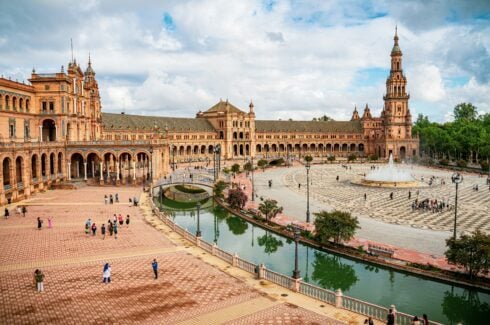
 RESPECTED travel magazine Lonely Planet has picked these two Spanish cities as the perfect autumn getaway.










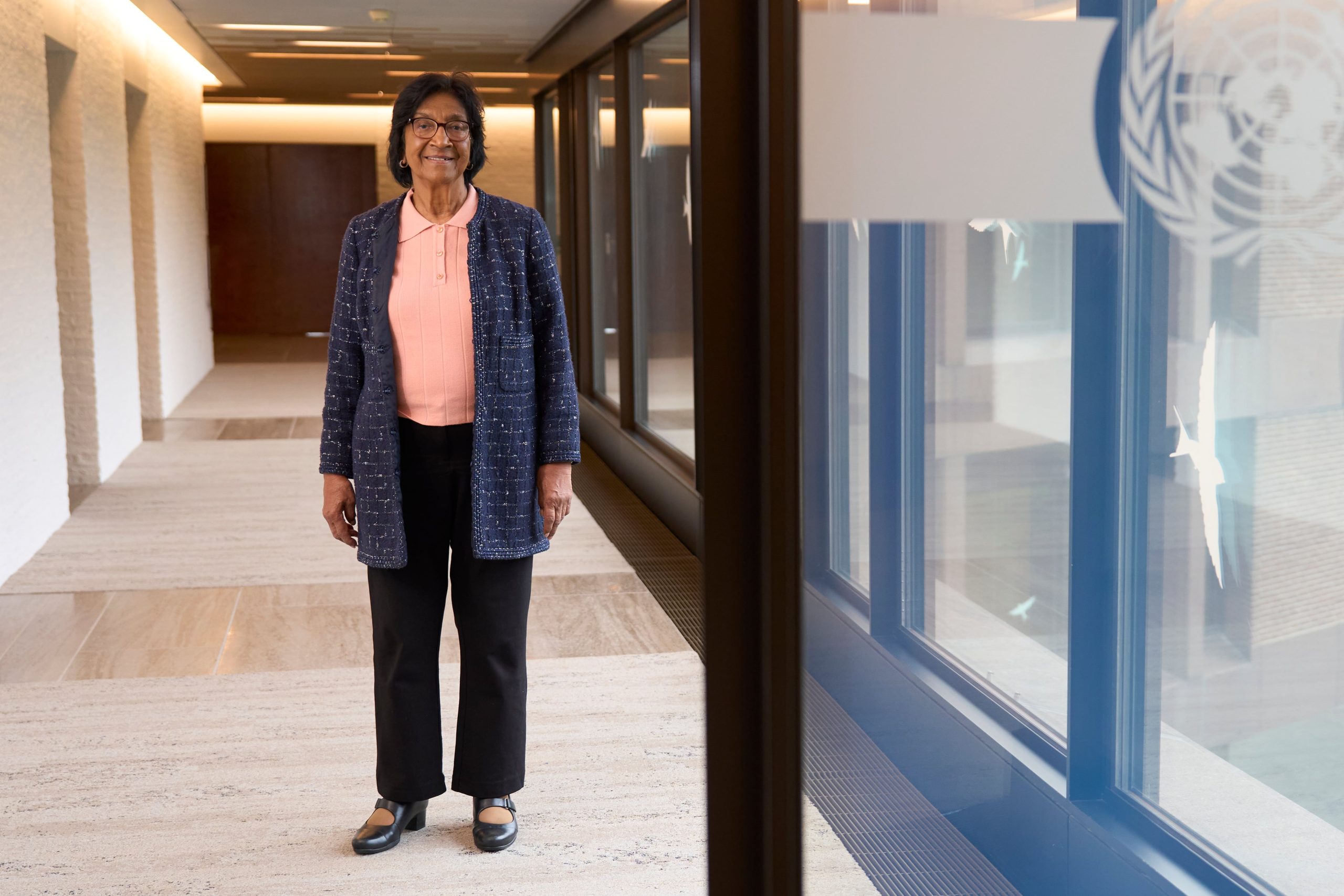
Eloquent and resolute, Navanethem “Navi” Pillay, recently awarded the Nobel Peace Prize, retains at 85 the passion and determination to continue the work that has defined her life: the defense of human rights.
Born in South Africa, she grew up under the apartheid regime and became a lawyer because she wanted to know “what people’s rights are.” The Norwegian Nobel Committee highlighted her efforts to uphold international law at a time when the International Criminal Court (ICC), as well as the International Court of Justice (ICJ), face attacks from the United States and its main ally, Israel.
Pillay has worked at both institutions, but the strongest backlash from Washington and the Israeli government came after she concluded in 2025 that the administration of Israeli Prime Minister Benjamin Netanyahu is committing genocide in Gaza.
Another pivotal moment in her career came in 1998, when, as a judge at the then International Criminal Tribunal for Rwanda, she sat on the bench that ruled that rape and systematic sexual violence constituted an integral component of the crime of genocide.
With her schedule packed with trips and engagements since receiving the prize, she speaks to EL PAÍS by video call and admits that “it’s just sinking in.”
Question. The Norwegian Nobel Committee said that “peace requires justice” when it announced that you had been awarded the Nobel Peace Prize on October 9. Hours later, the United States imposed financial and trade sanctions on the ICC. What is the greatest threat to the international rule of law today?
Answer. The resort to force is clearly the greatest threat to the international rule of law. And when powerful states take up that view and then get collaboration from other powerful people and states. These are all risks when, really, the rest of the world — that is, the majority of people — want peace and they want justice as the route to achieving it. They do not want more wars and more deaths. Because civilians are the ones who lose their lives most in modern warfare and remote armed drones. States have a peremptory obligation to protect civilians and to prevent crimes such as genocide. And we have to uphold those basic principles even in civil society. NGOs take great risks in going on the street to assert that.
Q. In 2025, as chair of a U.N. Independent International Commission of Inquiry, you concluded that there were reasonable grounds to say that Israel has committed genocide in Gaza. You came under fierce criticism from both Israel and the United States. Are you confident in the evidence your commission gathered? Why do you believe this amounts to genocide, the gravest of crimes and the one that is often considered the hardest to prove?
A. We analyzed both the Hamas attacks and Israel’s reaction, and we did it just like a court of law would. We did not put in a single piece of evidence in our report that we did not personally verify. Each department did its own investigation, and then we compiled all that together. Thanks to my previous experience in investigating genocide in Rwanda as a judge [in 100 days in 1994, between 500,000 and one million Tutsis and moderate Hutus were killed by the Hutu government and local militias], and based on the evidence of acts against the population in Gaza, together with statements made by leaders, genocidal intent by the government can be inferred. But we named three individuals: President Isaac Herzog, Prime Minister Benjamin Netanyahu, and former defense minister Yoav Gallant, as individuals who should be investigated and tried for genocide.
Q. Israel and the United States flatly reject your conclusions. Do you think the response from other democratic countries has been strong enough?
A. When we made the report, we exposed ourselves to criticism for concluding that there had been genocide in Gaza. I would change some parts of the text if it could be shown that certain things did not happen. But that is not the criticism we’re getting. We have been met with very serious and violent insults from Israel and the U.S., who call me a liar. That’s not so. The report seeks action by courts, whether national or the ICC, and it is significant that only these two countries have launched personal accusations without addressing the substance of the work. The Nobel Committee highlighted my work in respect of this conflict and this report. That vindicates our work and gives us a clear idea as to where the world is headed. We are not looking for another world war. We’re looking for an end of this conflict and for justice and accountability for these crimes to prevail.
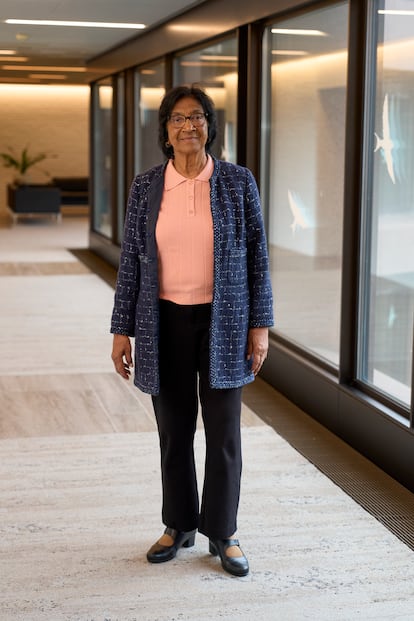
Q. You served first as a judge and later as president of the International Criminal Tribunal for Rwanda. In 1998, the tribunal ruled that rape and systematic sexual violence can constitute genocide if intended to destroy a specific group. It was a landmark ruling, but why has it taken so long for these crimes to be treated as more than a recurring horror of war?
A. They were not treated as crimes. I looked through some U.S. military manuals from the Vietnam War, and they encouraged soldiers to take those “yellow women” as a reward for fighting well. Some people think only killings amount to the destruction of a group, so this was the first time that view changed. On the other hand, I was told that many women will not come forward to give evidence, and that is a myth. Of course, if a group of white men goes to Rwanda, as they did, to hold big meetings and asks survivors what happened, they will not publicly say they were raped. Activists and NGOs have always said witnesses must be protected, and because we had reliable testimony, we were able to deliver convictions. I want to salute the courage of survivors of sexual violence who came forward to testify.
Q. You were born in South Africa and suffered under apartheid. Did you always want to be a lawyer or a judge?
A. I did it because those of us who grew up under that regime had no rights, and as a child I felt I wanted to know what people’s rights are. In that extreme situation where laws institutionalized racism, we were not exposed to what the U.N. was doing. There is a Universal Declaration of Human Rights that states everyone is equal. And apartheid was declared a crime against humanity, but this kind of information did not reach the general public in South Africa until some of us, the lawyers, used the outside mechanisms of international law. We wrote letters and sent them to leaders around the world, from then-prime minister Indira Gandhi of India to the French intellectual Simone de Beauvoir. The lawful struggle of civil society is a hard road, but it is the road that was chosen.
Q. On December 10, you will receive the Nobel Peace Prize in Oslo. Have you thought about what you will say in your acceptance speech?
A. We are witnessing an attack on the rule of law and going through precarious times where poor countries are being demonized by rich countries. I will speak about my life’s work and the way we approach these matters. I want to say that, right now, Spain is one of my favorite countries. I have great admiration for the King [Felipe VI], whom I have described as a human rights champion. And I respect that the prime minister [Pedro Sánchez] has taken a principled position on the Israel-Palestine conflict. I also salute Spain for its consistent efforts to support the abolition of the death penalty.
Sign up for our weekly newsletter to get more English-language news coverage from EL PAÍS USA Edition
Claudia Sheinbaum
Emiliano Andrade’s Daughter Blames ICE For His Death: ‘My Father Did Not Receive The Medical Attention He Desperately Needed’

The warnings began circulating on Facebook groups in Laredo, Texas, two days before Mexican authorities confirmed them. Relatives of detainees at the GEO Rio Grande detention center spoke of sickness, neglect and a man who had allegedly died after more than a month without proper medical care.
“People of Laredo, please help me share this; it’s urgent! The people at the GEO Rio Grande facility are in poor health.”
“It’s true. My son is sick in there. He’s been ill for days and they ignore him.”
“Girls, check on your relatives who are at GEO; my father just called me to say a man died. He had been sick for more than a month and they didn’t treat him. The name of the deceased is Emiliano Covarrubias Andrade. Dormitory H5A.”
“My husband says they took the body without even examining it and they want this to be kept quiet.”
Those messages were confirmed on Monday, when Mexico’s Foreign Ministry announced that it will file a complaint over the death of another Mexican national in an Immigration and Customs Enforcement (ICE) detention center operated by GEO Group. With Andrade’s death, 18 migrants have died in the custody of U.S. immigration authorities since Donald Trump returned to the White House.
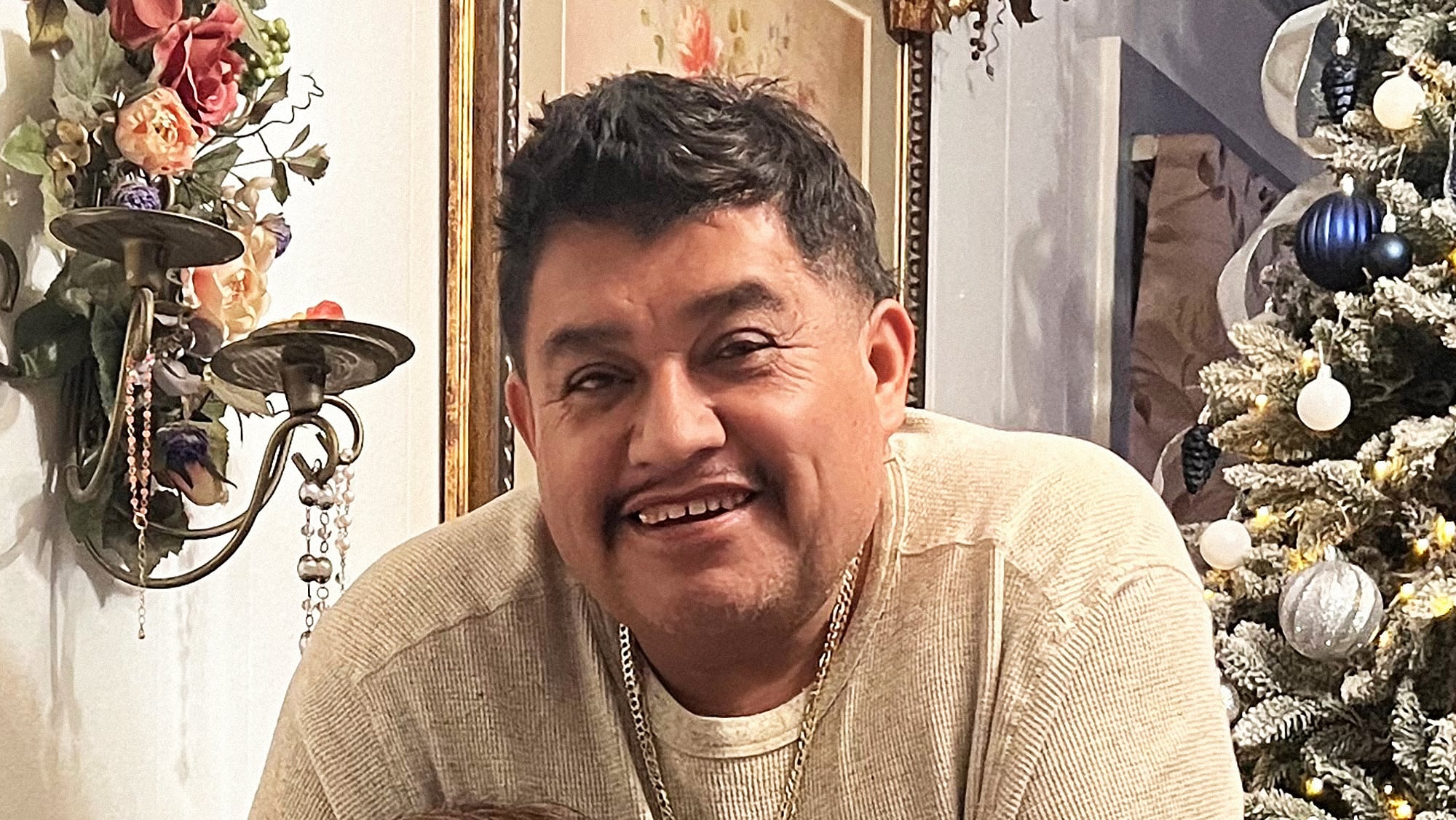
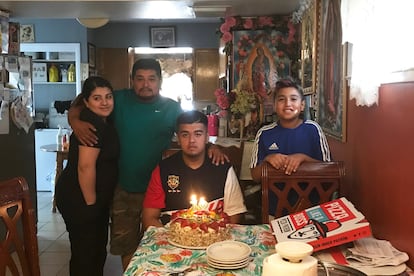
Emiliano Andrade Covarrubias was 56 years old. He came from a small town in the central Mexican state of Hidalgo and had lived in Dallas for decades. His three children were born in the United States. He worked as a painter and hoped eventually to return to Mexico, where he was building a house, which is why he frequently traveled back and forth between the two countries, his daughter, Stefani Andrade, told Texas Tribune. On his return from one of those trips by bus in June, he was detained at the border.
He had been in ICE custody ever since. During video calls with his family, he appeared increasingly thin. “We believe he did not receive the medical attention he desperately needed,” his daughter wrote on a GoFundMe page set up to help cover funeral expenses. “My father was more than just a name. He was a father, a loved one, and someone whose life meant so much to our family. He deserved to be treated with dignity, compassion, and care.”
This is not the first account of poor conditions inside migrant detention centers in the United States. Since Trump renewed his immigration crackdown, families have repeatedly denounced a lack of medication, inadequate food, limited access to basic hygiene, insufficient protection from the cold, and abuse and mistreatment.
The Mexican government has also stepped up its legal response, saying it has already filed 20 criminal complaints with prosecutors in the states where the deaths occurred. In August, Mexico’s Deputy Foreign Minister Roberto Velasco acknowledged that authorities had received responses in only four cases. The Foreign Ministry has not provided an update on the status of those complaints since then.
The report Dying in Detention, which examined the 52 deaths of detainees in ICE facilities during the first months of Trump’s current term through June, found failures in medical care even in serious cases, unsanitary conditions inside detention centers and a lack of accountability among those responsible.
The investigation, produced by Human Rights Watch and Physicians for Human Rights, found that deaths in ICE custody had more than doubled during Trump’s second term and that the mortality rate had reached its highest level in a decade.
Emiliano’s family did not learn of his death from ICE, but from the medical examiner’s office. On Monday, they traveled to Laredo to recover his belongings. “His passing has left our family devastated, heartbroken, and struggling to come to terms with such an unexpected loss,” wrote his daughter, Stefani Andrade, 29.
At her morning press conference, Mexican President Claudia Sheinbaum reiterated that her government, through Mexico’s consular network, would provide legal assistance to Mexican nationals in the United States: “We are against any form of racism, especially when it involves our fellow Mexicans in the United States.”
Andrade’s story is also the story of tens of thousands of Mexicans who built lives through hard work in the United States and now face an intensified immigration crackdown. In Laredo alone, he is the second migrant to die this year in an ICE facility. In June, Félix Alcorta Rodríguez, 63, died after being found unconscious, according to ICE; it did not give details on the cause of death. Another six Mexicans have died this year amid these roundups.
The youngest was Royer Pérez, who was just 19. The oldest, José Guadalupe Ramos and Lorenzo Salgados, were only 52. They came from Veracruz, Chiapas and Guanajuato. Most had spent decades doing the jobs that often fall to working-class immigrants in the United States, working in construction, laundries, and restaurant kitchens.
They were detained while having breakfast, on their way to work, or for driving without a license. The migrant who survived the longest in ICE custody did not last more than three months. Héber, 34, survived only a week. Several were ill for much of their time in detention, some in facilities allegedly designed “to break” those held inside them.
All left behind the wives they met in the United States, the children born in the United States and the lives they rebuilt in the United States.
Sign up for our weekly newsletter to get more English-language news coverage from EL PAÍS USA Edition


Esme Fox – esme@thelocal.es
Published: 20 Oct, 2026 CET. Updated: Tue 20 Oct 2026 15:05 CET

Add The Local as a preferred source
If you meet the requirements to apply for Spanish citizenship, are you allowed to leave the country while your application is in process?
Become a member or log in to continue reading
More
Comments
See Also

Navi Pillay, Nobel Peace Prize Laureate: ‘Netanyahu Should Be Tried For Genocide’

Emiliano Andrade’s Daughter Blames ICE For His Death: ‘My Father Did Not Receive The Medical Attention He Desperately Needed’
Can I Apply For Spanish Citizenship And Then Leave The Country?


-

 Uncategorized3 weeks ago
F1 Bahrain Grand Prix will be live and FREE on TV this weekend
-
EU2 weeks ago
EU nicotine crackdown sparks warning that ex-smokers could be driven back to cigarettes
-
Blackout preparedness3 weeks ago
Brussels takes action against Spain over failure to update blackout plan
-

 Foreign demand3 weeks ago
Market Snapshot: German Market In Q2 2026
-

 New Developments3 weeks ago
How To Get A Tourist Rental Licence In Andalusia (Spain) – Step-By-Step Guide 2025
-

 Uncategorized3 weeks ago
Lewis Hamilton F1 wish could come true as stunning plans for new track revealed
-
 Housing access / crisis / affordability3 weeks ago
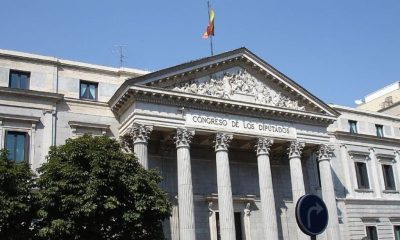
Radical Housing Decrees Defeated As Snap Election Talk Grows
-
Latest2 weeks ago
The Changes To Spain’s IRNR Non-Resident Property Tax In 2027
Join the conversation in our comments section below. Share your own views and experience and if you have a question or suggestion for our journalists then email us at news@thelocal.es.
Please keep comments civil, constructive and on topic – and make sure to read our terms of use before getting involved.
Please log in here to leave a comment.