
Donald Trump
Navi Pillay, Nobel Peace Prize Laureate: ‘Netanyahu Should Be Tried For Genocide’

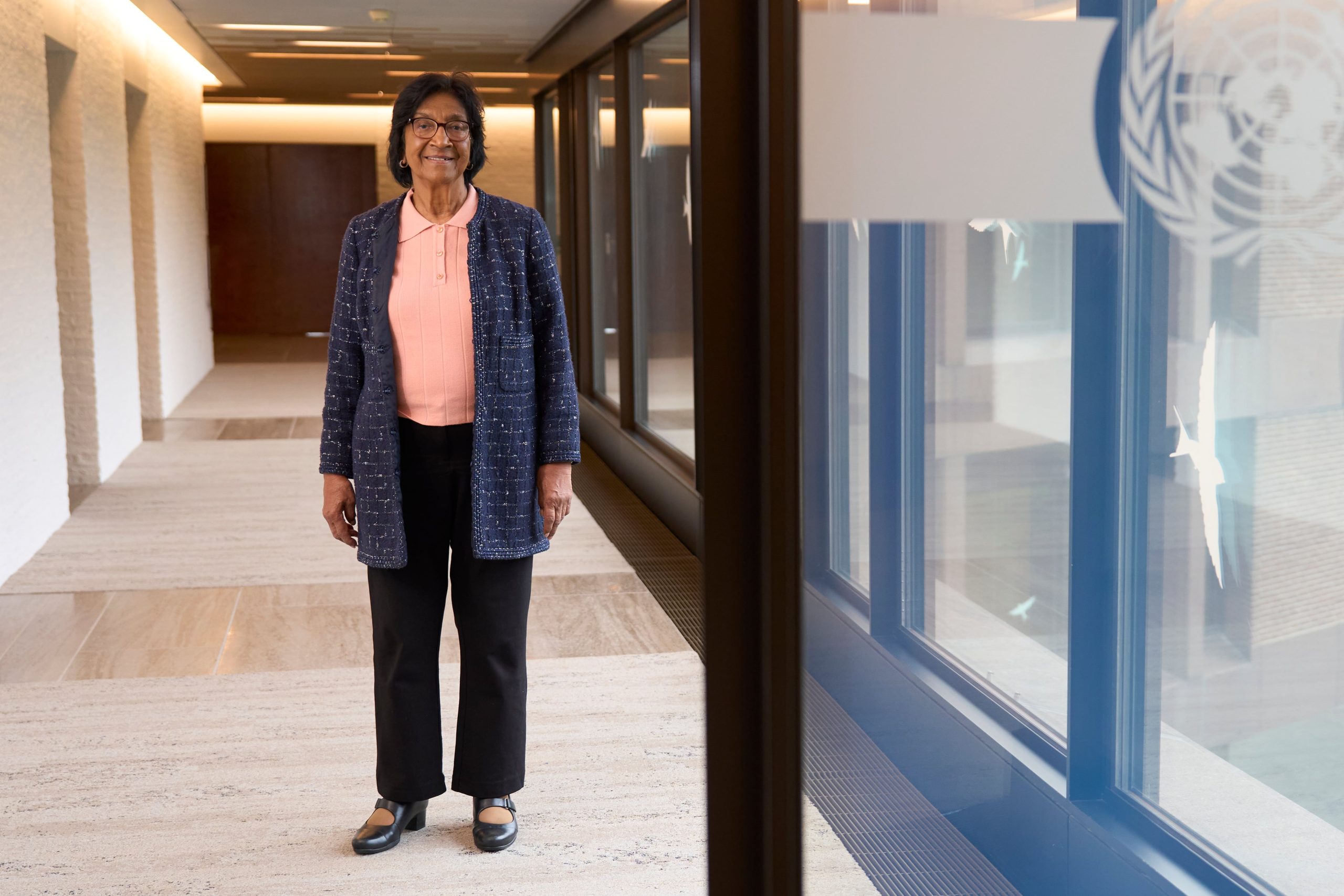
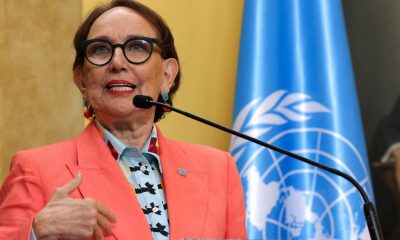
Eloquent and resolute, Navanethem “Navi” Pillay, recently awarded the Nobel Peace Prize, retains at 85 the passion and determination to continue the work that has defined her life: the defense of human rights.
Born in South Africa, she grew up under the apartheid regime and became a lawyer because she wanted to know “what people’s rights are.” The Norwegian Nobel Committee highlighted her efforts to uphold international law at a time when the International Criminal Court (ICC), as well as the International Court of Justice (ICJ), face attacks from the United States and its main ally, Israel.
Pillay has worked at both institutions, but the strongest backlash from Washington and the Israeli government came after she concluded in 2025 that the administration of Israeli Prime Minister Benjamin Netanyahu is committing genocide in Gaza.
Another pivotal moment in her career came in 1998, when, as a judge at the then International Criminal Tribunal for Rwanda, she sat on the bench that ruled that rape and systematic sexual violence constituted an integral component of the crime of genocide.
With her schedule packed with trips and engagements since receiving the prize, she speaks to EL PAÍS by video call and admits that “it’s just sinking in.”
Question. The Norwegian Nobel Committee said that “peace requires justice” when it announced that you had been awarded the Nobel Peace Prize on October 9. Hours later, the United States imposed financial and trade sanctions on the ICC. What is the greatest threat to the international rule of law today?
Answer. The resort to force is clearly the greatest threat to the international rule of law. And when powerful states take up that view and then get collaboration from other powerful people and states. These are all risks when, really, the rest of the world — that is, the majority of people — want peace and they want justice as the route to achieving it. They do not want more wars and more deaths. Because civilians are the ones who lose their lives most in modern warfare and remote armed drones. States have a peremptory obligation to protect civilians and to prevent crimes such as genocide. And we have to uphold those basic principles even in civil society. NGOs take great risks in going on the street to assert that.
Q. In 2025, as chair of a U.N. Independent International Commission of Inquiry, you concluded that there were reasonable grounds to say that Israel has committed genocide in Gaza. You came under fierce criticism from both Israel and the United States. Are you confident in the evidence your commission gathered? Why do you believe this amounts to genocide, the gravest of crimes and the one that is often considered the hardest to prove?
A. We analyzed both the Hamas attacks and Israel’s reaction, and we did it just like a court of law would. We did not put in a single piece of evidence in our report that we did not personally verify. Each department did its own investigation, and then we compiled all that together. Thanks to my previous experience in investigating genocide in Rwanda as a judge [in 100 days in 1994, between 500,000 and one million Tutsis and moderate Hutus were killed by the Hutu government and local militias], and based on the evidence of acts against the population in Gaza, together with statements made by leaders, genocidal intent by the government can be inferred. But we named three individuals: President Isaac Herzog, Prime Minister Benjamin Netanyahu, and former defense minister Yoav Gallant, as individuals who should be investigated and tried for genocide.
Q. Israel and the United States flatly reject your conclusions. Do you think the response from other democratic countries has been strong enough?
A. When we made the report, we exposed ourselves to criticism for concluding that there had been genocide in Gaza. I would change some parts of the text if it could be shown that certain things did not happen. But that is not the criticism we’re getting. We have been met with very serious and violent insults from Israel and the U.S., who call me a liar. That’s not so. The report seeks action by courts, whether national or the ICC, and it is significant that only these two countries have launched personal accusations without addressing the substance of the work. The Nobel Committee highlighted my work in respect of this conflict and this report. That vindicates our work and gives us a clear idea as to where the world is headed. We are not looking for another world war. We’re looking for an end of this conflict and for justice and accountability for these crimes to prevail.
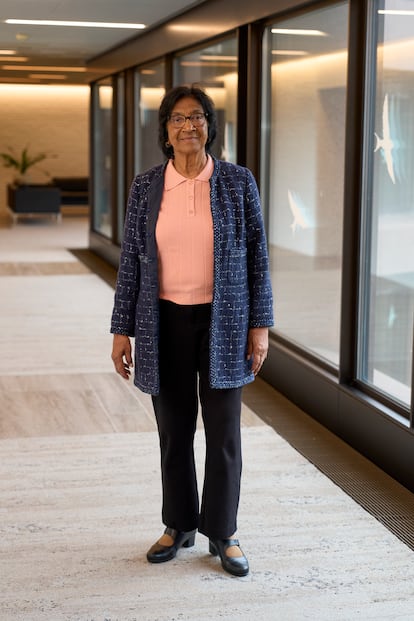
Q. You served first as a judge and later as president of the International Criminal Tribunal for Rwanda. In 1998, the tribunal ruled that rape and systematic sexual violence can constitute genocide if intended to destroy a specific group. It was a landmark ruling, but why has it taken so long for these crimes to be treated as more than a recurring horror of war?
A. They were not treated as crimes. I looked through some U.S. military manuals from the Vietnam War, and they encouraged soldiers to take those “yellow women” as a reward for fighting well. Some people think only killings amount to the destruction of a group, so this was the first time that view changed. On the other hand, I was told that many women will not come forward to give evidence, and that is a myth. Of course, if a group of white men goes to Rwanda, as they did, to hold big meetings and asks survivors what happened, they will not publicly say they were raped. Activists and NGOs have always said witnesses must be protected, and because we had reliable testimony, we were able to deliver convictions. I want to salute the courage of survivors of sexual violence who came forward to testify.
Q. You were born in South Africa and suffered under apartheid. Did you always want to be a lawyer or a judge?
A. I did it because those of us who grew up under that regime had no rights, and as a child I felt I wanted to know what people’s rights are. In that extreme situation where laws institutionalized racism, we were not exposed to what the U.N. was doing. There is a Universal Declaration of Human Rights that states everyone is equal. And apartheid was declared a crime against humanity, but this kind of information did not reach the general public in South Africa until some of us, the lawyers, used the outside mechanisms of international law. We wrote letters and sent them to leaders around the world, from then-prime minister Indira Gandhi of India to the French intellectual Simone de Beauvoir. The lawful struggle of civil society is a hard road, but it is the road that was chosen.
Q. On December 10, you will receive the Nobel Peace Prize in Oslo. Have you thought about what you will say in your acceptance speech?
A. We are witnessing an attack on the rule of law and going through precarious times where poor countries are being demonized by rich countries. I will speak about my life’s work and the way we approach these matters. I want to say that, right now, Spain is one of my favorite countries. I have great admiration for the King [Felipe VI], whom I have described as a human rights champion. And I respect that the prime minister [Pedro Sánchez] has taken a principled position on the Israel-Palestine conflict. I also salute Spain for its consistent efforts to support the abolition of the death penalty.
Sign up for our weekly newsletter to get more English-language news coverage from EL PAÍS USA Edition








Claudia Sheinbaum
Emiliano Andrade’s Daughter Blames ICE For His Death: ‘My Father Did Not Receive The Medical Attention He Desperately Needed’

The warnings began circulating on Facebook groups in Laredo, Texas, two days before Mexican authorities confirmed them. Relatives of detainees at the GEO Rio Grande detention center spoke of sickness, neglect and a man who had allegedly died after more than a month without proper medical care.
“People of Laredo, please help me share this; it’s urgent! The people at the GEO Rio Grande facility are in poor health.”
“It’s true. My son is sick in there. He’s been ill for days and they ignore him.”
“Girls, check on your relatives who are at GEO; my father just called me to say a man died. He had been sick for more than a month and they didn’t treat him. The name of the deceased is Emiliano Covarrubias Andrade. Dormitory H5A.”
“My husband says they took the body without even examining it and they want this to be kept quiet.”
Those messages were confirmed on Monday, when Mexico’s Foreign Ministry announced that it will file a complaint over the death of another Mexican national in an Immigration and Customs Enforcement (ICE) detention center operated by GEO Group. With Andrade’s death, 18 migrants have died in the custody of U.S. immigration authorities since Donald Trump returned to the White House.
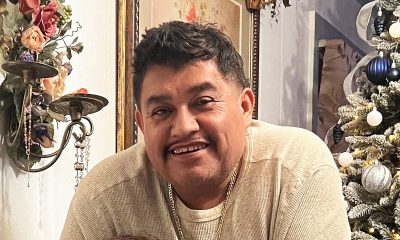
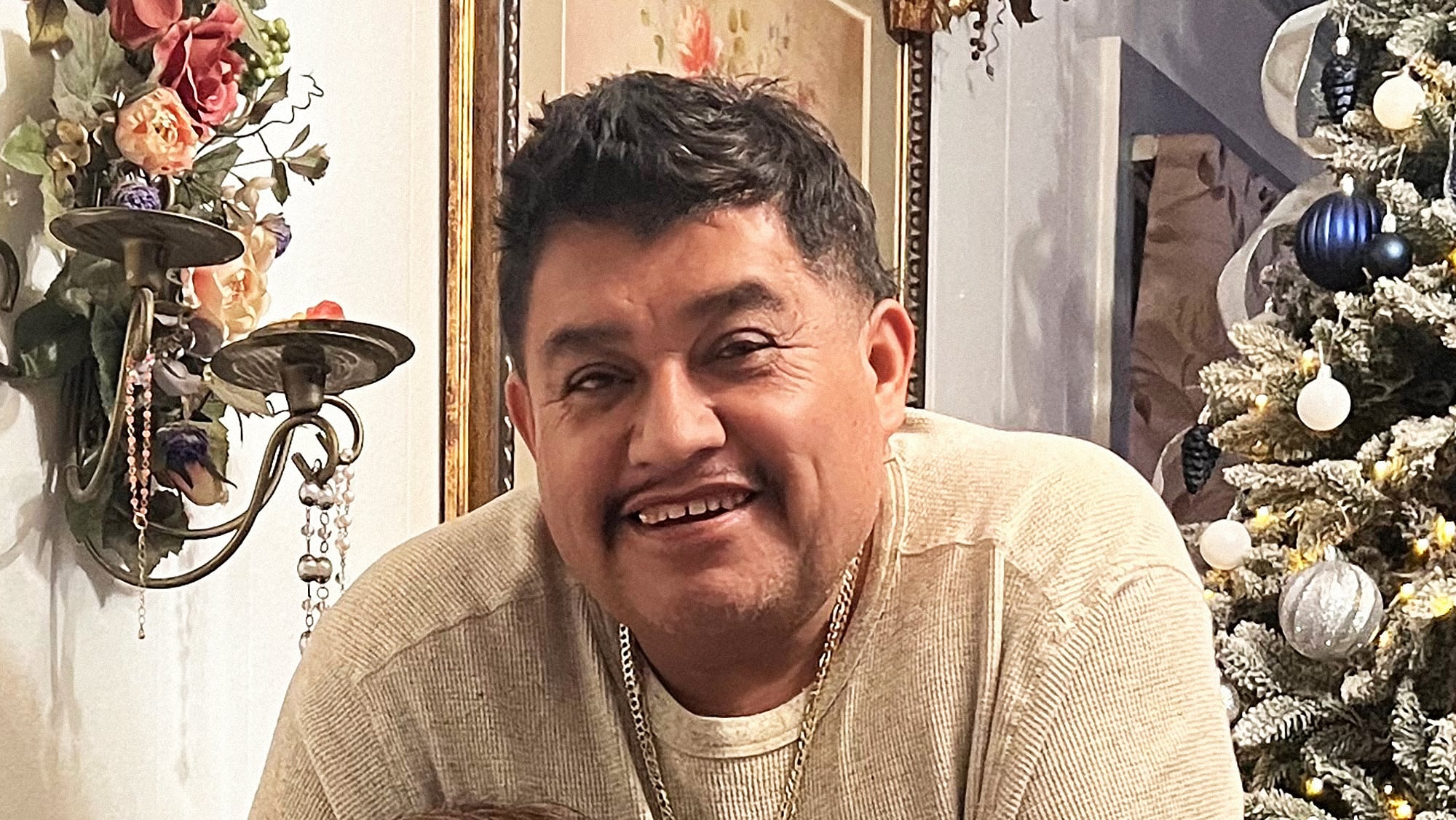
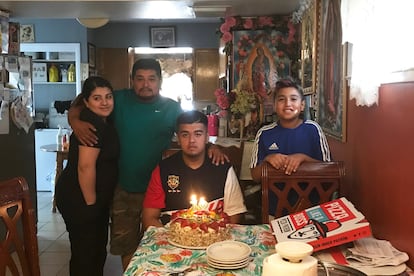
Emiliano Andrade Covarrubias was 56 years old. He came from a small town in the central Mexican state of Hidalgo and had lived in Dallas for decades. His three children were born in the United States. He worked as a painter and hoped eventually to return to Mexico, where he was building a house, which is why he frequently traveled back and forth between the two countries, his daughter, Stefani Andrade, told Texas Tribune. On his return from one of those trips by bus in June, he was detained at the border.
He had been in ICE custody ever since. During video calls with his family, he appeared increasingly thin. “We believe he did not receive the medical attention he desperately needed,” his daughter wrote on a GoFundMe page set up to help cover funeral expenses. “My father was more than just a name. He was a father, a loved one, and someone whose life meant so much to our family. He deserved to be treated with dignity, compassion, and care.”
This is not the first account of poor conditions inside migrant detention centers in the United States. Since Trump renewed his immigration crackdown, families have repeatedly denounced a lack of medication, inadequate food, limited access to basic hygiene, insufficient protection from the cold, and abuse and mistreatment.
The Mexican government has also stepped up its legal response, saying it has already filed 20 criminal complaints with prosecutors in the states where the deaths occurred. In August, Mexico’s Deputy Foreign Minister Roberto Velasco acknowledged that authorities had received responses in only four cases. The Foreign Ministry has not provided an update on the status of those complaints since then.
The report Dying in Detention, which examined the 52 deaths of detainees in ICE facilities during the first months of Trump’s current term through June, found failures in medical care even in serious cases, unsanitary conditions inside detention centers and a lack of accountability among those responsible.
The investigation, produced by Human Rights Watch and Physicians for Human Rights, found that deaths in ICE custody had more than doubled during Trump’s second term and that the mortality rate had reached its highest level in a decade.
Emiliano’s family did not learn of his death from ICE, but from the medical examiner’s office. On Monday, they traveled to Laredo to recover his belongings. “His passing has left our family devastated, heartbroken, and struggling to come to terms with such an unexpected loss,” wrote his daughter, Stefani Andrade, 29.
At her morning press conference, Mexican President Claudia Sheinbaum reiterated that her government, through Mexico’s consular network, would provide legal assistance to Mexican nationals in the United States: “We are against any form of racism, especially when it involves our fellow Mexicans in the United States.”
Andrade’s story is also the story of tens of thousands of Mexicans who built lives through hard work in the United States and now face an intensified immigration crackdown. In Laredo alone, he is the second migrant to die this year in an ICE facility. In June, Félix Alcorta Rodríguez, 63, died after being found unconscious, according to ICE; it did not give details on the cause of death. Another six Mexicans have died this year amid these roundups.
The youngest was Royer Pérez, who was just 19. The oldest, José Guadalupe Ramos and Lorenzo Salgados, were only 52. They came from Veracruz, Chiapas and Guanajuato. Most had spent decades doing the jobs that often fall to working-class immigrants in the United States, working in construction, laundries, and restaurant kitchens.
They were detained while having breakfast, on their way to work, or for driving without a license. The migrant who survived the longest in ICE custody did not last more than three months. Héber, 34, survived only a week. Several were ill for much of their time in detention, some in facilities allegedly designed “to break” those held inside them.
All left behind the wives they met in the United States, the children born in the United States and the lives they rebuilt in the United States.
Sign up for our weekly newsletter to get more English-language news coverage from EL PAÍS USA Edition
Dallas
Nikole Hannah-Jones: ‘Trump Understands America More Than The Democrats. He Knows How Effectively You Can Use Racism’
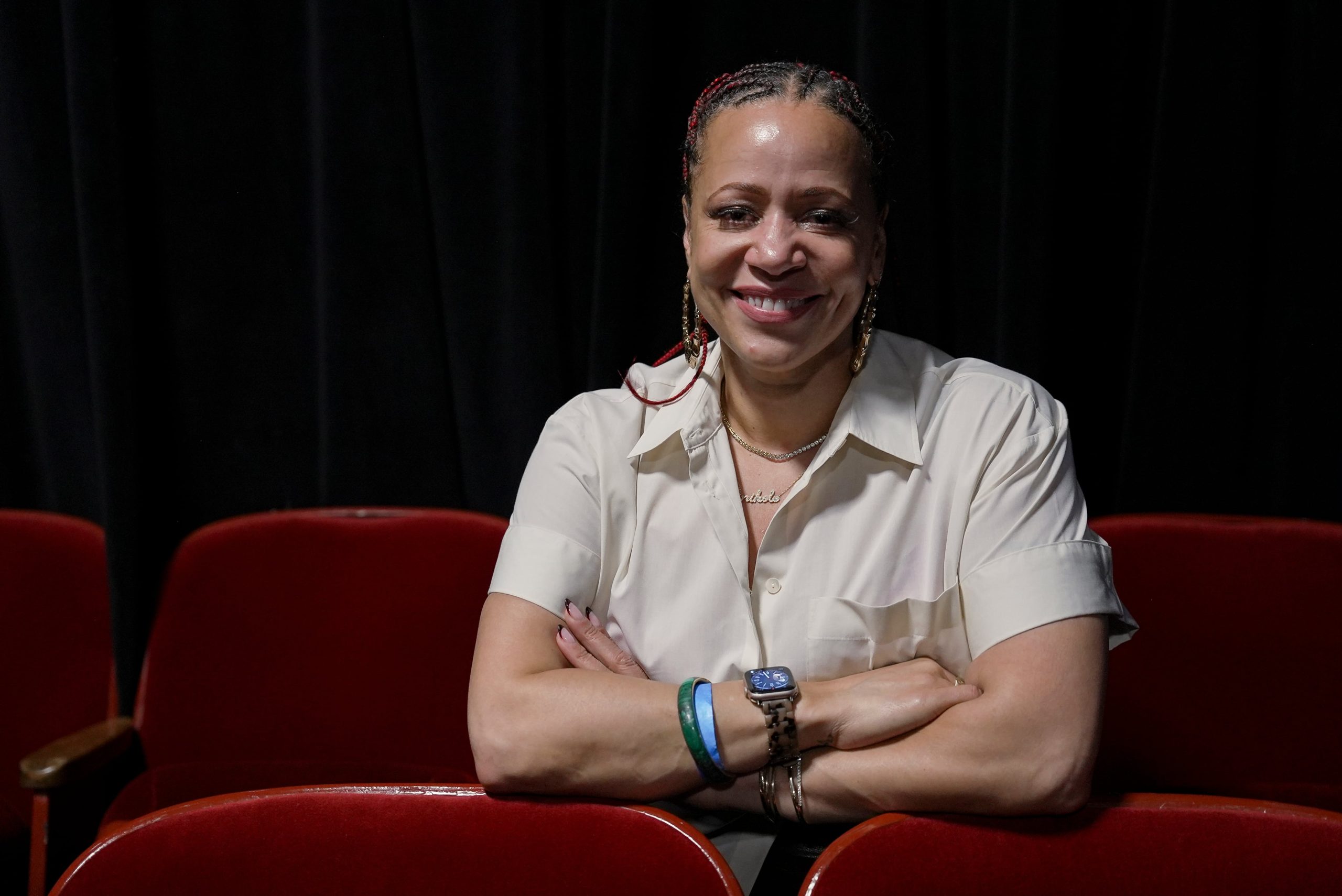
Nikole Hannah-Jones says there have been only two occasions when she looked around a first-class cabin and saw that every passenger was Black. She says that when that happens, something else is going on as well.
“White passengers come on, turn the corner, see that the entire first class is Black and there is a pause. Because it is very normal to fly coach… if the people in first class are white. But all of a sudden coach gets real shabby to you if everybody in first class is Black. And that’s a metaphor for America,” she says.
“You don’t ask: why does there have to be a first class and a coach? Why can’t you make the whole plane first class? That’s not a problem to you. You only question first class if the wrong people are in it. And this is America writ large,” she adds before a crowd of hundreds at the Texas Theatre, as part of the Hay Festival in Dallas. Everyone listens attentively. Then comes another thunderous round of applause. Then the requests for photos, the festival’s longest line for a book signing, and countless people thanking her for her work.
Hannah-Jones, 50, is a journalist at The New York Times Magazine and the creator of the 1619 Project, a landmark reporting initiative on the legacy of slavery in the United States. She won the Pulitzer Prize in 2020, turned the project into a documentary series that earned an Emmy Award, and expanded it into two books, both of which became bestsellers.
That came with consequences. In Florida, the 1619 Project was explicitly barred from being taught in public schools, while in Texas schools, educators were prohibited from requiring students to study it. Efforts to keep it out of classrooms spread across Republican-led states. During his first term, U.S. President Donald Trump cited the project as an example of the “toxic propaganda” he said was dividing the country and announced the creation of the 1776 Commission to promote what he called “patriotic education.”
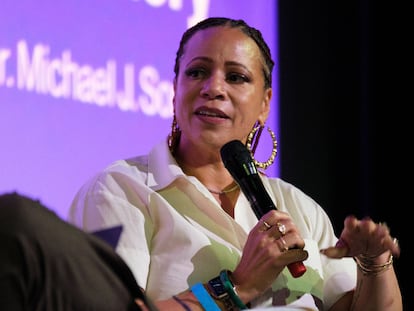
“The most openly white nationalist administration knows that to control power you have to teach a history that justifies your power. Control of history is never superficial,” Hannah-Jones says.
In a later interview with EL PAÍS, the journalist points to how Trump uses the idea of memory and history: “He gets his legitimacy by evoking a past where white men were the natural leaders of this country. He recalls that past to justify the open racism of his administration, saying ‘this is who we are as Americans.’ If the people who built this country were white men, it becomes a divine destiny that they should rule. He’s saying, ‘no matter what the country looks like, you will be on top.’”
The author is clear about who is receiving that message: white Americans unsettled by the country’s demographic changes, many of whom are themselves living on the brink of poverty.
She points to the example of a woman in Texas waiting in line at a food bank who was asked whether she regretted voting for Trump three times. She said she did not, but wished he had begun deportations sooner. “She thinks her suffering is okay, as long as the wrong people can’t be in the country and the right people are also suffering,” says Hannah-Jones, adding that race is being deliberately weaponized in such cases: “We spend too much time focusing on people we think should be out lessers, instead of recognizing who is exploiting all of us.”
Hannah-Jones believes it is precisely this “resentment” that Trump has successfully tapped into. “Trump understands America more than the Democrats,” she says. “He understands how effectively you can use racism as a Trojan horse. You don’t have to have great economic policy or great international policy. You can constantly lie to people, but if you provoke their sense of racial resentment, none of that will matter.”
“I don’t think Democrats have been willing to acknowledge how much race still animates and drives American politics,” she continues. “They tend to have an innate belief about the goodness of America and that everything will work out. Trump has a very realistic understanding of this country that he exploits.”
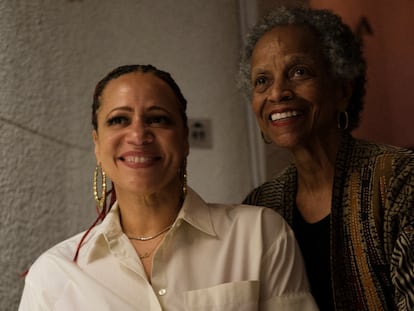
The journalist, whose career has focused on investigating race and inequality, founded the Center for Journalism and Democracy at Howard University, as well as the Ida B. Wells Society for Investigative Reporting, which is dedicated to training and supporting Black investigative journalists.
One of her most recent essays, on segregation in the U.S. education system, has once again thrust her into the center of a national debate. Hannah-Jones and her husband, both upper-middle-class professionals living in New York, chose to enroll their daughter in an under-resourced public school in Brooklyn where most students are Black. “I believed Faraji and I could bring some of that power with us,” she writes. “We had connections and time and status that should not matter, but that we all know do. And more than that, we believed strongly that if families like ours went into schools like this one, it would challenge other families with similar values to do the same.”
In the essay, she recounts her daughter’s sense of “betrayal” when she learned of the decision. Hannah-Jones has defended it, noting that her daughter was ultimately admitted to the predominantly white high school she wanted to attend. “I’ve often been told that I ‘sacrificed’ my daughter,” she says. “But we are so willing to sacrifice a whole lot of our children. And we’re okay with that. I wanted to use the story of this one child to stand in for the story of millions of children whose parents can’t just pull them out of a school when it goes bad.”
In doing so, Hannah-Jones once again shines a spotlight on educational segregation, a subject she has spent two decades investigating. She also sees the attacks on books and higher education as what she calls “the earliest attacks on democracy in the United States in this most recent moment.”
“If you study any fascist regimes, they always go after institutions of higher education because they teach you critical thinking. They teach you to question,” she explains. “And regimes don’t want people who question their power. And then they have to turn us against each other — that is the most important part.”
The upcoming midterm elections are looming large over cultural events across the country, particularly in Texas, where Democrats believe a long-awaited breakthrough may be within reach.
When asked what the headlines will be on November 4, the day after the midterms, Hannah-Jones replies: “I never try to predict the future because I think that’s the easiest way for journalists to look like an idiot. I just fear that, if we look at what the administration is saying and doing, we will not have a result on November 4 that is accepted. So I think the headline is going to be that the Trump administration is only going to accept one outcome in the election.”
Sign up for our weekly newsletter to get more English-language news coverage from EL PAÍS USA Edition
Abdul El-Sayed
Abdul El‑Sayed, The Democrats’ Riskiest Bet For The Midterms: ‘We Will Have To Hold Trump Accountable For All The Harm He Has Done’

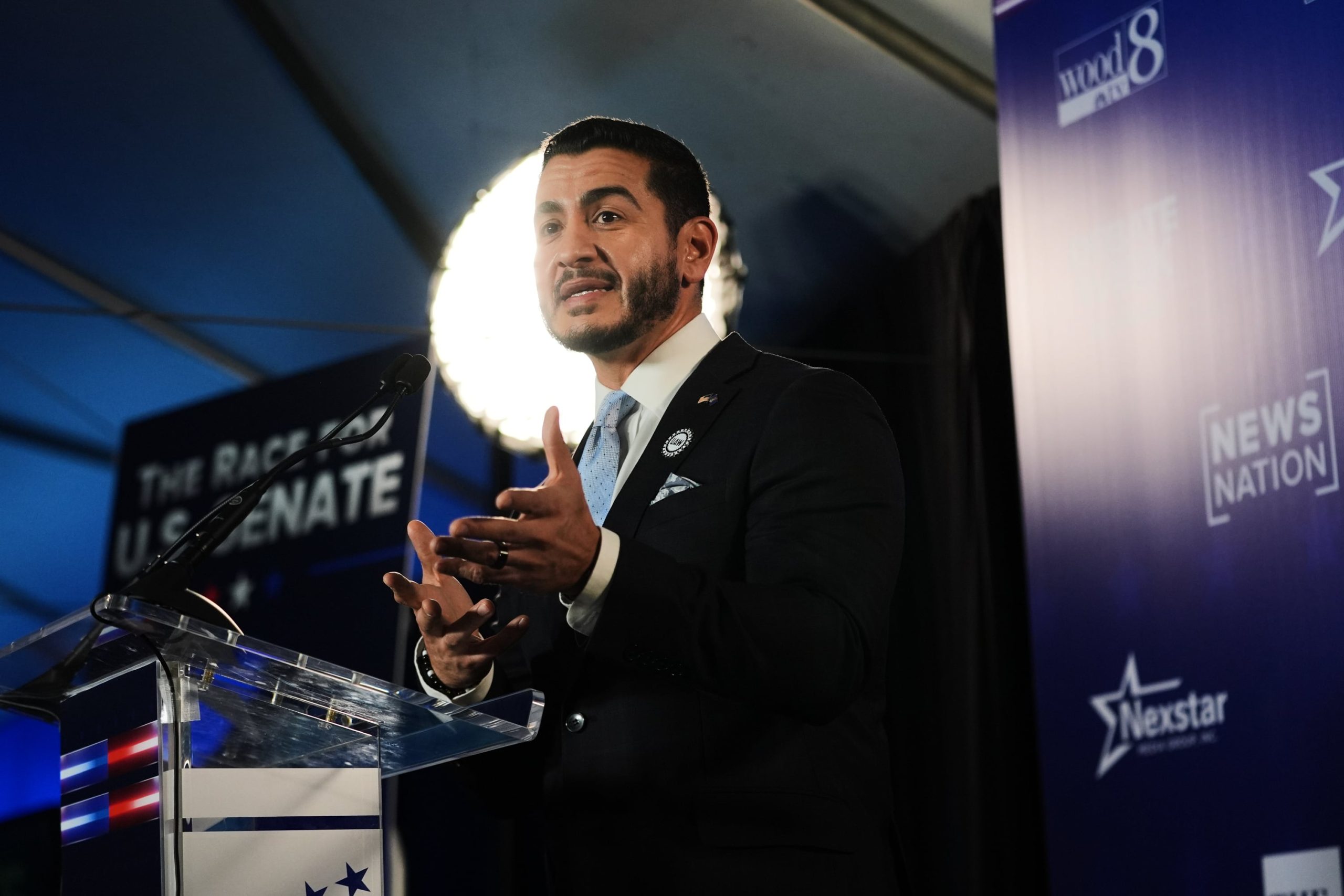
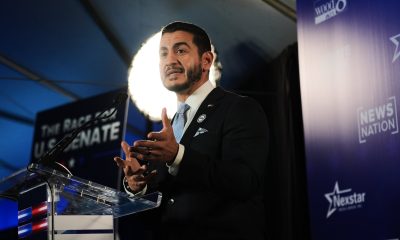
There is still over an hour before the protagonist appears, but the line already wraps around the block. Dozens of people wait patiently for their turn to see the man who has become the great hope of the Democratic left wing. When he begins to speak, pandemonium breaks out: “My name is Abdul El‑Sayed and I am going to be your next senator in Washington.” Over the next hour, the hundreds gathered in this venue will applaud, laugh, and cheer every word from the mouth of the new star of American politics, who has already made a fitted black T‑shirt and jeans his trademark look. We are in Lansing, Michigan’s capital, where one of the most gripping battles of the midterm elections — just over two weeks away — is being fought.
A few days before this meeting, El-Sayed answered questions from EL PAÍS over the phone. During that conversation, he made it clear that his priority is to fight to improve the lives of Michigan’s citizens. But he also gave a glimpse of what lies ahead for Donald Trump if, on November 3, he and a few other Democrats take their seats in the Capitol and — as some polls suggest — win a majority in the House of Representatives and, perhaps, in the Senate as well.
― What is your plan if you win the elections?
― I think we need to make sure that we make life more affordable for everyday folk. That means ending the stupid war we shouldn’t be fighting. It means making sure that we’re rebuilding the important agencies of government that are currently failing because of DOGE and Elon Musk. And it means fighting to provide more healthcare rather than the cuts to ACA and Medicaid that we’ve seen under Trump. And I think it’s really important that we make sure we hold the Trump administration accountable to the worst that they’ve done in office.
― Do you mean that the Congress seated in 2027 should pursue the president’s removal or impeachment?
― That’s not a choice I’ll make as U.S. senator. That’s a choice that the lower house will make. But you know, my focus is gas, groceries, the ability to see a doctor, but I also think when you look at [Defense Secretary] Pete Hegseth and his failure when it comes to this war, and people like [Health Secretary] Robert F. Kennedy, it’s important to investigate exactly what they’ve done and why they’ve done it.
In the phone conversation he provides no further details. But when pressed after the Lansing event about what he means when he calls for investigating the Republican administration’s actions, El‑Sayed offers one example: how the government handled an outbreak of explosive diarrhea this summer caused by cyclospora‑contaminated lettuce. “Thousands of people suffered the consequence. That’s not something that should happen in America. That was entirely because they doged out the part of the FDA that is supposed to protect you from that. I want to understand what happened. Who okayed that? I would like to ask Kennedy, specifically and directly, who ordered the shit lettuce and what are you going to do about it because I’ve seen nothing done about it yet.”
The Michigan battle
On November 3 Americans will vote to renew the entire House of Representatives and one third of the Senate, in addition to electing countless state and local officials. Until recently, seizing control of the upper chamber seemed all but impossible. But Trump’s unpopularity and the surprising strength of some candidates — like James Talarico in Texas or Mary Peltola in Alaska — have moved that once‑distant prospect into the realm of the imaginable.
In this context, the Michigan race stands out for several reasons. Here, Trump narrowly beat Democrat Kamala Harris in 2024 by only 80,000 votes. This Midwestern state of just over 10 million people must now fill the seat of a Democratic senator who decided to retire. Everything seemed set for Representative Haley Stevens to inherit the seat; she had the enthusiastic backing of the party establishment and the very generous Israeli lobby.
AOC has spent her career taking on the powerful on behalf of everyday people, and she has shown all of us what courageous, smart, values-driven leadership looks like. I’m deeply honored to earn her endorsement. Onward to victory.
2018➡️2026 pic.twitter.com/5U149jlP44
— Dr. Abdul El-Sayed (@AbdulElSayed) July 2, 2026
But El‑Sayed, a 41‑year‑old physician, a Muslim, son of Egyptian immigrants and well-connected to the orbit of Alexandria Ocasio‑Cortez and Zohran Mamdani‑aligned socialists, crossed her path. El‑Sayed gained momentum over the summer with a campaign whose slogan — “Money out of politics, money in your pocket and Medicare for all” — he repeats relentlessly.
Much of his success stemmed from a bold social media strategy, with videos showing him lifting weights — one of his passions — or performing choreographies to hits by Whitney Houston and Taylor Swift, always adapting the lyrics to his campaign slogan.
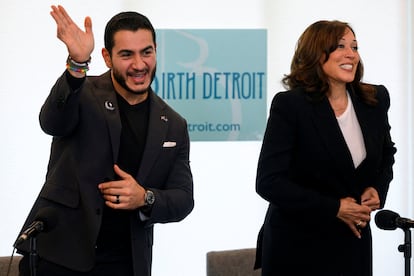
His speech denouncing the enormous influence of money in American politics attracted many young people who were disillusioned with their leaders and outraged by their country’s support for the Israeli government during its massacre in Gaza. What seemed impossible happened and the little‑known contender defeated the experienced politician. But at a high price. El-Sayed’s victory over his Democratic rival, by a handful of votes, showed just how divided the Democrats were between their two factions. Since then, heavyweights such as former president Barack Obama and former vice president Kamala Harris have tried to mend the party’s wounds by backing the Michigan candidate.
A historic milestone
If he wins on November 3, El‑Sayed will make history. He would become the first Muslim U.S. senator and would also demonstrate that the progressive wave that Mamdani started in New York is not confined to large liberal cities. A senator named Abdul El‑Sayed could be the signal Representative Ocasio‑Cortez needs to see there is traction outside the big cities and prompt her to run for president in 2028. His victory would confirm that leftists, too, can win swing territories — those within reach of both parties. He is aware of all this, but prefers to talk about other issues.
— Is Michigan the definitive test of how far the Democrats’ progressive wing can go?
— Maybe, but my focus is more on the future of Michiganders than it is on the future of the party.
Polls so far show El‑Sayed with a very slight lead that is essentially a technical tie with his Republican opponent, Mike Rogers, a former congressman closely aligned with Trump. All these factors weighed on last Friday’s meeting with voters in Lansing, turning the event into an electrifying occasion.

The event was full of true believers, like Joshua Pearl, 19, who joined El‑Sayed’s campaign this summer, drawn primarily by his hardline stance against Israel. “The idea that my taxes help fund a genocide blows my mind,” he said. But there were others, like Chuck Golden, 85, who has voted Republican and Democratic over the years and attended the event to see for himself whether he can trust this new candidate. For this retired engineer, the main motivation right now is to punish Trump.
Campaign of fear about Islam
El‑Sayed’s candidacy has shown how prepared Republicans are to use his Muslim faith as an electoral weapon. In the television debate the two candidates held on October 8, Republican Rogers accused him of receiving funding from Hamas, Hezbollah, and Al Qaeda. He used the word Muslim nearly a dozen times. Trump routinely attacks the Michigan Democrat, whom he prefers to call by his middle name, Mohamed, in a strategy similar to how he referred to Barack Obama as Hussein.
After the debate, the president called El‑Sayed a “Jihadist lunatic who hates our Country [and] the Black People of Detroit.” The latter insult makes sense in that it targets some of the Democrat’s weaknesses: he has substantial support among young people and Muslims but is far less popular among Black voters, Jews, and older voters. Last August, he was forced to apologize for remarks he had made a few months earlier, when — following an antisemitic attack on a synagogue — he said that “hurt people hurt people,” a comment that was interpreted as an attempt to downplay the attacker’s guilt.
In this campaign, El-Sayed has avoided speaking proudly of his Muslim faith or highlighting the milestone that his election to the Senate would represent. Instead, he opts for a more patriotic tone, in which he consistently extols a United States that embraces all differences.
— A quarter of a century after the jihadist attacks of 9/11, Islamophobia remains a real problem. What would it mean for the Muslim community to have its first senator?
— America is big enough for all of us. You know, there are some people who want to make America small. We want to make America big, and this movement that we’re building — people who are Muslim, Jewish, Christian, Hindu, Sikh, atheist — we want a big America where we come together to focus not on our differences, but on what our country can be for all of us.
— But do you believe your victory would have special meaning for Muslims in the United States?
— I think every community wants to see itself in the leadership of this country, and I think it’s important that our leaders reflect our country. Regardless of who you are, I hope that this race can remind you that you belong here too, right? If you pray like me or don’t pray like me, regardless of how you pray, if you pray, who you love, how you identify the color of your skin, you deserve to see yourself in this place. We’re demonstrating the greatness of this country and how much it means to all of us.
When El‑Sayed is asked to look back and to explain what it means that the son of Egyptian immigrants who arrived in the United States in the late 1970s earned a medical degree from Columbia and is now one step from winning a Senate seat, he reaches for his grandmother. “She never got to go to school, but she was the smartest, wisest person I ever met,” he replies.
But he immediately shifts back into campaign mode: “She never lived in America. She visited a couple times, and she believed in this place. She understood how lucky I was to be born and raised here. I want to build a future for people like her — people who are very smart and capable but without the opportunities they need. And I want to be able to build an America where every single kid can look up and say, ‘I got an incredible life waiting for me. I’m so blessed to be born and raised here.’ And I say that understanding just how unlikely that is for me, and recognizing that the work is about making it more likely for any kid anywhere in our in our country.”
Only a couple of weeks remain to find out whether El‑Sayed will achieve what not long ago seemed impossible. His anti‑corruption message can attract voters across the ideological spectrum, although it remains to be seen whether Democratic divisions will cost him. Meanwhile, he is convinced the risky bet is worth it, above all because of his chief obsession: securing a universal public healthcare system — common in other countries but revolutionary in the United States.
He puts it like this: “It’s less about other models in other places. It’s more about what we can do when we put our mind to it. I believe America is the greatest country in the world. I believe when we put our mind to solving a problem, nobody does it better than us. We have the resources if we’re willing to stand up to the corporations who keep trying to nickel and dime us simply because we get sick.”
Sign up for our weekly newsletter to get more English-language news coverage from EL PAÍS USA Edition

Navi Pillay, Nobel Peace Prize Laureate: ‘Netanyahu Should Be Tried For Genocide’

Emiliano Andrade’s Daughter Blames ICE For His Death: ‘My Father Did Not Receive The Medical Attention He Desperately Needed’
Can I Apply For Spanish Citizenship And Then Leave The Country?


-

 Uncategorized3 weeks ago
F1 Bahrain Grand Prix will be live and FREE on TV this weekend
-
EU2 weeks ago
EU nicotine crackdown sparks warning that ex-smokers could be driven back to cigarettes
-
Blackout preparedness3 weeks ago
Brussels takes action against Spain over failure to update blackout plan
-

 Foreign demand3 weeks ago
Market Snapshot: German Market In Q2 2026
-

 New Developments3 weeks ago
How To Get A Tourist Rental Licence In Andalusia (Spain) – Step-By-Step Guide 2025
-

 Uncategorized3 weeks ago
Lewis Hamilton F1 wish could come true as stunning plans for new track revealed
-
 Housing access / crisis / affordability3 weeks ago
Radical Housing Decrees Defeated As Snap Election Talk Grows
-
Latest2 weeks ago
The Changes To Spain’s IRNR Non-Resident Property Tax In 2027