Connect with us

%

Ávila Wildfire Is Now Spain’s Largest Ever Recorded As Blaze Reaches Unprecedented Scale

Published

on

avila-wildfire-is-now-spain’s-largest-ever-recorded-as-blaze-reaches-unprecedented-scale

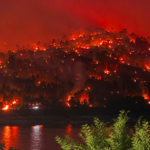
What began as a fire in Ávila has become far more than a regional emergency. Photo credit: @Blackxnitt on X

People hundreds of kilometres away from the flames are waking up to the smell of burning. Meteorologists are tracking an enormous plume of smoke drifting across Spain and out over the Mediterranean, while satellite images reveal a disaster that has grown far beyond the communities fighting it on the ground.

What began as a wildfire in the heart of Spain has developed into something with consequences reaching well beyond the fire zone. Even places untouched by the flames are now experiencing its effects, raising one unavoidable question: just how big has this fire become?

A fire unlike anything Spain has experienced

The scale of the Ávila wildfire is difficult to comprehend. With around 50,000 hectares already destroyed, the fire has surpassed every previous wildfire recorded in Spain. Thousands of hectares of forest, scrubland, farmland and natural habitat have been reduced to ash, leaving behind a scar across the landscape that is visible from satellite imagery. Wildlife has suffered enormous losses, with countless animals unable to escape the fast-moving flames. Entire ecosystems have been devastated, and environmental experts warn that while firefighters may eventually extinguish the blaze, restoring the landscape will take many years.

With over 90,000 people affected the fire has become one of the defining environmental disasters of the year, eclipsing previous records and underlining just how destructive Spain’s wildfire seasons are becoming. Official figures show that more than 150,000 hectares have already burned across Spain during 2026, making this one of the country’s worst fire seasons in recent memory.

Smoke so vast it can be seen from space

As firefighters continue battling the blaze on the ground, meteorologists have been watching it from orbit. Images captured by the third-generation Meteosat satellite reveal an enormous column of smoke rising from central Spain before being carried eastwards by the wind across much of the Peninsula and out into the Mediterranean Sea.

The satellite images provide a shocking image of the fire’s extraordinary size. Instead of appearing as a small localised plume, the smoke stretches across a huge area, clearly visible from hundreds of kilometres above the Earth. Meteorologists say prevailing winds have carried fine smoke particles far beyond the fire zone, affecting areas that have never been threatened by the flames themselves.

🛰🔥 El humo de los incendios en la Península es visible desde el satélite Meteosat.

⚠️ El humo está compuesto por partículas procedentes de la combustión que provocan un empeoramiento de la calidad del aire. Sigue las recomendaciones de las autoridades sanitarias. pic.twitter.com/vOKab7LuVh

— AEMET (@AEMET_Esp) July 26, 2026

The smell of smoke reaches the Balearics

Perhaps the most remarkable sign of the wildfire’s scale is how far its effects have travelled. Residents in the Balearic Islands reported smelling smoke despite being separated from the wildfire by the Mediterranean Sea. Across parts of eastern Spain, skies appeared noticeably hazier than usual as smoke drifted across the country, while air quality monitoring stations recorded increased concentrations of fine particles associated with wildfire smoke.

For many people, waking to the smell of burning despite living hundreds of kilometres from the nearest flames was a stark reminder that wildfires do not stop where the fire front ends. Smoke from large fires can travel vast distances, carrying tiny airborne particles capable of affecting visibility and reducing air quality far beyond the immediate disaster zone.

Health advice as smoke spreads

Health authorities have urged vulnerable people, including those with asthma, chronic respiratory conditions and heart disease, to monitor local air quality advice while smoke continues to affect different parts of Spain. Wildfire smoke contains microscopic particles that can irritate the eyes and throat, trigger coughing and breathing difficulties, and worsen existing medical conditions. Although concentrations are generally highest closest to the fire, changing wind patterns mean smoke can affect communities many hundreds of kilometres away, even where there is no immediate danger from the flames themselves.

A warning for Spain’s future

The Ávila blaze now stands apart because of its sheer scale, it is the largest wildfire Spain has ever recorded. Its smoke has crossed the Peninsula, drifted across the Mediterranean and reached the Balearic Islands. Its destruction can be seen from space, while its environmental consequences will remain long after the last flames are extinguished.

For many Spaniards, that may become the lasting image of the summer of 2026: not just a wildfire burning through forests, but a disaster so immense that its footprint reached the skies above Europe and its smoke reached people who never saw a single flame.

%

Why World Cup 2030 Could Put Murcia In The Global Football Spotlight

Published

on

why-world-cup-2030-could-put-murcia-in-the-global-football-spotlight

The 2030 World Cup will carry extra significance for Spain. Photo credit: SPORT PRESS MEDIA/Shutterstock

For years, Murcia football fans have dreamed of seeing the world’s biggest teams arrive on their doorstep. Now, while the region will not host an official World Cup match, it could still become part of football history. When the FIFA World Cup 2030 arrives in Spain, Murcia could find itself at the centre of the global tournament, with four facilities selected as proposed World cup base camps where national teams could train, prepare and live during the competition.  

It means that some of the biggest names in world football could swap stadium lights for Murcia sunshine, with elite players using the region’s facilities as their base while chasing the biggest prize in international football.

Four Murcia locations ready for the world’s best

The Region of Murcia has secured four proposed base camps for the 2030 World Cup, making it the Spanish province with the highest number of team base camps included in the proposal. 

The facilities are:

  • Pinatar Arena Football Center in San Pedro del Pinatar 
  • Grand Hyatt La Manga Club Resort in La Manga 
  • DoubleTree by Hilton La Torre Golf & Spa Resort in Roldán 
  • Alhama Arena Football Center in Alhama de Murcia 

These locations would not host competitive World Cup matches, but they could become temporary homes for international teams, providing training grounds, accommodation and preparation facilities throughout the tournament.  The final decision will depend on the FIFA evaluation process and, ultimately, the choices made by the participating national teams when selecting their preferred bases. 

A World Cup without matches, but with global attention

Murcia missed out on becoming one of Spain’s official match venues after its stadium bid was not selected, meaning fans in the region will not see World Cup fixtures played locally.  But the four proposed base camps could bring a different type of World Cup experience.

Instead of welcoming thousands of supporters for individual matches, Murcia could welcome some of the world’s greatest footballers for weeks at a time. Training sessions, team preparations, media attention and international visitors could place the region firmly in the global spotlight. For local businesses, tourism operators and football fans, the arrival of a national team could represent an opportunity that goes far beyond the 90 minutes played on the pitch.

Spain prepares to defend its crown

The 2030 World Cup will carry extra significance for Spain, with the national team entering the tournament as defending champions.  After lifting the trophy, the challenge will be even greater: trying to succeed on home soil while carrying the expectations of an entire country.

For Murcia, that adds another layer of excitement. The region could potentially find itself welcoming the team that arrives hoping to stop Spain’s title defence, or even hosting the next generation of stars looking to write their own World Cup story.

A chance to put Murcia on football’s map

The World Cup is one of the most watched sporting events on Earth, attracting billions of viewers and bringing international attention wherever it takes place. While Murcia will not have a stadium filled with fans watching a World Cup match, its role could still be significant.

A training base may happen away from the cameras, but it is where tournaments are often won and lost. Behind every trophy are weeks of preparation, tactical work and recovery, all carried out away from the spotlight. By 2030, Murcia could become the place where a football giant prepares for glory, the region may not host the final whistle, but it could play a key role before it is blown.

Continue Reading

%

The Case Of The Missing Melons: Lorca Police Are Hunting A Different Kind Of Thief

Published

on

the-case-of-the-missing-melons:-lorca-police-are-hunting-a-different-kind-of-thief

Watermelons are currently getting special attention. Photo credit: Gaurav Pal/Shutterstock

It is not usually the type of crime that brings images of dramatic police operations, but this summer in Lorca, the battle against theft has turned a humble fruit into the centre of a rural security operation. While some people may spend their summer searching for the perfect slice of cold watermelon to escape the heat, farmers in Lorca have a different concern: making sure their carefully grown crops actually make it from the field to the market.

With watermelon harvesting season underway, the Policía Local de Lorca has increased surveillance in agricultural areas to prevent thefts and protect local growers who have spent months caring for their crops. Because when a field full of ripe watermelons starts looking like an open-air supermarket with no checkout, farmers understandably want someone keeping an eye on the produce.

Police patrol fields as harvest season begins

The operation has seen officers increase their presence in rural areas across Lorca, carrying out specific controls around watermelon-growing zones. According to the Ayuntamiento de Lorca, Policía Local carried out 33 targeted controls linked to agricultural areas, identifying 261 people as part of the increased surveillance measures. 

The aim is simple: deter anyone tempted to take advantage of the busy harvest period and ensure farmers are not left counting missing melons instead of profits. For agricultural workers, a stolen watermelon may sound like a small loss compared with other types of crime, but for those who depend on farming, every crop represents months of work, investment and planning. A field full of fruit ready for collection can quickly become an attractive target for opportunistic thieves.

A sweet crop with serious value

Watermelons may be a symbol of summer, beach days and refreshing snacks, but behind every one is a serious agricultural business. Farmers must prepare the land, manage irrigation, protect plants from pests and wait months before finally seeing the results of their work.

That means losing even a portion of a harvest can have a significant impact, particularly when thefts happen repeatedly. The Policía Local operation comes as part of wider efforts to increase security in Lorca’s countryside, where officers regularly monitor agricultural areas during key harvesting periods.

More than just melon monitoring

Although watermelons are currently getting special attention, the latest operation forms part of a rural security campaign. During the week of increased controls, Policía Local carried out more than 100 checks across the municipality, resulting in seven arrests and various actions related to public safety, traffic and local regulations. But it is the watermelon patrols that have captured attention.

After all, it is not every day that a summer fruit becomes the subject of a police operation. The image of officers monitoring fields may sound unusual, but for farmers it is a welcome sight. A watermelon might be a refreshing treat for consumers, but in the field it represents time, effort and income.

Keeping the thieves out of the fruit bowl

Lorca’s watermelon watch despite how bizarre it sounds proves that agricultural theft does not always involve expensive machinery or large-scale operations. Sometimes it starts with someone deciding that taking “just a few” fruits from a field is harmless. For farmers, however, those missing watermelons quickly add up.

So while summer visitors may be thinking about finding the sweetest slice of the season, Policía Local de Lorca has another priority: making sure those watermelons are legally harvested, not casually collected by anyone passing through. This summer, the message from the fields is clear. The watermelons are growing, the farmers are working, and the police are watching.

Continue Reading

%

Horror In Benidorm As Child Rescued From 21st-Floor Air-Conditioning Unit

Published

on

horror-in-benidorm-as-child-rescued-from-21st-floor-air-conditioning-unit

The officers who climbed into that 21st-floor apartment knowing a single mistake could have had catastrophic consequences. Photo credit: Policía Local de Benidorm on Facebook

Residents looking up at a high-rise apartment block in Benidorm were met with a sight few will ever forget: a young child sitting outside a 21st-floor window, perched on the narrow ledge of an external air-conditioning unit with nothing but open air beneath him.

Within moments, the scene below filled with anxious onlookers as neighbours desperately tried to work out how to reach him before tragedy struck. What happened next has led to the rescue of the child, the arrest of his father and a police operation that many are describing as nothing short of extraordinary.

Child found sitting on air-conditioning unit 21 floors above the ground

According to the Policía Local de Benidorm, the alarm was raised after a neighbour spotted the child sitting outside the apartment on the external air-conditioning unit. The witness immediately alerted the building concierge, who contacted emergency services. When officers arrived, they found the child still outside the apartment, balanced on the unit several storeys above the street.

With no time to lose, officers rushed into the building while trying to work out the quickest and safest way to reach him. The challenge was simple but terrifying. Any sudden movement or loud noise risked startling the child while every passing second increased the danger.

Police race against time

Using a spare key provided by the building concierge, officers entered the apartment. According to police, one officer carefully reached the child and managed to hold him securely by the arm through the window while another officer supported his colleague from inside the apartment to prevent either of them losing their balance. After several tense moments, the child was safely pulled back inside.

No injuries were reported, bringing an end to a rescue operation that could easily have ended very differently. Images released after the incident show just how exposed the child had been, prompting widespread shock on social media as people struggled to comprehend how close the situation came to becoming a fatal accident.

Father arrested

Police say the child’s father returned to the apartment shortly after the rescue and was arrested on suspicion of temporarily abandoning a minor. According to reports, the man allegedly told officers he had left the apartment while the child was asleep to get a drink and go for a walk

Several Spanish media outlets identify the father as a 50-year-old Bulgarian tourist staying in Benidorm. The child, reported to be eight years old and diagnosed with autism spectrum disorder, was placed in the care of social services while authorities worked to locate his mother. The circumstances surrounding the incident remain under investigation.

How the child reached the outside remains under investigation

Investigators are continuing to establish exactly how the child managed to access the exterior of the apartment. The fact that he was sitting on an external air-conditioning unit on the 21st floor has raised obvious questions about how he was able to leave the safety of the apartment unnoticed.

Police have not disclosed how long the child had been outside before neighbours spotted him, but officers have praised the quick thinking of the resident who raised the alarm and the concierge whose immediate response helped emergency services gain rapid access to the apartment. Without that chain of actions, the outcome could have been very different.

A rescue few will forget

Incidents involving children at height are among the most challenging emergency responders face because every decision has to balance speed with caution. In this case, officers had only one priority: getting the child back inside safely without causing panic or placing him at greater risk. Their actions have since been widely praised, with many describing the rescue as an example of calm decision-making under immense pressure.

For those who were watching events unfold from the ground, the situation was nerve racking where a wrong move could  have been the difference between life and death, fortunately for the child, it ended with a safe rescue. For the officers who climbed into that 21st-floor apartment knowing a single mistake could have had catastrophic consequences, it was a rescue that will almost certainly stay with them for the rest of their lives.

Continue Reading

Trending

Copyright © 2017 Spanish Property & News