
Benjamin Netanyahu
Basel Adra, Palestinian Filmmaker And Oscar Winner: ‘Israelis Don’t See Us As Human Beings’

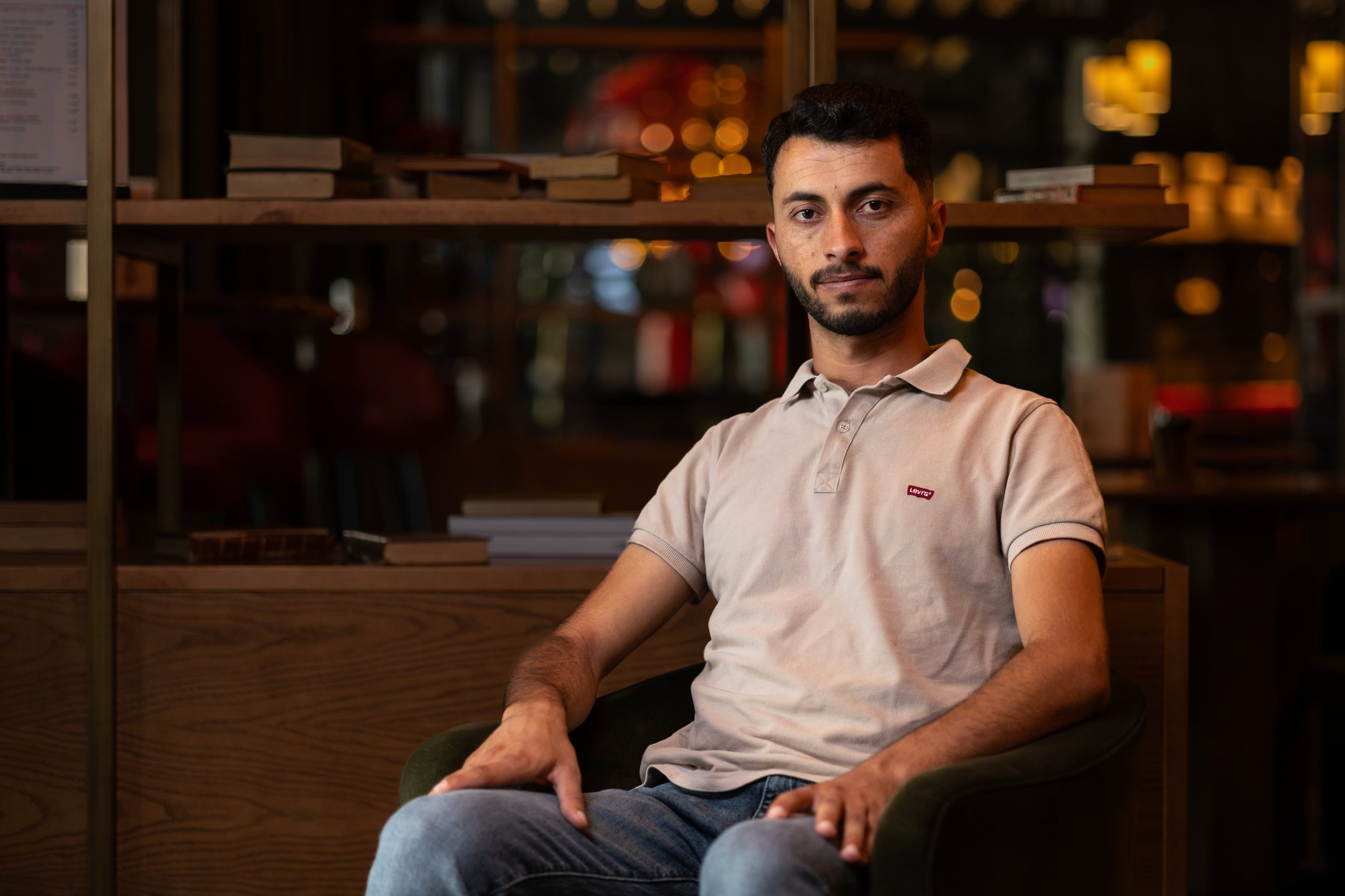
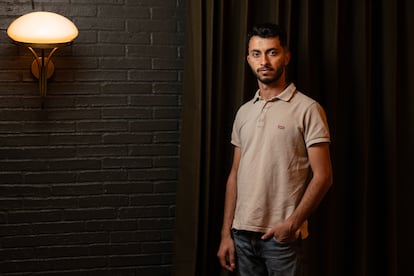
Wednesday morning at a Madrid hotel. Palestinian filmmaker Basel Adra, an Oscar winner for the documentary No Other Land, turned 30 on Monday after waiting hours in queues at border crossings and passing through checkpoints (“It’s inhuman, it’s another tool against Palestinians,” he says) in order to take part in the Ministerial Conference, co-organized by the ministries of culture of Spain and Palestine, which opened at the Museo del Prado on the afternoon of July 15 and where more than 30 international delegations will sign a declaration for the reconstruction of Palestinian culture. Thanks to his statuette and the trajectory of his film, Adra is one of the most visible faces among artists inside and outside his country, and he still lives in the village where he was born, Al Tuwani, a hamlet in Masafer Yatta, a harsh area of the southern West Bank depicted in his film. “They recognize me at every Israeli checkpoint, that scares me,” he explains. Serious — although he will smile when soccer or his 18-month-old daughter is mentioned — and accompanied by his wife, Adra sits down to talk. He makes only one request: that the chosen table be in the quietest area because he speaks softly and in a low voice.
Question. How is your family?
Answer. Physically fine. I have a one-and-a-half-year-old daughter, and she’s fine.
Q. What is your day-to-day life like?
A. It’s not easy to live in our communities. You can plan something for the next day, and suddenly Israeli forces arrive with bulldozers or settlers, and then your day changes. For example, I might plan to go to the city with my family, but we get up in the morning, something happens and the whole day is lost. So our daily life really depends on what is happening each day, on what they do to us.
Q. What do you expect from the Ministerial Conference?
A. I hope more attention is paid to Palestinian culture. That Palestinian artists and culture receive genuine support and backing from the international community; not just pity, but real assistance. That could help more filmmakers and artists show their work to the world. So we hope Palestinian artists find solid backing at that meeting.
Q. Do you feel Spain supports the Palestinian cause?
A. Absolutely. Both the government and ordinary people. For example, I remember a footballer did something small with a flag and caused a huge stir [he is referring to Lamine Yamal, who waved a Palestinian flag in May during FC Barcelona’s victory parade after winning La Liga]. Israeli ministers and officials had to comment on it, which drew even more attention.
Q. Europe is more hesitant…
A. We hope Spain doesn’t change because, you know, in Europe and other countries it’s easy to get support at first, but after a while the government changes or people within the government itself — as has happened in Sweden — change their minds and stop supporting the cause or even turn against it. The Israeli lobby always finds a way to influence official policies.
Q. Your father already had a camera with which he filmed both your childhood and attacks by settlers and Israeli forces. Is the documentary No Other Land — which portrays the daily struggle of Masafer Yatta families facing demolitions and forced displacement — the result of a legacy?
A. Not exactly. In my community, the camera arrived at the start of this century. It wasn’t common, it was unique, unlike today.
Q. Did you use it as a defensive tool?
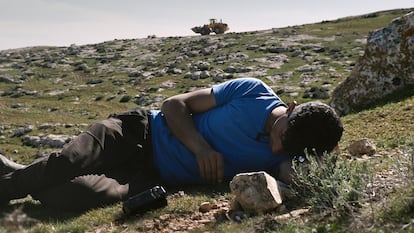
A. Yes. My father and other people recorded those images. It wasn’t just him. There were others in the community who were learning and filming, as well as international activists. So we have a very large archive because many people have been filming in the West Bank for two decades.
02:00
Trailer for ‘No Other Land’
Q. Do you feel a responsibility?
A. I feel a constant responsibility. Not only to bring my community’s story to film, but also to speak about it and try to help, you know? Filming and publishing is no longer enough; I have an even greater responsibility than before No Other Land.
Q. Are you shooting another documentary?
A. No, it’s a short animated film about movement restrictions in the West Bank. I’m making it with an Argentine animation production company. I found the company through friends in the U.S. I do it from my village and they do it from there. And the topic is a bit too complicated and dangerous for a documentary: if I wanted to shoot that film passing through checkpoints and filming with cameras, I would be in great danger… because of the Israeli soldiers and all that.
Q. What do you think of calls from filmmakers around the world to boycott Israeli artists and companies linked to their government?
A. That’s not an easy question because I work with filmmakers. For me it’s quite simple: those who publicly support, endorse and back the regime, the apartheid and all the atrocities committed by Israel, should be boycotted. You can’t accept people who support what their regime did in Gaza, the West Bank, Lebanon, or Syria. It’s not normal, you know? But I think those who raise their voices and defend humanity and international law should not be boycotted.
Q. Very few Hollywood stars, such as Javier Bardem or Mark Ruffalo, have dared to support Palestine. Do you understand that fear?
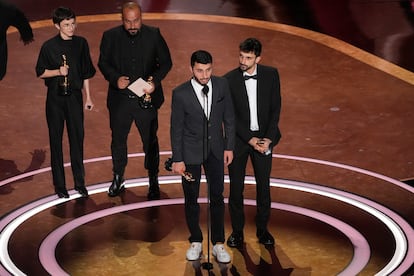
A. I don’t think this happens only in Hollywood. It happens in many other places around the world. People fear for their jobs, for their income, for their positions. They’re afraid of losing their work and, in other places, of course they fear for their safety. The Israeli regime has the backing of powerful regimes around the world; governments with great wealth and power that, in my view, lack moral standing. That’s why it’s understandable that people fear for their safety and salaries. We greatly value those who speak out against what is happening, and we always encourage others to overcome that fear and join the cause. However, it’s striking how fear takes hold of people who work in the film industry. They control your voice; they condition what you’re allowed to say and which topics you can make films about. Or even which films you can watch. For example, our film still hasn’t secured distribution in the United States.
Q. What do you remember about holding the Oscar in your hands?
A. I knew that even if I won the statuette, I would return to my reality, because since we won the award for best documentary at the Berlinale in 2024 there had been a lot of uproar around the world. And things did not change; on the contrary, they got worse. On the other hand, there was what was happening in Gaza: people saw on their phones what was happening, but the genocide did not stop. I was firmly convinced while working on the film that when it premiered people would do something. I believed people simply did not know what we were going through. And I had a very unpleasant feeling when I discovered that this is not true, that people do know and see what we are suffering, and simply let it happen.
Q. Do you think a documentary can change the world?
A. No, I think it changes people. I’ve been to movie theaters and screening rooms many times, and I see how No Other Land affects the audience sitting there. I inform people about what’s happening. That’s why I also know it’s an educational film for people who don’t have a firm stance or who are unaware of what’s happening to the Palestinians: they’ll learn from it.
Q. With Donald Trump and Benjamin Netanyahu in charge, can one still be optimistic about the future of Palestinians?
A. No, and regarding Israelis, it’s not only Netanyahu, the national security minister, Itamar Ben-Gvir, the finance minister, Bezalel Smotrich, or the settlers. Netanyahu, Smotrich and Ben-Gvir were elected by the people, and I believe they represent the majority of Israelis. For me, the problem is Israeli society. Even before [the Hamas-led attacks on] October 7 we lived under occupation, but Israelis in Tel Aviv lived their normal lives; the money from their taxes went to the settlers, to the settlements, and to the army, which killed Palestinians, although in smaller numbers than after October 7. But they do not see us as human beings. That’s why they accept the occupation and cannot claim ignorance; we live in the same territory and they cannot say they didn’t know what was happening. And now I think they have reached their worst moment in terms of racism and tolerance of the crimes committed against us Palestinians. So I don’t think change will come through elections in Israel or the United States. Europe must assume its responsibilities; to this day Europe, including Spain, allows products from the settlements to enter. Stopping that would be a small step toward change, although they aren’t even willing to do it. So what’s the point of speaking publicly about morality, international law, democracy, etc., if your actions say otherwise?
Q. As you said earlier, after the Oscar, Israeli attacks on your village increased. When was the last one?
A. This very morning they attacked the village of Susia in Masafer Yatta. I saw many people wounded, with bleeding injuries to the head and chest. Members of that family had already suffered attacks last March. Settlers came to their fields with their livestock; they called the police and the army to evict them, but no one came. The family decided to drive the animals away from near their homes; then two settlers, one of them in uniform, got out of their SUV, began shooting at the family and killed a man and wounded his brother, who has been left partially paralyzed. It was a nightmare and it still is. The killed man was 28 and had a wife and two daughters. And demolitions have increased with total impunity.
Q. You yourself suffered a raid at your home a month ago, didn’t you?
A. Yes, they entered at night and searched it. They even looked through my wife’s phone. And two months ago, settlers came to the house at four in the morning and smashed the cars of some activists parked in front of my building. I feel fear. But, to be honest, it’s a feeling all Palestinians share today.
Sign up for our weekly newsletter to get more English-language news coverage from EL PAÍS USA Edition









Tuesday, June 23. U.S. Secretary of State Marco Rubio lands in Abu Dhabi with a clear message: the Strait of Hormuz, he says, is an “international waterway” and, as such, “no country is allowed to charge tolls or fees” there. “That’s existing international law. That’s the way it is in international waterways all over the world, and that’s the way we expect it’ll be here.” His words were directed at several addressees: the United Arab Emirates, the friendly country he is visiting, and the other hydrocarbon exporters of the Persian Gulf, which should be able to export without hindrance. And, of course, Iran, which — in his words — will not be able to cash in on the ships transiting the crucial artery for the transport of oil, gas, and their derivatives.
Monday, July 13. All the hopes raised by the ceasefire agreement evaporate. Donald Trump has just notified Congress that his country is back at war, and his rhetoric on Hormuz takes a radical turn: “The U.S.A… will be reimbursed, at the rate of 20% on all cargo shipped, for any and all costs necessary to do the job of providing safety and security to this very volatile section of the World.” Shortly before, in an interview with Fox News, his favored network, he had called the U.S. the “guardian angel” of the strait.
Tuesday, July 14. As the clock ticks down toward the entry into force of a new U.S. blockade of Hormuz, effective only for Iranian ships, Trump doubles down… and then retreats in his own way: “I have decided to replace the 20% United States Reimbursement Fee with Trade and Investment Deals that the various Gulf States will be making into the United States,” he wrote on his social network, Truth, only to say later at a White House appearance that he does not believe “anyone should be able to charge a fee for the use of the strait.”
The damage, however, has already been done.
Despite how far-fetched the idea is — and despite the fact that the Republican magnate has made a habit of not keeping his word, his promises, or his threats — an administration source had assured on Monday that Trump’s position on this point was “very serious.” “This is what he’s always wanted to do, but people tried to talk him out of it. To him, this was his instinctual decision always, and he’s sort of just come back around to it,” the source told the news site Semafor.
Among those who publicly opposed that “instinctual decision” were Rubio, the vice president of the United States, J. D. Vance, and the secretary of defense, Pete Hegseth. A review of the archive turns up several statements against the idea of charging a toll… when it was supposed to come from Tehran.
Iran — which has been discussing the matter with its neighbor Oman for weeks — has repeatedly tabled an option that this Monday changed sides. It is Trump —who, together with Benjamin Netanyahu, launched the war that led to the closure of Hormuz — who now sees a possibility to charge for transiting those waters.
On either side, the mere idea wipes out any hint of security in an area critical to the global economy. It lends legitimacy to tolls that have “no legal basis,” as the International Maritime Organization (IMO, part of the United Nations) pointed out on Tuesday, but which increasingly seem closer to reality.
With this U-turn, yet another by Trump, the Republican also hands his opponents a powerful argument: Tehran can only see its proposal to charge for crossing Hormuz vindicated. “The president of the United States is completely right. Whoever guarantees the safe passage of merchant ships through the strait must be compensated for this service,” Iran’s foreign minister, Abbas Araghchi, wrote after the Republican’s proposal. He added his own interpretation immediately after: “Iran has always been the guardian of the strait and will remain so forever. Twenty percent is, of course, excessive. We will be fair.”
Trump’s outburst and subsequent backtrack in fact bring Iran and Oman even closer. This Monday, hours after listening to the White House, Omani authorities reaffirmed that their “priority” remained reaching an agreement “with Iran to guarantee freedom of navigation.” Even countries that initially wavered between the two contenders seem to be drifting further from Washington. No Middle Eastern capital was consulted by the Trump administration before it launched its proposal, according to reports by the Qatari outlet Al Jazeera and the U.S. site Axios.
From Trump’s Truth post on Tuesday, it is also unclear whether the “Trade and Investment Deals that the various Gulf States will be making into the United States,” announced ostensibly to mask his latest reeling in of threats and, according to Washington analysts, to avoid their unwanted effect on gasoline prices in an election year, are new pacts. Or whether the Republican was simply referring to deals sealed after his visit to the region last year, from which he returned with, among other gifts for him and his family, a plane donated by Qatar that the president hopes to use as Air Force One and that has already raised initial security concerns.
The Schrödinger strait
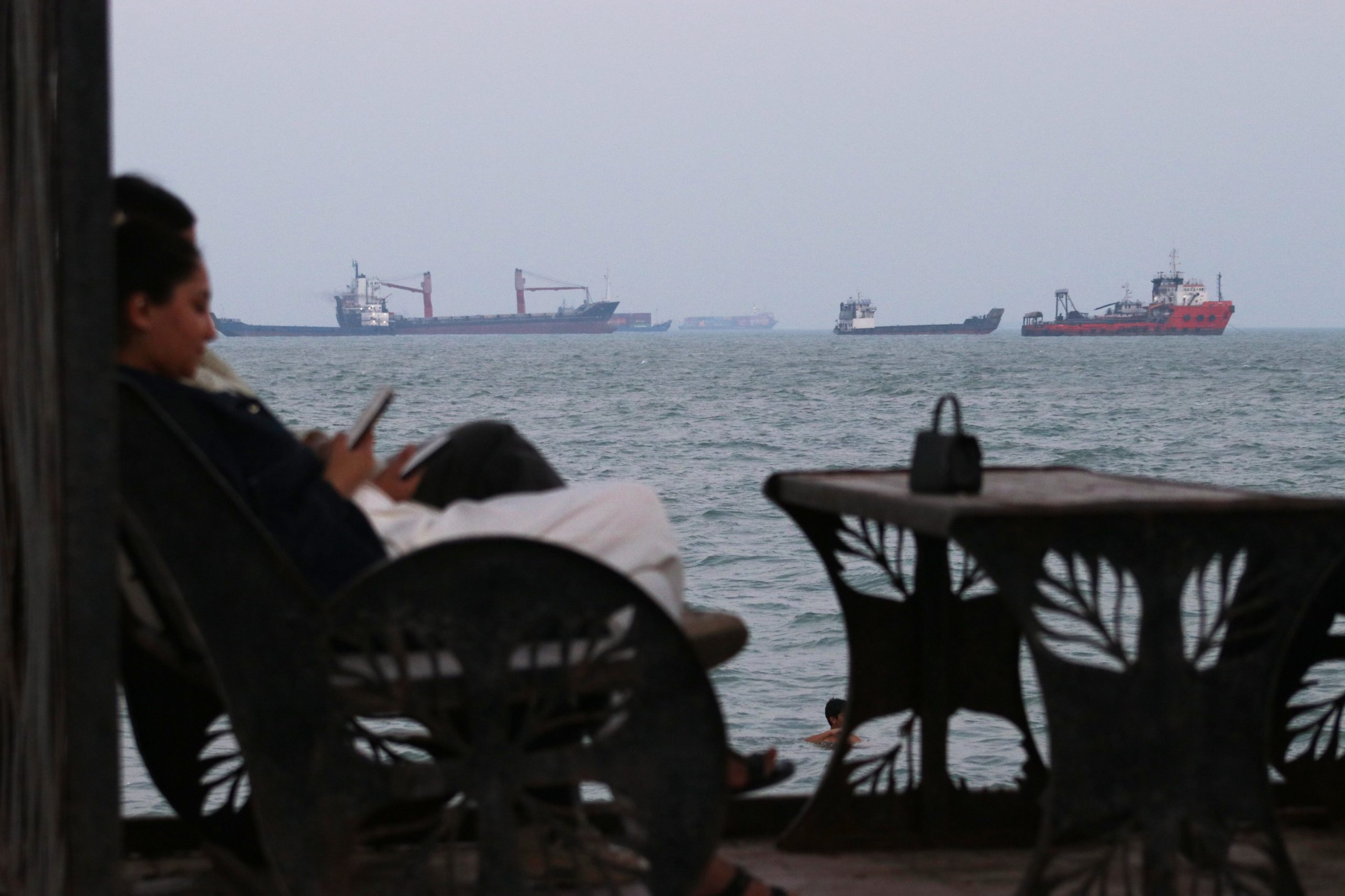
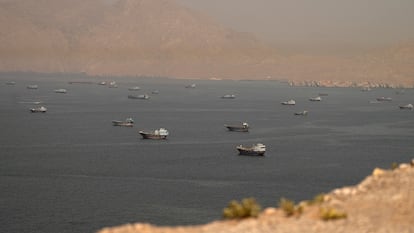
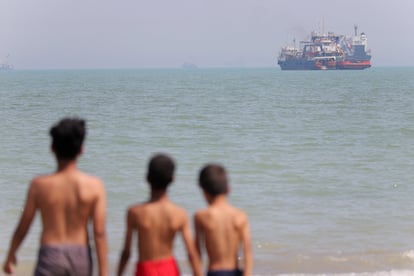
In recent days Hormuz has again been the Schrödinger strait: open according to the United States, closed according to Iran. On the ground, the reality is much more nuanced: some ships are still crossing, yes, but in dribs and drabs compared both with prewar transit volumes and with the weeks immediately after the memorandum of understanding was signed. Those who dare do so under cover, with their transponders switched off, to go as unnoticed as possible and avoid being attacked.
Transits have collapsed especially on the southern route, a lane that runs in Omani waters and which, on paper, is under the protection of the U.S. Navy. That, according to the specialist outlet Lloyd’s List, indicates that “shipowners’ confidence in that protection is eroding.”
In the last week alone, at least seven vessels have been attacked by Iran, mostly large tankers linked to Emirati, Saudi, and Qatari hydrocarbon companies that participate in a scheme in which these vessels, escorted by U.S. warships or monitored by aircraft, assume the risk of transiting Hormuz to then transfer their cargo to smaller ships off the port of Fujairah (United Arab Emirates).
“It is unlikely that ships will steam ahead full speed to assume the same risks while also paying a high tax,” warns Paul Donovan, chief economist at Swiss investment bank UBS, in an analysis published on Tuesday. “A 20% fee would be about 15 times higher than the levy Iran had considered and, as a proportional tax, would amplify fluctuations in the price of oil,” he notes.
The Baltic and International Maritime Council (Bimco), the largest shipowners’ association by membership, estimates that supertankers — which carry between one and two million barrels of crude — would have to pay about $27 million per voyage, while container ships would owe between $65 million and $260 million, depending on their cargo capacity. “While some cargo owners and operators might decide to absorb these additional costs, in most cases this expense will be passed along the supply chain and reflected in higher costs for consumers,” the analysis sent to this newspaper explains.
The shipping industry, which had already opposed the possibility of an Iranian fee or toll, is furious at Trump’s notion. “Charging tolls for passage through international waters would be fundamentally wrong,” Hapag-Lloyd told EL PAÍS in a comment sent by email. “Tolls for infrastructures like the Suez or Panama canals are different because they reflect significant investments in infrastructure. That is not the case in Hormuz.”
The UN Convention on the Law of the Sea (UNCLOS), the foundational text for governing global relations in this key area, prohibits imposing “tolls” in exchange for the passage of merchant ships through natural straits, although some, like the Turkish straits, do levy pilotage fees due to their greater navigational difficulty (the Bosphorus has a minimum width of 700 meters compared with Hormuz’s 30 kilometers).
Even harsher was Brazil’s president, Luiz Inácio Lula da Silva, who compared Trump to privateers: “He says he will clear the strait, but for every ship the oil owner must pay him 20%. This used to be called piracy. An important country like the U.S., which long fought against piracy, cannot now become a pirate.”
Price increases
Joining the toll proposal was the decision to reimpose the U.S. blockade in the Gulf of Oman to prevent trade to and from Iranian ports, a move that also raises tensions in the area and which, according to Jakob Larsen, Bimco’s head of security, will lead Iran to “increase its threats” against maritime traffic. Trump’s proposal, which raises transport costs and represents an “additional disincentive” for transiting the strait, would only make sense if it contributed to a “significant reduction of the Iranian threat,” something Larsen says “is unclear how it is intended to be achieved.” For that reason, he believes all this entails “a grave risk of escalation” in Hormuz which, combined with the restriction of Iranian crude exports that the U.S. naval blockade seeks, “will put further upward pressure on oil prices.”
The fragile peace promised by the June agreement “has come to an end,” declare Gregory Brew, Clayton Allen, and Firas Maksad of the risk consultancy Eurasia Group. It has happened, moreover, more than a month earlier than planned: the original agreement had been a cessation of hostilities until August 17, with Hormuz open throughout that period and the world finally getting a breather after the sequence of convulsions. “Although for now it is unlikely that the U.S. will resume large-scale bombings against Iran similar to those in the March war, the volume transported through the strait will fall from between 30% and 50% [of prewar levels, in recent weeks] to between 5% and 15% until both sides reduce tensions.” In plain terms: oil, gas, and fertilizers will be more expensive, until further notice.
Bridges and power plants
“Next week it gets really bad for them,” Trump declared. “We’re going to knock out all their power plants. We’re going to knock out all their bridges unless they get to the table and negotiate,” he added, repeating earlier threats that were at the time condemned by UN officials.
Sign up for our weekly newsletter to get more English-language news coverage from EL PAÍS USA Edition

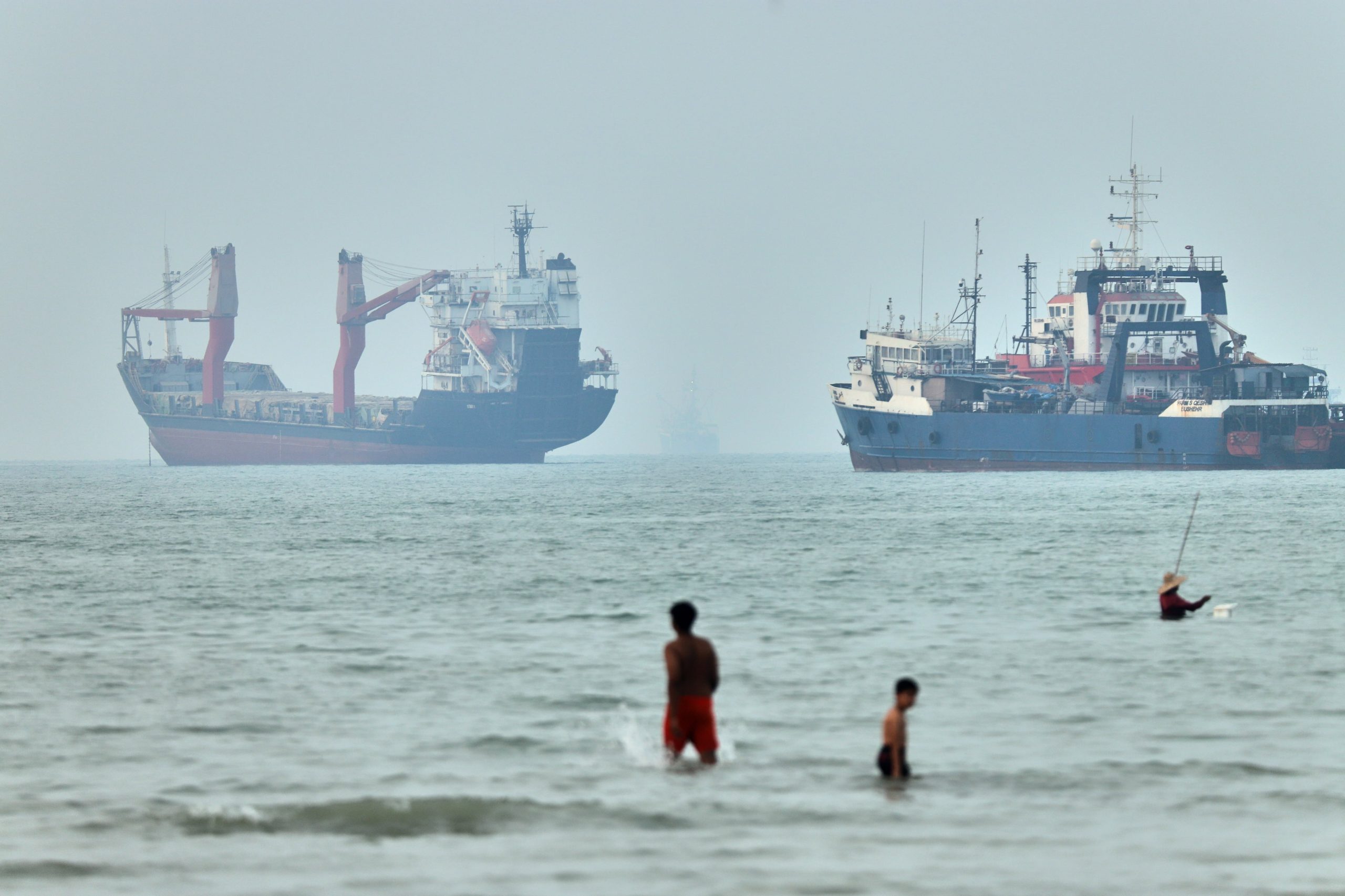
There has not been a single victory for the United States in Iran. The war launched in late February by Donald Trump and Benjamin Netanyahu appears set to alter — for the worse — the situation in the Strait of Hormuz, one of the world’s most critical arteries for the transport of hydrocarbons and fertilizers. Before the conflict, vessels travelled the strait freely, but that looks set to change significantly in the coming months, with an unprecedented system of tolls, fees for maritime services and other shifts.
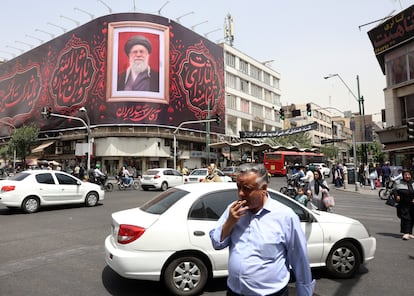
For years, the possibility of the Strait of Hormuz’s closure or blockade by Iran has been one of the scenarios discussed in any prospective analysis of potential conflict with the nation. It was a theoretical possibility but — it was believed — one with little chance of materializing into real and tangible events. Recent history has proved that assessment wrong: the Islamic Republic has demonstrated its ability to control the strait, and that it is not willing to give up the ace up its sleeve. Hormuz is, in the words of Iranian Parliament Speaker Bagher Ghalibaf, “a divine gift” and Iran’s “greatest instrument of power.”
“Hormuz is defined under Iran’s command, not [U.S. armed forces] […] The region’s security will be ensured through the end of interventions and the U.S. withdrawal from the area, respect for countries’ sovereignty, and acceptance of new geopolitical realities — not under the military umbrella of America,” warned Iran’s deputy foreign minister for legal and international affairs and negotiator Kazem Gharibabadi on X. The words were a response to the announcement that Admiral Brad Cooper, commander of U.S. Central Command, had held a meeting with military officials from several Arab countries to discuss the situation in the strait.
Iran has made it clear that things will not be returning to the pre-war status quo. The fifth point of the brief and somewhat ambiguous memorandum of understanding signed on June 17 makes it clear that free passage through the Strait of Hormuz will only be granted for the 60 days following the agreement.
Furthermore, Tehran holds that its port and military authorities are responsible for managing maritime traffic during that period. Iranian authorities will also “conduct dialogue with the Sultanate of Oman, to define the future administration and maritime services in the Strait of Hormuz, in discussions with other Persian Gulf Littoral States, in line with applicable international law and the sovereign rights of coastal states of the Strait of Hormuz,” according to the memorandum.
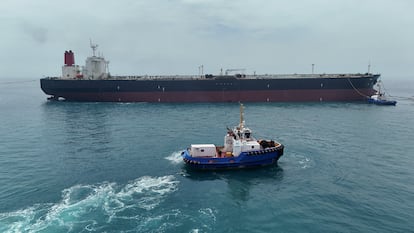
Negotiations between Iran and Oman have already begun, and a lot would have to change for them not to ultimately result in a payment — however it is labelled — for oil and methane tankers that pass through the strait on their way to the Arabian Sea. Last Monday, delegations from both countries met in the Omani capital of Muscat for the first meeting of the Joint Committee on the Strait of Hormuz to discuss its future administration.
The United Nations Convention on the Law of the Sea, which serves as the foundation of global regulations in this key area — worldwide, the bulk of goods are moved by boat — prohibits the application of “tolls” in exchange for the passage of merchant ships through natural straits. Canals like the Panama or Suez are a different matter, as their construction involved considerable costs. The treaty has been signed by Oman, but not Iran.
Billions at stake
Whatever the terminology, Iran is demanding that a fee be paid to pass through the Strait of Hormuz, and in a new development from recent weeks, Oman has not ruled out the option. In a recent interview with Radio Monte Carlo International, Omani Foreign Minister Badr al Busaidi said that his country opposes the imposition of “transit fees,” but did not rule out the possibility of charging for “maritime services,” such as maritime security or pollution control.
U.S. negotiators have already received an Omani proposal that mentions “voluntary contributions,” according to The New York Times. Al Busaidi himself explained that the model could be similar to those of the Malacca and Singapore Straits. There, a Japanese foundation has collected voluntary donations since 2008 for the maintenance of buoys and lighthouses, in addition to environmental conservation.
However, it has only received around $23 million in its first 15 years of operation. That figure is nothing compared to speculations surrounding the Strait of Hormuz. Iranian authorities expect to raise hundreds of millions or even billions of dollars — to be redistributed, of course, among the countries involved in the plan.
Ideas about a toll for extracting crude oil, natural gas or derivatives (diesel, gasoline, kerosene, fertilizers) have been floating around the Middle East for some time. In March, during one of the most intense phases of the war, an Iranian lawmaker confirmed the collection of $2 million per ship at a time of extreme global fuel shortages.
Tehran insists that payments will be mandatory, as is already the case in the Turkish straits of the Dardanelles and the Bosporus, where a fee of $6.70 per net metric ton of the vessel (without cargo) is charged to cover the costs of health inspections, lighthouses and rescue services, in addition to an extra fee if pilotage is required. Turkey collects approximately $229 million annually from such fees.
However, as Richard Meade, editor-in-chief of shipping news publication Lloyd’s List, notes that the key difference lies in the navigational hazards of the Turkish Straits, where the Bosporus narrows to a minimum width of 700 meters, compared with the Strait of Hormuz, which is just under 19 miles wide at its narrowest point. Moreover, the Turkish Straits are governed by the 1936 Montreux Convention, which predates UNCLOS.
“A transit fee through the Strait of Hormuz would, in practice, act as a new tax on one of the world’s most critical energy corridors,” Clair Jungman, director of maritime risk and intelligence at British consulting firm Vortexa, explains to EL PAÍS. “It would raise the costs of crude oil, liquefied natural gas, liquefied petroleum gas and motor fuels, while adding uncertainty to the planning of freight rates and shipping routes.”
Even if the Gulf’s exporting countries (the United Arab Emirates, Saudi Arabia, Kuwait and Bahrain, which are refusing to pay the fee) were to cover the cost initially, it would ultimately fall on importers in Asia and Europe, where the bulk of the region’s shipments end up.
“For exporters, the greatest risk is reputational and commercial: if the Strait of Hormuz comes to be perceived as less reliable or less neutral, freight rates, insurance costs and risk premiums would likely rise,” notes Jungman.
Dangerous precedent
“In the worst case, if it were one or two dollars per barrel, in the purely economic sense, the equation barely changes. The impact would be minimal, especially when taking into account that the barrel extracted by these countries is the cheapest on the market by far,” says Jorge León, vice president and head of geopolitical analysis at the Norwegian consulting firm Rystad Energy. “And in any case, if this is the price to pay so that the war ends and it is possible to cross Hormuz, it’s not very high.” The problem, he says, is the implication of the fee: “that Iran continues to have nearly absolute control of the strait and that it can close it again when it benefits them.”
For the market as a whole, ultimately, the impact would probably have less to do with the amount of the fee than with the precedent it would set. “Even if it were presented as a payment for maritime services or as a green surcharge, the market would likely interpret it as a transit toll,” Jungman warns. “That would increase volatility and reinforce interest in alternative export routes where they exist.”
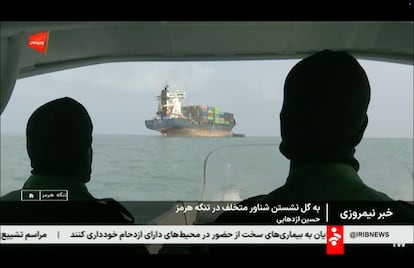
“Money isn’t the problem for the [shipping] industry. The price would be passed on to charterers and customers, and ultimately absorbed into the [transportation] cost — assuming it isn’t an exorbitant rate,” explains Meade.
He points out, for example, that during the war shipping companies paid Iran between $1 million and $2 million to get their tankers through the Strait of Hormuz. However, after about six weeks of conflict, “prices fell rapidly” to between $120,000 and $160,000 per vessel.
“It’s still a high cost, but not one that would hinder trade, especially when you consider supertankers that can carry one or two million barrels of crude oil. In that sense, the shipping industry could withstand this type of negotiation,” he adds.
Like Jungman, the director of Lloyd’s List warns of the “dangerous precedent” set by the fee. “What happens in Hormuz will not stay in Hormuz: Malacca, the South China Sea, the Taiwan Strait… any of the many potential strategic points at sea could become the subject of geopolitical negotiations. That’s why the United States, its Western allies, the International Maritime Organization, and much of the industry are opposed to it,” Mead says. He warns that “global free trade is at stake,” given that more than 80% of goods are transported by sea.
It is no surprise, therefore, that aside from the technical negotiations on the various aspects of the ceasefire agreement with Iran — the immediate end to hostilities on several fronts, the nuclear issue, frozen funds — the Strait of Hormuz is one of the main focal points of the political talks. Nor is it surprising that Trump dispatched his negotiators Jared Kushner and Steve Witkoff to Qatar last week to negotiate — albeit indirectly — with the Iranians.
Aware that it would be a failure for the White House if the war were to end without any clear objectives achieved and with tolls imposed on passage through Hormuz, U.S. envoys have urged their Iranian counterparts not to take an inflexible stance on this issue and to think in the long term, according to the news outlet Axios. If the U.S. lifts all sanctions on Iranian oil, they reason, the revenue the Islamic Republic could generate “would be 100 times greater than what it would receive by using the gangster-like tactic of imposing tolls,” stated a U.S. source quoted by the outlet.
After being completely closed for much of the war, transit volumes have recovered “significantly” since the signing of the memorandum of understanding — and in the immediately preceding days, when both sides had already begun easing the pressure of the strait’s dual blockade — according to the latest analysis by Vortexa. From virtually zero, flows have risen to nearly half of their pre-war levels.
“The reopening is real, but partial, and consistent with ongoing mine-clearing operations and intermittent security incidents in the strait,” Jungman concludes, referring to the reciprocal attacks that took place at the end of June.
Sign up for our weekly newsletter to get more English-language news coverage from EL PAÍS USA Edition

Lotería Nacional: Comprobar Sorteo Del Jueves 16 De Julio

The San Roque Club – Townhouses For Sale

Basel Adra, Palestinian Filmmaker And Oscar Winner: ‘Israelis Don’t See Us As Human Beings’

Spain Is Set To Be Swarming With Rock Legends This Weekend – Here’s What You Need To Know
Alhaurin el Grande and Coin launch historic 1.5 million kilo season for premium tomato

Cheap Flights And Mass Tourism Are Adding €3,800 To The Cost Of The Average Spanish Home, New Report Warns


-
 Barcelona2 weeks ago
Spain Is Set To Be Swarming With Rock Legends This Weekend – Here’s What You Need To Know
-
Alhaurin El Grande2 weeks ago
Alhaurin el Grande and Coin launch historic 1.5 million kilo season for premium tomato
-
 Business & Finance2 weeks ago
Cheap Flights And Mass Tourism Are Adding €3,800 To The Cost Of The Average Spanish Home, New Report Warns
-
Barcelona2 weeks ago
Gang Horror In Barcelona As Gunmen Shoot Dead 15-Year-Old Boy Hanging Out In A Park
-

 New Developments2 weeks ago
🌅 Stunning Penthouse With Panoramic Sea & Mountain Views Benalmádena
-
 Dutch demand2 weeks ago
Dutch Demand For Spanish Property Keeps Rising As Others Cool
-
 Andalucia2 weeks ago
La Fiscalía Abre Una Investigación Para Determinar Si Un Hospital Público De Málaga Utilizó Reactivos Caducados En Sus Análisis
-
Cataluña wildfire1 week ago
Spain travel chaos as Cataluña wildfires close major roads and suspend trains