
Benidorm
Benidorm Half breaks records


The Benidorm Half brings together 12,500 runners and sets a new record in the 21K.
The Benidorm Half brought together 12,500 participants: 6,300 in the 10K and 6,200 in the 21K. This figure sets a new record for entrants, comfortably surpassing the previous milestone of 9,132 runners set in 2025, and reinforces the growth of an event already ranked among the top six races with the highest participation on the national calendar.
How did the Benidorm Half start?
Tracing its roots back to its first official edition in 1984, the race has undergone a remarkable transformation over the past four decades. A pivotal turning point in its history came in 2018 when Tour-Sport Promociones Deportivas took over the organisation. They introduced a bold new concept by moving the start time to sunset, allowing runners to experience the city’s vibrant urban lighting and iconic coastal skyline.
Since that rebranding, which started with nearly 2,000 runners, the event has experienced exponential growth, evolving from a provincial fixture into a premier international sports tourism draw included in the Royal Spanish Athletics Federation (RFEA) calendar, with runners from 43 countries and a massive contingent of British athletes making up nearly half the field.
Female entrants outnumber men for the first time
This year’s edition also marked a historic milestone in the 10K: for the first time, women outnumbered men, with female participation at 51% compared with 49% for men. In the 21K, women made up 35% and men 65%.
On the course, Kenyan runner Nicholas Sitoti Munke delivered a standout performance in the men’s 21K, winning in 1:02:51 and shattering the previous course record of 1:03:51—set in 2025 by British athlete Ben Connor—by a full minute. Anabel Gomez led the women’s 21K podium with a time of 1:19:15. In the men’s 10K, first place went to Ruben Monreal Utrila in 29:38, while María Fuentes Olcina won the women’s 10K in 33:55.
Who were the winners in the local rankings?
In the local rankings, Francisco Javier Lopez won the men’s 10K with a time of 35:26, while Maria Fuentes claimed first in the women’s category with 33:55. In the local 21K, Juanan Fernandez took top honors in the men’s division in 1:15:00, and Svitlana Holosna won the local women’s race in 1:35:35.
Benidorm City Council Mayor Toni Perez started both races and awarded medals to the top finishers. Also present were the Sports Councillor, the Mobility Commission, the Minister of Citizen Security, and the regional deputy.
Find more local news, activities, and profile interviews for Costa Blanca North.
Prefer to read all your local news in one place? Check out our online newspapers for your local weekly news fix.

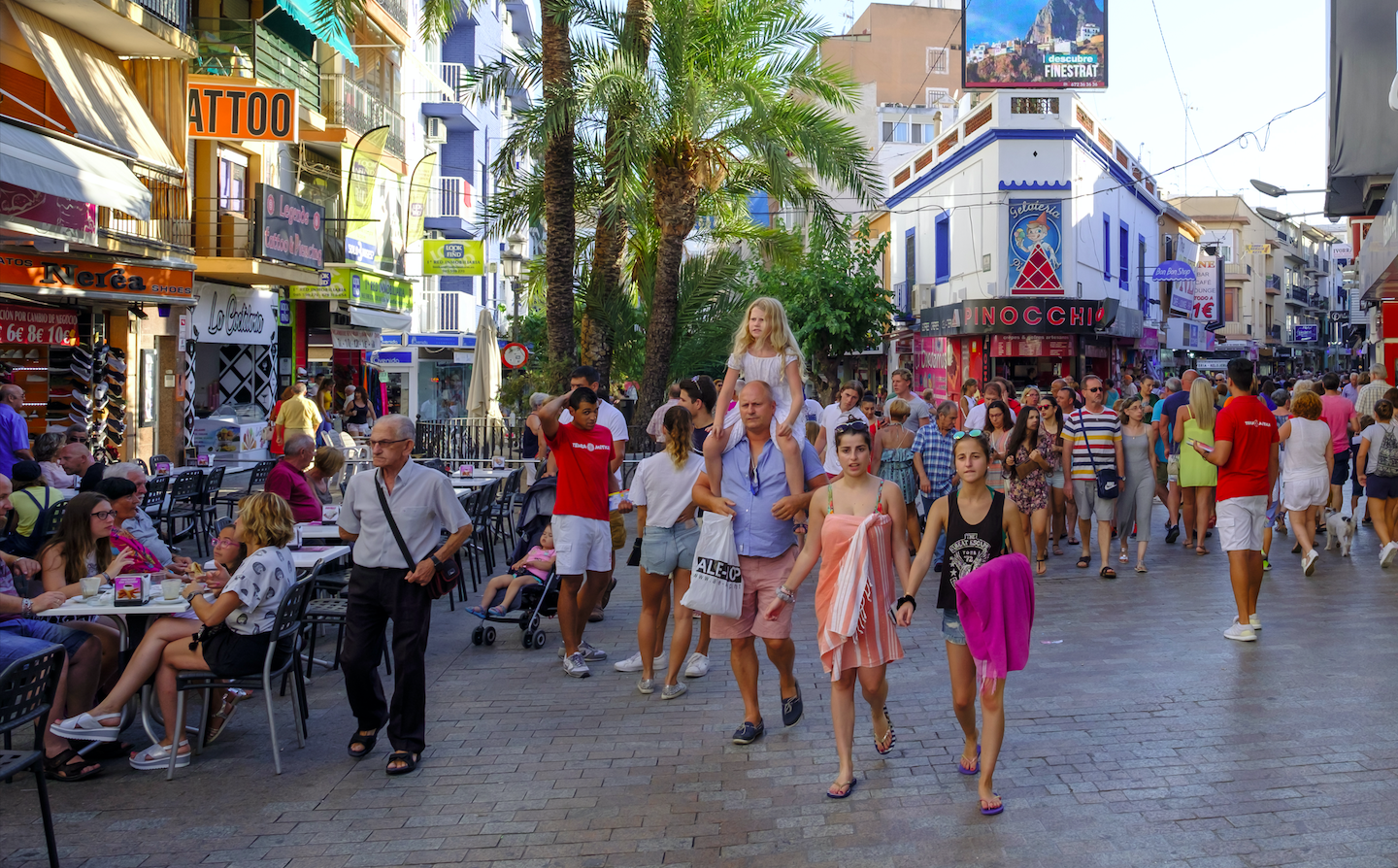
Torrevieja and Benidorm are attracting more residents. Photo credit: leonardo2011 /Shutterstock
Choosing where to live in Spain could mean very different things depending on which town you have your eye on. While Torrevieja and Benidorm are attracting more residents, other established destinations are seeing their populations shrink. New figures reveal a striking contrast between some of Spain’s best-known coastal locations and cities that are losing inhabitants.
Torrevieja recorded the biggest relative population increase among Spain’s principal municipalities during 2025, growing by 4.6 per cent. Benidorm followed with 4.1 per cent, according to the National Statistics Institute (INE). At the other end of the table, Coslada in Madrid saw the largest fall, at 0.8 per cent, followed by Cádiz city, which lost 0.6 per cent of its population.
Where the population is growing
They show that the two Alicante towns were not the only places gaining residents. San Sebastián de los Reyes, north of Madrid, grew by 3.6 per cent, while Colmenar Viejo increased by 3.4 per cent. Granadilla de Abona in Tenerife, L’Hospitalet de Llobregat near Barcelona and Sagunto in Valencia each recorded growth of 2.8 per cent.
Valdemoro in Madrid and Roquetas de Mar in Almería both grew by 2.7 per cent, while Elda in Alicante increased by 2.6 per cent. The figures are percentages rather than the number of people added, so a smaller municipality can record a higher growth rate without gaining as many residents as a much larger city.
Cádiz among the biggest fallers
Cádiz was one of the two principal municipalities with the steepest population losses. After Coslada’s 0.8 per cent fall, the Andalucían provincial capital recorded a decline of 0.6 per cent. Majadahonda in Madrid, Melilla and San Fernando in Cádiz province each fell by 0.4 per cent. Getxo in the Basque Country was down 0.2 per cent, while Santa Coloma de Gramenet in Barcelona and Madrid city each recorded a 0.1 per cent decrease.
These figures do not mean that every town in the surrounding province is losing residents. In fact, the wider provincial picture is very different: Alicante province grew by 2.3 per cent during 2025, making it the second-fastest-growing province after Toledo.
Spain’s population keeps rising
Despite the losses in some municipalities, Spain’s overall population continued to increase. The INE put the number of residents at 49,618,622 on 1 January 2026, up by 490,325 people, or 1 per cent, over the year. The number of residents with foreign nationality rose by 5.3 per cent to more than 7.27 million. People born outside Spain accounted for 20.3 per cent of the population, compared with 19.3 per cent a year earlier.
That distinction is relevant in coastal areas popular with international residents: nationality and birthplace are different measures, and the census records both separately in its tables. The figures also show that population growth was not spread evenly across the country. In 4,862 of Spain’s 8,132 municipalities, the population either increased or remained stable during 2025. That means more than four in ten recorded a fall.
For anyone considering a move, the figures offer a useful snapshot of how different parts of Spain are changing. Torrevieja and Benidorm are growing quickly, while Cádiz and Coslada are moving in the opposite direction.
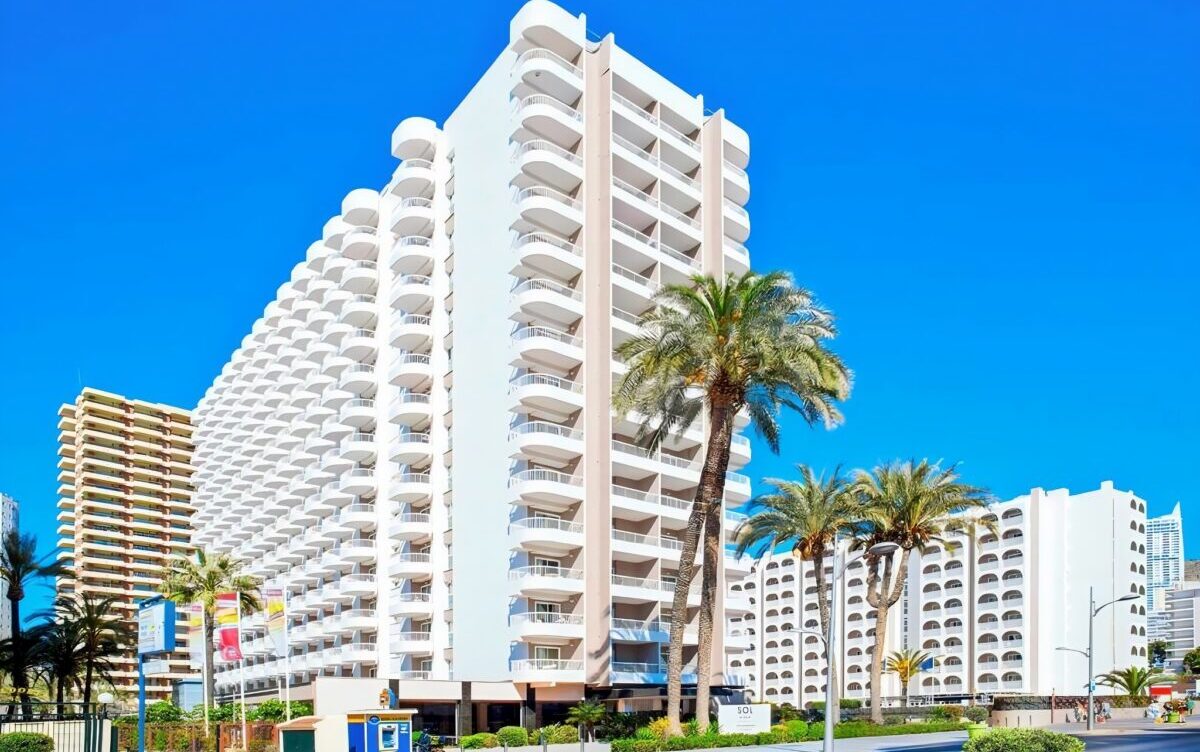
A British teenager’s devastating fall has raised questions about high-rise hotel accommodation, balcony safety and whether families should be offered rooms closer to ground level.
A serious accident involving a 17-year-old British holidaymaker in Benidorm has raised questions about whether hotels should routinely offer families the option of staying on lower floors.
Jamie suffered life-threatening injuries after falling from a sixth-floor hotel balcony at the Sol Pelicanos Ocas on Tuesday night, November 10. He had been on holiday with his mother, Gemma, and her friends when the incident happened.
The teenager was initially taken to hospital in Benidorm before being transferred urgently to Alicante, where surgeons carried out emergency surgery. His injuries included extensive fractures, a punctured lung, a ruptured artery, a broken pelvis, both legs and one arm.
Jamie’s family has since launched a £20,000 fundraising appeal to help bring him home to Britain when doctors consider him fit to travel.
Should families be offered lower hotel floors?
Benidorm is famous for its towering hotels and apartment blocks, with thousands of visitors spending their holidays in accommodation many floors above street level. Its skyline has previously attracted attention through buildings such as the InTempo residential tower, which stands 192 metres tall, or the TM Tower, under construction, which is set to reach 230.5m.
However, the latest accident raises a practical question for parents booking family holidays: should hotels routinely offer families with children and teenagers the choice of a lower-floor room?
Some families may actively prefer accommodation closer to reception, the swimming pool and other hotel facilities, rather than having to use lifts every time they leave their room.
Lower-floor accommodation could also provide parents with greater peace of mind, particularly when travelling with younger children. It would not remove every risk, but it could reduce the height involved in a potential fall. There is also the question of whether families should have to pay extra to make such a request.
Benidorm continues to build upwards
The discussion comes as the resort attracts attention for another ambitious high-rise development. TM Tower, a residential project planned for Benidorm, made headlines on November 12 after lift manufacturer Schindler announced it would supply seven high-speed lifts for the building.
Standing 230.5 metres tall, the planned 64-storey tower will contain 260 homes and is expected to become Europe’s tallest residential building. Completion is scheduled for the second half of 2028. The development has already featured in EWN’s report on Benidorm preparing to add Spain’s tallest residential tower.
Although TM Tower is not a hotel, the project reflects Benidorm’s continuing development of high-rise buildings and its distinctive skyline.
What do hotels and tour operators recommend?
British tour operators once already provided guidance about balcony safety. Jet2 Holidays’ accommodation safety advice tells customers never to leave children alone on balconies, climb on furniture or lean over railings. Its guidance also warns against attempting to move between neighbouring balconies.
Previous EWN reporting has also examined a British woman’s serious fall from a sixth-floor Benidorm hotel balcony. However, it is not clear whether Benidorm’s hotel association HOSBEC has any specific recommendation to hotels about allocating lower-floor rooms to families travelling with children. Nor has any resort-wide agreement requiring or encouraging hotels to do so been publicly established. Perhaps, in the light of Jaime’s horrific fall, it’s time the law changed on this precise subject.
Parents can ask their tour operator or hotel for a lower-floor room when booking, although availability cannot always be guaranteed.
Should hotels do more?
The question is whether room allocation should be left entirely to individual hotels or whether the industry should consider a more consistent approach to family accommodation.
Following Jamie’s accident, Benidorm’s hotel sector has an opportunity to explain what precautions are already available and whether families should be routinely offered the choice of staying closer to ground level.
balcony fall
Benidorm hotel fall: Family launches £20,000 appeal for critically injured British teenager

A British family is asking for donations to help bring their 17-year-old son home after he suffered life-threatening injuries in a sixth-floor hotel balcony fall in Benidorm.
Teenager faces uncertain recovery
Jamie was on holiday with his mum, Gemma, and her friends when the incident happened at the Sol Pelicanos Ocas hotel on Tuesday night, November 10. He was initially taken to hospital in Benidorm before being urgently transferred to Alicante, where surgeons carried out emergency, life-saving surgery.
According to his aunt, Lauren Baker, Jamie suffered extensive fractures across both sides of his chest, a punctured lung and a ruptured artery. He also broke his pelvis, both legs and one arm.
Surgeons managed to control the ruptured artery and stabilise him, but the teenager is still in intensive care, heavily sedated. Doctors have warned the family that there is a risk of paralysis while they continue assessing the extent of his injuries.
Parents face mounting costs in Spain
Jamie’s aunt has launched a £20,000 GoFundMe appeal to bring him home, with donations intended to help his parents stay close to him and meet the costs of his eventual return to Britain.
His father, Kev, was working in Dover when he received the news and immediately travelled to Spain. With no accommodation arranged and no bank card with him, he even spent a night sleeping in the hospital waiting room so he could stay near his son.
Gemma is meanwhile trying to negotiate the insurance arrangements while coping with the shock of her son’s injuries. The family is receiving assistance from Lia’s Wings, a UK charity specialising in medical transfers for critically ill babies and children.
Depending on Jamie’s condition when doctors consider him fit to travel, his journey home could involve a dedicated medical flight or a medically supported commercial service.
The family has also highlighted the financial difficulties that can follow a serious medical emergency abroad, something experienced by other holidaymakers, including an Irish tourist facing a costly journey home after a Spanish motorbike accident.
Donations could make a difference
Lauren describes her nephew as a loud, funny, football-mad teenager and a devoted Manchester United supporter who is fiercely loyal to his family. She says the fundraising target will help cover expenses not met by insurance or charitable assistance, including accommodation, travel and the eventual journey home.
Any money left after Jamie’s needs and the family’s emergency expenses have been met is intended to go to Lia’s Wings to help another family facing a similar crisis.
Anyone wishing to help can donate through the Bring Our Jamie Home GoFundMe appeal. Those unable to contribute financially are also being encouraged to share the appeal.
Spain’s coast faces a warning from Africa as study reveals 20 sinking cities
Electric scooter beats stadium security in bizarre football pitch invasion
Winter power cuts: How to keep Spanish homes warm and safe


-

 New Developments3 weeks ago
The San Roque Club – Townhouses For Sale
-
costa blanca live music4 weeks ago
Beatles tribute: The Liverpool Band returns to Orihuela Costa
-

 New Developments4 weeks ago
Stylish 3-Bedroom Apartment With Panoramic Sea Views – Benalmádena
-

 %4 days ago
Black Friday Shock As Just 6% Of Deals Pass OCU’s Genuine Bargain Test
-

 Uncategorized4 weeks ago
FIA explain Leclerc penalty decision as Hamilton left fuming after Ferrari clash
-

 America4 weeks ago
Así Ha Sido La Primera Jornada Del World In Progress 2026: Del Anuncio De Sánchez De Ayudas Para Las Víctimas De Urda A La Reivindicación De Rebeca Grynspan Del Papel De La ONU
-

 %3 weeks ago
Catral Celebrates November
-
blackout4 weeks ago
Power cuts hit Malaga: Eight towns and villages affected by electricity faults