Connect with us

News from Italy

Better than gold: Italy’s sweetest race ends with unlimited tiramisu

Published

on

A slice of tiramisu is worth its weight in gold medals
Credit: Shutterstock, stockcreations

People will do a long list of things if there’s the promise of a sweet treat afterwards. Cleaning the house, going to the gym or eating a plate of vegetables are all tasks one might tick off their to-do list to justify sitting down with a sugary snack. But what about running a 10k?

Italy’s Tiramisu Race rewards runners with unlimited dessert

On October 11, the Italian City of Treviso will be hosting the worlds sweetest race where instead of a medal waiting for them at the finish line, there will be a slice of tiramisu.

Unlimited slices in fact. Organisers have confirmed that participants who complete the 10.1-kilometre course and make it to the end can indulge in as much tiramisu as they want. And considering Treviso is the birthplace of the classic dessert, it’s sure to be among the best tiramisu in the world.

Rather than competing for a podium finish, runners can focus on enjoying the experience, knowing they’ll be rewarded with one of Italy’s most beloved desserts. Whether you’re chasing a personal best or simply looking for an excuse to visit northern Italy, this is one race that promises a memorable finish.

How to enter the Treviso Tiramisu Race

For its inaugural edition, only 1,000 bib numbers are available. Registration costs €18 up until August 30, at which point it will increase to €22 until all spots are filled. Sign up is available to complete online through ENDU.

The 10.1-kilometre course is designed to be accessible to a wide range of runners, making it ideal for both experienced athletes and those simply looking to combine sightseeing with a fun sporting event. With places limited, organisers expect entries to sell out well before race day.

Visiting Treviso during the Tiramisu World CUp

The Tiramisu Race will coincide not only with the Treviso City half marathon but also the Tiramisu World Cup taking place over the same weekend.

That means visitors can spend the day cheering on runners before sampling countless variations of the iconic dessert as amateur and professional makers compete for the title of best tiramisu.

Continue Reading
Click to comment

Leave a Reply

Your email address will not be published.

%

Italian Man Reunited With Stolen Moped

Published

on

italian-man-reunited-with-stolen-moped

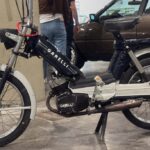
A man from Saluzzo, in Italy’s Piedmont region, said he thought police were playing a prank on him when they called to say they’d found the moped stolen from outside his home back in 1984, when he was just 16 years old.

The vehicle, a Garelli 50cc moped, now grey with age, resurfaced when Carabinieri officers in Volpiano, near Turin, pulled over a 64-year-old rider during a routine roadside check. The man wasn’t displaying a number plate, which immediately marked him out, since plates have been compulsory on 50cc mopeds in Italy since 1994. The bike itself had never carried one because it was stolen a decade before that law came in, but riding it without a plate today was exactly the kind of irregularity that prompts officers to take a closer look.

But something about the stop didn’t sit right with officers. “This guy was riding this scooter without a licence plate and so he was stopped,” Volpiano Carabinieri commander Americo Celani explained. “This gave us an indication that something was wrong.”

A check of the moped’s chassis number against old police records turned up a theft report dating back 42 years, to a disappearance from Vado Ligure on Italy’s Ligurian coast.

That led investigators to the original owner, now 58 and living near Cuneo, who had bought the moped in August 1984 as a 16th birthday present to himself, funded by money saved from bar work and odd jobs. It was stolen from outside his house just months later.

He told Italian newspaper La Repubblica he immediately assumed the call from police was a joke.

The 64-year-old rider was not responsible for the original theft but has been reported to prosecutors in Ivrea for handling stolen goods.

Other lengthy stolen property reunions

Long-delayed reunions between owners and stolen property are rarer than most thefts, but they do happen. In the UK, an Aberdeen woman, Audrey Hay, was reunited with her handbag 30 years after it was stolen and thrown into the River Don, after it washed up and was found by an 11-year-old girl walking nearby. In the US, a South Carolina man spent two decades searching for his stolen 1971 Dodge Challenger before federal investigators helped track it down through a car-dealer fraud case.

Continue Reading

%

“Your Labrador Won’t Pay Your Pension”: Italian Pet Proposal Sparks Debate

Published

on

“your-labrador-won’t-pay-your-pension”:-italian-pet-proposal-sparks-debate

The discussion has been framed less as a serious fiscal policy and more as a political provocation. Photo credit: Artem Avetisyan/Shutterstock

A mayor in northern Italy has sparked national debate after suggesting that dog owners could be asked to contribute around €20 per animal per year, in a proposal framed as a voluntary contribution aimed at supporting families with children.

The idea, put forward in the municipality of San Giorgio su Legnano near Milan, was described by the mayor as a “provocation” intended to  highlight demographic pressure and rising costs for local families. According to reporting in Italian media, the town has significantly more registered dogs than children in primary schools, a contrast the mayor used to underline broader population trends.

Mayor’s Comments and Proposal

In comments that quickly spread across Italian news outlets, the mayor added: “I doubt your Labrador will pay your pension”, a remark widely interpreted as a rhetorical jab at Italy’s declining birth rate and increasing reliance on pet ownership among households without children.

The proposed €20 contribution was presented as a way to generate modest municipal revenue that could be directed towards reducing the cost of school meals. Local reporting indicated that if applied across all dog owners, the scheme could raise several thousand euros annually for community services, although the proposal has no status as a formal national tax and remains at discussion stage.

The reaction has been divided. Some residents have supported the symbolic focus on family costs and public service funding, while others have criticised the framing of pet ownership as a financial counterweight to having children. Animal owners and commentators have also questioned whether such proposals risk oversimplifying complex demographic and economic trends.

What the proposal actually means in practice

Fortunately the measure is not a legally binding tax. It has been described locally as a voluntary or symbolic contribution rather than an enforced fiscal obligation.

Italy does not currently have a national “dog tax”, although municipalities are permitted to introduce local fees or administrative charges linked to services such as pet registration, identification, or waste management. The San Giorgio su Legnano idea sits within this broader context of local experimentation rather than formal tax reform.

The proposal has instead gained attention because of its framing, linking pet ownership directly with public spending pressures and demographic decline. This has placed it within a wider European debate over how local authorities fund services in ageing populations.

How this compares with other pet-related charges in Europe

While the Italian proposal has gained attention for its wording, it is not part of a coordinated European trend of new “pet taxes”, but rather reflects isolated local or national variations in pet-related fees.

United Kingdom: no dog tax, but historical precedent

In the UK, there is currently no dog tax or compulsory annual charge for pet ownership. A national dog licence once existed, but it was abolished in 1987.

Today, costs associated with pets are indirect and service-based, including veterinary care, insurance, and optional local authority charges in specific cases such as kennel services or fines for stray animals. There is no equivalent to the Italian-style municipal contribution linked directly to ownership.

Spain: registration-based system, not taxation

In Spain, pet ownership is regulated primarily through identification and registration requirements rather than taxation. National legislation requires dogs to be microchipped and registered, and some regions or municipalities impose administrative fees related to registration or ownership processes.

However, there is no nationwide pet tax comparable to historical systems in other European countries. Debates in Spain have focused more on animal welfare obligations and control measures rather than fiscal charges on ownership itself.

Some municipalities have explored small local fees linked to waste management or licensing, but these are not structured as recurring national or regional pet taxes.

Wider European context

Across Europe, pet-related charges vary significantly. Germany, for example, maintains a formal “dog tax” in many municipalities, which is one of the clearest examples of a structured recurring levy on dog ownership. Switzerland and Austria also apply local or cantonal pet-related charges in certain regions.

By contrast, countries such as the UK and Spain have moved away from direct ownership taxes, instead relying on regulation, registration and welfare enforcement.

Why these proposals keep reappearing

Pet-related levies often re-emerge in public debate during periods of economic pressure or demographic concern. In ageing populations, local governments face rising demand for services while tax bases shrink, prompting symbolic or experimental proposals that link household choices with public funding needs.

In the Italian case, the discussion has been framed less as a serious fiscal policy and more as a political provocation highlighting the contrast between rising pet ownership and declining birth rates.

While unlikely to become formal policy in its current form, the proposal has added to a broader European conversation about how local authorities balance welfare spending, family support, and demographic change.

A debate unlikely to disappear

Although the San Giorgio su Legnano proposal remains local and unofficial, its viral spread reflects a recurring theme across Europe: the search for new ways to fund public services while responding to shifting social patterns.

Whether framed as humour, provocation or policy experimentation, the idea of linking pets to public contribution continues to resurface in different forms across municipalities. For now, however, there is no sign of a coordinated move towards widespread pet taxation in either Spain or the United Kingdom.

Continue Reading
Advertisement
Advertisement

Spanish Real Estate Agents

Tags

Trending

Copyright © 2017 Spanish Property & News