
Latest
Spain’s Bilbao Named The World’s Best Value Travel Destination For 2027 After Flight And Hotel Prices Plummet By Two Thirds

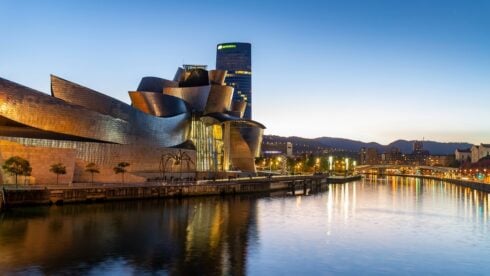
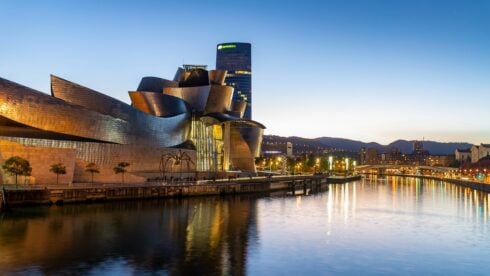 The Basque city beat Wroclaw, Bordeaux and even Zurich to top the travel site’s annual ranking









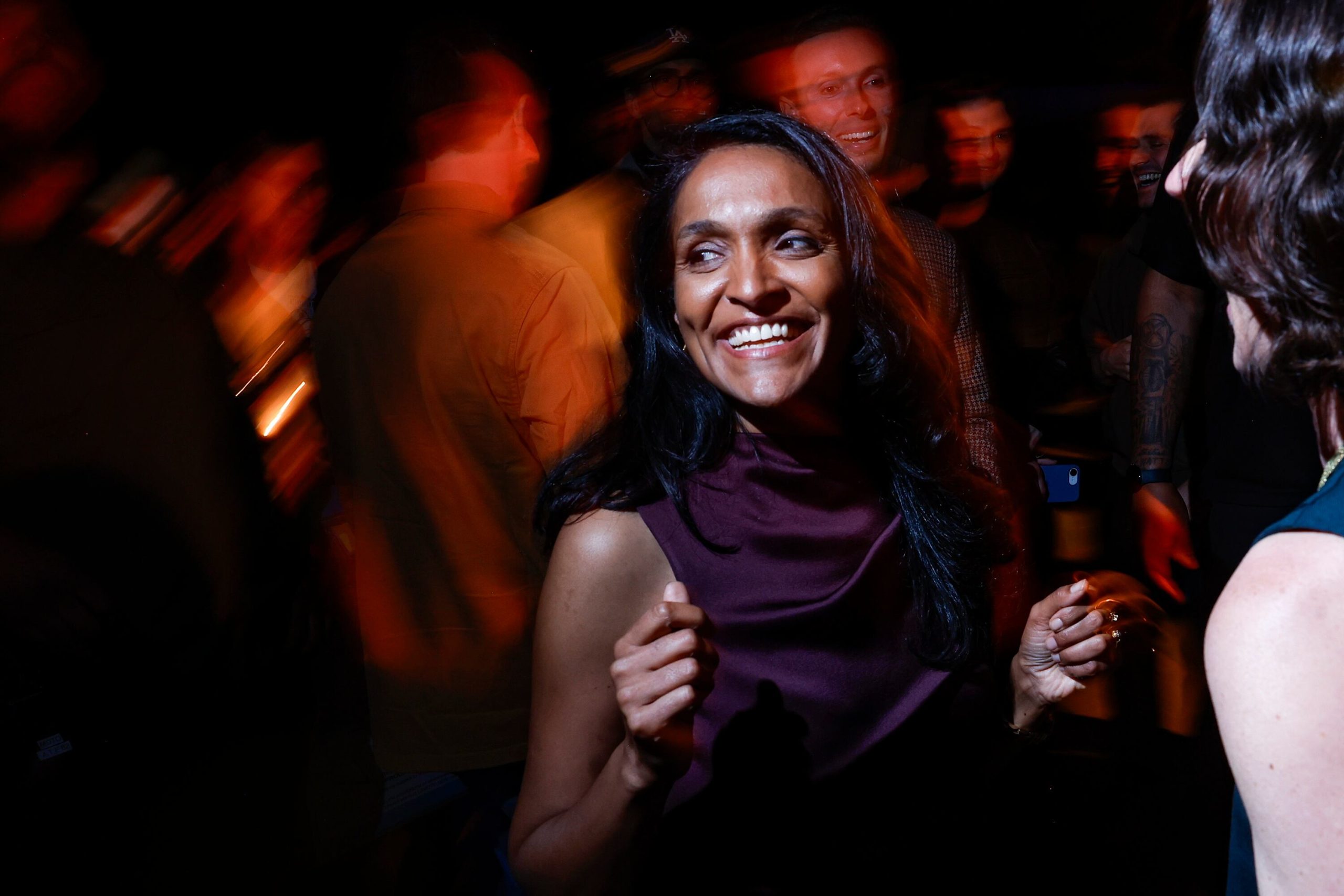
Karen Bass, a Democrat, had never lost an election. Until now. It became clear on Thursday that Nithya Raman, also a Democrat, will be the next mayor of Los Angeles.
Raman, who was born in India, graduated from Harvard University and is the mother of two children, will take the helm of the second-most-populous city in the United States, behind only New York City. She will be only the second woman to hold the office, following her predecessor, Bass, whom she defeated by a margin of 35,000 votes out of 824,000 counted. She will also be the first person of Asian descent, specifically South Asian, to serve as mayor of the city.
With 76% of ballots counted on Thursday morning, more than 36 hours after polls closed, Raman — a council member representing the Fourth District — held a commanding lead with 52.1% of the vote, compared with 47.9% for her opponent.
The results took time to emerge from an election night that also determined control of the federal Congress and saw Democrat Xavier Becerra elected governor of the state of California.
For several weeks, polls had projected Raman as the winner. Some showed her leading by only a couple of points, while others gave her an advantage of as much as 11. Yet just a week before Election Day, local media reported that Bass had closed the gap.
On Election Day, the race was effectively tied, and the gap between the two candidates remained razor-thin for hours. The final results, however, showed that Raman, as most forecasts had suggested, would ultimately prevail and take office.

Raman was virtually unknown outside local political circles until this summer, when she launched her primary campaign. But she steadily gained ground with voters through her ability to explain her ideas in simple terms and her focus on everyday concerns such as street maintenance, pollution and taxes. Some residents of her Fourth District, however, have criticized her precisely for what they see as a poor record on those bread-and-butter issues. When she entered the race, not a single member of the city council, on which she serves, endorsed her.
But Bass had been losing support after a difficult term, particularly because of her handling of the wildfires that swept through Pacific Palisades in January 2025. The blazes, which also devastated Altadena and Pasadena, although those areas are outside her jurisdiction, burned through 16,000 hectares, killed 25 people, forced 180,000 residents to evacuate and caused billions of dollars in damage, including the destruction of more than 11,000 homes.
“Where is our mayor?” That was the question Raman posed in a recent campaign video, underscoring her argument that Bass had failed to deliver on key promises, among them tackling homelessness.
On her first day in office, in December 2022, Bass made the issue a top priority, declaring a state of emergency and launching initiatives aimed at getting unhoused people off the streets and into permanent housing. But she failed to reverse the trend. In fact, the numbers have worsened in recent months: more than 73,000 people are homeless in Los Angeles, according to a report commissioned by the city. From 2025 to 2026, the homeless population increased by 3.4% in the city and 1.2% across Los Angeles County.
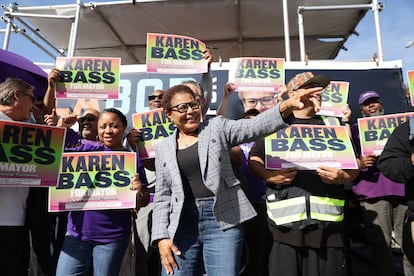
From now on, Raman will try to tackle those challenges, as well as the city’s housing crisis, a pressing issue in a place where the median home value stands at $928,000, according to the real estate website Zillow.
She has pledged to streamline the lengthy and cumbersome permitting process for new construction and create an office dedicated to protecting tenants. She has also promised greater transparency in the use of tax revenues, including the creation of a financial watchdog position that does not currently exist at City Hall.
The mayor-elect also plans to launch crews to repair streets and streetlights, hire more 911 operators, and expand the use of unarmed patrols and rapid-response teams to assist homeless residents and people experiencing mental health crises. She aims to open more parks, revitalize the city’s major thoroughfares, including the semi-neglected Hollywood Boulevard, and improve connections between Los Angeles and its main airport.
One of the biggest challenges Raman will face, and one that is likely to define her legacy, is the 2028 Olympic Games. The event will make Los Angeles a three-time Olympic host, the only city in the Americas to achieve that distinction.
In just 600 days, a sprawling and often chaotic city, with limited housing options, a deep reliance on cars, inadequate public transportation, chronic traffic congestion and poor links to its main airport, will have to welcome some four million visitors in need of accommodation and transportation.
How Los Angeles rises to that challenge will shape Raman’s tenure and may ultimately define it.
Sign up for our weekly newsletter to get more English-language news coverage from EL PAÍS USA Edition

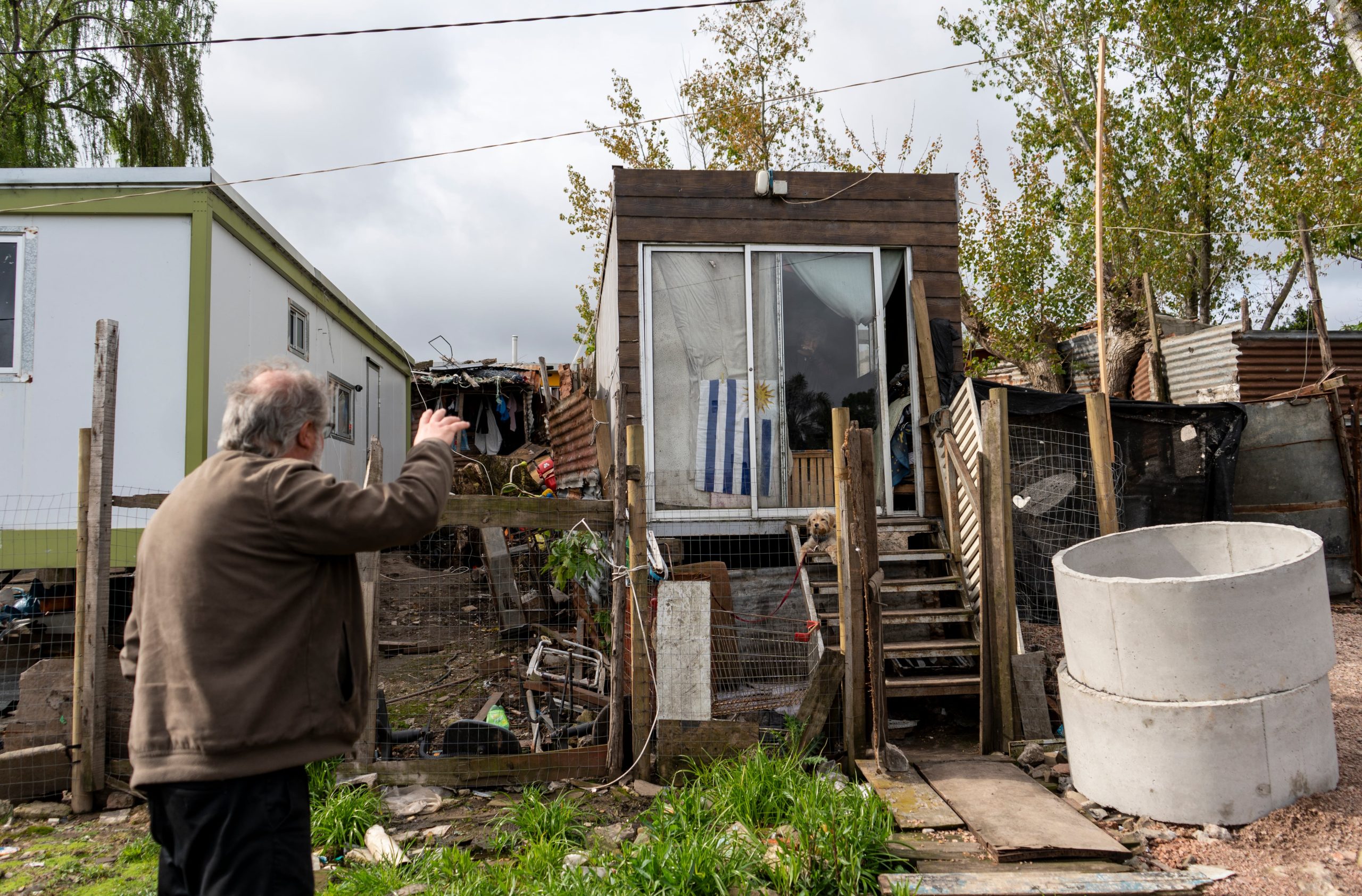
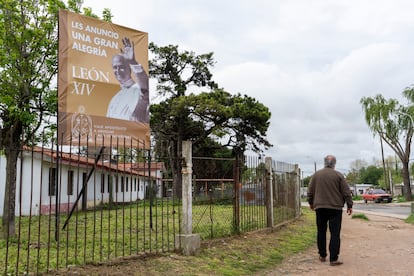
In Casavalle, one of Montevideo’s most vulnerable neighborhoods, Uruguayan priest Pablo Coimbra walks through a cluster of half-finished homes. The district, steeped in history, is set to receive Pope Leo XIV this weekend.
Built with solid foundations, concrete floors and aluminum-framed windows, the houses stand out amid the makeshift tin shacks and dirt roads that dominate the settlement.
“We have shown that it improves the quality of children’s education. Living without a bathroom, in a shack, is one thing; having a decent home is another,” Coimbra says ahead of the highly anticipated papal visit.
Coimbra has led Our Lady of Guadalupe Parish for the past six years. Founded in 1987, it belongs to the diocesan clergy. The community is now painting walls and preparing its facilities to welcome the pontiff during his visit to Uruguay.
The parish sits at one of Casavalle’s central hubs, behind a large modern square with skate ramps, playgrounds and sports courts. Around it are a police station, a school, a health clinic and a civic center housing a range of public services. The layout recalls that of old Spanish towns, organized around a central plaza where all civic life was concentrated.
But here, on the outskirts of Montevideo, opportunities and services are not always within reach. The presence of public institutions coexists with a reality shaped by poverty and violence: frequent shootouts, small-scale drug trafficking gangs battling for territory, contract killings, and children killed by stray bullets. These are the streets Pope Leo will walk through in Montevideo, where mud is a constant and sewage runs along the sidewalks.
The parish’s asymmetrical design breaks with the traditional image of a Catholic church. Its structure is defined by overlapping geometric brick volumes arranged on different levels, with sloping lines and staggered roofs. Inside stands an image of Our Lady of Guadalupe that arrived after John Paul II’s visit to Uruguay nearly four decades ago. The pope gifted the image, and the clergy later donated it to this parish on the condition that the church bear the Virgin’s name.
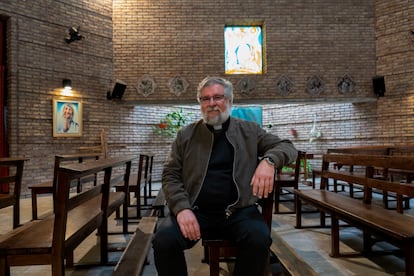
From there, where he celebrates Mass for 200 people every Sunday, Coimbra speaks about the neighborhood’s challenges and explains what sets the Church’s work apart from that of public institutions. “I wouldn’t say the state is absent here, because that’s not true. The State is present. But it’s not efficient. The bureaucracy, the delays…,” says Coimbra, explaining that it is difficult for the state to meet the community’s pressing needs.
The difference, he says, lies in daily contact. “We live here, I live here. So we are constantly going out into the neighborhood, visiting people, getting to know them, having direct contact with families, with their problems, with the realities of daily life.”
For a few hours, the papal visit will place Casavalle at the center of attention. The parish’s work, however, continues every day. “People here feel very excluded, left behind, and that’s why they’re so excited about the visit,” the parish priest says.
‘When is the Pope coming?’
“Father, when is the Pope coming?” The question comes up again and again during the walk through Casavalle. “Not long now,” Coimbra replies.
Some residents stop to greet him; others take the opportunity to tell him about their problems. “The demands are constant, you need to have a strong character,” the priest says. It requires knowing when to say no and where to set limits.
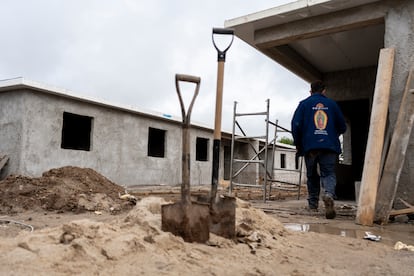
Just a few yards from the parish, where a stage is being erected for the Pope’s address, work continues at a frantic pace. In the background, there is the sound of plena, the Afro-Caribbean-rooted musical genre that is a staple of Uruguayan culture, known for its danceable, percussion-driven rhythms. The music blends with the sound of the concrete mixer and the thud of wet cement against the walls. There is a rhythm to the work, but also a sense of urgency. Although several homes are nearing completion, there is still much to be done. The ramp the pontiff will use is not yet finished, and damp days, with the sun reluctant to break through, have not made the task any easier.
The homes vary in size and design. Some are intended for older adults, while others are designed for large families. Some measure 72 square meters, while the largest spans 84. Their layouts are tailored to the needs of the people who will live in them.
Selecting the families was a key part of the process. The criterion was not whether they were Catholic, Coimbra explains, but whether they genuinely needed housing and could contribute to a harmonious community.
The neighborhood itself has also played a role in protecting the construction sites. Security guards monitor the area around the clock, but, according to the priest, protection has not depended solely on them. When some people tried to make off with building materials, local residents intervened to recover them. Vigilante justice played its part in a country where church and state have been separate for more than a century, since the 1918 Constitution.
The parish’s social work extends well beyond housing. Each month, it distributes 100 food baskets to families in the neighborhood and operates a community dining hall that serves afternoon snacks and dinner to more than 60 people, mainly children and teenagers, from Monday to Friday.
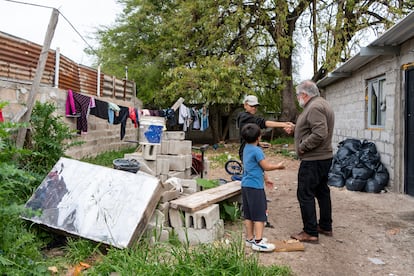
The parish also has a grass soccer field, enclosed by fencing and equipped with floodlights, a striking contrast to the surrounding shacks, whose residents watch from what effectively serves as the stands. From Monday to Friday, it hosts a soccer school for children between the ages of six and 15. The facility also offers mixed volleyball and other recreational activities, alongside programs providing social and family support.
From accountant to priest
Coimbra decided to become a priest while walking along Sarandí pedestrian street in Montevideo’s Ciudad Vieja district. He was 28 years old. He had just stepped off a bus near the Gateway of the Citadel when he felt what he describes as a clear inner voice telling him: “I want you to be a priest.” He asked God for a sign, and as he continued walking, a television crew approached him with an unexpected question: “Would you become a priest?” He answered yes. Deeply moved, he walked to Montevideo Cathedral, where he felt his doubts disappear.
The calling, however, had begun much earlier. Born in Salto, a department in northern Uruguay, into a working-class family, Coimbra served as an altar boy from childhood. He recalls an image of Jesus bearing a phrase that stayed with him for years: “Come and follow me.” At 18, he moved to Montevideo to study accounting. He lived in a boarding house with other young people from the interior, worked while attending university, and, after graduating, joined the Social Security Bank (Banco de Previsión Social) in 1991, achieving what many Uruguayans consider a dream job: a position in the public sector. Although he never drifted away from the Church, for years he envisioned a very different future.
After his ordination, Coimbra hoped to work in a neighborhood parish and remain close to ordinary people. Instead, his first assignment drew on his training as an accountant. He was tasked with conducting an audit of Radio Oriental, a Church-owned radio station known for its sports and news programming that was facing financial difficulties. He later took over its administration and eventually became parish priest of San Pedro Apóstol in Buceo, a neighborhood that stretches to Montevideo’s waterfront promenade.
A survey showing a weaker Catholic presence in Montevideo’s peripheral neighborhoods strengthened his conviction that the Church should address both material and spiritual needs. Today, that commitment is reflected in his work as pastor of Our Lady of Guadalupe Parish, in the heart of Casavalle, where he seeks to bring the Church closer to the daily life of the community.
Sign up for our weekly newsletter to get more English-language news coverage from EL PAÍS USA Edition


Conor Faulkner – conor.faulkner@thelocal.com
Published: 5 Nov, 2026 CET.

Add The Local as a preferred source
Spain’s Labour Ministry has confirmed that it intends to hike the minimum wage once again, this time by 5.3 percent, ahead of the country’s general election on November 29th.
Become a member or log in to continue reading
More
Comments
See Also

Nithya Raman Defeats Karen Bass To Become Los Angeles’ First Asian-American Mayor

Casavalle, The Vulnerable Neighborhood On The Outskirts Of Montevideo Awaiting Pope Leo XIV
Spain To Raise Minimum Wage To €1,500 Per Month


-
DGT3 weeks ago
Viral video in Spain sparks fury over drivers who ‘have no idea how to drive’
-

 Arabia Saudí4 weeks ago
Un Ataque De Los Hutíes Contra El Aeropuerto De Riad Causa Al Menos 12 Muertos Y Más De 300 Heridos
-
 America4 weeks ago
Un Tirador Mata A Ocho Personas En Una Vivienda En Pensilvania
-
Costa Blanca North4 weeks ago
Jávea opens historic lighthouse to the public with a new whale-watching viewpoint
-
Automated supermarket3 weeks ago
Spain’s 24-hour shop with no tills expands to Barcelona Airport
-
 %4 weeks ago
Concrete Balcony Slabs Collapse Onto Marbella Street
-

 America4 weeks ago
Trump Llega A Un Acuerdo Con Putin Para Que Rusia Libere Miles De Barriles De Diésel En Los Mercados Mundiales
-

 Uncategorized4 weeks ago
Williams F1 driver caught up in four-car pit lane pileup
Join the conversation in our comments section below. Share your own views and experience and if you have a question or suggestion for our journalists then email us at news@thelocal.es.
Please keep comments civil, constructive and on topic – and make sure to read our terms of use before getting involved.
Please log in here to leave a comment.