
ElPais
Casavalle, The Vulnerable Neighborhood On The Outskirts Of Montevideo Awaiting Pope Leo XIV

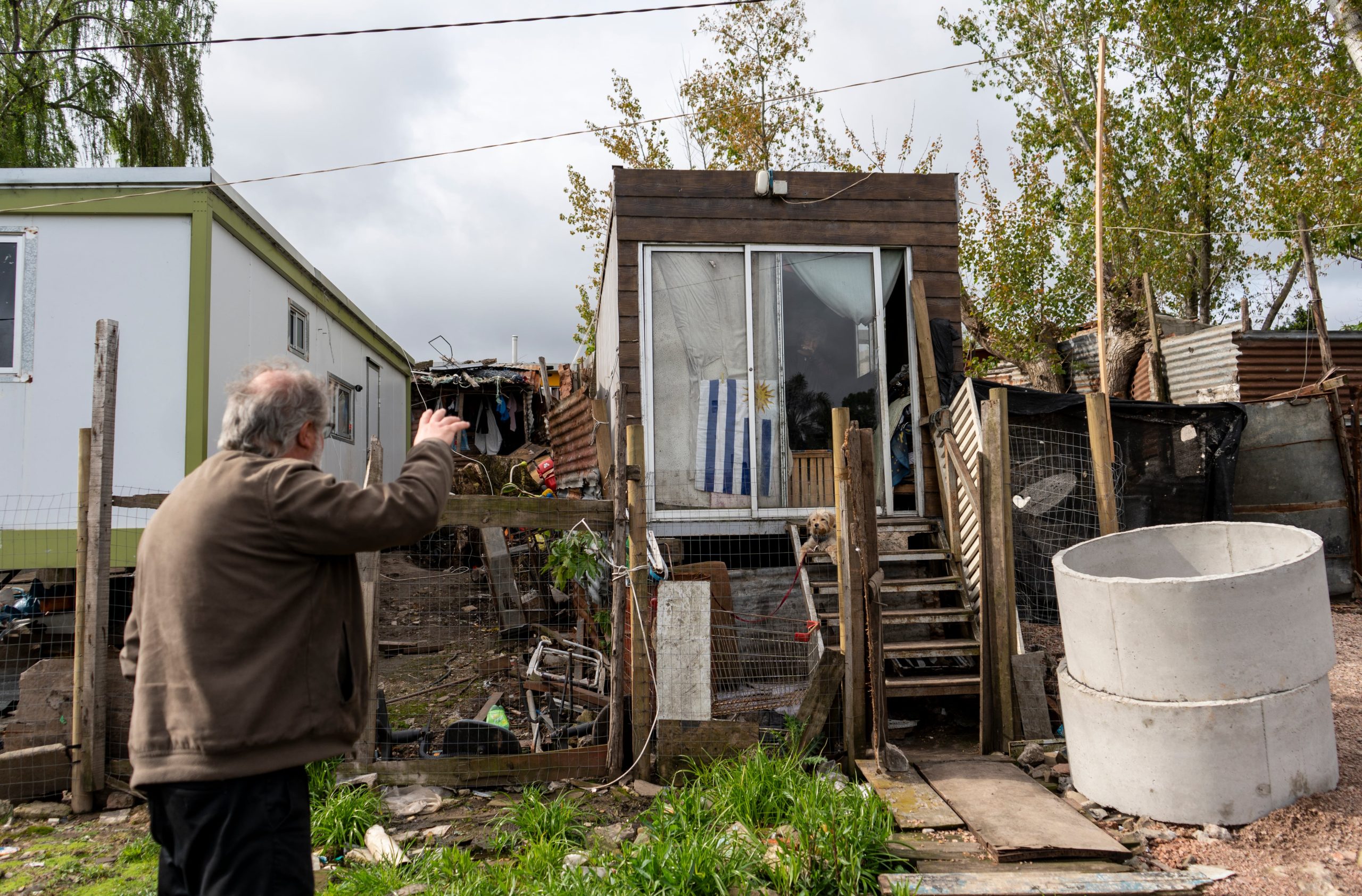
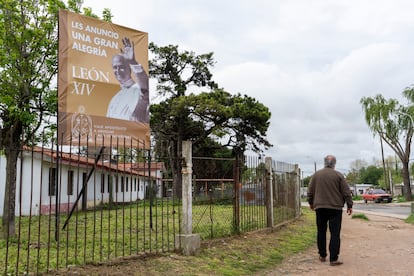
In Casavalle, one of Montevideo’s most vulnerable neighborhoods, Uruguayan priest Pablo Coimbra walks through a cluster of half-finished homes. The district, steeped in history, is set to receive Pope Leo XIV this weekend.
Built with solid foundations, concrete floors and aluminum-framed windows, the houses stand out amid the makeshift tin shacks and dirt roads that dominate the settlement.
“We have shown that it improves the quality of children’s education. Living without a bathroom, in a shack, is one thing; having a decent home is another,” Coimbra says ahead of the highly anticipated papal visit.
Coimbra has led Our Lady of Guadalupe Parish for the past six years. Founded in 1987, it belongs to the diocesan clergy. The community is now painting walls and preparing its facilities to welcome the pontiff during his visit to Uruguay.
The parish sits at one of Casavalle’s central hubs, behind a large modern square with skate ramps, playgrounds and sports courts. Around it are a police station, a school, a health clinic and a civic center housing a range of public services. The layout recalls that of old Spanish towns, organized around a central plaza where all civic life was concentrated.
But here, on the outskirts of Montevideo, opportunities and services are not always within reach. The presence of public institutions coexists with a reality shaped by poverty and violence: frequent shootouts, small-scale drug trafficking gangs battling for territory, contract killings, and children killed by stray bullets. These are the streets Pope Leo will walk through in Montevideo, where mud is a constant and sewage runs along the sidewalks.
The parish’s asymmetrical design breaks with the traditional image of a Catholic church. Its structure is defined by overlapping geometric brick volumes arranged on different levels, with sloping lines and staggered roofs. Inside stands an image of Our Lady of Guadalupe that arrived after John Paul II’s visit to Uruguay nearly four decades ago. The pope gifted the image, and the clergy later donated it to this parish on the condition that the church bear the Virgin’s name.
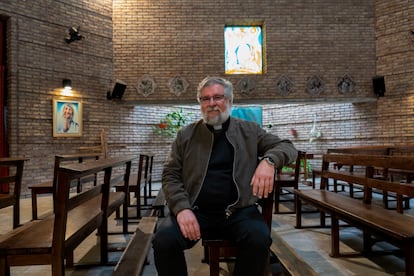
From there, where he celebrates Mass for 200 people every Sunday, Coimbra speaks about the neighborhood’s challenges and explains what sets the Church’s work apart from that of public institutions. “I wouldn’t say the state is absent here, because that’s not true. The State is present. But it’s not efficient. The bureaucracy, the delays…,” says Coimbra, explaining that it is difficult for the state to meet the community’s pressing needs.
The difference, he says, lies in daily contact. “We live here, I live here. So we are constantly going out into the neighborhood, visiting people, getting to know them, having direct contact with families, with their problems, with the realities of daily life.”
For a few hours, the papal visit will place Casavalle at the center of attention. The parish’s work, however, continues every day. “People here feel very excluded, left behind, and that’s why they’re so excited about the visit,” the parish priest says.
‘When is the Pope coming?’
“Father, when is the Pope coming?” The question comes up again and again during the walk through Casavalle. “Not long now,” Coimbra replies.
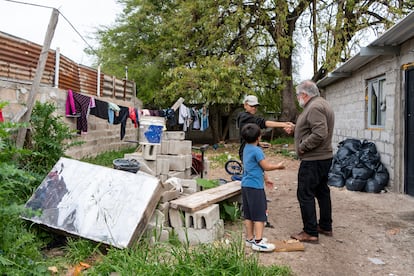
Some residents stop to greet him; others take the opportunity to tell him about their problems. “The demands are constant, you need to have a strong character,” the priest says. It requires knowing when to say no and where to set limits.
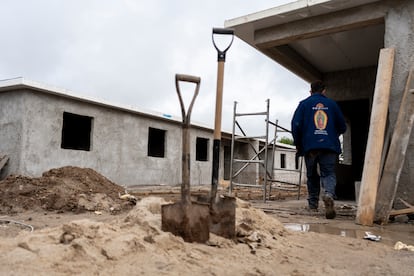
Just a few yards from the parish, where a stage is being erected for the Pope’s address, work continues at a frantic pace. In the background, there is the sound of plena, the Afro-Caribbean-rooted musical genre that is a staple of Uruguayan culture, known for its danceable, percussion-driven rhythms. The music blends with the sound of the concrete mixer and the thud of wet cement against the walls. There is a rhythm to the work, but also a sense of urgency. Although several homes are nearing completion, there is still much to be done. The ramp the pontiff will use is not yet finished, and damp days, with the sun reluctant to break through, have not made the task any easier.
The homes vary in size and design. Some are intended for older adults, while others are designed for large families. Some measure 72 square meters, while the largest spans 84. Their layouts are tailored to the needs of the people who will live in them.
Selecting the families was a key part of the process. The criterion was not whether they were Catholic, Coimbra explains, but whether they genuinely needed housing and could contribute to a harmonious community.
The neighborhood itself has also played a role in protecting the construction sites. Security guards monitor the area around the clock, but, according to the priest, protection has not depended solely on them. When some people tried to make off with building materials, local residents intervened to recover them. Vigilante justice played its part in a country where church and state have been separate for more than a century, since the 1918 Constitution.
The parish’s social work extends well beyond housing. Each month, it distributes 100 food baskets to families in the neighborhood and operates a community dining hall that serves afternoon snacks and dinner to more than 60 people, mainly children and teenagers, from Monday to Friday.
The parish also has a grass soccer field, enclosed by fencing and equipped with floodlights, a striking contrast to the surrounding shacks, whose residents watch from what effectively serves as the stands. From Monday to Friday, it hosts a soccer school for children between the ages of six and 15. The facility also offers mixed volleyball and other recreational activities, alongside programs providing social and family support.
From accountant to priest
Coimbra decided to become a priest while walking along Sarandí pedestrian street in Montevideo’s Ciudad Vieja district. He was 28 years old. He had just stepped off a bus near the Gateway of the Citadel when he felt what he describes as a clear inner voice telling him: “I want you to be a priest.” He asked God for a sign, and as he continued walking, a television crew approached him with an unexpected question: “Would you become a priest?” He answered yes. Deeply moved, he walked to Montevideo Cathedral, where he felt his doubts disappear.
The calling, however, had begun much earlier. Born in Salto, a department in northern Uruguay, into a working-class family, Coimbra served as an altar boy from childhood. He recalls an image of Jesus bearing a phrase that stayed with him for years: “Come and follow me.” At 18, he moved to Montevideo to study accounting. He lived in a boarding house with other young people from the interior, worked while attending university, and, after graduating, joined the Social Security Bank (Banco de Previsión Social) in 1991, achieving what many Uruguayans consider a dream job: a position in the public sector. Although he never drifted away from the Church, for years he envisioned a very different future.
After his ordination, Coimbra hoped to work in a neighborhood parish and remain close to ordinary people. Instead, his first assignment drew on his training as an accountant. He was tasked with conducting an audit of Radio Oriental, a Church-owned radio station known for its sports and news programming that was facing financial difficulties. He later took over its administration and eventually became parish priest of San Pedro Apóstol in Buceo, a neighborhood that stretches to Montevideo’s waterfront promenade.
A survey showing a weaker Catholic presence in Montevideo’s peripheral neighborhoods strengthened his conviction that the Church should address both material and spiritual needs. Today, that commitment is reflected in his work as pastor of Our Lady of Guadalupe Parish, in the heart of Casavalle, where he seeks to bring the Church closer to the daily life of the community.
Sign up for our weekly newsletter to get more English-language news coverage from EL PAÍS USA Edition


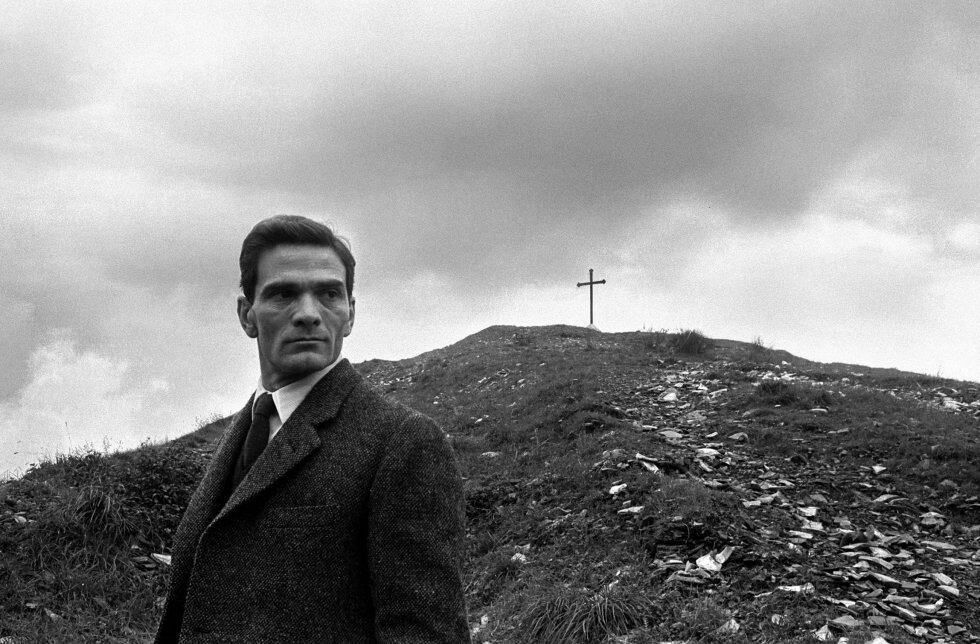
Italy continues to seek the truth about the death of writer and filmmaker Pier Paolo Pasolini, as almost no one believes the official account of his murder, which took place 51 years ago, in the early morning hours of November 2, 1975, in a vacant lot in Ostia, on the outskirts of Rome. The very verdict that convicted the 17-year-old who confessed to the murder, Pino Pelosi, already cast doubt on whether he acted alone, and since then there have been numerous hypotheses and attempts to reopen the case. The most recent efforts have come from Rome attorney Stefano Maccioni, who has been investigating the crime for years, has published books detailing his findings, and previously succeeded in getting the prosecutor’s office to reopen the case in 2010 and 2023 — though it was subsequently closed again on both occasions without reaching any conclusive findings. Maccioni has now tried again, filing a complaint a year ago, and the Rome District Attorney’s Office has agreed to reopen the case.
This time Maccioni has produced previously unknown testimony, which Italian media say comes from a retired member of the security forces who has previously unseen information about the initial investigation. The fact is that the inquiry and the trial were handled quickly: six months after the crime Pelosi was sentenced to nine years and seven months in prison, although the judge clearly indicated that the investigation should continue: “The court considers that the case file overwhelmingly shows evidence that Pelosi was not alone that night.”
The accused died in 2017 at 59 and took the secret to the grave. After leaving prison he wrote books and gave interviews offering contradictory accounts. On several occasions he said that the crime was actually carried out by three or four people who appeared at the scene and later threatened him if he spoke.

Pelosi was arrested a few miles away while driving the director’s car in the wrong direction. His account at the trial was that he refused to engage in a sexual relationship; Pasolini became aggressive, and he knocked him down by hitting him with a board. Pelosi then panicked, got into the writer’s car to flee, and as he drove away, he accidentally ran him over. The whole incident could be reduced to a sexual encounter and a fight that ended badly. But the truth is that the context of those years offers more complex perspectives.
The attorney, who in the past represented one of Pasolini’s cousins, Guido Mazzon, is now acting on behalf of the Lazio Region Journalists’ Association, film director David Grieco, and writer Giovanni Giovannetti. In this new effort to reopen the case, he is pursuing several lines of inquiry. On the one hand, he notes that new information has emerged from recordings made by the public television network RAI at that time and that a thorough review of the information gathered so far “leads to a single conclusion: it is not certain that Pelosi was alone on the evening of the murder, so it is essential to establish who was with him that evening.”
As Maccioni has been pointing out in recent years, he has focused on what Pasolini was doing in the months before his death: the film Salò, released posthumously, and the book Petróleo, which he left unfinished and which was published years later. He also refers to articles published in the days after the crime that provide clues.
The thesis linking the crime to Pasolini’s activities is already known and points to shadowy plots from Italy’s Years of Lead and the so-called “strategy of tension” involving violent neo‑fascist groups. Petróleo dealt with political and mafia plots involving ENI, the Italian hydrocarbons giant, and the suspicious 1962 plane crash that killed its president, Enrico Mattei, another Italian mystery. Pasolini was also among the first to denounce, in his articles for Corriere della Sera, the connections between power and destabilization operations by intelligence services. One hypothesis is that Pelosi was used as bait to lure him to the Idroscalo di Ostia — a remote spot he sometimes visited with casual partners — to set up an ambush.
The lead concerning his last film is based on the theft of some reels at the Cinecittà Studios and the possibility that Pasolini went to Ostia for a mysterious meeting to recover them, especially since it emerged that members of the Banda della Magliana, the Roman criminal group that at the time was linked to the dirtiest operations of the intelligence services, took part in the celluloid theft. No one ever believed Pelosi acted alone, but it was not possible to go further. Prominent reporter Oriana Fallaci wrote an article days after the crime with testimony pointing to the presence of other people.
The first investigation prompted by Maccioni relied on DNA from three individuals found on Pasolini’s clothes, which could not be identified. The data were compared with 30 people who had appeared in the inquiries, but all the tests were negative. In other words, someone else was at the murder scene, but who they were remains unknown. “As has been clear for almost 18 years, the judicial truth that attributed sole responsibility to Pelosi has been swept away in recent years by the scientific evidence we requested,” Maccioni explained.
“We trust that the Public Prosecutor’s Office in Rome will finally be able to provide the answers we have been seeking for far too many years,” the lawyer said. “At the same time, we urge all those who have chosen to remain silent about what they know until now, to come forward and speak.”
Sign up for our weekly newsletter to get more English-language news coverage from EL PAÍS USA Edition

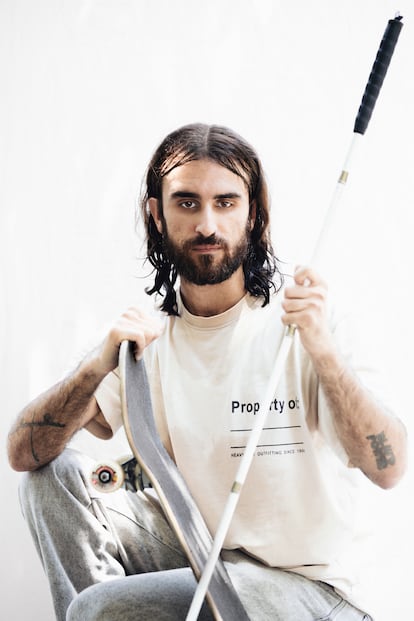
When Marcelo Lusardi went out to celebrate St. John’s Eve in the summer of 2016 with his skater friends in Spain’s northwestern region of Galicia, he never imagined how his life would soon change. While watching the bonfires on the beach, he realized something was clouding his vision, a kind of haze filling his right eye. In the weeks that followed the same thing happened to his left eye. Marcelo gradually went blind because of a rare disease, Leber’s hereditary optic neuropathy (LHON). He can see certain lights but, for practical purposes, he is blind. After 10 years, his story is considered one of the most inspiring in urban sports.
Lusardi, born 28 years ago in the capital of Argentina, Buenos Aires, has two major hobbies: skating and playing the electric guitar. As he was losing his sight, Marcelo would sometimes go down to the square with his instrument and a small Marshall amplifier. He wasn’t skating anymore. One day, already blind, a friend urged him to get back on the board for a spin. “I thought I was going to fall and that it was dangerous. But I agreed. And of course I fell,” he recalls as he does warm-ups before his skate session. He met us at the skatepark behind the regional parliament of Galicia in the city of Santiago de Compostela. He’s eager to finish soon so he can show two mates his new Telecaster guitar.
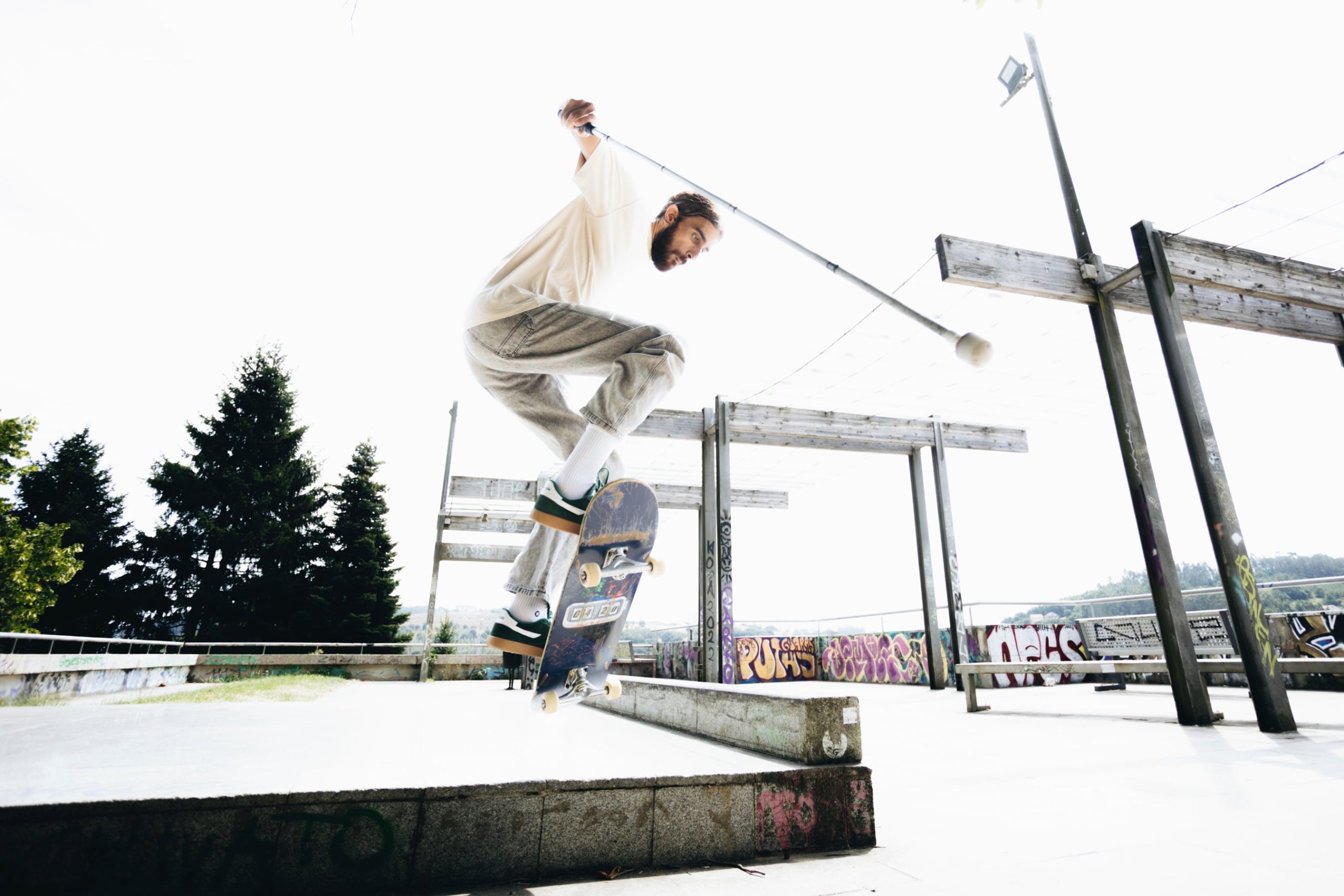
He returned to skating a few months after losing his sight. He’d skated since childhood but had to relearn almost from scratch. He mounts the board in the only viable way, with a cane in hand, and before attempting any trick he maps the spot with the cane’s wheel. “I never go alone to a new spot; always with someone who can see and warn me about things I might miss: curbs, handrails, changes in the surface… details I need to skate. I touch everything with the cane, with my feet, with my hands. I feel the material, the height of the curbs, the type of ground,” he explains. “Any information I can gather is useful to me.”
Eventually Lusardi threw himself off the top of a quarter pipe again, did flips, manuals and even jumped stairs. He began posting his feats on social media under the username The Blind Rider. One challenge he accomplished? “Getting back to doing an ollie to manual [jumping and landing on only the back wheels]. It’s something that’s very frightening when you’re blind and you can’t control well when you’re on the curb. It’s a sensation of flying without seeing,” he replies. “But it was also a challenge to learn Braille at 18.”
The surprise and admiration he provoked has translated into massive engagement. Someone very special shared his videos: the legend Tony Hawk, widely regarded as the greatest skater in history. “I really want to meet him someday and thank him from the bottom of my heart. When I saw it I almost cried, man,” he says.
Tattooed on his arm is his account logo: a skate and a white cane crossed to form an X. He now has more than 125,000 followers on Instagram. Many clothing and skate brands send him gear. He is an ambassador for the paraskate competition at O Marisquiño, the urban sports festival in Vigo that also hosts the World Cup Skateboarding event. It was a tough decision: “Ten years ago, when it all started, they had already asked me to participate as a solo exhibition. I’d been a fan of O Marisquiño since I was a kid and it intimidated me a lot. I advised them to hold an adapted skate competition, with people taking part with different disabilities, not just me there in the middle. They listened and I think it turned out really cool. I’ve been able to meet incredible people with very striking stories.” The competition offers the same prize money as the regular skate event.
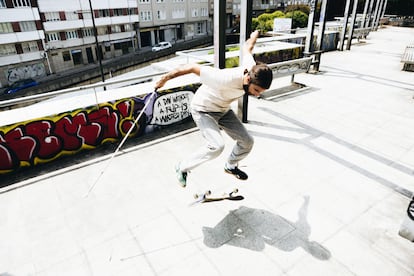
In the world of skateboarding there is a debate about whether it should be included in the Olympic Games. One argument against it is how hard it is to judge. Lusardi has clear ideas about it. “I would love to see paraskate included too. There would be bigger sponsors, of course, but also more role models. When something like this happens to you you don’t know who to look up to, what to do or how to handle it. The role models I had were incredible people skating with one leg, but no blind skaters. Greater exposure helps you see that many problems have solutions or can be managed,” he reflects.
Not all tricks are coming off today: some look good in photos taken just before he falls, but Lusardi insists on repeating them even after the shot is taken: “Out of skater pride I have to do them properly.” One thing making it difficult are pebbles: small stones he can’t see that suddenly slow his board. People in the square sweep them away to help. There’s a striking moment in each of Lusardi’s falls. Rather than lifting him or treating him paternalistically, his friends cheer him on to keep trying.
Lusardi is defined by self-sufficiency. He works during the week and lives independently. “What I struggled with the most was cooking with flames. It’s pretty intimidating, but I make lentils that are amazing,” he laughs. He is an example of someone who overcomes adversity. The media have always treated him as a story of personal triumph. Does he feel comfortable with that? “Yes and no. I feel more like a survivor than someone who has overcome things in an epic sense. For me it’s more ‘I survived adversity’ than anything else.”
“I came out of a very dark place and today I’m happy and I do what I like,” he says. Which fears has he beaten and which still beat him? “I’ve won in the sense that I know I’m capable of much more than I thought; I’ve been pushing the limit upward and I’ve proven things to myself I never imagined. What still intimidates me is that, at my level, what I have to attempt now is very risky.” One trick he wants to conquer is the flip off a stair set. “I feel like it’s going to be the trick of my life. It’s a battle I have pending with myself.”
Some people write to him because they find him inspiring and others even ask for photos. “There were moments when it felt very crazy. I was a normal kid, not outstanding at anything. Suddenly standing out at something was intense. What stressed me the most were the numbers: I felt the pressure to make the most of the moment, to push it because a lot of people were watching me,” he reflects. “I contribute to the message that people shouldn’t obsess over the limits they think they have. They aren’t as solid as we believe; many barriers can be broken. It gives me peace to know that what I do serves more than just me.”
He has always said he wouldn’t change his process. “I wish I could see again, obviously. But going blind has given me so much that, strange as it may sound, I wouldn’t change my past. It has given me another way of looking at the world, it has made me value what skate, music and the people close to me bring.” Asked about gene therapies or Neuralink, he is concise: “No way I’m putting a chip in my head.”
There comes a moment when Lusardi speaks solemnly: “I have a very strong feeling: since I surpassed myself, returned to skating and became happy again, I feel that if I had died at that moment I would have left this world in peace.” His story is that of someone who became an example without seeking it. He simply looked for a reason to get up every day. “I went blind at 18 and since then I am at peace with what I was dealt.”
He finishes the day drenched in sweat and with his list of tricks completed. He changes his T-shirt and puts on sunglasses. He grabs his phone quickly. Fer and Alex are waiting to play guitar.
Sign up for our weekly newsletter to get more English-language news coverage from EL PAÍS USA Edition

Lightning began to light up the sky at the port on Friday night. There were intense flashes that blinked on and off, but the thunder could not be heard. The rain, which had started in the highlands of Santa Cruz island in the afternoon, was increasing in intensity.
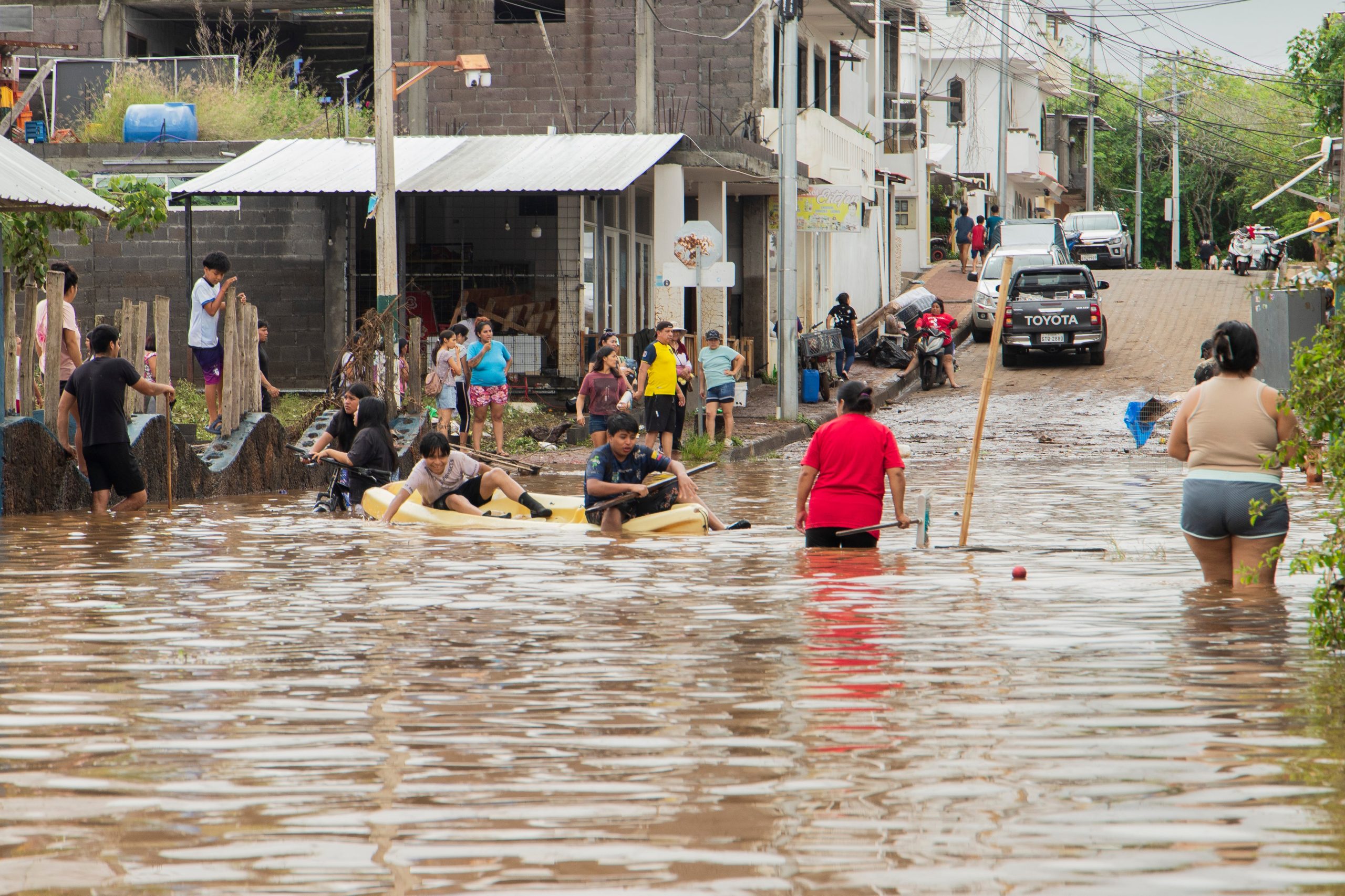
In Santa Cruz, an island of 15,000 inhabitants located 620 miles from mainland Ecuador, two very different ecosystems coexist. The port lies in the coastal zone: an arid, salty environment dominated by mangroves. The highlands are covered by an exuberant cloud forest with dense vegetation. Both areas meet in a gorge into which water drains. In the early morning of November 1, after 10 hours of heavy rain, that point turned into a huge waterfall. Water rushed down toward populated areas and unleashed a mudslide that caused one death and affected more than 2,000 people, according to Santa Cruz Mayor Fanny Uribe. This is one of the consequences of the El Niño phenomenon, which has affected the continent unevenly.
Freddy López, commander of the Santa Cruz Fire Department, estimates the water reached up to three meters high in the La Cascada and La Unión neighborhoods. “Rescues were carried out using kayaks and zodiacs, and most people were brought to safety,” the colonel explains.
At midnight many residents were still asleep. There were no alarms to warn them of what was happening. In the darkness, firefighters, the Red Cross, and young people from the community began knocking on doors to wake people up and help them get out. Virna Rosas, a resident of La Unión, was one of those who were warned. “Around one in the morning I had to leave my house after hearing knocks on my door. A young man carried my granddaughter, another carried my dog, and I was able to get out. All my things stayed under the water,” she says.
The emergency forced many people to abandon their homes by swimming. Some families tied children, older adults, and pets with ropes to prevent the water from carrying them away. Most of those affected headed to the Puerto Ayora Coliseum sports complex, which opened its doors to provide shelter from the water.
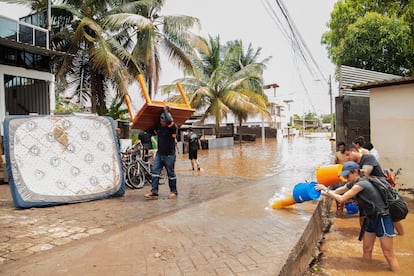
Although official figures of those affected hover around 2,000, the Un Cambio por la Vida Foundation has identified at least 500 people on the ground who are not included in that register and who are staying with relatives.
On the morning of October 31, a day after the disaster, the port woke up underwater. The sun came out for a few hours and the tourist area began to regain its pace. At first glance, some restaurants appeared to have resumed activities, but their kitchens had become community spaces from which food was prepared for affected people.
One of the kitchens providing aid is the La Torreja Fishing Foundation, which has delivered three meals a day to about 1,200 affected people. Cristina Zambrano, president of the foundation, lives in La Cascada, so named because of its proximity to the drainage point and one of the hardest-hit areas. “Although we were not affected because we are on the second floor, we mobilized because our neighbors need help,” she explains.
The kitchen operates thanks to a network of collaboration among island residents, who have organized in a WhatsApp group. These have become key coordination spaces: to clean homes and to call meetings or convene community work parties to remove large items from affected houses.
Through social media, youth leaders have made their bank accounts available for the emergency and, from mainland Ecuador, dozens of people have joined the effort with donations. Community support also extends to animals, with initiatives to care for dogs and cats that have been lost or injured during the emergency. Despite the crisis, the Ministry of Environment and Energy said that so far no giant tortoises or wild birds have been reported dead because of the rains.
Geographic distance and biosecurity restrictions to protect the Galápagos’ unique ecosystem also complicate sending donations. In light of these limitations, money transfers to relatives or youth leaders have become a fast alternative to buy protein, groceries, hygiene products, and everyday medicines within hours and without bureaucratic delays.
Local and national authorities have toured the affected areas to identify needs and coordinate actions. Measures announced include repairing the road that connects the airport with the town and removing debris with heavy machinery. However, as of the time this report was filed, the president, Daniel Noboa, had not spoken publicly about the emergency.
Santa Cruz Mayor Uribe said she is in talks with the government to activate housing vouchers for families who lost their homes and that they are seeking to finalize other medium-term actions. Uribe also told EL PAÍS in an interview that the next delivery of 1,000 basic food kits is being coordinated and that the possibility of relocating the La Cascada neighborhood will be studied, although no destination has yet been decided.
Most people affected returned to their homes to clean and recover their belongings. Walking through La Cascada, one sees narrow streets, barely three meters wide, with very little drainage space.
Grimelda Fuente, a neighborhood resident, says that despite the scare and the loss of some belongings, she has returned home and remains ready to evacuate if a new alert is declared.
Torrential rains put agriculture in jeopardy
The effects of the intense rains could also extend beyond homes. In the highlands, the farming community faces the consequences of the precipitation. The accumulated water could affect crops in the medium term. Agricultural production in Santa Cruz is crucial for the island’s food security, as 90% of what is grown is used for self-consumption, according to the Santa Rosa Farmers Association.
On September 29, the National Secretariat for Risk Management (SNGR) declared a red alert across Ecuador because of the El Niño phenomenon. That decision corresponds to the highest level within the alert system and responds to technical evidence confirming the phenomenon is underway, with oceanic and atmospheric conditions that could intensify over the coming months. The worst impact is expected to arrive in December.
Carmen Ramón, an organic farmer from Santa Rosa, one of the highland areas affected on the island, says the emergency was foreseeable. “A few months ago we knew this would happen and the streams were not cleared. My farm has been affected, the crops were carried away by the water and we are asking for assistance both with machinery to clear the gullies and for construction of greenhouses that would allow us to secure food production for island residents,” she says.
Sign up for our weekly newsletter to get more English-language news coverage from EL PAÍS USA Edition

Casavalle, The Vulnerable Neighborhood On The Outskirts Of Montevideo Awaiting Pope Leo XIV

Brits In Spain With Old UK Workplace Pensions Left Guessing As Britain Rewrites How Pensions Pay Out

Aldi Mandarin South African Fruit Label


-
DGT3 weeks ago
Viral video in Spain sparks fury over drivers who ‘have no idea how to drive’
-

 Arabia Saudí4 weeks ago
Un Ataque De Los Hutíes Contra El Aeropuerto De Riad Causa Al Menos 12 Muertos Y Más De 300 Heridos
-
 America4 weeks ago
Un Tirador Mata A Ocho Personas En Una Vivienda En Pensilvania
-
Costa Blanca North4 weeks ago
Jávea opens historic lighthouse to the public with a new whale-watching viewpoint
-
 %4 weeks ago
Concrete Balcony Slabs Collapse Onto Marbella Street
-

 America4 weeks ago
Trump Llega A Un Acuerdo Con Putin Para Que Rusia Libere Miles De Barriles De Diésel En Los Mercados Mundiales
-
Automated supermarket3 weeks ago
Spain’s 24-hour shop with no tills expands to Barcelona Airport
-

 Uncategorized4 weeks ago
Williams F1 driver caught up in four-car pit lane pileup