Connect with us

%

Blind British Man Sentenced For Driving A Stolen Car 241 Kilometres

Published

on

blind-british-man-sentenced-for-driving-a-stolen-car-241-kilometres

Almost totally blind, driver could make out red lights from lorry. Credit: WD Stock Photos – Shutterstock

A registered blind British man drove around 241 kilometres (150 miles) along one of Britain’s busiest motorways in the middle of the night, despite having no driving licence and being well over the drink-drive limit.

Anthony Hall, 50, from Huddersfield, set off for Scotland in his partner’s Vauxhall Meriva after drinking a considerable amount of wine. What makes the bizarre journey even more extraordinary is how Hall told police he managed to drive despite having been registered blind for around two years.

Following the lorry lights

Hall told officers that he could still see some blurry light and had followed the red rear lights of an HGV to guide him along the M6 in the UK. At one point, he overtook the lorry and had to look for another vehicle to use as his next marker.

Police stopped Hall north of Carlisle in the early hours of June 29 after an officer saw the Meriva drifting onto the hard shoulder and across the motorway. His roadside breath test recorded 50 micrograms of alcohol per 100 millilitres of breath, while a later reading was 46 micrograms. The legal limit in England and Wales is 35 micrograms. He claims that he and his partner had drunk 4 bottles of wine together. Hall also admitted he had taken his partner’s car without permission and had never held a driving licence or had insurance of any kind.

During questioning, he said he wanted to get away from his home life and intended to reach Scotland following ongoing disagreements at home, including financial problems. Bizarrely, he even stopped to refuel during the extraordinary journey, with a petrol station employee helping him fill up.

A man “in crisis”

Hall pleaded guilty to dangerous driving, drink-driving, taking a vehicle without consent, driving without insurance and driving without a licence. His solicitor told the court that Hall had suffered a breakdown and was trying to escape problems at home and with his finances. She described him as “an individual in crisis” who had made a poor decision while in that crisis.

Remarkably, nobody was injured during the journey, despite the obvious risks posed by driving at night on a motorway while almost 100 per cent blind, without a licence and after drinking considerable alcohol.

Suspended prison sentence and bizarre addition

Kirklees Magistrates’ Court heard that Hall had no previous convictions. Magistrates said the custody threshold had been crossed but took his previous good character and personal circumstances into account.

Hall was sentenced to 36 weeks in prison, suspended for 18 months. He must complete rehabilitation activities and was ordered to abstain from alcohol for 90 days and ordered to pay £272 in costs. But the most extraordinary part of this driving blind drunk, blind man’s sentence was that he was also disqualified from driving for 12 months.

%

How Flying Lost Its Easy Charm: 25 Years Since 9/11

Published

on

how-flying-lost-its-easy-charm:-25-years-since-9/11

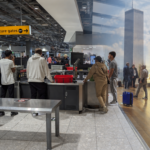
25 years of intensified airport security. Credit: 1000 Words – Shutterstock

Friday marks a quarter of a century since four hijacked airliners turned a clear September morning into the most watched terror attack of the television age, and it changed all of us. Nearly 3,000 people died when two jets tore into New York’s Twin Towers, a third ripped into the Pentagon, and a fourth came down in a field near Shanksville, Pennsylvania, after passengers fought back. World Trade Center Building 7 later fell as well. Families from more than 90 countries lost someone that day.

Live pictures of the towers collapsing went round the world in real time. Many readers of a certain age still remember exactly which kitchen, office or school corridor they were standing in. Days later President George W. Bush told a press conference a seemingly inconsequential and simple line that still shapes policy and lives today: “Either you are with us, or you are with the terrorists.” And no one dared complain about airport security again.

Governments reached for new laws, new wars and a new vocabulary, such as the so-called ‘War on Terror’, and ordinary life changed in quieter ways too. Few of those changes are closer to home for Britons and other Europeans heading to Spain or further, than the business of boarding a plane.

Once, air travel still carried a faint sense of occasion. It was even considered ‘romantic’ once. Even after D.B. Cooper’s 1971 parachute hijack pushed metal-detector arches into terminals, you could often stroll to a gate with a relative, keep your shoes on, and treat a bottle of water as nobody’s business but your own. That world ended on September 11, 2001.

What passengers now go through

Layer upon layer of extra screening followed and rarely  has been questioned, first in the United States and then, with local variations, across Europe. A short list of the main changes since that morning runs like this:

  • Federal or state screeners replaced many of the private contractors airlines used to hire.
  • Photo identification became a hard requirement, not a polite request.
  • Only ticketed passengers pass beyond the checkpoint; waving someone off at the gate is a distant memory.
  • Reinforced, locked cockpit doors were fitted across commercial fleets by 2003, and cabin access to the flight deck is barred.
  • Armed air marshals were put on more routes.
  • Every piece of checked baggage is now supposed to be screened for explosives, not a small sample.
  • Richard Reid’s failed “shoe bomb” attempt in December 2001 led, from 2006, to footwear coming off at many checkpoints. United States airports dropped that shoes-off rule last year, though habits die hard.
  • After British police broke up a 2006 plot to mix liquid explosives on flights out of Heathrow, the 100ml / 3-1-1 liquids rule spread worldwide. Some UK airports now allow larger bottles through new scanners; Spanish checkpoints are still mixed, even as Malaga and other Aena airports roll out 3D cabin-bag machines.
  • Full-body scanners, explosive-trace wipes, laptop-out-of-the-bag drills and, later, computed-tomography X-rays joined the queue.
  • Watch-list matching, trusted-traveller lanes and, in the European Union, advance passenger data plus the new Entry/Exit biometric system added another paper trail before anyone even reaches the belt.

EU rules on advance passenger information are in the same family of post-attack thinking: know who is flying before the wheels leave the tarmac. A bomb scare at Malaga earlier this year showed how quickly a single message still empties a jet bridge.

Romance drained out of the flying experience. Travellers now factor in an extra hour or two, decant shampoo into tiny bottles, and treat a joke about a bomb as a career-ending mistake at the airport. Security queues became part of the holiday, not an interruption of it.

Front door tight, back door less so?

Passenger halls get the cameras, the trays, falling trousers as the belt comes off and the public argument with security staff. Does cargo get the same? Freight still arrives through service roads, warehouses and “known shipper” schemes that rely as much on paperwork and trusted companies as on a scanner staring at every pallet. United States law eventually required 100 per cent screening of cargo on passenger aircraft after the 2010 printer-cartridge bomb plot from Yemen; all-cargo freighters and some off-airport screening still work to a different rhythm.

Inspectors and congressional reviews have, for years, warned that a shrink-wrapped pallet is harder to read than a cabin bag, and that staff doors and cargo gates do not always face the same scrutiny as the family shuffling through Terminal 3.

Safer? More uncomfortable

Official histories of the era, including the TSA’s own timeline and the record kept at the National September 11 Memorial & Museum, show a system built in panic and then patched, year after year, as each new plot exposed another gap. Flying is statistically safer from hijacking than it was on 10 September 2001. Cockpit doors hold. Box-cutters do not sail through unchallenged. Random people no longer wander airside because they fancied a look at the departure board.

Comfort is another matter. Suspicion became a habit. Fellow passengers are scanned as possible threats. Staff bark instructions because the drill leaves little room for a smile. Children who never knew the old ease grow up thinking a clear plastic bag of toothpaste is simply how holidays begin.

We may be safer in the air than our parents were before that Tuesday morning. We are also more watchful, more impatient, and not quite as easy in our seats as we once were. That, as much as the skyline that never came back, is the long shadow of 11 September 2001.

Continue Reading

%

Consum Gives Shoppers €47.94 Million In Discounts As Customer Savings Soar In Spain

Published

on

consum-gives-shoppers-e47.94-million-in-discounts-as-customer-savings-soar-in-spain

The supermarket’s different loyalty benefits contributed to the overall increase. Photo credit: Miroslaw Durma/Shutterstock

As prices continue to climb, nothing is more welcoming than getting a little discount off our shopping every now and again. But it turns out that one supermarket has gone a little bit beyond the odd discount, with millions of euros in savings handed back to its loyal customers so far this year.

And it is not just a handful of shoppers benefiting. More than 2.2 million Consum members have received discounts between January and July, with the total amount distributed significantly higher than during the same period last year, with the average saving reaching €21.45 per person. For households already watching the cost of their weekly shop, those discounts can make a noticeable difference over the course of the year.

Millions of shoppers benefit

Consum says the number of members receiving discounts increased by 6.4 per cent compared with the first seven months of 2025. The average saving also rose, increasing 2.1 per cent to €21.45. The supermarket’s different loyalty benefits contributed to the overall increase.  Discounts through its Mis Favoritos scheme rose by 13 per cent, while discounts linked to accumulated purchases increased by 8.9 per cent.

Personalised offers through Mis Cupones Ahorro also increased, with discounts up 5.9 per cent. The figures come as Spanish households continue to look closely at supermarket prices, with loyalty schemes becoming an increasingly common way for shoppers to reduce the cost of regular purchases.

Digital discounts continue to grow

Consum is also seeing more customers use digital methods to access their savings. Almost 60 per cent of the discounts distributed are now redeemed digitally, either through the Mundo Consum app, NFC technology, self-service checkouts or online purchases.

The Mundo Consum app itself recorded around 92,000 downloads during the first months of 2026, representing a 10 per cent increase compared with the same period last year. For shoppers who already use the app, the system means discounts and personalised offers can be accessed without relying solely on paper vouchers.

How Consum’s loyalty savings work

One of the main benefits available to members is the Cheque Crece system. Customers who spend at least €50 during a month can accumulate 1.25 per cent towards their monthly cheque, which can subsequently be used against purchases. Consum’s latest figures also show that discounts generated through Cheque Crece increased by 5.4 per cent during the first seven months of this year.

The supermarket cooperative says the figures demonstrate the value its loyalty programme is providing to customers, with the overall amount distributed in discounts growing faster than the number of members benefiting. For shoppers, however, the important figure is much simpler: the average member who received the benefits saved €21.45 between January and July. That may not transform a household budget, but when supermarket bills are paid week after week, even modest savings can add up.

Continue Reading

%

More Than 40,000 Treasures And Classic Cars Heading To Torre Pacheco This September

Published

on

more-than-40,000-treasures-and-classic-cars-heading-to-torre-pacheco-this-september

Explore 40,000 vintage treasures and classic cars in Torre Pacheco. Photo Credit: IFEPA

Antique collectors, vintage enthusiasts, and classic car aficionados on the Costa Calida are in for a treat as the IFEPA Exhibition Centre in Torre Pacheco prepares to host its annual flagship event from Friday, September 25 to Sunday, September 27. Merging the 23rd Antiques, Collectables, Retro and Vintage Fair alongside the RetroAuto Classic Vehicle Show, this three-day event transforms the venue into a time machine celebrating craftsmanship and automotive history.

Tens of thousands of vintage treasures from across Europe

Gathering more than 100 international exhibitors from across Europe, including Spain, France, and the United Kingdom, the event will offer an astonishing collection of over 40,000 memorabilia items. During the event, visitors will be able to explore a vast variety of retro treasures spanning multiple centuries, ranging from antique furniture, rustic decor, chandeliers, lamps, and mirrors to rare mechanical cash tills, typewriters, Victorian sewing machines, phonographs, and vintage toys. The event will also feature an impressive selection of jewellery, rare coins, vintage watches, and historic mantel clocks.

Items will be priced anywhere from €5 to four-figures for museum-quality rarities.

Classic cars, spare parts, and model railways: The RetroAuto show

Running parallel to the antiques fair, the RetroAuto exhibition will bring together more than 200 classic cars and motorcycles. Organised in collaboration with the Club Ruta del Sol and supported by the Santa Rosalía Classic Vehicles Club, the motoring section highlights decades of engineering, design, and style. A specialised section will also be open for classic vehicle owners, stocked with thousands of original spare parts, accessories, manuals, and restoration tools.

Adding to the transport heritage theme, the Murcia Association of Railway Friends is presenting detailed model railway layouts for fans of locomotives, including a historical recreation of the former Murcia railway station that once stood at Plaza Circular.

Live restoration workshops and prize giveaways

This year’s edition will also introduce interactive educational features and visitor incentives. Hosted by specialists from Lakeone, live restoration workshops will demonstrate professional techniques for repairing and preserving antique furniture, offering practical tips to bring forgotten attic treasures back to life. In addition, every attendee can enter a free raffle upon entry for a chance to win an authentic 1970s Lladró porcelain figure, a prized Spanish classic.

Event dates, ticket prices, and opening hours: How to take part in Torre Pacheco’s vintage treasure trove

Opening hours for the event will be from 10:30am to 9:00pm on Friday and Saturday, and from 10:30am to 8:00pm on Sunday. Admission is priced at €5 for advance online tickets or €8 at the door.

Those who are fans of vehicles, history, or even curious passers-by should not miss the opportunity to take part in this spectacular glimpse into the history of technology.

Continue Reading

Trending

Copyright © 2017 Spanish Property & News