Connect with us

%

Britain Abandoned A Possible £5.5bn Treasure Near Gibraltar. Now An Explorer Says He Would Go Back


Published

on

britain-abandoned-a-possible-55bn-treasure-near-gibraltar.-now-an-explorer-says-he-would-go-back

A suspected fortune in gold and silver may have gone down with HMS Sussex near Gibraltar in 1694, but no treasure has yet been recovered. Credit: KeatonDPhotographer / Shutterstock

Ten tonnes of gold may have been laying untouched 821 metres below the sea for more than three centuries off the coast of Gibraltar. Britain once backed a search for it, but a furious dispute involving Spain, the Rock and a different shipwreck brought the project to a halt.

The £5.5bn fortune no one has proved exists… yet

HMS Sussex, an 80-gun Royal Navy flagship, sank in a violent storm near Gibraltar on 1 March 1694. Around 500 men died and only two are believed to have survived. The warship was reportedly carrying a secret payment intended to keep the Duke of Savoy allied with England against Louis XIV’s France. British government accounts later described the suspected cargo as gold and silver coins worth an estimated £1 million at the time.

Modern calculations have put a possible haul of up to ten tonnes of gold at £5.5 billion in value by today’s standards. No treasure has been recovered yet, so this is still an estimate. The cargo’s size remains disputed and even the wreck itself has not been conclusively identified as HMS Sussex.

An 821-metre search produced a wreck but no answer

The British government signed an agreement with US company Odyssey Marine Exploration in September 2002, allowing further archaeological investigation and possible recovery. Britain maintained that the wreck and its contents would belong to the government if its identity were confirmed. Odyssey surveyed and carried out a limited trial excavation on a wreck known as Site E-82 in December 2005 and January 2006. An academic report on the project placed it 821 metres down in international waters in the Strait of Gibraltar, but did not establish that it was the missing flagship.

Andalucía’s own heritage register is also cautious. Its 2009 designation of underwater archaeological sites describes remains east of Punta Europa as a modern wreck that “some identify” as HMS Sussex.

How a separate treasure already broke Spain’s trust

The search had already become entangled in arguments over who could authorise work and how underwater heritage would be protected. A 2005 US diplomatic cable recorded Spanish culture minister Carmen Calvo saying Odyssey could search if it supplied Andalucía with a work plan. The same cable noted that she had previously said the company would search for HMS Sussex “over her dead body”.

The relationship collapsed in 2007 after Odyssey announced a separate recovery, codenamed Black Swan, and flew 17 tonnes of coins out through Gibraltar. Spanish officials felt they had been “had” by the company, according to another US cable, and suspended cooperation on HMS Sussex. The British delegation was formally told immediately before the Americans. However, the Black Swan cargo did not come from HMS Sussex. US courts found that it had been carried by the Spanish frigate Nuestra Señora de las Mercedes, sunk off Portugal in 1804, and ordered it returned to Spain. EWN reported on the ruling in 2011.

The Telegraph reported that Britain later declined to provide Royal Navy support for Odyssey’s vessels leaving Gibraltar, amid concern that another confrontation with Spain could escalate.

Explorer says modern equipment could reopen the hunt

Tom Dettweiler, one of the original HMS Sussex project managers, said that better ships and recovery equipment would make the task easier today. He mentioned a possible return if British ministers backed it. 

Dettweiler is now president of American Ocean Minerals. The company entered into a proposed merger agreement with Odyssey on April 8, 2026, bringing two names from the earlier project back into the same corporate story. 

But as much history as these two companies share with the project, there is still no announced expedition, new licence or government approval. Any return would reopen the same difficult questions over ownership, archaeological protection and authority in waters close to Gibraltar.

Will anyone eventually unravel the history behind the site? Perhaps one day there will be enough goodwill between the two countries to give it another go. But for now, Site E-82 remains 821 metres below the surface, with a mysterious story that could include a haul of billions of euros in treasure.

%

Could The Rock Become A New Gateway Into Schengen?

Published

on

could-the-rock-become-a-new-gateway-into-schengen?

Spain has spent the past few weeks dealing with intense pressure on its borders, while just across the water, a very different border has been dramatically opened up.

Gibraltar’s land frontier with Spain disappeared on July 15 under the new UK-EU agreement, moving Schengen immigration controls to the Rock’s airport and port. For British expats living on the Costa del Sol, that should mean easier journeys into Gibraltar. Yet Spanish security officers are warning that quicker crossings must not come at the cost of proper border controls.

The timing is particularly interesting. Spain has recently faced a major migration crisis in Ceuta, where tens of thousands of people crossed from Morocco, putting enormous pressure on Spanish authorities, and the events in Ceuta have put border security firmly back in the spotlight. That makes one question increasingly relevant: could Gibraltar’s new system create opportunities for people trying to reach the Schengen area illegally?

Guardia Civil warns that security cannot be sacrificed

Olaya Salardon, communications secretary of the Asociación Unificada de la Guardia Civil, has warned that officers need much greater clarity about how the new Gibraltar arrangements will work. “Our concern is not the fence itself, but that security does not become a bargaining chip,” she said. Spanish officers want (and still don’t have) clear information about responsibilities, protocols and which authorities will take charge of particular border and security operations.

That matters because the old physical frontier has not simply disappeared without replacement. Schengen controls have moved to Gibraltar’s airport and port, where Spanish officials and Frontex are involved under the new arrangements.

Salardon has warned that any gaps in security could benefit organised criminal groups rather than ordinary citizens. For British expats who regularly travel between Spain and Gibraltar, that concern is not just theoretical. A border that is quicker to cross is only an improvement if travellers can also have confidence in the system protecting it.

Gibraltar says it must not become a back door into Schengen

Gibraltar’s Chief Minister Fabian Picardo has also addressed the issue directly. He has argued that the Rock should not be regarded simply as a convenient gateway into the Schengen area. “There has to be an economic relationship with Gibraltar, you have to contribute to Gibraltar loyally,” Picardo said, while also stressing that Gibraltar should not be seen “simply as a door to enter the Schengen area more easily”.

His comments take on added relevance after the recent events in Ceuta. Spanish authorities were faced with a huge influx of people arriving from Morocco, leading to a major security operation and agreements on returning migrants. The episode demonstrated just how quickly pressure can build around Spain’s external borders.

Gibraltar is a completely different situation, and there is no suggestion that the Ceuta events are linked to the Rock. However, both cases underline why control of Europe’s external borders remains such a sensitive issue.

What does this mean for British expats?

For British residents in Spain, the most visible change is likely to be much easier movement by road. Cars travelling between La Linea and Gibraltar no longer face the old routine land-border checks, removing one of the biggest frustrations for commuters, shoppers and visitors. Brexit rules have not, however, disappeared.

British citizens are still subject to the relevant Schengen entry requirements when entering the Schengen area unless they benefit from specific residence or other rights. The new Gibraltar arrangement does not turn a British passport into an EU passport or restore general freedom of movement. That distinction could become increasingly important as people get used to the new border.

Security is not the only issue British expats will notice. Gibraltar has introduced a new Transaction Tax as part of the customs arrangements linked to the treaty. The standard rate started at 15 per cent, with more changes due under the agreed timetable. Gibraltar’s government has also had to correct claims that the new tax automatically means shop prices will rise by 15 per cent.

Officials say the tax is based on the value of goods when imported or produced rather than simply being added to the final price paid by customers. Tobacco, alcohol and fuel are also covered by new arrangements intended to reduce tax differences with Spain and tackle smuggling. For expats who regularly cross the border to shop or fill the car, those changes could eventually be just as noticeable as the disappearance of the old frontier.

The fence has gone: Now the system faces its first real test

Gibraltar’s new border is supposed to make life easier for thousands of people who cross between the Rock and Spain every day. Yet the real test will be whether faster movement can be delivered while maintaining effective immigration, customs and criminal controls.

The Guardia Civil wants reassurance that security will not be sacrificed. Picardo insists Gibraltar should not become an easy gateway into Schengen. Spain’s recent experience in Ceuta shows why those questions matter.

Continue Reading

%

Antonio Banderas Turns 66 At Starlite Gala

Published

on

antonio-banderas-turns-66-at-starlite-gala

Under the stars of Marbella’s historic Nagueles quarry, local favourite and superstar Antonio Banderas celebrated his 66th birthday with more than cake and candles. The Hollywood star returned as host to the 17th Starlite Occident Gala, where peace signs, flowers and a 1970s hippy theme set the scene for an evening all about generosity, music and a quiet plea for humanity in troubled times.

A hippy tribute with heart

Organisers embraced a “Peace & Love” dress code, transforming the open-air venue into a retro world of peace symbols, floral garlands and feel-good anthems. Banderas, who has called himself a “late hippy”, leaned into the theme. “Peace and love is now a slogan that unfortunately makes very little sense in the world we are living in,” he said, hinting at how his public voice has shifted from pure glamour to purpose.
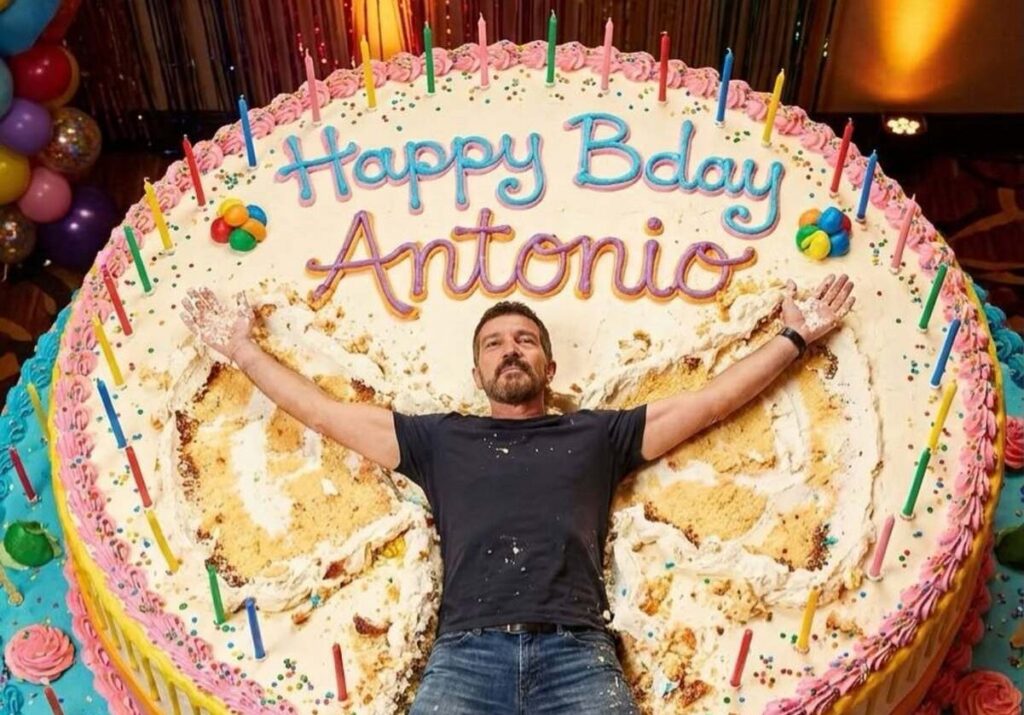
Antonio Banderas 66
Star turns 66
Credit:AntonioBanderas/FB

Midnight birthday moment and a shirt auction

Guests included long-time collaborator Placido Domingo, who led the room in singing “Happy Birthday” at midnight. In a spontaneous gesture that lifted the night’s fundraising total, Banderas handed over the very shirt he was wearing—painted by his own hand for the charity auction. Proceeds support educational, health and social projects run by the Starlite Foundation in partnership with Ninos en Alegria, Cudeca (palliative cancer care) and Lagrimas y Favores, the actor’s own foundation that backs students at the University of Malaga among other causes. Nicole Kimpel, Banderas’s partner since 2014, stood by his side for what felt like a double celebration.

Starlite matters more than ever 17 years on

Now in its 17th year, the gala has raised more than €3 million for charities over the years, turning Marbella’s summer spotlight into real-world impact. This edition also featured a special initiative to support reconstruction efforts in Venezuela following recent earthquakes, working with CAF (the development bank of Latin America and the Caribbean) and Venezuela Sin Limites. For Banderas, using fame to gather people and funds is “almost an obligation”, proof that celebrity can do more than dazzle, it can deliver.

Continue Reading

%

Fifty Prizes Worth €4,216 For SOS Canya

Published

on

fifty-prizes-worth-e4,216-for-sos-canya

Ten euros doesn’t buy much these days. Here, though, that small note could hand one lucky winner a €4,216 haul of prizes and, at the same time, help dogs in need

A single winning number, fifty ways to celebrate

Fundacion Canya SOS has launched its Grand Charity Raffle, but this is no ordinary raffle. Buy a €10 ticket, and if your number is the one drawn, you don’t walk away with a single item — you take home every one of the fifty prizes on offer. Only one ticket number wins, but that winner scoops the lot. Donated by local businesses and individuals across the area, the haul ranges from dog grooming vouchers and pet photography sessions to spa days, restaurant dinners, whale-watching trips, paragliding flights and gift cards from well-known shops. Winners will be decided by matching the last three digits of the official ONCE lottery coupon drawn on September 20, the same day the foundation hosts its first-ever Canya Festival.

Why the Los Barrios shelter needs urgent help now

Behind the glossy prize list sits an urgent appeal. Rescue teams describe this summer as one of the toughest on record, with dogs arriving in growing numbers, many sick, injured or just dumped by owners who can no longer cope. Eight puppies from Jimena were recently discovered tied up inside boxes, left exposed to soaring heat, while eleven dogs were brought in during a single day alone. Over the past year, more than 850 abandoned dogs have passed through the charity’s care, and over 200 currently depend on foster homes and the pound for food, medicine and daily attention.

How to buy a ticket

Tickets are sold at several points across the region, including the charity shop in Puerto de la Duquesa, Protectora Canya in Los Barrios, Discos Grammy in Algeciras, Tienda Cachalot in Tarifa and BigMat El Motor in Pueblo Nuevo de Guadiaro. . Anyone abroad or unable to visit in person can still take part remotely via Bizum, Revolut or PayPal, though organisers ask that buyers send a message beforehand to arrange payment details.

Where does the money go

Every ticket sold goes directly towards vet bills, vaccinations, surgeries and basic care for rescued dogs waiting for a second chance. Expats in the area have long supported SOS Canya’s work rehoming animals to new families in the UK, Germany and Finland, and this draw offers a low-cost, high-reward way to keep that lifeline running through a particularly difficult season.

Continue Reading

Trending

Copyright © 2017 Spanish Property & News