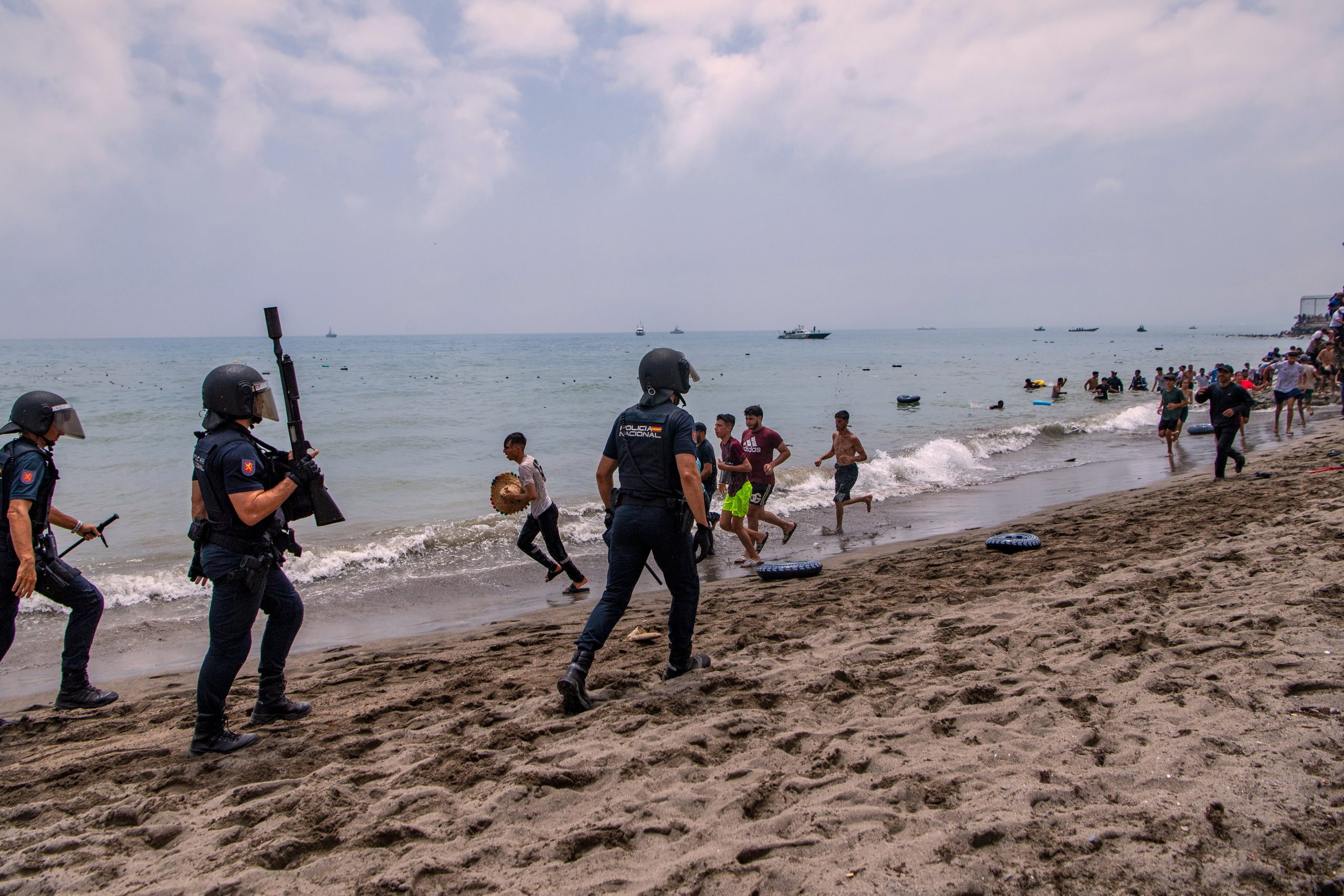
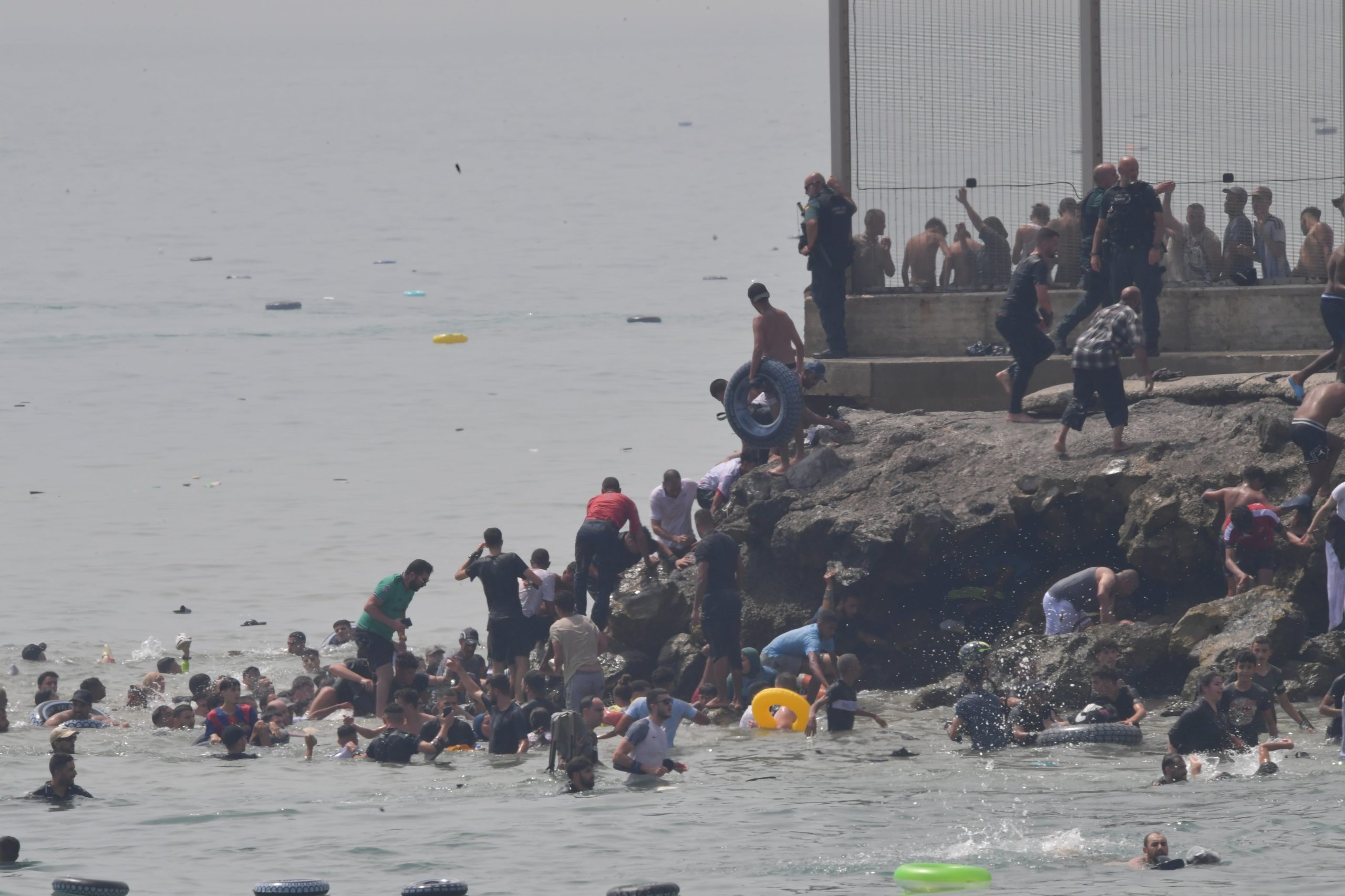
Hundreds of migrants entered the Spanish north African exclave of Ceuta on Thursday, AFP reporters saw, many of them having swum by sea around the frontier fence.
Migration from Morocco into Spain’s two north African territories, Ceuta and Melilla, has long been a politically sensitive issue between the two countries, as thousands cross the border at times.
AFP reporters saw a stream of adults and children, most of them wet, entering the town, plus discarded flotation rings and clothes on the shore near where the frontier barrier meets the sea.
READ ALSO: Why are Ceuta and Melilla Spanish?
The president of Ceuta, Juan Vivas, said Wednesday that 1,500 migrants had come to Ceuta by sea in the past few days.
The Spanish press on both sides of the political spectrum spoke of “thousands” more people entering Ceuta on Thursday.
“We are in a situation of total humanitarian and social emergency,” he said in comments broadcast Thursday by Spanish television.
“The reception centres are saturated — there is no more room for anyone in them and according to yesterday’s figures the number of people entering is more than 200 a day.”
Officials could not immediately be reached on Thursday to give more recent figures.
Una oleada de personas, miles de ellas, ha cruzado sin control de Marruecos a Ceuta. La Guardia Civil y los medios de emergencia, superados, solo se ocupan de los heridos. Los agentes han tenido que abrir las verjas, porque querían evitar que se forme un tapón… pic.twitter.com/pYFnAmbgLw
— EL PAÍS (@el_pais) July 30, 2026
Gathering in Morocco
Migrants walked cheerfully through the streets of Ceuta, thanking the Spanish police and calling out: “Bye bye, Morocco, hello Spain.”
Police and Civil Guards in Ceuta appeared to do little to intervene, though some officers attempted to direct the arrivals to the local migrant reception centre.
On the Moroccan side of the border, an AFP reporter on Thursday afternoon saw hundreds of people including children gathered near the border between Ceuta and the local town of Fnideq, waiting to cross into the Spanish territory.
Some of them said they had come after hearing rumours that the border was going to be opened on Thursday morning.
Moroccan authorities did not comment.
The crossings coincided with Morocco’s Throne Day, a national festival.
‘Immediate response’ promised
Spain’s Prime Minister Pedro Sánchez said on X that his government was “focussed on providing an immediate response to the crisis in Ceuta”.
“We are mobilising all necessary resources, working with Moroccan and international authorities, and preparing the necessary measures to restore normality as soon as possible.”
Sánchez spoke with Vivas, who described “with complete clarity and starkness the seriousness of the situation”, Ceuta’s regional government said in a statement.
Interior Minister Fernando Grande-Marlaska will travel to Ceuta on Friday “to monitor the situation”, the ministry said in a statement.
The ministry vaunted “Spain’s exemplary cooperation with Morocco in all areas, including on migration”, pointing the finger at human trafficking networks.
It said the two countries would implement “measures for the transfer” to Morocco “as soon as possible, of all the people who have entered Ceuta illegally”.
It said the government had increased its resources “to guarantee security and control of migration as well as the necessary humanitarian aid, so that no lives are put in danger at sea”.
A foreign ministry source speaking to AFP moved to play down the impact of Sánchez’s recent visit to Algeria, with which Morocco has a long-standing dispute over the territory of Western Sahara.
The source insisted relations were “not at all affected” by the trip.
Sánchez’s right-wing political rivals immediately pressured him on Thursday over the migrant arrivals.
“The government cannot look the other way regarding its duties because we are facing a national security crisis,” said opposition Popular Party leader Alberto Núñez Feijóo on X.
Far-right Vox party leader Santiago Abascal on X blamed Sánchez personally for the migrant influx in Ceuta.
Ceuta and Melilla have Europe’s only two land borders with Africa.
Article by AFP’s Lucía Díaz, with additional reporting by The Local’s Alex Dunham


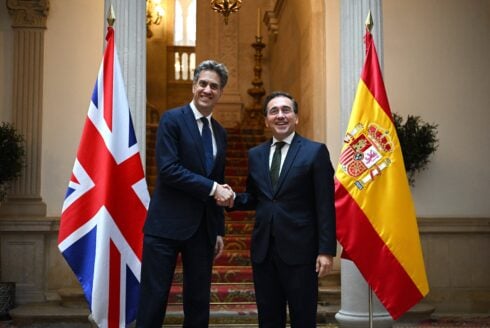 THE UK’s newly appointed Foreign Secretary, Ed Miliband, met with his Spanish counterpart, Jose Manuel Alvares in Madrid this week. They signed an agreement ‘to move forward together’ in the