Connect with us

%

British Couple Face Jail

Published

on

british-couple-face-jail

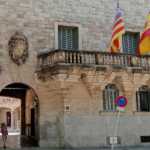
British couple appeared at Palma court and could face years in jail Credit: Shutterstock/neme_jimenez

A 64-year-old woman waiting for her daughter on a Mallorca street allegedly found herself fighting to escape after a British couple tried to force her into their car. The two Britons had reportedly been living on the island for two years, but what prosecutors say happened that day could now see them jailed for years.

Woman waiting for her daughter

The alleged incident happened at around 1pm on March 15 on Calle Maria Ana Bonafè in Son Ferriol, a neighbourhood of Palma.

According to the prosecution case which took place on Thursday September 10, the woman was standing in the street waiting for her daughter when a white car stopped nearby.

A British woman allegedly got out of the vehicle and attempted to force the 64-year-old into the car.

The woman resisted and fell to the ground while shouting for help. Her husband and several people in the area reportedly intervened, preventing her from being taken away.

The couple then allegedly fled in the vehicle. The woman was subsequently taken to Son Llàtzer Hospital after suffering bruising and other injuries. She was discharged later that evening.

Police arrested the British couple

The National Police launched an investigation following the alleged confrontation. Officers from the force’s Robbery Group later located and arrested the two suspects close to their home in Son Ferriol.

Spanish reports identified the pair as British nationals Craig Michael Hughes and Naomi Claire Fryer.

They were initially remanded in provisional custody without bail after appearing before a judge in Palma. The prosecution case centres on the allegation that the pair used force in an attempt to get the woman into their vehicle.

Couple appear before Mallorca court

The case reached the Provincial Court of the Balearic Islands in Palma on Thursday, September 10. Prosecutors are seeking nine and a half years in prison for each defendant, according to reports on the court proceedings.

The couple face allegations including unlawful detention, resistance and a road-related offence. The allegations have not been proven in court and both defendants are entitled to the presumption of innocence.

The hearing marks the latest stage in a case which began with the alleged confrontation on a residential street in Son Ferriol in March.

Defendant swears at reporters

The court appearance also produced a heated scene outside the Palma courthouse. Hughes, who was handcuffed as he was escorted from the court, was reportedly heard shouting at journalists gathered outside.

According to The Sun, he told reporters to “fk off you stupid c*s”.

The outburst came as the British couple faced the possibility of lengthy prison sentences over the alleged incident. Fryer was also escorted from the court by officers.

The comments made outside the courthouse are separate from the allegations being considered by the Spanish justice system and do not form proof of the charges against either defendant.

Woman managed to escape

The alleged attack unfolded in broad daylight while the woman was waiting for her daughter.

Her daughter reportedly arrived to find a group of people gathered around her mother following the confrontation.

The woman was said to have suffered bruising and pain following the alleged struggle, with the intervention of her husband and other members of the public preventing her from being taken away.

Police were alerted and officers subsequently tracked down the suspects. The case has now progressed to the courts, with prosecutors asking for lengthy prison terms if the defendants are found guilty.

For the 64-year-old woman, the alleged ordeal began as an ordinary wait for her daughter but quickly turned into a struggle to prevent herself from being forced into a car.

The outcome of the case will depend on the evidence presented before the Spanish court.

%

50,000 Brits Caught Up In Huge Passport Scare. Did You Hand Over Your ID In Spain?

Published

on

50,000-brits-caught-up-in-huge-passport-scare.-did-you-hand-over-your-id-in-spain?

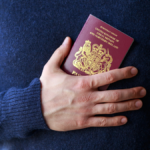
More than 50,000 British nationals were reportedly listed in records caught up in the cannabis club identity-document security scare. Credit: Max_555 / Shutterstock

If you have ever handed over your passport to join a cannabis club in Spain, you may want to pay attention to this.

More than 50,000 British nationals and around 12,000 Irish passport holders appear in records caught up in a huge security scare after almost one million passport and identity document scans were reportedly left accessible online.

A security researcher investigating the system identified 50,113 British nationals in the database, while fresh reporting by The Journal revealed that around 12,000 Irish passports were also among the records potentially exposed.

For anyone who remembers handing over their passport at one of these clubs, the obvious question is: was yours among them?

Why Spain is at the heart of the passport scare

Cannabis social clubs are particularly common in Spain, with estimates cited by The Journal putting their number at between 1,000 and 2,000 nationwide.

Unlike Amsterdam-style coffee shops, they generally operate as private associations. Prospective members may therefore be asked to register and prove their identity and age, sometimes by handing over a passport or another form of identification.

Some clubs used membership technology supplied by Cannabis Club Systems (CCS), an Irish-registered company formerly known as Nefos Solutions. Reception staff could upload customers’ identity documents to the system for verification, creating an enormous central collection of personal information.

Security researcher Sammy Azdoufal says the affected system contained 985,841 identity-document scans, including passports, identity cards and driving licences. His published account of the investigation lists 50,113 member records with British nationality.

However, not every British or Irish document necessarily came from a club in Spain. The researcher says the software was used by 377 clubs across Spain, the UK, Ireland, South Africa and elsewhere, although many were based in Spain.

How were the passports exposed?

According to the researcher, identity-document images were stored at predictable web addresses that did not require a login, password or security token. Anyone who understood the address pattern could potentially view the documents using an ordinary web browser.

That does not establish that criminals downloaded or misused the files. CCS disputes descriptions of the incident as a confirmed public data leak, saying it has found no verified evidence that personal information was extracted, published or distributed. Its investigation into the historical extent of any unauthorised access remains ongoing. The company says the reported vulnerabilities have been fixed and that the previously identified access points are no longer publicly accessible.

The Journal reported that Ireland’s Data Protection Commission is engaging with the Irish-registered company. The regulator has not made any finding of wrongdoing.

Spain has already warned about copying IDs

The case echoes something Spanish authorities have already been warning consumers about. As Euro Weekly News previously reported, businesses retaining complete copies of passports or identity cards can create risks that people may not consider when handing them over.

Spain’s Data Protection Agency says that, as a general rule, a complete copy of an identity document is not necessary simply to verify someone’s identity when entering a contract. However, it notes that sector-specific laws, including anti-money-laundering rules, can require copies in some circumstances.

One worrying aspect of the exposure is that passport details falling in to the wrong hands can make identity fraud and targeted scams considerably more convincing. Whilst another obviously sensitive element in this case is that the documents were connected to cannabis club memberships, potentially linking identifiable individuals with membership of a cannabis association.

Cybersecurity specialist Brian Honan told The Journal that such information could be exploited for scams or blackmail if it fell into the wrong hands.

Should British or Irish passport holders do anything?

There has been no reported blanket instruction telling affected British or Irish citizens to replace otherwise valid passports. Anyone who believes they may be affected should contact the club or CCS through official contact details rather than following links in unexpected messages. The UK’s National Cyber Security Centre advises people concerned about a data breach to remain alert for suspicious communications and check their accounts for unauthorised activity.

Be particularly cautious about unexpected emails, calls or messages containing genuine personal information. Never provide banking details, passwords or security codes simply because the person contacting you appears to know who you are.

If a physical passport has actually been lost or stolen, British citizens should use the government’s official lost or stolen passport service, while Irish citizens in Spain can follow the Embassy of Ireland’s guidance.

But for people whose passport is still safely sitting at home, the concern is different. 50,113 British nationals. Around 12,000 Irish passports. Almost one million identity document scans.

If you remember handing your passport across the reception desk at a cannabis club, you may now be wondering the same thing: Was yours one of them?

Continue Reading

%

Three Murcia Restaurants Shortlisted For Prestigious National Award

Published

on

three-murcia-restaurants-shortlisted-for-prestigious-national-award

Three Murcia restaurants are shortlisted for prestigious national culinary awards. Photo Credit: @barrapomelo / Instagram

Three new establishments in the Region of Murcia have been shortlisted for prestigious culinary awards, continuing to solidify the region as one of Spain’s premier culinary destinations. The three impressive restaurants, Pepe Juan Barra, Barra Pomelo, and La Macetúa, were recognised for the 2025 TheFork Awards, a national competition that celebrates the very best of the recent additions to Spain’s vibrant gastronomy scene, and shines a spotlight on innovation in the kitchens across the country.

The three shortlisted eateries and their concepts: standout restaurants in a standout city

The first of the establishments, Pepe Juan Barra, was born in the historic centre of Murcia, on Trapería Street. The concept of the restaurant is to “recover the spirit of the bars of yesteryear and bring it to our land, taking special care of the product and the cuisine,” according to the official TheFork website. A collaboration between Juan Guillamón and Pepe Morales, two chefs from Murcia with different backgrounds but a shared understanding of gastronomy, the owners have created “a welcoming, informal place […] where enjoying the atmosphere is just as important as eating well.”

The next restaurant, Barra Pomelo, is a contemporary gastronomic bar, based on the demonstration and tasting of seasonal products, which are cooked without fire: cured, marinated, pickled, ceviche-style, tempered and seasoned. TheFork describes it as a “close and precise experience, where the product, the technique and the balance of flavour are the true protagonists.”

Finally, the third of Murcia’s shortlisted entries, La Macetúa, endeavours to “revive the authentic Murcian bar, showcase local products, and, above all, support nearby producers who offer high-quality products and are committed to their community.”

National recognition, hand-chosen by Michelin-starred chefs

The restaurants were chosen by an elite jury of 56 Michelin-starred chefs, from a total of 41 shortlisted establishments from 20 different Spanish provinces and regions. Murcia’s impressive offering showcases the draw and creativity of its culinary scene, with one of the highest numbers of nominees overall, behind only Catalonia, with nine nominees; the Valencian Community, with six; and Madrid, with five.

This year’s selection also showcased other, emerging culinary destinations, with first-time shortlisted entries from regions like Asturias and Extremadura.

The public gets a say: how to vote for the winner of the 2025 TheFork Awards

Now that the experts have made their decisions, the selection process for the 2025 TheFork Awards will now turn to the public. Foodies across Spain will be able to cast their votes on the official TheFork website until the deadline, Sunday, October 11. The establishment that receives the highest number of public votes will win the People’s Choice Award for 2025, which last year was won by The Library, a combined wine boutique, gastropub, and private club in Madrid.

For locals and visitors in southeastern Spain, the national recognition of Pepe Juan Barra, Barra Pomelo, and La Macetúa is an excellent excuse to explore Murcia’s dynamic dining culture firsthand. These three standout eateries have not only made their local owners and patrons proud by being shortlisted for such a prestigious award, but also represent a thriving regional dining scene that is increasingly capturing national attention and praise.

Continue Reading

%

This Dinosaur Was Only Supposed To Exist In North America — So Why Is It In Spain?

Published

on

this-dinosaur-was-only-supposed-to-exist-in-north-america-—-so-why-is-it-in-spain?

The fossils were discovered at the La Tejería site in El Castellar, Teruel. Photo credit: Gorodenkoff/Shutterstock

For millions of years, scientists have pieced together the movements of dinosaurs from fossils scattered across the planet. But every so often, a discovery turns up that makes them rethink where an animal could actually have lived, and one such find in Spain has raised a particularly intriguing question.

Because this time, the fossils don’t belong to an obscure creature that few people have heard of. They belong to one of the most recognisable dinosaurs ever to walk the Earth, and its presence here is forcing scientists to reconsider the prehistoric connection between two continents. So how did it get here? That question takes us back around 150 million years, when today’s continents looked very different and the Atlantic was still taking shape.

Meet Teruel’s 150-million-year-old giant

The fossils were discovered at the La Tejería site in El Castellar, Teruel, by researchers from the Fundación Conjunto Paleontológico de Teruel-Dinópolis. They include 14 remarkably well-preserved tail vertebrae and several chevrons, the small bones attached to the underside of the tail vertebrae. The remains date back around 150 million years, to the Late Jurassic. This was a very different Spain, long before humans, modern cities or anything resembling today’s landscape existed.

The animal represented by the fossils could have reached around 25 metres in length, making it roughly the length of two-and-a-half buses. Until now, Diplodocus fossils had only been identified in North America, particularly in the famous Morrison Formation in the western United States. Detailed comparisons and evolutionary analysis have now established that the Teruel fossils belong to the same genus.

So how did a Diplodocus end up in Spain?

This is where the discovery becomes considerably more interesting than simply finding another dinosaur fossil. There was no modern Atlantic Ocean separating Europe and North America in the way there is today. Around 150 million years ago, the continents were still shifting, and the geography of the planet was dramatically different. North America and Europe were gradually pulling apart as the Atlantic opened, but the two landmasses were not yet as isolated as they are now.

Changing sea levels and temporary land connections or island chains may have allowed animals to move between areas that would eventually become separated by a vast ocean. The Teruel discovery provides evidence supporting the idea that Diplodocus was able to reach Europe during this period. In other words, this wasn’t a dinosaur somehow making an extraordinary modern-style transatlantic journey. It was living in a world where the route between North America and Europe was very different from the one we know today.

Why is the discovery so important?

Diplodocus has been one of the easiest dinosaurs to recognise since its fossils were first discovered in the United States in the 19th century. Its extraordinarily long neck and tail have made it a fixture of museums, books and dinosaur documentaries for generations. But scientists had always had a rather significant hole in its geographical story: every known Diplodocus fossil came from North America. The Teruel remains extend the known range of the genus into Europe and provide new evidence about how dinosaurs moved between continents during the Late Jurassic.

They also add to scientists’ understanding of the prehistoric ecosystems that existed across the Iberian Peninsula. Teruel was already an important area for dinosaur research, with numerous remains of giant sauropods discovered there. This latest find adds another enormous herbivore to the region’s prehistoric cast and gives researchers fresh evidence about how its ancient animal populations were connected to those elsewhere in the world.

What does Diplodocus actually mean?

The dinosaur’s name sounds suitably grand, but its meaning is surprisingly straightforward. Diplodocus means “double beam”, referring to the unusual double-beamed structures found on the underside of its tail vertebrae. The name comes from Greek and was chosen when the genus was described in the late 19th century.

Those distinctive bones were one of the features that helped scientists recognise what they were looking at when Diplodocus fossils were first studied in North America. The name has since become almost as famous as the animal itself, although the dinosaur that inspired it was rather more complicated than the museum models might suggest.

A very different map of the world

The discovery is a reminder that prehistoric geography cannot be read using today’s map. Around 150 million years ago, the continents were moving, seas were opening and closing, and animals could occupy areas that would eventually find themselves thousands of kilometres apart. What is now Teruel was part of that constantly changing world.

The Diplodocus fossils have survived all that geological upheaval, leaving researchers with a small but remarkably important piece of its enormous tail. And that is the real surprise from Teruel: a dinosaur that scientists had spent generations thinking of as a North American giant has now turned up in Spain, giving its prehistoric travels a much bigger map.

Continue Reading
Advertisement
Advertisement

Spanish Real Estate Agents

Tags

Trending

Copyright © 2017 Spanish Property & News