
News
Brits heading to Portugal with easyJet face five days of strikes, with 500 flights at risk


Cabin crew at easyJet’s Portuguese bases will strike from October 2. Credit: Wirestock Creators / Shutterstock
You’ve booked a late-season break in the Algarve and are counting down the days, but easyJet’s cabin crew based in Portugal are about to walk out. The union says around 500 flights from Faro, Lisbon and Porto could be hit across five days, starting Friday October 2.
Cabin crew walk out on Friday October 2
Cabin crew based at easyJet’s three Portuguese bases will strike from Friday October 2 until Tuesday October 6, with a second five-day walkout planned for December 19 to 23. The union behind it, SNPVAC (Portugal’s national cabin crew union), estimates around 500 scheduled flights could be affected in October alone, and easyJet has confirmed the dates.
A meeting of 188 easyJet crew backed the action unanimously, and the strike takes in Portugal’s Republic Day long weekend on Monday October 5, one of the busiest times to travel.
Around 35 UK return flights are already hit
However, the 500 figure covers all three Portuguese bases and not just UK services. easyJet says around 35 return flights to and from the UK have been affected so far, and it’s cancelling some in advance so passengers can rearrange their plans.
Still, easyJet links Portugal with UK airports including Gatwick, Luton, Manchester, Bristol, Birmingham and Glasgow, so anyone booked on those routes shouldn’t assume they’re in the clear.
Why the crew say they’ve had enough
SNPVAC says working conditions keep getting worse, pointing to constant changes to duty rosters, an alleged breach of the collective agreement, unequal treatment of crew and pilots, and pressure to work overtime because of staff shortages. Crew also say their pay is lower than at other airlines in Portugal, and than easyJet pays in other countries.
easyJet said it’s ‘extremely disappointed’ the union is planning strikes despite its willingness to keep talking, and the two sides are now in conciliation run by DGERT (Portugal’s labour authority).
Which flights must still run is still being settled
A Portuguese government order dated Friday September 25 covers minimum services (the flights that legally have to keep operating), and it specifically mentions protecting connections to Madeira. Madeira’s regional government has asked for Lisbon to Funchal, Porto to Funchal and Porto to Porto Santo to be kept running.
That means the final number of cancellations could still change, so it’s worth checking your booking regularly for updates rather than leaving it too late.
Anyone whose flight is cancelled can choose a refund or an alternative flight, and the UK Civil Aviation Authority says airlines must also provide food, drink and a hotel if you’re left waiting. Those rights apply whatever caused the cancellation, so keep your receipts and rebook as soon as you hear from easyJet.

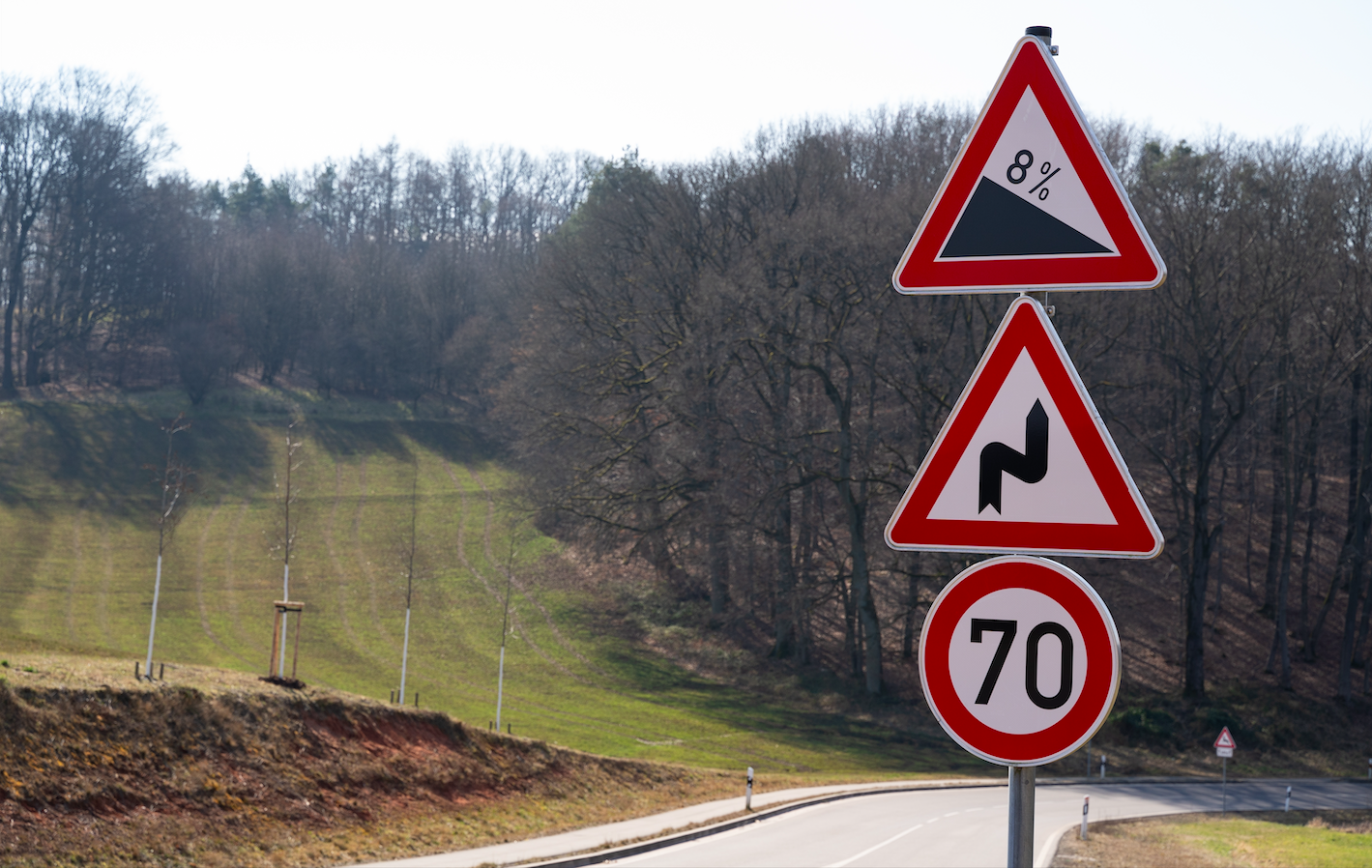
Police say the sign had been constructed from a round 70 km/h sign. Photo credit: Mentor Beqiri/Shutterstock
When driving on a motorway, you generally trust the signs telling you what speed you can legally travel. You are hardly going to pull over and investigate whether somebody has quietly put up a fake one, particularly when it looks like an ordinary road sign.
That is the bizarre situation motorists found themselves in on a road in Haldensleben, Germany, after an unknown person interfered with the speed limit next to a mobile speed camera. It looked convincing enough to affect what drivers believed they were legally allowed to do. By the time authorities realised what had happened, the consequences had already become a headache for the town, and for hundreds of motorists who had been caught on camera.
The fake sign looked convincing
The bizarre incident happened on Magdeburger Straße, a main route into Haldensleben in Saxony-Anhalt. The road is surrounded by businesses and petrol stations, meaning a change to the speed limit did not necessarily look suspicious to passing motorists. The fake sign showed a maximum speed of 70 km/h, despite the actual limit being 50 km/h. It had been put up independently and was not an official traffic sign issued by the authorities.
Police say the sign had been constructed from a round 70 km/h sign, a stand and a metal pipe. While officials noticed differences between the homemade setup and the equipment normally used by the authorities, it was apparently convincing enough to affect drivers passing the location. There was an important detail that the person putting up the sign presumably knew: a mobile speed camera was operating on the same stretch of road.
Almost 400 drivers caught by the camera
Between September 4 and September 6, the camera recorded almost 400 photographs of vehicles exceeding the 50 km/h limit and issued the fines. For a driver who had just passed what appeared to be a legitimate 70 km/h sign, being photographed at 60 or 65 km/h would have seemed particularly unfair. From their point of view, they were below the speed shown on the sign.
The problem became even bigger for the authorities once they discovered that the sign had been placed there illegally. The city removed the fake sign, but by then hundreds of photographs had already been taken. What happened next was an unusual twist: the motorists caught by the camera fortunately did not end up paying the fines.
Almost 400 cases had to be dropped
The city of Haldensleben ultimately had to discontinue all the affected penalty proceedings from that weekend. The reason was not simply that there had been a fake sign. Authorities could not establish beyond doubt exactly when the sign had been put up. Without knowing the precise point at which the fake 70 km/h limit appeared, it was impossible to determine with sufficient legal certainty which drivers had passed the camera while the misleading sign was in place.
That meant the cases could not simply be pursued on the basis of the camera photographs. The decision even affected motorists who had been travelling faster than 70 km/h. The city therefore lost the fines that could otherwise have been issued from the affected measurements.
Police believe it was deliberate
Authorities are not treating the incident as someone putting up a strange road sign for a laugh. Police believe the unknown person may have deliberately wanted to mislead motorists and cause them to exceed the genuine 50 km/h limit, knowing that the speed camera was operating nearby.
The police have opened an investigation for Amtsanmaßung, a German offence involving unlawfully assuming or exercising an authority that belongs to a public official. They are also describing the incident as a dangerous interference with normal road traffic. There is currently no identified suspect but police have appealed for witnesses who may have seen someone putting up the sign or noticed suspicious activity around the location.
The sign was removed, but the damage was already done
Once the authorities discovered what had happened, the homemade sign was taken down.That solved the immediate problem for motorists, but it could not undo the hundreds of speed-camera photographs already recorded over those three days. The incident has left Haldensleben with an unusual outcome: almost 400 motorists were caught by a speed camera, yet the uncertainty surrounding a single roadside sign meant the resulting penalty cases had to be abandoned.
For drivers, there is also an obvious lesson in how easily a convincing piece of roadside equipment can create confusion. The sign looked official enough to influence traffic, while the camera continued operating according to the actual 50 km/h restriction. And whoever put it there remains unknown.
Competiciones
España – Croacia En Directo | Yamal, Sobre Su Segundo Gol A Livakovic: “Lo Conozco De Los Entrenos”

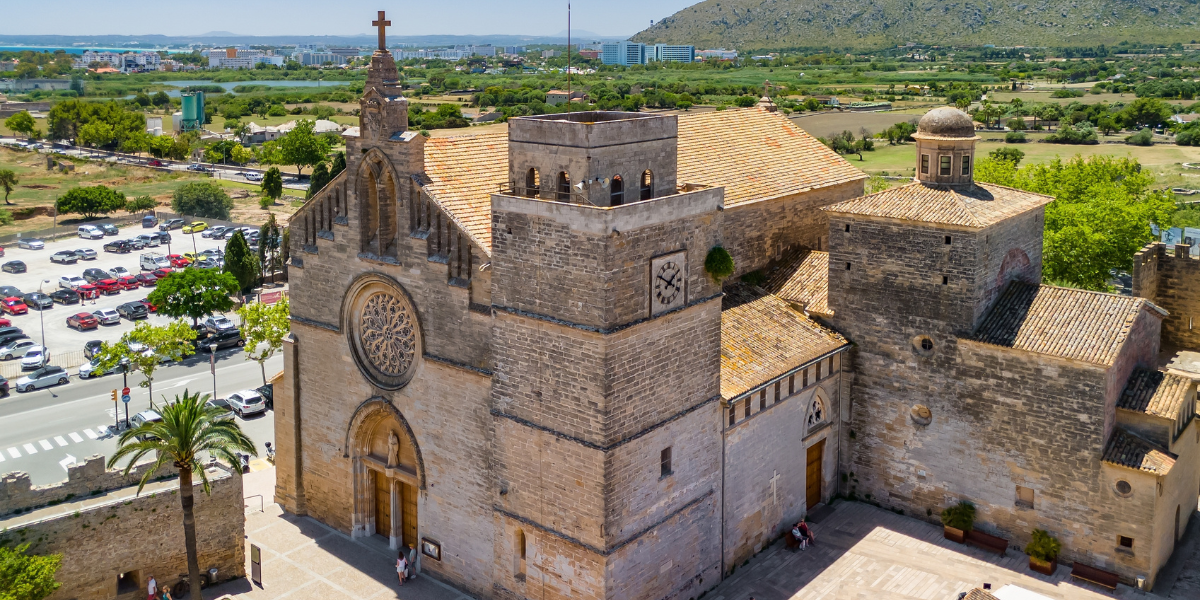
Representatives from 125 of Spain’s prettiest municipalities will gather in Alcudia
Credit: Shutterstock/Mazur Travel
Mallorca’s Alcudia is set to become a showcase for some of Spain’s most beautiful villages this October when it hosts the national assembly of the country’s prestigious beauty network.
Representatives from across Spain will travel to the northern Mallorca municipality from October 23 to 25 for the 14th National Assembly of Los Pueblos Más Bonitos de España, or Spain’s Most Beautiful Villages.
The event will bring together members of the association, which currently includes 126 municipalities recognised for their architectural, cultural, natural and heritage appeal.
Alcudia itself has been part of the network since 2020, making its selection as this year’s host particularly significant.
The municipality presented its bid to organise the gathering at the association’s Eastern Region Assembly in Arties in October 2025, and was subsequently chosen to welcome representatives from across the country.
What makes a village one of Spain’s most beautiful?
Being included in the network is about considerably more than simply having pretty streets or photogenic buildings.
Spain’s Most Beautiful Villages association was created to promote and protect small municipalities with a strong combination of architectural heritage, cultural traditions, landscapes and quality of life.
Towns seeking inclusion have to undergo an assessment process before they can receive the official designation.
The organisation looks at factors including the conservation of buildings and public spaces, cleanliness, the appearance of façades, traffic management, the presence of traditional architecture and the preservation of local heritage.
The aim is to encourage municipalities to protect the characteristics that make them distinctive while also promoting them as tourism destinations.
A growing network of Spanish destinations
The association has expanded considerably since its creation, with dozens of municipalities now forming part of the network across Spain.
Its members include historic inland villages, mountain communities and coastal destinations, each offering a very different version of the Spanish landscape.
The organisation is also linked to the international Les Plus Beaux Villages de la Terre network, connecting Spain’s initiative with similar associations in other countries.
The national assembly provides an opportunity for the participating municipalities to share experiences and discuss issues affecting historic and rural destinations.
For Alcudia, meanwhile, hosting the event offers a chance to put Mallorca’s own approach to heritage, tourism and local development in front of representatives from throughout Spain.
Why Alcudia was chosen
Alcudia is perhaps an unusual member of the network because it combines the character of a historic town with a much larger tourism industry.
Its old town remains one of northern Mallorca’s major attractions, surrounded by its distinctive medieval walls and filled with narrow streets, traditional buildings, shops, restaurants and cafés.
But the wider municipality stretches well beyond the historic centre.
The resort of Port d’Alcudia attracts visitors with its long sandy beach and marina, while the surrounding area includes countryside, coastline and the S’Albufera wetlands.
The combination gives Alcudia an opportunity to demonstrate how a popular tourist destination can also promote and preserve its historic identity.
That balance is likely to be particularly relevant during an event bringing together municipalities that rely on tourism while seeking to protect their character.
A spotlight on Mallorca
The October gathering will also give the island a chance to showcase its cultural and natural attractions to representatives from throughout Spain.
Visitors attending the assembly will be able to experience Alcudia’s historic centre and surrounding landscape while taking part in the programme organised for the national meeting.
The town’s selection also underlines the growing role of Mallorca’s smaller historic destinations within Spain’s wider tourism landscape.
Rather than simply being another meeting for local authorities, the assembly is expected to bring together municipalities with a shared interest in preserving what makes their communities distinctive while attracting visitors.
For Alcudia, that message is particularly relevant.
The municipality has long had to balance the demands of mass tourism with the preservation of its historic centre, archaeological heritage and natural surroundings.
Its inclusion in Spain’s Most Beautiful Villages network recognises those qualities, while October’s gathering will put them firmly centre stage.
Almost 400 motorists caught in bizarre German speed camera trap
España – Croacia En Directo | Yamal, Sobre Su Segundo Gol A Livakovic: “Lo Conozco De Los Entrenos”
Mallorca’s historic Alcudia to welcome Spain’s most beautiful villages this October

Detenido Un Hombre Por La Muerte De Una Mujer De 47 Años En El Distrito De Arganzuela De Madrid
Spanish airline Vueling named Europe’s best low-cost carrier for 2026
Spain’s wildfire toll revealed as almost 300,000 hectares go up in flames


-
 Arganzuela1 week ago
Detenido Un Hombre Por La Muerte De Una Mujer De 47 Años En El Distrito De Arganzuela De Madrid
-
Best airlines2 weeks ago
Spanish airline Vueling named Europe’s best low-cost carrier for 2026
-
2026 wildfires2 weeks ago
Spain’s wildfire toll revealed as almost 300,000 hectares go up in flames
-

 Claudia Sheinbaum2 weeks ago
The Azcatitlan Codex Returns To Mexico From Europe After Nearly Two Centuries
-

 %2 weeks ago
Mallorca Property Overrun By Wild Goats
-

 basque country1 week ago
British Actress Naomi Watts Attacks Ageism In Hollywood As She Picks Up Prestigious Donostia Award At San Sebastian Film Festival
-

 Uncategorized2 weeks ago
Heartbreaking Instagram post reveals death of F1 star
-

 %2 weeks ago
Fast Food Chain Soaring Beef Costs