Connect with us

%

Cabopino’s 139 Year Old Shipwreck Mystery

Published

on

cabopino’s-139-year-old-shipwreck-mystery

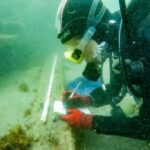
Divers are about to slip beneath the waves off Cabopino with a detective style mission. What lies on the sandy seabed could finally reveal the identity of a 19th-century vessel lost on its way from France to Argentina.

Underwater archaeology campaign planned for mid-September

Work on the Cabopino wreck (pecio de Cabopino) is scheduled from September 15 to 30, led by the Andalucian Historical Heritage Institute (IAPH) through its Underwater Archaeology Centre (CAS). The team will document surviving timbers, metal fastenings and cargo remains, and produce a detailed 3D model of the site. These will allow researchers to study fragile elements without physical contact and, in time, support virtual reconstructions for public engagement.

A 39-metre Mediterranean merchantman on a sandy floor

First inspected in 2022 at the request of Malaga’s culture department, the site sits at an average depth of around six metres. Initial surveys recorded a visible structure roughly 39 metres long by 15 metres wide, construction features suggest the vessel was built using shipbuilding methods common in the Mediterranean and dates to the modern era, most likely the 19th or early 20th century. Coastal movements continue to expose fresh material, so more of the hull, cargo and onboard items may still be buried under the sand.

French tiles and barrels hint at global trade routes

Part of the original cargo is still in place on the wreck, giving researchers rare insight into late 19th-century maritime commerce. Archaeologists have identified wooden barrel fragments and large quantities of building ceramics, mainly French roof tiles and floor tiles bearing Marseille commercial marks active from the 1870s into the early 1900s. Together, these finds can help map distribution networks that linked Mediterranean production centres with markets across the Atlantic.

Could this be the Italian brig-barque lost in 1887?

Historical press research has uncovered reports of an Italian brig-barque (bricbarca), named Garegliano or Gagliano, wrecked in November 1887 after leaving Marseille with construction materials bound for Buenos Aires. Identification remains unconfirmed, but the overlap between documentary records and archaeological evidence is currently the leading theory under investigation.

The Cabopino campaign begins hot on the heels of work off San Pedro de Alcantara, where specialists recently took part in a study that identified another wreck as the Spanish line-of-battle ship (navio de linea) Fernando, built in Ferrol (1750–51) and lost in 1760 near Placer de las Bovedas.

%

Fast Food Chain Soaring Beef Costs

Published

on

fast-food-chain-soaring-beef-costs

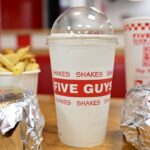
There is a reason Spain is now Five Guys’ most successful European market. People cannot get enough of those juicy burgers, generous fries and sugary sweet shakes, but for the chain, keeping portions unchanged during a period of soaring beef prices came at a steep cost. Here is how the burger giant hit record revenue while navigating an 83% drop in profits.

Record year for sales

Five Guys Spain has just smashed through the €100 million mark for the first time ever. Sales hit €105.9 million in 2025, up 10.4 per cent on the year before. That’s a huge deal for a brand that only landed in Spain back in 2016, and it means Spain is now the best-performing market Five Guys has anywhere in Europe, even though it’s one of the smallest countries the chain operates in.

Big knock in profits

Interestingly though more sales didn’t mean more money in the bank. Net profit dropped to just €698,327, a massive 83.2 per cent fall from the €4.16 million made the year before. Operating profit also slid, down 26.9 per cent to €4.9 million. The reason, beef got a lot more expensive, and rather than pass that cost onto customers, Five Guys chose to eat into its own margins instead. Recipes and portions stayed exactly the same, and toppings and sauces are still free.

A small price rise, but nothing else changed

Back in May 2025, the chain did slightly bump up its menu prices, roughly in line with inflation, just to help protect those margins. It’s keen to stress that nothing else changed. No smaller portions, no reformulated recipes, no charging extra for sauce. That’s a contrast to several other restaurant brands in Spain that have trimmed portions or added new charges over the past year.

Could you soon have one near you?

Only three new restaurants opened in 2025, a much slower pace than the eleven the year before, taking the total to 43 across Spain. New spots opened in Malaga and Benidorm, with Andalucia flagged as a particular focus for growth. Last month, Five Guys opened its first airport location, at Barcelona’s El Prat, hinting at more travel-hub openings to come. Next year, expect fresh openings across several regions, including the Balearic Islands. Since first arriving in Spain, the chain has opened an average of seven restaurants a year (aside from the pandemic years of 2020 and 2021), and bosses say that pace is set to pick up again from 2026 onwards, both on the mainland and the islands. Soon you could be tucking into that huge pile of seasoned fries and sipping on one of there shakes at a location near you.

Continue Reading

%

50,000 Brits Caught Up In Huge Passport Scare. Did You Hand Over Your ID In Spain?

Published

on

50,000-brits-caught-up-in-huge-passport-scare.-did-you-hand-over-your-id-in-spain?

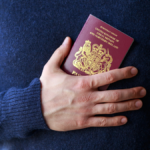
More than 50,000 British nationals were reportedly listed in records caught up in the cannabis club identity-document security scare. Credit: Max_555 / Shutterstock

If you have ever handed over your passport to join a cannabis club in Spain, you may want to pay attention to this.

More than 50,000 British nationals and around 12,000 Irish passport holders appear in records caught up in a huge security scare after almost one million passport and identity document scans were reportedly left accessible online.

A security researcher investigating the system identified 50,113 British nationals in the database, while fresh reporting by The Journal revealed that around 12,000 Irish passports were also among the records potentially exposed.

For anyone who remembers handing over their passport at one of these clubs, the obvious question is: was yours among them?

Why Spain is at the heart of the passport scare

Cannabis social clubs are particularly common in Spain, with estimates cited by The Journal putting their number at between 1,000 and 2,000 nationwide.

Unlike Amsterdam-style coffee shops, they generally operate as private associations. Prospective members may therefore be asked to register and prove their identity and age, sometimes by handing over a passport or another form of identification.

Some clubs used membership technology supplied by Cannabis Club Systems (CCS), an Irish-registered company formerly known as Nefos Solutions. Reception staff could upload customers’ identity documents to the system for verification, creating an enormous central collection of personal information.

Security researcher Sammy Azdoufal says the affected system contained 985,841 identity-document scans, including passports, identity cards and driving licences. His published account of the investigation lists 50,113 member records with British nationality.

However, not every British or Irish document necessarily came from a club in Spain. The researcher says the software was used by 377 clubs across Spain, the UK, Ireland, South Africa and elsewhere, although many were based in Spain.

How were the passports exposed?

According to the researcher, identity-document images were stored at predictable web addresses that did not require a login, password or security token. Anyone who understood the address pattern could potentially view the documents using an ordinary web browser.

That does not establish that criminals downloaded or misused the files. CCS disputes descriptions of the incident as a confirmed public data leak, saying it has found no verified evidence that personal information was extracted, published or distributed. Its investigation into the historical extent of any unauthorised access remains ongoing. The company says the reported vulnerabilities have been fixed and that the previously identified access points are no longer publicly accessible.

The Journal reported that Ireland’s Data Protection Commission is engaging with the Irish-registered company. The regulator has not made any finding of wrongdoing.

Spain has already warned about copying IDs

The case echoes something Spanish authorities have already been warning consumers about. As Euro Weekly News previously reported, businesses retaining complete copies of passports or identity cards can create risks that people may not consider when handing them over.

Spain’s Data Protection Agency says that, as a general rule, a complete copy of an identity document is not necessary simply to verify someone’s identity when entering a contract. However, it notes that sector-specific laws, including anti-money-laundering rules, can require copies in some circumstances.

One worrying aspect of the exposure is that passport details falling in to the wrong hands can make identity fraud and targeted scams considerably more convincing. Whilst another obviously sensitive element in this case is that the documents were connected to cannabis club memberships, potentially linking identifiable individuals with membership of a cannabis association.

Cybersecurity specialist Brian Honan told The Journal that such information could be exploited for scams or blackmail if it fell into the wrong hands.

Should British or Irish passport holders do anything?

There has been no reported blanket instruction telling affected British or Irish citizens to replace otherwise valid passports. Anyone who believes they may be affected should contact the club or CCS through official contact details rather than following links in unexpected messages. The UK’s National Cyber Security Centre advises people concerned about a data breach to remain alert for suspicious communications and check their accounts for unauthorised activity.

Be particularly cautious about unexpected emails, calls or messages containing genuine personal information. Never provide banking details, passwords or security codes simply because the person contacting you appears to know who you are.

If a physical passport has actually been lost or stolen, British citizens should use the government’s official lost or stolen passport service, while Irish citizens in Spain can follow the Embassy of Ireland’s guidance.

But for people whose passport is still safely sitting at home, the concern is different. 50,113 British nationals. Around 12,000 Irish passports. Almost one million identity document scans.

If you remember handing your passport across the reception desk at a cannabis club, you may now be wondering the same thing: Was yours one of them?

Continue Reading

%

Three Murcia Restaurants Shortlisted For Prestigious National Award

Published

on

three-murcia-restaurants-shortlisted-for-prestigious-national-award

Three Murcia restaurants are shortlisted for prestigious national culinary awards. Photo Credit: @barrapomelo / Instagram

Three new establishments in the Region of Murcia have been shortlisted for prestigious culinary awards, continuing to solidify the region as one of Spain’s premier culinary destinations. The three impressive restaurants, Pepe Juan Barra, Barra Pomelo, and La Macetúa, were recognised for the 2025 TheFork Awards, a national competition that celebrates the very best of the recent additions to Spain’s vibrant gastronomy scene, and shines a spotlight on innovation in the kitchens across the country.

The three shortlisted eateries and their concepts: standout restaurants in a standout city

The first of the establishments, Pepe Juan Barra, was born in the historic centre of Murcia, on Trapería Street. The concept of the restaurant is to “recover the spirit of the bars of yesteryear and bring it to our land, taking special care of the product and the cuisine,” according to the official TheFork website. A collaboration between Juan Guillamón and Pepe Morales, two chefs from Murcia with different backgrounds but a shared understanding of gastronomy, the owners have created “a welcoming, informal place […] where enjoying the atmosphere is just as important as eating well.”

The next restaurant, Barra Pomelo, is a contemporary gastronomic bar, based on the demonstration and tasting of seasonal products, which are cooked without fire: cured, marinated, pickled, ceviche-style, tempered and seasoned. TheFork describes it as a “close and precise experience, where the product, the technique and the balance of flavour are the true protagonists.”

Finally, the third of Murcia’s shortlisted entries, La Macetúa, endeavours to “revive the authentic Murcian bar, showcase local products, and, above all, support nearby producers who offer high-quality products and are committed to their community.”

National recognition, hand-chosen by Michelin-starred chefs

The restaurants were chosen by an elite jury of 56 Michelin-starred chefs, from a total of 41 shortlisted establishments from 20 different Spanish provinces and regions. Murcia’s impressive offering showcases the draw and creativity of its culinary scene, with one of the highest numbers of nominees overall, behind only Catalonia, with nine nominees; the Valencian Community, with six; and Madrid, with five.

This year’s selection also showcased other, emerging culinary destinations, with first-time shortlisted entries from regions like Asturias and Extremadura.

The public gets a say: how to vote for the winner of the 2025 TheFork Awards

Now that the experts have made their decisions, the selection process for the 2025 TheFork Awards will now turn to the public. Foodies across Spain will be able to cast their votes on the official TheFork website until the deadline, Sunday, October 11. The establishment that receives the highest number of public votes will win the People’s Choice Award for 2025, which last year was won by The Library, a combined wine boutique, gastropub, and private club in Madrid.

For locals and visitors in southeastern Spain, the national recognition of Pepe Juan Barra, Barra Pomelo, and La Macetúa is an excellent excuse to explore Murcia’s dynamic dining culture firsthand. These three standout eateries have not only made their local owners and patrons proud by being shortlisted for such a prestigious award, but also represent a thriving regional dining scene that is increasingly capturing national attention and praise.

Continue Reading
Advertisement
Advertisement

Spanish Real Estate Agents

Tags

Trending

Copyright © 2017 Spanish Property & News