Connect with us

%

Care Home Killer Given Spain’s Toughest Sentence For Insulin Murder

Published

on

care-home-killer-given-spain’s-toughest-sentence-for-insulin-murder

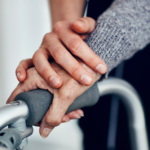
Care homes exist to protect those who can no longer protect themselves. Photo credit: PeopleImages/Shutterstock

Families place enormous trust in the people caring for their elderly relatives. It is a trust built on the belief that those who cannot protect themselves will be treated with dignity, compassion and respect. That is why one of Spain’s latest Supreme Court rulings has struck such a nerve.

The country’s highest court has imposed ‘prisión permanente revisable’, Spain’s toughest criminal sentence, on a nursing assistant who murdered a 98-year-old care home resident by injecting her with insulin despite knowing she was not diabetic. The decision overturns an earlier 20-year prison sentence and sends a powerful message about crimes committed against society’s most vulnerable.

A murder inside a place meant to provide care

The case dates back to August 2022 at a municipal care home in León. The victim was a 98-year-old woman living with advanced dementia, entirely dependent on those around her for her daily care. According to the Supreme Court ruling, the nursing assistant first assaulted the elderly resident before administering insulin taken from the home’s medical supplies. 

The victim did not suffer from diabetes, the injection caused severe hypoglycaemia, leaving her in a coma before she died several days later in hospital. What makes the crime particularly disturbing is where it happened. Care homes exist to protect those who can no longer protect themselves. Residents and their families place enormous confidence in carers, believing they are in safe hands. Instead, prosecutors argued, that trust was exploited in the worst possible way.

Spain’s highest court steps in

Last year, a jury found the woman guilty of murder and the Provincial Court of León sentenced her to 20 years in prison.  However, prosecutors appealed, arguing the punishment failed to reflect both the victim’s extreme vulnerability and the abuse of trust involved, Spain’s Supreme Court agreed.

Judges ruled that the circumstances justified prisión permanente revisable, a sentence reserved for the country’s most serious crimes. Unlike a life sentence in some countries, reviewable permanent imprisonment allows an offender to request a review after serving a substantial minimum period behind bars. Release is only considered if strict legal conditions are met and the offender is judged no longer to present a danger to society, it remains Spain’s most severe criminal penalty.

A crime that shocked Spain

The ruling has reignited debate about protecting elderly people living in residential care. Spain has one of Europe’s fastest-ageing populations, with increasing numbers of families relying on nursing homes to care for relatives suffering from dementia and other conditions requiring constant supervision.

Most care workers perform demanding jobs with professionalism and compassion. Cases like this remain exceptionally rare. That rarity, however, is precisely why they generate such public outrage. When abuse or violence occurs inside a care home, it shakes confidence far beyond the family directly affected.

Trust is everything

The Supreme Court placed significant weight on the victim’s inability to defend herself. At 98 years old and living with advanced dementia, she depended entirely on those responsible for her care. Rather than offering protection, the court concluded that the defendant used her position to commit the crime.

That abuse of trust became one of the key reasons for increasing the sentence. For many families, it is difficult to imagine a greater betrayal. Every day across Spain, relatives leave parents and grandparents in the care of professionals believing they will be treated with kindness. The overwhelming majority are, but this case serves as a reminder that safeguarding vulnerable residents requires constant vigilance.

Why the ruling matters

Legal experts say the judgment is significant because it demonstrates the Supreme Court’s willingness to apply Spain’s toughest punishment where victims are exceptionally vulnerable and offenders exploit positions of care or authority.

The decision also reinforces the legal protection afforded to elderly people who are unable to defend themselves. For prosecutors, the ruling reflects the seriousness of crimes committed against people whose lives depend entirely on those looking after them.

Justice, but no closure

Nothing will undo what happened inside that care home in León. A family lost a mother, grandmother and great-grandmother in circumstances almost impossible to comprehend. The Supreme Court’s decision cannot change that.

What it can do is send a clear message that crimes committed against the elderly, particularly by those entrusted with their care, will be treated with the utmost severity. For thousands of families with loved ones living in care homes across Spain, that message may offer some reassurance.Trust remains the foundation of every care home. When that trust is deliberately broken, Spain’s highest court has made clear it will respond with the harshest punishment the law allows.

%

Polish Swimmer Conquers Baltic After 55 Hours Then Doctors Make Strange Request

Published

on

polish-swimmer-conquers-baltic-after-55-hours-then-doctors-make-strange-request

Bartłomiej Kubkowski had spent more than two days in open water. Photo credit:Bartłomiej Kubkowski on Instagram

What would happen to your body after almost 55 hours swimming through the Baltic Sea without sleep? One Polish athlete has now given scientists a rare chance to find out, after an extraordinary request was made following his latest challenge. Bartłomiej Kubkowski had spent more than two days in open water during his attempt to swim from Sweden to Poland. The request came after he finally reached the Polish coast, following a journey of more than 160 kilometres.

Doctors asked if they could freeze samples of his blood for scientific research, Kubkowski agreed. The unusual request followed a feat that pushed him through exhaustion, sleep deprivation, cold water and difficult conditions. He completed the crossing on his fifth attempt, becoming the first person to swim from Sweden to Poland across the Baltic Sea. 

A fifth attempt finally succeeds

Kubkowski set off from Kåseberga in southern Sweden and reached Dziwnów on Poland’s Baltic coast. The journey covered just over 160 kilometres and took around 55 hours. Reports put his completion time at approximately 55 hours and 10 minutes. 

He remained in the water throughout the crossing, a support boat accompanied him, but he was not allowed to touch it. Food and drinks could be provided from the boat, meaning he had to keep swimming rather than climbing aboard to rest. He also went without sleep during the crossing. 

The achievement came after four previous attempts over five years. His previous effort ended when he was only around 11 kilometres from the Polish coast. Exhaustion and worsening conditions forced him to stop before reaching land. This time, he made it all the way to Dziwnów. 

His body became the next question

After the swim, medical staff carried out tests on Kubkowski, the results prompted the unusual request to preserve his blood for research. The samples could give scientists an opportunity to examine the physical effects of an endurance effort lasting more than two days. Kubkowski’s experience is particularly unusual because the crossing combined prolonged physical exertion with a lack of sleep and exposure to open water.

According to reports, the head doctor told Kubkowski that his blood results resembled those of someone who had just completed a marathon. That comparison came after a swim roughly four times the distance of a standard marathon, performed continuously through the Baltic. The samples will now be frozen rather than simply discarded after routine medical testing, allowing them to be used for further scientific work.

The final kilometres were the hardest

Getting to the Polish coast was not simply a matter of continuing at the same pace until the finish. Kubkowski said that around 11 kilometres from the end, he began losing consciousness and became unsure of where he was. A change in the weather added another difficulty during the final part of the crossing.

After spending more than two days awake and swimming, he still had to maintain enough concentration and strength to complete the remaining distance. He eventually reached the beach at Dziwnów, where supporters were waiting. The finish marked the end of a challenge that had occupied him for years.

The swim also raised money

Kubkowski’s Baltic challenge was linked to a fundraising campaign for Cancer Fighters, a Polish foundation supporting children with cancer. The campaign had raised more than one million Polish złoty by the time of the latest reporting.  That means the crossing was not solely a personal sporting challenge. Money was being raised for children receiving cancer treatment while Kubkowski attempted a route that nobody had previously completed in the same way.

Now the achievement has another potential legacy. The frozen blood samples could allow researchers to study what happens inside the body after an extreme endurance effort lasting almost 55 hours. Kubkowski set out to conquer the Baltic Sea after four failed attempts, He succeeded on the fifth.  But after 160 kilometres in the water, the most unusual part of the story may only just be beginning, because scientists now want to see what his body went through.

Continue Reading

%

Murcian Firefighters Are Bringing Vital Drinking Water To Earthquake Survivors In Venezuela

Published

on

murcian-firefighters-are-bringing-vital-drinking-water-to-earthquake-survivors-in-venezuela

Spanish firefighters supply clean drinking water to earthquake survivors abroad. Photo Credit: @bomberosporbomberos / Instagram

A nonprofit organisation based in Murcia, Bomberos por Bomberos (Firefighters for Firefighters), has launched a critical humanitarian operation in Venezuela, delivering safe drinking water to populations severely impacted by the devastating recent earthquakes. As the organisation’s first international mission, the dedicated team has successfully completed complex technical installations to link a water well to a specialised purification unit located at the Caribe fire station in the Venezuelan city of La Guaira.

Local nonprofit’s first international mission delivers vital water supplies

This water treatment plant, a compact, high-capacity unit funded by the Universidad Católica San Antonio de Murcia (UCAM), can process up to 3,000 litres of clean drinking water every hour. The team constructed PVC pipelines to carry unpurified water from the well directly into the filtration system and out to an accessible distribution hub.

Bomberos por Bomberos is also coordinating tanker trucks equipped with large holding tanks to transport clean water directly into camps and remote settlements, where vulnerable local people are currently taking shelter.

Dedicated mobile distribution teams tackling a growing health crisis

Access to uncontaminated drinking water across the regions affected by the earthquakes has become critically scarce. Humanitarian workers warn that the deficit will worsen as other relief organisations phase out bottled water distributions in temporary camps. Without access to safe supplies, many desperate residents have turned to untreated well water, sparking widespread gastrointestinal illnesses and health complications.

Community awareness drives demand at local fire station

Local creators and Venezuelan social media channels have actively spread news about the new purification plant, driving a steady increase in daily demand at the Caribe fire station. With this effort, Bomberos por Bomberos continues to expand its logistics footprint to keep pace with the growing need for clean, fresh water.

Working tirelessly to provide water for displaced people, the Murcian firefighters are playing an essential role in stabilising public health and supporting vulnerable families through this devastating crisis. It is just one of the ways Murcian emergency responders and nonprofit organisations are working to spread humanitarian aid in light of the earthquake disaster in Venezuela.

Continue Reading

%

What Revolut’s New French Licence Changes For Account Holders In Spain

Published

on

what-revolut’s-new-french-licence-changes-for-account-holders-in-spain

Revolut has been granted a full banking licence in France. Credit: Ascannio / Shutterstock

More than six million people in Spain now bank with Revolut, yet not one of their euros is protected by the Spanish deposit fund. A licence granted in Paris on Monday August 10 could change which country stands behind that money.

The €100,000 guarantee that comes from Lithuania 

Revolut has served Spanish customers since 2023 through Revolut Bank UAB, Sucursal en España. Their branch registration brought Spanish IBANs, direct debits for utility bills and Social Security, and access to Bizum.  What it didn’t bring was a Spanish guarantee. Revolut’s own deposit insurance information for Spain states that money held with Revolut Bank UAB is insured by the Lithuanian public institution Deposit and Investment Insurance, up to €100,000 for a single depositor.

That is the same figure the Spanish deposit guarantee fund covers, although the difference is whose fund would pay out, and which country’s process a saver in Almería or Málaga would have to follow to get the money back. 

France goes first while Spain is kept waiting

Revolut Bank S.A. received its full licence on Monday August 10 after a joint assessment by the French prudential regulator (ACPR), and the European Central Bank, with the decision adopted by the ECB Governing Council. The company said the new entity will “progressively begin serving customers across Europe, starting with France, with other European markets including Germany, Ireland, Italy, Portugal and Spain to follow in subsequent phases”.

No timetable has been published for any market beyond France. The Lithuanian entity remains, in Revolut’s words, a cornerstone of operations, and both banks are supervised by the ECB in what the company calls a dual-hub model. 

For customers in France, eligible deposits will come under the Fonds de garantie des dépôts et de résolution (FGDR), the French scheme, as accounts transfer across. If Spain follows the same route, Spanish balances would shift from Lithuanian cover to French cover. 

Mortgages are the prize Revolut wants in Spain

Revolut closed 2025 with 6.3 million customers in Spain, its third-largest market, and has said it wants eight million by the end of this year. It began installing its own cash machines in Madrid and Barcelona last year and plans 200 across Spain during 2026.

The obvious gap is lending. Revolut has said it intends to launch mortgages in Spain, the product that generates much of the profit at Santander, BBVA and CaixaBank, using the fully digital model it already runs in Lithuania. 

A full licence in a large euro-area market gives the group firmer regulatory footing to widen lending and savings products across the region. In France that includes the Livret A and other tax-free regulated savings accounts. Spain has no direct equivalent, so the practical benefit there is more likely to arrive as credit.

The ECB curbed Revolut’s product launches only last year

Any Spanish rollout depends on supervisors. In July 2025 the ECB told Revolut’s European board that its Lithuanian bank could not launch new products across the European Economic Area until it addressed deficiencies in governance, risk, compliance and legal controls, according to details first reported by the Financial Times in June 2026.

The regulator ordered an independent review of the product approval framework and required the board to assess the capital and liquidity impact of new launches. Revolut said it had strengthened its internal controls and was in “continuous and constructive dialogue” with its regulators.

The Bank of Lithuania separately fined Revolut Bank €3.5 million in April 2025 over shortcomings in monitoring transactions and business relationships. It said it found no confirmed cases of money laundering.

What account holders in Spain should watch for

Nothing changes for a Spanish account today. Balances, IBANs and card details stay as they are, and Revolut has said existing customers will be told directly about any changes. The signal to watch is the deposit information inside the app and in the terms sent by email. When the entity holding the money changes from Revolut Bank UAB to Revolut Bank S.A., the guarantee moves with it, and so does the office a saver would need to contact if anything went wrong.

Continue Reading
Advertisement
Advertisement

Spanish Real Estate Agents

Tags

Trending

Copyright © 2017 Spanish Property & News