Connect with us

China

China Tacha De “invenciones” Las Acusaciones De Trump Sobre Su Supuesta Injerencia En Las Elecciones De 2020

Published

on

china-tacha-de-“invenciones”-las-acusaciones-de-trump-sobre-su-supuesta-injerencia-en-las-elecciones-de-2020

China ha respondido con dureza este viernes a las acusaciones del presidente estadounidense, Donald Trump, quien sugirió la víspera, en un discurso a la nación, que Pekín trató de influir en las elecciones presidenciales de 2020 para impedir su reelección. El Ministerio de Exteriores chino ha calificado esas afirmaciones de “pura invención” y “difamación maliciosa”, y ha instado a Washington a dejar de convertir al gigante asiático en argumento de sus disputas políticas internas.

Seguir leyendo

%

China Bans AI Partners From Children

Published

on

china-bans-ai-partners-from-children

China is banning virtual partners and virtual relatives for minors, while at the same time also requiring platforms to strongly remind users that they are speaking to AI and prompt breaks after long conversations.

The allure of the “Perfect” digital partner

Your AI boyfriend never forgets your birthday. Your AI girlfriend always replies instantly. They remember your favourite music, ask how your day went, and can even flirt back. Unlike human relationships, chatbot companions never get tired, never argue over forgotten anniversaries, never leave messages unread, and are available 24 hours a day.

In just a few short prompts, users can create a chatbot that feels less like software and more like a real partner. Today’s generative AI can be easily customised to behave like a romantic partner, a best friend, or even parents and siblings. They remember previous conversations, develop ongoing story lines, offer emotional reassurance, and adapt their personalities to individual users.

It is this realism and tireless availability is precisely what worries regulators. For younger people, it creates a very real risk of developing a highly unhealthy emotional dependence on a system specifically designed to keep conversations going. This is exactly the kind of relationship China has decided children should not be having.

Drawing a legal line around virtual relationships

From July, 15, new Chinese regulations will prohibit AI platforms from offering virtual partners or virtual family members to anyone under the age of 18, making China one of the first countries to explicitly draw a legal line around AI companionship for minors.

The rules are part of the country’s new Interim Measures for the Management of Artificial Intelligence Anthropomorphic Interactive Services, jointly issued by five government departments, including the Cyberspace Administration of China (CAC).

To curb excessive attachment and protect minors’ mental well-being, the new regulations introduce several strict requirements for providers –

Reality check reminders – Platforms must make it clear that users are interacting with artificial intelligence rather than a real person. Anyone spending more than two continuous hours chatting must receive reminders about their usage.
Youth modes – Platforms must introduce dedicated youth modes with features such as usage limits and parental controls.
Crisis intervention – If providers detect that a user is experiencing severe emotional distress or expressing intentions of self-harm, they must generate supportive guidance and, in serious cases, take intervention measures, including contacting a guardian or emergency services.
Data privacy – Companies are prohibited from using sensitive conversation data to train AI models without separate, explicit user consent.

How is the Europe reacting to virtual relationships?

Elsewhere, governments are watching closely but have taken a different, less restrictive approach. Europe has so far stopped short of a China-style ban. The EU does not prohibit AI boyfriends, girlfriends, or companion chatbots. Instead, its AI Act focuses broadly on preventing harmful uses of AI, such as systems that manipulate users or exploit children’s vulnerabilities in ways that could cause significant harm. European policymakers and researchers are increasingly voicing concerns about emotional attachment to AI among young people, however, at present there are currently no EU-wide bans in place.

AI is day by day becoming deeply integrated into our lives, we already know that chatbots can successfully imitate friendship and romance, but how much of that relationship we are comfortable encouraging especially to our younger generation.

Would you be concerned if your child told you their boyfriend, girlfriend or best friend lived inside their phone?

Continue Reading

China

The World Is Plunging Into A Dangerous Spiral Of Military Spending

Published

on

the-world-is-plunging-into-a-dangerous-spiral-of-military-spending

The Atlantic allies met this week in Turkey for NATO’s annual summit against a backdrop of sustained growth in global military spending. Spurred both by the threat from Russia and political pressure from the White House, the Alliance’s European partners have taken significant steps forward in military investment. This trend is taking place within the broader context of a global rearmament effort that has been underway for the past decade. Geopolitical tensions, technological revolutions, economic and industrial considerations, and other factors suggest that this trend still has a long way to run.

According to data compiled by the Stockholm International Peace Research Institute (SIPRI), a highly respected authority in this field, the world has now experienced 11 consecutive years of rising military expenditure, a period that coincides with the beginning of Russia’s aggression against Ukraine in 2014. Military spending has increased by 41% over the past decade. In 2025, nearly $3 trillion was devoted to defense, equivalent to 2.5% of global GDP. The increase in 2025 was 2.9%, lower than the jump recorded the previous year (9.7%). However, multiple indicators suggest that 2026 and 2027 could bring further substantial increases.

Within NATO, U.S. military spending this year will be higher than last year’s, and the Trump administration has asked Congress to approve a Pentagon budget increase for the next fiscal year from the current $1 trillion to $1.5 trillion — a remarkable jump. There is resistance among lawmakers to such a dramatic increase, and it is highly unlikely that it will be approved in those exact terms. However, it is quite possible that the final agreement will still represent another significant step forward compared with the previous budget.

At the same time, the European allies are heading toward further increases in military spending. For example, BNP Paribas forecasts for 2026 “a further acceleration in military spending within the European Union. After an increase from 1.9% to 2.15% of GDP between 2024 and 2025, spending is expected to rise by around €80 billion [$91.6 billion] and reach 2.5% of EU GDP” this year.

Overall, NATO accounts for 55% of global military spending.

Many other actors, of course, are also contributing to this escalation. Russia is naturally at the center of the story. Its aggression against Ukraine has driven a runaway increase in its own military spending while also spurring higher spending by others. Its economic difficulties, however, make it harder for Moscow to continue advancing along that path.

China, meanwhile, has for some time maintained a steady pace of nominal military spending increases of around 7% per year. This consistent growth reflects Beijing’s effort to narrow the gap with the United States. It is worth noting that this stability persists despite a slowdown in its economic growth, which is forecast at around 4.5%.

Other parts of the world, by contrast, are galloping ahead. Countries in Southeast Asia are experiencing a situation that is similar — though not identical — to that of Europe. Concern about a powerful neighboring country and pressure from the United States are pushing them in the same direction.

U.S. Secretary of Defense Pete Hegseth delivered a speech in late May at the important Shangri‑La Dialogue in Singapore that will sound very familiar to Europeans: “President Trump is setting the gold standard. We demand 3.5% from our allies and partners […] For those nations that rise to this challenge that embrace responsibility as true partners, the benefits will be clear […] But for those who believe they can continue to free ride on the generosity of the American taxpayer, hear us now. Those days are over. Allies who refuse to step up and carry their own weight for our collective defense will face a clear shift in how we do business.”

The message is resonating strongly in the Middle East as well, where there is little doubt that the war against Iran and its consequences will fuel a significant wave of rearmament.

What’s driving the rise

The motivations behind this dynamic are primarily geopolitical. “The world is moving toward a multipolar configuration. Asymmetric, but multipolar. And in that transition monsters are born,” says Michele Testoni, associate professor at the IE School of International Relations and coordinator of the book NATO and Transatlantic Relations in the 21st Century. It is a landscape that fosters a sense of insecurity.

Testoni also points to another factor: “We are living in a time of great technological revolution. History shows that these revolutions are often quickly adopted by the military.” The rise of artificial intelligence and its combination with robotic and automated technologies opens new possibilities, and that leads to imbalances and sparks races to adapt to the changes.

Vicente Palacio, director of foreign policy at the Fundación Alternativas, highlights another important factor: military spending as an economic stimulus. “At a time of not only geopolitical tensions but also economic difficulties, the military dimension is seen as a new source of growth and reindustrialization. That ranges from Germany to Russia, and includes the United States, France and many other countries.”

Another notable feature of the current arms race is the near absence of international agreements capable of constraining it. New START, which set limits on nuclear arsenals between the United States and Russia, expired last February and there is no clear prospect of a replacement being negotiated. More broadly, it is worrying that, a few weeks ago, the review conference of the Treaty on the Non‑Proliferation of Nuclear Weapons once again ended without any agreement. The nuclear realm is another area of heavy investment, according to SIPRI. While there is no significant increase in the number of nuclear warheads, the nuclear powers are making huge investments to renew their arsenals.

The defense industry naturally benefits from all this. The 100 largest companies in the sector have grown sharply. Between 2002 and 2025, revenues in constant dollars doubled, reaching $680 billion.

And during this decade of rapidly expanding military spending, new types of companies have entered the sector in a major way, with Palantir serving as a prominent example. Palantir does not sell weapons. Instead, it provides AI-based operating systems and other digital capabilities. Its importance has become extraordinary. Its technical capabilities are evident, but so too are its political and cultural implications.

Alex C. Karp, the company’s co-founder, has long advocated for greater involvement by Silicon Valley as a whole in national security matters, and has criticized the tech sector’s tendency to focus on maximizing profits through consumer gadgets.

Peter Thiel, the company’s leading figure, recently argued that the Pope, by calling for regulation of AI, is inadvertently acting like a ”Chinese communist agent.”

The forces driving the rearmament spiral are numerous and powerful. Arms races do not automatically lead to conflict. NATO’s history demonstrates this. During the Cold War, the alliance maintained very high levels of military spending, and the result was deterrence rather than direct conflict. Proxy wars did occur between the two blocs in other regions, but in Europe — the alliance’s primary theater — not a single shot was fired between NATO and the Soviet bloc.

Nevertheless, that does not eliminate concern. The rapid growth in military spending, occurring amid geopolitical tensions and the erosion of international institutions and norms, creates a scenario that many observers find deeply unsettling.

But that does not mean that the rise in military spending, amid conflict and the erosion of international institutions and norms, is not a worrying development.

Sign up for our weekly newsletter to get more English-language news coverage from EL PAÍS USA Edition

Continue Reading

China

The European ‘catenaccio’

Published

on

the-european-‘catenaccio’

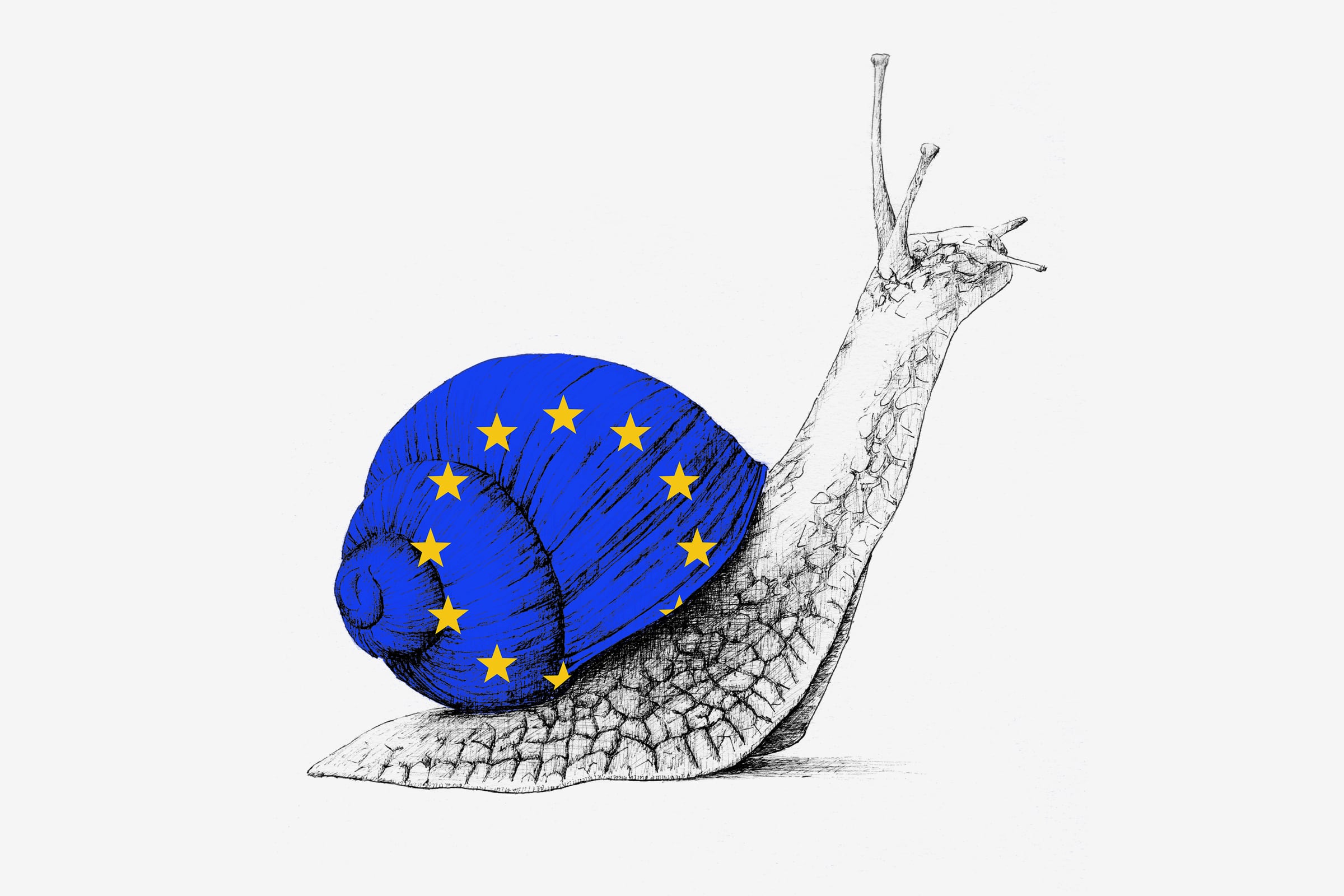
The footballing catenaccio was a strategy, originally developed in Switzerland and popularized in Italy, that prioritized airtight defense and strict man-marking. The idea was that there was no need to have the ball and build the play; it was enough to protect your own goal, counterattack, and hope to catch the opponent by surprise. It is a passive strategy, now largely obsolete, used only by teams that see themselves as inferior. Teams that see themselves as superior want to be aggressive and keep possession so they can dictate the pace of the game. Catenaccio is a strategy for not losing, not a strategy for winning.

European economic policy is a version of catenaccio, revealing either a sense of inferiority — or, even worse, a political preference for being inferior — relative to the United States and China. Playing constantly on the defensive makes progress very difficult.

China’s economic strategy, which the United States has largely begun to emulate in recent years, has been clear over the past decade: invest whatever public and private resources are necessary to become a global leader in strategic sectors. Of course, this has been accompanied by a strategy of protecting the domestic industry — but without massive investment, protection alone would have achieved nothing. This investment has benefited from a huge internal market, where companies can grow and develop until they reach the scale required to become world leaders, as well as fierce competition that encourages innovation. All of this has been supported by subsidies and public infrastructure aimed at strategic industries.

The Made in China 2025 plan, designed in 2015, established the guidelines, which have since been updated and expanded through successive five-year plans. The result has been a total public-sector deficit estimated, depending on how the public sector is defined, at between 8% and 15% of GDP, and public debt around 100% of GDP.

The outcome is well-known: China has become a leader in cutting-edge industries and increasingly dominates high-value-added sectors, where it competes directly with European exports.

About a decade ago, the United States realized that China would become a formidable competitor and tried to counter this strategy through containment measures, including import restrictions, sanctions, and more recently tariffs. But it did not work. Chinese imports, measured in value-added terms and including indirect imports, fell by only about 2%, while the containment measures actually encouraged even more Chinese investment.

For example, after restrictions were imposed on the technology sector in 2018, China designated technology as a national-security sector, and today it competes head-to-head with Silicon Valley in artificial intelligence and semiconductors. The more restrictions that were imposed, the more determined China became to achieve self-sufficiency in strategic sectors.

When the United States launched a tariff war with China in 2025, it took only a few weeks to discover China’s superiority in negotiation. China threatened to cut off supplies of rare earths, the 17 chemical elements essential to modern technology and the energy transition. The United States quickly realized that within weeks it could be left without essential components for computers, batteries, and medical and military equipment.

At that point, the United States changed strategy, deciding to imitate China and invest whatever resources were necessary to become independent in the supply of strategic materials. The Project Vault for rare-earth investment, subsidies to the production of semiconductors, public investment in technology firms, and the Defense Department’s private-equity group are all manifestations of the U.S. desire to strengthen its economy through investment so as to become less dependent on China.

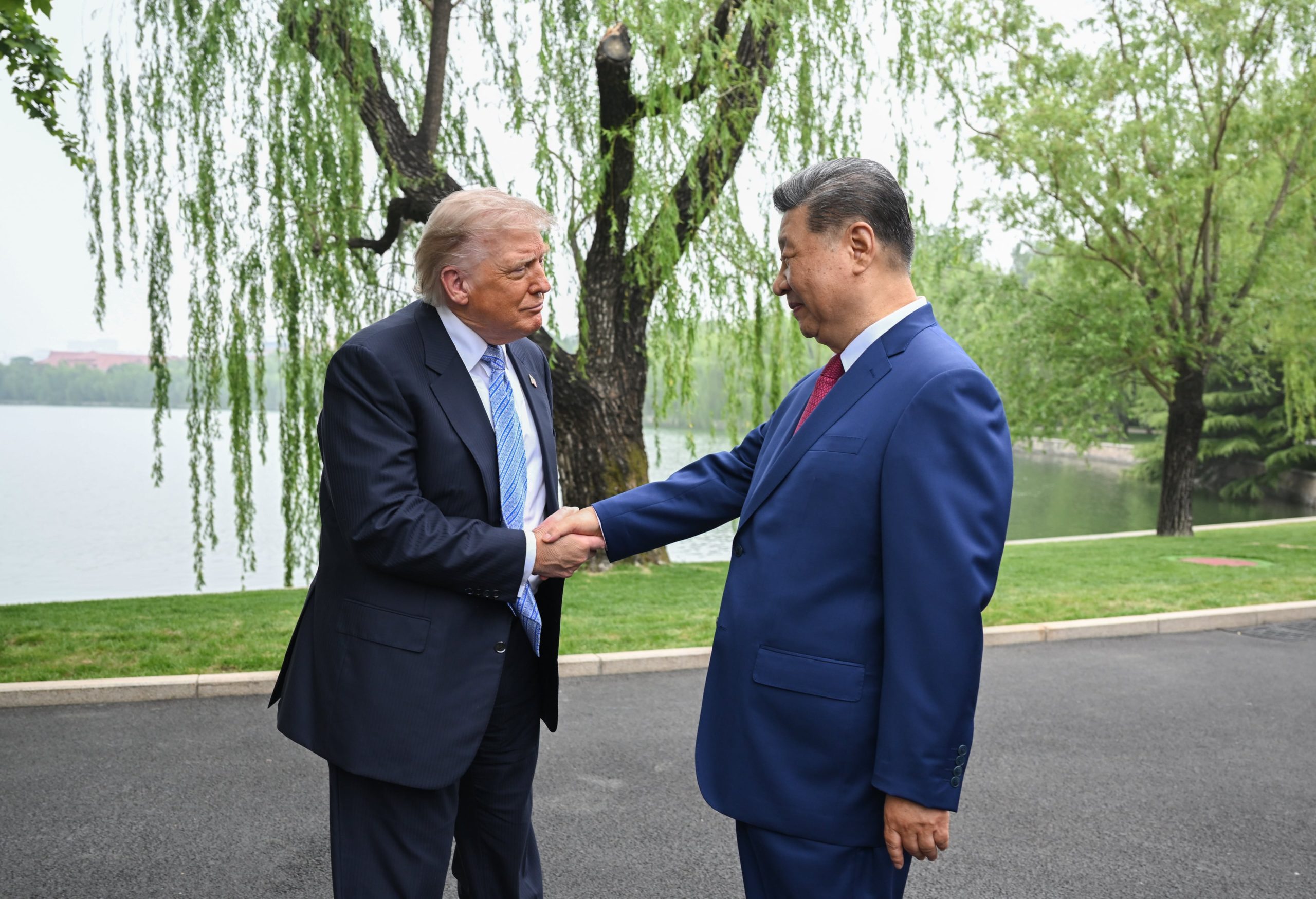
The United States concluded that catenaccio did not work and that it had to strengthen itself before engaging in another trade war with China. Since then, the tone of relations has changed. Negotiations are underway to facilitate mutual investment, and Trump and Xi are scheduled to meet three times this year.

Europe, however, remained complacent in the face of China’s rise — particularly Germany’s automobile industry — and European countries remain more concerned with monitoring their neighbors’ fiscal policies than with investing to close the technological gap with the United States and China.

In 2024, the Draghi Report recommended increasing European investment by 5% of GDP annually for a decade, financed in part through eurobonds, in order to close the productivity gap with the United States. Two years have passed; only about 20% of the recommendations have been implemented, and the increase in investment has been minimal.

The same has happened with the recommendations of the Letta Report on removing barriers within the single market. Barely 10% have been implemented, and Europe still has a nationally fragmented internal market that severely limits business growth and productivity.

Even worse, negotiations over the next European budget are moving in the opposite direction. The debate is not about how much to increase the budget to provide Europe with the public goods needed to advance in cutting-edge technologies, but rather about how much to reduce it. The European budget is a clear political statement that Europe does not want to compete with China or the United States.

Most European countries, especially the so-called “frugal” ones, still prefer to be small countries in a world dominated by large powers. Politically, that is more comfortable and avoids the need for ambitious decisions. But it condemns European citizens to remain behind the United States in productivity, behind China in industrial capacity, and behind both in military and technological capabilities.

Of course, Europe must defend itself when the United States or China adopt commercial measures that harm it. But if we do not invest in strengthening ourselves, and if we do not have a genuine European single market to offer as leverage, our negotiating power is limited. A trade war with China could deprive us overnight of essential materials. A trade war with the United States could cut us off from defense supplies or access to advanced artificial-intelligence models by executive decree.

Let’s not forget: trade wars are never won, consumers ultimately pay the tariffs.

European policy remains anchored in the past and still believes that savings, trade surpluses, and adherence to fiscal rules are sufficient. Complaints that the Chinese currency is undervalued are merely a way of avoiding the reforms and investments that are actually needed.

The reality is that four years have passed since Russia’s invasion of Ukraine and there is still no European defense project. We have made no meaningful progress on banking union, capital-markets integration, eurobonds, or the European public goods required to deal with this new geoeconomic reality. It is certainly not for lack of ideas or recommendations.

The political rhetoric speaks of strategic autonomy in response to the breakdown of the international order, but the reality is that European leaders do not seem to believe that the current situation requires greater effort or policies different from those of the past.

It is the catenaccio of a small team whose ambition is simply not to lose.

Sign up for our weekly newsletter to get more English-language news coverage from EL PAÍS USA Edition
Continue Reading

Trending

Copyright © 2017 Spanish Property & News