Connect with us

%

Civil Guard Searches Frigiliana Town Hall

Published

on

civil-guard-searches-frigiliana-town-hall

Civil Guard officers carried out a court authorised search at Frigiliana Town Hall this morning, gathering documentation linked to suspected misconduct in public office and misappropriation of public funds under the direction of the Court of Instruction No. 1 in Torrox.

Early‑morning operation ordered by Torrox investigative court

Civil Guard officers entered Frigiliana Town Hall early this morning under instructions from the Court of Instruction No. 1 in Torrox, (the local investigative court responsible for first‑instance criminal inquiries). Officers initiated a judicially authorised search linked to suspected misconduct in public office and misappropriation of public funds. Staff were asked to leave shortly after officers arrived, with the final worker exiting at 10:10am, according to local media. Access to the building was restricted while investigators reviewed documentation inside.

Searches extend to local offices and private homes

COPE Malaga reports that the operation went beyond the main Town Hall building. Several local departments were visited, and officers also attended private homes connected to the case. No arrests have been confirmed, and investigators have not disclosed the number of locations involved.

Confidentiality measures limits public information

A secrecy order issued by the Torrox investigative court prevents the release of detailed information about the suspected irregularities. Spanish outlets state that the case concerns potential administrative wrongdoing and financial mismanagement within the local authority. No names of individuals have been published, and no details of specific contracts or decisions have yet been released.

Political context surrounding the investigation

Frigiliana’s government is led by the Spanish Socialist Workers’ Party (PSOE). Party representatives have called for caution while the judicial process continues. Opposition councillors from the People’s Party (PP) have spent two years submitting complaints about alleged irregularities in contracting and public‑fund management. Media reports suggest today’s searches relate to those earlier submissions, though the court has not publicly confirmed any link.

Atmosphere in the village during the operation

Residents arriving at the Town Hall this morning found the doors closed and staff waiting outside. No uniformed officers were positioned at the entrance, as investigators worked inside the building. Activity in the centre of Frigiliana remained calm, with locals observing the situation from a distance while officers continued gathering documentation.

The case continues

Proceedings remain active, and further information will only be released once the court lifts the secrecy order. Spanish media expect additional updates once investigators complete the initial phase of evidence collection. No timeline has been provided for the next judicial actions.

%

Los Alcazares Pride Returns With Star-Studded Line-Up And Free Health Services

Published

on

los-alcazares-pride-returns-with-star-studded-line-up-and-free-health-services

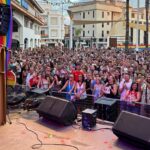
Mar Menor pride festival returns with headliners Nebulossa and parades. Photo Credit: Los Alcazares Town Hall

Los Alcazares is set to celebrate diversity on the shores of the Mar Menor with the return of its annual Pride celebration. Running from Monday, July 6 to Saturday, July 11, this third edition of “El Mar Menor vibra con Orgullo” promises nearly a week of events dedicated to the LGTBIQ+ community, equality, and respect.

Star-studded line-up at Plaza de la Feria

The main stage at Plaza de la Feria will host as many as 30 diverse acts throughout the week. Acclaimed artists Nebulossa and Malena Gracia will top the star-studded bill, alongside popular performers like Satín Greco, Le Cocó, Pitita, Kuve, and Keunam.

The festival’s major highlights begin on Thursday, July 9, with the Gala Míster Orgullo del Mar Menor. This is followed on Friday by the colorful Gala Divas y Reinas. The celebrations reach their peak on Saturday, July 11, starting with a lively parade along the seafront at 19:00, marching from Plaza del Espejo to Plaza de la Feria.

Following the march, Mayor Mario Pérez Cervera and the “Lo tienes claro?” Association will deliver a pride manifesto, setting the stage for an opening speech and a massive closing gala, featuring unforgettable musical performances.

Highlighting health and advocacy on the coast

In addition to the fun aspect of the event, it will also have another main focus: public health. All day on July 10, and in the morning of July 11, organisers will provide quick, confidential, and free HIV tests at the Town Hall, available for anyone who wants to take one.

Local businesses along the Los Alcazares promenade are also actively participating, with many hosting themed events, decorative displays, and special promotions to welcome the influx of international and local visitors.

This vibrant coastal celebration will successfully blend high-energy entertainment with important advocacy, welcoming residents and visitors to honour equality and have fun together. Organisers suggest that anyone interested in attending arrive early to the event, and enjoy one of the most colourful and fun celebrations in the town’s local summer calendar.

Continue Reading

%

The Kind Of Abuse No One Sees Is Now Being Treated As A Crime In The Netherlands

Published

on

the-kind-of-abuse-no-one-sees-is-now-being-treated-as-a-crime-in-the-netherlands

Psychological abuse is being treated as a pattern of behaviour rather than a single event. Photo credit: KieferPix/Shutterstock

For many people, the idea of abuse is still linked to something visible. A raised voice, a confrontation, or injuries that can be explained and seen. But for others, it looks very different. It can be quiet, gradual and almost impossible to describe from the outside. It might be a partner who wants to know where you are all the time. Who questions your friends. Who checks your phone. Who slowly starts to make decisions feel less like your own.

Nothing may ever look dramatic enough for anyone else to notice, but over time, life begins to feel smaller, more controlled, and harder to step away from. In the Netherlands, that kind of behaviour is now being brought into focus in a way it never has before. Psychological abuse and coercive control are moving towards being treated as crimes in their own right, even when no physical violence is involved.

When control replaces love

Psychological abuse rarely arrives as something obvious. It often begins with behaviour that is easy to dismiss at first. A partner becomes overly jealous. They want to know where you are all the time. They start questioning your friends, your family, your decisions. Slowly, the space you once had in your own life begins to shrink.

Over time, this can turn into something more suffocating. Access to money is restricted. Social contact is controlled. Movements are monitored. Small choices become something that needs approval. Many victims describe it not as one dramatic moment, but as a gradual loss of independence they only fully recognise once they are already deep inside it.

Because there are no visible injuries, it is often misunderstood from the outside. Friends may not see it. Even the person experiencing it may struggle to find the right words for what is happening.

Why invisible abuse is being taken more seriously

The shift taking place in the Netherlands is built around a simple idea: abuse should not only be recognised when it turns physical. Psychological abuse and coercive control are now being treated as patterns of behaviour that can trap victims long before violence escalates. That includes intimidation, isolation, constant surveillance, threats, humiliation and emotional manipulation.

One of the key reasons behind this approach is timing. In many domestic abuse cases, controlling behaviour has been identified as an early warning sign that situations can escalate into physical violence later on. Recognising those patterns earlier gives authorities a chance to intervene before harm becomes more serious.

It also reflects a growing understanding that many victims never report what they are going through because they cannot easily “prove” it in the traditional sense. Without visible injuries, the abuse can remain hidden for years.

How this compares with Spain

Spain already has some of Europe’s strongest domestic violence protections, with laws recognising both physical and psychological harm within relationships. However, psychological abuse is generally dealt with as part of other domestic violence offences rather than as a standalone crime focused specifically on coercive control patterns.

The discussion now emerging in Europe raises a broader question about whether more countries should explicitly define controlling behaviour itself as a separate offence, rather than relying on broader categories of domestic abuse once harm has already escalated. For victims, the distinction is important. It can affect how early intervention happens, how cases are investigated, and how patterns of behaviour are understood in court.

A change in how abuse is understood

Across Europe, there is a gradual shift in how people talk about domestic abuse. It is no longer seen only through the lens of physical violence, but increasingly as a spectrum of behaviours that can begin with control, isolation and psychological pressure. The impact on victims can be long-lasting, affecting confidence, independence and mental health even after a relationship has ended.

The Netherlands’ move has added momentum to that conversation, highlighting how different countries are starting to approach the issue in different ways. Whether Spain follows a similar path or not, the debate itself reflects a changing reality: abuse is not always visible, and it does not always arrive in the form people expect.

When harm is real even if it cannot be seen

For many who have experienced psychological abuse, the hardest part is not what happened during the relationship, but what comes after. Explaining something that left no physical trace can be difficult. Being believed can take time. And rebuilding independence often happens slowly, long after the control has ended.

That is why this change matters. It challenges the idea that harm must be visible to be real, and it places focus on patterns of behaviour that can quietly shape someone’s entire life. Even without bruises, broken bones or public scenes, the impact can be profound. And as more countries begin to recognise that reality, the definition of abuse itself is starting to change.

Continue Reading

%

Spain Could Become Its Own ‘Sahara’

Published

on

spain-could-become-its-own-‘sahara’

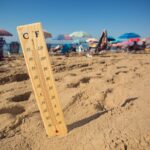
Spain is bracing for another spell of extreme summer heat. Credit : aleks333, Shutterstock

Just when it felt like Spain might finally get a break from the relentless heat, forecasters are warning that another intense spell of scorching weather is already on the horizon. From this thursday, July 2 temperatures are expected to climb once again, with parts of the country likely to top 40C. But what has caught meteorologists’ attention isn’t just the heat itself. It’s where it’s coming from.

Many people assume Spain’s hottest days arrive when scorching air sweeps in from the Sahara. This time, experts say that’s not necessarily the case. Instead, the peninsula is expected to generate much of the heat itself, creating the kind of conditions that can leave cities sweltering for days and nights offering very little relief.

For anyone living in Spain or planning a holiday over the coming week, the result may feel exactly the same. Long afternoons that are too hot for sightseeing, evenings that barely cool down and another stretch of weather where air conditioning becomes less of a luxury and more of a necessity.

Why Spain doesn’t need the Sahara to produce extreme heat

The idea that Spain can become its own source of extreme heat might sound surprising, but meteorologists say it’s something they have been seeing more often in recent summers.

The forecast points to a powerful area of high pressure settling over the Iberian Peninsula from the end of the week. That high pressure acts like a lid on the atmosphere. Sunshine pours in hour after hour, winds remain light and there is very little to disturb the warm air building close to the ground.

As the air slowly sinks, it becomes even warmer and drier. Add in some of the longest days of the year and the result is what forecasters describe as a heat dome, a weather pattern that traps hot air over the same area instead of allowing cooler Atlantic air to move in.

It’s a reminder that Spain doesn’t always need a blast of Saharan air to experience dangerous temperatures. Under the right conditions, the peninsula can effectively become its own hotspot.

That doesn’t mean the Sahara plays no role in Spanish heatwaves. Sometimes hot air from North Africa does combine with these weather patterns, making conditions even more extreme. But according to current forecasts, the atmosphere over Spain is capable of producing plenty of heat on its own.

What people across Spain are likely to notice first

The first thing many people will notice probably won’t be the afternoon temperatures. It will be the nights.

When a heat dome settles over Spain, the heat built up during the day has nowhere to go. Buildings, roads and pavements continue releasing warmth long after sunset, making it difficult for temperatures to fall.

That means many towns and cities could once again experience tropical nights, when temperatures stay above 20C until morning. In some inland areas, forecasters are even warning of torrid nights, where the mercury may struggle to drop below 25C.

For residents, that often becomes the hardest part of a heatwave. Sleeping with the windows open offers little relief if the air outside still feels warm. Fans end up running all night and homes without air conditioning can quickly become uncomfortable.

During the day, inland regions and western Spain are expected to bear the brunt of the heat, with temperatures above 40C becoming increasingly likely if the latest forecasts hold. Coastal areas should remain slightly cooler thanks to sea breezes, although many popular holiday destinations will still experience unusually hot conditions.

There is a chance that isolated thunderstorms could develop as small disturbances move across the upper atmosphere. While they may briefly cool a few local areas, they are not expected to bring widespread relief from the heat.

Why these heat domes are becoming a familiar part of Spanish summers

If it feels as though Spain is seeing more of these prolonged heat episodes, that’s because meteorologists say the weather patterns behind them are becoming increasingly common.

During the recent spell of extreme temperatures, the air mass became exceptionally hot over the Iberian Peninsula before spreading north across France and into central Europe, helping to break temperature records far beyond Spain’s borders.

A similar setup now appears to be developing once again. Forecast models suggest another strong ridge of high pressure will become established over Spain, creating the stable conditions needed for heat to build rapidly over several days.

For many people, the distinction between a Saharan heatwave and one generated largely over Spain probably won’t matter. What matters is how it feels on the ground.

It means planning outdoor activities earlier in the morning, thinking twice before heading out in the middle of the afternoon and accepting that evenings may offer little escape from the heat.

Holidaymakers may find beaches busier than usual as people search for any breeze they can find, while inland cities could become particularly uncomfortable during the hottest hours of the day. Anyone hiking, cycling or visiting historic towns should be prepared for temperatures that can quickly become exhausting.

The latest forecasts may still evolve over the next few days, but one thing already looks increasingly likely. Spain is heading into another period of exceptionally hot weather just days after the last one ended.

And while many people instinctively look south whenever the mercury rises, this time the real story is much closer to home. Under the right atmospheric conditions, Spain doesn’t always need the Sahara to produce a heatwave. Sometimes, the country’s own weather is enough to turn much of the peninsula into one of Europe’s hottest places.

With the height of the summer holiday season still ahead, that is unlikely to be welcome news for residents hoping for cooler evenings or visitors expecting more comfortable conditions. For now, the forecast suggests the heat is not ready to loosen its grip just yet.

Continue Reading

Trending

Copyright © 2017 Spanish Property & News