Connect with us

%

Costa Del Sol Newspaper 30 Jul – 5 Aug 2026

Published

on

costa-del-sol-newspaper-30-jul-–-5-aug-2026

By Eugenia • Published: 30 Jul 2026 • 10:00 • 1 minute read

Euro Weekly News delivers the latest news and events for Fuengirola, Marbella, Mijas, Sotogrande and Benalmadena all in one place in English.

Google News

Follow Euro Weekly News on Google News

Get breaking news from Spain, travel updates, and expat stories directly on your Google News feed.

Follow on Google News

Sign up for personalised news

Subscribe to our Euro Weekly News alerts to get the latest stories into your inbox!

By signing up, you will create a Euro Weekly News account if you don’t already have one. Review our Privacy Policy for more information about our privacy practices.

%

Málaga Is Seeing Fewer Jellyfish This Summer

Published

on

malaga-is-seeing-fewer-jellyfish-this-summer

Málaga is seeing fewer jellyfish this summer (but things could change) Credit: Shutterstock/SAGStock

If you’re heading to Málaga’s beaches this summer and love a good dip in the ocean, there’s some reassuring news that means you won’t feel the dreaded sting when you swim. Despite another hot Mediterranean season, jellyfish numbers along much of the Costa del Sol have so far remained surprisingly low.

The reason lies offshore rather than on the sand.

Marine experts say unusual sea currents in the Alborán Sea are currently acting as a natural barrier, making it much harder for jellyfish drifting in open water to reach Málaga’s coastline. While other parts of the Mediterranean have experienced periodic jellyfish sightings, conditions off Málaga have largely kept them away from the beaches where thousands of locals and tourists are swimming each day.

That means, for now at least, beachgoers have a better chance of enjoying a sting-free dip.

The invisible barrier protecting the coast

Scientists point to a large circular current known as the western Alborán gyre.

Created as Atlantic water flows through the Strait of Gibraltar into the Mediterranean, this rotating current effectively traps floating material offshore rather than allowing it to drift towards the beaches.

As long as the current remains stable and weather conditions stay relatively calm, it acts like a natural shield, preventing many jellyfish from reaching the Costa del Sol. According to experts, this is why current forecasts show only a low probability of significant jellyfish arrivals along Málaga’s coastline over the coming days.

It is a reminder that jellyfish are largely passengers rather than powerful swimmers. Their movements depend far more on winds and currents than on where they choose to go.

Why that could change quickly

Unfortunately, that doesn’t mean Málaga is guaranteed a jellyfish-free summer.

A change in weather can rapidly alter conditions at sea. If winds shift direction or marine currents weaken, jellyfish that have been held offshore can suddenly be pushed towards the coast.

Historically, prolonged easterly or Levante winds have been one of the biggest triggers for jellyfish appearing on Costa del Sol beaches, even after weeks of relatively clear water.

For that reason, marine experts stress that beach conditions should be checked daily rather than assuming the coast will remain jellyfish-free for the rest of the holiday season.

Not every jellyfish is dangerous

Several jellyfish species found in the waters around Málaga are relatively harmless and cause only mild irritation if touched.

Others, however, can deliver much more painful stings.

Among the species occasionally seen off the Costa del Sol is Pelagia noctiluca, often recognised by its pinkish-purple colouring. Beachgoers may also encounter larger species, while the Portuguese man o’ war, although not technically a jellyfish, deserves particular caution because its long tentacles can inflict severe stings.

Even jellyfish washed up on the beach should never be touched, as their tentacles can continue to sting long after the animal has died.

How to stay safe at the beach

The easiest way to avoid problems is to pay attention to beach safety information before entering the sea.

Lifeguarded beaches display coloured flags indicating bathing conditions, and many will also post notices if jellyfish have been spotted nearby.

If you see a jellyfish in the water, avoid sudden movements and calmly swim away rather than splashing towards it. Children should also be warned not to pick up stranded jellyfish or fragments washed onto the sand.

If you are stung:

  • Rinse the affected area with seawater, not fresh water.
  • Do not rub or scratch the skin, as this can release more venom.
  • Carefully remove any visible tentacles using tweezers or while wearing gloves if available.
  • Apply a cold pack wrapped in cloth to ease pain.
  • Seek help from lifeguards or medical professionals if pain is severe, symptoms spread, or breathing difficulties develop.

For now, Málaga’s beaches are benefiting from a fortunate combination of marine currents that are keeping many jellyfish at bay. But with winds and sea conditions capable of changing within days, visitors should continue checking local beach warnings before taking to the water. A little awareness could help keep an otherwise perfect summer beach day that way.

Continue Reading

%

Two Chilean Recluse Spiders With A Fearsome Reputation Have Reached Portugal

Published

on

two-chilean-recluse-spiders-with-a-fearsome-reputation-have-reached-portugal

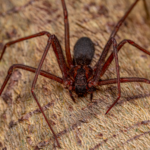
Recluse spiders are often blamed for injuries they did not cause. Photo credit: Vinicius R. Souza/Shutterstock

If you have recently seen headlines about one of the world’s most infamous spiders being discovered in Portugal and immediately started checking your shoes before putting them on, you are probably not alone. The discovery of a spider with a reputation for causing serious skin reactions sounds alarming, but before Portugal is imagined as a new home for a dangerous eight-legged invader, there is something important missing from many of the headlines, the reality is far less dramatic.

Scientists have confirmed the discovery of two male specimens of Loxosceles laeta, better known as the Chilean recluse spider. The finding marks the first official record of the species in Portugal and the first documented record on the Iberian Peninsula. It is an important scientific discovery, but it does not mean Portugal or Spain is suddenly full of Chilean recluse spiders hiding in homes.

Two spiders do not equal an invasion

Two male Chilean recluse spiders were discovered in Porto months apart. While that is enough for scientists to officially record the species in Portugal, it does not mean the spider has successfully colonised the Iberian Peninsula. For an introduced species to become established in a new country, it needs much more than simply arriving. It must survive, reproduce, adapt to the environment and create a self-sustaining population over generations.

Finding two unexpected visitors is very different from discovering a thriving population. However, scientists acknowledge that further isolated discoveries in Iberia would not be surprising. Global trade constantly moves species around the world, and accidental introductions can happen through cargo, packaging and imported goods.

A spider that travelled the world

One of the most interesting examples of an introduced Chilean recluse population comes from Finland. A colony became established inside the Natural History Museum of Helsinki after the spiders were believed to have arrived through fruit shipments during the 1960s and 1970s.

Despite decades of visitors passing through the building, including school groups and children, only one confirmed bite has ever been recorded from that colony. The example shows that even where these spiders are present, human encounters remain extremely uncommon.

Spain’s arachnologists urge calm

To find out what this discovery really means, I spoke to friend and colleague Cristian Pertegal, PhD, one of Spain’s leading arachnologists, who has spent more than a decade carrying out active research into spiders and other arachnids. While Pertegal believes the discovery is scientifically significant, he is concerned that some media coverage risks turning it into something it simply is not.

“My biggest concern is that some local media will blow it out of proportion,” he told Euro Weekly News. “Finding two specimens is scientifically interesting, but it shouldn’t be interpreted as evidence that the species has established itself across the Iberian Peninsula.” Pertegal believes the biggest danger at the moment is not the spider itself, but the fear surrounding it.

“People hear the words ‘Chilean recluse’ and immediately imagine a deadly spider hiding in every corner. The reality is very different. Bites are exceptionally rare and cases that actually develop into loxoscelism are rarer still.” For Pertegal, the discovery should encourage scientific curiosity rather than panic. “This is exactly the sort of discovery that should encourage good science, not unnecessary fear.”

A familiar spider with a different name

Adding even more confusion is the fact that Spain and Portugal already have a recluse spider of their own. The Mediterranean recluse spider (Loxosceles rufescens) is native to southern Europe and can already be found across the Iberian Peninsula.

The Chilean recluse (Loxosceles laeta) belongs to the same group as other medically important recluse spiders, including the brown recluse (Loxosceles reclusa) found in parts of the United States. Like other recluse species, it is a small, brownish spider that is difficult for the untrained eye to identify. One of its most recognised features is the dark violin-shaped marking on the upper part of its body, which has led to many species in this group being known as “violin spiders”.

However, this marking alone is not enough to identify a recluse spider. Colour, patterns and body shape can vary, and many unrelated spiders can be mistaken for them. The Chilean recluse, Mediterranean recluse and brown recluse are closely related, and distinguishing them often requires specialist examination of anatomical features under a microscope. For this reason, experts warn against identifying spiders based solely on photographs or fear-driven assumptions after seeing alarming headlines.

Why does the Chilean recluse have such a reputation?

There is a reason Loxosceles laeta attracts attention, native to South America, particularly Chile, Peru and Argentina, it is considered one of the world’s most medically significant spiders because its venom can, in some cases, cause a condition known as loxoscelism. Some bites can result in skin damage and tissue necrosis, but the image of an aggressive spider actively seeking humans is far from reality.

The Chilean recluse is exactly what its name suggests: a recluse. It prefers dark, quiet places and generally avoids people. Most genuine bites happen when the spider becomes trapped against the skin, such as inside clothing, bedding or shoes.

The problem with “spider bites”

One of the biggest challenges surrounding recluse spiders is that they are often blamed for injuries they did not cause. Many people report being bitten by spiders despite never seeing the animal responsible. Without the spider being captured and correctly identified, proving the cause of a skin injury can be extremely difficult.

In many cases, suspected spider bites later turn out to have another explanation, including bacterial infections such as MRSA (methicillin-resistant Staphylococcus aureus), which can produce skin damage similar to loxoscelism. This does not mean genuine recluse bites do not happen. They do. However, confirmed cases are far rarer than public perception suggests.

A major clinical study in Santiago, Chile, examined 250 cases of loxoscelism recorded between 1955 and 2000. Most involved skin reactions, while a smaller number developed the more severe viscerocutaneous form. The figures demonstrate that genuine cases exist, but they also highlight why experts focus on confirmed cases rather than every suspected spider encounter.

Interesting discovery, not a reason for fear

The discovery of Loxosceles laeta in Porto is undoubtedly significant. It gives scientists valuable information about how species move around the world and how global trade can accidentally transport wildlife. Could more isolated specimens appear in the future? It is possible.

But finding individual spiders is very different from proving a species has adapted, reproduced and established itself in a new environment. For now, the message from experts is simple: Portugal has discovered two Chilean recluse spiders. It has not discovered a spider invasion, the real story is not about a dangerous spider suddenly taking over Iberia. It is about how quickly fear can spread, often much faster than the facts.

Continue Reading

%

Horror In France As Five Newborn Babies Discovered Inside Boxes

Published

on

horror-in-france-as-five-newborn-babies-discovered-inside-boxes

Investigation will need to establish whether the infants were born alive. Photo credit: Vad-Len/Shuttetstock

A quiet home in southern France has become the centre of a devastating investigation after police discovered the remains of five newborn babies hidden inside cardboard boxes. The discovery in Orange, in the Vaucluse region of southeastern France, has shocked the local community and left investigators searching for answers about what happened inside the property.

Authorities launched a criminal investigation after the discovery, with forensic experts now working to establish the circumstances surrounding the deaths of the infants. While the case has raised many questions, investigators have warned that the full picture will only become clear once medical examinations and further enquiries are completed. For neighbours, the most difficult part of the story is the contrast between an ordinary family home and the tragedy that was allegedly unfolding behind closed doors.

A discovery that began with a newborn baby

The investigation reportedly began after a 32-year-old woman gave birth to a healthy baby at home before being taken to hospital. Reports indicate that the woman had previously denied being pregnant, with the circumstances surrounding the birth now forming a key part of the investigation. While she was receiving medical care, her husband reportedly discovered what appeared to be human remains inside cardboard boxes at the property and contacted authorities.

Police later found the remains of five newborn babies inside the home, triggering a major investigation. Authorities are now working to determine when the deaths occurred, the causes of death and the exact circumstances surrounding each case. At this stage, investigators have not released details about how the babies died, and forensic examinations will be crucial in providing answers.

A community left searching for answers

The discovery has left residents in Orange struggling to understand how such a tragedy could have remained hidden. Neighbours reportedly described the couple as a normal family, with no obvious signs that anything unusual was happening inside the property. That sense of disbelief has deepened the shock, as residents attempt to process the discovery of five newborn babies in a place that appeared to be an ordinary home.

Cases involving hidden pregnancies are among the most complex and sensitive situations authorities investigate. They can involve many different factors, including whether a pregnancy was recognised, a person’s mental state, access to support and the circumstances surrounding childbirth. However, investigators have not yet confirmed the reasons behind what happened in this case.

Unanswered questions remain

One of the biggest questions facing investigators is how multiple pregnancies and births could have remained unknown. Reports suggest the woman had denied being aware of her pregnancies, while her husband has reportedly said he was unaware of them as well. Authorities are now gathering evidence, speaking to those connected to the family and awaiting forensic results that could help reconstruct the timeline.

The investigation will also need to establish whether the infants were born alive, the exact dates of the births and the circumstances leading to their deaths. Until those answers are confirmed, officials are expected to proceed carefully as they work through one of the most disturbing cases to emerge in France.

A tragedy behind closed doors

The case has also renewed attention on the phenomenon of hidden pregnancies, known in France as “déni de grossesse”, where a woman may not consciously recognise that she is pregnant.

Medical experts have previously highlighted that such situations can be extremely complex, with some women reaching advanced stages of pregnancy without fully understanding what is happening. However, each case is different, and authorities investigating the events in Orange will need to establish the specific circumstances before drawing conclusions.

A town waiting for the truth

For now, the residents of Orange are left with more questions than answers. The discovery of five newborn babies inside a family home has created a wave of sadness and disbelief, while investigators continue their work away from public attention. Behind the shocking headlines is a tragedy involving five babies, a family and a community trying to understand how such an event could have happened.

As forensic teams examine the evidence and investigators continue searching for answers, the focus remains on uncovering the truth about what happened inside the home in Orange. For a town that began the week like any other, a discovery inside a few cardboard boxes has changed everything, leaving France waiting for answers.

Continue Reading

Trending

Copyright © 2017 Spanish Property & News