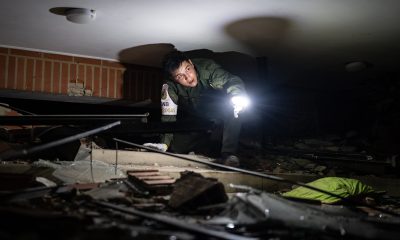
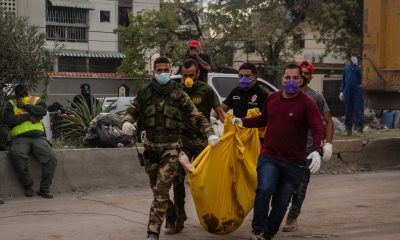
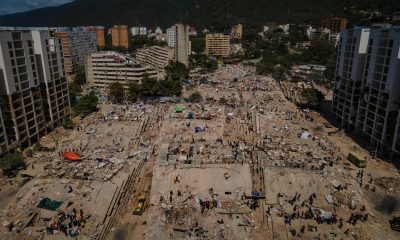
Three days had passed since the earthquakes, and no Venezuelan had the time or the mental space to think about immigration enforcement. It seemed that every possible misfortune had already befallen them: back home, the earthquakes had left thousands dead, injured, or missing; and in the United States, they had spent the previous year and a half living in fear of Immigration and Customs Enforcement (ICE), talking constantly about arrests, court hearings, and deportations.
At noon on Saturday, June 27, a group of Venezuelan food-delivery workers in Washington, D.C., gathered for lunch at their usual restaurant. ICE, which showed no regard for the grief and mourning, arrived and detained the Venezuelans who were there.
“We are terrified,” said a woman who witnessed the arrest and asked to remain anonymous. “This job is our livelihood. We are sending a lot of aid to Venezuela with our paychecks.”
Not even a natural disaster of still-incalculable proportions has prompted Donald Trump’s administration to pause its effort to carry out what it calls the largest deportation campaign in history.
In the days leading up to his immigration appointment, Nelson Contreras, 35, who arrived from Venezuela in 2022, began watching videos coming out of Caracas and La Guaira, the areas hardest hit by the catastrophe. He showed them to his wife, Ariel Whaley, whom he had married only a week earlier.
“He was working when he heard the news; he shook his head and looked very sad and affected by it,” his wife says.
Concern about his immigration check-in gradually was replaced by anguish over what was happening in his country.
Last Thursday, he attended his appointment and spent two hours with immigration officials, who instructed him to return on Saturday. That evening, Contreras left for work at a food distribution warehouse in Philadelphia, with a feeling that it might be the last time he would see Whaley.
He called her on the phone. “In the middle of the call, he suddenly said: ‘Record me.’ He wanted me to take a screenshot of the two of us. Maybe he felt that would be one of the last times he’d see my face before they sent him back to Venezuela,” she says.
Contreras’s fears proved well-founded. ICE detained him, and he is now being held in Pennsylvania while awaiting a judge’s decision.
But Whaley’s anxiety over the possibility of her husband’s deportation predates the latest crisis.
“Since Maduro’s arrest on January 3, I have lived in terror,” the woman says, referring to the Venezuelan president’s capture by the U.S. military. “The humanitarian crisis was already dire and the earthquake has worsened it enormously. It has also exposed how poorly prepared the Venezuelan government is to meet the population’s needs. I would be terrified if he, or any other Venezuelan, were sent back amid such confusion, pain, destruction and need.”
One week after the strongest earthquakes Venezuelahas experienced in more than a century, authorities report more than 2,000 deaths and over 4,000 missing in a country where nature has delivered what feels like the final blow after years of economic crisis, corruption, repression and the devastation wrought by Chavista rule.
Those were the forces that drove 1.2 million Venezuelans to leave their country and settle in the United States, especially over the past decade. Now the earthquakes have once again laid bare not only the reasons Venezuelans left in search of a better future, but also why so many cannot return. Power outages have hampered rescue operations among the rubble; the healthcare system is overwhelmed; the country with the world’s largest proven oil reserves does not have enough fuel to power machinery in disaster zones; and some people have reported being threatened for publicly exposing the regime’s incompetence.
Meanwhile, the Donald Trump administration, which since January has wielded decisive influence in Venezuela and has insisted that it is a country to which migrants can safely return, not only deported nearly 14,000 Venezuelans last year but is also holding about 6,000 more in detention centers.
On Wednesday, June 24 — the day the earthquakes struck — the U.S. government operated a deportation flight from Texas carrying 147 people. Most of them later died when the hotel where Venezuelan authorities were processing their arrival in Caracas collapsed. That same night, another group of Venezuelans at the detention center in Dilley, Texas, was on the verge of being deported as well, but was returned to the facility because of the scale of the disaster.

It has only been a few days since the disaster — too soon to look beyond the mourning, the decomposing bodies and the nation’s grief. Yet Venezuelan migrants in the United States cannot help asking themselves: if ICE detains them, what country would they be returning to? And if they are sent back, how will they help their loved ones?
No distance is enough to make Yonatan Matheus feel safe or at ease. New York, where he arrived as an asylum seeker, is far from La Guaira, his hometown, but that has done nothing to lessen the pain of the tragedy. He has seen images of the rubble that was once his cousin’s home and of other relatives’ destroyed houses. It was not until midnight on Wednesday that he finally learned his family was safe.
“Several relatives and people close to me lost their homes, other families lost everything and many members of my community died. It’s a very hard feeling to explain: you want to be there to hug, help and support them, but you simply can’t,” he says.
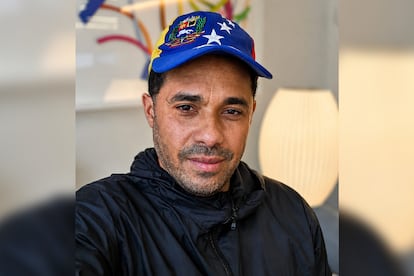
Alongside his concern for loved ones is another burden he has carried for years: waiting for permanent residency so that he can feel secure in the United States.
“Those of us who fled persecution should not have to live with the constant fear of losing the protection that international law recognizes for people who cannot return to their country,” he insists. “In times of an emergency of this magnitude, all humanitarian measures available to protect Venezuelans should be considered. The important thing is that no one be forced to return to a country facing an emergency while many families are trying to recover.”
The fight for TPS
On June 29, five days after the earthquakes, the U.S. government — which, in addition to personnel and equipment for rescue operations, mobilized $150 million in assistance to Venezuela and contributed $100 million to the United Nations fund for the country’s recovery — publicly warned: “The T in TPS stands for TEMPORARY.”
The statement signaled that Temporary Protected Status (TPS), which in recent years has protected nationals of Afghanistan, Nicaragua, Honduras, Haiti, Syria, Somalia and Venezuela, was all but finished.
The announcement followed a Supreme Court decision allowing the termination of the program for roughly 350,000 Haitians and nearly 6,000 Syrians. “You don’t have to go home but you can’t stay here,” the Department of Homeland Security posted on X.
Under U.S. law, TPS may be granted when humanitarian conditions make it unsafe for migrants to return to their country. Following Haiti’s devastating 2010 earthquake, which claimed more than 300,000 lives, Haitians in the United States received that protection. Syrians who fled the repression of Bashar al-Assad were later granted the same status under the Obama administration.
Five years ago, the Biden administration extended TPS to Venezuelans because of the country’s “extraordinary and temporary conditions.” Before leaving office in 2025, Biden renewed that protection for an additional 18 months. Since then, TPS has become one of the central points of contention between Venezuelan migrants and Trump.
Since November, when then–Homeland Security secretary Kristi Noem announced the end of TPS protections for Venezuelans, nearly 600,000 Venezuelans have been left without work authorization and exposed to possible detention or deportation. Now, as they focus on collecting, organizing and sending humanitarian aid to their country, Venezuelan communities across the United States are calling for those protections to be extended.

Venezuelan attorney John De la Vega, who is part of a campaign urging the Trump administration to extend TPS, believes the current circumstances clearly justify such a move.
“One of the reasons the Immigration Service can grant TPS is based on natural disasters, and it cites earthquakes as an example, and what we are seeing in Venezuela is affecting tens of thousands of Venezuelans. There isn’t even an airport for people to return to their country safely,” the lawyer says. “We are talking about the community not asking for anything extraordinary, but simply that they use and implement the law.”
This week, a coalition of politicians, activists, organizations and lawyers urged the Trump administration and the Department of Homeland Security to redesignate Venezuela for TPS, arguing that the earthquakes had compounded an already severe humanitarian crisis and made the country even less able to receive deportees.
José Antonio Colina, one of the signatories and president of the group Venezuelans Persecuted for Political Reasons in Exile, believes that amid “an aggressive immigration policy under which our protections have steadily been stripped away,” the community’s common request is simple: some form of legal protection. “That they are not returned to a country that is not capable of receiving them,” he says.
Beyond halting deportations, Colina hopes the government will stop ICE’s pursuit of Venezuelans and release those being held in detention centers. “If they can’t be sent to Venezuela, what will they do? Will they leave those people in immigration jails here in the United States? Until when? They sent humanitarian aid, they are sending money, they are sending rescuers. Why not give protection to the Venezuelans who are here?”
Sign up for our weekly newsletter to get more English-language news coverage from EL PAÍS USA Edition
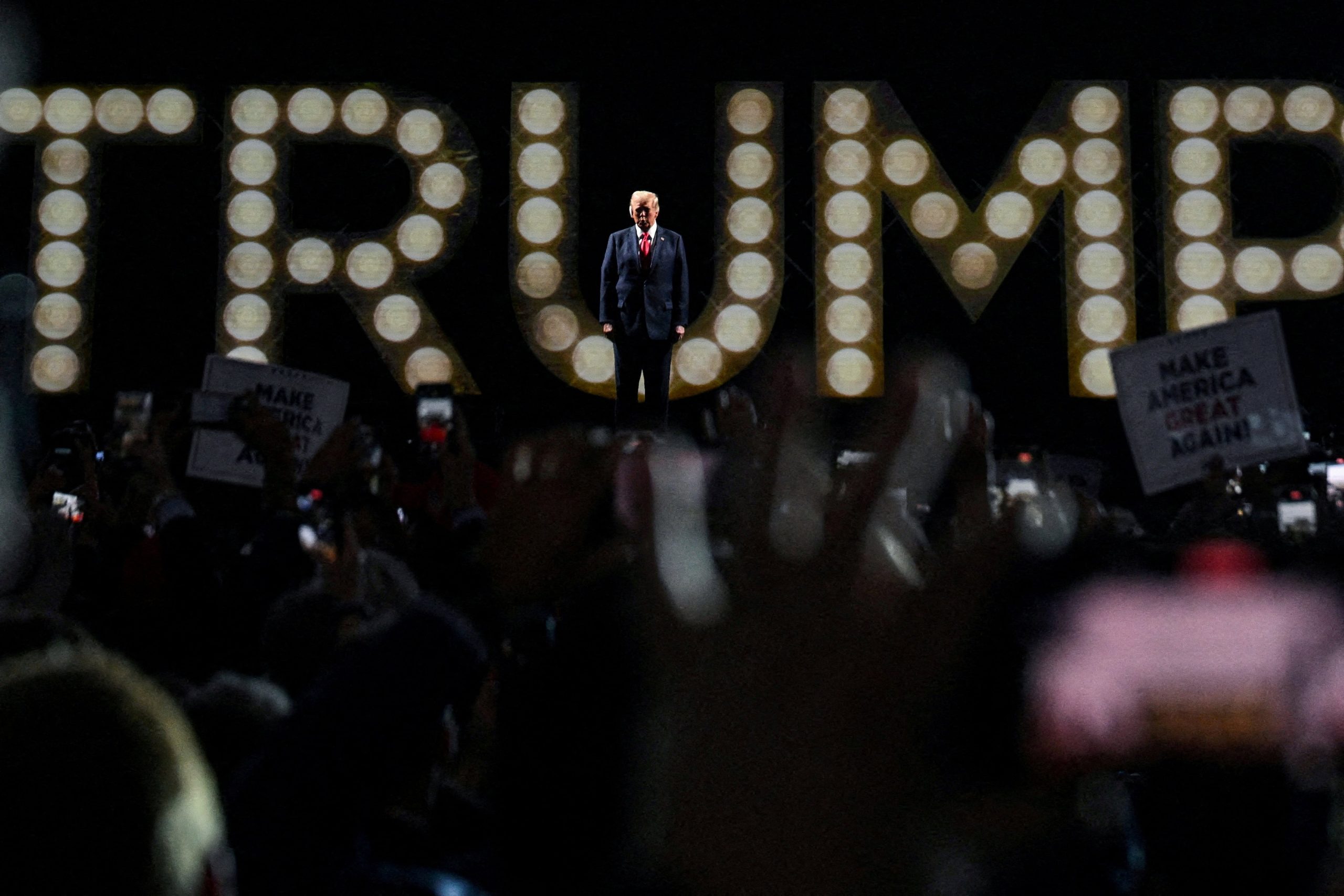
Although it may not seem so, Donald Trump is a successful author. He has written a dozen books, some of which — such as The Art of the Deal — reached the top of the bestseller lists. The U.S. president has never been one to overlook a business opportunity. Over the years, he has been a builder, a real-estate developer, a casino owner, a television personality whose audience enjoyed watching him fire employees, and even an aspiring owner of a professional football team.
Since moving into the Oval Office, however, he has increasingly turned his attention to more modern and intangible assets: cryptocurrencies and digital tokens, which have helped expand his vast fortune, estimated at around $7.6 billion according to the Bloomberg Billionaires Index.
The core of his business empire rests on two relatively stable pillars: real estate and his brand. He owns dozens of luxury hotel developments across the Middle East, where he has expanded his business interests since returning to the White House in January 2025. He has also secured a growing number of deals to develop golf courses, luxury residential projects and skyscrapers in Saudi Arabia, the United Arab Emirates and Qatar.
Many of these projects are owned by other investors, but Trump licenses his name as a symbol of luxury in exchange for substantial fees. The entire operation falls under the umbrella of The Trump Organization, the cornerstone of his business empire, which is currently managed by his sons, Eric and Donald Jr., through a trust.
“By keeping his assets in a family-managed trust, which he can revoke at any time, Trump and his family are in the unique position to profit directly from his public service,” explains the advocacy group Open Secrets.
Under The Trump Organization, the president’s family controls dozens of real-estate assets. According to the company’s website, its portfolio includes more than a dozen hotels in locations such as New York, Doonbeg in Ireland, Turnberry in Scotland, Oman, Vietnam and the Maldives. Alongside many of these resorts, it also operates golf courses. Altogether, the conglomerate says it manages more than 20 public and private golf properties around the world. Some are not company-owned, but are operated by the organization.
The group also owns roughly 40 luxury towers and high-end properties worldwide. In the New York–New Jersey area alone, it has 16 towers. Others can be found in Romania, the Philippines, Turkey and Uruguay. Not all of these buildings are owned by Trump; in some cases, he licenses his name as a luxury brand. The company also leases commercial space within these properties, generating another lucrative source of revenue.
The Trump brand itself is highly profitable. The company licenses the Trump name for buildings and other real-estate developments in exchange for fees, a practice that has drawn criticism and scrutiny over potential conflicts of interest.
The holding company also sells merchandise associated with the president. A Trump-branded polo shirt costs $80, while a baseball cap sells for $36. According to the financial disclosure released on Tuesday, the group earned more than $635 million from commemorative coins issued during Trump’s presidency. It also reported nearly $5 million in revenue from Trump-branded watches and $208,000 from sales of a Bible bearing the president’s name.
The group also has a dozen new real-estate projects underway, expanding its portfolio in countries including India, Oman, Saudi Arabia, the United Arab Emirates, Qatar, Indonesia, Georgia and Romania.
Although during his first term Trump made clear that his business interests would remain separate from politics and promised not to enter into new commercial deals abroad, he changed course after returning to the White House. He has even expressed frustration that his efforts during his first stint in office went largely unrecognized.
“I found out that nobody cared,” he said in an interview with The New York Times.
“No modern president has jumped so directly from the world of business to the presidency as Donald Trump,” notes Open Secrets. “And in so doing, Trump has refused to do as his predecessors have done: sever ties to the companies or financial interests that may pose, or present the appearance of, a conflict of interest.”
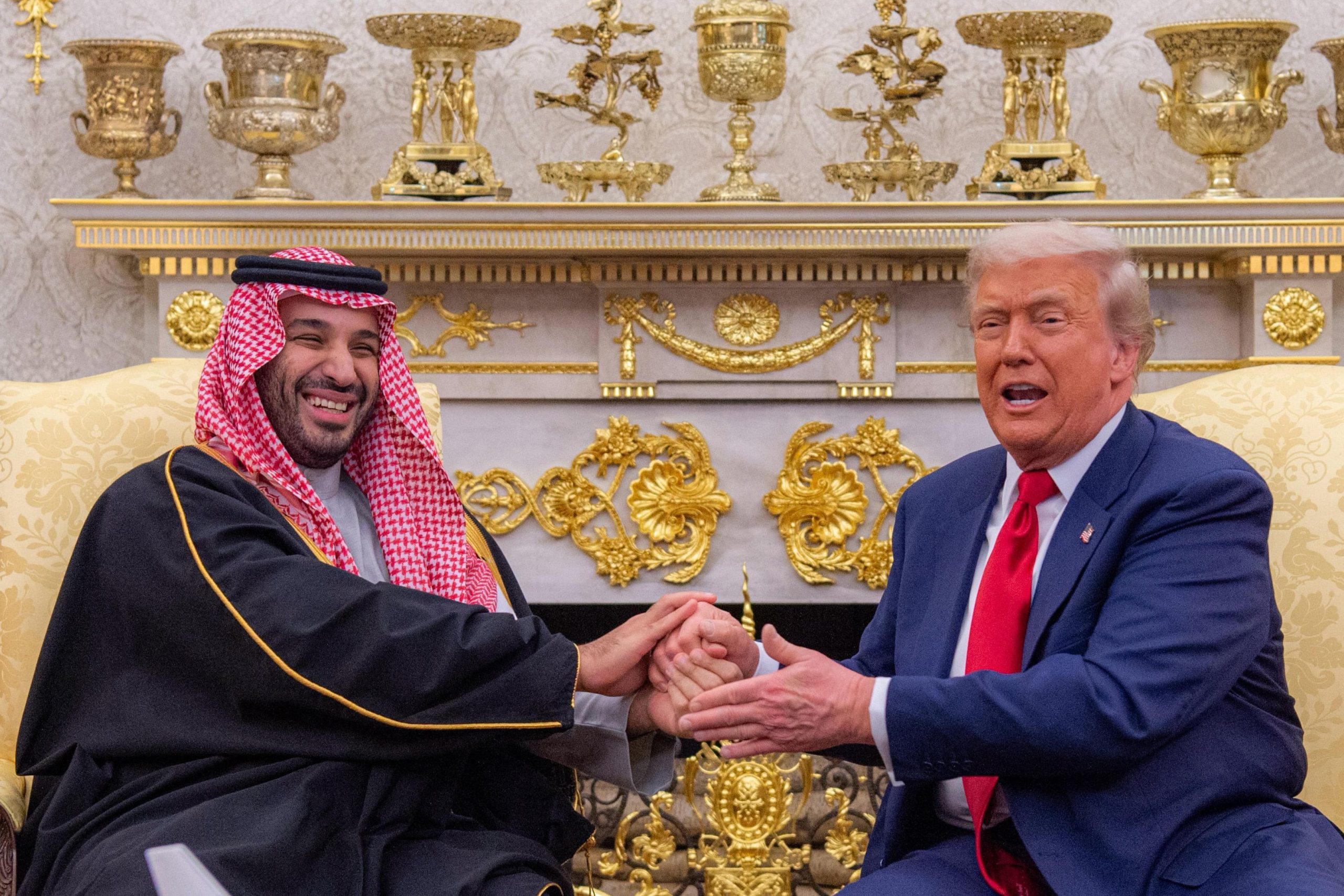
This vast real-estate empire has been further bolstered by Trump’s ties to the Gulf monarchies. He began his second term with a tour of the Middle East, visiting the royal families of Saudi Arabia, Qatar and the United Arab Emirates. The New York businessman has long been familiar with the region. He started doing business in the UAE at the beginning of the century and gradually built relationships with some of the Gulf’s most prominent developers and business figures.
Trump’s sons have expanded the family empire into the cryptocurrency sector. Just before their father returned to the White House, they launched a crypto venture called World Liberty Financial. Following Trump’s tour of the Middle East, the company secured a series of major investments. A firm linked to the upper echelons of Abu Dhabi’s leadership used the Trump-backed cryptocurrency to make a $2 billion investment in the crypto exchange Binance, providing a significant boost to the venture.
The children have inherited their father’s appetite for business. They are now expanding the family empire into Europe. Ivanka Trump, the president’s favorite daughter, and her husband, Jared Kushner — who serves as an intermediary and negotiator in several peace talks — have set their sights on an exclusive stretch of Albania’s coastline. There, they plan to develop a luxury residential and hotel complex, but the project has met with local opposition.
Nor do Trump’s sons miss an opportunity. According to The New York Times, they invested in a mining company shortly before the U.S. administration led by their father signed an agreement with the authorities of Kazakhstan granting access to one of the world’s largest tungsten deposits. The newspaper reported on the deal last week.
Sign up for our weekly newsletter to get more English-language news coverage from EL PAÍS USA Edition
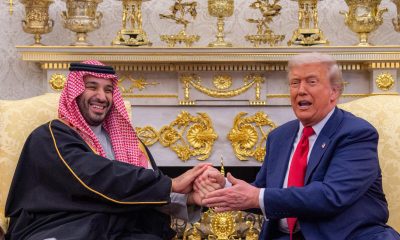
A brief statement of barely 150 words was enough for the United States to announce that it will not renew the USMCA — the landmark trade agreement with Mexico and Canada — “in its current form.”
“However, the Agreement remains in force pending resolution of these issues or until the Agreement’s termination,” the Office of the United States Trade Representative (USTR) clarified.
Washington says it would prefer to conduct annual reviews of the pact, a strategy that threatens to unsettle markets by introducing uncertainty for businesses operating on both sides of the border. The White House’s proposed solution for companies seeking to eliminate that uncertainty is to invest in the United States — an approach seen as an exercise in economic nationalism.
“The United States will continue to engage with Mexico and Canada to address the Agreement’s shortcomings and our trade deficits with these countries,” the department headed by Jamieson Greer said in the statement. “As previously announced, the United States will meet with Mexico during the week of July 20 for a third round of bilateral negotiations related to the joint review of the USMCA.”
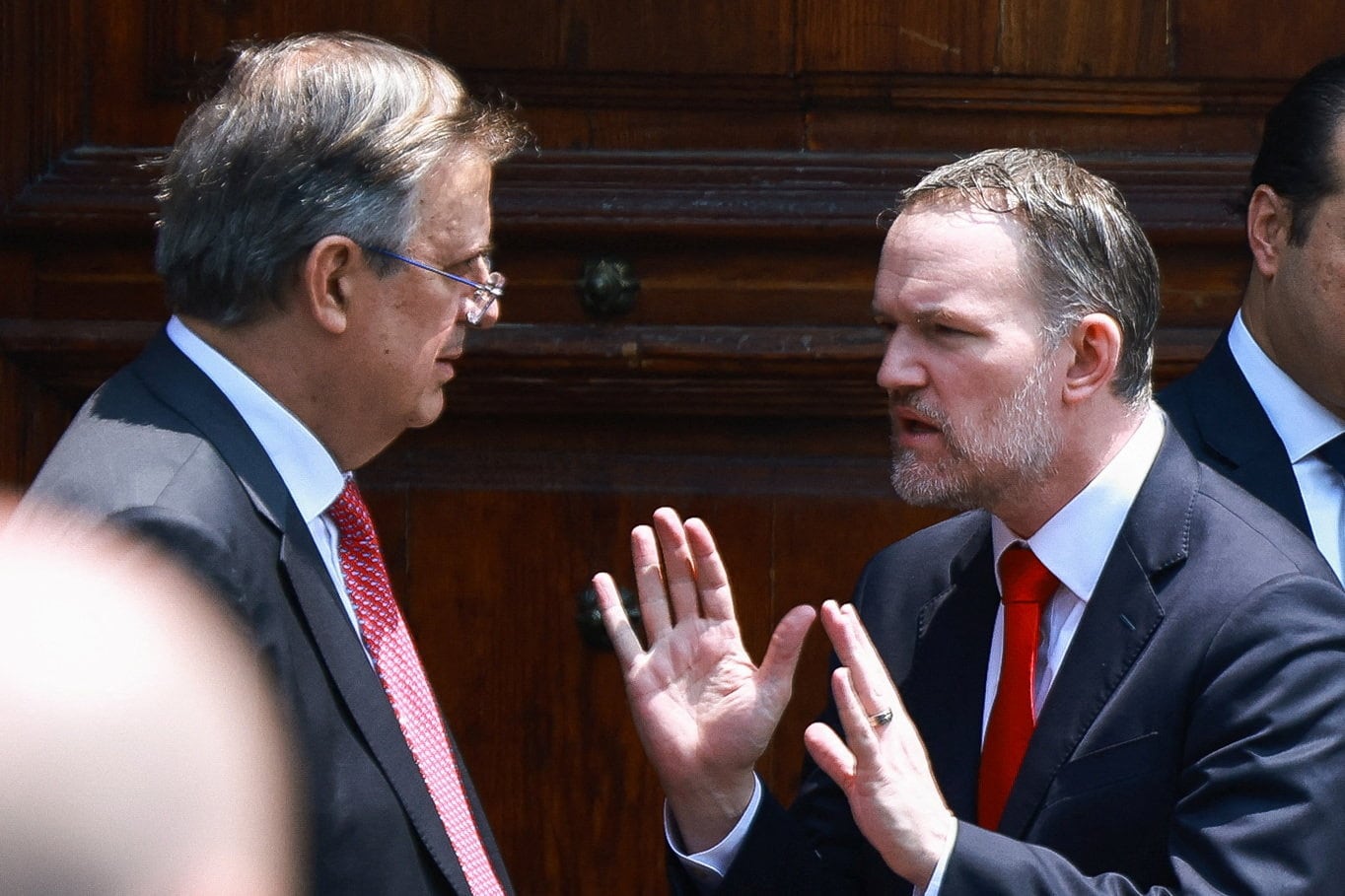
The news broke on Wednesday, July 1, as the deadline for the USMCA review expired. The three countries’ trade representatives — Jamieson Greer for the United States, Mexico’s Economy Minister Marcelo Ebrard, and Canada’s Dominic LeBlanc — held a virtual meeting to discuss the implementation of the agreement, the extension of the review period and the next steps for the pact.
Following the announcement by Greer, who has gained influence within Trump’s inner circle, optimism in Mexico began to fade. Speaking shortly after the videoconference, Ebrard said Mexico still had room to preserve the North American trade relationship.
“The United States is not in a position to extend the agreement for another 16 years. We are going to move forward under the annual-review track for the next 10 years, which is the remaining term of the agreement.”
“We are not in a hurry, but neither do we want uncertainty, and that is why we need to reach agreement on a number of issues,” the Mexican official said in a short video posted on social media.
Ebrard argued that the annual reviews would allow the three partners to address outstanding disputes and concerns on an ongoing basis. “The United States believes it has lost jobs, particularly in some manufacturing sectors, and the issue of the trade deficit remains pending,” he acknowledged, citing some of the key issues in negotiations with the Trump administration.
“The agreement benefits the United States because it helps lower the price of goods,” she said during her morning press conference.
Sheinbaum also highlighted the importance of regional unity and the strength of North America as an economic bloc in relation to global competitors.
“As North America, the three countries together can compete more effectively against other regions of the world,” she added.
Tariffs changed the relationship
A senior Commerce Department official explained that trade relations between the United States and the rest of the world shifted last year when Donald Trump decided to impose unilateral tariffs.
“Our trade deficit with Canada has fallen by roughly a quarter over the past year and a half. Trade with Mexico has increased significantly because of the impact of our tariffs on the rest of the world, with many supply chains returning to the United States,” the official said.
“To some extent, the agreement is subordinate to the president’s robust trade policy,” U.S. officials added.
While trilateral negotiations continue, the trade agreement will remain in force for another decade unless the United States or one of the other signatories decides to withdraw. Instead of scheduled reviews every six years, the pact will now be reviewed annually, opening the door to potentially contentious negotiations every year and creating uncertainty for supply chains across North America.
The automotive industry is watching developments closely, as it is among the sectors most exposed to the agreement, with manufacturing and assembly plants spread across all three countries.
The senior U.S. official also highlighted the differing nature of Washington’s negotiations with Mexico and Canada. While talks with Claudia Sheinbaum’s government are progressing smoothly, U.S. authorities say they have encountered greater obstacles with Canada.
“Mexico has been very constructive throughout this process. It has put forward proposals to reduce the trade deficit, so we have been engaged in formal bilateral negotiations with Mexico to address and resolve a number of bilateral issues,” the official said, suggesting that discussions may increasingly be conducted on a bilateral basis with both its northern and southern neighbors.
Bilateral relations
“Canada is in a different position. Along with China, it was one of the few countries in the world to retaliate against the United States following the president’s landmark trade measures aimed at reducing the U.S. trade deficit and bringing manufacturing back home. Nor has it addressed many of the non-tariff barriers and trade challenges that have persisted in recent years,” the senior U.S. official with knowledge of the negotiations.
Canada’s representative, Dominic LeBlanc, offered his assessment of the meeting in a statement: “We agreed on the importance of continuing our discussions and identifying ways to ensure trade and investment frameworks between Canada, the United States and Mexico continue to support North American prosperity and competitiveness. For Canada, this includes substantive discussions with the United States on addressing sectoral tariffs on Canadian steel, aluminum, autos and lumber.”
LeBlanc said Canada remained “in a position of strength” to preserve and strengthen the USMCA. “At a time of global economic uncertainty, Canada is a stable, reliable and trusted partner. We have the energy and natural resources the world needs, a world-class workforce, and a predictable business environment attracting the highest investment in decades,” he said in the statement.
In force since 2020
The United States-Mexico-Canada Agreement was signed during Donald Trump’s first term and entered into force in 2020, but it included a review clause beginning on July 1 this year. At the time, Trump described it as “the best agreement we’ve ever made.”
The agreement has a 16-year lifespan, running until 2036, although any of the three countries can withdraw with three months’ notice. The USMCA governs nearly $2 trillion in annual trade among the three partners and replaced the North American Free Trade Agreement (NAFTA), which had been in force since the 1990s.
Since the three North American countries signed their first trade pact, their economic ties have deepened significantly, creating highly integrated supply chains in sectors such as automotive manufacturing and many others across the continent. The millions of jobs tied to that integration would be difficult to disentangle.
Even so, Washington has not ruled out formally withdrawing from the agreement, a move that would require six months’ notice.
Sign up for our weekly newsletter to get more English-language news coverage from EL PAÍS USA Edition
Fiel a su gusto por pulverizar los precedentes, el presidente de Estados Unidos, Donald Trump, anunció este martes en un mensaje en Truth que el Partido Republicano celebrará una convención en septiembre, cuando falten dos meses para la convocatoria de las elecciones de medio mandato, en las que los suyos llevan las de perder, en buena medida, por la impopularidad de su líder.