
News from Denmark
Denmark train crash leaves four critical after commuter collision

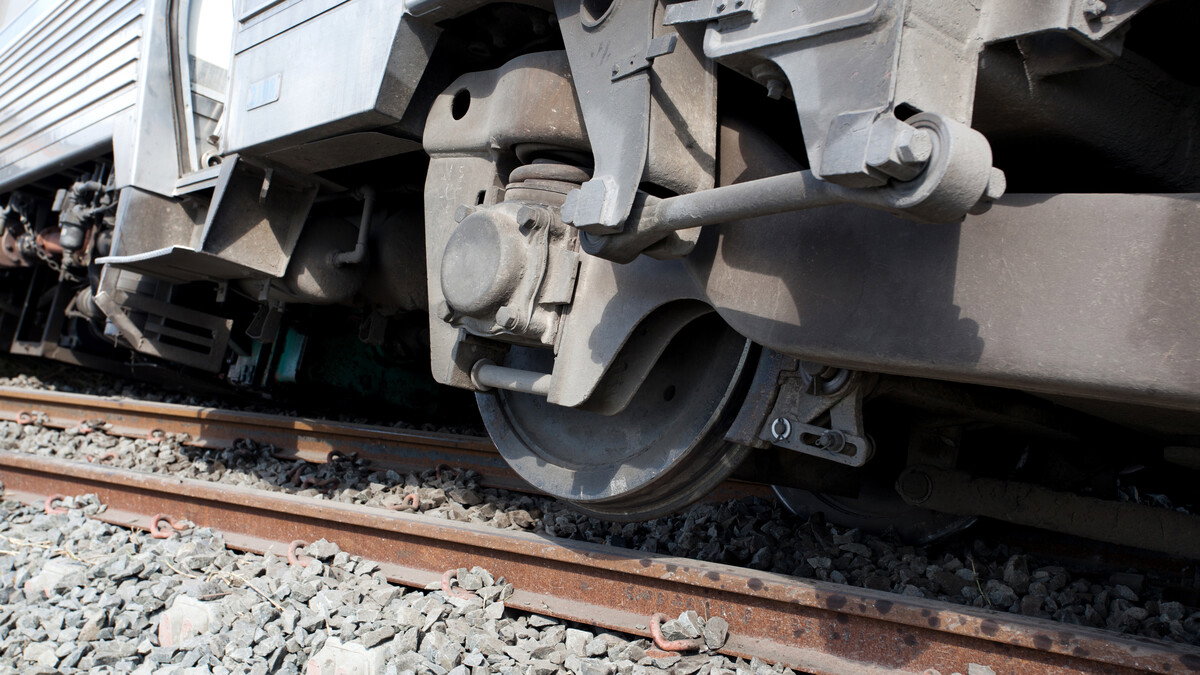
A head-on collision between two commuter trains north of Copenhagen left at least 17 people injured, including four in critical condition.
Credit: Shutterstock/I WALL
A head-on train collision in Denmark has left four people in critical condition and at least 13 others injured, after two commuter trains crashed north of Copenhagen during the morning rush on April 23. The accident happened on a regional line between Hillerod and Kagerup, an area regularly used by daily commuters travelling into the Danish capital. Emergency services confirmed that a major response was launched within minutes, with ambulances and helicopters deployed to the scene.
Authorities say all passengers were evacuated safely and no one was trapped inside the trains, but images from the site show severe damage to the front sections of both carriages, highlighting the force of the impact.
What caused the Denmark train collision?
At this stage, Danish officials have not confirmed the exact cause of the crash. Investigations are now focusing on whether the collision may have been linked to a signalling failure, operational error, or a breakdown in communication between train control systems. Local reports describe the incident as a head-on collision between two local trains operating on the same track. Both trains remained upright after the crash, which likely prevented a higher number of serious injuries.
Denmark’s rail network is generally considered one of the safest in Europe, with modern infrastructure and strict operational protocols. That makes incidents like this particularly significant, as they raise questions about how two trains could end up on the same track moving towards each other.
What this means for passengers in Europe
While the crash happened in Denmark, the implications are broader for passengers across Europe, including expats living in Spain who rely heavily on regional rail networks. Unlike high-speed trains such as AVE services in Spain, commuter and regional lines often operate with more complex track-sharing systems. These systems depend heavily on signalling accuracy and human coordination, which can increase the risk of incidents if something goes wrong.
Spain itself has seen rail safety improvements in recent years, particularly following past high-profile accidents. However, this incident is a reminder that even well-developed European rail systems are not immune to rare but serious failures. For expats who regularly travel by train, especially on local routes, the key takeaway is not panic but awareness. Rail travel remains one of the safest forms of transport in Europe, but disruptions, delays, and occasional incidents can happen.
Emergency response and current situation
Danish emergency services described the operation as large-scale but controlled. Multiple ambulances attended the scene, while helicopters were used to transport the most seriously injured to nearby hospitals. Four passengers remain in critical condition, while others are being treated for minor and moderate injuries. Authorities have not yet released full details about the victims.
Rail services in the affected area were suspended following the crash, with delays expected to continue while investigators examine the tracks, signalling systems, and train data. Officials are expected to release further updates in the coming days as more information becomes available.
A rare but serious reminder
Train collisions of this nature are rare in Northern Europe, particularly on commuter lines. The fact that no fatalities have been reported so far is being seen as a positive outcome given the circumstances.
However, the incident will likely lead to a detailed review of safety procedures and operational controls, not just in Denmark but across European rail networks. For now, the focus remains on the recovery of those injured and understanding how a routine morning commute turned into a major emergency.





News from Denmark
Queen Mary breaks silence on father’s death with heartfelt tribute: ‘My heart is heavy’
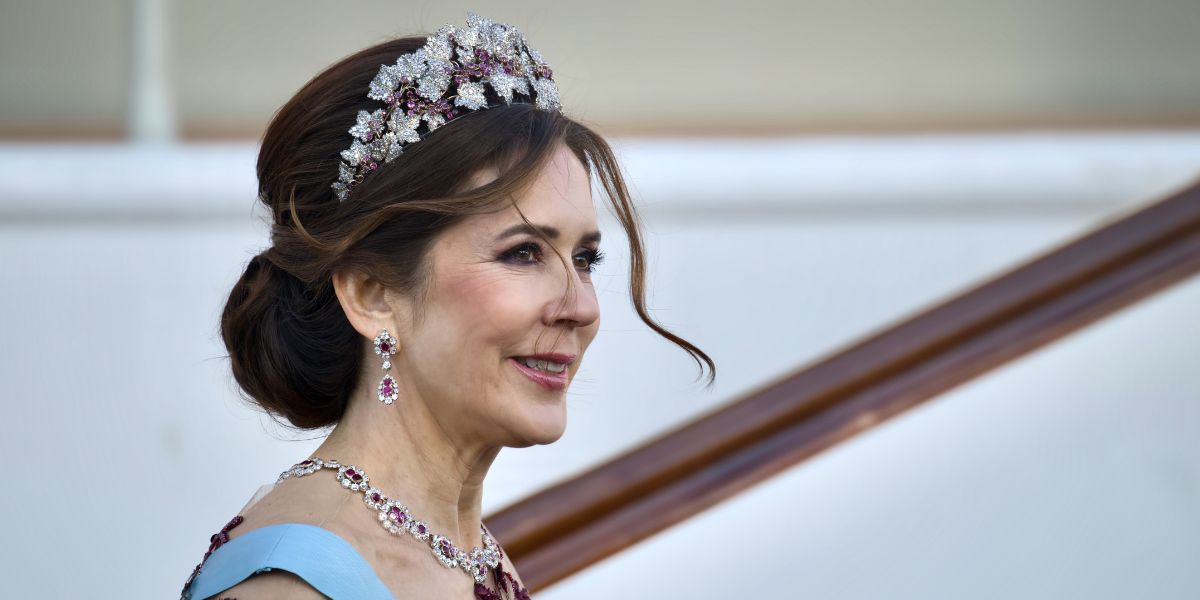
Queen Mary of Denmark shared emotional tribute to father on Instagram
Credit: Shutterstock
Denmark’s Queen Mary has spoken out following the death of her father, revealing new details about his final years in a rare and deeply personal message.
The Australian-born royal confirmed that John Donaldson died on April 11 in Hobart, Tasmania, aged 84, after what the Danish royal household described as a prolonged period of declining health.
A long decline before his passing
While no specific cause of death has been publicly confirmed, officials have made clear that Donaldson’s health had been deteriorating “over the past few years,” with age-related issues believed to be a key factor.
The respected professor of applied mathematics had been living in Hobart, the city where Queen Mary grew up, and had increasingly stepped back from public life as his condition worsened.
Sources close to the Danish royal household indicated that his decline had been gradual rather than sudden, making the timing of his daughter’s final visit all the more significant.
In what now feels especially poignant, Queen Mary of Denmark was able to spend time with her father shortly before his death.
During an official royal tour of Australia in March, her first visit home since becoming queen, she and King Frederik X travelled to Tasmania to see him privately.
The visit was described as deeply meaningful, with the pair sharing what were likely their final moments together.
‘My Heart Is Heavy’
In her statement on the royal family’s Instagram account, Queen Mary offered a rare glimpse into her personal grief, writing: “My heart is heavy,” as she mourned the loss of her “beloved father.”
She reflected on the lessons he taught her and the enduring love he gave, adding that while grief will soften over time, gratitude and memories will remain strongest.
The message struck a chord internationally, showing a more vulnerable side to a royal often defined by composure and duty.
A quiet but influential life
Donaldson, born in Scotland in 1941, moved to Australia in the 1960s, where he built a distinguished academic career and raised four children.
He remained a grounding force in his daughter’s life as she transitioned from Tasmanian upbringing to European royalty, most memorably walking her down the aisle at her 2004 wedding.
Despite his connection to the Danish monarchy, he largely stayed out of the spotlight, appearing only at key family milestones.
The Danish royal family has confirmed that a private memorial service will be held, allowing the family to grieve away from public attention.
His death has prompted tributes from both Denmark and Australia, reflecting the unique role he played in bridging two worlds – as the father of a queen, but also as a respected academic and family man.
A loss that resonates
For Queen Mary, the loss is both deeply personal and quietly universal.
Behind the titles and public appearances is a daughter mourning her father – one who had been unwell for some time, but whose absence is no less profound.
And in sharing her grief so openly, she has reminded many that even in royal life, some moments are simply, and unmistakably, human.

Belgium launches new emergency warning campaign and wants residents ready before the next crisis
Mallorca newspaper 23 – 29 Apr 2026
Costa Calida newspaper 23 – 29 Apr 2026

Luxury Villas For Sale, Estepona – ProjectL1

Stylish 3-Bedroom Apartment With Panoramic Sea Views – Benalmádena
Brussels warns Spain that migrants regularised under controversial scheme will be deported back to Spain if they try to move to other EU countries


-
 New Developments3 weeks ago
Luxury Villas For Sale, Estepona – ProjectL1
-
 New Developments3 weeks ago
Stylish 3-Bedroom Apartment With Panoramic Sea Views – Benalmádena
-
eu response to spain migration policy2 weeks ago
Brussels warns Spain that migrants regularised under controversial scheme will be deported back to Spain if they try to move to other EU countries
-

 %3 weeks ago
Poland Disconnects Utilities At Russian Consulate That Moscow Refuses To Hand Over
-

 Uncategorized4 weeks ago
Lewis Hamilton goes from Karate Kid to Samurai Warrior with Kill Bill guru
-
AER Lingus3 weeks ago
High-speed internet at 35,000 feet: Aer Lingus launches Starlink Wi‑Fi
-

 Uncategorized3 weeks ago
How Lewis Hamilton spent break with A-list star
-
Groundforce4 weeks ago
Spain’s Easter holiday airport strikes: Walkout suspended over weekend but disruption expected to kick in from first day of Semana Santa