Connect with us

News from Denmark

Queen Mary breaks silence on father’s death with heartfelt tribute: ‘My heart is heavy’

Published

on

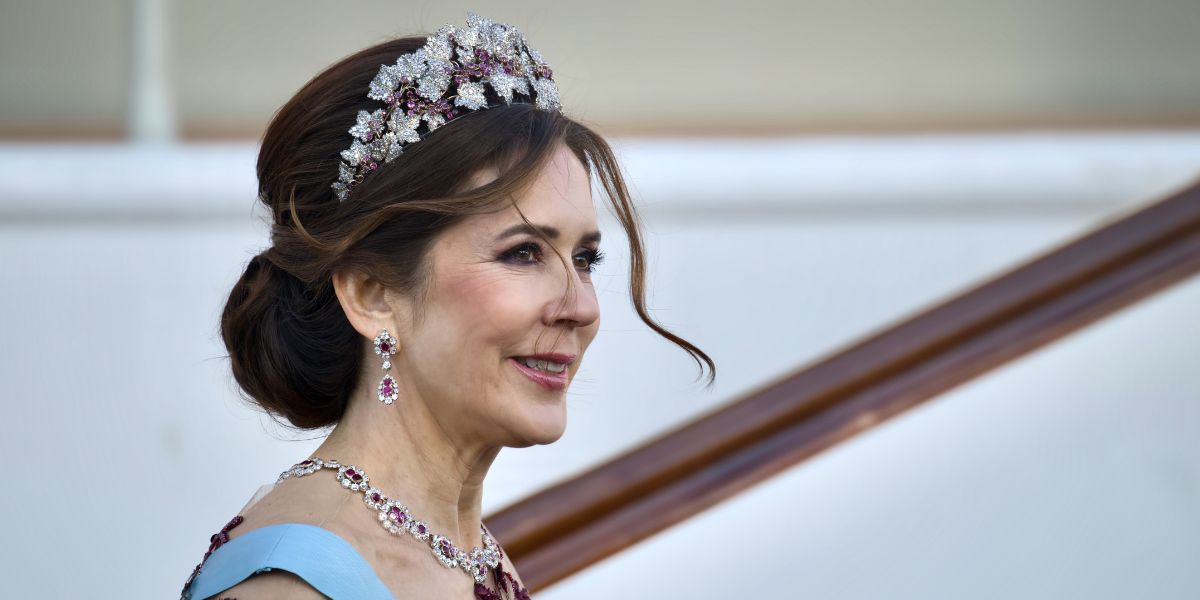
Queen Mary of Denmark shared emotional tribute to father on Instagram
Credit: Shutterstock

Denmark’s Queen Mary has spoken out following the death of her father, revealing new details about his final years in a rare and deeply personal message.

The Australian-born royal confirmed that John Donaldson died on April 11 in Hobart, Tasmania, aged 84, after what the Danish royal household described as a prolonged period of declining health.

A long decline before his passing

While no specific cause of death has been publicly confirmed, officials have made clear that Donaldson’s health had been deteriorating “over the past few years,” with age-related issues believed to be a key factor.

The respected professor of applied mathematics had been living in Hobart, the city where Queen Mary grew up, and had increasingly stepped back from public life as his condition worsened.

Sources close to the Danish royal household indicated that his decline had been gradual rather than sudden, making the timing of his daughter’s final visit all the more significant.

In what now feels especially poignant, Queen Mary of Denmark was able to spend time with her father shortly before his death.

During an official royal tour of Australia in March, her first visit home since becoming queen, she and King Frederik X travelled to Tasmania to see him privately.

The visit was described as deeply meaningful, with the pair sharing what were likely their final moments together.

‘My Heart Is Heavy’

In her statement on the royal family’s Instagram account, Queen Mary offered a rare glimpse into her personal grief, writing: “My heart is heavy,” as she mourned the loss of her “beloved father.”

She reflected on the lessons he taught her and the enduring love he gave, adding that while grief will soften over time, gratitude and memories will remain strongest.

The message struck a chord internationally, showing a more vulnerable side to a royal often defined by composure and duty.

A quiet but influential life

Donaldson, born in Scotland in 1941, moved to Australia in the 1960s, where he built a distinguished academic career and raised four children.

He remained a grounding force in his daughter’s life as she transitioned from Tasmanian upbringing to European royalty, most memorably walking her down the aisle at her 2004 wedding.

Despite his connection to the Danish monarchy, he largely stayed out of the spotlight, appearing only at key family milestones.

The Danish royal family has confirmed that a private memorial service will be held, allowing the family to grieve away from public attention.

His death has prompted tributes from both Denmark and Australia, reflecting the unique role he played in bridging two worlds – as the father of a queen, but also as a respected academic and family man.

A loss that resonates

For Queen Mary, the loss is both deeply personal and quietly universal.

Behind the titles and public appearances is a daughter mourning her father – one who had been unwell for some time, but whose absence is no less profound.

And in sharing her grief so openly, she has reminded many that even in royal life, some moments are simply, and unmistakably, human.

Continue Reading
Click to comment

Leave a Reply

Your email address will not be published.

%

Queen Mary Breaks Silence On Father’s Death

Published

on

queen-mary-breaks-silence-on-father’s-death

Queen Mary of Denmark shared emotional tribute to father on Instagram Credit: Shutterstock

Denmark’s Queen Mary has spoken out following the death of her father, revealing new details about his final years in a rare and deeply personal message.

The Australian-born royal confirmed that John Donaldson died on April 11 in Hobart, Tasmania, aged 84, after what the Danish royal household described as a prolonged period of declining health.

A long decline before his passing

While no specific cause of death has been publicly confirmed, officials have made clear that Donaldson’s health had been deteriorating “over the past few years,” with age-related issues believed to be a key factor.

The respected professor of applied mathematics had been living in Hobart, the city where Queen Mary grew up, and had increasingly stepped back from public life as his condition worsened.

Sources close to the Danish royal household indicated that his decline had been gradual rather than sudden, making the timing of his daughter’s final visit all the more significant.

In what now feels especially poignant, Queen Mary of Denmark was able to spend time with her father shortly before his death.

During an official royal tour of Australia in March, her first visit home since becoming queen, she and King Frederik X travelled to Tasmania to see him privately.

The visit was described as deeply meaningful, with the pair sharing what were likely their final moments together.

‘My Heart Is Heavy’

In her statement on the royal family’s Instagram account, Queen Mary offered a rare glimpse into her personal grief, writing: “My heart is heavy,” as she mourned the loss of her “beloved father.”

She reflected on the lessons he taught her and the enduring love he gave, adding that while grief will soften over time, gratitude and memories will remain strongest.

The message struck a chord internationally, showing a more vulnerable side to a royal often defined by composure and duty.

A quiet but influential life

Donaldson, born in Scotland in 1941, moved to Australia in the 1960s, where he built a distinguished academic career and raised four children.

He remained a grounding force in his daughter’s life as she transitioned from Tasmanian upbringing to European royalty, most memorably walking her down the aisle at her 2004 wedding.

Despite his connection to the Danish monarchy, he largely stayed out of the spotlight, appearing only at key family milestones.

The Danish royal family has confirmed that a private memorial service will be held, allowing the family to grieve away from public attention.

His death has prompted tributes from both Denmark and Australia, reflecting the unique role he played in bridging two worlds – as the father of a queen, but also as a respected academic and family man.

A loss that resonates

For Queen Mary, the loss is both deeply personal and quietly universal.

Behind the titles and public appearances is a daughter mourning her father – one who had been unwell for some time, but whose absence is no less profound.

And in sharing her grief so openly, she has reminded many that even in royal life, some moments are simply, and unmistakably, human.

Continue Reading

%

Princess Isabella To Break Royal Tradition

Published

on

princess-isabella-to-break-royal-tradition

Denmark’s monarchy is stepping into a new chapter and Princess Isabella is at the centre of it. The 18-year-old royal is set to begin military service this summer, becoming one of the first women to take part in the country’s newly expanded conscription programme.

The decision marks a significant cultural shift, not only for the Danish royal family but for Denmark itself, as it modernises its approach to national service.

A royal first in a changing Denmark

Princess Isabella, daughter of King Frederik X and Queen Mary, will begin her 11-month military service in August 2026 after completing her secondary education.

She is set to join the Guard Hussar Regiment in Slagelse, a historic cavalry unit within the Danish Armed Forces known for both its operational role and ceremonial ties to the monarchy.

Her participation places her among the first cohort of young Danish women to undertake extended military service under new legislation, signalling a clear move toward greater gender equality in defence.

The reform behind the headlines

Denmark has recently overhauled its conscription system in response to growing security concerns across Europe.

Under the updated model, military service has been extended from four to 11 months and applies to both men and women. All 18-year-olds are now required to attend an assessment process, often referred to as “Defence Day”, where they are evaluated for suitability.

While not everyone is called up, volunteers are prioritised, making Princess Isabella’s decision to step forward both symbolic and voluntary.

The new structure combines several months of basic training with further operational experience, offering a more comprehensive introduction to military life than previous programmes.

Following in royal footsteps

Princess Isabella is not the first member of her family to pursue military training. Her older brother, Crown Prince Christian, began his own service with the Guard Hussar Regiment in 2025 and has since continued into officer training.

Military service has long been part of royal tradition across Europe, particularly for heirs to the throne. However, Isabella’s role reflects a modern evolution of that expectation, one that increasingly includes women.

Europe’s young royals in uniform

Across Europe, a number of young royals have undertaken military training as part of their preparation for public life.

In Norway, Princess Ingrid Alexandra completed military service with the Combat Engineer Battalion in 2025, serving as an engineer soldier and rifleman.

Belgium’s future queen, Princess Elisabeth, studied at the Royal Military Academy in Brussels, where she completed a year of military and academic training.

In the United Kingdom, both Prince William and Prince Harry served in the armed forces. William spent several years in service, including as an RAF search and rescue pilot, while Harry completed two tours of duty in Afghanistan during his decade-long military career.

Sweden’s Princess Victoria also undertook basic military training in 2003, reflecting a broader expectation that future monarchs gain first-hand experience of national defence structures.

A monarchy evolving with its people

Princess Isabella’s decision reflects a wider transformation in how modern royal families engage with the public. Military service is increasingly seen as a way to demonstrate discipline, responsibility and relatability: qualities that resonate with younger generations.

It also mirrors broader societal changes, particularly around gender roles and equal participation in national duties.

For Denmark, the symbolism is especially powerful. As one of the first women to take part in the country’s expanded military service, Isabella represents a monarchy that is adapting in real time.

And as she prepares to swap royal engagements for regimented training, her journey signals not just a personal milestone, but a defining moment for Denmark’s future, where tradition and modernity move forward side by side.

Continue Reading
Advertisement
Advertisement

Spanish Real Estate Agents

Tags

Trending

Copyright © 2017 Spanish Property & News