Connect with us

%

Designing A Relaxing Garden Lounge Area With Teak

Published

on

designing-a-relaxing-garden-lounge-area-with-teak

A garden lounge area can become one of the most loved spaces in your home. It is somewhere to enjoy a morning coffee, unwind after a long day, chat with friends on a summer evening or simply sit and enjoy the garden. Teak is a natural choice for outdoor lounge furniture, combining comfort, durability and timeless style. With a little planning, you can create a relaxing outdoor lounge that feels as comfortable and inviting as your living room.

Choosing the right location

The success of a lounge area starts with its location. Think about where you naturally want to sit in your garden. You might choose a spot that catches the evening sun, enjoys a pleasant view or offers some privacy from neighbours. A position close to the house is convenient for bringing out drinks and snacks, while a more secluded spot at the end of the garden can feel like a peaceful retreat.

Consider shelter too. A wall, hedge, pergola or garden building can provide protection from wind and create a cosier atmosphere. Look at how the sun moves across the garden during the day, as you may want some shade for hot afternoons.

Getting the layout right

The layout of your lounge area should encourage relaxation and conversation. Arranging seating so people face each other, perhaps in a U shape or around a central coffee table, makes it easy to chat. If your lounge area overlooks a view or a feature such as a pond or fire pit, angle seating towards it.

Leave enough space for people to move around comfortably. Allow room between sofas and the coffee table to stretch your legs and reach for drinks easily. In larger gardens, a lounge area can be defined with an outdoor rug, a change in paving or planting around the edges, creating a sense of an outdoor room.

Selecting teak lounge furniture

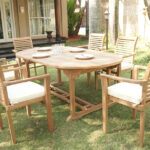
Teak lounge furniture comes in a wide range of styles, from classic designs with graceful curves to contemporary pieces with clean, modern lines. Deep-seated sofas and armchairs offer the most comfortable lounging experience, encouraging you to sink back and relax. Modular sets allow you to create corner sofas or rearrange pieces to suit different occasions.

A well-designed teak outdoor lounge furniture collection will offer sofas, armchairs, coffee tables and side tables that work together, making it easier to create a coordinated, inviting space. Choosing pieces from the same range helps ensure a harmonious look.

Quality matters when choosing teak. Furniture made from mature heartwood with strong joinery will be more durable and comfortable for years to come. Check that seating is supportive and generously proportioned, and that frames are sturdy and well finished.

Comfort through cushions

Cushions are essential for a truly relaxing lounge area. Choose deep, supportive seat cushions and plump back cushions in high-quality outdoor fabric. Look for materials that resist fading, water and mildew, so they stay looking good throughout the season.

Scatter cushions in complementary colours and textures add comfort and personality. Neutral tones such as cream, grey and sand work beautifully with the warm colour of teak, while pops of colour can be introduced through accent cushions that are easy to change.

When not in use, store cushions somewhere dry. Cushion storage boxes or a dry shed are ideal and help prolong the life of your fabrics.

Adding warmth and atmosphere

To make your lounge area usable for more of the year, consider adding a source of warmth. A fire pit creates a natural focal point and a cosy gathering place on cooler evenings. Outdoor heaters can also extend the season. Soft throws and blankets add comfort when temperatures drop.

Lighting transforms the atmosphere after dark. Warm, low-level lighting creates a relaxing mood. Lanterns, candles, festoon lights and solar-powered lights all add charm without overwhelming the space.

Bringing in nature

A garden lounge should feel connected to the natural world around it. Surround your seating area with planting to create a sense of enclosure and privacy. Fragrant plants such as lavender, jasmine and roses add a sensory dimension, while ornamental grasses rustle gently in the breeze. Large planters can be used to soften hard landscaping and frame the space.

Shade and shelter

Shade is important for comfortable lounging on sunny days. A parasol, sail shade or pergola provides relief from the midday sun. A pergola with climbing plants can create dappled shade and a beautiful natural canopy. Some people add outdoor curtains or screens for extra privacy and protection from the wind.

Caring for your lounge furniture

Teak is easy to care for, making it ideal for a relaxing space you want to enjoy rather than maintain. An occasional clean with mild soapy water and a soft brush keeps it looking fresh. Over time, teak will weather naturally to a silver-grey patina, or you can maintain its golden colour with a suitable protector.

Your outdoor retreat

A well-designed garden lounge area with teak furniture creates a peaceful retreat where you can relax, socialise and enjoy the outdoors. By choosing the right location, planning a comfortable layout and adding cushions, lighting and planting, you can create a space that invites you to slow down and make the most of every moment in your garden.

%

Moved To Spain? Expats Reveal What They Wish They Had Known Before Relocating

Published

on

moved-to-spain?-expats-reveal-what-they-wish-they-had-known-before-relocating

The climate was not everyone’s idea of paradise. Photo credit: NewJadsada/Shutterstock

Moving to Spain can mean leaving behind family, friends and familiar surroundings for sunshine and a fresh start. But once the excitement wears off and everyday life takes over, do you ever wonder whether you would do anything differently? We asked readers who have made Spain their home about their biggest regret. Others shared personal losses and unexpected challenges.

Wishing they had moved sooner

For several, the regret was not moving earlier. Mark from Fuengirola said he wished he had moved to Spain when he was younger, while James wished he had done it 35 years sooner. Anne, who left Ireland, summed up the difference between her old and new lives: “In Ireland we were existing. In Spain we are living.”

Peter from San José, spent a year in a small Spanish fishing town, described how his priorities had changed since arriving. He appreciates café visits, walking rather than relying on a car and the local culture. Looking out at the sunrise each morning, he still finds it hard to believe he lives there.

The language and employment reality

Several wished they had learned Spanish before moving. One regretted not being fluent, while David urged newcomers not to be put off. He learned by working alongside Spanish people and believes newcomers can pick up the language after arrival.

Cathy, who has lived in Spain for 26 years, learned by visiting Spanish cafés and bars and talking to locals. Finding work is harder. Peter warned that anyone relying on Spanish wages should think carefully before relocating. Helen, who has lived in Spain for 20 years and works full-time, complained about low wages and high taxes. Despite speaking Spanish, she said she still felt like an outsider.

What they left behind

For some, the biggest regret is family. Sarah from Mallorca shared that her parents and mother-in-law died shortly before her family moved to Spain. She wishes she could have shared Spain with them. Diane also said she misses her children and grandchildren.

Practical concerns also emerged. Steven advised newcomers to check that their private health insurance is accepted by medical centres in their area before needing treatment. Brexit’s 90-day rule was another frustration for readers wanting to spend longer in Spain. Property also featured. One reader regretted buying a house in Spain 25 years ago, saying the money would have been better invested in a property in the UK.

Would they make the same decision again?

Despite the difficulties, many had none. Robert, who has spent 21 years between Lorca and Águilas, called it his best decision. Julia, now living in Lanzarote, said she was a proud and happy immigrant and had never regretted leaving Vienna. The climate was not everyone’s idea of paradise. One reader joked that he would rather be back in the rain in Glasgow, while another admitted he had underestimated how cold Spanish winters could feel.

Gary, who moved back to New Zealand, said only after leaving did he realise he had left his heart in Spain. Another reader said the noise in their small village, particularly frequent fireworks, had become a daily frustration. Moving abroad does not leave every problem behind. Employment, bureaucracy, retirement, healthcare and family separation can all affect the experience, and Spain is not right for everyone. But many readers have found something they value more than the comforts they left behind. For them, the biggest regret is not what Spain has failed to offer, but how long they waited to make it home.

Continue Reading

%

Michael Jackson’s Only Ever Posed-For Painting Goes Up For Auction In Paris For €500,000

Published

on

michael-jackson’s-only-ever-posed-for-painting-goes-up-for-auction-in-paris-for-e500,000

Strong and Jackson maintained a close artistic relationship over the years. Photo credit:CC BY-SA 2.0 on Wikipedia

A rare opportunity to own a piece of Michael Jackson’s personal history is coming up at auction in France, where an original portrait of the late singer is expected to fetch up to €500,000. What makes the painting particularly unusual is that Jackson did not simply inspire the artwork: he personally posed for it and even took part in its creation. Titled The Book, the portrait was painted by Australian artist Brett-Livingstone Strong in December 1989, when Jackson was at the height of his international fame.

It is believed to be the only painted portrait for which the King of Pop ever agreed to sit as a model. The original artwork is now being offered by French auction house Aguttes, with an estimate of between €300,000 and €500,000. It will go under the hammer on Thursday, November 26, at the auction house’s premises in Neuilly-sur-Seine, just outside Paris. It was displayed publicly for the first time in Europe on Friday, November 20.

A painting Jackson helped create

The involvement of Jackson himself is what sets The Book apart from other celebrity portraits. According to Arthur Perault, head of Aguttes’ Pop Culture and Memorabilia department, the singer took an active interest in the work alongside Strong. Photographs from the period show the two men together in the artist’s studio, with Jackson apparently enthusiastic about the creative process. Perault described the painting as almost a joint creation between the singer and the artist.

Completed in December 1989, the portrait shows Jackson seated in a red velvet outfit, looking towards the viewer with his hands resting on a closed book. The elaborate composition features columns, decorative drapery and a landscape in the background, giving the scene an almost theatrical quality. There are also references to Neverland, Jackson’s famous private estate and personal retreat. A depiction of Tinker Bell, the fairy from Peter Pan, appears within the composition, reflecting his fascination with the fictional world and its themes of childhood and escapism.

The story behind the book

The title is not simply an artistic choice. The book represents the notebooks Jackson used to record his ideas, drawings and song lyrics, offering a glimpse into the creative world behind some of his music. The portrait was officially unveiled on January 26, 1990, at the Beverly Hilton in Beverly Hills, with Jackson present. At the time, it attracted considerable attention, with contemporary press reports describing it as the most expensive portrait of a living celebrity.

Strong and Jackson maintained a close artistic relationship over several decades, eventually establishing the Jackson-Strong Alliance. The artist has also described Jackson as a mentor and friend. The original painting remained in private hands for many years before being exhibited again in Harlem in July 2009, just days after Jackson’s death on June 25 2009.

Its authenticity is supported by archival material, including provenance documents and photographs from its original unveiling. More than three decades after it was created, The Book is now returning to public view, offering collectors the chance to acquire an original work with a direct connection to one of the most recognisable performers in music history.

Continue Reading

%

Spain’s Traffic Authority Buys New Drones

Published

on

spain’s-traffic-authority-buys-new-drones

New drones taking over from helicopters. Credit: DGT

Drivers across Spain could soon face a new set of eyes in the sky after the Dirección General de Tráfico (DGT) signed an emergency €1.3 million contract for more capable drones. Officials hope the purchase will plug gaps left by the grounding of the entire Pegasus (blue and yellow) helicopter fleet.

All 11 helicopters belonging to the Aerial Means Unit now sit in storage at the Cuatro Vientos base in Madrid. Eliance, the firm contracted to operate and maintain the aircraft used for road surveillance and issuing fines, has entered insolvency proceedings (concurso de acreedores). It can no longer guarantee the safety of the helicopters, so the DGT ordered them moved to the capital and placed in preservation.

Euro Weekly News previously reported how the crisis began to bite when helicopters stopped flying from bases including Malaga, Seville and Santiago de Compostela. Spain’s €51m Pegasus helicopters grounded: Questions raised over traffic fines

Why drones are the stop-gap solution

Earlier this month the DGT began relying more heavily on its existing drones to keep some form of aerial monitoring going. Those units have drawn heavy criticism from unions, which described them as little more than “toys”. In eight years they recorded barely 500 flying hours. Some Thyra models had to be withdrawn after becoming uncontrollable and causing accidents near roads.

Fernando GarcĂ­a Castro at the Ministry of the Interior, said the new drones will still have serious limits. They can only reach 120 metres altitude, top out at 80 km/h and stay aloft for about 40 minutes. That means they can spot illegal turns or drivers jumping stop signs, but they cannot measure or fine speeding offences. He added that the new machines are unlikely to be ready before next year at the earliest.

Union wants the helicopters flying again

The union representing the helicopter pilots, CCOO, has called for an emergency contract covering fuel, spare parts and engineering work so the helicopters parked at Cuatro Vientos can return to service. Pilots warn that leaving the aircraft stored for long periods risks mechanical problems that could make them harder to bring back into operation.

Workers from the Aerial Means Unit and traffic control centres staged a protest this week, arguing that staff shortages combined with the Eliance collapse are putting road safety at risk.

What drivers should expect on the roads

Fixed and mobile speed cameras, average-speed sections and unmarked patrol vehicles continue operating as normal. Aerial enforcement of pure speeding offences is currently limited, though drones can still catch other dangerous manoeuvres. Recent reports have also covered hooded saboteurs destroying Seville speed cameras and tighter pedestrian crossing rules enforced by the DGT. Drivers can check official guidance on the DGT website.

Continue Reading

Trending

Copyright © 2017 Spanish Property & News