Connect with us

%

Dirty Air And Hotter Weather Could Mean Higher Blood Sugar For You, Even Without Diabetes

Published

on

dirty-air-and-hotter-weather-could-mean-higher-blood-sugar-for-you,-even-without-diabetes

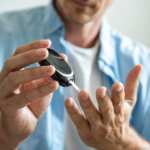
Dirty air and heat were linked to higher blood sugar, even in people without diabetes. Credit: Iren_Geo / Shutterstock

A large European study that included 5,464 volunteers from Cataluña has found that even people with no diabetes showed higher average blood sugar when they were exposed to dirtier air or hotter, more changeable temperatures.. The researchers stress that it shows a link between the two, but isn’t yet proof that one causes the other. 

The study looked at 21,259 people without diabetes

Researchers pooled data on 21,259 people across nine European cohorts, all of them without diabetes. Of those, 5,464 came from GCAT|Genomes for Life, a Catalan project run by the Germans Trias i Pujol Research Institute (IGTP).

The work was led by the Swiss Tropical and Public Health Institute and the University of Basel, and it was published in Environment International. IGTP, which took part, announced the findings on Wednesday October 21. 

The team looked at HbA1c, a blood test that shows average blood sugar over the previous two to three months, which is also one of the tests doctors use to diagnose diabetes. 

Dirty air and heat were both linked to higher blood sugar

Higher exposure to air pollution, particularly PM10 (tiny airborne particles that come from sources including traffic, industry and dust), was linked to higher HbA1c levels. Rising temperatures and bigger swings in temperature were linked to higher levels too.

Those findings might sound worrying, but the picture is a bit more complicated. Dirty air and hot weather didn’t seem to work on their own, as the researchers found that they affected each other. Living near parks and green spaces, on the other hand, made no consistent difference to blood sugar either way.

Cleaner air looked more valuable on hotter days 

Cleaner air appeared to bring a bigger benefit when it was hotter, according to the researchers. So cleaner air could be linked to lower blood sugar, while hotter weather and bigger swings in temperature could be linked to higher levels.

GCAT researcher and co-author Natàlia Blay said environmental exposures like air pollution and temperature shouldn’t be looked at on their own. Temperature, she added, is especially relevant in today’s changing climate.

Inflammation and insulin resistance may be behind it

Scientists think inflammation in the body and insulin resistance could help explain the link. However, the study didn’t directly examine how well the body’s insulin-producing cells were working, so that remains a theory.

The study also only shows an association, and it doesn’t conclude that pollution or temperature changes cause diabetes in people who don’t have it.

More research is needed to understand how the link works and how big it really is. In the meantime, anyone worried about their own blood sugar can ask their doctor about an HbA1c test.

%

Burglar In Spain Drinks Himself To Sleep In Bar Raid Gone Wrong

Published

on

burglar-in-spain-drinks-himself-to-sleep-in-bar-raid-gone-wrong

Repeated robberies leave businesses facing repair bills. Photo credit: Sonia Bonet/Shutterstock

A Bilbao bar owner could have been forgiven for expecting a nasty surprise after discovering someone had broken into the premises. Finding the alleged burglar fast asleep inside, with a half-empty bottle of orujo beside him, was probably not what he had in mind.

The bizarre incident happened in the early hours of Friday at the Río-Oja bar in Bilbao’s Casco Viejo. The suspected thief reportedly forced his way inside, helped himself to three beers and opened a bottle of orujo, because, why not? But unfortunately for him, his attempted robbery took an unexpected turn.

An attempted robbery turns into a drinking session

According to Antena 3 Noticias, the man forced open the bar’s metal shutter to gain entry. The alarm system was switched off because it was undergoing maintenance, allowing him to enter without triggering it.

Rather than making a quick getaway with valuables, he reportedly treated the premises as his own private drinking spot. He consumed a fair amount of alcohol including half a bottle of Orujo, a traditional Spanish grape pomace brandy with considerably more kick than your average cerveza.

Neighbours call the police

Noise coming from the premises alerted nearby residents, who contacted the police after suspecting someone had broken in. When officers arrived, they discovered the alleged burglar having forty winks inside the establishment. Beside him sat his Achilles heel: the bottle of orujo, with around half its contents remaining. His night ended in police custody rather than with the stolen goods he may have originally been hoping to find.

The bar had already been targeted

The incident might sound like a comedy of errors, but the Río-Oja has a much more serious problem. The bar had reportedly been targeted for the third time in 2026. During a previous break-in in August, thieves forced the shutter and escaped with €300. Two other nearby establishments were also reportedly targeted that Friday night, adding to concerns among local traders about security in Bilbao’s Casco Viejo.

Repeated robberies leave businesses facing repair bills, damaged entrances and stolen cash or equipment. Even when intruders fail to take anything, owners still have to deal with the damage and the cost of making their premises secure again.

Repeated break-ins leave bar owners worried

Local hospitality businesses have expressed concern about the number of robberies and are calling for greater security in the historic centre. For the Río-Oja’s owner, another break-in means yet more repairs and the worry of being targeted again.

The latest intruder may not have managed to steal anything, but he certainly left the bar with a story that will be difficult to forget. Most customers are eventually asked to leave when a bar closes. This one needed the police to show him the door.

Continue Reading

%

Rincon Tapas Trail Returns

Published

on

rincon-tapas-trail-returns

Sample each tapa and decide the winner. Credit: Ayto

Food lovers will have ten days to sample their way around Rincón de la Victoria when the town’s Ruta de la Tapa returns from Friday, November 13, to Sunday, November 22.

In its sixth year, the event brings together 31 bars and restaurants across La Cala del Moral, Rincon de la Victoria, Torre de Benagalbon and Benagalbon.

Each venue will prepare a tapa specially for the occasion, with every dish priced at €4 including a drink. Customers can choose a draught beer, soft drink or water. Participating premises will display a special sign.

Discover cuisine from Rincon

Organised by Rincon de la Victoria Council’s Tourism Department, the route encourages people to discover local bars and restaurants in the area.

A digital guide linked to Google Maps will help visitors find the venues and plan their route. According to the organisers, the guide has recorded 383,018 visits across the six editions.

Customers can also enter a draw for a share of the €1,000 prize fund. Visitors can collect a ‘tapaporte’ from any participating restaurant or the Municipal Tourist Office. To qualify, they must obtain stamps from four different establishments in at least two of the four local areas, vote for their favourite restaurant and submit the completed passport by November 22.

Which bar has the best tapas?

Five winners will each receive a voucher booklet worth €200. Each booklet contains four €50 vouchers, which must be used at four different participating restaurants by February 28, 2027. Completed passports can be deposited at participating venues or the Tourist Office.

€2,700 will go to the restaurants judged best. A public vote will also decide the public favourite. Full details, including the participating restaurants, their tapas and the competition rules, are available at turismoenrincon.es/ruta-de-la-tapa.

With 31 stops and a set price for food and drink, the route gives residents and visitors a chance to try local specialities without committing to a full meal.

Continue Reading

%

2 Women Hospitalised After 80-Year-Old Runs Red Light In Torrox

Published

on

2-women-hospitalised-after-80-year-old-runs-red-light-in-torrox

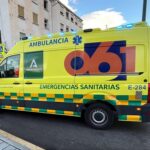
Ambulance in Velez-Malaga. Credit: Junta

Two women have been seriously injured after being struck by a car at a pedestrian crossing in Torrox Costa, with the driver reportedly telling police she failed to notice a red traffic light.

The accident happened shortly before 5pm on Friday, November 6, on Avenida de Andalucia, directly opposite the bus station in the coastal town. The area has previously seen a serious road accident in Torrox Costa, involving a motorcyclist and a cyclist.

The victims, aged 62 and 64, were crossing the road at a traffic-light-controlled pedestrian crossing when they were hit by the car.

Both women suffered serious injuries and were given emergency treatment at the scene before being taken by ambulance to the Hospital Comarcal de la Axarquia in Velez-Malaga. A subsequent report on the two women’s hospitalisation on November 7 confirmed they were still in hospital.

Driver says she did not see red light

The car was being driven by an 80-year-old Belgian woman who lives in Velez-Malaga. During the initial police enquiries, the driver reportedly explained that she had been distracted and had not realised the traffic light was red when she approached the crossing.

Two ambulances, Guardia Civil traffic officers and Torrox Local Police attended the scene. Emergency teams treated the injured pedestrians before arranging their transfer to hospital.

The accident took place in a busy part of Torrox Costa, close to the bus station. No other details have yet been released about the women’s medical condition or whether any formal action has been taken against the driver.

The incident is a reminder of the importance of remaining alert behind the wheel, particularly when approaching pedestrian crossings and traffic signals. EWN has previously reported on another pedestrian crossing accident in Spain. The Spanish Traffic Authority’s road safety guidance for pedestrians also explains the rules for crossing roads safely.

Continue Reading

Trending

Copyright © 2017 Spanish Property & News