
News from Spain
Drug raid in Spain takes bizarre turn as Guardia Civil discover exotic reptile


Young alligator found during police raid
Credit: Shutterstock, Vladislav T. Jirousek
Guardia Civil officers carrying out a drug raid in Seville were confronted with something they certainly were not expecting to find inside a private home, a young exotic reptile capable of growing to around 2.5 metres long.
What began as a routine search in the Los Pajaritos neighbourhood quickly took a bizarre turn when officers discovered the animal inside a flat on Calle Pegaso.
Exotic reptile discovered during police raid
The reptile was found by chance as officers searched the property as part of an ongoing investigation into suspected criminal activity.
Authorities have stressed that the operation was not related to the animal itself and the wider investigation remains ongoing, with few details released so far. It is also unclear whether any arrests were made in connection with the raid.
The reptile was immediately placed in the care of the Guardia Civil’s Nature Protection Service, Seprona.
Measuring around half a metre long, the animal was initially believed to be a crocodile. However, specialists at Mundo Park later confirmed it was in fact a young spectacled caiman, Caiman crocodilus, a species native to Central and South America that can grow to around 2.5 metres in length.
Illegal ownership of exotic animals in Spain
It remains unclear how the residents came into possession of the caiman or how long it had been kept inside the Seville property.
Spanish law restricts the private ownership of certain exotic animals without the appropriate authorisations. Once officers realised the species involved, the relevant protocol was activated and Seprona assumed responsibility for the animal while enquiries into its origin continue.
Authorities have not ruled out further investigations into its possession.
Spain has faced similar cases before, with exotic caimans discovered far from their natural habitat, raising questions over how many may be living in the country under the radar.
Mundo Park gives rescued caiman a new home
The young caiman has since been relocated to Mundo Park in Guillena, an authorised zoo with experienced staff and facilities designed to care for exotic reptiles.
Zoo staff confirmed the animal is in good condition and clarified that it is a spectacled caiman rather than a crocodile, correcting initial reports following the raid.
The park is equipped to provide the specialist care, diet and habitat the young reptile will need as it continues to grow.
For the unexpected resident of the Seville flat, life has now taken another unusual turn, swapping a private home discovered during a police raid for specialist care at Mundo Park.
The zoo has since released a video introducing its newest reptile resident and showing off the unlikely star of one of Seville’s more bizarre police discoveries.





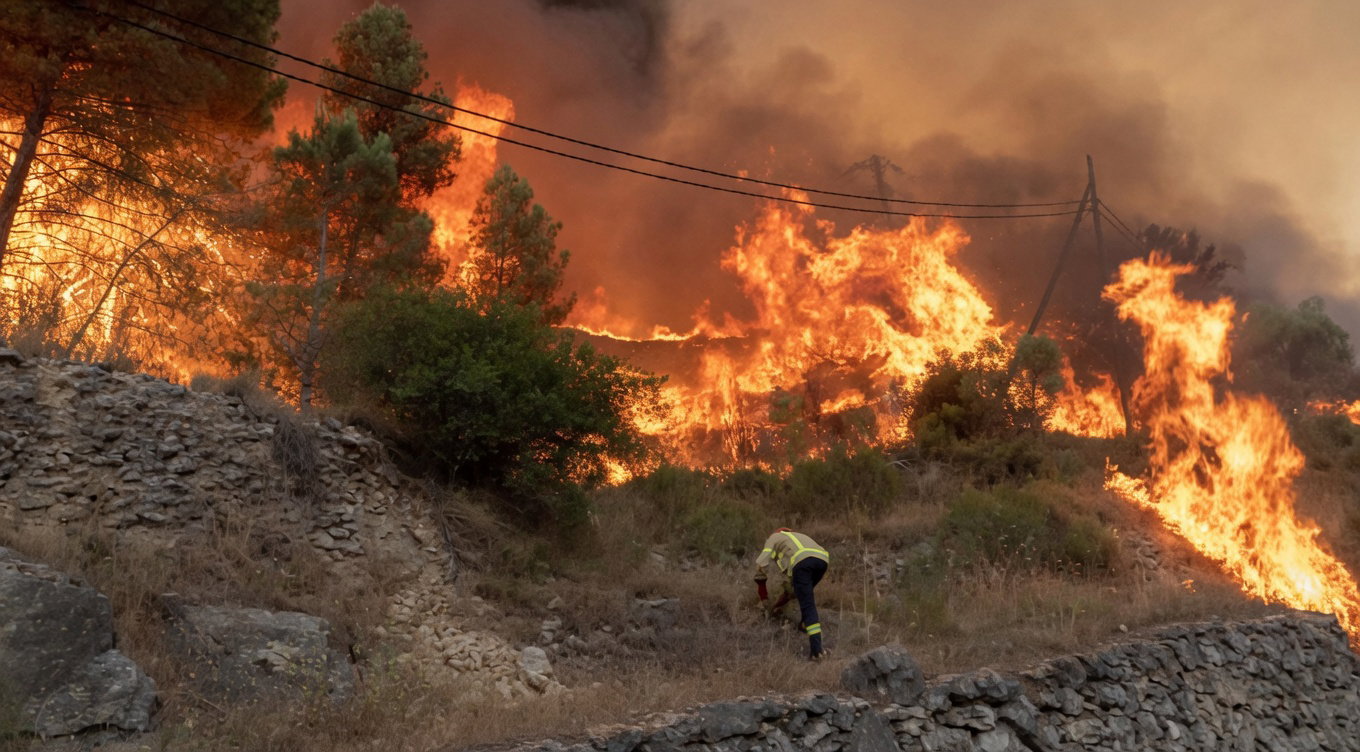
Ground crews are supported by helicopters and fixed-wing aircraft. Photo credit : Bombers on X
Wildfires burning across Cataluña have become one of Spain’s biggest emergencies of the summer, forcing road closures, halting train services and bringing in military support as firefighters battle multiple active fronts. For anyone travelling through the region, the impact is already being felt.
Major transport routes have been disrupted, authorities are urging people to avoid unnecessary journeys, and emergency crews continue working around the clock as conditions remain critical in several areas. While firefighters have stabilised the large wildfire in Anoia, another blaze at Sentmenat continues to demand significant resources, prompting the deployment of Spain’s Military Emergency Unit (UME) to reinforce local crews.
Military support joins the fight
Cataluña’s firefighters have spent days battling several wildfires burning across the region, with changing weather conditions making the operation particularly difficult. The situation became serious enough for the Unidad Militar de Emergencias (UME) to be deployed alongside Bombers de la Generalitat, adding specialist personnel and equipment to help contain the fires.
The military deployment indicates the sheer scale of the emergency. Firefighters are working across several locations simultaneously, with crews on the ground supported by helicopters and fixed-wing aircraft whenever conditions allow. Emergency services have continued to warn that the combination of dry vegetation, high temperatures and shifting winds means conditions can change quickly, even where progress has already been made.
Anoia stabilised but crews remain on alert
There has been some welcome progress in Anoia, where firefighters have confirmed the wildfire has now been stabilised. However, stabilised does not mean extinguished, it means crews have stopped the fire’s forward spread, allowing them to concentrate on securing the perimeter, cooling hotspots and preventing flare-ups.
Firefighters are expected to remain in the area while conditions continue to be monitored, particularly during the hottest parts of the day when fire behaviour can become more unpredictable. Authorities have asked residents and visitors to respect any remaining restrictions while emergency operations continue.
Sentmenat remains the biggest concern
Attention has now shifted towards Sentmenat, where firefighters continue working intensively to contain another active wildfire. Crews remain on the ground alongside aerial support as they try to prevent further spread, with emergency services describing conditions as particularly demanding.
Changing winds continue to complicate operations, while dry woodland and vegetation provide ideal conditions for fires to spread if not brought under control quickly. Firefighters remain hopeful that continued work throughout the day will improve the situation, but officials have stressed that the emergency is far from over.
🔴 ACTUALITZACIÓ (21.00 h): aquest incendi iniciat al terme municipal de Carme (Anoia) afecta una superfície aproximada de 400 hectàrees, segons dades provisionals d’#AgentsRurals.
#IFAnoia https://t.co/oyVNn8pCg3 pic.twitter.com/m4FwSlYxiN
— Agents Rurals (@agentsruralscat) July 6, 2026
Road closures continue to disrupt journeys
The wildfire emergency is affecting far more than the communities closest to the flames. Several roads across affected parts of Barcelona province remain closed while firefighters continue working, forcing drivers onto lengthy diversions and creating delays for commuters, residents and holidaymakers alike.
Police have restricted access around several fire zones to allow emergency vehicles to move safely and to reduce unnecessary traffic in affected areas. Drivers are being urged not to rely entirely on satellite navigation, as closures can change quickly depending on how the fires develop. Before setting off, motorists are being advised to check official traffic updates and allow extra time for their journey.
Rail services also affected
The disruption extends beyond the road network, Rail services on several routes have been suspended or interrupted while emergency crews work close to railway infrastructure and safety inspections are carried out. Passengers have been encouraged to check the latest information before travelling, as delays and cancellations remain possible while firefighting operations continue.
For many people travelling across Cataluña, particularly during the busy summer period, the disruption has complicated journeys that would normally take only a few hours. Transport operators expect services to return progressively once emergency services declare the affected sections safe.
Why travellers should pay attention
Spain experiences wildfires every summer, but several active fires burning at the same time place additional pressure on emergency services and transport networks. A single road closure can quickly affect surrounding routes, while suspended rail services leave passengers searching for alternatives at short notice.
Even travellers staying well away from the fires themselves may encounter delays simply because major transport corridors have been affected. Authorities continue to advise against unnecessary travel into affected areas while crews remain actively tackling the fires.
Check before you leave
With firefighters still working across multiple fronts and military support now assisting the response, disruption is expected to continue while conditions remain difficult. Anyone planning to travel through Cataluña should check official traffic and rail updates before leaving, be prepared for diversions and allow extra time for their journey.
Emergency services remain focused on bringing the remaining fires under control as safely and as quickly as possible. For everyone else, staying informed before setting off may prove just as important as packing the essentials for the journey.

Police were called to the Ibiza property after neighbours complained about music. Credit: Interfere / Shutterstock
A noise complaint in Ibiza has exposed a possible illegal tourist rental costing €27,500 for one month, turning one expensive summer booking into a warning for holidaymakers and foreign residents checking villas, apartments and holiday homes across Spain’s islands and Costas.
How a noise complaint led police to a €27,500 Ibiza rental
A group of tourists in Ibiza found themselves at the centre of a possible illegal holiday rental case after police were called to a property over complaints about music.
According to Ibiza Town Hall, local police officers attended a home in the municipality during the weekend after neighbours reported noise disturbances. Once inside, officers found several people who said they were on holiday and had rented the property for one month.
At the request of police, the occupants showed a rental contract and proof of payment through four bank transfers totalling €27,500. Officers then drew up an inspection report, which will be sent to the Consell Insular d’Eivissa, the island council responsible for tourism regulation.
The council will now decide whether the rental activity broke Balearic tourism rules and whether any administrative proceedings or sanctions should follow.
Why a booking contract does not always mean a legal holiday let
The Ibiza case is a useful warning for visitors booking expensive summer stays in Spain, especially in areas where holiday rental rules are strict and enforcement is increasing. Many tourists assume that a formal contract, online advert or bank transfer means a villa or apartment is legally registered. When in reality, a legal-looking booking does not prove that a property has permission to operate as tourist accommodation.
Ibiza’s island council warns that booking through an online platform is not, by itself, proof that accommodation is legal. Legal tourist accommodation should appear in the official tourism register and should have a valid licence number. That number should normally be visible in the advert and available at the property.
The rules are particularly tight in Ibiza. The Consell d’Eivissa says tourist rentals in residential multi-family buildings, meaning flats or apartments in blocks, are expressly prohibited on the island. Holiday rentals in Ibiza are regulated under Estancias Turísticas en Vivienda, known as ETV. The council says only the whole of a single-family home can be marketed for tourist stays, and only for periods of no more than two months.
Renting separate rooms, placing different groups under different contracts in the same home, or advertising shared spaces as tourist accommodation can all raise problems under local rules.
Noise complaints can now trigger rental inspections
The detail that should worry both visitors and illegal operators is how the Ibiza case began. Tourism inspections don’t usually happen at random, but after a complaint from neighbours about loud music, it’s easier for other details to come into the light.
The Balearic Government has announced new measures against illegal tourist accommodation, including a protocol linking local police in Ibiza with tourism inspection services. Under that system, police callouts caused by neighbour complaints or other incidents may lead to tourism inspection files if officers detect signs of illegal accommodation.
For tourists, this means a loud party, repeated complaints, overcrowding or unusual movement in and out of a property can bring more than a warning over noise. It can put the rental itself under scrutiny.
For residents in Spain, especially those living in apartment blocks or urban areas affected by tourist lets, the same system gives complaints a clearer route into enforcement. In a separate recent case in Sant Antoni, local police and island inspectors sealed a home being used for illegal tourist rental, with a proposed sanction of €275,001 after tourists were found staying there.
How tourists can reduce the risk before paying
Sanctions for illegal tourist rentals are usually aimed at owners, operators or platforms, not ordinary holidaymakers. But tourists can still face the fallout: a disrupted stay, pressure to leave and find alternative accommodation, difficulty recovering money, or a holiday spent dealing with police, neighbours and paperwork.
The safest step before paying a large deposit or full balance is to ask for the tourist licence number and check it against the relevant regional or island tourism register. In Ibiza, the Consell advises visitors to check whether the advert includes the licence number, whether the licence is visible on arrival, whether guests are properly registered at check-in, and whether the Sustainable Tourism Tax has been explained where applicable.
Warning signs include no visible licence number, vague property details, pressure to pay by transfer outside a recognised booking system, refusal to provide registration details, or an advert offering private rooms as tourist accommodation.
The same caution applies beyond Ibiza. Mallorca, the Costa del Sol, Costa Blanca and other Spanish tourist areas all have their own rules, but the principle remains: an attractive advert and a signed contract are not enough.

Drug raid in Spain takes bizarre turn as Guardia Civil discover exotic reptile
Haitam case in Torremolinos reopens after family appeal succeeds in Malaga court
Spain travel chaos as Cataluña wildfires close major roads and suspend trains

Red Bull set for radical new design in desperate bid to keep Max Verstappen

F1 Qualifying Results: 2026 Austrian Grand Prix times and grid positions
Mallorca solar eclipse 2026: Best viewing areas and what to know


-
 Uncategorized2 weeks ago
Red Bull set for radical new design in desperate bid to keep Max Verstappen
-
 Uncategorized1 week ago
F1 Qualifying Results: 2026 Austrian Grand Prix times and grid positions
-
best places to view the solar eclipse in mallorca2 weeks ago
Mallorca solar eclipse 2026: Best viewing areas and what to know
-
DGT2 weeks ago
Spain’s traffic warning for summer 2026: These are the weekends the DGT says you should avoid
-
 %2 weeks ago
Spain’s Heat Reaches Highest Level In 76 Years
-
Latest2 weeks ago
CONFIRMED: Spain Breaks June Heat Record
-
Latest1 week ago
EU Worries Jet Fuel Supply Situation To Worsen
-
Latest2 weeks ago
Spain’s Former PM Requests His Corruption Probe Be Nullified