Connect with us

%

Dutch And Polish Demand San Pedro

Published

on

dutch-and-polish-demand-san-pedro

San Pedro Alcantara’s new‑build market has seen a pattern with Dutch and Polish buyers becoming the most active nationalities.

Rising interest from northern and eastern Europe

Recent sales at the Zinnia development in central San Pedro Alcantara shows that growing demand for new-build homes in the area is being driven by a change in buyer nationalities, with Dutch and Polish purchasers currently leading reservations in the area. Northern and eastern European clients are seeking modern homes in Marbella’s western district, attracted by year-round services, improved infrastructure and proximity to the coast. Most buyers fall between 40 and 55 years old and have established professional careers. Interest comes from lawyers, doctors, entrepreneurs, senior managers, project leads and designers. Younger couples and individual purchasers also appear in the demographic mix.

A diverse mix of European and Middle Eastern buyers

Strong interest is also coming from Lithuania, the United Kingdom, Israel, Saudi Arabia, Norway and Estonia. This mix shows how San Pedro has become a preferred entry point for international buyers who want access to the luxury of Marbella without the eyewatering prices of popular Puerto Banus or the famous Golden Mile. Local demand is ever present, with buyers from Estepona and Benahavis choosing San Pedro for its transport links, schools and growing residential options.

Second homes, relocations and investment strategies

Demand spans several motivations. Many Dutch, Polish and Lithuanian buyers are securing second homes for extended stays, while British and Norwegian clients frequently combine personal use with rental income. Relocation interest is rising too, particularly among professionals in their forties and fifties who want a stable base with international schools, healthcare access and year-round amenities.

Many international clients now see the area as a practical alternative to central Marbella, with modern developments, improved public spaces and a quieter residential feel. Current demand suggests that future projects are likely to continue attracting northern and eastern European buyers who look for efficient homes, contemporary design and long-term value.

%

Family’s Car Vanishes With Cowboy Brit Mechanic Into Workshop Limbo

Published

on

family’s-car-vanishes-with-cowboy-brit-mechanic-into-workshop-limbo

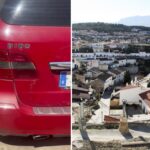
Long gone family car. Credit Ayto Benamaurel

A British family in Andalucia handed over a car for what they thought was a straightforward ITV check-up job. Almost two and a half years later they still have no car, no refund and a paper trail that now only points towards an inevitable future court date.

Bernie and Earl say they trusted a British mechanic in Benamaurel, Granada Province, in April 2024 to get their Mercedes ready for Spain’s compulsory ITV roadworthiness test. What followed, they say, was a transfer to an officially recognised Mercedes workshop in Guadix, thousands of euros of work they never authorised, an insurance claim opened with Earl’s personal details without permission, and months of each party pointing at the other. Earl, a construction worker, now has no choice but to do the family Lidl run on an electric scooter. That shop feeds two adults, two teenagers, four rescue dogs and three rescue cats.

How an ITV job turned into 29 months without a car

April 2024 was meant to be a routine hand-over. The Brit mechanic took the car “in good faith for ITV-related work,” the family say. By June they were told it had to be taken to a main dealership. They later concluded that step was not necessary. Transfer went through an insurance process using Earl’s personal details, which he at no point signed over, and which he says he was misled into agreeing.

October 2024, according to the family, the mechanic took €1,000 under false pretences. That money went onto a workshop account without Earl’s authority and has never come back. Late 2024 into early 2025, they say, roughly €4,000 of work was billed in Earl’s name without his knowledge. The dodgy mechanic acted as go-between while the owners were shut out of decisions about their own vehicle.

Bernie puts the clock plainly: “the car arrived at a Mercedes workshop Guadix 26 months ago, after almost three months with the first mechanic. We have therefore been without the car for approximately 29 months altogether.”

Spanish workshop and Brit mechanic still point at each other

The paperwork, the family insist, is awkward for everyone involved. Earl had been put on the register as the owner in the dealership’s internal system, and as the official client since December 2023, although he signed nothing. Decisions, authorisations and costly work still went through a third party and without his knowledge or permission.

April 2025 brought a written line from the Mercedes workshop in Guadix, via Mercedes-Benz Spain, that they had been misled by the mysterious British mechanic and that he bore responsibility. After that letter, the family say, the dealership still refused key documents on “data protection” grounds, kept the disputed €1,000, and left the car on its property. Mercedes-Benz Spain and Mercedes-Benz Germany have since said responsibility sits solely with the workshop and is nothing to do with them. Neither the British workshop owner, nor the Guardix taller have been contactable by telephone for comment in recent months.

The Brit mechanic, they add, has “effectively gone to ground.” In February 2025 he opened an insurance claim through the insurance company using Earl’s details without any consent. Findings from that claim were later used, the family say, to try to wash his hands of the matter in OMIC proceedings.

A complaint was then made against the family. They had to attend a police station and rely on their 12-year-old daughter to translate. They believe parts of that complaint were falsified.

Trusting a local professional because he speaks English

Professional expats on the coast are many, and the majority are pros, providing exceptional service, and are easy to communicate the nuances of what the customer needs and wants. But, inevitably, amongst the flock there’s always a black sheep giving everyone a bad name. One that promises the earth and delivers nothing. Cowboy traders whom we are left wondering if they really wanted to move to Spain, or they just weren’t wanted back home anymore.

Some, because of the language difficulties, know there is a captive market in Spain of expats who are not 100 per cent with the lingo, and can easily fall into the trap of trusting a slippery character who claims that not only does he know the language, culture and laws perfectly, but that he will help bridge the gap for you. Among the gems, there’s always a rotten egg who ruins it for everyone – and keeps the cash, of course.

Earl’s employment has taken a hit without having a proper vehicle. Official routes have already been used: OMIC, the Junta de Andalucia and the data protection agency. Advice now is that judicial proceedings may be the only route left.

What Spanish garage law actually requires

Spain is not a free-for-all if you know the rules. Workshops must give a written estimate, a deposit slip when they take the keys, and an itemised invoice. Authorised work is supposed to come from the owner, not from whoever happens to be chatting in English in the waiting area.

Consumer offices exist for a reason. Andalucia’s official path starts with a hoja de reclamaciones, then OMIC (OMIC is the local town-hall consumer office, or Oficina Municipal de Información al Consumidor) or Ministerio de Consumo if the workshop dodges a proper answer. Junta guidance is here: Reclamaciones – Junta de Andalucia and Como presentar una reclamacion.

ITV itself is a separate, tightly policed test, not a blank cheque for a mate-of-a-mate to disappear with your keys. Recent EWN reporting on inspection integrity includes Bribes, arrests and unsafe cars: ITV scandal rocks Spain. Damage during an official inspection has its own liability rules, covered in Who takes responsibility for vehicles damaged during an ITV?.

Trust, language and the risk of betrayal

Plenty of British residents in Spain still put their trust in a familiar accent when a car needs work or their house needs repairs. That shortcut can feel safer than a Spanish-only taller where maybe not everything is fully understood. This article is a reminder that a shared passport is not a professional qualification, and that “I’ll handle the dealership for you” can become a wall between owner and workshop.

None of this article finds the British mechanic, Guadix workshop or insurance company guilty in a courtroom. It reports what the family say they can document: unauthorised work, money that did not come home, a car still sitting in Guadix (somewhere), and a family man left doing the big shop on two wheels.

Bernie is not asking for sympathy. She wants the keys to her car, the €1,000 handed over in confidence, and a straight answer about who authorised what after Earl was already placed the books as client without his knowledge. Until a judge or a workshop manager breaks the deadlock, that car and work on it remains a very expensive local story in Granada province.

Continue Reading

%

How Flying Lost Its Easy Charm: 25 Years Since 9/11

Published

on

how-flying-lost-its-easy-charm:-25-years-since-9/11

25 years of intensified airport security. Credit: 1000 Words – Shutterstock

Friday marks a quarter of a century since four hijacked airliners turned a clear September morning into the most watched terror attack of the television age, and it changed all of us. Nearly 3,000 people died when two jets tore into New York’s Twin Towers, a third ripped into the Pentagon, and a fourth came down in a field near Shanksville, Pennsylvania, after passengers fought back. World Trade Center Building 7 later fell as well. Families from more than 90 countries lost someone that day.

Live pictures of the towers collapsing went round the world in real time. Many readers of a certain age still remember exactly which kitchen, office or school corridor they were standing in. Days later President George W. Bush told a press conference a seemingly inconsequential and simple line that still shapes policy and lives today: “Either you are with us, or you are with the terrorists.” And no one dared complain about airport security again.

Governments reached for new laws, new wars and a new vocabulary, such as the so-called ‘War on Terror’, and ordinary life changed in quieter ways too. Few of those changes are closer to home for Britons and other Europeans heading to Spain or further, than the business of boarding a plane.

Once, air travel still carried a faint sense of occasion. It was even considered ‘romantic’ once. Even after D.B. Cooper’s 1971 parachute hijack pushed metal-detector arches into terminals, you could often stroll to a gate with a relative, keep your shoes on, and treat a bottle of water as nobody’s business but your own. That world ended on September 11, 2001.

What passengers now go through

Layer upon layer of extra screening followed and rarely  has been questioned, first in the United States and then, with local variations, across Europe. A short list of the main changes since that morning runs like this:

  • Federal or state screeners replaced many of the private contractors airlines used to hire.
  • Photo identification became a hard requirement, not a polite request.
  • Only ticketed passengers pass beyond the checkpoint; waving someone off at the gate is a distant memory.
  • Reinforced, locked cockpit doors were fitted across commercial fleets by 2003, and cabin access to the flight deck is barred.
  • Armed air marshals were put on more routes.
  • Every piece of checked baggage is now supposed to be screened for explosives, not a small sample.
  • Richard Reid’s failed “shoe bomb” attempt in December 2001 led, from 2006, to footwear coming off at many checkpoints. United States airports dropped that shoes-off rule last year, though habits die hard.
  • After British police broke up a 2006 plot to mix liquid explosives on flights out of Heathrow, the 100ml / 3-1-1 liquids rule spread worldwide. Some UK airports now allow larger bottles through new scanners; Spanish checkpoints are still mixed, even as Malaga and other Aena airports roll out 3D cabin-bag machines.
  • Full-body scanners, explosive-trace wipes, laptop-out-of-the-bag drills and, later, computed-tomography X-rays joined the queue.
  • Watch-list matching, trusted-traveller lanes and, in the European Union, advance passenger data plus the new Entry/Exit biometric system added another paper trail before anyone even reaches the belt.

EU rules on advance passenger information are in the same family of post-attack thinking: know who is flying before the wheels leave the tarmac. A bomb scare at Malaga earlier this year showed how quickly a single message still empties a jet bridge.

Romance drained out of the flying experience. Travellers now factor in an extra hour or two, decant shampoo into tiny bottles, and treat a joke about a bomb as a career-ending mistake at the airport. Security queues became part of the holiday, not an interruption of it.

Front door tight, back door less so?

Passenger halls get the cameras, the trays, falling trousers as the belt comes off and the public argument with security staff. Does cargo get the same? Freight still arrives through service roads, warehouses and “known shipper” schemes that rely as much on paperwork and trusted companies as on a scanner staring at every pallet. United States law eventually required 100 per cent screening of cargo on passenger aircraft after the 2010 printer-cartridge bomb plot from Yemen; all-cargo freighters and some off-airport screening still work to a different rhythm.

Inspectors and congressional reviews have, for years, warned that a shrink-wrapped pallet is harder to read than a cabin bag, and that staff doors and cargo gates do not always face the same scrutiny as the family shuffling through Terminal 3.

Safer? More uncomfortable

Official histories of the era, including the TSA’s own timeline and the record kept at the National September 11 Memorial & Museum, show a system built in panic and then patched, year after year, as each new plot exposed another gap. Flying is statistically safer from hijacking than it was on 10 September 2001. Cockpit doors hold. Box-cutters do not sail through unchallenged. Random people no longer wander airside because they fancied a look at the departure board.

Comfort is another matter. Suspicion became a habit. Fellow passengers are scanned as possible threats. Staff bark instructions because the drill leaves little room for a smile. Children who never knew the old ease grow up thinking a clear plastic bag of toothpaste is simply how holidays begin.

We may be safer in the air than our parents were before that Tuesday morning. We are also more watchful, more impatient, and not quite as easy in our seats as we once were. That, as much as the skyline that never came back, is the long shadow of 11 September 2001.

Continue Reading

%

Consum Gives Shoppers €47.94 Million In Discounts As Customer Savings Soar In Spain

Published

on

consum-gives-shoppers-e47.94-million-in-discounts-as-customer-savings-soar-in-spain

The supermarket’s different loyalty benefits contributed to the overall increase. Photo credit: Miroslaw Durma/Shutterstock

As prices continue to climb, nothing is more welcoming than getting a little discount off our shopping every now and again. But it turns out that one supermarket has gone a little bit beyond the odd discount, with millions of euros in savings handed back to its loyal customers so far this year.

And it is not just a handful of shoppers benefiting. More than 2.2 million Consum members have received discounts between January and July, with the total amount distributed significantly higher than during the same period last year, with the average saving reaching €21.45 per person. For households already watching the cost of their weekly shop, those discounts can make a noticeable difference over the course of the year.

Millions of shoppers benefit

Consum says the number of members receiving discounts increased by 6.4 per cent compared with the first seven months of 2025. The average saving also rose, increasing 2.1 per cent to €21.45. The supermarket’s different loyalty benefits contributed to the overall increase.  Discounts through its Mis Favoritos scheme rose by 13 per cent, while discounts linked to accumulated purchases increased by 8.9 per cent.

Personalised offers through Mis Cupones Ahorro also increased, with discounts up 5.9 per cent. The figures come as Spanish households continue to look closely at supermarket prices, with loyalty schemes becoming an increasingly common way for shoppers to reduce the cost of regular purchases.

Digital discounts continue to grow

Consum is also seeing more customers use digital methods to access their savings. Almost 60 per cent of the discounts distributed are now redeemed digitally, either through the Mundo Consum app, NFC technology, self-service checkouts or online purchases.

The Mundo Consum app itself recorded around 92,000 downloads during the first months of 2026, representing a 10 per cent increase compared with the same period last year. For shoppers who already use the app, the system means discounts and personalised offers can be accessed without relying solely on paper vouchers.

How Consum’s loyalty savings work

One of the main benefits available to members is the Cheque Crece system. Customers who spend at least €50 during a month can accumulate 1.25 per cent towards their monthly cheque, which can subsequently be used against purchases. Consum’s latest figures also show that discounts generated through Cheque Crece increased by 5.4 per cent during the first seven months of this year.

The supermarket cooperative says the figures demonstrate the value its loyalty programme is providing to customers, with the overall amount distributed in discounts growing faster than the number of members benefiting. For shoppers, however, the important figure is much simpler: the average member who received the benefits saved €21.45 between January and July. That may not transform a household budget, but when supermarket bills are paid week after week, even modest savings can add up.

Continue Reading
Advertisement
Advertisement

Spanish Real Estate Agents

Tags

Trending

Copyright © 2017 Spanish Property & News