
Abdul El-Sayed
‘Economic Populism Is Very Fashionable’: The Old Bernie Sanders Formula That Helped Democrats Win The Midterms

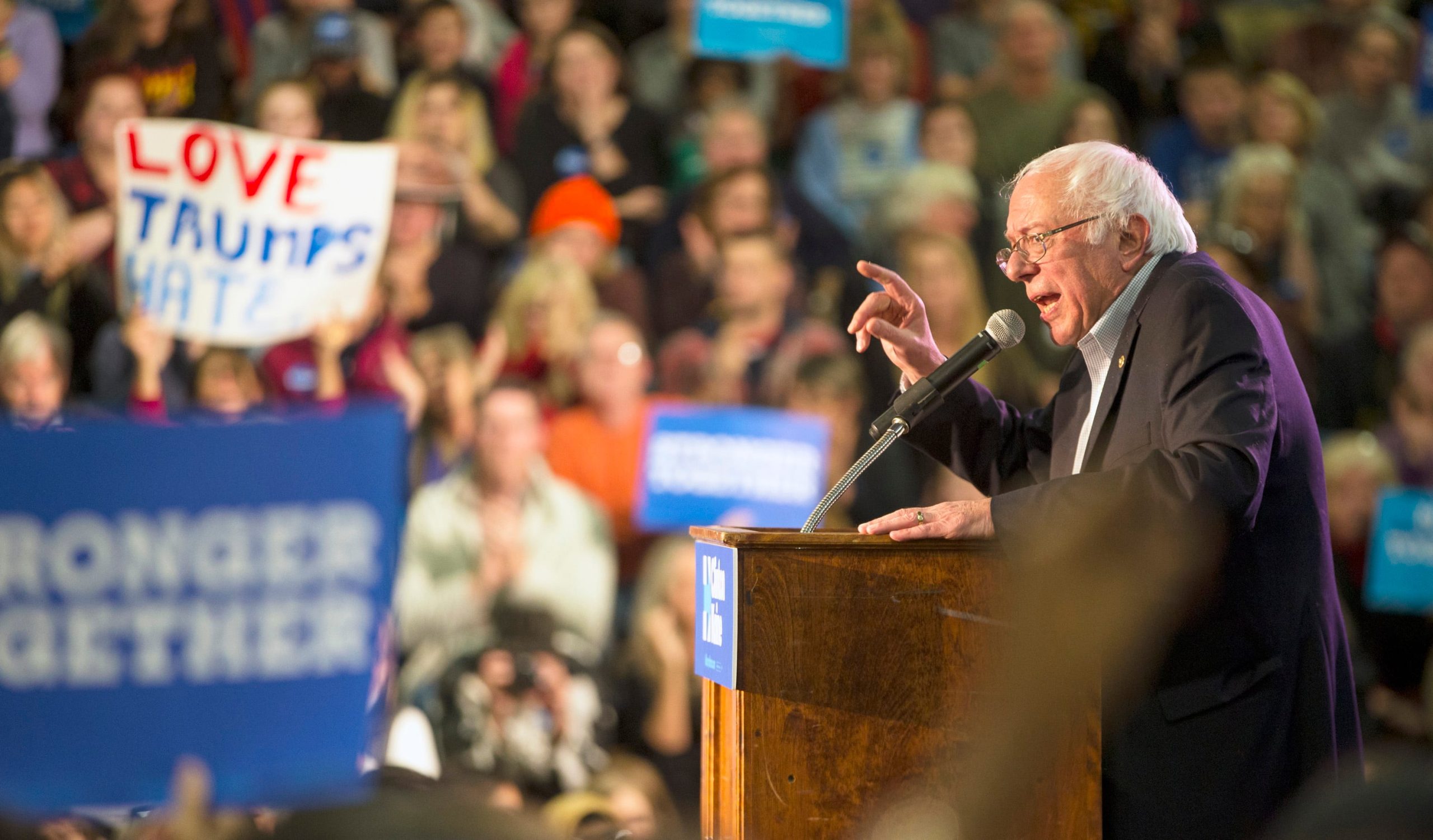
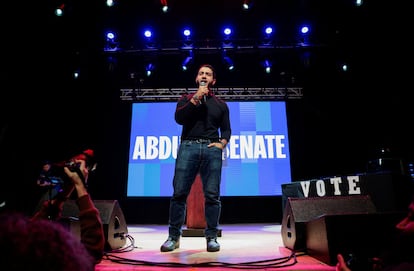
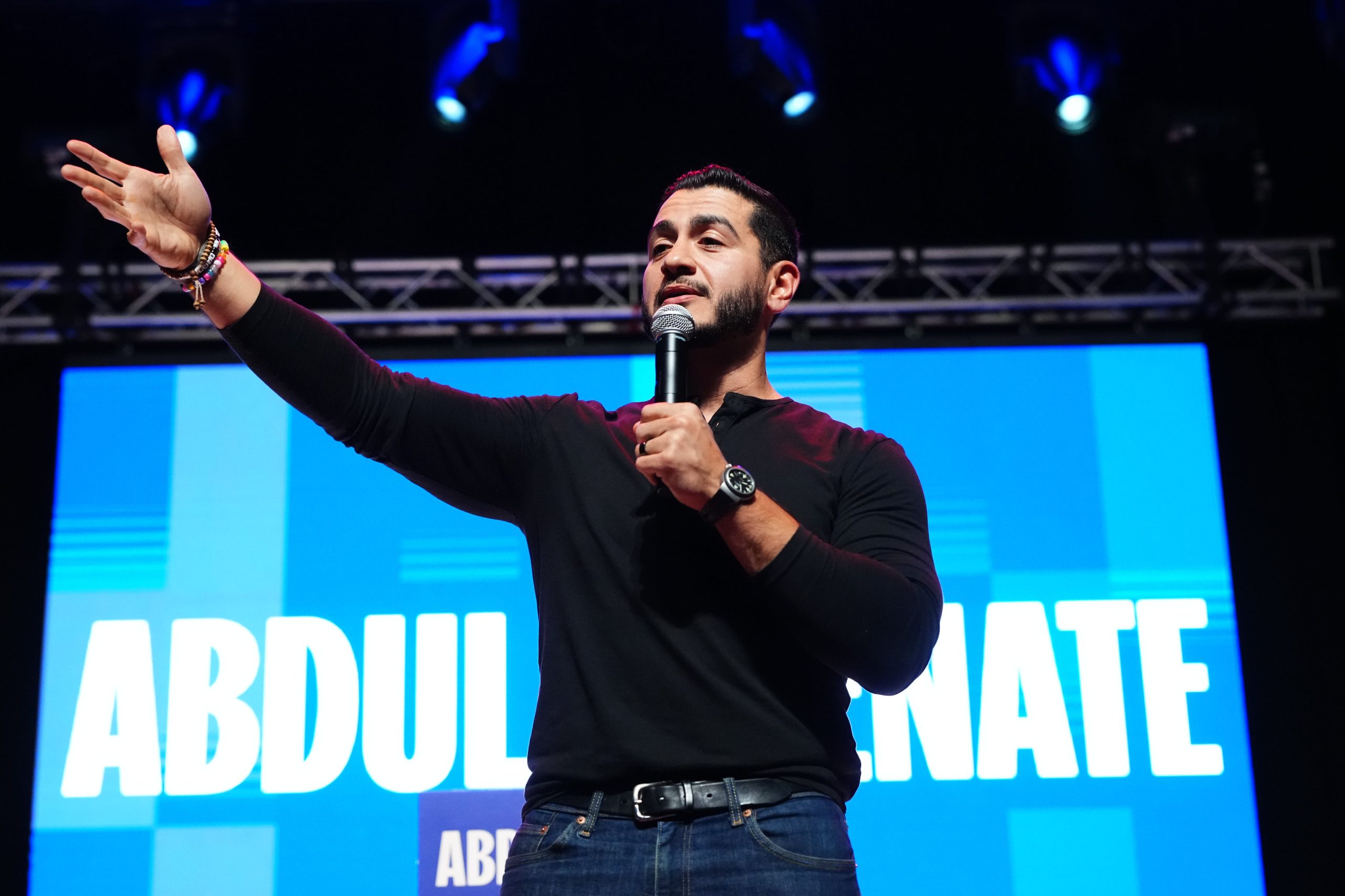
A doctor from Michigan said the “suffocating hold that billionaires and oligarchs” exercise over American politics and the economy had to be broken. It was Abdul El-Sayed. Over in the other end of the country, a son of Mexican immigrants from the Central Valley spoke about how all the wealth produced in Silicon Valley was “in the hands of the richest 1%.” It was Randy Villegas. And on the East Coast, an artist and union organizer warned of the weariness with an establishment “that has abandoned the working class.” That was Claire Valdez.
At that point, during the campaign for the midterms, neither El-Sayed had won the Senate seat, nor Villegas the seat for California’s 22nd District, nor Valdez the seat for New York’s 7th District. Without calling it “economic populism,” these new candidates were speaking the language that Senator Bernie Sanders began testing more than three decades ago — the language he used in his popular 2016 campaign against Hillary Clinton for the Democratic nomination, which won primaries in 22 states. “If we do not create an economy that works for ordinary people,” Sanders warned then in an interview on Moyers & Company, “we will not change this country.”
His proposal was not enough to secure a victory over Clinton; rather, it earned him criticism within his own party. For years, Sanders appeared to tread alone along the thorny path of the political left in a United States not fully ready for him. Until now. After the Democrats’ sweeping victory on November 3, and with a significant number of progressive and even socialist candidates winning, Sanders posted a video set to David Bowie’s iconic song Starman, saying these were “some of the greatest progressive victories in modern American history.”
The video showed images of the independent senator from Vermont raising the hands of El-Sayed, Villegas and Valdez, among other candidates, at campaign events he traveled to in order to endorse them. They all won their seats in Washington and Sanders celebrated them. But, in truth, it was a celebration of himself, because after going through so much, at age 85 and convinced he will never be president of the United States, history has shown that without Sanders there would probably not have been an election the one that made Zohran Mamdani mayor of New York, nor a wave of progressive or socialist candidates triumphing above the country’s dominant political trends.
“If you’re asking me, am I shocked by that? That the argument about economic justice and taking on oligarchs and fighting for the working class is working in Texas, is working in Ohio, is working in Montana, is working in Florida, is working all over the country — no, I am not shocked. That is what I’ve always believed,” Sanders told Politico last week.
Several analysts agree with him. Political researcher Dino Guastella, a board member at the Worker Class Policy Center (WCPC), believes “economic populism is very fashionable among Democratic candidates,” and that there has been “an evolution in the party that has brought it closer to Sanders’ positions.” Others, like Dr. Lincoln A. Mitchell, a scholar and political analyst at Columbia University’s School of International and Public Affairs, insist these are messages that could have been heard in the 1970s or the 1980s. “This is less new than people think. Is it really that different from what Jerry Brown said in 1992, or what Jesse Jackson said in 1988, or from Bernie Sanders’ 2016 campaign?” he asks.
What is different, and what researchers agree on, is that Donald Trump has helped take the lid off a pot that had long been boiling: how corporations and billionaires have been shaping the country’s politics and the everyday lives of the working class.
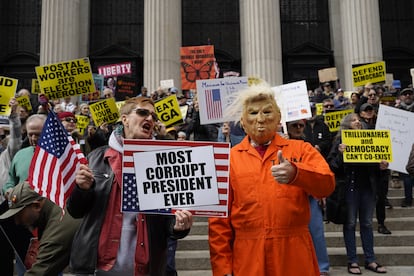
In pre-election polls, voters loudly demanded economic change. Across the board, surveys recorded the high cost of living as the top concern: from rising gasoline prices to the increased cost of grocery shopping.
According to Erica Etelson, president of the political analysis organization Rural Urban Bridge Initiative, ten years after Sanders campaigned with his so‑called “kitchen table populism,” focused on households’ everyday concerns and pointing to the influence of money in the country’s political and economic life, “the number of Americans facing financial hardship has increased considerably.” This has created, Etelson says, “fertile ground for the new wave of populist candidates who, this year, built their message around families’ economic concerns.”
Morris Katz’s formula
In the 2024 presidential election, American voters also urgently demanded economic improvement — an opening Trump, with his populist rhetoric, was able to exploit. But who is considered part of that working class — one of the debates that is hard to settle in the United States — is understood in a very particular way within the MAGA movement.
According to Dr. Mitchell, when Trump thinks of this sector he means “the white working class,” when in reality this group must cope not only with the cost of gas and food but also with the costs of education, health care and housing.
“The working person today is not working in an auto plant building Chrysler vehicles,” the Columbia scholar says. “They’re driving for Uber 20 hours a week. They’re working as a cashier at a Walmart or a Costco 20 hours a week. They’re looking for odd jobs or swapping services with neighbors. ‘I’ll watch your kids if you fix my car.’ That’s how much of the U.S. population manages to get ahead. It’s a very, very difficult economic situation.”
That was the message Mamdani captured perfectly, and which, according to political strategist Morris Katz in an interview with the local outlet Tribeca Citizen, is what drew him when they sat down for coffee before Mamdani ran for mayor. Katz, who became the lead media strategist for Mamdani’s mayoral campaign, said that Mamdani spoke about the working class and about taking care of New York as someone who wants everything in order in their living room, as if there were nothing politics couldn’t fix.
Katz’s political formula is said to have been behind Mamdani’s seismic rise, but the truth is Katz also inherits Sanders’ proposition: a political candidate, in his terms, must understand that the problem for much of American society is economic. “For a long time, politicians accepted how people felt about the economy but refused to take responsibility for actively participating in changing it,” the 27‑year‑old New Yorker told The Atlantic.
Katz’s formula also seeks other qualities in the candidates he recruits: that they not be the typical politicians who arrive at the Capitol, but rather “authentic” people. “We need real people to run for public office,” he told Tribeca Citizen. He and his agency, Fight Agency, also produced the campaigns of Randy Villegas, Abdul El‑Sayed and Gina Hinojosa in Texas. The strategy, however, did not pay off with Graham Platner, an oyster farmer and Senate hopeful in Maine, who withdrew from the race after allegations of inappropriate sexual conduct surfaced against him.
Experts say these Democrats listened to the national demand: without appearing extremist to the moderates, they rebuilt a political identity close to the working class, focused on the cost of living and opposed to the concentration of power and wealth. Research by Dustin Guastella and Erica Etelson through the Worker Class Policy Center (WCPC) found that more than 70% of Democratic candidates in 2026 were appealing to populist rhetoric in their campaigns. After analyzing candidates’ websites, they saw that about 60% attacked some form of economic elite, 44% targeted the political elite, and 35% did both.
The question is: why did the United States wait a decade to embrace Sanders’ populism?
The displacement of ‘wokeness’
Researcher Guastella recalls that in 2016 many attacked Sanders, insisting his populism was racist, sexist or xenophobic. “They insisted his way of doing politics was ‘toxic,’” he says. “Unfortunately, instead of refuting these accusations, many sectors of the left joined them.”
In the 2020 elections, the establishment chose Joe Biden over Sanders, fueling an anti‑populist and woke wave that this new generation of candidates has tried to distance itself from. Even the newly reelected congresswoman and potential presidential hopeful Alexandria Ocasio‑Cortez has acknowledged that voters avoid identity battles and are more attracted to a political pitch that shakes up billionaires and Big Tech.
“Many members of the left and the Democratic establishment embraced highly unpopular causes and slogans, like ‘defund the police’ or support for open borders,” Guastella says. “These new progressive slogans were enthusiastically received by professional, college‑educated voters, but were largely rejected by the working class.”
Over time, these woke ideas became associated with the Democratic Party as a whole, “which hurt them when it came to attracting potential working‑class voters,” the analyst says, who believes Democrats have drawn the right lesson from all this. They understand that the economic critique from the left remains relevant: “The rich own too much power, while the rest of the population lacks sufficient wages to make ends meet. Republicans have done nothing to solve this problem; in many ways, they have made it worse,” Guastella argues.
Dr. Mitchell believes Democrats must also recognize that what really drove voters in these elections were two things: “The economy, and the genuine frustration and anger about what they see in the Washington administration. Investigate corruption, and not only Trump’s; they should also bring before Congress the corporate billionaires who are bribing it. That is part of what populism demands.”
Sign up for our weekly newsletter to get more English-language news coverage from EL PAÍS USA Edition










Abdul El-Sayed
Islamophobia, Free Healthcare, And A Final Blow: The Battle For Michigan Will Determine Just How Far To The Left The United States Can Shift


República Checa – España En Directo | España Vence Con Sufrimiento A República Checa Gracias A Los Goles De Baena Y Pubill

Liam Lawson

Playa Flamenca Red Cross Charity Day
Viral video in Spain sparks fury over drivers who ‘have no idea how to drive’
Spain’s pet owners face fines of up to €200,000 for animal welfare offences
Halloween lunch sells out as 51 join Marbella get-together


-
DGT4 weeks ago
Viral video in Spain sparks fury over drivers who ‘have no idea how to drive’
-
Keeping cats and dogs outside4 weeks ago
Spain’s pet owners face fines of up to €200,000 for animal welfare offences
-
Age Concern Marbella - San Pedro2 weeks ago
Halloween lunch sells out as 51 join Marbella get-together
-
Council tax (IBI)4 weeks ago
Barcelona plans 150% property tax increase on tourist flats ahead of 2028 ban
-
airports4 weeks ago
Travelling between Spain and Italy? The extra border checks could soon end
-
Consumer Rights Spain4 weeks ago
EU offers extra year of warranty on phones, but Spain faces delays
-

 New Developments2 weeks ago
How To Get A Tourist Rental Licence In Andalusia (Spain) – Step-By-Step Guide 2025
-

 %4 weeks ago
Santa Pola Museo Del Mar