
Latest
How El Niño Could Affect Your 2026-2027 Winter Holiday And What To Check Before Booking


 Staysure advises flexible winter bookings and careful insurance checks in its El Niño travel advice.














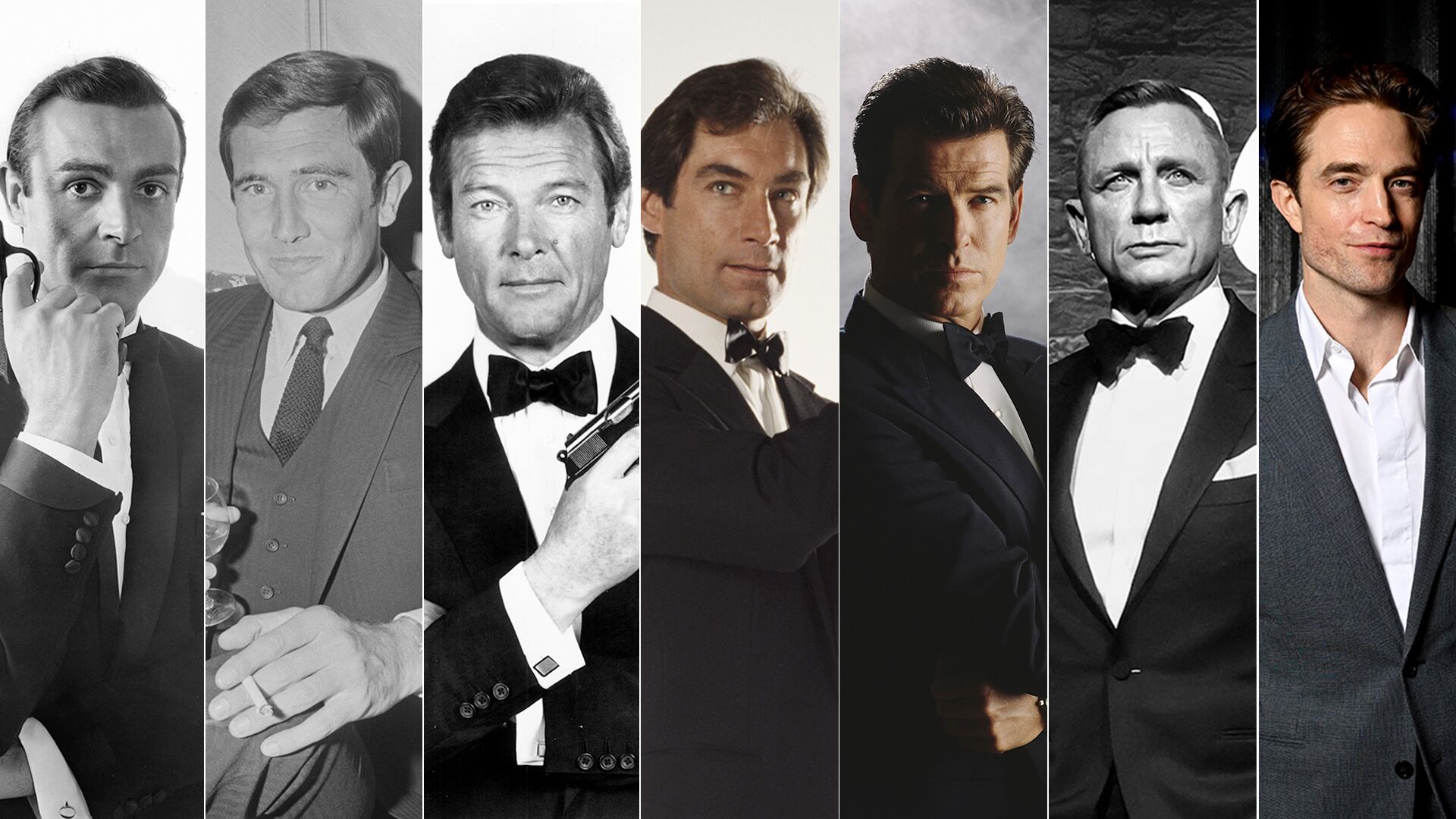
Few things in cinema are more subjective than deciding who was the best, or worst, James Bond. The same goes, broadly speaking, for choosing between actors who have played the same character. Such debates can lead to lively and fiercely contested arguments… except in obvious cases such as Superman (Christopher Reeve) and, to open another can of worms, Batman (George Clooney, though he was saddled with the worst suit and the worst script in the worst film).
There have been several James Bonds. By the official canon, there have been seven actors in the role, although an eighth, David Niven, played him in the 1967 Casino Royale, a film made outside the Eon Productions umbrella, the company that held the screen rights to Ian Fleming’s creation. The first actor to bring Bond to the screen was the American actor (sacrilege!) Barry Nelson in the 47-minute television adaptation Casino Royale (1954), broadcast as part of CBS’s Climax! series.
Incidentally, even Sean Connery stepped outside the official canon when he played the secret agent for a seventh time in Never Say Never Again (1983), produced by Warner Bros., while Eon had Roger Moore under contract. It is also striking to look at the list of actors who came close to playing Bond, or turned down the role altogether: Cary Grant (who would have been magnificent), Adam West (the Batman of the classic TV series), Patrick McGoohan, Burt Reynolds, Sam Neill (who would have landed the part had Dalton declined it), Henry Cavill and Sam Worthington (the two finalists who lost out when Daniel Craig won the role), and now Nicholas Hoult, who lost the role to Robert Pattinson.
If one had to sum up Bond’s screen incarnations in a few words, time has been especially kind to George Lazenby’s lone outing. Sean Connery remains the purists’ Bond; Roger Moore the campiest; Timothy Dalton is the favorite among those who prefer the Bond closest to Ian Fleming’s original creation; Pierce Brosnan got the role a little too late in his career; and Daniel Craig’s standing only grew over time, aided by a run of films conceived almost as a self-contained series of their own.
What will Robert Pattinson bring to this list? For starters, strong acting credentials and box-office appeal, which is probably why he was chosen by director Denis Villeneuve, who had already worked with him on Dune (with Steven Knight writing the screenplay), and by producers Amy Pascal and David Heyman, whom Amazon Studios has put in charge of the franchise.
For Amazon Studios, he is clearly the safest choice, assuming that once Pattinson completes The Batman Part II, he will never again play the Dark Knight, a point on which virtually no one in the industry seems to disagree. He has signed on for three films, providing continuity for the development of the character, although he is already 40 years old. By contrast, his rivals in the casting process, Jack Lowden, the favorite among Bond traditionalists, Callum Turner, Josh O’Connor and Nicholas Hoult, are all 36.
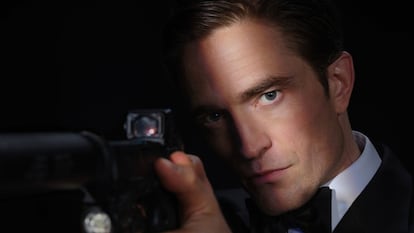
Will he be a sexy Bond? Craig took the character into thoroughly physical territory, something that does not come naturally to Pattinson, although he did get into shape for The Batman.
Writing in The Hollywood Reporter, James Hibberd notes: “The angular Pattinson often has a nervous or uncomfortable quality, which makes him highly watchable, but even his romantic roles tend toward quirkiness […] Pattinson is the first actor ever cast as Bond who seems more suited to play a Bond villain than the hero.”
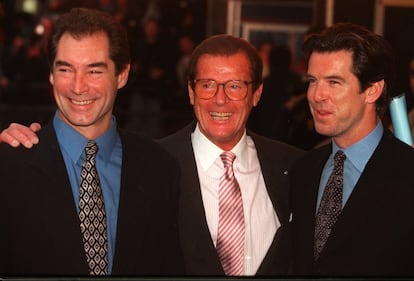
And what was the secret agent like in Ian Fleming’s 12 novels? The Royal Navy commander was Scottish, dark-haired, with blue-grey eyes, 1.89 metres tall and weighing 93 kilos; lean rather than muscular, cold and calculating, a bon vivant and a gentleman, sophisticated yet violent, with a face resembling that of the U.S. composer Hoagy Carmichael.
For Bond’s previous screen-rights holders, half-siblings Barbara Broccoli and Michael G. Wilson, the cinematic 007 must possess “presence, charm, personality and acting ability.”
Could Bond be played by a woman? “No,” Broccoli told EL PAÍS, “it will always be a male character. Because Fleming wrote it that way. Cinema in general certainly needs more female protagonists, but they should exist in their own right, not by transforming previously existing male characters.”

While we wait for Pattinson to take over the role, let’s look back at the other actors who have played 007, ranked from worst to best.

6. George Lazenby
The only actor from outside the British Isles (the United Kingdom and Ireland) to play 007 in the official canon. The Australian was also the youngest, taking on the role at 29. He appeared in only one film, On Her Majesty’s Secret Service, because although he had signed a seven-picture deal, midway through production, amid his own doubts and pressure from his agent, who insisted Bond was an outdated character, he announced that he would make only that film. As Bond, he was both tough and romantic. In the end, he was the one who undermined any chance of developing the character further.

5. Pierce Brosnan
When he first received the offer, he was tied to the television series Remington Steele. By the time he was finally able to free himself from that contract, however, he was a decade late to receive the double-0 designation, the licence to kill. Even so, he got off to a strong start with GoldenEye (1995). He made the most of his trademark swagger and helped bring 007 into the modern era, although some of his films, such as Die Another Day, arguably took things a step too far.
4. Roger Moore
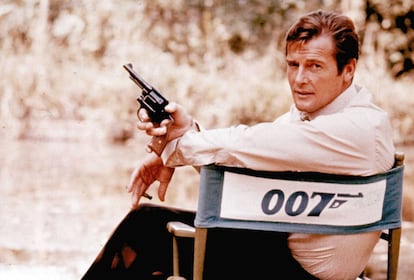
Moore turned down the first offer to play Bond when Lazenby walked away from the role, as he was happy starring in The Saint. He was the oldest actor to take on 007, at 46, and also the oldest to leave the role, at 58. In fact, if Never Say Never Again is excluded, only Daniel Craig spent longer in the role. By the end, Moore was looking a little long in the tooth on screen, as the producers forced him to continue playing the character. He remains the most playful, debonair and effortlessly charming Bond, although he lacked some of the depth and gravitas of other incarnations. His was unmistakably Bond’s pop era.

3. Daniel Craig
Time has a way of settling these debates. Craig, who had already established himself as a formidable dramatic actor in films such as Road to Perdition, Layer Cake, Some Voices, The Mother and Munich, entered the franchise facing a wave of skepticism: he was too blond, lacked charisma, was too heavily built, critics said. After a superb debut in Casino Royale, however, he steadily won over audiences, ultimately starring in one of the finest Bond films ever made, Skyfall. Tough, brutal and hard-hitting in the action sequences, Craig gradually revealed the character’s vulnerability and ultimately brought his story to a close with Bond’s death in No Time to Die.

2. Sean Connery
He created the character. So completely, in fact, that Fleming altered details in some of his later novels to bring his literary Bond closer to the version Connery portrayed on screen. Incidentally, Connery also went on to become a superb dramatic actor later in his career. His Bond was macho, violent, sophisticated and supremely self-confident. But more importantly, his Bond paved the way for all those that followed. The films he starred in established virtually every defining element of the cinematic Bond formula: a spectacular pre-title sequence; lavish opening credits accompanied by a theme song performed by a major music star; exotic locations; gadgets devised by Q; flirtation with Miss Moneypenny; a dressing-down from M; a villain of unusual intelligence and menace; the inevitable “Bond. James Bond”; another order for a “vodka martini, shaken, not stirred”; plenty of casinos and gleaming sports cars fresh off the production line. And, of course, the Bond girl, or girls, who have gained far greater dramatic weight since the turn of the century.
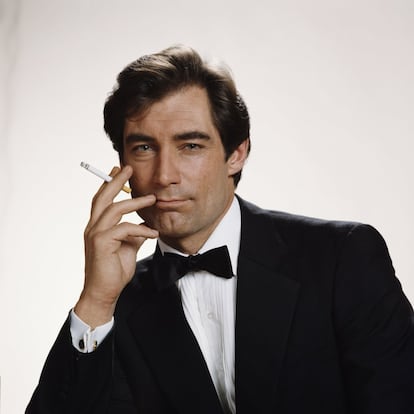
1. Timothy Dalton
The actor who came closest to Fleming’s Bond, and one who insisted on shaping the scripts accordingly. He was also the actor who turned down the role of 007 more times than anyone else before finally accepting it. First, before Lazenby was cast, because he felt he was too young. Then again in the mid-1980s, when he still had reservations about the part. He finally agreed to take on the role in 1986.
Dalton played Bond in two outstanding films, The Living Daylights and Licence to Kill. He declined to return for a third, GoldenEye, after legal disputes between the studios left him waiting five years to put on the tuxedo again. By then, he felt he was too old for the role.
A star of the British Shakespearean stage, Dalton created a Bond who was aggressive, ruthless (just look at the number of people he kills in Licence to Kill), realistic, intensely serious and stoic, albeit with the occasional flash of a smile. He also performed almost all of his own action scenes, although he never had the chance to showcase his skill as a swordsman. Dalton was the man who truly grasped Bond.
James Bond will return…
Sign up for our weekly newsletter to get more English-language news coverage from EL PAÍS USA Edition



Every James Bond, Ranked From Worst To Best

El Pensador Que Preguntó Qué Siente Un Murciélago, Thomas Nagel, Premio Berggruen 2026
En Gráficos: Así Resurgieron Los Brotes De Sarampión En Estados Unidos


-

 New Developments2 weeks ago
Luxury Villas For Sale, Estepona – ProjectL1
-
Age Concern Marbella - San Pedro3 weeks ago
Halloween lunch sells out as 51 join Marbella get-together
-

 New Developments3 weeks ago
How To Get A Tourist Rental Licence In Andalusia (Spain) – Step-By-Step Guide 2025
-

 %3 weeks ago
Spain Orders Replacement Of Eight Million Gas Meters: New Rules, Costs And Deadlines
-

 New Developments2 weeks ago
The San Roque Club – Townhouses For Sale
-
Barcelona riots3 weeks ago
Looting and street violence hit Barcelona as El Corte Inglés customers are trapped
-
countryside2 weeks ago
Rural revival: Five Almeria villages make moving inland easier and more enticing
-

 New Developments4 weeks ago
Inside The Most LUXURIOUS Apartment Building In Spain!