Connect with us

%

Eleven-Year-Old From Malaga To Cycle 20,000 Km To 56 Dog Shelters

Published

on

eleven-year-old-from-malaga-to-cycle-20,000-km-to-56-dog-shelters

Samuel, ready to cycle the world for dogs in animal shelters. Credit: SCtW FB

Samuel turns twelve just weeks before he leaves Malaga on November 15, 2026. He plans to pedal 20,235 kilometres across 20 countries over 594 days, stopping at 56 animal shelters along the way. At each one he will film a single dog and shares its story so donations go straight to that shelter’s own link. No middlemen, no foundation, nothing held back.

His parents will ride every kilometre with him. Dutch by nationality and born in Belgium, Samuel has already lived in France and a mountain village in Andalucia before settling in Malaga. He speaks Dutch, English and Spanish fluently, which means he can chat to shelter staff himself from Morocco to Turkey and beyond. Food comes high on his list of things to look forward to, though the shelters top it.

How a simple idea grew legs

Samuel first said he wanted to cycle around the world. No route, no plan, just that. The family had talked for years about a big camper-van trip, but the numbers never stacked up. Then he asked why they could not do it on bikes instead. Three bikes and a tent suddenly made the whole thing possible.

He grew up with rescue dogs and the simple rule that a dog you find is a dog you keep. So the purpose became clear: stop at shelters because those dogs deserve better. At six he had already walked ten days of the Camino de Santiago on his own legs. This time the classroom moves with him, with geography under the wheels, languages in the next kennel, maths in daily distances and budgets.

Ordinary bikes, no shortcuts

Electric bikes looked safer at first. Batteries over 160 Wh cannot fly on passenger planes, and the route needs three flights. A motor that packs up in Laos or Morocco is no roadside fix either. So the family switched to ordinary touring bikes. That means shorter days of about 50 kilometres, rest days every three or four, and a flatter route with mountain passes cut out wherever possible.

Nineteen months instead of eighteen. Twenty thousand kilometres will be under his own steam.

Samuel was disappointed at first, then simply said he would do it the hard way. Everything that holds up, or does not, will be down to the frame, wheels and parts.

Real cost and real help needed

He leaves school, his own room and his mate José behind. This is no holiday or stunt. It is getting up on the mornings nobody wants to. Bikes, ferries, visas, food and safe places to sleep for nearly two years will cost more than the family can cover alone. Training happens now on a bike that is still too big for him.

Supporters can still make a difference. Three proper touring bikes sized for a growing twelve-year-old, panniers, a solid tent, helmets, spare parts, a tough camera and basic kit remain on the list.

Ideal arrival is by October 1 so everything can be tested. Partial help counts too. Anyone who manufactures any of it or simply wants to chip in for the daily costs can get in touch. Donations can get to him via PayPal at paypal.com/paypalme/samuelcyclestheworld.

Spain already struggles with hundreds of thousands of dogs and cats entering shelters each year, as Euro Weekly News has reported in coverage of the abandoned dog crisis and local rescues such as ACE in Mijas and Axarquia Animal Rescue. Samuel’s films will send money and attention straight to the places that need it most, one dog and one country at a time.

He says that he already knows he will cry somewhere. He is going anyway.

%

Scare At Benalmadena Hotel As Fire

Published

on

scare-at-benalmadena-hotel-as-fire

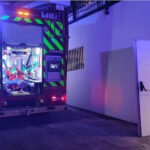
Firefighters set up outside Benalmadena hotel. Credit CPB Benalmadena

Nearly 300 holidaymakers staying at Spirit Hotel Benalmadena faced a sudden scare on Sunday night when flames broke out inside the beachfront property. No one suffered any injuries, and crews brought the situation under control without major drama.

Fire starts in basement massage room

Flames appeared around 9pm in a room on floor -2, specifically the massage salon that had already closed for the evening. Empty at the time, the space still filled with smoke quickly enough to trigger safety protocols across the hotel. Guests already inside received instructions to stay put or move to safer areas as a partial evacuation got under way. New arrivals were held outside until the all-clear came through.

Two crews from Benalmadena firefighters raced to the scene and extinguished the blaze in short order. Hotel staff worked hand-in-hand with the firefighters throughout, while Local Police and National Police officers helped manage the perimeter and keep everyone calm. Officials later praised the smooth teamwork that stopped the incident escalating.

Guests return after all-clear

By roughly 10.15pm the area was declared safe. Holidaymakers filtered back to their rooms, and the hotel returned to normal operations. Manager Hugo Uria described the evening as “a right scare” yet stressed that sensors and sprinklers had kicked in fast, limiting the damage. Investigators are still looking into exactly how the fire started.

This latest alert comes after other recent incidents on the Costa del Sol, including a tragic house fire in Arroyo de la Miel earlier this summer that claimed young lives (see our earlier coverage here). Local crews have also been honing skills through night-time drills at the Benalmadena cable car, involving provincial firefighters and drones.

Spirit Hotel Benalmadena sits right on the seafront along Avenida Antonio Machado. Anyone planning a stay can check current facilities and offers on the official site here. For wider Costa del Sol emergency updates, keep an eye on local fire service channels and Euro Weekly News reports.

Guests can rest easy knowing the rapid response and solid coordination prevented any harm this time.

Continue Reading

%

Premature Baby Born At Just 24 Weeks Has Sight Saved By Spanish Doctors

Published

on

premature-baby-born-at-just-24-weeks-has-sight-saved-by-spanish-doctors

Retinopathy of prematurity is one of the major causes of childhood blindness. Photo credit: Iryna Inshyna/Shutterstock

A baby born so early that every day of survival mattered was facing another devastating battle, the possibility of losing its sight. Born at just 24 weeks, the premature baby developed a serious eye condition that can lead to permanent blindness, but doctors in Elche managed to intervene before the damage became irreversible.

The baby was suffering from severe retinopathy of prematurity (ROP), a condition affecting the developing blood vessels in the retina. In serious cases, it can cause the retina to detach and result in permanent loss of vision. Specialists at the Hospital General Universitario de Elche treated the baby with a highly specialised procedure designed to stop the abnormal blood-vessel growth before it could cause irreversible damage.

A race to protect the baby’s sight

Being born at 24 weeks meant the baby’s eyes were still developing when it entered the world. The blood vessels in the retina normally continue developing during the final stages of pregnancy. Extremely premature birth interrupts that process and can leave the retina vulnerable to abnormal blood-vessel growth. In severe ROP, those vessels can damage the retina and eventually cause it to detach.

That was the danger facing the baby in Elche, doctors identified the condition and were able to intervene while treatment could still prevent permanent damage. The hospital says the intervention preserved the baby’s visual function, avoiding the loss of sight that can occur when severe ROP progresses untreated.

Highly specialised treatment

The treatment involved an intraocular injection of an anti-VEGF biological drug. The medication works by reducing the signals responsible for abnormal blood-vessel growth in the retina. By controlling that growth, doctors can reduce the risk of further damage and retinal detachment.

Although the injection is minimally invasive, carrying it out on a baby born at only 24 weeks presented significant challenges. The patient was extremely fragile and required specialist neonatal care before, during and after the procedure. The hospital therefore brought together its Ophthalmology Department and Neonatal Intensive Care Unit for the intervention.

Protecting a fragile patient

Ophthalmologists Cristian Fernández and Manuel Baeza performed the eye procedure, while paediatrician Consuelo Vázquez and the neonatal intensive-care team were responsible for preparing and monitoring the baby. The team used a specific neonatal intensive-care protocol and a micro-dosing system to administer the medication.

The baby’s condition meant that the procedure could not simply be treated as a routine eye injection. Its extremely premature birth and very low weight required careful monitoring throughout. The cooperation between the specialist teams allowed doctors to treat the eye problem while maintaining the level of intensive care required by such a vulnerable patient.

A condition that can steal a child’s sight

Retinopathy of prematurity is one of the major causes of childhood blindness, fortunately it is preventable  It occurs primarily in babies born very prematurely because their retinal blood vessels have not completed their normal development. Some cases are mild and resolve without treatment. More severe cases require close monitoring and intervention to prevent permanent damage.

That makes screening particularly important for babies born at very low gestational ages. In this case, doctors were able to detect the problem and act before the retina suffered irreversible damage. The successful intervention means the baby has avoided one of the most serious consequences associated with severe ROP.

What happens now?

The treatment does not mean the baby’s medical journey is over, extremely premature babies often require continued specialist monitoring, and babies treated for ROP need follow-up examinations to check how the retina develops and ensure there are no further complications. For this child, however, doctors have achieved the outcome that mattered most: protecting its sight during the earliest and most vulnerable stage of life.

The case also demonstrates the importance of specialist neonatal and ophthalmological care for babies born at the limits of viability. A child who arrived at just 24 weeks was facing the possibility of permanent blindness on top of the many challenges associated with extreme prematurity.

Doctors in Elche have now stopped that threat before it could become irreversible. For the family, the intervention means their baby can continue growing with its visual function preserved, something that could have been very different without timely specialist treatment.

Continue Reading

%

Long-Awaited Health Centre To Open In Nerja

Published

on

long-awaited-health-centre-to-open-in-nerja

New health centre under construction in Nerja. Credit: CBO FB

Locals in eastern Costa del Sol are finally seeing light at the end of the tunnel after more than twenty years of waiting. Construction on the brand-new Nerja health facility is nearing completion, with regional health authorities targeting a phased opening prior to the end of 2026, with any luck.

Being built between Avenida de Pescia and Cuesta del Ingenio near the Chillar River, the facility represents a €9.4 million investment funded through European relief funds. Regional healthcare managers will meet with site directors and contractors early in September to finalise operational schedules.

Modern medical facilities for thousands of residents

Covering 4,520 square metres over three storeys and a basement, the building offers more than double the floor space of the existing medical hub. Approximately 25,000 residents from Nerja and nearby Frigiliana will rely on the facility, which is also built to handle seasonal tourist influxes.

Inside, patients will find 26 standard consultation rooms, five multipurpose suites, and five dedicated paediatric spaces. Specialist units cover minor surgery, dentistry, physiotherapy, radiology, and critical care.

Moving operations from the old facility will happen gradually to prevent any disruption to everyday patient appointments. Medical staff, diagnostic equipment, and administrative teams are set to transition in stages across late 2026.

Major urban upgrade in progress

Plans for the facility apparently date back to 2003, though years of bureaucratic delays, site alterations, and funding debates stalled progress until construction finally kicked off in July 2024.

Future ownership of the current medical building remains undecided. Local council leaders want to convert the property for municipal use once ownership transfers over from the Junta de Andalucia.

Nearby infrastructural changes are moving forward alongside the health complex. Local authorities are processing a €27.61 million underground car park project with 847 spaces, plus a new connecting road linked to Avenida de Pescia to ease traffic flow across the town.

Continue Reading
Advertisement
Advertisement

Spanish Real Estate Agents

Tags

Trending

Copyright © 2017 Spanish Property & News