
Elon Musk
‘Enshittification’ Reaches Social Media: ‘For Zuckerberg And Musk, Your ‘friends’ Are A Burden. They Just Want You To See Ads’

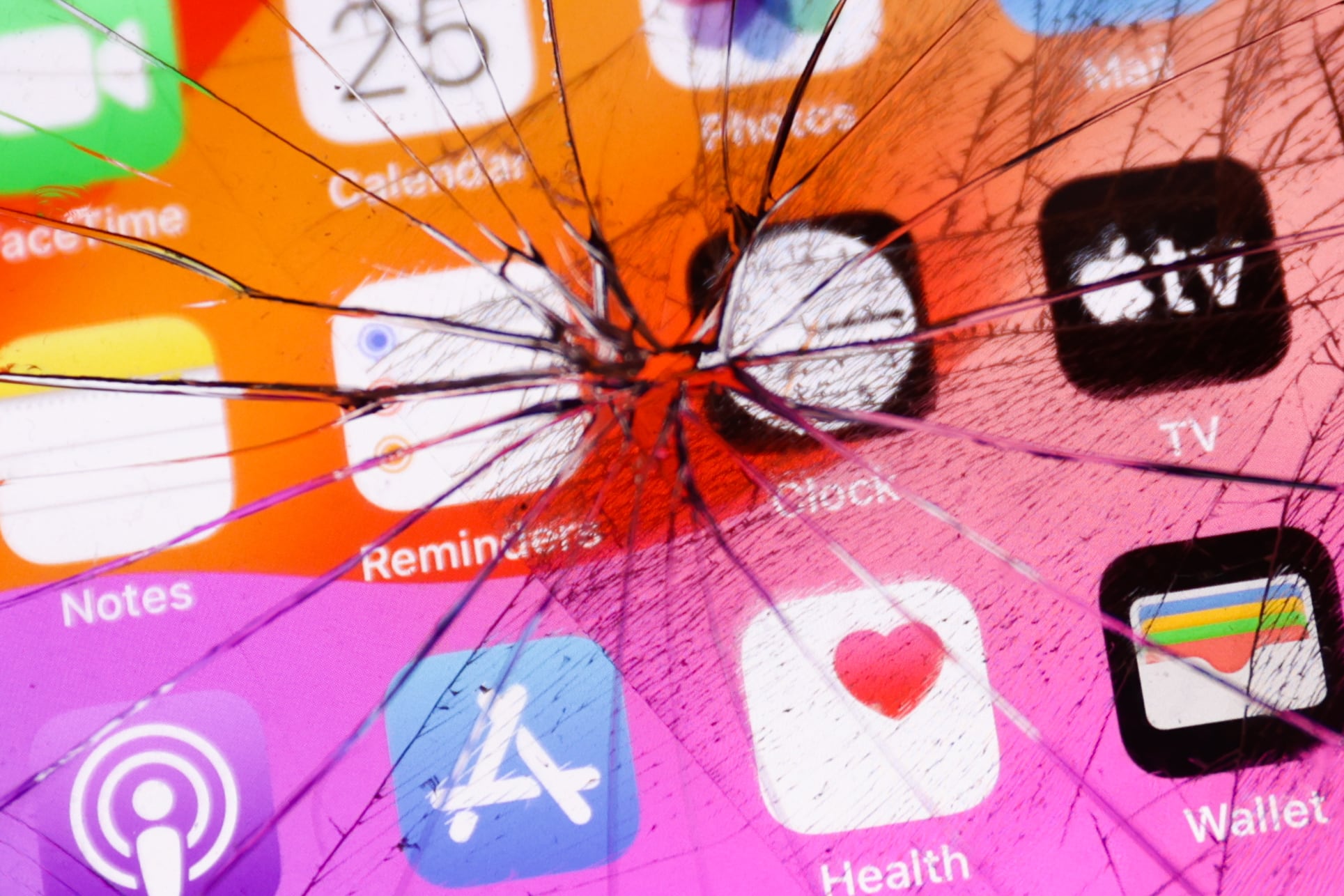
A friend is upset because you didn’t “like” a photo from her last trip, but the truth is you haven’t even had a chance to see it. Instead of displaying it on your feed, Instagram prioritized showing you ads for food.
Upon logging onto X, the cascade of posts with the heading “for you” includes a paid user launching into a pro-Nazi rant. You click to report it, but the content moderation system doesn’t work. And, to make matters worse, the Nazi actually earns money from the interaction.
There was a time when social media was useful for connecting with like-minded people, coordinating charitable initiatives, strengthening friendships, or forging romantic relationships. In recent years, however, these spaces have become more hostile, and not only because of hate speech, which social media giants are increasingly less willing to combat. Something seems to have broken down in the functionality of the internet, between Facebook’s erratic algorithm and Google search results now headed by fabricated, AI-generated content and sponsored ads (while the correct response to your query is buried at the bottom of the page).
In 2022, the Canadian-born writer and activist Cory Doctorow – a member of the Electronic Frontier Foundation (EFF) and a former observer delegate to the United Nations’ World Intellectual Property Organization (WIPO) – coined a term for this phenomenon: “enshittification.” Named Word of the Year by the American Dialect Society in 2023 and by the Australian Macquarie Dictionary in 2024, it encapsulates both a clear description of the accelerated decline of these social media platforms and – as Doctorow writes – an analysis based on three key elements: “It’s an analysis that explains the way an online service gets worse, how that worsening unfolds, and the contagion that’s causing everything to get worse, all at once.” The 54-year-old compiled his thoughts on the subject in a book, titled Enshittification: Why Everything Suddenly Got Worse and What to Do About It (2025).
In his book, he studies the cases of Facebook, Amazon, Twitter (now X) and Apple products from the perspective that doctors use to study pathogens: he “explore[s] the epidemiology of enshittification.” Doctorow establishes four phases to this:
1. First, platforms are good to their users.
2. Then they abuse their users to make things better for their business customers.
3. Next, they abuse those business customers to claw back all the value for themselves.
4. Finally, they have become a giant pile of shit.
“I’m thrilled to see the term spreading,” he tells EL PAÍS via video call. “It may not always be used exactly as [I] intended [it to be], but I think it’s great that people are finding that the term offers a way to express unease and frustration with things that are all interconnected. Beyond the unique characteristics of digital companies, the same old lack of competition [in the monopolistic sense], weak regulation, as well as limited bargaining power for workers lead to the problems that we have with all kinds of services.”
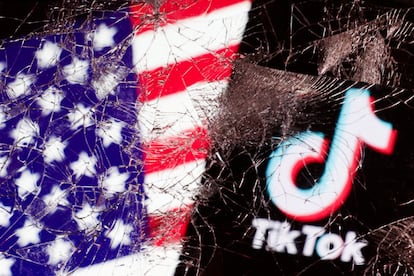
So, why are social networks, which are supposedly based on friendship, showing us less and less content from our friends? “Even though [friendship is] what keeps you on Facebook and Twitter, for Mark Zuckerberg and Elon Musk (the respective owners of both platforms, as well as Instagram and WhatsApp in the former’s case), their asset – [which consists of] your “friends” – is actually a burden, because [maintaining] your friendships doesn’t involve staying [online] as long as possible watching ads,” he reasons. “That’s why they’re jealous of TikTok and its algorithm, because it’s different with content creators. A creator can’t pay rent or buy food if you don’t watch their content, so they organize everything they do and dedicate every hour they can to figuring out how to keep you interested. The owners of traditional platforms are trying to get users to primarily watch content creators, because if your friends [log off], maybe you will, too.”
The writer is skeptical that these practices are linked to the much-discussed social media addiction. “One of the problems with the addiction narrative is that it makes people feel powerless and tech companies seem more powerful, like evil wizards manipulating our dopamine [levels],” he reflects. “That’s why it’s even more incredible to see how these [digital] platform owners self-destruct by taking something so valuable and important to people — people who confuse love of their friends with an addiction to Mark Zuckerberg’s network — and throwing it away, because they’re so greedy; they just want you to spend more time [on their apps].”
The fact that content creators sometimes receive poor or unfair compensation for what they produce is an example of the third phase of “enshittification.” This is when social media platforms, having already abused users, then go ahead and abuse those who do business with them. This happens with influencers via the exorbitant commissions that Amazon and Apple charge for third-party product transactions, and with advertisers, who have long suspected fraud when, upon withdrawing their Facebook ad budget, they noticed that the impact on sales barely changed… it was as if their advertising had never reached their target audience in the first place (or perhaps no one at all).
The positioning of mediocre products above those that users actually want, or above those that are popular, also calls into question the effectiveness of search engines, which, not so long ago, seemed more refined.
In this sense, artificial intelligence (AI) has proven to be a major accelerator of the decline in quality. Platforms are putting all their eggs in the AI basket, because it means dividing the pie among even fewer people. For instance, a fake artist generated by AI isn’t going to complain about how little they’re getting paid by Spotify, a company that, in turn, will be happy to pit its simulated songs against the work of real musicians, in order to devalue them.
“The professions [that are the first to be] absorbed by AI are [the ones that are tied to] companies that aren’t concerned with doing a good job,” the essayist notes. “Poor quality content, poor quality advertising, poor quality music, poor quality emails… it’s like doing homework. We’ve standardized education so much that the goal isn’t learning, but rather the completion of formal requirements, meaning that it’s easy to grade using the same criteria. And the way to do that is to eliminate qualitative aspects… even though writing, without qualitative aspects, is garbage. If the analytical or creative component doesn’t matter, why not just ask AI to do it?”
Technofeudalism and democracy
For Cory Doctorow, what’s happening with the internet is indicative of a large-scale systemic problem. In his book, he cites U.S. President Donald Trump as an example of the political debasement of power. “Trump is the product of a two-party system in which campaign finance controls have been dismantled and the party bureaucracy has essentially taken control of the primaries, which means that you don’t really have a choice. In Trump’s first election, the Democrats’ slogan was ‘Vote Blue No Matter Who,’ meaning, ‘no matter how bad we are, vote for us because Trump is worse.’ Our politicians should aspire to more than that.”
The activist ironically remarks that he often refers to the president as “Comrade Trump,” because he’s accelerating the end of the American empire faster than any communist leader could have ever imagined. Now that the United States no longer seems like a reliable partner, there’s greater international reluctance to contract with its technology companies. “He’s made it clear that the best way to guarantee national security is to distance oneself as much as possible from the U.S. and its products. Trump has realized that he can order American companies to [blacklist] his geopolitical rivals. The judge who sentenced Bolsonaro in Brazil lost his Microsoft account and the court’s working documents. [Trump] did the same to the president of the International Criminal Court, in retaliation for issuing a genocide arrest warrant against Netanyahu. If Trump wants to steal Greenland, he doesn’t need to send tanks; he can simply shut down all the major Danish companies, ministries and households.”
False dilemmas – masked by a supposed freedom of choice – have direct implications for mobile operators. In 2021, Apple enabled a checkbox prompt for its users to opt out of their data being tracked by apps like Facebook. An overwhelming 96% of iPhone owners checked it. “That’s what happens when you give people real choices, when you see their preferences, [instead of] just [offering them] the least bad of several terrible options,” Doctorow celebrates. “But the kicker is that Apple secretly activated surveillance on iPhones, so that they could spy on their customers in order to run their own targeted advertising network, because they were competing with Facebook.”
“When a company does something and doesn’t tell you,” he continues, “it’s not because they don’t want to spoil the surprise: it’s because they know you’d hate it. And our [political and economic leaders] are increasingly doing things they know you’d hate but you simply don’t have a choice.”
Enshittification analyzes how rent-seeking is also being consolidated in the digital realm, through (among other things) a perverse use of the very concept of ownership. If a user decides to break with Amazon and close their account, they lose the license to read even the ebooks that they already purchased through the service. The limited interoperability of Apple devices has been the subject of strong criticism, as the firm is seen as confining its users to a closed ecosystem and limiting their rights as consumers. These platforms act as large landlords: in addition to the percentages that they receive from sales, services like Amazon and Google earn billions by renting out search engine placements.
Doctorow refers to the notion of “technofeudalism,” coined by the economist Yanis Varoufakis. The former Greek finance minister warns in Technofeudalism: What Killed Capitalism (2023) that technology has become a tool geared toward rent-seeking, with tech giants controlling the means of production and leasing them to real, productive businesses.
“Sometimes, I say that capitalists hate capitalism because they want to live in a world where they’re insulated from risk; [they prefer a] world of rentiers,” the Canadian thinker affirms. “Technofeudalist companies transfer the risk to their workers. If you’re an Uber driver, you have no control over how many people will use your services. Uber decides the price, advertising budget, frequency of alerts and how the app works… but if you don’t get enough rides, you’re the one who goes hungry.”
Despite everything, the author resists succumbing to defeatism. He believes that recent initiatives (especially within the European Union, but also some significant ones enacted during Joe Biden’s presidency in the U.S.) to regulate these companies and curb monopolies can pave the way for a return to the “good, beloved internet” that we once enjoyed. “As someone who’s skeptical of markets, and as someone who believes that states should play a much stronger role in how companies are organized and in what they can do, I think competition is good. [But] in a [truly] competitive market, companies cannot conspire to control their regulators, as Silicon Valley does. According to the very principles of capitalism, if we obtain high-quality goods and services, it’s because of companies’ fear of competition.” The less fear… the more enshittification.
Sign up for our weekly newsletter to get more English-language news coverage from EL PAÍS USA Edition

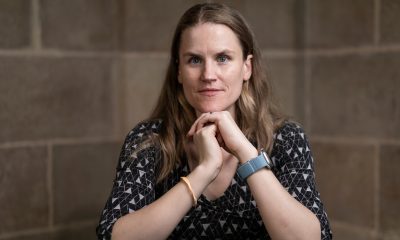

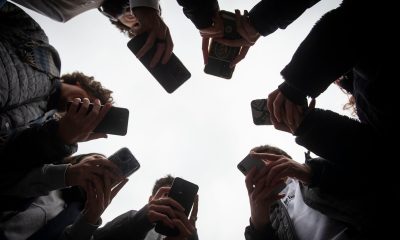









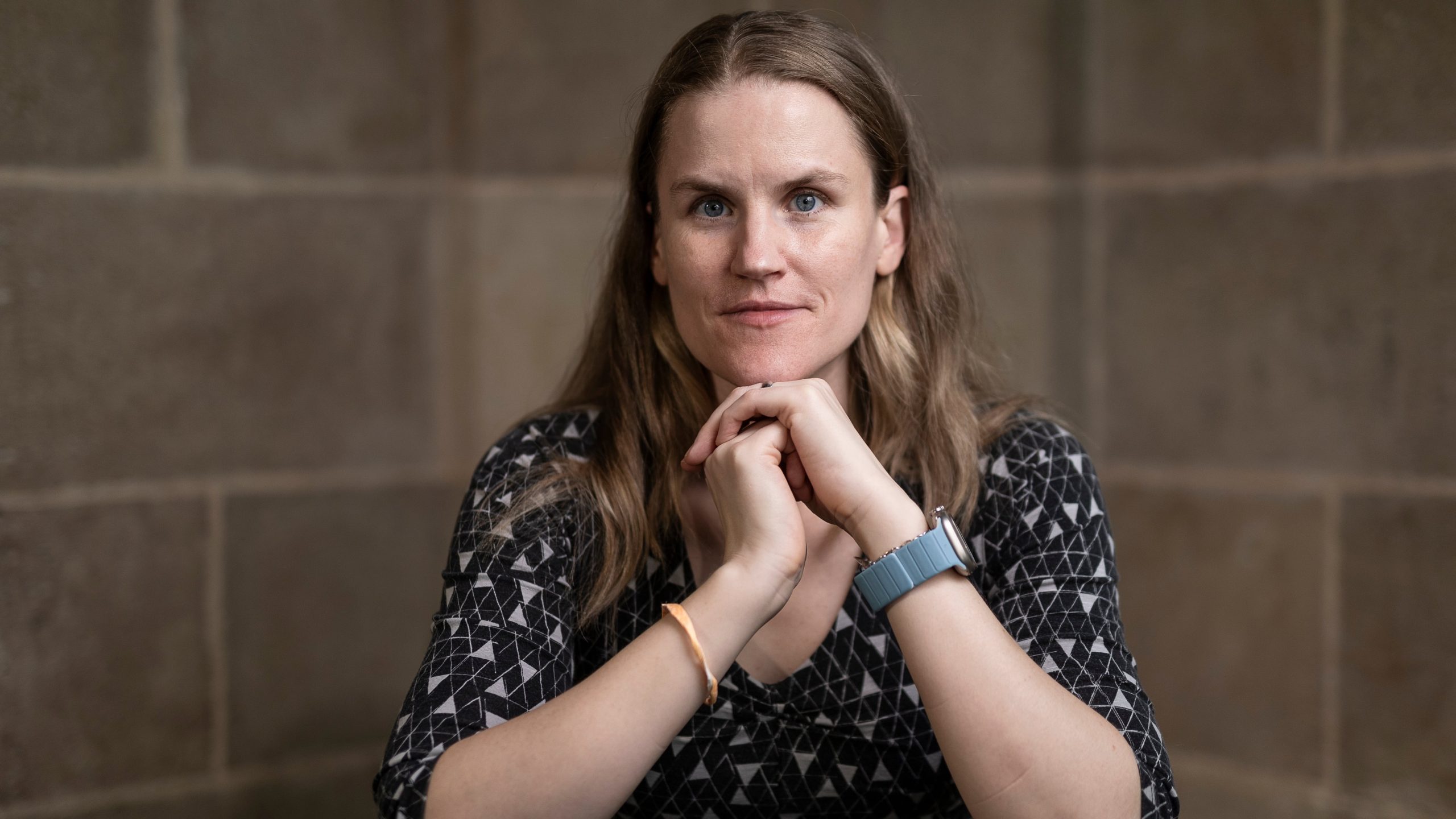
In September 2021, The Wall Street Journal published the Facebook Files, a series of reports based on internal documents from the tech company that, among other things, showed its executives were aware of the harms Instagram and Facebook were causing young people. It was a bombshell. It triggered the biggest reputational crisis for Mark Zuckerberg’s company, which weeks later rebranded as Meta. The person behind it was engineer Frances Haugen, 42, who left her post at Facebook carrying 21,000 internal documents. The U.S. Senate summoned her to testify, and investigations were opened into her revelations.
The body of evidence provided by Haugen helped many parents connect the dots. Thousands of families with teenagers heavily involved in social media — who had suffered mental health issues, eating disorders, or even suicide — filed lawsuits against the company. Many of these cases became part of a class-action suit filed in 2023 by thousands of individuals and dozens of educational institutions against several social media platforms. That same year, attorneys general from 41 states sued Meta for harming children with its products and failing to disclose those risks.
The legal tsunami has already begun to yield results. Two months ago, a New Mexico jury ruled that Meta is guilty of misleading consumers about the safety of its platforms and putting minors at risk. In Los Angeles, Meta and YouTube (owned by Google) lost a case that found them liable for fostering addiction among minors.
Haugen now lives in Puerto Rico (she understands Spanish but doesn’t speak it). Her years at Google, Pinterest, and Facebook are behind her: she has founded an NGO, Beyond the Screen, aimed at making social media more transparent. She spoke exclusively to EL PAÍS in Barcelona after taking part as a keynote speaker at the first International Meeting on Digital Rights.
Question. It’s been five years since the leak. How would you describe Meta’s evolution since then?
Answer. During the first two years, it seemed they had gotten the message. A month after the leak, they announced they would double down on safety. And they did. They hired a lot of people and built a lot of systems. But then Elon Musk came along, bought X, and fired its whole safety and content-moderation team. He showed that there weren’t consequences for not investing in safety.
In a very short time, the industry as a whole made a radical turn. Company after company followed Elon’s lead. So I would say we may be worse off today than when I leaked the documents. We have not fully used the powers of tools like the Digital Services Act [DSA, the EU regulation to create a safer, more transparent online environment] or other systems that would allow us to put pressure on these platforms.
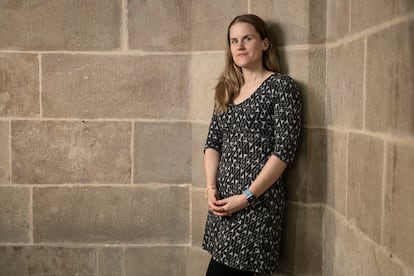
Q. The documents you leaked started a major legal process against Meta that has united families, educational institutions and state attorneys general, both Democrats and Republicans. How was it possible to generate so much consensus?
A. In the United States, we take for granted the idea that almost every important issue becomes this grinding and intractable fight where we can’t agree on how to move forward. Social media is one of those issues where left or right, people see the damage that’s happening to kids. And while we may not all be on the same page about how to intervene, there is consensus that teenagers should not be online at 2 a.m. and that, unless there is a plan for how phones are used in schools, we will keep suffering their distracting power. People are not willing to keep accepting those costs.
Q. What impact do you think the recent rulings in New Mexico and Los Angeles will have?
A. The New Mexico case is different from the others because it focused on child exploitation: child trafficking, sharing of sexual images of minors and child sexual abuse. I am incredibly heartened at how quickly the jury returned their verdict. Normally, in cases like this, if a decision comes in 24 or 48 hours, it tends to favor the defense. But there was so much evidence against Meta and it was so vivid that the jury decided immediately. I hope we see more states conclude that if New Mexico can win so decisively, they can too. It’s easy to view the New Mexico case as only involving $325 million [the size of the penalty]. That state has just 2.1 million residents, but if you scale those damages up to the size of the U.S., you’re talking about roughly $55 billion. And that’s only one case. If more states decide they will not accept the costs of child exploitation, teenage disorders or self-harm, that starts adding up to the kinds of damages that forces are reckoning.
Q. What will be the next step in this legal process?
A. We expect many more documents to come to light this summer as evidence in the California trial [the jurisdiction where the main lawsuits are filed]. We will also see the start of the federal phase of the class actions brought by families, individuals and school districts. So we’ll see what the different puzzle pieces are playing out over the next few months. That will be the next big front in this legal battle.
Q. How else should the harmful effects of social media be addressed?
A. Historically, when there are class actions on weighty issues that seem likely to succeed, Congress gets dislodged. Even if we have well-crafted laws ready to be enacted, they can languish because of the deadlock, as happened with tobacco. It was only after 46 states won that anti-tobacco laws started to be seriously discussed.
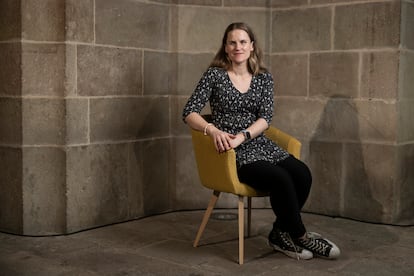
Q. Both in the U.S. and in Europe, there is growing concern about the effects of social media platforms on children, but it seems artificial intelligence is not part of that conversation. Do you think we will see a similar social reaction?
A. We have very little concept of what it means to be 14 today. It has become normal for teenagers to have AI friends. Character.ai [a site offering personalized conversational agents] brags that the median amount of time people spend with their avatars is two hours a day. Digital friends are not really your friends. Their enablers. They’re your sycophants. They might hype you up, but they’re designed to keep you on that system and isolated. They’re not designed to have you flourish.
In the U.S., we are starting to see lawsuits over self-harm and over children who died as a result of negligence and lack of oversight of these AI friends. If we don’t extend the conversation from social networks to digital friends, we will see many of the same problems repeat.
Q. Do you think class actions will also be brought over AI’s effects on children?
A. AI companies have faced lawsuits much earlier than platforms, comparatively. OpenAI, for example, only released ChatGPT three years ago and has already begun to face wrongful-death lawsuits [there are several documented cases of people allegedly driven to suicide by the chatbot]. Instagram went close to 15 years before they started facing serious legal consequences. During the first 10 years of social media, from 2004 to 2014, we thought it was fun and positive for the world. Companies have realized that if they don’t engage with the public more, they’re not going to fully blossom.
Q. What was the day after leaking the Facebook files like? Were you able to find work?
A. If you’re in a position where you could become a whistleblower, you’ve likely acquired enough life experience to do something else. When I worked at big tech companies, I didn’t realize they tried to make employees fear not being able to survive outside them. One thing that allowed me to take the step was YouTube’s algorithm recommending videos on how to start a small business. That’s how you get into this field.
I’ve gotten job offers back in corporate America, but I am pursuing other projects that I’m more passionate about. It will be interesting to see how Generation Z reacts in the next 10 years — they know they’re disposable and they don’t expect to stay long at one company. If you don’t have confidence that, even doing good work, you will remain at the company, then you have fewer incentives to keep corporate secrets.
Q. Right now there may be people thinking about leaking documents. What would you tell them?
A. Leaking is how critical information gets out, and you don’t need to become a whistleblower to give it to a journalist. Lots of people leak documents. Arturo [Béjar, also a former Meta employee] or I may be very visible, but for every Frances Haugen there are 100 people who make sure the right document gets into the right person’s hands. It’s important to know the proper ways to get a really important document out of a company. I, for example, took photos of my screen because I had a sneaking suspicion I was being watched by my employer.
Q. How do you imagine social media in 10 years?
A. One thing that has surprised me most in recent years is Blue Fever, which was among the top 10 downloaded apps in 2023. It’s a social network mainly used by Generation Z, and it’s different because it’s anonymous and focuses on feelings and experiences. It’s designed to be a safe space. We tend to assume that when people are anonymous, they behave badly. It opened my eyes to the idea that there are many creative people experimenting and that young people are eager to stop using Instagram and Facebook. I have a feeling that current youth movements will, within the next five years, find the key that makes platform choice a real option — so you decide with your friends where you want to be instead of being dragged back to the usual ones. The fact that many 21- and 22-year-olds don’t want to spend a decade doing what I did will create the critical mass that gives us a larger variety of options.
Sign up for our weekly newsletter to get more English-language news coverage from EL PAÍS USA Edition


Resultados De Las Elecciones En Perú, En Vivo | Los Sondeos A Pie De Urna Pronostican Un Empate Entre Keiko Fujimori (50,7%) Y Roberto Sánchez (49,3%)

Latest F1 standings as Lewis Hamilton makes big move after best Ferrari result yet

Marbella Council Begins Removal Of Six High-Voltage Pylons In Nueva Andalucia
In The Final Stretch Of Colombia’s Presidential Campaign, Undecided Voters Are In High Demand

How To Get A Tourist Rental Licence In Andalusia (Spain) – Step-By-Step Guide 2025
Spain heatwave 2026: When the next extreme temperatures could hit and which areas may suffer most


-
Abelardo de la Espriella2 weeks ago
In The Final Stretch Of Colombia’s Presidential Campaign, Undecided Voters Are In High Demand
-
 New Developments3 weeks ago
How To Get A Tourist Rental Licence In Andalusia (Spain) – Step-By-Step Guide 2025
-
aemet3 weeks ago
Spain heatwave 2026: When the next extreme temperatures could hit and which areas may suffer most
-

 Uncategorized3 weeks ago
FBI investigation launched over Valtteri Bottas Cadillac theft
-
buffet4 weeks ago
Toyo Japanese, Asian favours in Fuengirola
-
Costa Blanca South4 weeks ago
Torrevieja opens registration for Concilia Verano 2026 summer school
-

 Uncategorized3 weeks ago
Max Verstappen is no diva – Nurburgring rival on
-
Costa Calida4 weeks ago
Puerto de Mazarron prepares for San Isidro festivities with music and traditions