
America
Estados Unidos Ultima Nuevos Aranceles A China, La UE Y Otra Docena De Países







America
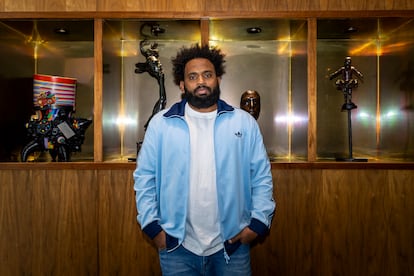
Abraham Jiménez, On Florida’s Most Radical Exiles: ‘They Don’t Realize It, But They Have A Fidel Castro Inside Of Them’

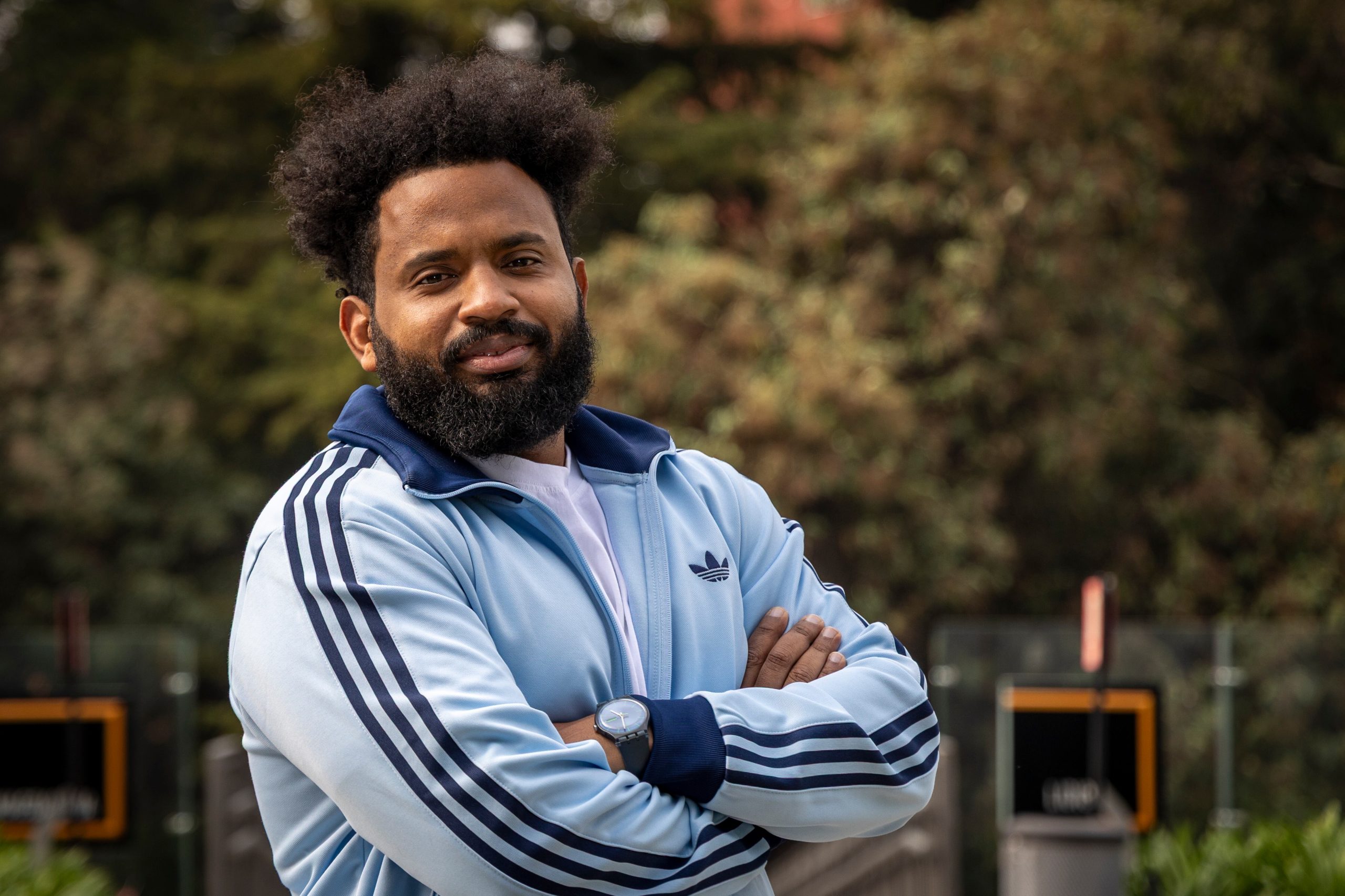
Talking about Cuba again has been a painful process for Havana native Abraham Jiménez Enoa, 38. The image of State Security agents — the relentless political police — ordering him to undress inside a prison cell bored holes in his mind for years. It was the greatest humiliation of his life.
As one of the founders of the independent magazine El Estornudo, Jiménez’s crime was doing journalism. Publishing a column in The Washington Post could only mean being on the CIA payroll. When he returned home, state television broadcast his interrogation. Confinement alone was not enough. He had to be turned into a pariah.
His grandmother couldn’t contain her rage. Abrahamcito, raised like a son, is the grandson of a former bodyguard of Fidel Castro and Che Guevara; he used to ask his grandfather to tell him stories of the Revolution; he is also the son of a counterintelligence professor at the Ministry of the Interior. And now, suddenly, he was… a gusano (a worm, meaning a counterrevolutionary). Even thinking about it was painful. In January 2022, Jiménez went into exile, to the Spanish city of Barcelona. His grandmother died three months later.
Jiménez recounts his process in the 2024 book Aterrizar en el mundo (Landing in the World). He also recounts how, across the ocean, he has encountered another kind of monster: xenophobia and racism. The Cuban journalist spoke with EL PAÍS in a hotel in Mexico City, where he was participating in an academic event about Cuba. Talking is no longer impossible. But it still hurts.
Question. What has it been like to talk about Cuba again?
Answer. It’s strange. It’s a love-hate relationship. Geography isn’t to blame for what happened to me. But inevitably I translated all that into repulsion. I would go to a bar, hear a Cuban accent, and leave… Suddenly, one Saturday, we were having breakfast at home, a Carlos Varela song played, and I started crying. That’s when reconciliation began.
Q. In the midst of all that process, you were expelled from the country. You went forth into the outside world for the first time. How much has it changed you?
A. A lot. I’ve become colder. My partner works, goes to an office and is there all day, but I don’t see anyone. Because I’m freelance and also because I don’t feel like it. All that has affected my character: I used to be a person who interacted a lot, and now I’m absolutely the opposite. I don’t know if I’ll manage to heal all the effects of what I went through.
Q. And what has it been like to be a migrant?
A. I always make the nuance: I am an exile. I live in another dimension of migration. I didn’t leave because I decided to. They made me leave. And that implies a permanent existential dissociation: my body is in Barcelona, but my mind is not. When it’s my mother’s birthday or someone gets sick, I can’t go see her. You don’t belong anywhere…
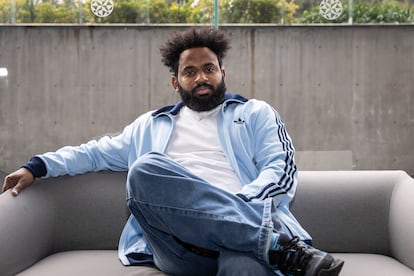
Q. In the book, you recount how the harassment by the Cuban State Security caused you a deep depression. What motivated you to be honest like that?
A. When the persecution intensified, I couldn’t leave the house. Even in that situation, I absolutely broke down. There were days when I didn’t get out of bed. There’s that idea in activism: “We are unbreakable.” It seems to me, first, a lie, and second, a deception. There’s nothing more powerful and beautiful than saying: “You are such sons of bitches that you’ve broken me.”
Q. There are quite a few households in Cuba where revolutionaries and dissidents coexist. Do you think those two Cubas will ever reconcile?
A. The hardest thing that ever happened to me, beyond the day I was stripped, was that family breakup. Every Sunday we used to go to lunch with my grandparents and had after-dinner conversation. That got messed up. I became an outcast. No one is going to give me back those Sundays I lost.
With my father it’s the same: today our relationship is marked by all that. I don’t know if I’ll ever see him again. He had a stroke. If he dies, the last times I was with him were extremely cold. In the ideal Cuba, that reconciliation would exist: in the end, there is something above ideology, which is the land. And it is very sad, because I don’t see it; I see it getting worse and worse.
Q. In the book, you recount what has caught your attention about life outside Cuba. Were you surprised to see how many people who are not Cuban have an opinion about your country?
A. It happens to me all the time in Spain.
Q. How do you handle it?
A. Very badly. I think it’s an insult. There are many gurus around. I’ve been in Spain for five years; who am I to tell a Spaniard what Spain is like? They’re Europeans and they’re white, they think they have the last Coca-Cola in the desert and they come to explain to me what my country is like. A country, moreover, from which I was kicked out.
Q. Do you get the impression that they use Cuba as part of cultural battles?
A. They don’t care about us. They talk about Cuba, but as an abstraction that people use at will. It happened with the international flotilla. It was regrettable. You look at that and you can’t be against it, because it’s true that there’s no food or electricity on the island. But you can’t profit politically from that, nor walk around like it was a safari. In Spain, the left still doesn’t acknowledge the lack of human rights in Cuba. So what happens? That [the far-right party] Vox and the [mainstream conservative] PP welcome the dissidents.
Q. There are precisely groups in exile, especially in Florida, that embrace the far right…
A. I went to Miami for the first time in 2024 and it was unbelievable. It’s like a trip to the past. But, at least in my case, I had the bad experience of realizing that it’s Cuba, but from the opposite end of the political spectrum. Like calling ICE and saying: “There’s an illegal guy here, go take him away”… I stayed in Hialeah and saw all the Trump flags. They do the same thing as the Cuban government. They don’t realize it, but they have a Fidel Castro inside of them.
Q. You have spoken about the racist episodes you experienced in Barcelona. Are you afraid that Vox will govern Spain [which is holding a general election this coming Sunday]?
A. I’m very scared. Not even for me, but for my daughter. She’s one of the few Black kids in her school. I was surprised by the racism. I had experienced it in Cuba, but not so explicitly. And the beautiful thing about all that is that I’ve rediscovered myself as Black. I was on the plane and the idea of another exile crossed my mind.
Q. Would you leave Spain?
A. For my daughter, I would do anything.
Sign up for our weekly newsletter to get more English-language news coverage from EL PAÍS USA Edition
Abelardo de la Espriella
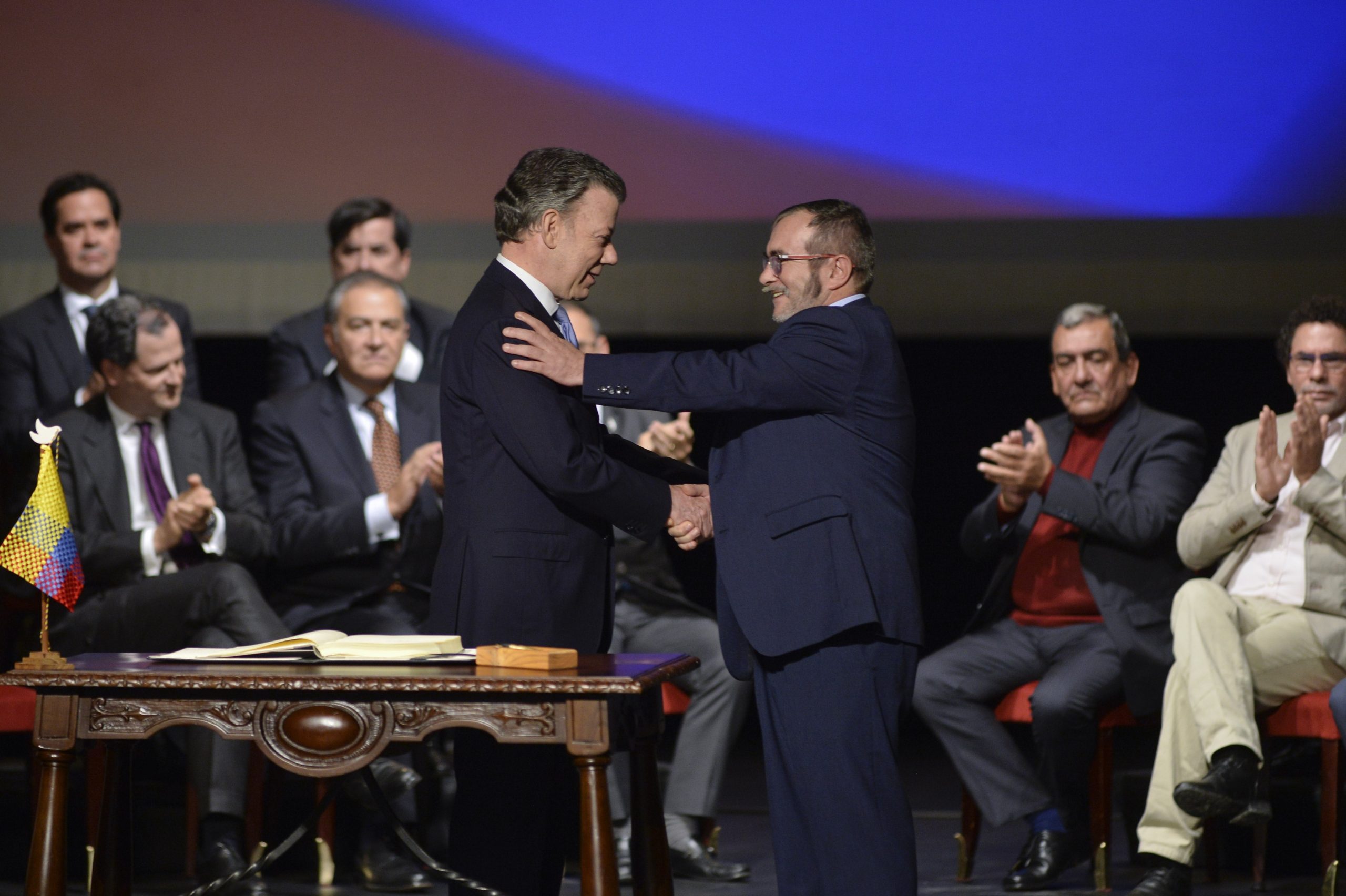
Colombia Marks 10 Years Since FARC Peace Deal As De La Espriella Threatens Its Future

America
What’s Next For Cuba’s Political Future: An Attack By Trump Before Year’s End Or A Democratic Shift?

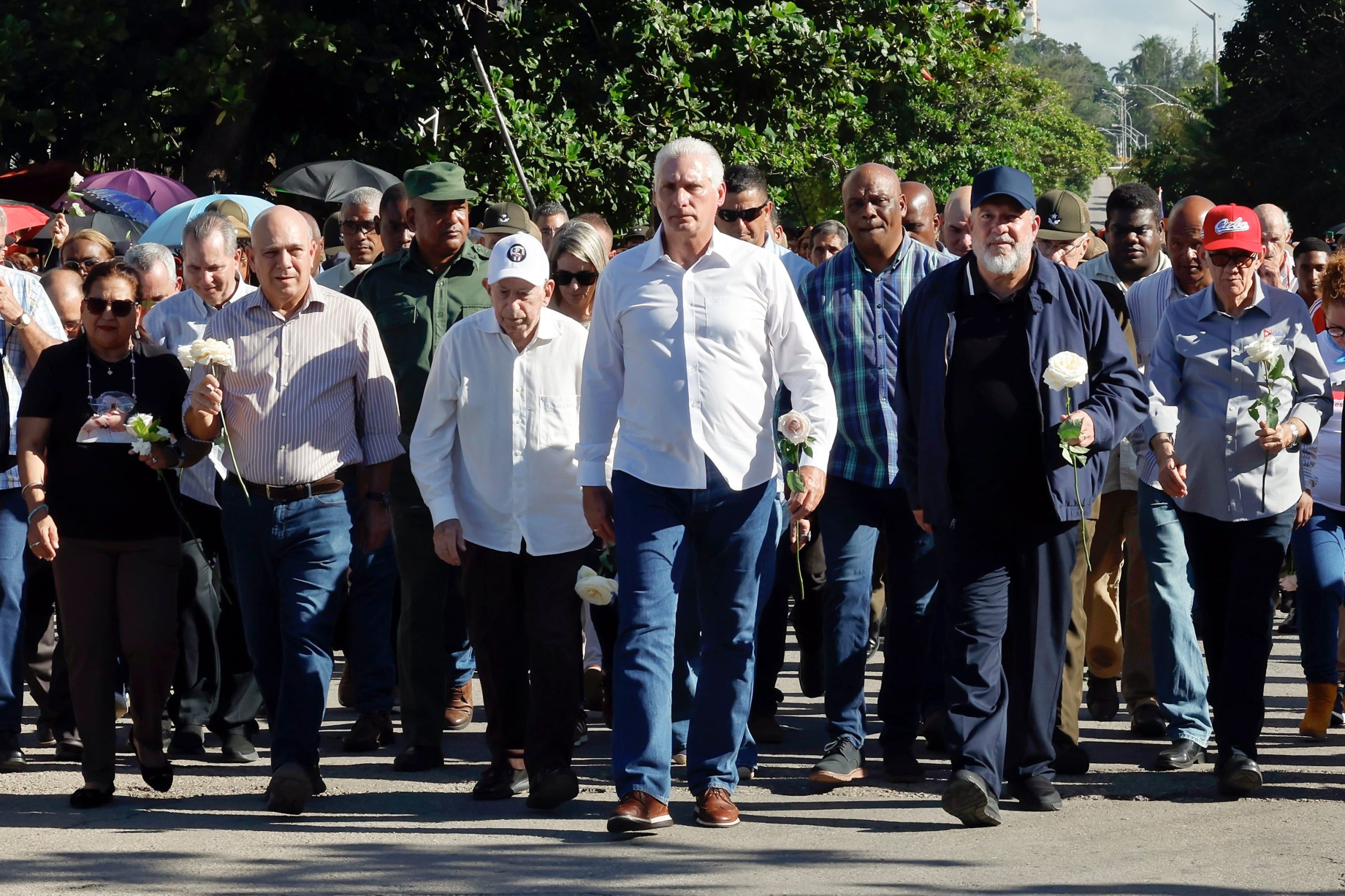
It’s been nearly 10 months since U.S. President Donald Trump first announced that Cuba would be next. It was shortly after his administration had taken out Nicolás Maduro in Venezuela, and before walking into an unpredictable war with Iran. Since then, the president has decreed an oil blockade, slapped sanctions on dozens of businesses and Cuban leaders, and practically every month he issues new reminders that Cuba is a “failed state” that’s about to fall.
Yet the Castro regime is still standing, and the questions being asked in Washington D.C. and Miami, as well as on the island itself, are: will Trump accelerate an attack on Cuba before the end of the year? Or will his rhetoric against Havana lose even more steam when the Democrats take control of Congress in January?
Analysts interviewed by this newspaper agree that neither scenario is likely.
“I never believed that a military intervention was an option. Much less now that Trump is tired [of the issue],” says Francisco O. Mora, a professor of politics and international relations at Florida International University (FIU). William M. LeoGrande, a professor and dean emeritus of the School of Public Affairs at American University, adds that “Congress does not have a lot of control over sanctions by Trump on Cuba.”
For a long time, quite a few Cubans believed in the possibility that the United States would handle Cuba the way it did Venezuela. The fear of a military intervention was mixed with people’s desire to end a life marked by blackouts, food shortages and an economic outlook made worse by growing pressure from the U.S. administration. “If you get on a bus, the first thing you hear is: ‘If only Trump would come, it doesn’t matter what happens,” said Juan Luis Bravo, a resident of Guantánamo, in the east of the island, in a conversation with EL PAÍS in May of this year.
Since then, however, Cubans — who have not seen any improvements in their country through action by their own government — have lost faith in changes coming from the United States. The Trump administration has not secured concessions from the government of Miguel Díaz-Canel during negotiations, and Havana appears to be playing with time.
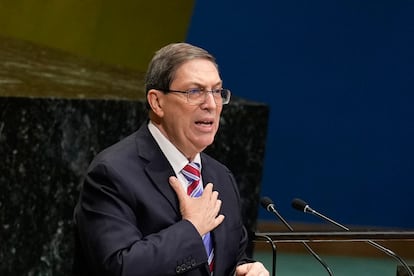
In an interview with The New York Times in late October, Foreign Minister Bruno Rodríguez Parrilla admitted that his government’s strategy was to simply endure. “For as long as it takes. U.S. policy toward Cuba will change. It has to. It’s inevitable,” he said.
Trump and State Secretary Marco Rubio have been pressuring the Cuban government like perhaps no other U.S. administration before. They have closed off all outside aid, made Cuba much more dependent on imports from the U.S., sent military ships to take up positions near the Cuban coast, sat down with members of the Castro family, and even made a public call for collaboration with the CIA to recruit spies that might help accelerate a change in the system. “Seize this opportunity to create the change you desire,” said Rubio.
But so far there has not been a “friendly takeover” of the island, the way Trump put it, and it looks like nothing is going to change before the end of the year. At a rally in Florida ahead of the midterms, this is what he said to his loyal Cuban-American voters: “Don’t worry, we’ll take care of Cuba on our way back from Iran.”
But the midterms, which changed the electoral map in the U.S., left several signs: according to surveys, Cubans in Miami are a lot more concerned about the cost of life and about immigration issues than about securing a regime change in Cuba; all three Cuban-American congressmembers from South Florida (Mario Díaz-Balart, María Elvira Salazar and Carlos Giménez) won by very small margins in territories where they had always enjoyed wide latitude; the war in Iran was without a doubt one of the reasons for voter discontent. And so the White House should think twice about walking into another conflict, this time with a small island just 90 miles from Miami.
Although the most recent survey on Cuba by Florida International University shows that 73 % of Cuban-Americans support military action to remove the government of Díaz-Canel, analysts do not believe that this is going to happen. LeoGrande doubts this is a viable option, much less after the “disaster in Iran.”
“This has proven that you cannot trigger a regime change with an aerial war,” he says. “Besides, with U.S. forces occupied with Iran and no end in sight, and a general political rejection of war, any military action would have a high political cost.”
This expert in U.S. foreign policy insists that Cuba is a very different case from Venezuela: there is no person on the island “whose kidnapping, as happened with Maduro, could provoke a 180-degree turn in the political orientation of the Cuban regime.” That is to say, there is no Cuban equivalent of Delcy Rodríguez, the interim president of Venezuela.
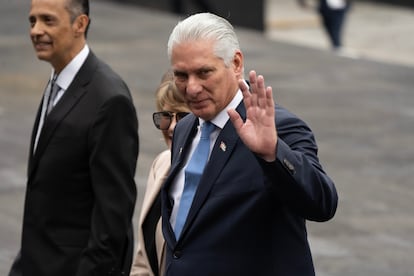
What is being asked now is whether Cuba, and particularly its people, will have to endure two more years of tough policies, or whether the new Democrat-led U.S. Congress might be able to relieve the agenda of sanctions and strangulation implemented by Rubio and Trump.
An uncertain political future
For now, the hangover from the midterms has not ended the battery of sanctions against Havana. Two days after the vote, the State Department sanctioned businesses and individuals with ties to the Cuban elite who, according to a statement by Rubio, were part of a maritime transportation network bringing in crude oil from China. “The Trump administration will not stand idly by while the Cuban regime channels the island’s resources to its military elite,” he said.
Historically, Democratic administrations have applied less pressure on the Cuban regime. Under Barack Obama, both countries announced a thaw in diplomatic relations in 2014. In recent months, several Democratic congressmembers have also spoken up against the White House’s policies.
Pramila Jayapal, the representative for DC’s 7th Congressional District, met in May with Díaz-Canel in Cuba and said that the oil blockade is causing incalculable suffering to the Cuban people. And Illinois congresswoman Delia Ramírez has led an initiative with 31 other members of Congress to demand that the Trump administration rule out any military action against Cuba.
Will these Democratic voices carry enough weight to scale back the sanctions and end the tough policies?
The scholar Mora thinks that Congress could hold several hearings “to try to better understand what the goals of the administration in Cuba are.” However, he does not think that Congress has a lot of influence in terms of changing policies. “The Constitution gives the president a lot of leeway to act on national security-related foreign affairs,” he notes.

Meanwhile, Professor LeoGrande insists that the International Emergency Economic Powers Act (IEEPA) grants the president a lot of authority to impose the secondary sanctions that Trump has used against Cuba.”
“Any legislation aimed at limiting sanctions that the new Congress might approve would be vetoed by Trump,” he says. “Besides, Cuba will not occupy a very prominent spot on the Democrats’ legislative agenda in the coming two years. They will focus on domestic economic issues and on corruption probes.”
There is, however, another scenario that for now remains speculative but not entirely dismissible to these analysts: the possibility that Marco Rubio, himself a Cuban-American, might run for president in 2028. In that case, says Mora, he would have to quit his role as secretary of state “more or less in the summer of next year, in order to start the campaign, which is a long and complicated process.”
Without Rubio for the remainder of the term, says this analyst, things could be different with another state secretary who might not show the same level of interest and attention that Rubio has been showing for Cuba, says Mora. “That could be a calculation by the [Cuban] regime to gain more time. They want to see how to outlive this administration. If they are waiting for January, with the change of Congress, they could be making a mistake. If they are waiting for the summer and Rubio’s potential departure, they might be onto something. Nobody is going to prioritize Cuba the way he is doing.”
Sign up for our weekly newsletter to get more English-language news coverage from EL PAÍS USA Edition

Manifestaciones 25-N Contra La Violencia De Género, En Directo | Miles De Personas Recorren Las Calles De Las Principales Ciudades Contra La Violencia De Género

‘Why Do You Think That You Could Do That?’: The ‘misogynistic’ Interview That Questioned Hailey Bieber’s Business Credentials

La UME Se Desplegará En El Hierro Tras Declarar Canarias La Emergencia Por La Crisis Migratoria


-

 New Developments4 weeks ago
Luxury Villas For Sale, Estepona – ProjectL1
-

 New Developments3 weeks ago
The San Roque Club – Townhouses For Sale
-
countryside4 weeks ago
Rural revival: Five Almeria villages make moving inland easier and more enticing
-
costa blanca live music3 weeks ago
Beatles tribute: The Liverpool Band returns to Orihuela Costa
-

 New Developments3 weeks ago
Stylish 3-Bedroom Apartment With Panoramic Sea Views – Benalmádena
-

 America3 weeks ago
Así Ha Sido La Primera Jornada Del World In Progress 2026: Del Anuncio De Sánchez De Ayudas Para Las Víctimas De Urda A La Reivindicación De Rebeca Grynspan Del Papel De La ONU
-
Eating out in Gibraltar4 weeks ago
Young woman left horrified after Gibraltar restaurant receipt carries shocking racist slur
-
All Saints4 weeks ago
Driving to Andalucía this weekend? DGT warns of extra traffic after train crash