Connect with us

%

EU Nicotine Crackdown Sparks Warning That Ex-Smokers Could Be Driven Back To Cigarettes

Published

on

eu-nicotine-crackdown-sparks-warning-that-ex-smokers-could-be-driven-back-to-cigarettes

questions are being raised about the organisations helping shape that debate. Photo credit: Vladimir Konstantinov/Shutterstock

If you gave up smoking years ago, the last thing you probably expected was to find yourself caught up in a Brussels argument about what should replace the cigarette you stopped buying. Yet that is exactly where Europe’s latest tobacco debate is heading, with vaping, nicotine pouches and heated tobacco products now at the centre of a fight over how much regulation they should face.

At the same time, questions are being raised about the organisations helping shape that debate,  including claims that some receive substantial EU funding while campaigning for tougher restrictions. A new analysis has put €12.8 million in annual public funding received by nine Brussels-based organisations under the microscope, claiming that 96.8 per cent of the funding identified comes from the European Commission. The figures come from the Hungary-based Free Market Foundation and are being promoted by Michael Landl, director of the World Vapers’ Alliance.

Europe is rewriting its tobacco rules

The timing is important, the European Commission is reviewing the EU’s Tobacco Products Directive, the rules governing tobacco and related products across the bloc. Its evaluation, published in April 2026, found that existing EU tobacco rules had contributed to a significant fall in smoking and tobacco-related deaths. But the Commission also identified a new problem: the rapid growth of products such as e-cigarettes, heated tobacco products and nicotine pouches, particularly among young people.

The Commission has since opened a consultation on revising the tobacco rules, with the legislative revision planned for 2026. Its stated objective remains creating a “tobacco-free generation” by 2040, meaning tobacco use by less than 5 per cent of the population. That is where the dispute over alternative nicotine products comes in.

Supporters of tobacco harm reduction argue that products which do not involve burning tobacco should not automatically be regulated in the same way as cigarettes. Their argument is based on the difference between inhaling tobacco smoke and using products without combustion. Public-health organisations generally take a more restrictive approach, pointing to nicotine addiction and concerns about young people taking up products that could create a route into tobacco use.

The EU has already faced questions over funding

This is not the first time concerns have been raised about the organisations involved in European tobacco policy. In January 2023, the European Health and Digital Executive Agency awarded a framework contract to a consortium led by Open Evidence, with the European Network for Smoking Prevention (ENSP) and the University of Crete also involved. The contract was worth around €3 million and covered research and consultancy work supporting EU tobacco-control policy. The involvement of ENSP prompted a complaint to the European Ombudsman over an alleged conflict of interest.

The Ombudsman investigated the Commission’s handling of the issue and, in February 2025, concluded that no further inquiry was justified. The decision records that the Commission had examined declarations concerning conflicts of interest and the qualifications of consortium members. It said ENSP’s role was limited to facilitating access to experts and providing technical and scientific information. That finding is important because the allegation of a proven conflict of interest should not be presented as established fact.

Scientists challenge the direction of travel

The argument over regulation has nevertheless become increasingly heated. A letter signed by more than 100 scientists and public-health experts and addressed to Commission President Ursula von der Leyen has criticised the treatment of nicotine alternatives in the EU’s regulatory process. The signatories claimed that 131 relevant scientific studies had been left out of the analysis and argued that the main health damage from conventional smoking comes from tobacco combustion rather than nicotine itself.

The Commission’s own evaluation, however, stresses the health risks associated with novel nicotine products and says their increasing use, particularly among young people, presents new challenges for tobacco control. There is also a documented disagreement over the Commission’s regulatory assessment itself. Its Regulatory Scrutiny Board issued a negative opinion in December 2025 on the draft evaluation, after which the Commission says it revised the document in response to the Board’s recommendations.

What happens to smokers trying to quit?

This is ultimately the issue behind the increasingly fierce argument. One side wants stronger restrictions to prevent nicotine products from attracting new users, particularly children and young people. The other argues that treating every nicotine product in essentially the same way could remove alternatives used by existing smokers trying to leave cigarettes behind.

The funding controversy adds another layer. The €12.8 million figure comes from an analysis by the Free Market Foundation, rather than from an EU finding that the organisations involved are improperly influencing policy. The European Commission’s own documents confirm that it funds tobacco-control organisations and that it is currently working on a major revision of the bloc’s tobacco rules.

For former smokers, therefore, the outcome could eventually affect far more than the wording on a Brussels policy document. It could determine which nicotine alternatives remain available, how they are taxed and marketed, and how closely they are regulated alongside conventional cigarettes. The EU has not yet adopted the revised Tobacco Products Directive. The debate over what those new rules should contain is still very much underway.

%

British Tourists Arrested After Taxi Driver Left Bloodied In Magaluf

Published

on

british-tourists-arrested-after-taxi-driver-left-bloodied-in-magaluf

Another taxi driver attempted to intervene and was also punched in the face by the younger brother. Photo credit: Rocky Reborn/Shutterstock

If you’ve ever been in a situation where you’ve depended on a taxi driver to get you home, you’re probably aware that there are certain conditions you need to meet as a passenger before you can climb into the back seat. Being able to behave yourself is one of them, and being so drunk that you’re likely to cause problems is another.

Two British tourists in Mallorca appear to have discovered just how serious that second condition can become after a taxi driver in Palmanova refused to take them because they were too intoxicated. What followed was a violent confrontation that left one driver covered in blood and missing several teeth, while the two brothers ended their night in the hands of the Guardia Civil.

Taxi refusal sparks violent confrontation

The incident happened at around 2.30am on Wednesday at a taxi rank on Passeig Mar in Palmanova, close to Magaluf. The two British brothers, aged 31 and 21, had reportedly been drinking heavily when they arrived at the rank. According to local reports, the pair first verbally abused two female taxi drivers before trying to get another taxi. A male driver then refused to take them because of their condition.

That decision was followed by a violent confrontation. The younger brother reportedly spat at the driver, before his older brother began punching him. The attack continued with the driver being punched and kicked, leaving him with serious facial injuries and several teeth knocked out.

Another taxi driver was also attacked

The violence did not stop with the first driver, another taxi driver attempted to intervene and was also punched in the face by the younger brother. Other drivers at the rank witnessed the confrontation and contacted the Guardia Civil. Officers arrived at the Palmanova taxi rank and arrested both brothers.

The injured driver was left covered in blood following the attack, with his missing teeth among the injuries reported by local media. The location is in Palmanova, one of Calvià’s main tourist resorts, just along the coast from Magaluf. Taxi ranks in the area can be particularly busy during the late-night hours as tourists leave bars, clubs and other nightlife venues.

British brothers face court proceedings

The brothers were brought before a judge in Palma following their arrests. The 31-year-old was remanded in custody, with the court setting bail at €15,000. His 21-year-old brother was released on bail. Both are facing proceedings relating to the injuries caused during the incident.

Ultima Hora reported that the older brother was considered to have played the greater role in the assault. The case will now continue through the Spanish judicial system. For the taxi drivers involved, what began as an ordinary night shift quickly turned into a serious confrontation.

A night out ends very differently

Taxi drivers in busy holiday resorts regularly deal with passengers who have been drinking, but there is a clear difference between getting into a taxi after a few drinks and being too intoxicated for a driver to feel comfortable accepting the fare. In this case, the refusal to take the two tourists did not end the situation. Instead, it was followed by an attack involving two drivers and the arrests of the two brothers.

The 31-year-old remains in custody unless he meets the €15,000 bail conditions, while his younger brother has been released as the proceedings continue. What should have been a simple taxi ride back to their accommodation instead ended with an injured driver, a second driver assaulted and two British holidaymakers facing the Spanish courts.

Continue Reading

%

Jorge Rey Predicts Storms For Spain’s October Bank Holiday Before African Heat

Published

on

jorge-rey-predicts-storms-for-spain’s-october-bank-holiday-before-african-heat

The first signs of the change are expected from October 9. Photo credit: Jorge Rey on Facebook

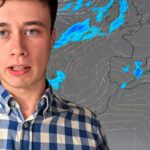
If you have plans for Spain’s October bank holiday, the weather could make a big difference to them. The latest long-range prediction from Jorge Rey points to a very mixed few days, with storms expected in parts of the country before a burst of warmer air arrives, and another significant change is being forecast later in the month.

The dates to watch are October 10, 11 and 12, when millions of people will be travelling for the Puente del Pilar. But Rey’s forecast does not stop there. He is also pointing to October 23 and 24 for another spell of rain and storms across much of northern Spain and parts of the centre.

Storms could arrive for the October holiday

The first signs of the change are expected from October 9, when unsettled weather is forecast to move in from the west before reaching the Mediterranean. Rey predicts stormy conditions in the Levante on October 10 and 11, potentially bringing a very different start to the long weekend for people heading towards Spain’s eastern coast.

Northern Spain is expected to see cooler conditions and weaker rainfall during the same period, while the east could face more active weather. This means the Puente del Pilar could look very different depending on where people are spending it, with some areas dealing with thunderstorms and showers while others see cooler but comparatively quieter conditions, and then the forecast takes another turn.

October 12 could bring a burst of African heat

By Monday, October 12, Rey predicts a mass of African air moving into Spain and pushing temperatures higher. The increase is expected to be particularly noticeable across eastern Spain, potentially bringing much warmer conditions just as the long weekend comes to an end.

Western areas could have a very different experience, with cloud and locally developing storms also expected on the 12th. The three-day holiday could therefore see a striking switch from unsettled conditions to much warmer weather, depending on the region and the day. For anyone planning beach trips, sightseeing or outdoor meals, the difference between the start and end of the holiday could be considerable.

A quieter spell is expected

The unsettled weather is not expected to continue throughout the month. Rey’s forecast points towards a more stable period after the middle of October, with high pressure becoming more influential before the next major change arrives.

That calmer spell could last for several days, giving Spain a brief return to more settled autumn weather. But the second half of the month is not expected to remain quiet, with another significant shift forecast for October 23 and 24.

More rain and storms on October 23 and 24

According to Rey’s prediction, a front moving in from the west could bring rain and storms across much of northern Spain and parts of the centre around October 23 and 24. The north is expected to see the clearest change, with wetter weather spreading across the region and temperatures becoming milder.

It could mark another distinct change after the calmer spell expected earlier in the month. The forecast suggests that parts of northern Spain could remain unsettled as further fronts pass through, particularly around the western Cantabrian coast. Conditions are then expected to improve again around October 27, although the western Cantabrian area could continue seeing occasional changes as Atlantic weather systems move across.

The October dates to watch

For anyone planning trips or outdoor activities, there are several dates worth keeping in mind. October 9 could see the first signs of the change as unsettled weather moves in from the west, followed by stormy conditions in the Levante on October 10 and 11. Then October 12 could bring a sharp rise in temperatures as African air moves into the east, although western Spain could remain cloudy and see local storms.

After a more settled period in the middle of the month, October 23 and 24 are expected to bring another spell of rain and storms, this time affecting much of northern Spain and parts of the centre. The final week could then see conditions improve again, although the north-west may remain more changeable. For now, the two periods likely to attract the most attention are the Puente del Pilar from October 10 to 12 and the later spell around October 23 and 24, when Spain could once again see a sharp change in the weather.

Continue Reading

%

€1 Million Euromillones Prize Lands In Malaga

Published

on

e1-million-euromillones-prize-lands-in-malaga

Lottery shop in Carrefour Alameda. Credit: cc-carrefour-alameda.com

A lucky Euromillones ticket holder in Malaga is €1 million richer after Friday’s draw, with the winning El Millón ticket sold at a lottery administration inside Carrefour Alameda.

Administration No. 67 in Malaga capital validated the winning ticket for Spain’s separate El Millón prize, giving one player a seven-figure windfall from the draw held on Friday, October 2.

Loterías y Apuestas del Estado, the state organization responsible for licensing lotteries in Spain, confirmed the winning El Millón code as GKH34441. Unlike the main Euromillones jackpot, El Millón is a separate €1 million prize available exclusively to tickets played in Spain.

Malaga win comes as well as €28.8 million jackpot

Friday’s draw also produced a major jackpot winner in Spain, although that prize went to Cantabria rather than Malaga. A single ticket matched all five main numbers and both Lucky Stars to claim €28,871,634. The winning ticket was validated at Receptor No. 69,930 on El Sol, 11, in Cabezón de la Sal, Cantabria. Malaga’s winner did not need to match the main Euromillones combination to claim the El Millón prize.

Check the winning Euromillones numbers

Friday’s main combination was: 07 – 08 – 10 – 22 – 35 with lucky Stars: 02 and 10 The official Euromillones results from Loterías y Apuestas del Estado confirm one first-category winner and one El Millón winner in the draw.

Spain’s official lottery results also show European ticket sales of €47,486,533.60 for Friday’s draw.

Next Euromillones jackpot

Following the Cantabria jackpot win, the next Euromillones draw starts again with a guaranteed first-category fund of €17 million.

For Spanish players, every qualifying Euromillones entry also provides a chance to win El Millón, meaning another €1 million prize will be up for grabs when the game returns.

Malaga has seen several recent Euromillones wins in Malaga province, including another €1 million El Millón ticket sold in the city in December 2025 again.

Continue Reading

Trending

Copyright © 2017 Spanish Property & News