
Latest
EU Proposes New Rules On Recognition Of Qualifications For Non-EU Citizens


Add The Local as a preferred source
New legislation proposed by the European Commission this week seeks to make the recognition of professional qualifications easier for non-EU citizens, a common complaint of many who’ve moved to the bloc from abroad.
Become a member or log in to continue reading
More
Comments
See Also

Arganzuela
Detenido Un Hombre Por La Muerte De Una Mujer De 47 Años En El Distrito De Arganzuela De Madrid



Agentes de la Policía Nacional han detenido en la mañana de este sábado un varón por su participación en la muerte de una mujer de 47 años el distrito madrileño de Arganzuela.
AENA
Barcelona And Palma Brace For Major Airport Protests This Weekend As Locals Voice Anger At Planned Expansions

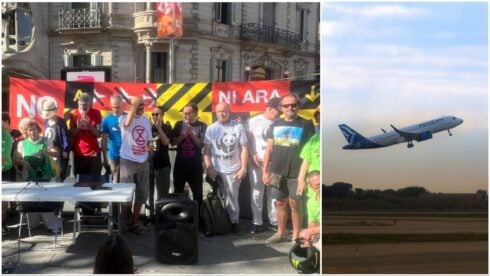
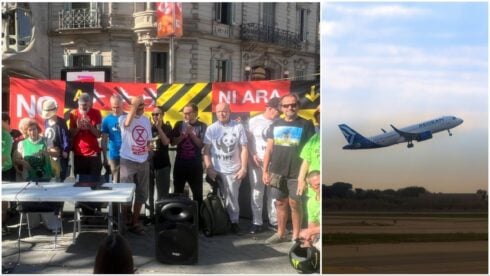 THOUSANDS are expected to take to the streets of Barcelona and Palma this weekend to protest against airport expansion plans they say will worsen overcrowding

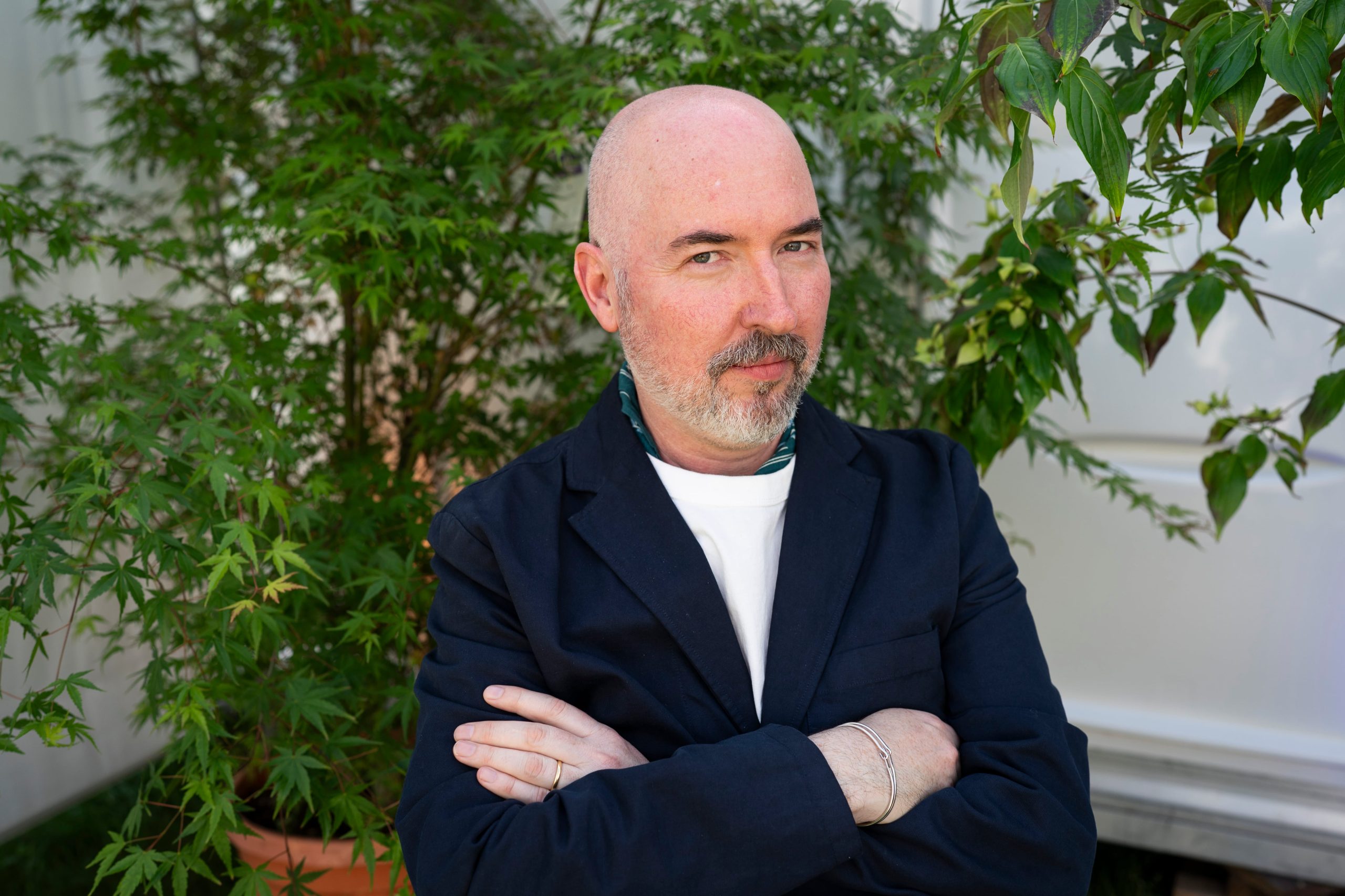
This was an interview designed to avoid mentioning Donald Trump. Douglas Stuart’s literature — and his life, which is inextricably linked to it — provides ample material for hours of conversation on much more fascinating topics. His work deals with family (understood as a suffocating bond, rather than a refuge), secrets that are kept hidden for years (which offer both salvation and damnation) and the evolution of gay life over the last half-century. His writing also examines how poverty continues to mark those who have experienced it, long after they have overcome it. The idea was to focus on these themes. But, after 45 minutes of conversation, the name of the U.S. president comes up.
How does he feel about the country where he’s spent more than half his life? It’s almost a routine question, asked after this journalist feels that he has enough material. It’s a question meant to conclude the interview. But then, suddenly, enough material for another interview emerges. “It’s funny. No one evers asks me about America,” Stuart reflects. He pauses for a long time, and then launches into his answer.
“You know what? I’ve built my life here, thinking this was my place. But for the first time, my husband and I are thinking about leaving. I don’t think this country is going to improve in 2028, when Trump leaves office. He’s sown the seeds of hatred, which are going to stay. More than Trump, I’m afraid of his voters,” he sighs, sitting in a Greenwich Village café in New York City, while taking a bite of an olive oil pastry.
But it’s best to leave all this for later, and get on with what we came to talk about.
Stuart, who was born in Glasgow 50 years ago, published John of John (2026) this past May and a Spanish edition is coming out this month. In this novel, he returns to the themes he explored in the publishing phenomenon Shuggie Bain (2020) — which won the Booker Prize the year of its release — and in Young Mungo (2022).
Happiness seems like a pipe dream for the families he writes about. Contending with trauma, his characters are trapped in suffocating poverty, with queer identity as a backdrop, an identity that can only be experienced on the margins of society. His three books all take place in the 1980s and 1990s.
Scotland is the setting for Stuart’s books, as well as for the first half of his life — one that could fill several novels. His childhood and adolescence were spent in a dysfunctional and impoverished family in Glasgow. He then moved to New York City in the early 2000s, working for Calvin Klein and the top designers during the golden age of American fashion. And, in his forties, he became a successful writer.
Stuart admits that his novels present a somewhat distorted view of family life. Perhaps it’s influenced by the fact that his father abandoned him when he was four and died shortly afterward. Or that his mother, who suffered from alcoholism, died when he was 16. He was very close to her.
“Family, for me, is a puzzle that I’m always trying to figure out,” he explains. He also acknowledges that these conflicted relationships — like the claustrophobic atmosphere in John of John — make for excellent narrative material. “It’s very boring to write about a family where everyone’s in love and everyone’s behaving,” he jokes.
“Just because your parents love you doesn’t mean to say your parents don’t also bring pain into your life. It’s easy to say that families are based on love and acceptance, but they’re much more complex than that. And this usually happens more to gay men and lesbians, who frequently create a version of themselves — a fiction — because of their inability to show themselves as they truly are. It’s something that happens to me, too. I know my family is proud of me, but there are things they can’t understand. That sometimes makes you feel a little alone.”
Stuart observes that the advances in LGBTQ+ rights over the last few decades have led younger generations to prefer not to look back. His latest novel, set in rural Scotland, dissects that feeling of loneliness, of having no one to connect with, something that was very common in the pre-internet queer world.
“I feel like we’re missing out on something by not talking about how hard the recent past was. I’m only 50: all of this happened in my lifetime. Yes, it’s difficult, but it’s part of our queer history. We in the queer community still aren’t ready to wrestle with our collective pain.”
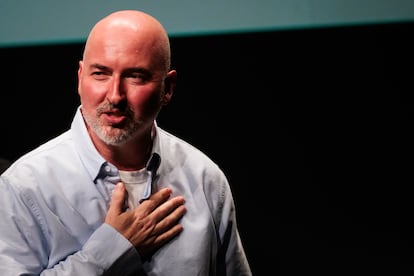
In the LGBTQ+ community, things have changed a lot in recent decades. However, Stuart doesn’t necessarily think it’s for the better.
“Dating was very innocent, not as sexual and explicit as it is today. I would spend months corresponding with strangers. I took comfort in this; in the pages, we told each other about our grandmothers, our homes, our schools and what we hoped for in the future. It was incredibly intimate.” When he started working on his latest novel, he consulted those old letters. “I was struck by how lonely we were. We were desperate to connect and share the wildest things with strangers,” he recalls.
He doesn’t want to sound nostalgic, but he says that, today, gay men have gained visibility, yet they still haven’t managed to resolve that loneliness. “Nowadays, you can find exactly what you like, instantly. When you contact someone, the first thing they ask is what sexual position you want. It’s convenient, but it corrupts the soul a little. And, above all, it doesn’t answer that deep loneliness we feel. Many gay men feel truly alone, in a way they can’t quite identify.”
Still, despite everything, he seems to have settled down when it comes to relationships. He’s been with his husband for 30 years. “Back then, marriage between men wasn’t legal, but we basically got married a month after meeting. I was 20 years old, and I knew I was going to spend the rest of my life with him.”
When he started writing John of John back in 2018, he had doubts about the need to revisit these topics. Three years had passed since the U.S. Supreme Court’s approval of same-sex marriage: it seemed like the battle for equality had already been won. But things have taken a turn for the worse since then. Transgender rights are in the crosshairs of the Trump administration, while polls show a decline in acceptance of sexual diversity. “I see politicians and novelists vilifying transgender people every day. The closer I got to finishing the book — while seeing this conservative and religious backlash against queerness — the more relevant the book became.”
One of his obsessions is to not forget about social class when discussing sexuality. He grew up watching James Ivory’s films, where deviations from the norm were always found among the elite. “It seemed like, to be gay, you had to play cricket,” he jokes. He was the first in his family to finish high school. “My class transformation began on the first day I stood in the College of Textiles, in Glasgow, in 1994.” He was able to do so thanks to Scotland’s generous scholarship system. But today, he says, that system no longer exists: his life path would no longer be possible.
After completing a master’s degree in fashion, a talent scout recruited him to work for Calvin Klein. His new life began in New York City, in 2000.
Stuart has managed to leave poverty behind, but he hasn’t forgotten it. “You never truly leave the social class you grew up in. All my convictions, the way I approach things every day — like whether I should order this cake we’re eating — the way I spend money, the way I think about justice in the world… all of that is marked by my class. If you’ve ever known poverty, you never forget it.”
He kept those origins very much in mind during the years he worked in the luxury fashion industry, first at Calvin Klein and then at Ralph Lauren. There, he interacted with people who had never had to think about money. And the culture shock was too much for him: he ended up leaving the job because, he says, it made him deeply unhappy.
“The clothing was beautiful, the design work was amazing, I loved doing it. But I couldn’t get into that ostentatious display of wealth. I remember conversations where they’d say, ‘This isn’t expensive enough; we have to raise the price so that the customer feels it’s out of reach,’” he recounts.
Ralph Lauren employed highly-qualified people, particularly young people who had studied design or art and came from middle- or working-class families. But those who bought the clothes and ran the company, Stuart asserts, were completely different. “They were Mr. Lauren’s personal friends. He had met them either at a country club or a social club. And they might have been people with no formal education at all, but they came from the right background.”
“[The luxury fashion industry] was a microcosm of class, like a Dickensian novel in miniature. I couldn’t cope with that at all.”
The conversation returns to the United States in the present day. Stuart’s disappointment is evident: he arrived in a country where he felt everyone was accepted and could aspire to a better life. “Where I came from, the American Dream seemed like a reality. That’s no longer the case. It’s become such a wildly intolerant place; it feels really dangerous. It’s hard to stay hopeful, day after day, in the face of so much hatred.”
He acknowledges that he has much to be grateful for in this country, where he has become a citizen. But he also feels that his time here is coming to an end. He’s not sure he believes in the American experiment. “Every country is an experiment. And the United States is very young, only 250 years old. It’s still figuring out how to build itself.”
“The currency of hate in this country is insane. Trump is only the symptom. He’s given everybody the green light to say what they hate. And their hate is [directed] toward immigrants, queer people, trans people, women, or Black people.”
He has no kind words for the president, whom he describes as “a lunatic, a narcissist and a crook,” but he’s more concerned about those who support him. “They carry a lot of hate in their hearts. And that’s a really weird thing, to suddenly be confronted with the fact that your countrymen believe in that.”
Sign up for our weekly newsletter to get more English-language news coverage from EL PAÍS USA Edition

Luxury Villas For Sale, Estepona – ProjectL1

Detenido Un Hombre Por La Muerte De Una Mujer De 47 Años En El Distrito De Arganzuela De Madrid

Barcelona And Palma Brace For Major Airport Protests This Weekend As Locals Voice Anger At Planned Expansions

Max Verstappen works with new race engineer at Italian Grand Prix

EXPLAINER: Inside The Row Over The Right-Wing Mayor Of Madrid’s €6m Penthouse – And Why It Could Offer A Lifeline To Pedro Sanchez
Ibiza council hits illegal tourist rental with €793,000 fine – but will the owner pay that much?


-
 Uncategorized2 weeks ago
Max Verstappen works with new race engineer at Italian Grand Prix
-
 Chamberi2 weeks ago
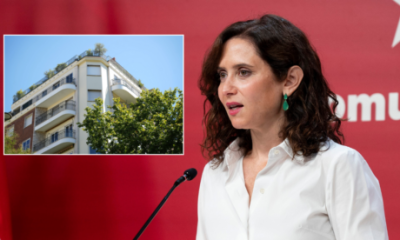
EXPLAINER: Inside The Row Over The Right-Wing Mayor Of Madrid’s €6m Penthouse – And Why It Could Offer A Lifeline To Pedro Sanchez
-
Holiday rentals1 week ago
Ibiza council hits illegal tourist rental with €793,000 fine – but will the owner pay that much?
-
bravery2 weeks ago
10-year-old jumps from burning French farmhouse, saves two dogs and teddy
-

 Energy efficiency & certificates1 week ago
94% Of Spanish Homes Are Energy Inefficient – Could Tighter Rules Be Coming?
-

 Uncategorized2 weeks ago
Max Verstappen hails
-

 New Developments2 weeks ago
Stylish 3-Bedroom Apartment With Panoramic Sea Views – Benalmádena
-

 Andalucia2 weeks ago
There’s One Chief Consultant Orthopaedic And Trauma Surgeon In Marbella You Can Trust Under The Knife
Join the conversation in our comments section below. Share your own views and experience and if you have a question or suggestion for our journalists then email us at news@thelocal.es.
Please keep comments civil, constructive and on topic – and make sure to read our terms of use before getting involved.
Please log in here to leave a comment.