
Africa
Europe Enters The ‘era Of Deportations’









Africa
The Global South Takes Center Stage In The Art World: Could Its Cultural Hegemony Reshape Geopolitics?

A line circles the globe at roughly 30 degrees north of Mexico: it dips, rises and wavers, dividing the world along economic lines. In Asia, it climbs and then drops to exclude Japan, Australia, and New Zealand from the “South.” This world map, split by what became known as the Brandt Line, appeared in the 1980 UNESCO report North–South: A Programme for Survival, coordinated by then–German chancellor Willy Brandt. The line blurred the familiar Cold War geography — even softening the contours of the Non‑Aligned Movement, born at the 1961 Belgrade summit and led by Yugoslavia, India, Egypt, Indonesia, and Ghana as a way to distance themselves from both sides of the Iron Curtain.
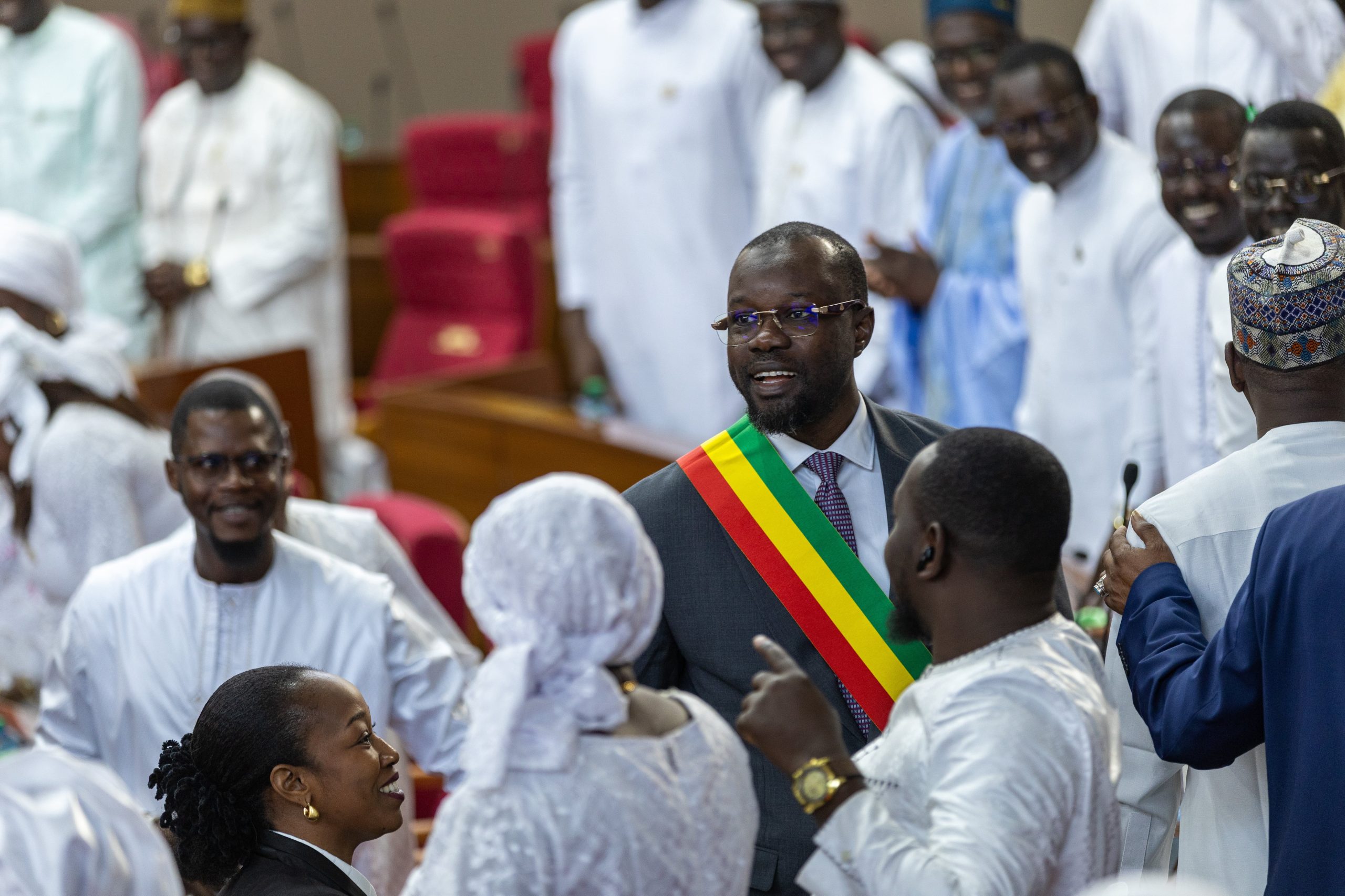
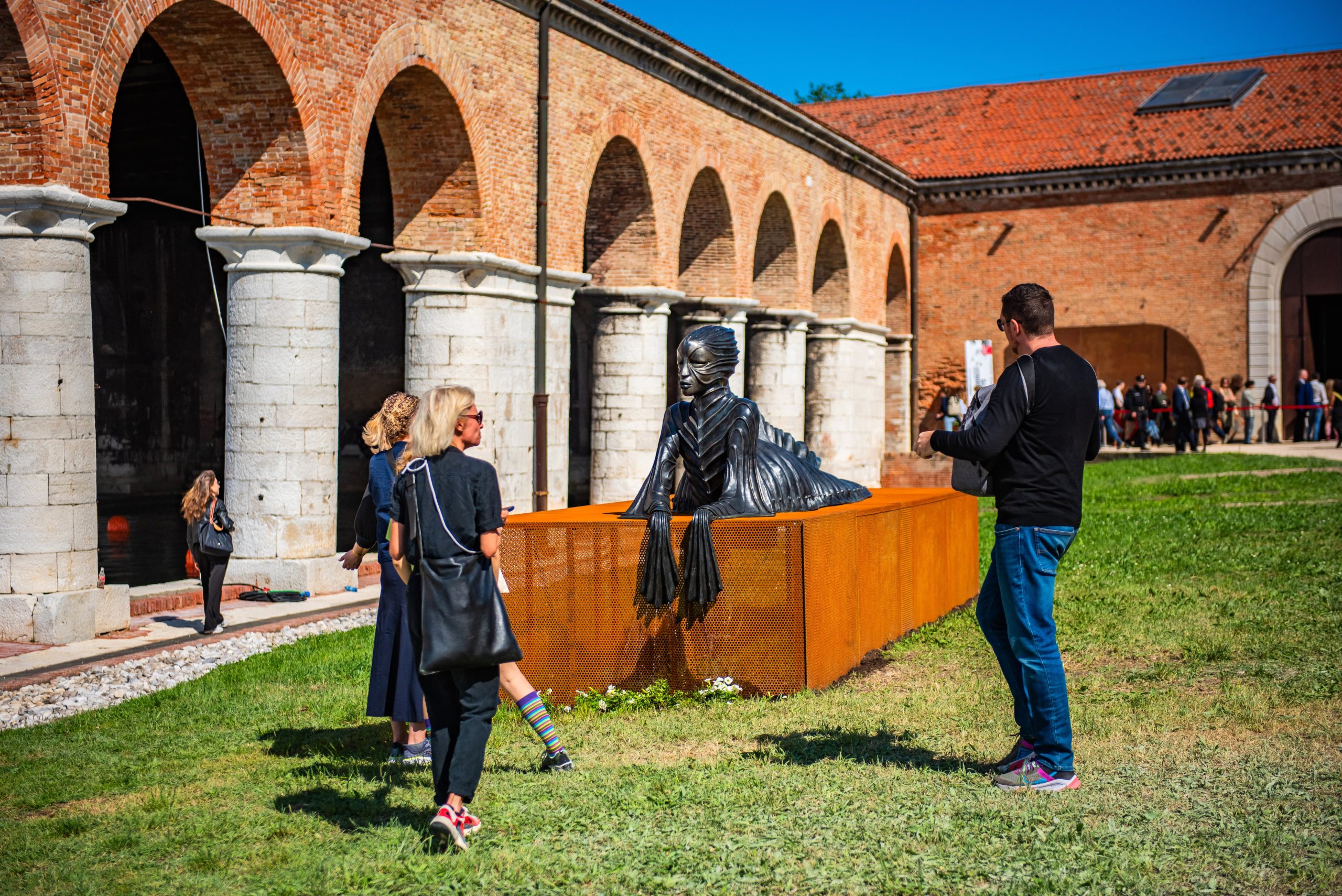
The southern side of the Brandt Line — minus South Korea and Israel — forms the most up‑to‑date definition of the Global South, a term that is steadily replacing “Third World” or “developing countries.” In the art world, the Global South has become the new hype. First used in 1969 by U.S. writer Carl Oglesby to criticize the “intolerable social order” imposed by the North, the term has recently crystallized into something new. It now dominates major art biennials: nearly all of their curators come from Global South backgrounds, and most of their artists do as well. The Venice Biennale, which opened on May 9, was curated by the Cameroonian thinker Koyo Kouoh (who passed away a year ago). Of its 111 participating artists, 62 were born in the Global South — and many others trace their origins to it.
A third space
“What does the Global South really mean?” asked ArtReview ahead of the 35th São Paulo Biennial in 2023. Manuel Borja‑Villel — the only white member of that Biennial’s curatorial team and former director of Spain’s Reina Sofía museum — says in a video call that the Global South’s current force in the art world reflects the decline of the global political order. “Europe is lost. The Global South allows us to reject the supposed universalism of the West. It makes other dynamics visible and legitimate.”
The Global South has now embedded itself in the narrative of major biennials. “Sharjah Biennial shines a light on the global south” was how the Financial Times titled its review of the most recent edition in the United Arab Emirates. Curated by five women from the South, Sharjah positioned itself as a genuine third space for artists from across the region. “The Global South works as a space of solidarities that brings diversity into dialogue. It’s crucial that art is produced far from the North,” says Māori curator Megan Tamati‑Quennell — the first Indigenous curator of a major biennial — speaking via video call.
The Navajo artist Raven Chacon’s work A Wandering Breeze, created for Sharjah, revealed the connective potential of the Global South. Chacon filled the abandoned houses of Al Madam — a village overtaken by desert sand decades ago — with sand. The Bedouin soundtrack used by Chacon also hinted at Indigenous resistance in his native Arizona desert.
Angolan writer and musician Kalaf Epalanga, a member of the acclaimed Lisbon group Buraka Som Sistema and author of Whites Can Dance Too, defends — with nuance — the term Global South. In his view, it is not a geographic space but a historical condition shaped by colonialism. “The Global South makes visible connections that don’t pass through Europe or the United States. It shifts the axis. Interest in the Global South stems from a real change: the center can no longer explain the world,” he says via email.
Amanda Carneiro, Afro-Brazilian curator at the São Paulo Museum of Art, prefers the term Global South to multiculturalism, “because it names the asymmetry between the universal narratives of the North and the subaltern world.” At the same time, the Global South grants legitimacy to other conceptions of art. At the Venice Biennale, for example, Kouoh’s team has designed spaces for Procession/Invocation (linked to Afro-Atlantic carnivals), Enchantment, and Physical and Spiritual Rest.
Meanwhile, the influence of the Global South is disrupting the hegemonic governance of the major biennales of the Global North. A case in point is the mass resignation of the current Venice Biennale’s jury, which stepped down in protest over the inclusion of Russia and Israel — countries whose presidents are accused of war crimes.

The Global South of the art world encompasses the “ecology of knowledges” proposed by Portuguese scholar Boaventura de Sousa Santos — which equates the knowledges of the South with Western science — the decolonial thought of Argentine philosopher Enrique Dussel — which replaces the universal with the pluriversal — and the subaltern voices defended by Indian theorist Gayatri Chakravorty Spivak.
The Global South “shifts the center” toward all the world’s cultures, as Kenyan writer Ngũgĩ wa Thiong’o (who died in 2025) long demanded. The Global South has already become a geopolitical tool: diffuse in outline, porous, built on partial solidarities and historical affinities. The (Global) South emerges as the reverse of the status quo — a past that might have been, or an open future.
Indian curator Natasha Ginwala explains by email that it forms a “global majority” tied to decolonial vocabularies and ancestral knowledge; it offers another vision of the future in a time of social polarization and the rise of artificial intelligence.
South in the North
“Where do we look for North and South when we face the coexistence of a very wealthy Asian elite and undocumented Chinese workers in a grocery store in northeastern Italy?” asked Italian writer Wu Ming 1 (a member of the Wu Ming collective) in Esta revolución no tiene rostro (This Revolution Has No Face). The question continues to reverberate, split in two: is there South in the North? Is there North in the South?
Curator Megan Tamati‑Quennell embodies the tensions of the Global South in her own life. As a New Zealander, she belongs to the North; as a Māori woman, to the South. For her, African American artists are part of the Global South. The two novels that serve as cornerstones of the current Biennale highlight the dialogue between the Global South and the “South‑of‑the‑North”: Beloved, by African American writer Toni Morrison, and One Hundred Years of Solitude, by Gabriel García Márquez. As a nod to the South, African American curator Naomi Beckwith will direct the Kassel Biennale in 2027.
The concept of the Global South is not without problems. On one hand, there is the risk that it becomes “folklorized and turned into a brand,” preventing structural change, as Borja‑Villel argues. On the other, it can erase hierarchies within the South itself, since elites often operate as the North, says Amanda Carneiro.
Kalaf Epalanga warns of the danger that the Global South becomes merely a visual or sonic atmosphere rather than “a way of being.” He cites the example of world music: it was created to make global musical traditions visible, but ended up as a catch‑all shelf “where everything fit and everything was far from the center.”
Political shift
On February 18, 2024, Brazilian President Luiz Inácio Lula da Silva championed the Global South in Ethiopia. “We were once known as poor countries, as Third World countries, as underdeveloped countries, as developing countries. No. Now we are the economy of the Global South.”
If the North has lost the reins of geopolitics, will the Global South take them? The challenge for this part of the world, says Afro-Brazilian curator Lorraine Mendes in a phone interview, is “to find a safety net for the dispossessed, solidarity through political agreements, and cultural connections to reorient the geopolitical map.”
Faced with a decaying global order, the Global South, through art, has a window of opportunity to establish, as Subcomandante Marcos suggested decades ago from Chiapas, “the dignified south omnipresent in all cardinal points.”
Sign up for our weekly newsletter to get more English-language news coverage from EL PAÍS USA Edition

E

Ryanair Hints At Dramatic Return To Spanish Regional Airports If Fees Fall

EU To Make Online Purchases Easier To Cancel

Mexico’s Most Controversial Politician, Rubén Rocha, Goes To Ground As Cartel Questions Intensify
Insurance company Mapfre decides to pay out €14 million compensation for 2025 blackout

Who Bought Where In The Second Half Of 2025?


-
 ElPais2 weeks ago
Mexico’s Most Controversial Politician, Rubén Rocha, Goes To Ground As Cartel Questions Intensify
-
blackout April 20254 weeks ago
Insurance company Mapfre decides to pay out €14 million compensation for 2025 blackout
-
 Foreign demand4 weeks ago
Who Bought Where In The Second Half Of 2025?
-
Abelardo de la Espriella1 week ago
In The Final Stretch Of Colombia’s Presidential Campaign, Undecided Voters Are In High Demand
-

 New Developments4 weeks ago
Inside The Most LUXURIOUS Apartment Building In Spain!
-
Costa Blanca South4 weeks ago
Alicante police chief to retire after 17 years of service
-

 New Developments4 weeks ago
🌅 Stunning Penthouse With Panoramic Sea & Mountain Views Benalmádena
-
Costa del Sol4 weeks ago
Starlite Marbella 2026 offers over 1,000 summer jobs: Apply before positions fill fast