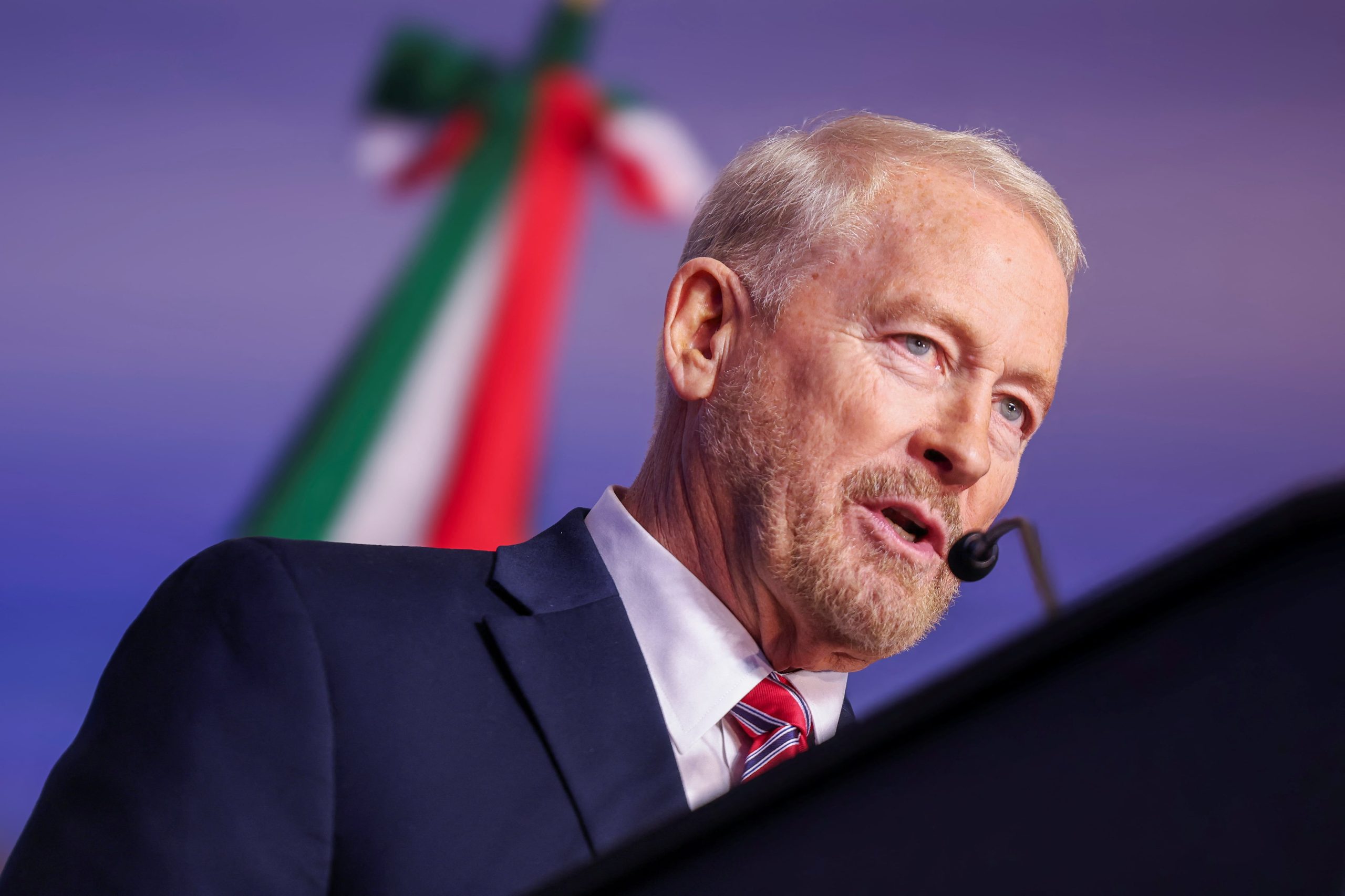
In the war with Iran, the sense of urgency has shifted sides. In February, the United States and Israel judged it so urgent to start the conflict that they were prepared to launch a massive strike and kill the supreme leader, Ali Khamenei, even amid negotiations; three months later it is Donald Trump who is trying to keep alive the talks that would definitively end the conflict, while Tehran remains firm. The U.S. president showed that attitude again on Monday when he ordered Israel’s prime minister, Benjamin Netanyahu, to halt the airstrikes the latter had announced on Beirut. The aim? To prevent the feared derailment of negotiations with the ayatollahs.
Much of that urgency stems from the closure of the Strait of Hormuz. No one — probably not even Iran — believed the Revolutionary Guard could virtually seal the Strait shut. Yet it has: notwithstanding ups and downs, it is approaching 90 days of closure. The shutting of the maritime lane that typically carried one-fifth of the world’s oil and liquefied gas — and an even larger share of some key derivatives such as aviation fuel — has been Tehran’s strongest card to put pressure on the United States. It is also the reason that, three months on, the sense of urgency has shifted to the other side.
Although the worst energy consequences are being felt in Asia and Europe, Trump cannot afford to reach the November midterms — when the entire House of Representatives and more than a third of the Senate will be up for grabs and control of his legislative agenda will be at stake — with gasoline priced above four dollars a gallon. The precedents are clear: none of his predecessors has won a presidential or midterm election with the price of the nation’s key fuel above that threshold.
Other reasons add to the purely electoral ones. Trump launched this war convinced that it would end in a matter of days, as with the operation that captured Nicolás Maduro in Venezuela or the strike against Iranian nuclear facilities a year earlier. The Republican leader has since used the word “boring” more than once in connection with this war. Polls showing that more than two-thirds of American voters oppose the conflict add fuel to his desire to bring it to an end once and for all.
There is another, military reason: the rapid depletion of ammunition used in the hostilities, especially the extremely costly interceptors for air-defense systems like THAAD and precision-guided missiles. A study by the Center for Strategic and International Studies estimates that replenishing those arsenals will take years — a window other adversaries might try to exploit.
It also matters that strategic stocks of crude oil, gasoline, diesel and jet fuel are being drawn down far faster than expected, increasing the urgency to reopen Hormuz. Reaching the summer with the strait still closed would be lethal. Conversely, the staying power of Iran — a country with martyrdom at the core of its culture — has been markedly greater than many analysts had anticipated, and greater than the White House itself predicted.
Last Thursday’s latest plot twist, when Iran denied that the draft agreement was only awaiting Trump’s signature, is further evidence that the hurry to end the conflict has switched sides in recent weeks. So too are Trump’s reported outbursts on Monday during a call with Israeli prime minister Benjamin Netanyahu, according to the digital outlet Axios.
In early April, when the U.S. announced its own blockade of Hormuz, Tehran seemed much keener to reach an understanding given the stranglehold its economy would face, but now it is now Washington that appears far more anxious for a deal to unblock the strait. Although Iran’s exports have fallen, most analysts agree it is a mistake to underestimate the resilience of a country that has lived under sanctions for decades.
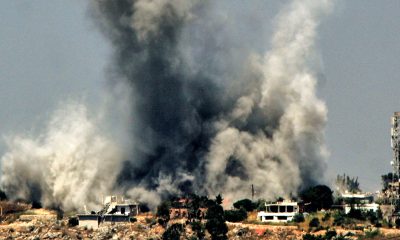
For Israel, the offensive in Lebanon is a kind of two-for-one: the thinking was, if it does not affect the Iran–U.S. talks, fine — because that means ‘freedom of action’ (in Israeli military parlance) and that Hezbollah has been abandoned by Tehran, its main supplier of weapons and economic backer. If, on the other hand, it does impact the negotiations, even better, since Netanyahu wants the war with Iran to resume and to go after the regime and civilian installations until its collapse.
For all these reasons, Iran achieved an important victory in Monday’s episode: it linked the fate of the two ceasefires (the Lebanese one and the global one) and prompted Trump to act in the same direction, publicly showing an overpowering urgency to bring the Islamic Republic back to the negotiating table.
Israel had done everything possible to separate the two truces. In April it launched a brutal offensive in Lebanon to make clear, through more than 300 dead, that any agreement between Iran and the United States lay outside its purview. It was a fairly successful strategy: Trump treated it that way at the time.
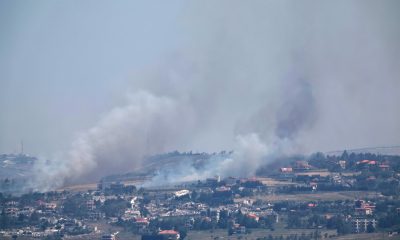
But Tehran insisted, so as not to leave its ally Hezbollah completely stranded, and Trump ended up forcing a ceasefire in Lebanon. But Netanyahu and Washington agreed on a formula to empty it of substance — as they did in Gaza: Israel continued bombing the south and the Beqaa Valley and demolishing entire villages (even hiring private contractors it pays per demolished house). Hezbollah, meanwhile, has continued launching projectiles daily, especially drones against the soldiers occupying Lebanon, killing about a dozen. The U.S. only asked that Beirut be left out of the picture, except for targeted killings of Hezbollah leaders.
Netanyahu then ordered troops northward last week, escalating the conflict with Washington’s acquiescence. But the announcement that Beirut would be bombed was the last straw for Iran, causing it to abandon the position it had been adopting (that defending Hezbollah was not worth endangering the truce with the U.S.) and to relink the fate of both: it announced it was abandoning negotiations with the U.S. because of the offensive in Lebanon.
Trump phoned Netanyahu. The conversation, according to the news site Axios, was full of insults: ‘What the hell are you doing?’ he asked. ‘You’re fucking crazy. If it weren’t for me you’d be in prison. I’m saving your ass. Everybody hates you now, even in Israel.’
After that conversation the Republican rushed to social media to proclaim that talks with Iran were advancing “full steam ahead.” Though Trump boasts of being in no hurry to reach an agreement with Tehran, he wants to be able to announce as soon as possible a deal around the memorandum of understanding both adversaries are discussing, then use the 60 days that document envisages to address the thorniest issues, such as Iran’s nuclear program, and finally declare the crisis closed — even if a definitive agreement is never reached and those issues might trigger a new conflict in the future.
‘Sixty days is an extremely ambitious timetable to narrow positions on some of those topics,’ said Ali Vaez, an analyst at the think tank International Crisis Group, in a recent videoconference. ‘This could become one of those provisional deals that never turns into a definitive one, as in Gaza. But if you compare it with the alternative — returning to a conflict that could easily escalate and get out of control, or leaving things as they are — which could cost more lives globally, it is a step forward.’
The other lesson of this war is that the world economy’s capacity to withstand a closure of Hormuz — for which there is no precedent — is considerably greater than assumed. Fuel shortages are taking a toll, especially in Asia, where several countries have been forced to ration supplies, but the worst predictions have not materialized. Reserves are falling fast, yes, but the world’s ability to adapt has been greater than forecast.
The International Energy Agency warned in mid-April that Europe had only six weeks of jet fuel left, yet seven weeks have now passed, planes are still flying and costs have even fallen. Largely because refineries on both sides of the Atlantic have been able to redirect output toward that specific fuel, reducing production of less urgent products (such as gasoline and even diesel). Reserves are being consumed at record pace, but the apocalypse has once again disappointed its prophets — provided Hormuz does not remain closed into the summer. That remains the limit.
Sign up for our weekly newsletter to get more English-language news coverage from EL PAÍS USA Edition
The Mexican government’s campaign against foreign interference has reached U.S. Ambassador to Mexico Ronald Johnson. The U.S. representative this week clashed with President Claudia Sheinbaum after her Sunday speech, in which she protested U.S. interference in Mexico’s internal politics. Johnson, a former Green Beret appointed by Donald Trump to press for action against the drug cartels, replied with a social media post that the Mexican leader acknowledged almost immediately: “Ambassadors must be respectful of countries’ internal political affairs.”
The post that unsettled the president was published by Johnson on Monday afternoon, a day after the rally in which Sheinbaum marked two years since her electoral victory with a renewed defense of national sovereignty and a direct reproach to the United States for making public its claims of alleged ties to drug trafficking against Sinaloa Governor Rubén Rocha and nine other individuals. On Monday Sheinbaum sought to soften the tone by acquitting President Trump of responsibility for the supposed campaigns against Mexico, which she blamed on “sectors of the far right,” but the diplomat responded forcefully: “The fight against cartels should unite us, not divide us. People on both sides of our border want to live safely and in peace. They deserve freedom from the intimidation, corruption, and fear that the cartels inflict. Every moment spent turning this shared security challenge into a political dispute is a missed opportunity to strengthen our partnership and protect the people we serve.”
The remarks by Johnson, a retired colonel with extensive experience in the U.S. intelligence apparatus, were not well received at the National Palace. It is not the first time the ambassador has stirred tensions in the bilateral relationship, with messages touching on the two most sensitive current issues: Chihuahua and Sinaloa. In Mexico they have sparked a bitter debate between the government and the opposition, who accuse each other of encouraging interventionism and covering up narco-politics.
Johnson’s messages
It was U.S. Ambassador Johnson who announced on Sunday, April 19, 2025, the deaths of two U.S. agents in a car accident in Chihuahua. “We are deeply saddened by the tragic loss of two U.S. Embassy personnel, the Director of Chihuahua’s State Investigation Agency (AEI), and an AEI officer in this accident. We honor their dedication and tireless efforts to confront one of the greatest challenges of our time,” he wrote. What appeared to be a conventional message of condolence turned into a delicate disclosure instead: the involvement of CIA agents in dismantling a drug lab in the Sierra Tarahumara, which put Chihuahua Governor Maru Campos, a member of the opposition PAN party, under fire from the federal government and the governing party Morena for allegedly authorizing foreign agents to operate on national territory.
The Chihuahua case prompted the Mexican government to send a diplomatic note to the United States requesting an explanation, and to summon the ambassador to a meeting with officials from the Security Cabinet. The Attorney General’s Office also opened an investigation that remains ongoing, and Morena threatened to push for an impeachment proceeding against Maru Campos, a process it later chose not to pursue.
Just four days after the Chihuahua incident, the U.S. ambassador visited Sinaloa to witness the launch of a project called Mexinol — a low-emissions methanol production plant — and used his remarks to launch a couple of barbs at an event that the then-governor of Sinaloa, Rubén Rocha, did not attend. “No company will commit resources where the rules are unclear, where there is no transparency, or where accountability is optional. If we want projects like this to succeed, if we want our shared future to be as promising as it can be, corruption and extortion must have no place,” the ambassador said in a state governed by Morena since 2021 and long suspected of protecting the Sinaloa Cartel dating back to Trump’s first presidency (2016–2020).
A week later, on Wednesday, April 29, Johnson posted on his social media a message reporting the filing of criminal charges against Governor Rubén Rocha and nine others by the U.S. federal prosecutor’s office in the Southern District of New York. While the ambassador again highlighted the “close coordination” and the fight against corruption as a “shared priority” of both governments, he also stressed: “The corruption that enables organized crime and harms both our countries will be investigated and prosecuted wherever U.S. jurisdiction applies.” At the same time, the Department of Justice released the grand jury indictment against Rocha; Morena senator Enrique Inzunza, Culiacán Mayor Juan de Dios Gámez and other officials. The political storm was only beginning.
In the days that followed, the Sheinbaum administration rebuked the United States for making the Rocha case file public, despite the existence of diplomatic channels and the confidentiality obligations that should govern communications between the justice systems of both countries. Sheinbaum personally questioned the arrest-with-a-view-to-extradition request, saying there is no conclusive evidence implicating Rocha and other Sinaloa politicians who are members of Morena. Since then the president has placed defense of national sovereignty at the top of her government’s and party-movement’s public agenda. “In the face of external attacks there must be national unity,” she said on May 1. “Mexico is nobody’s piñata,” she declared at the end of the month in her message marking two years since her electoral victory, by which time bilateral relations had already been strained by this episode.
For international relations scholar Érika Ruiz Sandoval, the latest dispute between the president and the U.S. ambassador shows that the government has not understood that the terms of the Mexico–United States relationship changed when Trump took office for a second time. The coordinator of the international relations degree at Universidad Iberoamericana believes that the National Palace grew used to the rhythms of Ken Salazar, the ambassador during President Joe Biden’s administration, who frequently visited President Andrés Manuel López Obrador, always wearing his cowboy hat and a broad smile.
“They don’t realize that the ambassador is acting as a harbinger of what’s going to happen to you; Ambassador Johnson is being clearer than ever that the terms of the relationship are different, and not negotiable. They are different because they can be, and because they caught you with your fingers in the door and you have no room to maneuver, no international political capital, and no reputation to defend,” Ruiz Sandoval says. The relationship between Salazar and López Obrador, however, soured when the diplomat and former cabinet member under Barack Obama criticized Morena’s judicial reform.
This expert considers it a mistake to defend sovereignty at all costs at the expense of the relationship with the United States, at a delicate moment in negotiations over the United States–Mexico–Canada Agreement (USMCA), without gaining anything in return and solely to protect Morena politicians. “It’s a very short-sighted, poorly considered stand that risks what is ultimately this country’s lifeline, which is the USMCA,” she adds.
Sign up for our weekly newsletter to get more English-language news coverage from EL PAÍS USA Edition
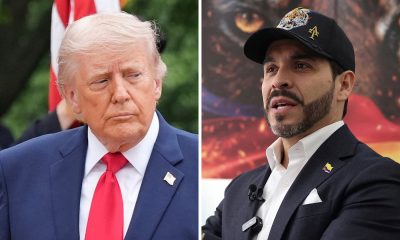
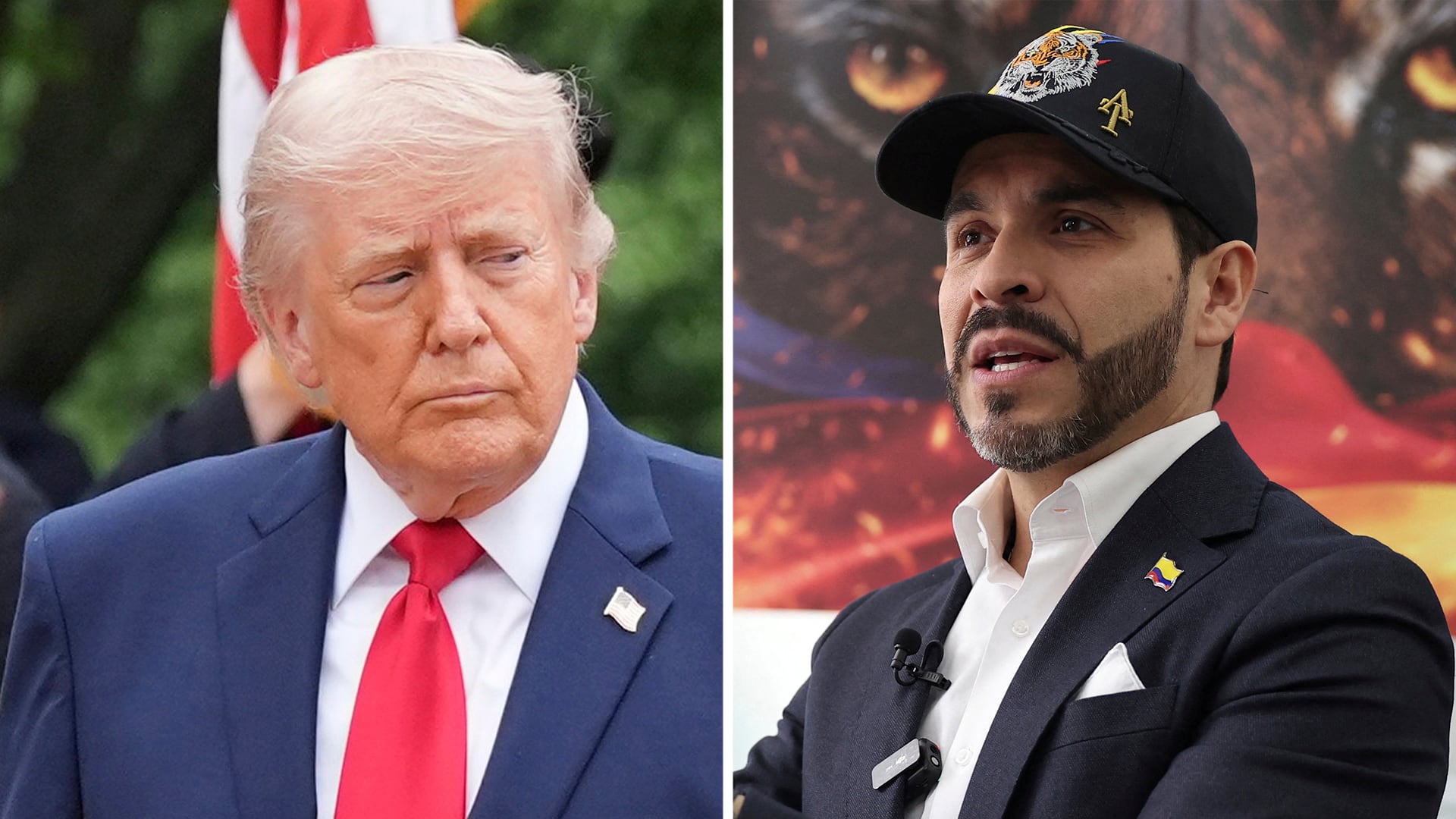
It took a while, but the endorsement that Colombia’s far-right presidential candidate Abelardo de la Espriella was most eagerly awaiting has finally arrived. U.S. President Donald Trump expressed his support for him on Tuesday via his social media platform, Truth. And he did so in the most effusive way possible: “Congratulations to Colombian presidential candidate El Tigre, Abelardo de la Espriella, a smart, strong, and tough leader, on his decisive victory in the first round of Colombia’s presidential election,” the Republican celebrated in his message.
Washington’s official endorsement is yet another victory for the underdog candidate, who won the first round on Sunday with more than 10.3 million votes and has the momentum on his side heading into June 21, when he will face the leftist candidate Iván Cepeda in a runoff.
De la Espriella is an outspoken admirer of Trump and has sought to strengthen ties with his inner circle in recent months. He traveled to Miami twice during the campaign and met with several Republican congressmen and with Christopher Landau, the U.S. Under Secretary of State. On more than a few occasions, the Colombian candidate has, through letters and press releases, urged Trump to take action against criminal groups in Colombia and warned him of the alleged risks that Colombian President Gustavo Petro poses to the country’s democracy.
De la Espriella reacted immediately. In an interview with Semana magazine, he stated: “Thank you; without him, none of this would be possible. […] It is essential to understand that the U.S. plays a decisive role in combating crime and narco-terrorism. On trade issues as well, the U.S. is our primary partner. In the Tiger era, taking trade to unprecedented heights will be crucial.”
Petro’s response came shortly thereafter. In a post on X, the Colombian president criticized his U.S. counterpart’s “interference” in domestic politics. “When one country interferes in another’s decisions, freedom dies. I urge all of Colombia to vote in complete freedom and not become anyone’s slaves or colony,” he declared.
Petro and Trump had smoothed over their differences during a meeting held in February at the White House. Although the U.S. president is not particularly popular in Colombia—a recent poll showed a 37.6% approval rating and a 45.2% disapproval rating—Petro has been boasting in recent months about what he has called a good relationship. “I’ve spoken with him twice recently. Meeting him burst certain misleading myths about Colombia and about me. He got to know a different person,” he told EL PAÍS in April. Now Trump is backing the candidate whom the Colombian president has branded a fascist.
From Javier Milei in Argentina to José Antonio Kast in Chile, Trump has, since his return to the White House, built up a long track record of supporting right-wing and far-right politicians and candidates across the continent.
Sign up for our weekly newsletter to get more English-language news coverage from EL PAÍS USA Edition
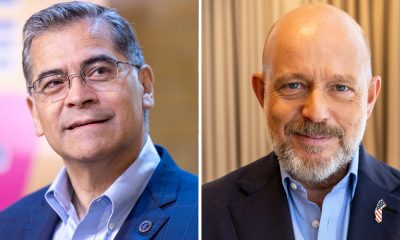
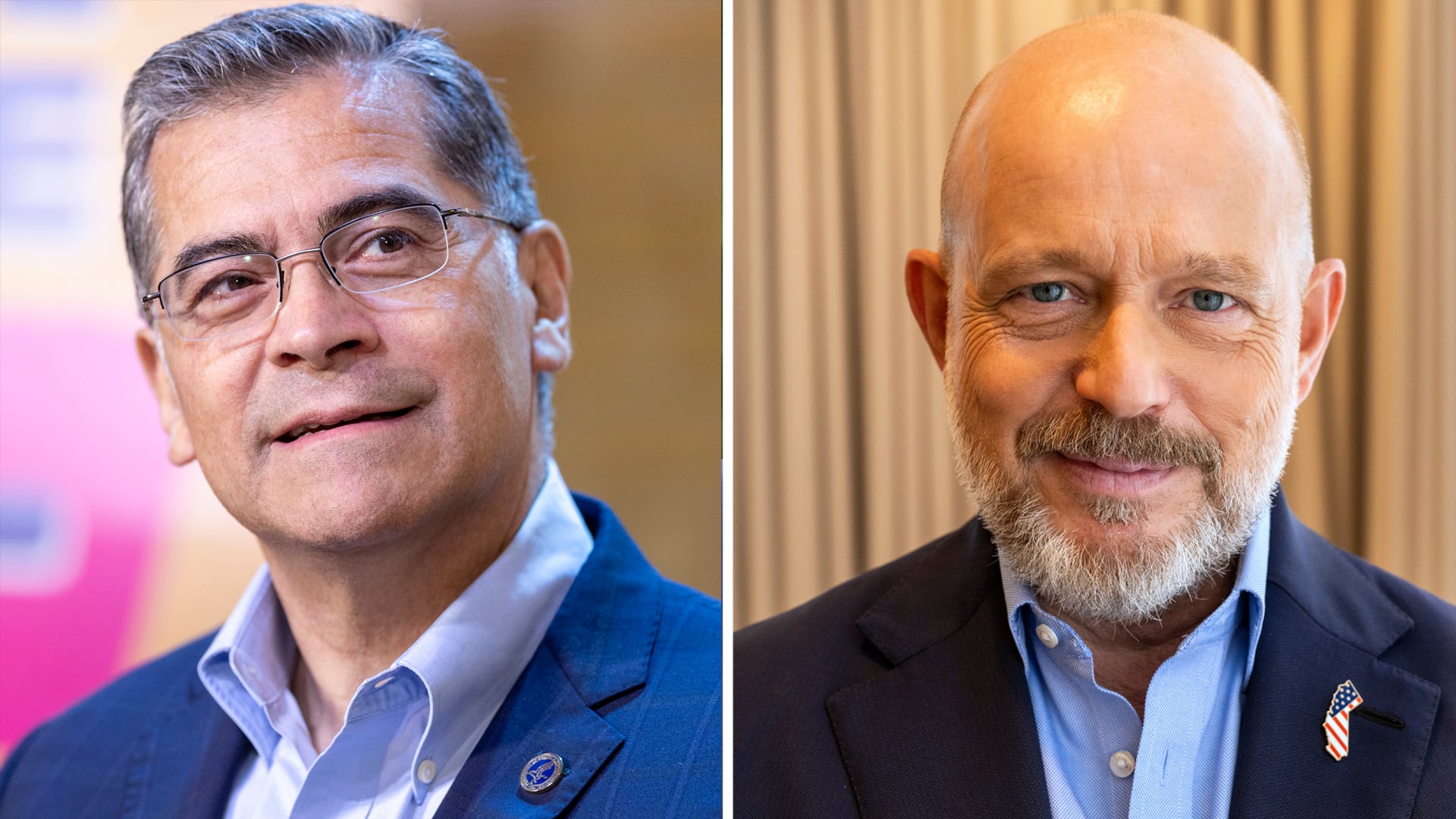
Early results from California’s primary elections indicate that the Democrat Xavier Becerra and Steve Hilton, a Republican, will face off for the governorship of the nation’s most populous state in a November runoff. Both candidates emerged from a tight contest that will shape the state’s political direction after the departure of Governor Gavin Newsom, one of the most visible opponents of President Donald Trump. Since 2011, California has been under Democratic control and has become a laboratory for progressive policies that often clash with the White House agenda.
With roughly 55% of votes counted in the slow California tally, Hilton was just ahead of Becerra with 27.6% and 25.5% respectively, and are poised to be the two candidates most likely to advance to the November 3 election. There were 61 candidates on the ballot. Under the system known as the jungle primary or open primary, only the two contenders with the most votes move on to the next round, regardless of party affiliation.
Trump’s influence was evident in this election: through his platform Truth Social he urged his followers on Tuesday to vote for Hilton. “He will work with me and the Federal Government, the money will flow because I have confidence in him (but not any of the others!), and we will MAKE CALIFORNIA GREAT AGAIN,” the president wrote. Vice President J. D. Vance also joined in praising the candidate, stressing that the state needs better political leadership.
This is being described as the most expensive governor’s race in U.S. history, surpassing $315 million in spending, most of it on advertising, according to data compiled by AdImpact. The total swelled after the billionaire Tom Steyer, who founded one of San Francisco’s largest investment firms, poured more than $200 million of his own money into the campaign. But it was not enough to secure the Democratic bid, and he now appears set to finish third with just under 20% of the vote.
A Becerra win in November would signal continuity in the confrontational approach toward Trump that marked Newsom’s tenure. A victory for Hilton, by contrast, would signal a turn toward a conservative agenda aligned with the president’s priorities on immigration, public safety, the economy and government regulation.
With backing from Trump and the Republican Party apparatus, Hilton has pledged to turn the state red again. The former political commentator broke through in the race on two promises: revive an economy strained by rising living costs and toughen public safety measures, while also supporting operations by Immigration and Customs Enforcement (ICE). Hilton began his political career in Britain, where he was born. He had ties to the Conservative Party during the Margaret Thatcher era, moved to California in 2012 and started a career as a Fox News host. His plan, in his own style, is to repeat the feat of another immigrant who became governor, Arnold Schwarzenegger. Since the movie star left office at the end of his second term in January 2011, no other Republican has held the post.
Becerra, for his part, seeks to become California’s first Hispanic governor in more than a century. The son of Mexican immigrants and a former secretary of Health in the Joe Biden administration, he has centered his campaign on defending the “California way of life,” protecting immigrants and expanding social programs that, he says, were undermined by policies pursued under Trump. Becerra has a 35-year political career that includes service in the state Assembly, the U.S. Congress and as California’s attorney general. He highlights as an achievement the fact that, with more than 120 lawsuits, he restrained Trump during his first term and proposes to repeat that strategy.
The outcome of the November midterms could have repercussions beyond the state’s borders and influence the Democratic strategy heading into the 2028 presidential contest. Outgoing Governor Newsom continues to signal a possible run for the White House.
During Trump’s first term (2017–2021), California positioned itself as the main center of resistance on issues such as immigration, climate change, reproductive rights and social justice. Although it remains one of the most favorable territories for the Democratic Party, Republican influence has grown in recent years: California was the third-largest state for Trump in 2024 (six million votes), behind only Texas and Florida.
Sign up for our weekly newsletter to get more English-language news coverage from EL PAÍS USA Edition