Connect with us

%

Europe’s Best Beach For 2026 Revealed

Published

on

europe’s-best-beach-for-2026-revealed

A new ranking of Europe’s most spectacular beaches has been unveiled for 2026, sparking fresh inspiration for summer travel.

While Greece has secured the top spot this year, Spain has delivered a strong performance with one of its most iconic destinations taking second place.

Greece named home to Europe’s best beach

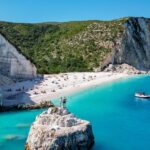
The coveted title of Europe’s best beach for 2026 has gone to Fteri Beach, a secluded cove celebrated for its striking natural beauty. Carved into the coastline of the Greek island of Kefalonia, Fteri Beach is known for its dramatic white cliffs, luminous blue waters and untouched, almost otherworldly setting.

Part of its appeal lies in its relative inaccessibility. Visitors typically reach the beach by boat or via a more challenging пеш hike, which has helped preserve its pristine condition and keep crowds to a minimum. Travel experts praised its raw, unspoilt atmosphere – a key factor in securing the top ranking this year.

Spain’s Cala Macarella takes an impressive second place

Hot on its heels is Cala Macarella, which has been named the second-best beach in Europe for 2026. Located on the southern coast of Menorca, the beach is widely regarded as one of Spain’s most picturesque coastal spots.

Cala Macarella is instantly recognisable for its horseshoe-shaped bay, framed by rugged limestone cliffs and shaded by pine trees. Its calm, shallow waters shimmer in vivid shades of turquoise and emerald, creating a tranquil environment that is ideal for swimming and relaxing.

Despite its popularity, the cove retains a sense of escape. Access is managed during peak months, with visitors often arriving via a scenic coastal path or shuttle service, helping to preserve the natural surroundings while still allowing access to its beauty.
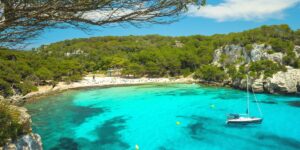
Cala Macarella, Menorca, in second place
Credit: Shutterstock/Rulan

What sets these beaches apart

The ranking, compiled by travel experts, evaluates beaches based on a wide range of factors beyond simple aesthetics. Water clarity, environmental preservation, crowd levels, accessibility and overall experience all contribute to the final list.

Fteri Beach stood out for its dramatic isolation and untouched landscape, offering visitors a rare sense of discovery. In contrast, Cala Macarella impressed with its balance – combining postcard-perfect scenery with a more accessible, visitor-friendly experience.

This contrast highlights a growing trend in European travel: while remote, hidden beaches are increasingly desirable, there is still strong demand for destinations that offer both beauty and ease of access.

Spain continues to shine on the European beach scene

Although Greece has taken the top honour this year, Spain’s presence near the top of the list reinforces its reputation as one of Europe’s premier beach destinations. From the Balearic Islands to the Atlantic coast, the country offers an extraordinary variety of shoreline, each with its own unique character.

Cala Macarella’s runner-up position is particularly significant, as it showcases the enduring appeal of Menorca – often considered the quieter, more natural island in the Balearics compared to its neighbours.

A summer hotspot for 2026

With its high ranking now confirmed, Cala Macarella is expected to attract even more внимание in the coming months. Travellers planning a visit are likely to encounter increased demand, particularly during peak summer weeks.

Those looking to experience the beach at its most serene are advised to visit early in the day or outside the busiest periods. Even then, its natural beauty and calm atmosphere remain its defining features.

For 2026, the message is clear: Greece may officially be home to Europe’s best beach, but Spain’s Cala Macarella is a very close contender – and for many travellers, it may offer the perfect balance of beauty, accessibility and Mediterranean charm.


%

Spain’s Southern Beaches Prepare To Receive 56,500 Tonnes Of Invasive Brown Algae

Published

on

spain’s-southern-beaches-prepare-to-receive-56,500-tonnes-of-invasive-brown-algae

Authorities describe the situation as continuous, as the algae is repeatedly reintroduced by marine currents rather than arriving in isolated seasonal events. Photo credit: Andreas Poertner/Shutterstock

Coastal authorities in southern Spain are preparing for continued large-scale arrivals of invasive Japanese brown algae (Rugulopteryx okamurae) along the Andalucía coastline in 2026. Aggregated regional reporting indicates that around 40 municipalities may be affected to varying degrees, as marine currents continue to transport significant volumes of algae onto beaches.

The species, commonly known as Japanese brown algae or Asian invasive seaweed, has spread rapidly since its arrival in waters linked to the Strait of Gibraltar. It is now established along much of the southern Spanish coast, creating persistent challenges for local authorities responsible for beach maintenance and environmental management.

Tens of thousands of tonnes expected annually

Regional estimates suggest that approximately 56,500 tonnes of invasive algae could be deposited on Andalucía’s beaches during 2026. The figure is based on accumulated removal data and observed seasonal patterns rather than a fixed scientific forecast.

The distribution is uneven, with the highest concentrations typically recorded in Cádiz and Málaga provinces, particularly in coastal areas closest to the Strait of Gibraltar. Smaller but persistent accumulations are also recorded in Huelva, Granada and Almería.

Authorities describe the situation as continuous rather than seasonal, as the algae is repeatedly reintroduced by marine currents rather than arriving in single isolated events.

Around 40 municipalities affected across the coastline

Aggregated regional monitoring indicates that around 40 municipalities across Andalucía are affected to varying degrees. These include both large urban coastal centres and smaller towns dependent on seasonal tourism.

In Cádiz province, municipalities such as Algeciras, Tarifa, La Línea de la Concepción, Barbate, Conil de la Frontera, Bolonia, Caños de Meca and Rota have reported repeated beach accumulations. These areas are among the most exposed due to their proximity to the Strait of Gibraltar.. 

In Málaga province, the impact is concentrated along the western Costa del Sol corridor. The most consistently affected areas include Manilva, Casares Costa, Estepona, Marbella, Mijas Costa and Fuengirola. Occasional lighter deposits have also been recorded further east in Torremolinos and parts of the western Málaga city coastline have also experienced regular deposits requiring mechanical removal  depending on seasonal current conditions. 

Additional lower-intensity impacts have been recorded along parts of Granada, Almería and Huelva.

How the algae affects beaches

The arrival of Japanese brown algae can significantly alter beach conditions. When large volumes accumulate on shorelines, the algae forms thick mats that cover sand surfaces and shoreline edges.

Key impacts include:

  • Reduced usable beach area during peak accumulation periods 
  • Changes to the appearance and texture of sand, as algae mixes with sediment 
  • Odour issues as decomposing algae is exposed to heat and sunlight 
  • Increased labour requirements for mechanical and manual beach cleaning 
  • Temporary disruption to beach facilities in heavily affected zones 

While not structurally damaging to sand itself, repeated deposition can require frequent intervention to maintain safe and accessible beach environments.

What it means for beach goers

For visitors, the algae does not pose a direct health risk, but it can affect the overall beach experience.

In heavily affected areas, beachgoers may encounter:

  • Sections of shoreline covered in decomposing seaweed 
  • Reduced swimming and sunbathing space during peak accumulation 
  • Strong organic odours in hot weather conditions 
  • Increased presence of cleaning machinery during the day 

In many locations, municipalities prioritise clearing main swimming areas first, meaning conditions can vary significantly along the same stretch of coastline.

Despite these disruptions, beaches generally remain open, with local councils working to maintain accessibility throughout the tourist season.

Ongoing removal operations across Andalucía

Local authorities across Andalucía have implemented continuous removal programmes. These include mechanical beach cleaning, manual collection in environmentally sensitive areas, and transport of collected algae to authorised disposal sites.

In some municipalities, repeated interventions are required during peak accumulation periods. In more exposed locations, cleaning may take place daily in order to maintain beach usability.

The cost of these operations has placed pressure on municipal budgets, particularly in smaller coastal towns with limited seasonal revenue.

Environmental pressures and long-term management

Marine scientists continue to monitor the ecological impact of the Japanese brown algae.

Beyond its presence on beaches, Rugulopteryx okamurae has significant ecological consequences in coastal waters. The algae can form dense mats on the seabed, blocking light from reaching native marine vegetation and reducing the space available for local species to grow. This process can displace native algae and seagrass habitats, leading to reduced biodiversity in affected areas. Over time, the structure of local ecosystems may shift, with fewer native species able to compete for space and resources.

Marine scientists also note that the algae can alter seabed composition and simplify habitats used by fish and invertebrates. This reduces ecological complexity in nearshore waters and can affect local food chains. Once established, the species is extremely difficult to remove. Authorities and researchers generally agree that eradication is not currently feasible, and management efforts focus on containment and repeated removal rather than elimination.

Outlook for 2026

With continued inflows expected throughout 2026, municipalities across Andalucía’s coastline are likely to remain engaged in ongoing clean-up operations. While severity varies significantly by location, the overall trend indicates sustained pressure on coastal maintenance systems, particularly in the 40 municipalities identified as most affected.

Continue Reading

%

Palma’s Binter NightRun Transformed The City Into A Huge Open-Air Sporting Festival

Published

on

palma’s-binter-nightrun-transformed-the-city-into-a-huge-open-air-sporting-festival

Palma’s Binter NightRun drew thousands of runners and spectators for its sixth edition across the city centre. Credit: Instagram/Binter NightRun

Thousands of runners and spectators filled the streets of Palma on Saturday night as the sixth edition of the Binter NightRun turned the city centre into one of Mallorca’s biggest sporting events of the spring.

The popular night race returned to Palma on May 9 with illuminated routes, live music, DJs and entertainment points spread across the city, creating a festival atmosphere that continued late into the evening. Organisers described the event as one of Spain’s leading urban night races, attracting participants of all ages and abilities.

Three races brought runners through Palma’s landmarks

The event featured three different race formats designed to appeal to both experienced runners and families. The Green Family Mile, a charity-focused 1.7-kilometre route, began at the Dalt Murada esplanade beneath Palma Cathedral. The race was designed as an accessible and inclusive event encouraging participation from families and casual runners.

Later in the evening, participants took part in the 5K and 10K races through Palma’s historic centre and waterfront areas. The 5K route began near the Consolat de Mar on Passeig Sagrera, while the longer 10K race started at Bellver Castle before runners descended into the city centre under special lighting and entertainment effects. Large crowds gathered along the routes as runners passed some of Palma’s best-known landmarks including the Cathedral, the seafront promenade and the old city walls.

Music, lights and entertainment created festival atmosphere

Unlike a traditional road race, the Binter NightRun focused heavily on creating an entertainment experience for both runners and spectators. Throughout the evening, DJs, music stages and lighting installations animated the route while bars and terraces across Palma remained busy with visitors watching the race unfold. Organisers promoted the event as a combination of sport, tourism and nightlife, helping strengthen Palma’s growing reputation for large-scale urban sporting events.

Participants were encouraged to arrive early, with race bib collection taking place at El Corte Inglés Alexandre Rosselló throughout Friday and Saturday before the event.

Palma continued growing role in sports tourism

The Binter NightRun forms part of a wider race series held in several Spanish cities including Tenerife, Murcia, Zaragoza and Las Palmas. Palma’s edition has steadily expanded in recent years and is now considered one of the island’s standout sports tourism events. Earlier this year, the race was officially promoted at FITUR 2026 as part of Mallorca’s international tourism strategy.

For many runners, however, the appeal went beyond competition. The combination of illuminated streets, warm Mediterranean temperatures and a festive city atmosphere once again transformed Palma into a giant nighttime celebration of sport and community.

Continue Reading

%

Calvià Celebrated Europe Day With Music, Markets And Family Activities In Palmanova

Published

on

calvia-celebrated-europe-day-with-music,-markets-and-family-activities-in-palmanova

Palmanova’s seafront promenade hosted music, markets and family activities during Calvià’s Europe Day celebrations. Credit: Facebook/Ayuntamiento de Calvia

Palmanova transformed into a lively multicultural festival this weekend as Calvià celebrated Europe Day with live music, street performances, food stalls and family activities along the Passeig de la Mar.

The all-day event took place on Sunday, May 10, bringing together residents, tourists and local associations for one of the municipality’s most colourful community celebrations of the spring season. Organised by Calvià Town Hall, the festivities ran from 10am until 10pm and attracted families throughout the day.

International market and live entertainment filled the promenade

Visitors explored an international market stretching along the seafront promenade, while children enjoyed face painting sessions, inflatable attractions and street parades held throughout the day.

The event placed a strong focus on cultural diversity and European coexistence, with organisers highlighting the importance of solidarity and community spirit in one of Mallorca’s most international municipalities. Local associations and performers helped create a festive atmosphere designed to reflect the many cultures that form part of everyday life in Calvià.

Several parades moved through Palmanova during the celebration, while the main stage hosted a full programme of performances ranging from traditional Mallorcan dance to modern music acts.

Traditional dance and music shared the stage

The entertainment programme began in the morning with performances by a modern dance academy followed by the official opening ceremony. One of the highlights of the day was a Ball de Bot performance featuring traditional Mallorcan dancing accompanied by live music, bringing a local cultural element to the European-themed celebration.

Throughout the afternoon and evening, DJ sessions and live bands kept crowds gathered near the stage area. Organisers scheduled several festive-style performances that continued until the closing concert in the evening.

The seafront atmosphere, warm spring weather and family-friendly programme helped maintain a steady flow of visitors across the day.

Calvià continued tradition of Europe Day celebrations

Europe Day celebrations have become an established annual tradition in Calvià, where a large international population has helped shape the municipality’s identity over recent decades.

Town hall officials described the event as an opportunity to celebrate coexistence and strengthen connections between local communities and international residents living across the municipality.

Palmanova’s Passeig de la Mar once again served as the centrepiece for the festivities, with market stalls, performances and activities spread across the waterfront area until the event concluded at 10pm.

The celebration formed part of wider Europe Day events taking place across Mallorca and Spain marking European unity, cultural exchange and cooperation between member states.

Continue Reading
Advertisement
Advertisement

Spanish Real Estate Agents

Tags

Trending

Copyright © 2017 Spanish Property & News