Connect with us

%

Europe’s Best Beach For 2026 Revealed

Published

on

europe’s-best-beach-for-2026-revealed

A new ranking of Europe’s most spectacular beaches has been unveiled for 2026, sparking fresh inspiration for summer travel.

While Greece has secured the top spot this year, Spain has delivered a strong performance with one of its most iconic destinations taking second place.

Greece named home to Europe’s best beach

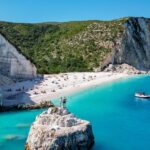
The coveted title of Europe’s best beach for 2026 has gone to Fteri Beach, a secluded cove celebrated for its striking natural beauty. Carved into the coastline of the Greek island of Kefalonia, Fteri Beach is known for its dramatic white cliffs, luminous blue waters and untouched, almost otherworldly setting.

Part of its appeal lies in its relative inaccessibility. Visitors typically reach the beach by boat or via a more challenging пеш hike, which has helped preserve its pristine condition and keep crowds to a minimum. Travel experts praised its raw, unspoilt atmosphere – a key factor in securing the top ranking this year.

Spain’s Cala Macarella takes an impressive second place

Hot on its heels is Cala Macarella, which has been named the second-best beach in Europe for 2026. Located on the southern coast of Menorca, the beach is widely regarded as one of Spain’s most picturesque coastal spots.

Cala Macarella is instantly recognisable for its horseshoe-shaped bay, framed by rugged limestone cliffs and shaded by pine trees. Its calm, shallow waters shimmer in vivid shades of turquoise and emerald, creating a tranquil environment that is ideal for swimming and relaxing.

Despite its popularity, the cove retains a sense of escape. Access is managed during peak months, with visitors often arriving via a scenic coastal path or shuttle service, helping to preserve the natural surroundings while still allowing access to its beauty.
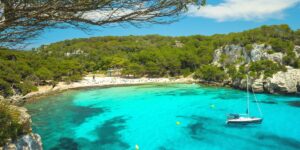
Cala Macarella, Menorca, in second place
Credit: Shutterstock/Rulan

What sets these beaches apart

The ranking, compiled by travel experts, evaluates beaches based on a wide range of factors beyond simple aesthetics. Water clarity, environmental preservation, crowd levels, accessibility and overall experience all contribute to the final list.

Fteri Beach stood out for its dramatic isolation and untouched landscape, offering visitors a rare sense of discovery. In contrast, Cala Macarella impressed with its balance – combining postcard-perfect scenery with a more accessible, visitor-friendly experience.

This contrast highlights a growing trend in European travel: while remote, hidden beaches are increasingly desirable, there is still strong demand for destinations that offer both beauty and ease of access.

Spain continues to shine on the European beach scene

Although Greece has taken the top honour this year, Spain’s presence near the top of the list reinforces its reputation as one of Europe’s premier beach destinations. From the Balearic Islands to the Atlantic coast, the country offers an extraordinary variety of shoreline, each with its own unique character.

Cala Macarella’s runner-up position is particularly significant, as it showcases the enduring appeal of Menorca – often considered the quieter, more natural island in the Balearics compared to its neighbours.

A summer hotspot for 2026

With its high ranking now confirmed, Cala Macarella is expected to attract even more внимание in the coming months. Travellers planning a visit are likely to encounter increased demand, particularly during peak summer weeks.

Those looking to experience the beach at its most serene are advised to visit early in the day or outside the busiest periods. Even then, its natural beauty and calm atmosphere remain its defining features.

For 2026, the message is clear: Greece may officially be home to Europe’s best beach, but Spain’s Cala Macarella is a very close contender – and for many travellers, it may offer the perfect balance of beauty, accessibility and Mediterranean charm.


%

Spanish Prime Minister Forced To Land In Turkey After Aircraft Problem Mid-Flight

Published

on

spanish-prime-minister-forced-to-land-in-turkey-after-aircraft-problem-mid-flight

The aircraft experienced a technical malfunction mid-flight. Photo credit: Pool Congreso/Congreso de los Diputados

A technical issue involving the Airbus 310 carrying Spain’s Prime Minister Pedro Sánchez led to an unscheduled landing in Turkey while he was travelling to Armenia for a European summit. The incident occurred during an official trip linked to the European Political Community meeting.

According to reports, the aircraft experienced a technical malfunction mid-flight, prompting the crew to divert as a precautionary measure.  The landing took place in Ankara, where the delegation remained overnight before continuing their journey to Armenia the following day. The stopover interrupted the planned travel schedule but did not affect Sánchez’s participation in the summit. The aircraft was operating as part of an official government flight, with security and technical protocols activated once the issue was identified.

Diversion decision and landing in Ankara

The decision to divert to Ankara was taken after the crew detected a technical problem during the flight. Safety procedures required an immediate assessment of the situation, and the landing in Turkey was carried out as a precaution rather than an emergency descent. Once on the ground, checks were carried out on the aircraft while arrangements were made for the delegation to remain in Turkey overnight.

No injuries were reported among those on board, and there was no indication of any security threat linked to the incident. The following day, alternative arrangements were made to continue the journey to Armenia so that Sánchez could attend the planned European Political Community summit. The meeting brings together leaders from across the continent to discuss political, economic and security issues.

Official trip to Armenia

The visit to Armenia forms part of Spain’s participation in European discussions involving heads of state and government. These summits are designed to provide a forum for coordination between European countries on shared challenges, including international security, energy policy and regional stability.

Despite the disruption caused by the aircraft issue, the Spanish delegation proceeded with the programme once travel resumed. The stopover did not result in any changes to the agenda in Armenia.

Aircraft safety procedures

In cases involving official government flights, strict protocols are in place to deal with technical irregularities. When a fault is detected, crews are trained to prioritise landing at the nearest suitable airport where maintenance and safety checks can be carried out. The diversion to Ankara followed standard aviation procedures designed to ensure the safety of passengers and crew.

Such measures are routine in civil and government aviation when technical concerns arise, even if the issue does not constitute a critical emergency. Once grounded, aircraft undergo inspection by technical teams to determine the cause of the fault and whether repairs are required before further travel. In this case, the delegation waited overnight while arrangements were made for continuation of the trip.

No reported impact on delegation

There were no reports of injuries or medical incidents among those on board. The delegation, which included officials accompanying the Prime Minister, remained in Turkey during the overnight stop without further complications.

Press reports indicate that the situation was managed in coordination with aviation authorities and relevant government services. The aircraft later continued its journey once the necessary arrangements were completed.

Context of European Political Community summit

The European Political Community summit, which was the destination of the trip, brings together leaders from across Europe to discuss cooperation on political and strategic issues. It has become a regular forum for dialogue between European Union and non-EU countries.

Spain’s participation in the summit reflects its role in broader European discussions on regional stability and policy coordination. The event typically includes bilateral meetings and multilateral sessions between attending leaders.

Travel disruption resolved

Although the technical fault led to an unexpected interruption in travel, the situation was resolved without further incident. The aircraft diversion to Turkey ensured safety procedures were followed, and the delegation was able to continue its journey to Armenia once conditions allowed.

Continue Reading

%

Cruise Ship Tragedy As Three Passengers Die In Suspected Hantavirus Outbreak

Published

on

cruise-ship-tragedy-as-three-passengers-die-in-suspected-hantavirus-outbreak

MV Hondius visiting Antartica. Credit: Antarctic & Arctic Adventures FB

Three fatalities have been reported following a suspected hantavirus outbreak on a cruise ship currently traversing the Atlantic Ocean. World Health Organisation (WHO) representatives confirmed the deaths occurred aboard the MV Hondius as it sailed from Argentina to Cape Verde.

One case of the rare virus has been officially confirmed, with five additional suspected cases currently under investigation by international health bodies. British officials are currently monitoring the condition of a 69-year-old UK national who remains in intensive care in Johannesburg following an emergency evacuation for specialist care.

Fatalities reported during Atlantic crossing

South African health ministry officials said that the first casualty was a 70-year-old man who died while the ship was still at sea. His 69-year-old wife also succumbed to the illness in a Johannesburg hospital after being moved from the vessel for urgent treatment. Sources close to the case identified the deceased couple as Dutch nationals who were holidaying on the remote route.

Hantavirus transmission and ship safety

Hantavirus infections typically reach humans through direct contact with infected rodents or their droppings, urine, and saliva. Severe respiratory distress often follows infection, creating a serious medical emergency for those affected by the pathogen. While human-to-human transmission is rare, the contained environment of a cruise ship necessitates strict health protocols to protect all those remaining on board during the voyage.

World Health Organisation experts are currently coordinating with member states and Oceanwide Expeditions to manage the ongoing public health risk and facilitate medical evacuations. Two other passengers displaying symptoms may face isolation in Cape Verde before the ship proceeds to Spain’s Canary Islands later this week to undergo further screening.

MV Hondius originally departed from Ushuaia in Argentina on March 20 and was scheduled to finish its journey in early May. Global authorities are monitoring the situation closely to guarantee all remaining passengers receive necessary support and medical screening before the voyage continues to its final destination.

Sign up for personalised news

Subscribe to our Euro Weekly News alerts to get the latest stories into your inbox!

By signing up, you will create a Euro Weekly News account if you don’t already have one. Review our Privacy Policy for more information about our privacy practices.

Continue Reading

%

Passengers Face Alcohol Tests In Spain

Published

on

passengers-face-alcohol-tests-in-spain

Co-drivers in Spain could face alcohol tests under proposed driving rules Credit : Andrey_Popov, Shutterstock

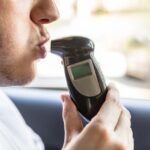
Spain is moving closer to allowing 17-year-olds to drive, but there is one detail that is catching people off guard. The adult sitting in the passenger seat will not just be there for reassurance. Under the proposed rules, the supervising co-driver could also be stopped and tested for alcohol or drugs, just like the person behind the wheel.

This change comes from a European directive that introduces supervised driving before the age of 18. Spain has not yet applied the system, but the framework is already clear. And for families, the focus is shifting as much to the passenger seat as it is to the driver.

Why the co-driver matters under the new driving rules

When people hear that 17-year-olds may soon be allowed to drive, the first reaction is often about the young driver. But the real responsibility sits partly with the adult next to them.

This is not a casual passenger role. The co-driver is expected to guide, observe and step in if needed. They are there to support the learner in real traffic situations, not just to tick a legal box. Because of that, their condition matters.

If the adult has been drinking or is under the influence of drugs, they are no longer able to supervise properly. That is why the rules allow authorities to carry out roadside checks on the co-driver as well.

It may feel unusual at first, but from a safety point of view, it is consistent. The system treats the supervising adult as part of the driving process, not as someone who is simply along for the ride.

What the rules say about who can sit in that seat

Not everyone will be allowed to act as a co-driver. The conditions are quite strict. The person must be at least 24 years old, must hold a valid EU driving licence and must have had that licence for at least five years. They must also not have been banned from driving in the last five years.

These requirements are there for a reason. The idea is to make sure that the person supervising has enough experience to handle different situations and guide a new driver calmly. Someone who has only recently passed their test would not meet that standard.

There is also room for Spain to go further. The European rules allow countries to introduce additional conditions if they want to strengthen the system. That could include limiting how many young drivers one person can supervise or adding extra checks.

For now, those details are still being worked out.

How driving at 17 would actually work

The system itself is fairly straightforward. A 17-year-old would go through the same steps as any other learner. That means theory lessons, exams and a practical driving test. Passing those would lead to a licence.

The difference comes after that. Until the driver turns 18, they would only be allowed to drive with a qualified adult in the passenger seat. This would be clearly marked on the licence with a specific code, making it easy for police to identify drivers under this rule.

Once they reach 18, the restriction is lifted and they can drive on their own.

Spain’s traffic authority, the DGT, is already working on how to introduce this system. The European directive sets a deadline of November 2028 for countries to adapt their laws.

Why alcohol and drug checks include the co-driver

This is the part that raises the most questions. Why test someone who is not actually driving? The answer lies in the role they play.

The co-driver is there to supervise, correct and guide. If they are not fully alert, that support disappears. In some situations, it could even make things worse if the advice they give is delayed or unclear.

By allowing checks on both people in the car, authorities are trying to keep the supervision meaningful.

It also sends a clear message. If you agree to sit next to a young driver, you take on a responsibility that comes with rules.

In practice, it means that anyone acting as a co-driver will need to treat the situation as seriously as if they were driving themselves.

What this could mean for families

For many families, this system will change the way driving is introduced. Parents are likely to be the main co-drivers, which means they will need to be fully aware of the responsibility involved. It is not just about helping their child gain confidence. It also means respecting the same standards expected of a driver.

For young people, it opens a door earlier than before. Being able to drive at 17 could make a difference, especially for those living in areas where public transport is limited. It can help with studies, work or daily life.

But that freedom comes with conditions. Every journey involves supervision, and that supervision has to be taken seriously.

Why Spain is looking at this model now

The approach is based on a system already used in countries like Germany. The idea is to give new drivers more time to learn under guidance rather than leaving them to manage everything alone from the start. Experience is built gradually, with support in real situations.

From a road safety point of view, that can make a difference.

Instead of going from lessons straight to independent driving, there is a transition period where mistakes can be corrected in real time.

Spain sees potential in that model, particularly for younger drivers who may benefit from extra support during their first months on the road.

A small detail that changes the whole picture

At first glance, the headline is about 17-year-olds driving. But the detail that stands out is the role of the co-driver.

They are not just a passenger. They are part of the system, with responsibilities that come with it. And that includes something many people would not expect.

If the rules go ahead as planned, sitting in the passenger seat could mean being breath tested or checked for drugs, simply because you are there to supervise.

It is a small shift on paper, but it changes how driving is shared between two people. And that is likely to be the part most people remember.

Continue Reading
Advertisement
Advertisement

Spanish Real Estate Agents

Tags

Trending

Copyright © 2017 Spanish Property & News