While a driver needs 40 super licence points to compete in F1 full-time, young drivers can obtain a free practice only super licence which they can get with 25 points.
This means, being on 35 super licence points, Herta is eligible to take part in FP1 sessions this year.
During a recent appearance on the Beyond the Grid podcast, Herta was asked about the time he nearly signed an F1 contract. Host Tom Clarkson referred to a period in the paddock when they were all led to believe that Herta had signed for Alpha Tauri (now Racing Bulls).
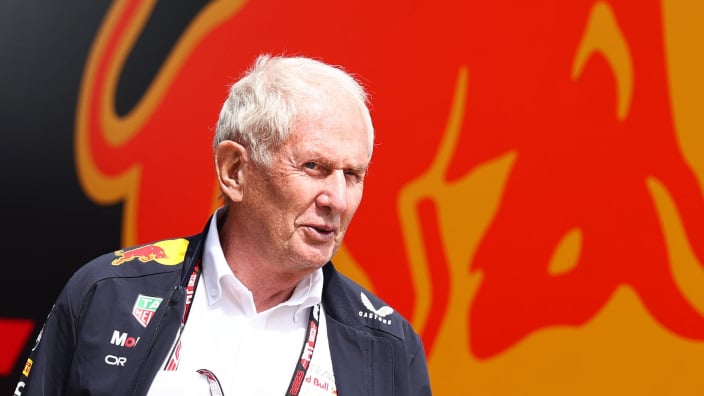
The Alpha Tauri squad was and remains owned by Red Bull, with their former advisor Dr Helmut Marko responsible for signing drivers and was in frequent contact with Herta during this period.
When asked how being on the precipice of signing an F1 contract felt for Herta, he responded: “I really liked the straightforward-ness of dealing with Dr Marko. Sometimes it hurts as a driver, you don’t want to hear some things but sometimes you need to hear them.
“But the good thing about all of that is he’s very straightforward on the possibility of it. One day it was 80 per cent and the next day it’s 40 per cent, we clawed back some so maybe 60.
“There was a very real possibility that I had a contract from them, I was just unable to sign because I didn’t have a super licence. And they were feeling really good at a point that they thought it was going to happen, and then they weren’t sure and eventually I couldn’t really wait too much more.
“I had to sign a new deal in IndyCar, Michael [Andretti] and Dan [Towriss] were very gracious to have me back in IndyCar and so I signed with them, which ended up being the right thing because I would have had no Formula 1 and no IndyCar seat. I don’t know what I would have done then.
“It was a very strange time, it was always day-to-day, it was so hard. Even for me, looking at the reports and thinking ‘man, these people think it’s going to happen, maybe it’ll happen’. And then you call Dr Marko and he’s like ‘well, don’t be so sure and maybe this stuff can happen’.
“I was very gracious at the time of everybody, being able to go into the Red Bull sim. Being able to talk to Dr Marko about the possibility of Formula 1. And a lot of people took a lot of time out of their days to point me in the right direction and help me out.”
An F1 icon has shed light on exactly why things didn’t work out between him and a future champion during their time together at Mercedes.
Jock Clear is a renowned British F1 engineer who is able to boast working with some of the sport’s biggest names, including two seven-time champions.
Clear worked as Lewis Hamilton‘s senior performance engineer between 2013 and 2014, having just come off the back of working with Michael Schumacher through the twilight of his career with the Silver Arrows.
You wouldn’t know it on paper given that Rosberg managed to outperform F1 legend Schumacher during his first season racing alongside one of the sport’s greats, but Clear and Rosberg did not get on.
In a recent appearance on Peter Windsor’s YouTube F1 Livestream, Clear delved into his tricky relationship with Rosberg, highlighting what it was about the German-Finnish racer that rubbed him up the wrong way.
“It just didn’t click, we just didn’t click,” Clear said about working with Rosberg during the 2010 season.
“I really value the relationship that I have with my driver, and it needs to be right, it’s a sporting environment and you need to understand each other, and Nico and I just didn’t understand each other at all, we just didn’t have any synergy.”
Further detailing the fallout of his position alongside Rosberg, Clear told F1 journalist Windsor that as soon as Schumacher heard the news that Rosberg would no longer be using the Brit as his engineer for 2011, the seven-time champion said: “Well if Nico doesn’t want him I’ll have him.”
Rosberg was instead reunited with Tony Ross who he had worked well with at Williams, with the German benefitting from the Mercedes reshuffle for the 2011 championship.
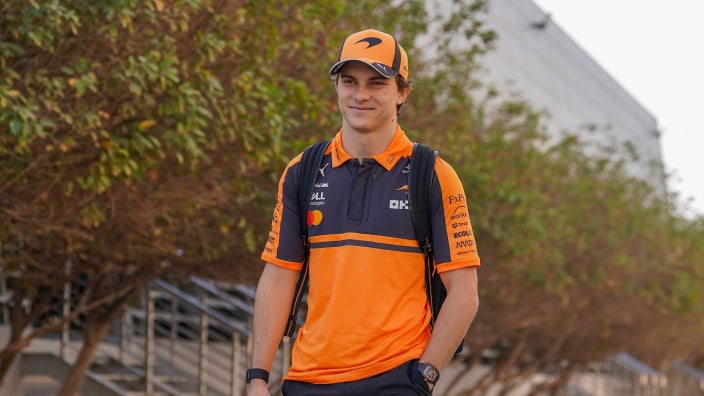
The childhood home of McLaren F1 star Oscar Piastri is available for you to buy, if you have a spare $6.5million lying around.
Piastri has become somewhat of an Australian superstar, taking over the Aussie mantle from Daniel Ricciardo, who retired in 2024 having been replaced by Piastri at McLaren in 2022.
But despite having claimed nine grand prix victories so far across his career, Piastri has not had much success at his home race in Melbourne, Australia.
And after that disastrous moment, it is understood that Piastri went back to his family home in Melbourne, Victoria to relax and unwind.
Piastri grew up in the glitzy Brighton suburb of the city in a house that, according to RealEstate.com, was sold in 2009 for $1.27million, when Piastri was just nine years old.
It is owned by one Nicole Piastri, Oscar’s mother, and has been lived in by Oscar and his sisters Hattie, Mae and Edie as they grew up.
Now, following some renovations, the Melbourne-based property is up for sale with Nick Johnstone Real Estate, for $6.5million.
The Piastri family home is a six-bedroom house with a pool outside that has been installed by the current owners.
Said pool also has a stunning water feature, making it an incredible place to unwind after a tough F1 race – or just a tough day in work if you’e a normal person.
It has a home office which is complete with a ‘waiting area’ not too dissimilar from a doctor’s waiting room, but cool nonetheless.
The house also has a home theatre, the norm these days for people with mega expensive houses, while a car garage in the basement has room for six cars and a turntable.
To make things even better, the house is close to the Brighton Public Golf Course and is a short trip away from Brighton Beach and local train stations which will take you into the centre of Melbourne.
A five-day ban has been threatened by authorities for drivers ahead of the 2026 F1 Monaco Grand Prix.
F1 heads to the principality in June for the sixth round of the 2026 season, with it being later in the season than the iconic event usually falls.
This is to eradicate the previous clash between the Monaco GP and Indianapolis 500, another iconic motorsport race that has been clashing on the racing calendar with Monaco for many years.
The later date of the Monaco GP is also designed to streamline the sport’s global logistics and help F1 move toward its sustainability goals, including its target of reaching Net Zero carbon emissions by 2030.
But ahead of this year’s event, which organisers are hoping will see more overtaking compared with previous years due to the smaller, more nimble F1 cars brought about by the recent regulations overhaul in F1, the Monegasque government have introduced new guidance for road car users.
They have announced that an immediate five-day vehicle immobilisation will apply to any road traffic offence that is committed during the Monaco GP weekend, as well as the Top Marques Monaco automotive show which takes place in May.
Owners caught committing a road offence at these times will have their cars seized by police and will not be able to get them back for five days.
These measures have been brought in because of unauthorised gatherings of sports cars that authorities have noticed are pretty common during these two events which spill onto public roads and can generate dangerous driving, traffic violations and noise disturbance for residents.
The five-day vehicle immobilisation period has previously been used in past years, and will act as a deterrence for organisers of these impromptu events.
Previous editions of the iconic race around the streets of Monaco have not provided fans with much excitement, as the width of modern-day F1 cars make it almost impossible to overtake.
In 2025, F1 tried to shake things up by introducing a mandatory two-stop strategy to at least bring more variation when it came to strategy.
But most teams and drivers opted to pit on exactly the same lap on both occasions, and very few actually risked doing something a little different.
This year, however, that rule has been scrapped, and we will not have the mandatory two-stop race around the principality.
However, the new regulations might just increase the excitement of the race.
So far in 2026, we have seen drastically increased amounts of overtakes at the three grands prix compared to the same events 12 months ago.
While the boost and overtake modes have at times made overtaking too easy for the drivers, in Monaco this could prove to be a God send for fans hoping to see more overtakes around the streets of Monaco.
Couple this with the fact that F1 cars are much narrower and lighter than they were in 2025, and we could actually see an exciting Monaco GP.
The track signed a contract extension last year, and will remain on the F1 calendar until at least the 2035 season.