
ElPais
False Leads And Road Checks: Search Continues For Fugitive Responsible For Explosive That Killed A Police Officer In Spain

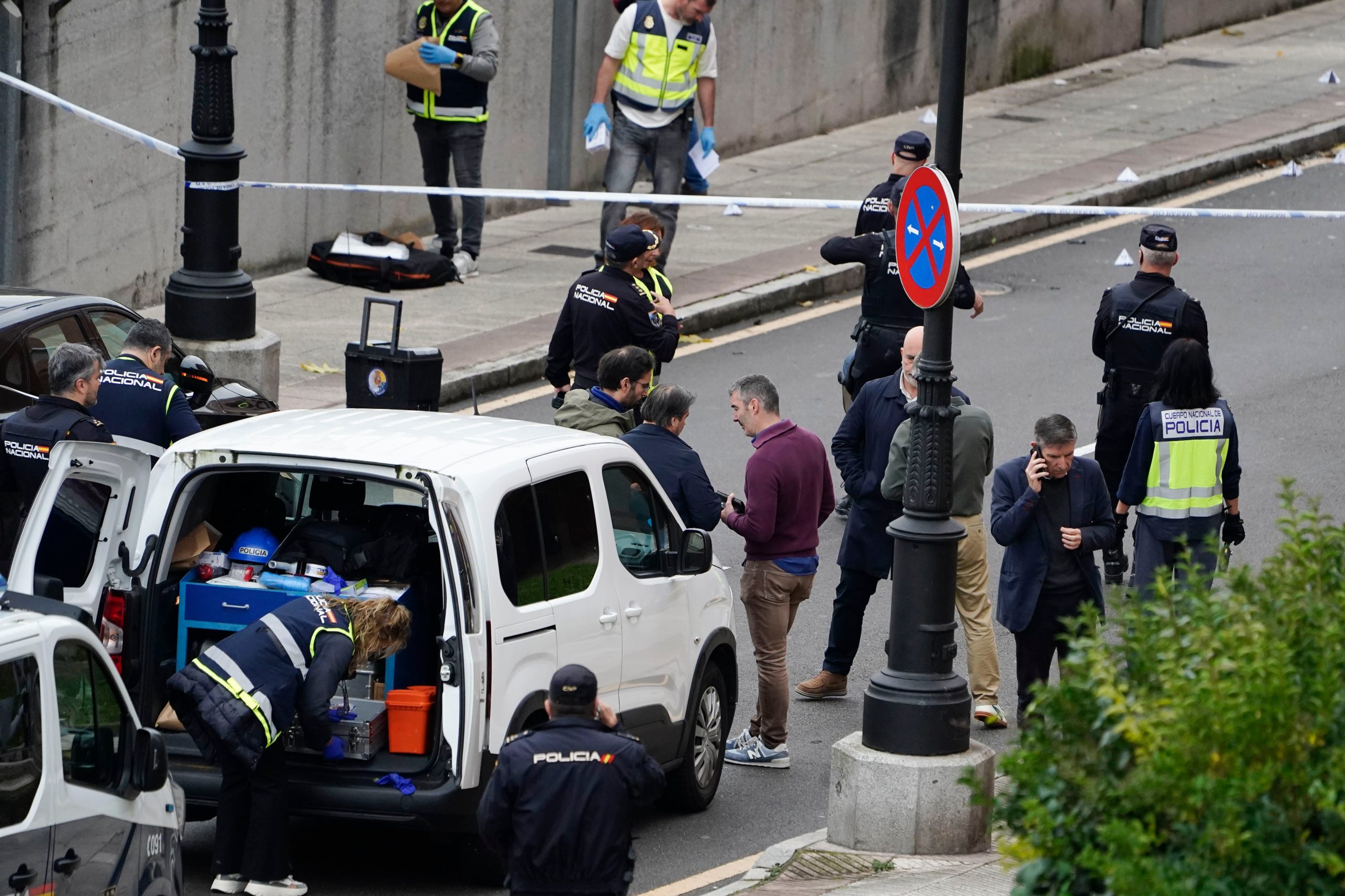
The police are continuing their relentless search for Manuel F. A., the 64-year-old man suspected of carrying out the attack that shocked Oviedo, in Asturias, northern Spain, on Tuesday. The suspect planted an explosive device inside a backpack, killing one police officer and seriously injuring another, who remains hospitalized. Officers have been searching for more than 24 hours. Police sources say investigators have pursued several false leads and are conducting roadblocks with the assistance of the Spanish Civil Guard.
The fugitive has a criminal record containing around 10 previous offenses involving ordinary criminal activity, according to several police sources, including theft and minor assault. Some investigators are therefore puzzled by the severity of the incident, as Manuel F. A. did not appear to fit the profile of a particularly dangerous individual.
The events unfolded shortly after 7 a.m. on Tuesday when, following an alleged argument with a 17-year-old neighbor in a building on Rafael Urrusti Street in the Villafría neighborhood, he reportedly shot her five times. It has yet to be determined whether the projectiles were bullets fired from a firearm or some other type of ammunition. The young woman was injured but is recovering at the Central University Hospital of Asturias. Access to the building remains restricted, and several residents have been evacuated.
Police launched an operation in the Asturian capital to track down the fugitive after discovering a backpack containing a homemade explosive device in the entrance hall of the building in the Villafría neighborhood. As officers attempted to handle the device in order to deactivate it, a police sub-inspector from the force’s canine unit, named Juan José Rodríguez Rodríguez, who was nearing retirement, was killed instantly. A member of the TEDAX unit—the police’s elite squad specializing in the detection, neutralization, and deactivation of explosive devices—suffered serious injuries to one leg.
The operation launched in response, which involved setting up checkpoints at all exits from the Principality of Asturias and at the bus and train stations in Oviedo and Gijón, is temporary in nature, according to the police sources consulted. As time passes, they explain, the chances of finding the fugitive through such measures diminish.
The checkpoints remained in place throughout the night, although the search area has expanded beyond Oviedo, the sources said. “Searches are also being conducted in nearby towns,” one police source explained. Nearly 100 officers are involved in the operation. The provincial intelligence brigade, homicide squad, and judicial police are also participating in the investigation.
Asturias Chief of Police Jordi Moreno said in remarks to the media on Wednesday that the force’s absolute priority is to “arrest the person responsible for the shooting,” according to the news agency Europa Press. Regarding the condition of the injured TEDAX officer, who remains hospitalized, Moreno said he was “stable” after spending many hours in surgery, although his injuries are serious and there is a risk he could lose sight in one eye.
The partner of the main suspect was arrested on Tuesday morning. During questioning, she reportedly provided a location where the man might be found, but officers were unable to locate him there. Sources confirmed that she remains in custody.
The National Police are concerned that Manuel F. A. may be armed. Some sources say he is carrying both a handgun and a long gun, and they have not ruled out the possibility that he may also be carrying additional explosives. Officers are using drones to survey the area. According to several police sources, investigators have also received calls reporting possible sightings that they believe to be false from people who think they spotted the fugitive after his photograph was published in the media. Images show a thin, bald, clean-shaven man of athletic build and average height.
The explosion also killed Deny, a three-year-old German shepherd police dog who was working alongside the officer who died.
The Oviedo City Council has declared two days of mourning, and political parties in Asturias have decided to suspend their pre-election campaigning in the region. In a post on X, Spanish Prime Minister Pedro Sánchez also said he was “deeply shocked” by the officer’s death.
The Buenavista Police Headquarters in Oviedo will host an official funeral for the deceased sub-inspector on Thursday. The ceremony will be held behind closed doors. “You have to have tremendous strength of character, be a good person, and be a good police officer to show up for work today after experiencing what happened yesterday,” the chief of police in Asturias added in his remarks, praising the officers’ work.








ElPais
Vatican Investigation Into The Sodalitium Reveals Ovary Removals And The Use Of Psychiatric Drugs To ‘treat’ Homosexuality

EL PAÍS launched an investigation into clerical child sexual abuse in the Spanish Church in 2018 and maintains an updated database with all known cases. If you know of a case that has not come to light, you can write to us at: abusos@elpais.es. If it is a case in Latin America, the address is: abusosamerica@elpais.es.
───────────
Pope Leo XIV arrives in Peru on Wednesday, returning to the country where, as a bishop, he waged his most significant battle against clerical abuse within the Sodalitium Christianae Vitae, one of Latin America’s most powerful ultraconservative Catholic groups.
Founded in Peru in 1971 and inspired by Spain’s Falange fascist organization, the group became the focus of a campaign that earned him many enemies, some of whom sought to discredit him during the most recent conclave. After Pope Francis dissolved the group in January 2025, Leo XIV took up the task of securing redress for victims. In May, he dispatched a special commissioner, Spanish priest Jordi Bertomeu, who opened a listening office in Lima for a month to receive testimony from those affected.
The Vatican investigation has identified around 250 victims, far more than were previously known, revealing the full scale of abuses within an organization that displayed cult-like characteristics. The abuses extended beyond sexual misconduct, including the abuse of power, as well as psychological, physical and spiritual abuse.
The most serious cases involved the medical and gynecological monitoring of young female members. According to two sources from the listening office team and testimonies gathered by EL PAÍS, at least 20 women underwent procedures to remove their ovaries. In the case of male members, those who showed signs of homosexuality were treated with psychotropic drugs and later paired in arranged marriages with women from the organization’s female branches.
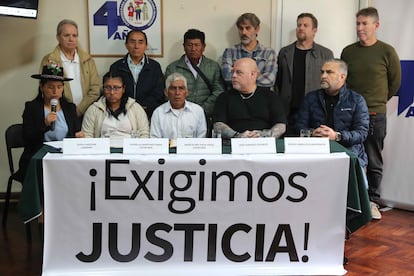
The flood of new testimonies, and the severity of the accounts, has overwhelmed the listening office. Until now, the Sodalitium Christianae Vitae had acknowledged only 83 victims, both minors and adults, and says it has paid $5.3 million in compensation.
“It has been very difficult work. We have encountered people who are utterly broken. I have experience speaking with victims of human rights violations, but this was different. Their spiritual identity had been destroyed,” says one of the experts who worked on the team assisting victims.
“They entered the Sodalitium at a very young age, at 13 or 14. One pattern was to erase their emotional personality, and another was to separate them from their families,” adds the expert. “Inside it was like living in the 16th century, with a military discipline designed to break their will and a pattern of psychological and sexual abuse.”
Within the Sodalitium Christianae Vitae, which was led by the charismatic layman Luis Fernando Figari, who has been accused of numerous acts of sexual abuse, there were two women’s branches: the Servants of the Plan of God and the Marian Community of Reconciliation.
In those communities, physical and psychological abuse caused menstrual problems, but superiors denied members medical treatment and, in some cases, pushed them toward having their ovaries removed.
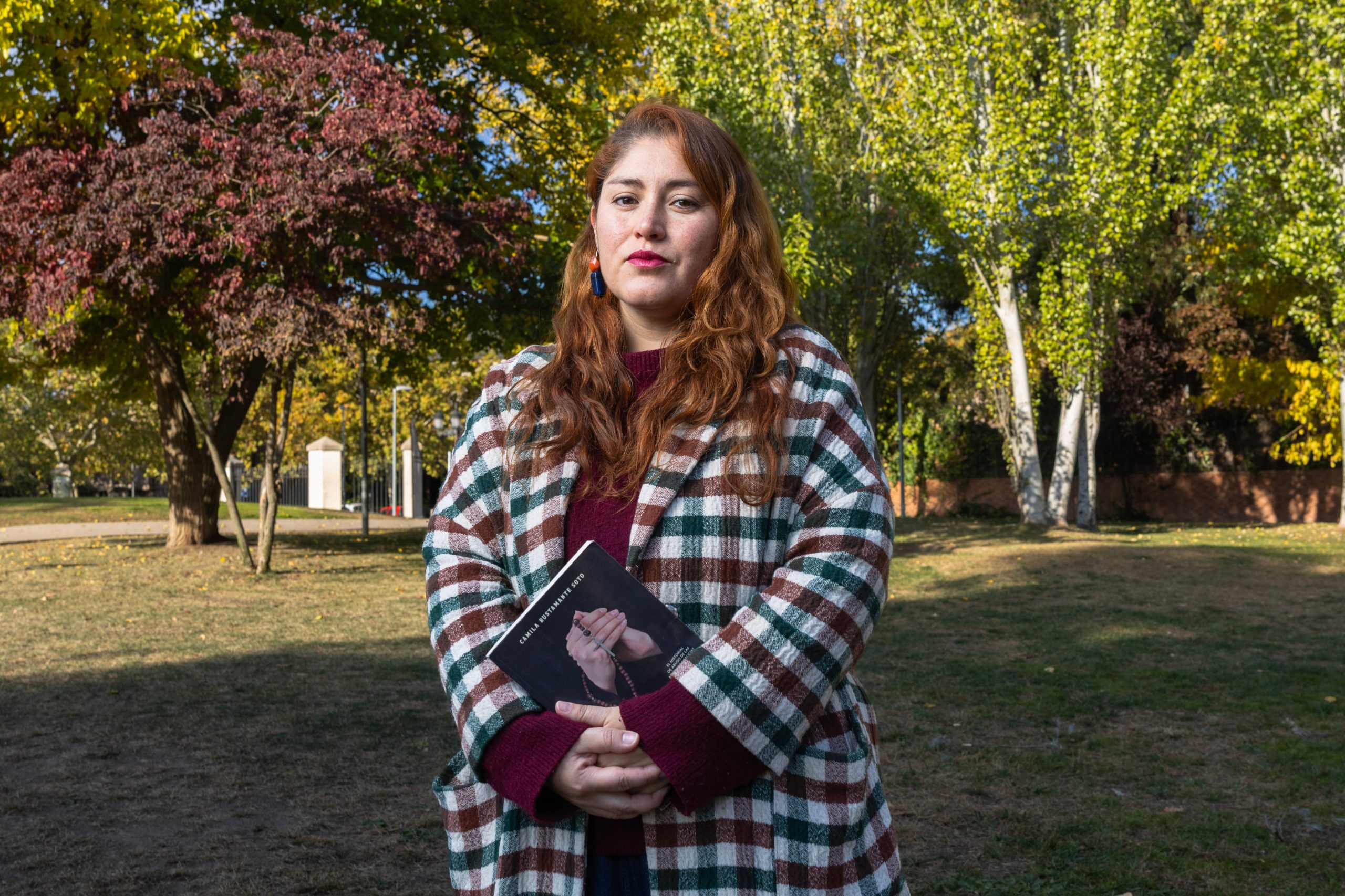
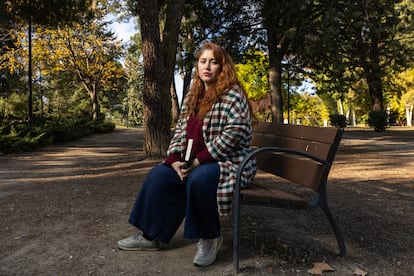
“I knew a case directly: one of the girls had gynecological problems and they told her, ‘You already gave your life to God, what does it matter, take everything out,’” says Camila Bustamante, a Chilean journalist who belonged to the Servant of God’s Plan. “Years later she left, and now she cannot have children. For them you could only be a nun or a mother, and now she is neither.”
After speaking with 30 victims and their families, Bustamante published the book Siervas (Servants) in Chile in 2022, which exposed the abuses in this organization.
Bustamante says the scales fell from her eyes in 2015, when the scandal erupted in Peru following the publication of Mitad monjes, mitad soldados (Half Monks, Half Soldiers), by journalists Paola Ugaz and Pedro Salinas. At the time, she had just married a member of the Sodalitium, in keeping with another common practice within the group: internally arranged marriages.
“Love was secondary; the important thing was to fulfill God’s plan,” she recalls. She and her husband eventually came to realize that they, too, had been victims. Bustamante says she suffered spiritual abuse, manipulation and psychological mistreatment.
‘It is the tip of the iceberg’
“I think the Servants [of the Plan of God] were the cruelest of all the organizations within the Sodalitium,” says Bustamante.
The journalist describes sexual abuse between women, physical punishments, young women being “kidnapped” and locked in rooms for weeks, and offenses against their health, as superiors decided whether members would be allowed to see a doctor. She also recounts untreated accidents that left some women with permanent disabilities.
“There were many nervous breakdowns, panic, which trusted psychiatrists treated with medication at levels that left people drugged, unable to move,” she says. Bustamante says one girl was disabled because she was forced to go down a staircase without basic safety conditions, and others attempted suicide.
Bustamante recalls that many of these women returned to their families in their thirties after years of separation. Relatives who had not seen them since they were 18 found them emotionally devastated.
In her view, only “the tip of the iceberg” has so far emerged about the abuses committed within the Servants of the Plan of God and the wider Sodalitium Christianae Vitae. She believes women are more reluctant to report abuse and often fear that speaking out could harm the Catholic Church.
As for the men’s branches of the organization, the Vatican investigation uncovered a pattern of medical treatment involving the intensive use of psychiatric drugs.
“Yes, the famous Sodalitium psychiatrists, there were two of them,” recounts Renzo Orbegozo, another survivor of the organization. “They controlled promiscuity and homosexuality. A friend of mine was gay and they sent him to a psychiatrist to ‘cure’ it with medication. I also went to the psychiatrist; life in the Sodalitium caused anxiety, depression, suicidal thoughts. When someone gave in, they drugged them. We were lab rats.”
One of the experts on the listening team confirms that the Sodalitium’s two trusted psychiatrists prescribed extremely powerful medications for years, drugs that are in fact intended to treat serious disorders such as schizophrenia and bipolar disorder. “A young man who left later saw a psychiatrist and was astonished by all the medicines he had been taking, because after examining him, he was told he had nothing,” says the expert.
The Vatican’s investigation, however, has run into difficulties in tracing the vast financial empire of the Sodalitium in order to compensate victims, because the organization concealed its assets before it was dissolved, through a network of companies and offshore entities, according to press investigations.
In an unusual move that underscored Leo XIV’s commitment to the clean-up effort he has pursued in Peru, the Holy See sent a dossier to the Peruvian Attorney General’s Office in January over suspicions of possible money laundering and financial irregularities following the privatization of Church assets without Vatican authorization. The Attorney General’s Office nevertheless closed the case last month, a decision that associations representing Sodalitium victims have sharply criticized.
“We cannot accept that an investigation of this magnitude be closed without the public receiving sufficient explanations,” the groups said in a statement two weeks ago.
The organization’s abuses were not limited to sexual misconduct; they were also financial. The rural community of Catacaos, in Piura, has for years alleged that the Sodalitium stole its land through fraudulent documents and mafia-style methods. In an unprecedented gesture, cardinals and archbishops from Peru knelt before local residents last May to ask for forgiveness during a Mass celebrated in the community.
Criticism of Pope’s visit arrangements
Meanwhile, the media and legal harassment of the journalists who exposed the scandal, Pedro Salinas and Paola Ugaz, continues. The Vatican’s envoy, Jordi Bertomeu, has also been the target of a smear campaign, including through far-right Spanish digital media outlets.
Even so, victims say they are concerned that former Sodalitium leaders still wield influence in the country’s highest circles and that, in reality, it is the ultraconservative milieu aligned with the organization that is overseeing the Pope’s visit. The most conservative wing of the Peruvian Church dominates the Peruvian Bishops’ Conference, which long protected the Sodalitium, while the far-right government of President Keiko Fujimori appointed former minister and businessman Raúl Diez Canseco, who is regarded as close to that sector, to coordinate the visit.
Victims of sexual abuse within the Sodalitium fear they may be sidelined and denied a meeting with the Pope, despite having formally requested one. The same has happened to the rural community of Catacaos, which has received no response to its own request. Victims of political violence from Peru’s past also say that the Cardinal of Lima, Carlos Castillo, acting in line with Leo XIV, informed them that they would meet the Pope, only for the meeting to be dropped from the program.
The Vatican has confirmed that the pontiff will meet victims of clerical sexual abuse in Peru, but has provided no further details. “We have only our voice and the Pope’s support,” says Renzo Orbegozo. “We hope that in Peru he will deliver an explicit message of condemnation. We need to bring this process to a close. The Vatican has more powerful documentation that it could use. It should act.”
When he was a bishop in Peru, Leo XIV supported Sodalitium victims and the journalists investigating the organization. They now hope he will do the same as Pope when he arrives in Peru.
Paola Ugaz, the journalist who uncovered the scandal alongside Pedro Salinas, is pessimistic, though she still hopes the Pope’s visit can make a difference. “The outlook is worrying because they want to sweep the Sodalitium case under the rug,” she says. “Although it no longer exists in the Church, it is alive and well. One of the companies linked to them sued me again in October, which gives me the sad record of being a journalist facing legal proceedings for eight consecutive years.”
Ugaz continues: “My colleague Pedro Salinas could face 11 years in prison over a case that is a sham of lies. We find ourselves in a moment similar to others in the past: an organization bent on revenge, a tax system taken over by them and a media blackout around us. It is like living through Groundhog Day.”
Sign up for our weekly newsletter to get more English-language news coverage from EL PAÍS USA Edition

Claudia Sheinbaum
From El Mencho To R2: Mexico’s Offensive Against The Jalisco New Generation Cartel

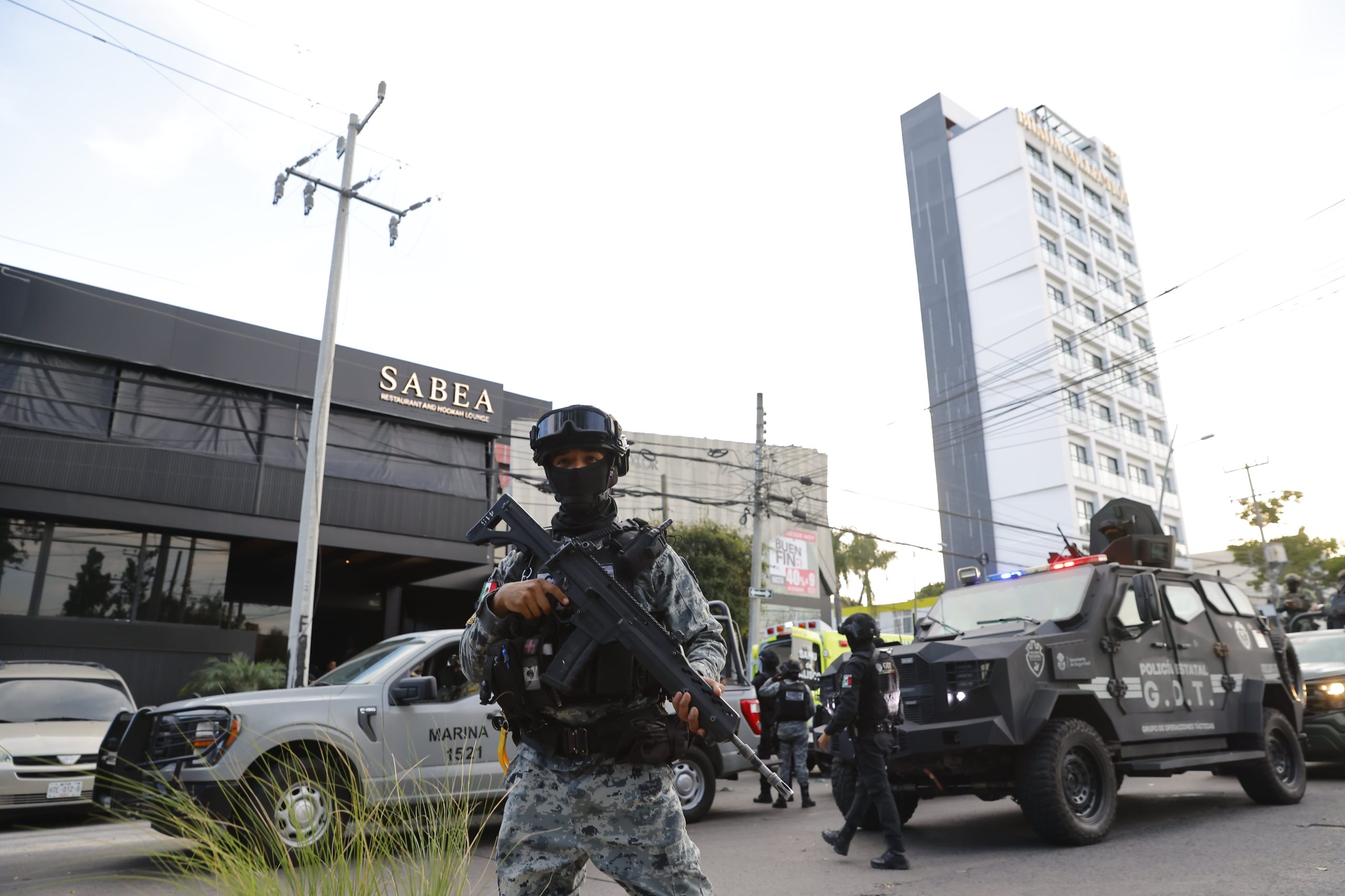
Rafael “R2″ Álvarez Ayala, one of the top leaders of the Jalisco New Generation Cartel (CJNG), was arrested on Sunday in Zapopan, part of the metropolitan area surrounding the Mexican city of Guadalajara, the capital of Jalisco. Alongside him, 19 other people were detained following a shootout outside a restaurant, in which both the cartel leader and a member of the Mexican Navy were wounded. R2 remained hospitalized on Monday after the operation, which forms part of a broader campaign targeting senior figures within the CJNG, including the death of its founder and leader, Nemesio “El Mencho” Oseguera Cervantes, in February 2026.
Security analysts consulted by EL PAÍS argue that, for a Mexican government facing mounting pressure from the United States, the criminal organization has become the country’s top target.
Sources involved in the operation told EL PAÍS that R2 and his associates had been partying for hours inside a restaurant that had been closed to the public for their private event, with a live banda band performing. Authorities accuse R2 of serving as the CJNG’s chief in the area. He underwent surgery for gunshot wounds at a hospital in Guadalajara, while members of the Navy and the National Guard guarded the surrounding area.
“Mexican and U.S. agencies are completely focused on the Jalisco New Generation Cartel because it is the largest criminal organization in Mexico and poses the greatest risks,” says Eduardo Guerrero, a security analyst and director of the consultancy Lantia Intelligence.
After Claudia Sheinbaum’s administration spent its first year “trying to contain and stabilize the violence in Sinaloa,” he says, its second year saw priorities shift decisively toward the cartel. According to Lantia’s data, the organization has “around 122 subordinate or allied groups that answer to the cartel’s leadership.”

Although authorities had been targeting the CJNG for months, the February 2026 capture of El Mencho was the first major breakthrough of the security strategy pursued by Mexican President Claudia Sheinbaum and Security Minister Omar García Harfuch.
After a six-year administration defined by former president Andrés Manuel López Obrador’s “hugs, not bullets” approach, the arrest of a drug lord who had eluded justice for decades during an operation in the mountains of Jalisco, carried out by Mexican authorities with U.S. intelligence support, was a stark and widely applauded contrast.
The arrests continued. In April, authorities captured Audias Flores Silva, known as “El Jardinero,” one of El Mencho’s trusted lieutenants. In July, they detained Ramón Álvarez Ayala, alias “R1,” the alleged mastermind behind the killing of politician Carlos Manzo. September brought the arrest of Manuel Alejandro Rendón Aguilar, known as “El Señor de la T,” the cartel’s alleged regional coordinator in Michoacán.
A month later, authorities captured Iván Cazarín Molina, alias “El Tanque,” who allegedly oversaw the group’s operations in the states of Veracruz, Oaxaca, Tabasco and Puebla, as well as dismantling the entire network of Iván Sánchez Santiago, known as “El Cromo,” in the Isthmus of Tehuantepec.
The Jalisco New Generation Cartel is widely regarded as Mexico’s most powerful criminal organization, particularly since the internal war within the Sinaloa Cartel weakened its longtime rival. The U.S. Drug Enforcement Administration (DEA) describes the CJNG as one of the world’s “most powerful, influential and ruthless” criminal organizations. According to Mexican authorities, intelligence provided by the DEA played a key role in locating R2.
According to Manuel Balcázar, a security consultant and associate researcher at the Center for Studies on Security, Intelligence and Governance at the Autonomous Technological Institute of Mexico (ITAM), “These arrests are the result of binational cooperation, since in every case there has been a continuous exchange of information and intelligence with U.S. agencies, a joint effort that responds to the cartel’s active expansion of operations beyond the American continent.”
Balcázar points to recent operations in Spain, Ecuador, Nigeria and South Africa as evidence of what he calls “Crime 4.0”: “By that I mean that crime no longer operates as a transnational criminal group but as a company, a global criminal holding that allows it to keep functioning like a franchise even when leaders fall.”
According to the 2024 National Drug Threat Assessment published by the DEA, “The franchise model permits each semi-independent group to customize its operations according to specific areas of expertise (for example, running clandestine methamphetamine labs) or market demands, provided they comply with naming, branding, and organizational structure requirements, and follow the general direction handed down by Jalisco Cartel leadership.” The report adds that the cartel “does not pay the operating costs of its franchises but does collect a percentage of overall profits.”
R2 inherited leadership of the CJNG’s “Los R’s” cell after his brother, Ramón Ángel Álvarez Ayala, was arrested for allegedly masterminding the murder of Carlos Manzo, the mayor of Uruapan. The brothers had previously been arrested in Guadalajara in 2012, when authorities identified them as senior figures within the criminal organization. Both reportedly received orders directly from El Mencho and oversaw the group’s operations in Michoacán and parts of Jalisco.

Guerrero argues that Michoacán has become a top priority for the United States because of its importance to U.S. food supply chains, particularly for products such as avocados, limes and berries, and that it has turned into a testing ground for new security strategies.
According to Guerrero, “In this state, Mexican and U.S. authorities are testing a comprehensive strategy aimed at systematically weakening criminal organizations on multiple fronts — financial, logistical and human — in an effort to prevent them from regenerating so quickly. The goal is no longer temporary disruption, but the permanent dismantling of a cell or an organization.” Whether that strategy will ultimately succeed, he cautions, remains uncertain.
That uncertainty is, in the end, the central question. For Balcázar, significantly weakening the CJNG, given its quasi-corporate structure, requires action on three fronts. The first is to sustain the current operational pressure over time: “to continue for another two years before we can truly say its capabilities have been affected.” The second is to target the cartel’s finances by “working in parallel through financial intelligence, because behind all this criminal activity there are undoubtedly bank accounts, investments and tax havens.” The third is to go after its political connections.
On this last point, Guerrero agrees. “Without links between the criminal world and the political world, it is very difficult for organized crime to be as successful as it is in Mexico,” he explains. “The United States has pressured Mexico heavily, and Mexico has responded well to that pressure, except when it comes to politicians linked to [the governing party] Morena who are also connected to some criminal organization. And there is a group of politicians in the inner circle of the former president [Andrés Manuel López Obrador] who are untouchable.”
Guerrero notes that when lower-level officials, such as mayors, are involved, authorities will sometimes allow investigations to proceed. But when the figures are more influential, “such as sitting governors or politicians seeking governor’s offices,” he says, that is where the line is drawn.
Sign up for our weekly newsletter to get more English-language news coverage from EL PAÍS USA Edition

False Leads And Road Checks: Search Continues For Fugitive Responsible For Explosive That Killed A Police Officer In Spain

Axarquia Support Bancosol Food Drive 2026

Elche Basilica Hosts Two Free Concerts
Viral video in Spain sparks fury over drivers who ‘have no idea how to drive’
Spain’s 24-hour shop with no tills expands to Barcelona Airport
Spain’s pet owners face fines of up to €200,000 for animal welfare offences


-
DGT4 weeks ago
Viral video in Spain sparks fury over drivers who ‘have no idea how to drive’
-
Automated supermarket4 weeks ago
Spain’s 24-hour shop with no tills expands to Barcelona Airport
-
Keeping cats and dogs outside4 weeks ago
Spain’s pet owners face fines of up to €200,000 for animal welfare offences
-
Consumer Rights Spain3 weeks ago
EU offers extra year of warranty on phones, but Spain faces delays
-
Council tax (IBI)4 weeks ago
Barcelona plans 150% property tax increase on tourist flats ahead of 2028 ban
-
Age Concern Marbella - San Pedro2 weeks ago
Halloween lunch sells out as 51 join Marbella get-together
-
airports4 weeks ago
Travelling between Spain and Italy? The extra border checks could soon end
-

 %3 weeks ago
Santa Pola Museo Del Mar