
Claudia Sheinbaum
Final Countdown To Defuse Protests Against Mexican Government Ahead Of World Cup Opening Game

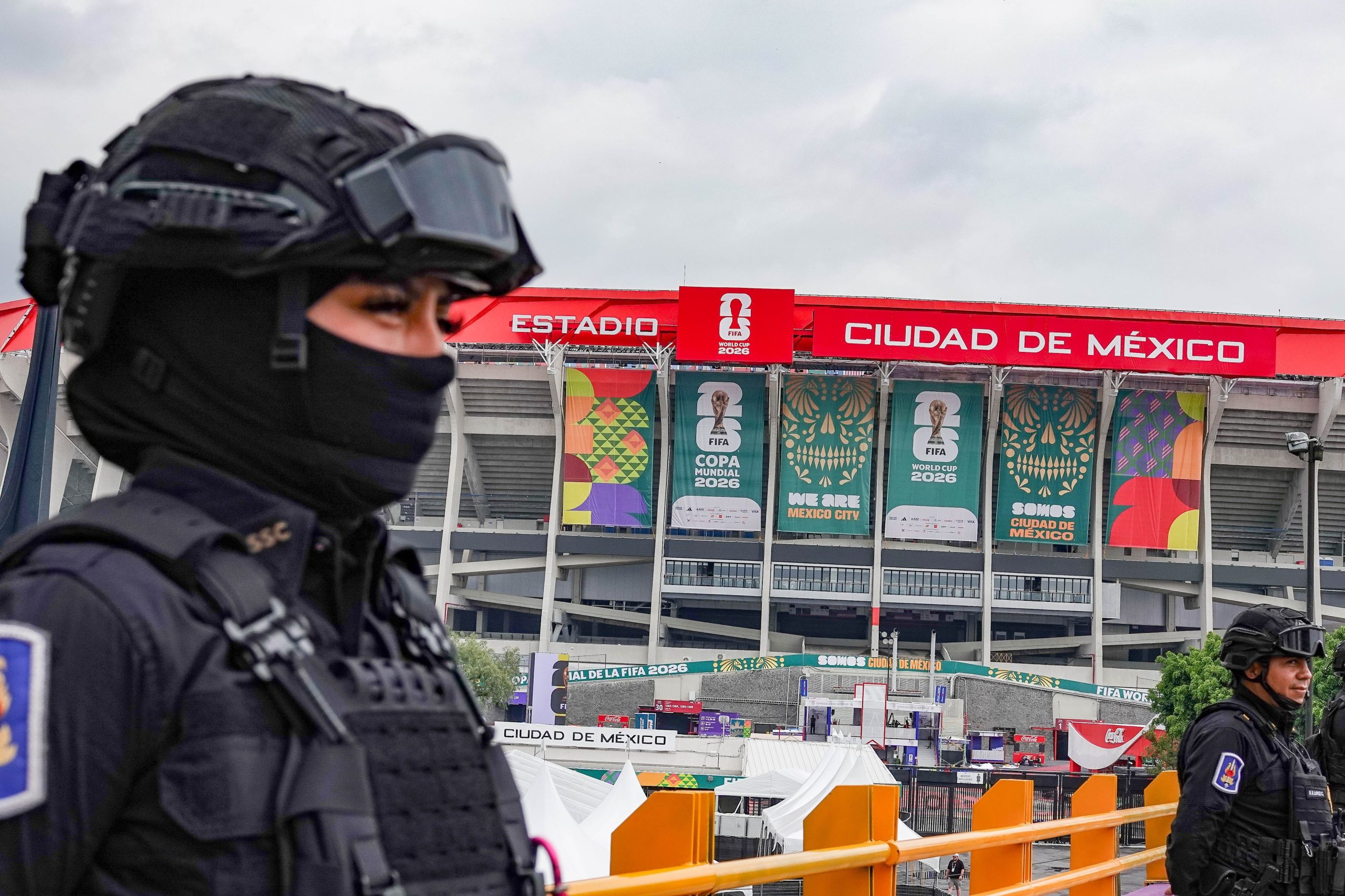
Only 24 hours remain before the World Cup kicks off in Mexico and the country is going though its final dress rehearsals. Preventing demonstrations on opening day is already a pipe dream: negotiations with teachers have stalled and search groups will march to make their missing relatives visible. With everyone in position and the cards on the table, attention is focused on avoiding the worst-case scenario for the government of Claudia Sheinbaum — an image of a police officer striking a teacher circling the globe on the day the country is playing for its international image. The concern is not unfounded: on the first day of protests a teacher lost an eye in clashes with police. The past two weeks have tested containment measures, and Wednesday will be the last chance to fine-tune the public staging. To ease the pressure, authorities have canceled classes for Thursday and ordered remote work for public servants.
The opening match will be the first of five games played in Mexico City. There are 13 matches in total across the country, which is expected to receive more than five million fans, according to official forecasts. The government is banking on World Cup fever to dilute the complaints. The tournament — the third to be hosted at Estadio Azteca — has acted as a catalyst in a country riven by social crises. Thousands of teachers — 10,000 according to the union, 3,000 according to the government — have camped in the historic downtown for two weeks with the same demand they made 18 months ago: a return to public pensions, a request the government considers unworkable. After 50 working tables, neither Rosa Icela Rodríguez nor Mario Delgado, the Interior and Education secretaries leading negotiations, have managed to stop the National Coordination of Education Workers (CNTE) from returning to the streets, despite warnings given a year ago. So far, the massive police deployment has prevented them from reaching Estadio Azteca and the Zócalo, where the president had planned to attend the opening match — now uncertain and pending the protest’s evolution.
Collectives that search for the disappeared have also announced marches for this Wednesday and for Thursday morning. It was the last recourse they had left. Mothers have already put their children’s faces on national team shirts, in a sticker album, on banners along avenues — they have done everything to force people to look into the eyes of the roughly 133,000 people who remain unaccounted for in the country. The opening date is their last spotlight. At the last minute, a protest for judicial independence in the city’s south and a contingent of Ayotzinapa students — who arrived on Monday with explosives that were confiscated — also joined them. The government has managed, however, to halt the powerful farmers’ front, which told EL PAÍS that it has given the executive this week’s breathing room because talks with the new head of the Agriculture Secretariat are on track.
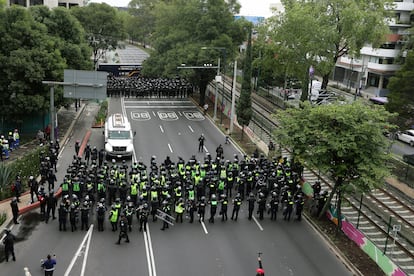
With the Colossus of Santa Úrsula sealed off for a one-kilometer radius, Sheinbaum’s government will focus on keeping all elevated roads leading directly to the stadium open. Authorities will allow entry to this last protected stretch from 6.00 a.m., that is, seven hours before kick-off. “Fans’ access is guaranteed. We only ask that they arrive early. If someone wants to arrive at the last minute, they may face more complications. Be more prepared — that’s what we ask,” Mexico City’s secretary of government, César Craviotto, said on Tuesday. With the planned marches and tourists in the capital, authorities are now relying only on peaceful coexistence. The aim is to contain, not confront. The president has repeatedly said during her morning briefings that the right to protest is guaranteed and that her government will never punish public demonstrations. Sheinbaum is less concerned about Tlalpan Avenue being closed than about Mexico projecting an image of repression before Shakira takes the stage.
Teachers explode, countryside concedes
Over the past year Sheinbaum has faced two major domestic challenges: the organizing power of the CNTE and the farmers’ pressure on the highways. The government has chaired one negotiation table after another for months to prevent unrest from getting out of control, but the results have been mixed. While teachers press in the streets to unblock their main demand — the return to public pensions — the countryside says it is tentatively satisfied with the course of talks. “We don’t feel completely attended to, but we do feel we will make progress,” says Eraclio Rodríguez, one of the leaders of the National Front for the Defense of the Countryside, which has granted the government the enjoyment of the opening match, though it does not rule out mobilizations afterward.
Interlocutors play a different role in each case. While teachers point to dissatisfaction with the proposed measures — the latest being to strengthen the only public pension fund and create a public insurer — the farmers’ representative speaks of a change “like night and day” at the Agriculture Secretariat, previously headed by Julio Berdegué and now by his former undersecretary, Columba López. “We are doing better, things are going well,” Rodríguez says, contrasting that with the difficulties they face with the economy minister, Marcelo Ebrard. The picture changes on the teachers’ side. “This is not a personality issue. She [Rosa Icela Rodríguez] has the disposition. They are decent people, they have treated us well; the problem is substantive: they are not proposing to repeal the ISSSTE law (which governs public-sector retirement),” summarizes Pedro Hernández, CNTE’s general secretary in Mexico City.
The head of the public body, Martí Batres, and Sheinbaum herself once mobilized in the streets in the same way they are now. They know each other, they are the same people on both sides, and, broadly speaking, they respect one another. That adds a layer of complexity to negotiations, but it does not resolve them. “They have a history of fighting for rights. Sometimes power makes you forget that. We would think that sympathy should favor negotiation frameworks,” the union leader laments.
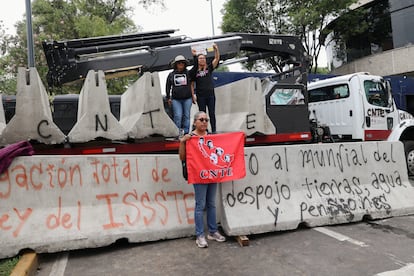
Disappointment has spread through the most radical sector of the teaching ranks while the government bets on fatigue and a deterrent police presence in mobilizations that always manage to secure some additional measure, but never the one they want. According to the government, a return to public pensions would require a disbursement equal to 20% of national GDP — an interpretation teachers reject and one that has driven them to escalate tensions on the eve of the tournament’s opening. It is unclear which side time will favor once the collective euphoria takes hold of the national mood.
The disappeared, a perpetual crisis
Among all of Mexico’s crises there is an old lament: a country where, government after government, thousands go missing and no authority halts the tragedy. International bodies have described it as a humanitarian emergency, but inside the country it is so common that it sometimes goes unnoticed. Every World Cup venue has its square, its memorial to the disappeared, a space where families insist on leaving that reminder: many are still missing. So far Sheinbaum’s government has presented a package of laws and a reinterpretation of the missing persons registry, both heavily criticized by collectives. With the World Cup’s imminent arrival, the president stepped up the pace. “In recent months we have had meetings to build some improvements to the investigation protocol and the law,” says Jacky Palmeros, who founded the collective Una luz en el camino after the disappearance of her daughter, Monserrat Uribe, in 2020 in Iztapalapa, east of the capital: “But there is a lack of willingness and commitment.”
These meetings, however, have been accompanied by what the collectives define as “a new way of repressing and violating families”: removing the photos and banners of the disappeared as soon as families put them up. Faced with that scenario, they decided to march. “Our intent is never to sabotage the World Cup; it is not to prevent people from going, watching and enjoying themselves, only to make visible what you have so strenuously tried to hide. In that context, we ask that upcoming actions be respected,” Palmeros told Secretary of Government César Craviotto this week. “They told us we will not be able to approach, to make ourselves visible and to protest freely because they will close access to free movement,” the activist adds, saying there “is a feeling of hostility in the air”: “There is fear, I think, on both sides. No one knows what will happen. All that remains is to wait. Neither they nor we will change our minds.”
Sign up for our weekly newsletter to get more English-language news coverage from EL PAÍS USA Edition









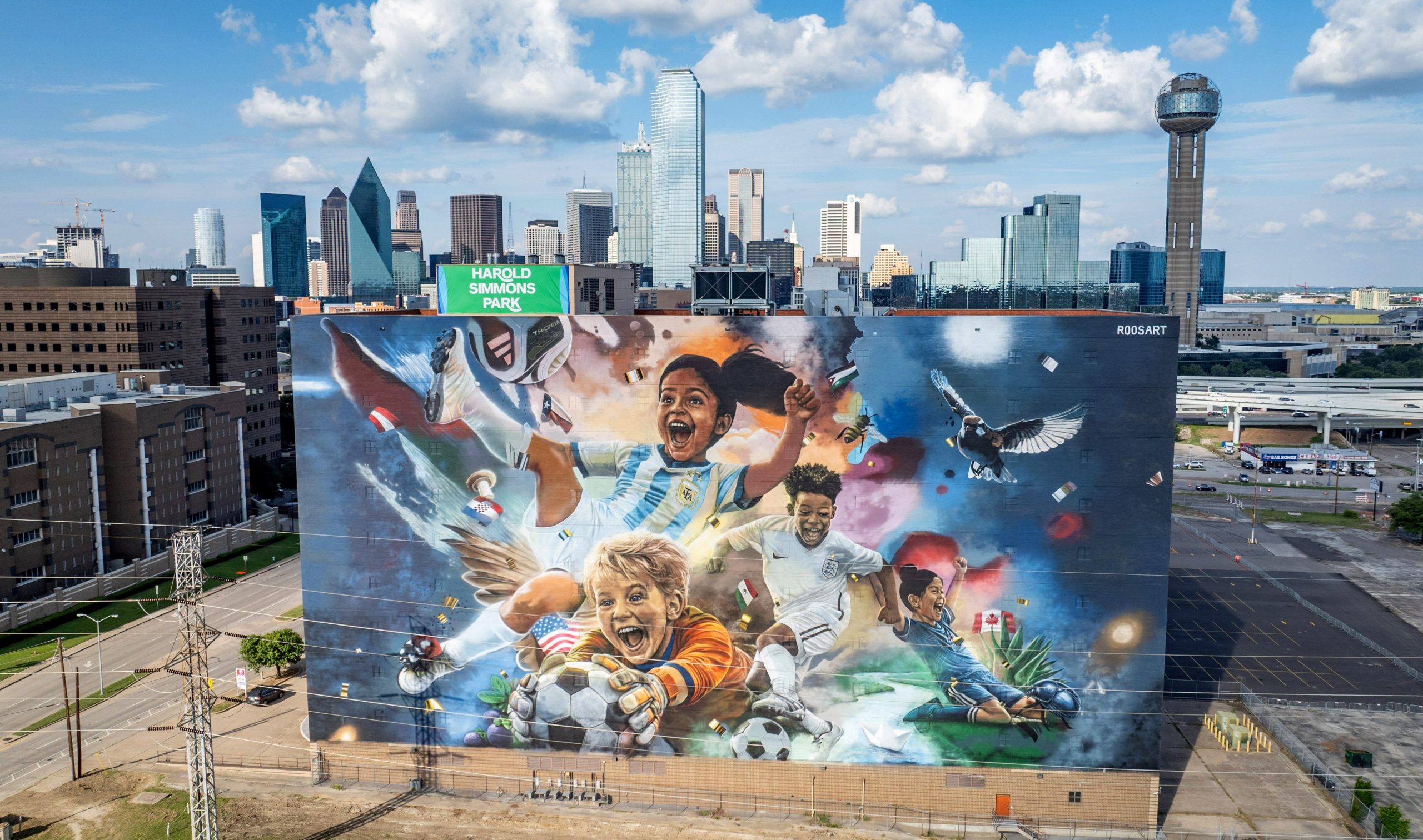
“The world will stand still, and the eyes of the world will be focused on North America,” the 56-year-old Swiss president of FIFA, Gianni Infantino, said a few days ago from the United Nations headquarters in New York. With four days to go before the ball starts rolling, the three host countries — the United States, Mexico, and Canada — say they have everything ready. Or, more precisely, almost everything. The biggest soccer tournament in history — 48 national teams playing a total of 104 matches — takes place amid various circumstances that complicate organization: the United States remains at war with Iran, President Donald Trump’s strict immigration policies are frightening away many supporters, and FIFA’s dynamic-pricing ticket system has put seats out of reach for much of the fan base.
“78 Super Bowls in 38 days”
The United States has been preparing since 2018, when FIFA decided in a cold Moscow room that it would host the tournament together with its two North American neighbors. Since returning to the Oval Office, Trump has poured resources into ensuring that his close friend Infantino presents the World Cup as a success. But the world’s wealthiest country does not have a deep passion for soccer. Americans are more focused on the NBA finals, between the New York Knicks and the San Antonio Spurs, than on the tournament’s opening — soccer remains a minority sport in the U.S., where baseball, NFL, basketball and even ice hockey have greater followings.
To make matters worse, the White House also appears more engaged in the celebration of the 250th anniversary of the United States’ independence from the British crown in 1776, which takes place on Saturday, July 4 — when the World Cup’s round-of-16 matches will be underway.
The major issue surrounding the World Cup will be security and the role of ICE, the U.S. immigration agency. U.S. authorities have threatened to deploy agents around stadiums and carry out raids to detain immigrants without proper documentation. Trump’s aggressive immigration policy has drawn harsh criticism from various sectors over the brutality and impunity of these agents, who have deported nearly 600,000 people in the past year.
More than 100 nonprofit organizations have recently protested to warn visitors about “serious human rights violations” occurring in the country. immigrant-rights groups are mobilizing: in Los Angeles, the hospitality union representing more than 2,000 workers and present at SoFi Stadium — which will host eight World Cup matches — is considering striking if immigration agents are spotted around the stadium. In Miami, Atlanta, Seattle, Philadelphia, and other cities, groups are preparing activities in response to ICE abuses. Nearly two-thirds of Americans — 65% — oppose immigration agents patrolling stadiums during this summer’s World Cup, according to a poll published this week by The Washington Post.
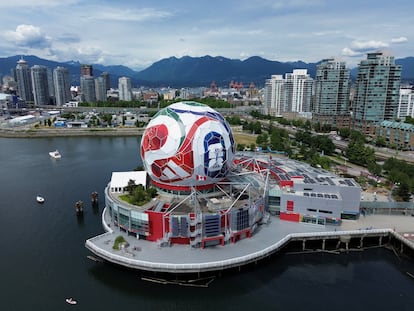
The competition is also being held under heavy security measures. The United States is engaged in a war with Iran, whose national team, incidentally, will have to travel to Los Angeles and Seattle for its three group-stage matches. And although the White House says it will issue visas for the athletes, the Iranian delegation has not yet received authorization to travel.
In addition, the war has driven up inflation, with gasoline prices at highs not seen since the start of the war in Ukraine. U.S. household budgets are strained by rising prices, and many view a competition they don’t fully understand with skepticism.
Beyond concerns over visa processing, security, and rising travel, accommodation and ticket costs, limited access to public transportation in some host cities adds to uncertainty about World Cup logistics. Getting to stadiums will be expensive and chaotic. Some cities lack subway or commuter-rail connections. Bus services are scarce and suffer frequent disruptions. Although all cities have bolstered transport services, authorities recommend planning journeys in advance.
Still, there are cities where hotel room quotas have not been filled, many tickets remain unsold for lower-interest matches, and travel bookings suggest fewer visitors may arrive than expected — a prospect that has organizers, who raised expectations for the world’s biggest sporting event — on edge.
Federal and state authorities have worked hard to have everything ready. But the political climate has not helped. Differences between the two major parties kept the Department of Homeland Security — which oversees national security, airports, ports and more — effectively closed and unable to spend for nearly six weeks. That congressional impasse, from February to April, caused delays in planning airport security and immigration screening for visitors.
Despite that, Homeland Security Secretary Markwayne Mullin said this week his department will be ready for the unprecedented security operation for the 2026 FIFA World Cup. “We are going to be prepared and we’re working every single day on it and we’re locking down stadiums with sweeps, we’re pushing out perimeters, we’re killing choke points, creating traffic control,” he said at a Capitol Hill hearing. Mullin, who has been in office for barely three months and has acknowledged he has never watched a soccer match, said he is coordinating with the states and with the 11 U.S. host cities. “We have 78 Super Bowls in 38 days, and hopefully we’ll pull it off with complete safety.”
Mexico pushes preparations to the last minute
Like its northern neighbor, security is one of the challenges facing President Claudia Sheinbaum’s administration and the governments of the three Mexican host cities. Just four months ago, the army killed El Mencho, the world’s most-wanted criminal, and the globe looked at Mexico with distrust because of the ensuing violence and cartel roadblocks, especially in Guadalajara, which will host four World Cup matches.
Mexico responded with Plan Kukulkán, a World Cup–specific strategy led by Secretary of Security Omar García Harfuch that deploys 100,000 police and military personnel, aircraft and anti-drone systems to protect stadiums, hotels, airports and fan zones “from any threat.” Homicide figures have fallen by half under the current administration, while operations against and arrests of cartel leaders continue. “From my side, and on behalf of FIFA, there is absolute confidence in President Sheinbaum; we are in regular contact with the presidency and the authorities, and we continue to follow the situation. The World Cup will be an incredible celebration,” Infantino said after El Mencho’s death.
FIFA, however, has acknowledged concerns about mobility in Guadalajara, Monterrey, and Mexico City. The three cities suffer serious traffic problems and conflicts over the use of ride-hailing apps at airports. Works to connect air travelers with the cities are being rushed or have been postponed until after the World Cup.
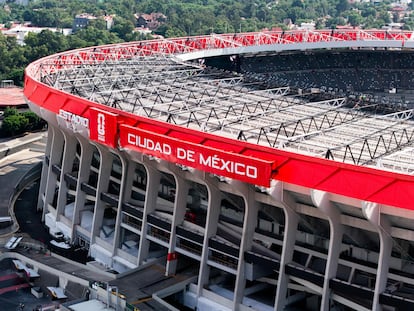
Mexico City, with 21 million people in its metropolitan area, is the most strained. In connectivity terms it is easy to move by public transport, but deterioration and overcrowding complicate operations. Mayor Clara Brugada’s government has focused on bike lanes and last-minute improvements. But the real strategy is to keep people at home on match days: classes have been suspended and Brugada has asked public and private employers to promote remote work. Mobility plans for the opening game this Thursday include closing major roads and using FIFA’s special transport to move attendees to the Estadio Azteca. The first trial was staged during the stadium’s reopening for Mexico’s friendly against Portugal, when only local residents could access the vicinity on foot or by car.
The weather and possible protests do not help. The short World Cup period will coincide with the rainy season, which last year caused severe flooding in some states. In the past week, the National Union of Education Workers has staged nonstop protests across the city demanding better pay and pensions. All kinds of organizations and collectives have also warned they may impose blockades: relatives of the disappeared, transport workers, students, and sex workers. Governments and organizers have said they will respect the right to protest, while expressing confidence that agreements can be reached.
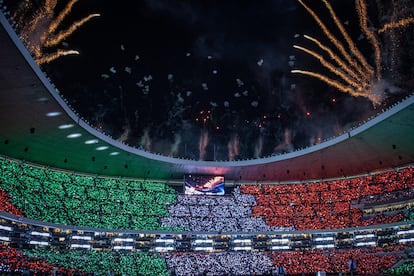
All of the above comes at a time when Mexico–U.S. relations are at their worst under Sheinbaum and Trump. The deaths of two CIA agents on Mexican soil, and the U.S. accusation against nine Sinaloa officials of collusion with drug cartels, have sparked a crossfire of actions and statements. Former president Andrés Manuel López Obrador — who said he would only leave political retirement in cases of threats to national sovereignty — published a letter criticizing U.S. interference and strongly questioning Trump’s pressure on Mexico under the banner of fighting “narco-terrorism” and illegal migration. The photograph that will symbolize the state of relations among the three host countries will probably be taken at the opening match: it will be the first time the World Cup opening ceremony has been held without the presence of all the heads of state involved.
Sign up for our weekly newsletter to get more English-language news coverage from EL PAÍS USA Edition

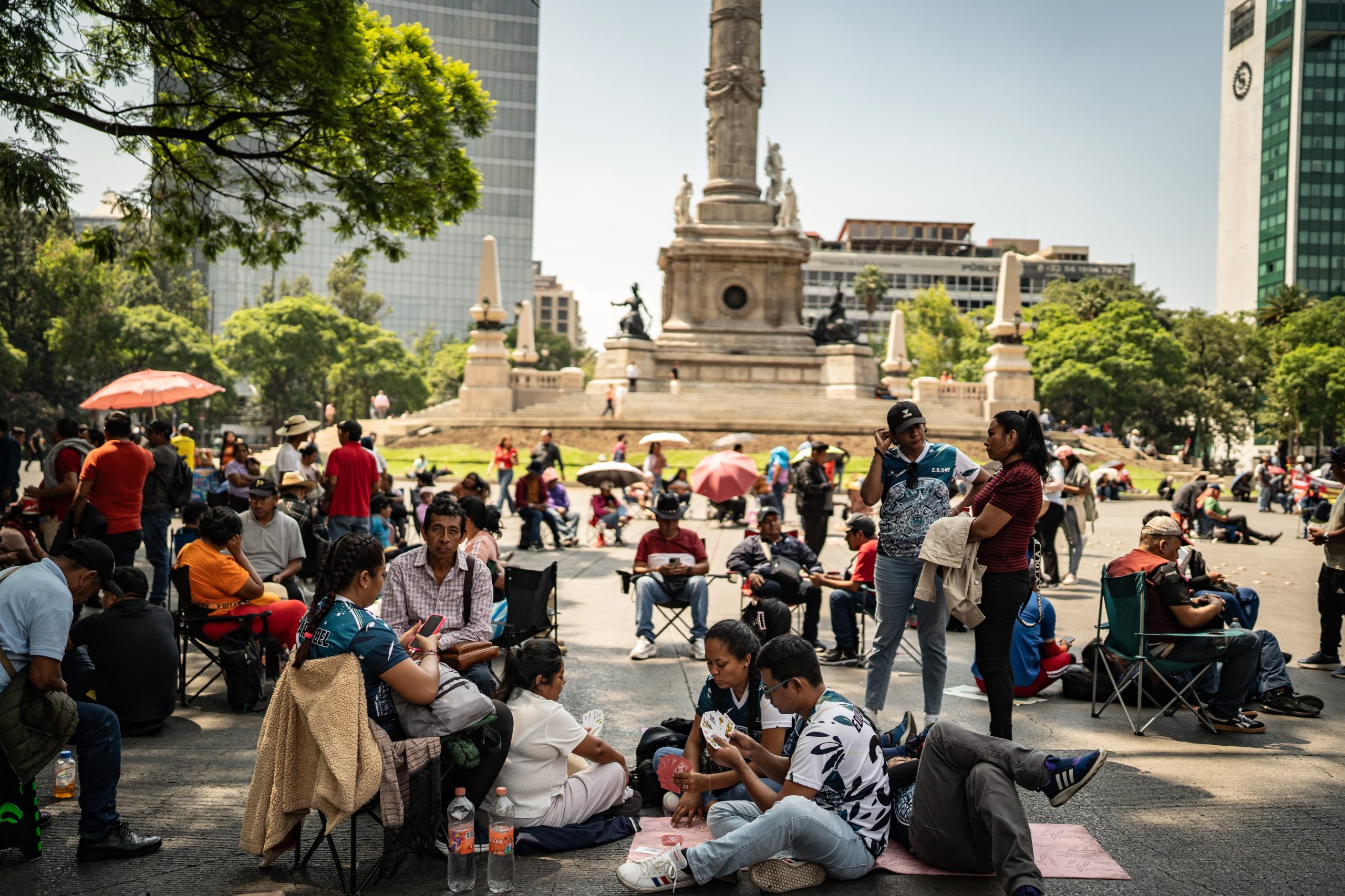
Teachers in Mexico have launched a nationwide strike that is bringing mounting pressure on President Claudia Sheinbaum’s government ahead of the start of the soccer World Cup.
On the second day of the walkout, there has been no progress — only rising tensions across Mexico City, where the first groups of teachers began arriving last week. Educators affiliated with the CNTE teachers union are stepping up pressure on the government in an effort to extract concessions before the tournament kicks off on June 11. So far, the Sheinbaum administration has failed to calm the protests.
The sporting event is drawing closer, and Tuesday’s negotiating table with officials from the Interior Ministry, the Education Ministry, and the Institute for Social Security and Services for State Workers (ISSSTE) ended without major progress. The protest camp, a semi-permanent encampment of tents and tarpaulins that are blocking key streets, continues to spread across the main arteries of the city center and by this afternoon had reached Belisario Domínguez Street. Some 12,000 teachers, according to union estimates, are now camped in Mexico City with a set of demands that remain unchanged: repeal of the 2007 ISSSTE law (which weakened pensions and increased retirement age) and the education reform, and a 100% wage increase.
These are, in fact, the same demands as a year ago, when they set up the first protest camp of Claudia Sheinbaum’s administration.
“We are just as — or even more — outraged than we were 18 months ago. We are in the same situation: there has been no response to our demands, and the president has not said when she will meet with the Single Negotiation Committee,” said Marcelino Hernández, the general secretary from Zacatecas, after the first meeting, which resumed on Wednesday morning.
“They tell us they have the political will, but that the president cannot meet because supposedly we stood her up on May 8 of last year. They’re still repeating that same line,” added Elvira Veleces, from Guerrero.
May 8 had been set for the government’s first meeting with teachers after they succeeded in forcing the Mexican president to withdraw her own reform of the ISSSTE law. But the CNTE ultimately rejected the meeting so as not to demobilize workers ahead of the imminent nationwide strike.
The next attempt came two weeks later, but this time it was Sheinbaum herself who called it off, in protest at the blockades in the capital, which had already intensified following the declaration of an indefinite strike.

The strategy of blockades has returned with the same intensity, but with time tighter than ever. Teachers cut off Paseo de la Reforma — the city’s financial hub — on Tuesday morning and toppled several of the large statues installed by the city government for the World Cup, representing “football giants.”
The Zacatecas branch of the left-wing union — split from the larger, more institutional SNTE teachers union, which is closer to the government — proposed extending part of the encampment onto Paseo de la Reforma. But the national assembly has, for now, ruled out relocating, preferring to remain united in the historic center, where the impact is already being felt.
Spain’s Economy Minister and First Deputy Prime Minister Carlos Cuerpo was forced to meet virtually with Sheinbaum after being unable to reach Mexico’s National Palace, the seat of government. The National Museum of Art (MUNAL) has closed until further notice, citing “circumstances beyond its control,” while vandalism in some areas has forced Mexico City’s local government to carry out rapid repairs ahead of the anticipated sporting event. FIFA has also canceled in-person volunteer training sessions in the Zócalo square, opting instead for online formats, according to El Financiero, for “security reasons.”


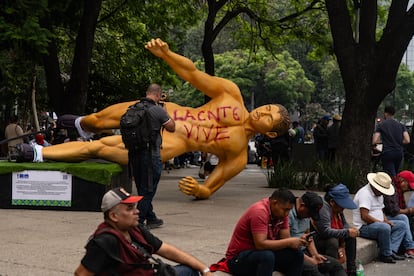

Tensions are also rising on the other side. The CNTE has announced that Proceso Columbo, a teacher from Guerrero injured in Monday’s clashes with police, has lost the eye that was struck by a projectile. It is not yet clear whether he has lost his sight entirely or may retain vision in the other eye, as he remains hospitalized awaiting surgery. Mexico City’s security minister, Pablo Vázquez, said Tuesday that authorities will investigate alleged “infiltrators” who took part in Monday’s protests, as claimed by the federal government. Vázquez declined to say whether they belonged to the teaching profession, stating only that they acted “in a manner contrary to that of the vast majority who mobilized.”
Secretary of the Interior Rosa Icela Rodríguez, Secretary of Education Mario Delgado, and Martí Batres, general director of ISSST, who are leading negotiations, reiterated their willingness to remain at the table to avoid further disruption, and reaffirmed the president’s commitment to eliminating USICAMM, the internal promotion system that has generated widespread opposition in the sector.
Although remarks from some regional representatives of the CNTE expressed disappointment with Tuesday’s meeting, they must now consult their bases and the national assembly before deciding on next steps. According to union sources, internal debate is intense. All indications suggest the blockades will continue, given that Sheinbaum’s government has yet to concede on any of the core demands — especially pensions, the sector’s main concern.
Teachers are seeking a return to the public pension model that existed before 2007, when the ISSSTE law governing public-sector retirement was reformed. Since then, pensions have been managed by private administrators known as Afores. While Sheinbaum opposed the reform at the time and is sympathetic to teachers’ demands, she argues that the state cannot afford a full return to the previous system, as the fiscal cost after so many years would be enormous.
Instead, the government, led by the Morena party, has opted to soften some of the reform’s harshest aspects. During the administration of Sheinbaum’s predecessor, Andrés Manuel López Obrador, the Pension Fund for Wellbeing was created, through which the state tops up low private pensions. Under Sheinbaum, additional measures include a gradual reduction in the retirement age for part of the teaching workforce and a 9% pay rise. For teachers, however, this is not enough: they see these as partial measures that leave them vulnerable to future governments.
One year on, both sides find themselves back in the same streets, with the same demands on the table and no clear resolution to the central dispute. The countdown to the World Cup adds a new layer of pressure on all parties. The government does not want to welcome thousands of foreign visitors next week with a protest camp blocking the city center, but teachers are not entirely comfortable with the idea of spoiling the event for their fellow citizens either. They have eight days to reach a deal.
Sign up for our weekly newsletter to get more English-language news coverage from EL PAÍS USA Edition
Claudia Sheinbaum
US Ambassador Ronald Johnson, An Uncomfortable Voice Amid Mexico’s Defense Of Sovereignty


Dog Owners Risk €50,000 Fines In Spain For Exposing Pets To Scorching Summer Temperatures

A UFC Fight At The White House: Trump’s Controversial Sporting Event Sparks A Wave Of Criticism

F1 is SAVED as FIA announces groundbreaking engine changes in major U-turn


-

 Uncategorized2 weeks ago
Montoya vs Brundle BEEF, Newey
-

 Anthropic2 weeks ago
The IPOs Of SpaceX, OpenAI And Anthropic Threaten To Drive Wall Street To Bubble-Like Levels
-

 %2 weeks ago
Tourist Begs Police Not To Fine Her After Swimming In The Trevi Fountain During Heatwave
-

 New Developments2 weeks ago
Luxury Villas For Sale, Estepona – ProjectL1
-

 Africa1 week ago
Europe Enters The ‘era Of Deportations’
-

 Foreign demand2 weeks ago
German Demand For Spanish Property Cools After A Strong Run
-

 %2 weeks ago
The Rising Cost Of Finding Love
-
 %2 weeks ago
Portugal Notifies Of Temporary Suspension Of EU Border Biometric Checks