
Latest
Foreign Buyers Flock To Spain’s Ultra-Prime Hotspots

Author:  Mark Stücklin
Posted on
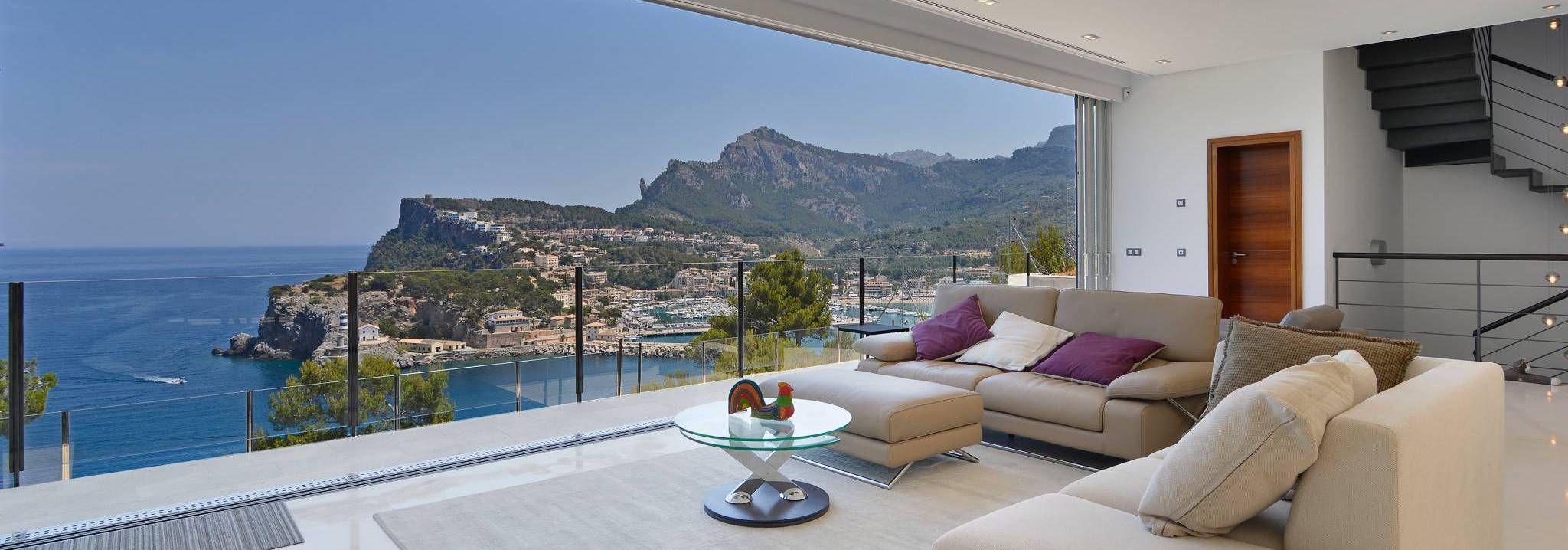
Five locations dominate Spain’s market for homes priced above €3 million, underlining just how concentrated the country’s super-prime property sector has become.
According to new analysis from Idealista, the undisputed leaders are the Costa del Sol’s so-called Golden Triangle of Marbella, Estepona and Benahavís, joined by Calvià in Mallorca and the city of Madrid. Together, these markets account for thousands of homes on the market with asking prices starting at €3 million and stretching beyond €20 million.
International demand and buyer profiles
The Costa del Sol remains the standout destination for international buyers. Foreign demand accounts for around 43% of interest in Marbella, Benahavís and Estepona, while Calvià tops the list with almost half (49%) of all demand coming from overseas. Madrid is the exception, where foreign demand in this segment is a more modest 11%, albeit growing steadily.
The nationality of buyers varies by location. Americans are the leading foreign audience searching for ultra-luxury homes in Marbella and Madrid, reflecting growing US interest in Spain’s prime property market. Germans dominate in Benahavís and Calvià, while British buyers top the rankings in Estepona and remain among the three largest foreign groups in every destination except Madrid. Dutch, Swedish and Mexican buyers also feature prominently in selected markets.
Property preferences and standout markets
The type of property buyers want also depends on the location. Detached villas overwhelmingly dominate demand in the coastal destinations, particularly in Benahavís, where more than three-quarters of enquiries are for villas. Buyers are clearly prioritising privacy, outdoor space and lifestyle. Madrid is different, with prime apartments, especially in the Salamanca district, remaining the preferred choice.
Perhaps the most interesting finding is how Benahavís stands apart even within this exclusive group. It is the only market where the largest share of international demand is for homes priced between €5 million and €10 million, rather than the €3 million to €5 million bracket that dominates elsewhere. More than a quarter of international buyers looking in Benahavís are searching for properties above €10 million, highlighting its position as Spain’s most exclusive residential market.
The figures reinforce a trend that has become increasingly clear in recent years. While the wider Spanish housing market has cooled in some segments, demand for exceptional properties from wealthy international buyers remains remarkably resilient. For the prime coastal markets, foreign demand continues to be one of the key drivers supporting prices at the very top end of the market.










Achraf Hakimi
A Marruecos Le Llega Con Bono Y Ounahi En Su Función Más Floja Para Despedir A Canadá En Los Octavos Del Mundial





En el Orgullo de Madrid ocurren muchas cosas, algunas de ellas por primera vez. Para algunas personas, como Diari, de 15 años, esta es la primera manifestación a la que acude en su vida. “Espero que sea una marcha reveladora”, cuenta en los aledaños del Paseo del Prado, minutos antes de que empiece el Orgullo, al que acude con algunas de sus amigas. “Me parece importante gritar por nuestros derechos”, agrega sin dejar de mirar a su alrededor: “Hay muchísima gente”, dice con los ojos muy abiertos. La cantante Zahara sí que ha estado en otras manifestaciones del Orgullo, pero nunca había sido invitada a ir en la cabecera: “Es un honor. Me siento súper afortunada”.







Housing politics
Spanish Government Plans Another Housing Decree, Because The Last One Worked So Well


The Spanish government is preparing another Royal Decree-law on housing this July, with more intervention in the rental market and more uncertainty for landlords. Property owners in Spain might be forgiven for wondering what new surprise awaits them next.
The government has confirmed plans to approve a new housing package in July by Royal Decree-law, a fast-track legislative tool meant for urgent and exceptional situations. Once approved, the decree would take immediate effect, but would still need to be ratified by Parliament within 30 days.
That means, if it is approved towards the end of July, the political battle over its future could drag on until after the summer. In the meantime, landlords and tenants will once again be left trying to work out which rules apply, for how long, and what happens if Parliament later rejects them.
Another decree, another layer of uncertainty
We have been here before.
The previous Royal Decree-law 8/2026, approved in March, included an extraordinary two-year extension for some rental contracts and a 2% cap on annual rent increases. It was in force from 22 March until 28 April, when Parliament refused to ratify it.
That short-lived decree has left a legal mess behind it. Tenants and landlords are now arguing over who was entitled to request the extension, whether requests made during the decree’s brief life still count, and what happens to contracts expiring after the decree was rejected. Lawyers, naturally, are sharpening their pencils.
What the new decree is expected to include
The new package from the Housing Ministry led by Isabel Rodríguez (pictured above) is expected to revisit many of the same ideas, including rental contract extensions, restrictions on annual rent increases, regulation of seasonal and room rentals, tax incentives for landlords who reduce rents, and a requirement for rental contracts to be in writing.
It is also expected to include measures aimed at tourist rentals, including raising VAT on holiday lets to 21%, plus vague promises to boost affordable housing and speed up administration.
The government will present this as a balanced package to lower rents, protect tenants, fight fraud, and increase supply. That is the theory.
The practical effect may be something else entirely: more rules, more confusion, more litigation, and fewer owners willing to put property into the long-term rental market. Spain’s housing shortage will not be solved by making ownership riskier and less predictable, though that does appear to be the chosen experiment.
A regulatory spiral
Every new housing law in Spain seems to create unintended consequences that then require more regulation to fix. Rent controls push properties out of the long-term market, so the government targets seasonal lets. Owners move to tourist rentals, so tourist rentals are taxed and restricted. Investors hesitate, supply falls, rents rise, and the government concludes that still more intervention is needed.
Round and round it goes.
For foreign owners and investors, the wider message is hard to miss. Each individual measure may not be enough to trigger panic, but the cumulative effect is to weaken private property rights and increase the cost, risk, and hassle of owning property in Spain.
Political risk
This is what you might call political risk. Spain remains a wonderful place to live and own a home, but the risk attached to owning property here is ticking up, one regulation at a time. The short-term rental registry debacle is a recent example: more bureaucracy and cost for owners, only for the courts to strike it down. EU membership limits how far Spain can go in weakening property rights, but the direction of travel is not encouraging, especially for foreign owners and investors.
Everyone has a different tolerance for political risk. If yours is wearing thin, and recent developments are bringing forward your decision to sell, the best place to start is with a personalised SPI market report to understand your local market. Fill in the form below to find out more.
Personalised Market Report

Could Holidaymakers In Spain Soon Pay More Than Locals?

A Marruecos Le Llega Con Bono Y Ounahi En Su Función Más Floja Para Despedir A Canadá En Los Octavos Del Mundial

Mi Primera Vez En El Orgullo: “Es Un Sueño Que Nunca Pensé Que Fuera A Cumplir”
Dinosaurs are roaring over to Estepona this summer in a massive 5,000m² exhibition

Real Estate Agents In Barcelona Are Using AI To ‘pimp Up’ Dilapidated Homes – And It’s Not Illegal
Local community gets ready for its annual Calahonda Day celebration on June 27


-
Costa del Sol2 weeks ago
Dinosaurs are roaring over to Estepona this summer in a massive 5,000m² exhibition
-
 ai generated property listings2 weeks ago
Real Estate Agents In Barcelona Are Using AI To ‘pimp Up’ Dilapidated Homes – And It’s Not Illegal
-
Costa del Sol2 weeks ago
Local community gets ready for its annual Calahonda Day celebration on June 27
-

 Abelardo de la Espriella2 weeks ago
Resultados Elecciones Colombia 2026, En Vivo | De La Espriella, Nuevo Presidente De Colombia, Según El Preconteo De Votos
-

 Andalucia2 weeks ago
More Than One Home Is Squatted Every Day In Malaga Province As PP Calls For 24-Hour Evictions And Bill Cut Offs
-

 Comisiones Obreras2 weeks ago
CC OO Advierte De Que Impulsará Movilizaciones Y Huelgas Ante El Bloqueo Patronal Al Acuerdo De Convenios
-

 Uncategorized2 weeks ago
Red Bull set for radical new design in desperate bid to keep Max Verstappen
-

 Andalucia2 weeks ago
Historic June Heatwave Forces Mass Cancellations Of Beach Bonfires On Usually Raucous San Juan Celebrations Over Forest Fire Fears