Connect with us

%

Fuengirola’s Magnificent Horse Show

Published

on

fuengirola’s-magnificent-horse-show

Saddle up for a captivating live event this May as the Grand Show Equestrian Arts  is galloping into Fuengirola’s Plaza de Toros. On Saturday, May 16 an extraordinary evening of horsemanship, flamenco, fire, and spectacle will happen before your very eyes.  Doors open at 6pm, with the show beginning at 7:45pm. 

What to expect from the Grand Show Equestrian Arts

This traditional horse show weaves together equestrian disciplines in one single breathtaking performance. Horse fans will get to enjoy working equitation (which focuses on the rider’s ability, form, and use of aids to control the horse smoothly), haute ecole (The “High School” of classical dressage involving highly advanced maneuvers like leaps and refined collected movements), and liberty dressage (performing movements and patterns with the horse while it is completely free of tack, halters, or lead ropes). 

Each of these art forms take years of demanding dedication from both horse and rider.

Also lightning up the plaza will be flamenco dancing, live music, fantasy performances, and carousel displays with ponies. For the ultimate dramatic finale, a thrilling fire show rounds off a night that truly has something for everyone.

Tickets, prices, and venue details

Doors open at 6pm, with the show beginning at 7:45pm. Tickets start from just €20. 

Held at Plaza de Toros de Fuengirola C. Camilo José Cela, 12, the venue has two seating options – 

  • General Zone (rows 2–11): €20
  • Barrier Zone (rows 0–1): €30

Tickets are limited across both zones, so early booking is strongly advised. There is no private parking, however, parking is available in nearby public areas. Access to stands 1 and 2 is via the side gate.

A perfect evening for horse lovers and more

Spain is known and loved for this type of show, so if you are a seasoned equestrian or simply looking for a different type of night out for you and your family then this show delivers. An evening designed to captivate everyone. 

Tickets are available now at and more information at the Plaza de Toros website. 

%

Spain’s Southern Beaches Prepare To Receive 56,500 Tonnes Of Invasive Brown Algae

Published

on

spain’s-southern-beaches-prepare-to-receive-56,500-tonnes-of-invasive-brown-algae

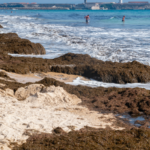
Authorities describe the situation as continuous, as the algae is repeatedly reintroduced by marine currents rather than arriving in isolated seasonal events. Photo credit: Andreas Poertner/Shutterstock

Coastal authorities in southern Spain are preparing for continued large-scale arrivals of invasive Japanese brown algae (Rugulopteryx okamurae) along the Andalucía coastline in 2026. Aggregated regional reporting indicates that around 40 municipalities may be affected to varying degrees, as marine currents continue to transport significant volumes of algae onto beaches.

The species, commonly known as Japanese brown algae or Asian invasive seaweed, has spread rapidly since its arrival in waters linked to the Strait of Gibraltar. It is now established along much of the southern Spanish coast, creating persistent challenges for local authorities responsible for beach maintenance and environmental management.

Tens of thousands of tonnes expected annually

Regional estimates suggest that approximately 56,500 tonnes of invasive algae could be deposited on Andalucía’s beaches during 2026. The figure is based on accumulated removal data and observed seasonal patterns rather than a fixed scientific forecast.

The distribution is uneven, with the highest concentrations typically recorded in Cádiz and Málaga provinces, particularly in coastal areas closest to the Strait of Gibraltar. Smaller but persistent accumulations are also recorded in Huelva, Granada and Almería.

Authorities describe the situation as continuous rather than seasonal, as the algae is repeatedly reintroduced by marine currents rather than arriving in single isolated events.

Around 40 municipalities affected across the coastline

Aggregated regional monitoring indicates that around 40 municipalities across Andalucía are affected to varying degrees. These include both large urban coastal centres and smaller towns dependent on seasonal tourism.

In Cádiz province, municipalities such as Algeciras, Tarifa, La Línea de la Concepción, Barbate, Conil de la Frontera, Bolonia, Caños de Meca and Rota have reported repeated beach accumulations. These areas are among the most exposed due to their proximity to the Strait of Gibraltar.. 

In Málaga province, the impact is concentrated along the western Costa del Sol corridor. The most consistently affected areas include Manilva, Casares Costa, Estepona, Marbella, Mijas Costa and Fuengirola. Occasional lighter deposits have also been recorded further east in Torremolinos and parts of the western Málaga city coastline have also experienced regular deposits requiring mechanical removal  depending on seasonal current conditions. 

Additional lower-intensity impacts have been recorded along parts of Granada, Almería and Huelva.

How the algae affects beaches

The arrival of Japanese brown algae can significantly alter beach conditions. When large volumes accumulate on shorelines, the algae forms thick mats that cover sand surfaces and shoreline edges.

Key impacts include:

  • Reduced usable beach area during peak accumulation periods 
  • Changes to the appearance and texture of sand, as algae mixes with sediment 
  • Odour issues as decomposing algae is exposed to heat and sunlight 
  • Increased labour requirements for mechanical and manual beach cleaning 
  • Temporary disruption to beach facilities in heavily affected zones 

While not structurally damaging to sand itself, repeated deposition can require frequent intervention to maintain safe and accessible beach environments.

What it means for beach goers

For visitors, the algae does not pose a direct health risk, but it can affect the overall beach experience.

In heavily affected areas, beachgoers may encounter:

  • Sections of shoreline covered in decomposing seaweed 
  • Reduced swimming and sunbathing space during peak accumulation 
  • Strong organic odours in hot weather conditions 
  • Increased presence of cleaning machinery during the day 

In many locations, municipalities prioritise clearing main swimming areas first, meaning conditions can vary significantly along the same stretch of coastline.

Despite these disruptions, beaches generally remain open, with local councils working to maintain accessibility throughout the tourist season.

Ongoing removal operations across Andalucía

Local authorities across Andalucía have implemented continuous removal programmes. These include mechanical beach cleaning, manual collection in environmentally sensitive areas, and transport of collected algae to authorised disposal sites.

In some municipalities, repeated interventions are required during peak accumulation periods. In more exposed locations, cleaning may take place daily in order to maintain beach usability.

The cost of these operations has placed pressure on municipal budgets, particularly in smaller coastal towns with limited seasonal revenue.

Environmental pressures and long-term management

Marine scientists continue to monitor the ecological impact of the Japanese brown algae.

Beyond its presence on beaches, Rugulopteryx okamurae has significant ecological consequences in coastal waters. The algae can form dense mats on the seabed, blocking light from reaching native marine vegetation and reducing the space available for local species to grow. This process can displace native algae and seagrass habitats, leading to reduced biodiversity in affected areas. Over time, the structure of local ecosystems may shift, with fewer native species able to compete for space and resources.

Marine scientists also note that the algae can alter seabed composition and simplify habitats used by fish and invertebrates. This reduces ecological complexity in nearshore waters and can affect local food chains. Once established, the species is extremely difficult to remove. Authorities and researchers generally agree that eradication is not currently feasible, and management efforts focus on containment and repeated removal rather than elimination.

Outlook for 2026

With continued inflows expected throughout 2026, municipalities across Andalucía’s coastline are likely to remain engaged in ongoing clean-up operations. While severity varies significantly by location, the overall trend indicates sustained pressure on coastal maintenance systems, particularly in the 40 municipalities identified as most affected.

Continue Reading

%

Benalmadena Hacks Off Lockboxes

Published

on

benalmadena-hacks-off-lockboxes

Fresh action against illegal tourist apartment key safes has taken place in Benalmadena after council workers removed several lockboxes fixed to public railings in busy residential areas.

Town hall officials said the metal boxes had been attached without permission and formed part of unauthorised use of public street furniture connected to holiday rental properties.

Tourist flat crackdown reaches Benalmadena streets

Many tourist flat owners use self check-in systems instead of greeting guests personally, allowing visitors to collect keys at any hour without arranging face-to-face handovers. Many of the boxes carry apartment numbers, labels or coded markings allowing holiday guests to identify which keys belong to their rental property.  Several had been attached directly to railings and other public structures across the town.

Council teams removed the devices following complaints linked to the growing spread of tourist accommodation in residential neighbourhoods.

Councillor Presi Aguilera said public spaces cannot be used for private commercial activity and confirmed inspections will continue in areas with large numbers of tourist apartments.

Residents voice frustration over holiday rentals on Costa del Sol

The ongoing growing anger surrounding tourist flats continues relentlessly across parts of Costa del Sol, with residents regularly raising concerns online about housing pressure, neighbourhood disruption and the changing character of residential districts.

Heated discussions on social media and local forums connected to Malaga province have increasingly focused on the rapid growth of short-term holiday accommodation in towns popular with visitors.

Benalmadena joins several Spanish municipalities attempting to tighten controls on the tourist rental sector through inspections, registration checks and enforcement measures targeting illegal activity, although Benalmadena appears to be among the first areas to publicly remove the lockboxes. 

Council representatives said further operations could take place in other parts of the town as authorities continue to make efforts to keep public areas free from unauthorised installations linked to tourist apartments.

Continue Reading

%

Spain’s Wealth Gap Explodes As Under-35s Lose Nearly 80% Of Their Wealth In Two Decades

Published

on

spain’s-wealth-gap-explodes-as-under-35s-lose-nearly-80%-of-their-wealth-in-two-decades

Economists caution that the gap is not only a reflection of income differences but of wealth-building capacity. photo credit: Pormezz/Shutterstock

The financial position of younger adults in Spain has weakened significantly over the past two decades, while older generations have continued to accumulate wealth, according to data drawn from Spain’s Household Finance Survey. The figures show a substantial divergence in net wealth between age groups, driven largely by housing ownership and long-term asset accumulation.

Analysis of the data indicates that the net wealth of people under 35 has fallen by around 75–80% over approximately two decades. Over the same period, households headed by those over 65 have maintained or increased their financial assets, widening the gap between generations to more than €300,000.

The findings are based on research compiled from the Bank of Spain’s Household Finance Survey, which tracks the distribution of assets, debt and income across Spanish households. The data has been widely referenced in economic studies examining generational inequality.

Housing and asset ownership driving divergence

One of the central factors behind the widening gap is housing ownership. Older generations in Spain have benefited from decades of rising property values, often purchasing homes when prices were significantly lower relative to income. Many of these households now own property outright or with minimal debt, contributing heavily to their overall net wealth.

By contrast, younger adults have entered a housing market characterised by higher prices and stricter lending conditions. As a result, a growing proportion of under-35s rent rather than own property, limiting their ability to accumulate long-term assets.

Economists note that this structural difference in housing access is one of the main drivers of generational inequality in Spain, alongside employment patterns and wage growth.

Sharp decline in wealth among younger households

The data suggests that the average net wealth of households headed by individuals under 35 has fallen by roughly three-quarters in real terms over the past 14–20 years, depending on the period measured. This decline reflects both lower levels of asset ownership and higher relative debt burdens among younger age groups.

Student debt, insecure employment contracts and delayed entry into the housing market have all contributed to weaker balance sheets among younger households. Although employment rates among young adults have improved in recent years, wages have not kept pace with housing costs and living expenses.

At the same time, older households have seen steady increases in accumulated wealth, supported by property appreciation and long-term savings. This has reinforced a structural divide between age groups.

Gap between generations exceeds €300,000

The difference in average net wealth between households headed by those under 35 and those over 65 now exceeds €300,000. Some estimates place the gap closer to €340,000 depending on methodology and reference year.

This disparity highlights the long-term effect of asset accumulation among older cohorts compared with the limited asset base of younger adults. It also reflects the compounding effect of home ownership, pensions and financial investments over time.

Economists caution that the gap is not only a reflection of income differences but of wealth-building capacity, which is strongly influenced by timing of entry into property markets and access to credit.

Structural pressures on younger generations

The data has prompted renewed debate in Spain about the long-term sustainability of intergenerational equality. Younger households face a combination of high rental costs, temporary employment contracts and delayed family formation, all of which affect their ability to build savings.

In urban areas, particularly Madrid and Barcelona, housing affordability remains a key concern. Rental prices have increased faster than wages in many regions, further limiting disposable income for younger adults.

At the same time, older households tend to benefit from pension income alongside existing assets, providing greater financial stability in retirement.

Long-term implications for inequality

Experts suggest that the widening wealth gap could have lasting implications for economic mobility. Lower levels of asset ownership among younger adults may reduce their ability to invest, start businesses or access credit on favourable terms.

While some convergence may occur over time through inheritance transfers, the current structure of wealth distribution indicates that generational differences are likely to persist in the short to medium term.

The Bank of Spain’s data continues to be used as a key reference point for policymakers assessing inequality trends and housing market pressures across the country.

Continue Reading

Trending

Copyright © 2017 Spanish Property & News