Connect with us

%

Goodbye To The Annual ITV: Check If Your Car Qualifies For The Spanish Exemption

Published

on

goodbye-to-the-annual-itv:-check-if-your-car-qualifies-for-the-spanish-exemption

Vehicles must be officially recognised as historic. Photo credit: rafa jodar/Shutterstock

Some car owners in Spain could soon have a lot less reason to visit their local ITV centre, with historic vehicles benefiting from longer gaps between compulsory inspections and, in some cases, complete exemption. The rules offer a welcome break for classic car enthusiasts, but not every older vehicle will qualify.

Spain’s historic vehicle regulations provide a different inspection timetable depending on a car’s age. This means some owners can avoid the annual appointments that ordinary motorists face once their vehicles reach 10 years old.

Which cars qualify for the ITV exemption?

According to the DGT under Spain’s historic vehicle regulations, cars generally need to be at least 30 years old to qualify for historic status. They must also meet specific conditions, including retaining their original characteristics and having historical or cultural interest. Vehicles must be officially recognised as historic before their owners can benefit from the special ITV arrangements.

Simply having a car that is more than three decades old is not enough. The regulations also distinguish between vehicles that can use a simplified classification procedure and those requiring additional administrative checks.

How often will historic cars need an ITV?

The frequency of inspections depends on the vehicle’s age once it has obtained historic status.

The timetable is as follows:

  • 30 to under 40 years old: Every two years.
  • 40 to under 45 years old: Every three years.
  • 45 to 60 years old: Every four years.
  • Over 60 years old: Exempt from compulsory periodic ITV inspections.

Historic motorcycles have a four-year inspection interval, while historic mopeds are exempt from periodic testing. Owners of exempt vehicles can still arrange voluntary inspections to check their mechanical condition and ensure they remain safe on the road.

What happens to ordinary older cars?

Unfortunately, motorists hoping that the changes will save them an annual ITV appointment simply because their car is getting older will be disappointed. Ordinary passenger cars still follow the existing inspection schedule.

Their first ITV is required after four years, followed by inspections every two years until they reach 10 years old. After that, the inspection becomes annual. A 15-year-old family car, for example, will still need its yearly ITV unless it has successfully obtained historic vehicle classification.

There are restrictions on historic vehicles

Historic status also comes with conditions on how the vehicle can be used. These cars are intended for occasional journeys rather than everyday commuting, with circulation limited to 96 days per year. Owners must also maintain appropriate insurance and ensure their vehicles are safe to drive.

The inspection requirements take account of the technology available when the vehicle was manufactured. Classic cars are not automatically expected to have modern safety equipment that was never part of their original design.

When do the rules take effect?

The revised Historic Vehicle Regulations were introduced under Royal Decree 892/2024 and came into force on October 1, 2024. The 2027 reference concerns the continued application of these rules to eligible vehicles, rather than a completely new ITV law being introduced next year.

For classic car owners, the benefit is clear: fewer compulsory inspections, potentially lower motoring costs and, for the oldest qualifying vehicles, no periodic ITV requirement at all.

%

Spain Unveils Unusual Shipping Container Gyms To Help Save Rural Villages

Published

on

spain-unveils-unusual-shipping-container-gyms-to-help-save-rural-villages

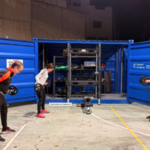
The container is fitted with machines and equipment for strength training and general fitness. Photo credit: Diputación de Valencia

Living in a small Spanish village shouldn’t mean having to travel miles just to find a gym. In Ademuz, in Valencia province, residents can now book a workout inside a converted shipping container, complete with fitness equipment and an instructor on hand to help.

The unusual facility is part of a pilot project designed to bring sports facilities to rural communities at risk of losing residents. Rather than expecting people to travel elsewhere to keep fit, the idea is to take the gym to them. And the early response suggests there is plenty of interest.

A gym residents can book by the hour

The container has been adapted into a compact fitness centre, fitted with machines and equipment for strength training and general exercise. It is located on Avenida de Valencia, beside Ademuz’s covered sports court. Unlike a conventional gym, users cannot simply turn up whenever they fancy a workout. Sessions must be booked in advance using a mobile phone, with limited places available in each time slot. An instructor is also available to advise users on the equipment and their exercises.

There is a competitive element too. Participants can collect medals and appear in participation rankings, giving them an extra incentive to return regularly. The initial response has been encouraging. Ademuz mayor Ángel Andrés said 79 people had registered within just a few days of the facility opening. He described it as a service the village had not previously been able to offer residents.

From military origins 

The container gym is the Box Cube Gym, developed by Valencian company Grupo Contact. The concept was originally designed for the Armed Forces, allowing soldiers to maintain their physical training at bases and during deployments overseas. 

The gyms are now installed at military facilities in Spain and have also been deployed abroad. Their container format allows them to be transported with other equipment and opened up to provide training space wherever troops are stationed.

Could the container visit other villages?

The project is a joint initiative between the Diputació de València and the Valencian Federation of Municipalities and Provinces (FVMP). Its aim is to provide sports facilities in smaller communities where building and maintaining a permanent gym may not be practical. The container is due to remain in Ademuz until the end of December. Authorities will use the trial to assess how well it works and whether residents continue to use it.

If successful, they will consider taking the facility to other municipalities in the province during 2027. That could allow several communities to share the same equipment rather than each having to find the money and space for a permanent gym. For villages with relatively small populations, a portable facility may be a more realistic way of providing access to exercise.

Giving young people a reason to stay

The idea is about more than somewhere to lift weights. Rural towns competing with cities for younger residents need to offer leisure facilities, sporting opportunities and places to meet friends if they want the next generation to see a future there. Andrés said the gym was designed particularly with younger residents in mind. He argued that villages need to offer opportunities comparable with those available in larger towns if they want young people to stay.

A shipping container will not solve rural depopulation, but the trial offers a practical way of bringing a service to places where a permanent facility may be difficult to justify. If the project proves successful, residents in other villages could soon find that getting to a workout no longer means driving to the nearest town.

Continue Reading

%

New Nissan Micra EV Review: Modern Style On Renault 5 Tech

Published

on

new-nissan-micra-ev-review:-modern-style-on-renault-5-tech

The trend of mergers and tech sharing between car makers over the last few years has led to some strikingly similar vehicles, just with different badges on the steering wheel. A modern incarnation of badge engineering from the 1960s. The arrival of the EV revolution seems to have exacerbated this, very much a case of cars being automotive white goods. There to do a job, and generally doing it well, but somewhat soulless in character.

There is still hope though with a number of recent EVs focussing on retro style to great effect, and more are in the pipeline. Renault’s 5, and sister performance brand Alpine’s A290, generated much appreciation, rightly so because they injected some joie de vivre into the EV market.

Another, perhaps arguably more surprising, star in this respect is Nissan’s new Micra. Great cars in their day most people’s image of a Micra now is their local takeaway delivery vehicle. No longer! The all-new Micra is pure EV and, judging by many comments I received about my test car, super stylish.

However, the Micra has a secret, its underpinnings are Renault 5. You can pick out similarities but Nissan has done a fantastic job of turning the Renault 5 from retro chic into modernistic style. Not all buyers like retro and some shy away from the rather brutalist style that comes with many new models.

Two battery sizes are offered with the new Micra, 40kwh with a projected 196-mile range and 52kwh with a longer 257 miles. Prices start at £22,995 but with the UK electric car grant drop to a very attractive £21,495. There are three trim levels and standard fare starts with rear parking sensors, Apple Car Play and Android Auto, Bluetooth, automatic air conditioning, keyless start, rear privacy glass and a heat pump.

The interior of the Micra is different enough, with the choice of materials, to make it stand alone, but then the Renault 5 interior is good anyway and despite some cheaper plastics the Micra feels well-built. There’s a decent amount of passenger space and boot isn’t bad either. Seats are comfortable, the drive smooth and quiet and controls are pretty logical and intuitive. I did find there are too many column stalks on the right of the steering wheel though, with the gear shift lever, wipers and audio.

In small battery form the range makes for an excellent commute/city car with occasional longer journeys, the larger 52kwh adds distinctly more options in terms of journeys. It’s arguably smaller range than some of its rivals may deflect a few buyers, but ultimate range is not everything in a city car.

The Micra is one of the most enjoyable, individual and stylish cars I driven in a long time.

Facts at a glance

  • Model: Nissan Micra Evolve
  • Engine: 110 kw electric motor with 52 kwh battery
  • Gears: Automatic
  • Price: €35,749/£29,865 or €31,261/£26,115 with UK electric car grant
  • Performance: 0-100kph/62mph 8 seconds/Maximum speed 150kph/93mph
  • Range: 257 miles combined driving
  • Emissions: 0 g/km

Model tested was UK-specification and equipment levels and prices may vary in other markets

Continue Reading

%

Early Christmas Cheer & Mindful Holiday Gift Shopping

Published

on

early-christmas-cheer-&-mindful-holiday-gift-shopping

Christmas is coming, and I couldn’t be happier! I adore this time of year almost as much as Mr Grinch loathes my unbridled enthusiasm for all things Christmassy. When is it too soon to start trimming the tree, anyway? Did you know that in the Philippines, they kick off the celebrations as early as September 1st? Now that’s my kind of people! My credit card, unfortunately, doesn’t share my enthusiasm.

Of course, Christmas isn’t everyone’s cup of tea. Some love it, some loathe it, and others would happily relocate to another continent just to escape it (although, perhaps avoid the Philippines). Fat chance, anyway! Mariah Carey is already being defrosted, preparing her annual, grandiose comeback to every radio station, shopping centre and village square. The woman has become an international Christmas emergency!

Then comes the shopping frenzy. But here’s a thought: do we really need to spend a fortune on famous labels to give someone something wonderful?

I’m certainly not talking about counterfeits. Absolutely not. They’re illegal and undermine fair trade. I’m talking about giving legitimate, less glamorous brands a chance. Sometimes, their quality, style and durability are every bit as good as those of their expensive competitors.

Take my trainers. Wherever I go, people compliment them. “Gorgeous! Where did you get them?” They even give me a little extra height, always welcome. I wasn’t exactly at the front of the queue when they were handing out centimetres!

When I tell people where I bought them and how little I paid, they look at me in disbelief. “Really? That’s all?” Yes, really! And no, I haven’t won them in a raffle.

Perhaps it’s time we stopped paying so much for a name and started appreciating what we’re actually buying, especially when so many people are feeling the pinch. The real art of living is making the best of what we have, whether little or a lot. After all, having plenty and knowing how to enjoy it are two entirely different talents.

And while we’re talking about spending, let’s remember our local shops and businesses. Buying, giving and enjoying what our neighbourhoods offer keeps the local economy moving. Sensible shopping, happy recipients and thriving businesses. Now that’s a win-win!

Personally, one of my favourite Christmas gifts is much simpler: watching the lights being switched on, enjoying the excitement and finishing the evening with steaming chocolate con churros at a local bar.

Still alive, rocking and kicking, enjoying the little things. What more could I possibly ask for?

So, here’s wishing everyone a wonderful Christmas, happy holidays, clever shopping and plenty of reasons to smile.

And while we’re at it, how about we persuade Mariah Carey to apply for a seasonal part-time job at Santa’s toy factory? I’m sure there’s an opening for an elf, preferably on the night shift, somewhere in the North Pole. Anything, really, to keep her away from a microphone until January. We might even chip in for her travel expenses!

Continue Reading

Trending

Copyright © 2017 Spanish Property & News